
 vn
vn en
en ja
ja ko
ko zh
zh













List of relic sites (65)
Xa Loc Temple
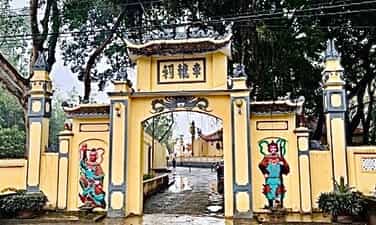
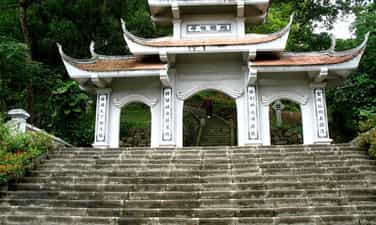
After more than 700 years of ups and downs, Xa Loc temple (Tu Xa, Lam Thao, Phu Tho, Vietnam) still retains its inherent value, a place for people near and far to express gratitude for their sacrifices and kindness. The benevolence and patriotism of the brave general Lan Ho Hau - Governor of the Great King. In 1991, Xa Loc Temple was ranked a National Historical Monument by the Ministry of Culture, Sports and Tourism. Today, along with preserving and preserving artifacts in the temple, the local government has actively mobilized social capital to continue repairing and embellishing the temple, promoting its great spiritual significance. not only to the people of Tu Xa commune but also demonstrates the nation's moral principle of "when drinking water, remember its source". Xa Loc Temple's architecture is considered typical of the architectural art of worship in the province. The temple was built in the style of Nhi, including Dai Bai and Thuong Cung. The back of the Temple is based on the position of King Hung's Ancestor Temple on Nghia Linh Mountain, the Temple faces South, surrounded by daffodils. Dai Bai house has 3 rooms, for gongs, drums, worshiping horses, and worshiping chambers with swords, knives, and spears painted in red and gold. This is also a place to worship the souls of martyrs who died in battles to protect their homeland. Inside Dai Bai is the Upper Palace worshiping the god Lan Ho and worshiping Phung Sao Stone and Phung Sao Den - two talented subordinates of the god Lan Ho. On the left and right sides are houses built with simple architecture, three rooms for relatives, villagers, and tourists from all over to prepare for the ceremony to enter the temple to burn incense. What impresses everyone when coming to Xa Loc Temple is that the grounds inside the temple are covered with ancient trees, creating shade and fresh air. In 2017, the Temple was expanded to a campus of more than 1 hectare, with a lotus pond and three-entrance gate, creating a majestic and beautiful look for the temple. SOURCE: PHU THO NEWSPAPER
Phu Tho
4114 view
Rating : National monument
Au Co Mother Goddess Temple
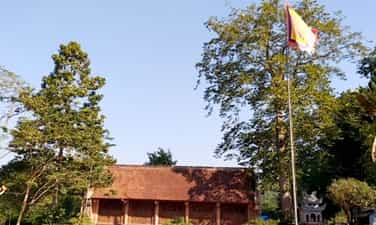
Mother Goddess Au Co Temple, Hien Luong commune, Ha Hoa district, Phu Tho province is a place to worship Mother Goddess Au Co. For a long time, in the minds of all Vietnamese people, Au Co Mother Temple associated with the belief of worshiping Mother Au Co has become a beauty in the cultural essence of the Vietnamese people, a sacred symbol of the origin of Lac children and grandchildren. Hong of all Vietnamese people. During the integration period, researching the value of Au Co Mau Temple associated with developing spiritual tourism about national roots is the direction to preserve and promote the multifaceted value of the heritage. From the center of Viet Tri city, following the Noi Bai - Lao Cai highway for just over an hour, visitors will arrive at Au Co Temple Relic Area, Hien Luong commune, Ha Hoa district. Coming here, every Vietnamese person will not only have peaceful moments, but also be immersed in the legendary space of the image of mother Au Co giving birth to Lac and Hong of Vietnam in a bag of hundreds of eggs. This image has become an immortal image that lives forever in the thoughts, emotions and minds of generations of Vietnamese people. Legend has it that Au Co is a "fairy who descended to earth", not only is she very beautiful, "can speak more than flowers, and is more fragrant than jade", but she also reads carefully, is good at playing the flute, and is fluent in pronunciation. Therefore, she is often called "The First Princess". After marrying Lac Long Quan - son of Kinh Duong Vuong, Au Co gave birth to a sac of a hundred eggs, which hatched into a hundred children. One day, seeing that his children had grown up, Lac Long Quan said to Au Co: "I am a Dragon, you are a Fairy. Although yin and yang come together to form a hundred children, union is difficult because of different lineages. ”. Having said that, he divided 50 people to follow their mother up the mountain and 50 people to follow their father down to the sea, dividing the country to rule for a long time. SOURCE: PHU THO NEWSPAPER
Phu Tho
4098 view
Rating : National monument
Chu Hung Temple
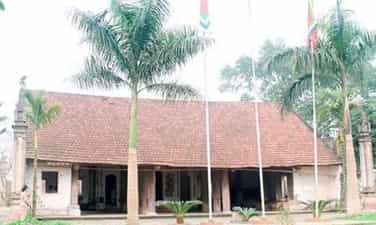
Chu Hung Temple Festival in Am Ha commune, Ha Hoa district is closely associated with the formation and development of the Chu Hung Temple national historical site. This is the place to worship Con Nhac Dai Vuong - the person who had the merit of fighting the enemy to protect the country and region of Chu Hung during the period of the 18th Hung King - Hung Due Vuong. The people of Chu Hung expressed their respect for Con Nhac Dai Vuong, so they submitted a request to King Gia Long to build a temple to worship him with incense smoke forever. In July 1806, King Gia Long officially approved the people of Chu Hung to start construction of the temple, located in the terrain of a sacred land, on the top of Quy Son mountain, far away from the temple gate is Kim mountain peak. Turtle - Golden Turtle. Since then, every Tet holiday, Am Ha people in particular and Ha Hoa people in general organize incense burning ceremonies to pay homage to the deity and open the village festival on January 7 every year. . SOURCE: PHU THO NEWSPAPER
Phu Tho
4008 view
Rating : National monument
Mao Pho temple
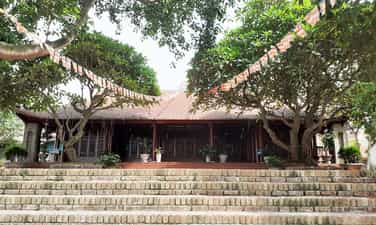
Mao Pho village communal house still preserves many precious and valuable artifacts such as 6 ordinations, altars, palanquins, wooden dragon and phoenix carvings dating from the late Le and early Nguyen... Every year, on 4 occasions During the festival, the villagers organize the festival with sacrifices, palanquin processions and special folk games. Mao Pho Temple was recognized as a national historical, cultural and architectural relic in 1993. Mao Pho communal house relic area was built in the Later Le period with an architectural scale divided into 2 parts: communal house and temple. The communal house and temple are located on a large, flat area of land with beautiful natural landscape, facing east overlooking the beach on the banks of Thao River. Currently, the old communal house has been repaired by the people of Mao Pho village, raising the entire communal house architecture to make it more dignified, spacious, and more worthy of the stature of the gods. here. Lady Mao Pho Temple is a place to worship Saint Mother Duyen Hoa, previously established in a separate place. During the construction of the dike road passing through the village, the old temple was moved to a new place in the same campus as the communal house and village temple. In the temple, there is still a statue of the sacred and majestic Holy Mother. Not only were the temples and shrines rebuilt by Mao Pho people to make them more dignified, but on this occasion, thanks to a rare fate, the content of the previously lost Mao Pho village genealogy was brought back to the correct place of worship. its. With the omen of the Phoenix bird holding a jade pen, it flew to the sound of thunder when the Great Kings of Pen Loi Mao were born, allowing contact with the Phoenix family to follow Tien Au Co's mother up the mountain, creating bronze drums that echoed like the sound of the sound. Thunder, on which is engraved the image of a person wearing fur, is the name of the nation that has existed since the time of Hung King. SOURCE: Bach Viet overlaps nine
Phu Tho
4165 view
Rating : National monument
Phuc An Pagoda
Phuc An Pagoda was built in the post-Le Dynasty (18th century), majorly restored in 1972. Currently, the Three Jewels of Phuc An Pagoda still retains its ancient architectural appearance with a Khau-style architectural plan including : The front hall, the left and right corridors and the main hall. The Tien Duong Court has 5 compartments and 2 compartments, 6 rows of pillars with a total of 40 columns, 4 sets of trusses in the middle of the structure in the style of stacking and matching columns, and two pig-shaped trusses, two trusses of stacked structure, and gong stands. The wooden frame is linked with strong beams and beams, with smooth planing, the column bases rest on boulders, and the roof is tiled in the Le period. The unique feature of the Tien Duong building is to create a wider awning to block the sun, wind and rain. There are only 2 curved ends of the front roof, the match neck part is used to carry planks, the wall system is bricked but the two-column columns run long. The corridor connecting the upper temple creates a grandeur for the temple when standing in all directions. The two rows of left and right corridors running parallel connecting Tien Duong and Thuong Dien actually have 3 compartments on each side, but seen from the back there are 6 long, clear compartments. Each row has 3 rows of pillars, the total row is 18 wooden pillars. The architecture here shows the precise and skillful calculations of ancient artisans: With 3 rows of pillars standing on the ground and a row of pillars mounted on crossbeams to form two symmetrical roofs without the usable area being narrow. , the heart of the house is expanded thanks to successive transmissions, which is a traditional Vietnamese technique. The Main Hall is parallel to the Front Hall, arranged higher through a stepped structure. The upper palace consists of 3 compartments, 5 rows of pillars with 18 wooden columns, a unique roof system in the style of "First three, second rear", gable walls, the match neck of the front roof is made of bars to facilitate ventilation. , 4 trusses in the style of "Gongs are high, gongs are high, beams are low - ironwood paneled ceilings represent the tradition of Vietnamese ancient houses. Phuc An Pagoda currently has 22 worshiping statues arranged on both sides of the Front Hall and layers of statues on the Upper Palace level in the Main Hall. Among them, a typical set of Tam The statues has the artistic style of creating round statues in the 18th century. Phuc An Pagoda currently reserves a system of valuable relics and antiques, typically: "Phuc An Tu Trung" bronze bell ", height 0.90m, diameter 0.50m; Khanh dong is 1.05m long and 0.90m wide. The bell and the bell were cast in the thirty-third year of Minh Menh - 1832. The handle of the bell and the bell were made into geometric patterns, and the bell was shaped like a giant leaf. On the body of the bell and the inscription are engraved in Chinese characters the names of those who made meritorious deeds in repairing Phuc An Pagoda. SOURCE: LAM THAO DISTRICT ELECTRONIC INFORMATION PORTAL
Phu Tho
3272 view
Rating : National monument
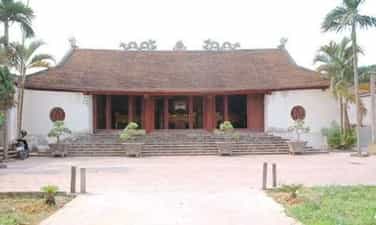
Ha Bi Trung Communal House
Ha Bi Trung Communal House is located in the system of historical relics worshiping the holy Duc Tan Vien Son, Cao Son, Quy Minh in the Da River and Northern midland region. The communal house was made of thatch, bamboo, and cork leaves right after the villagers moved from the right bank to the left bank of the Da River at the end of the 18th century. By the year of Dinh Hoi, 1827, the communal house was built with nails, ironwood, and masonry walls. , roofing tiles on flat land, looking Southeast. Besides the Tan Vien Son three-position, Ha Bi Trung Communal House also worships the village's Tutelary God who has publicly established a hamlet and Ha Bi site; Also worshiping together are Ban Tho Long Cung, Princess Tien Dung, and Nam Giao Patriarch Si Nhiep - the person who was instrumental in spreading Chinese characters to Vietnam. After a long period of ups and downs and historical events, many construction items of the communal house were damaged. The remaining traditional features are the sesame dui system, diaphragm, set of first verses, 8 pillars, altar to worship three Tan Vien Son saints, incense bowl, two wax candles, flower tubes... and sacrificial rituals. The ceremony is still performed according to traditional rituals. In 2007, with permission from the provincial People's Committee, the people of the village contributed over 500 million VND to repair and restore a number of construction items in the monument. On March 13, people in Xuan Loc commune (Thanh Thuy) and tourists from all over happily received the certificate of national historical relic recognition for Ha Bi Trung communal house. SOURCE: PHU THO NEWSPAPER
Phu Tho
3218 view
Rating : National monument
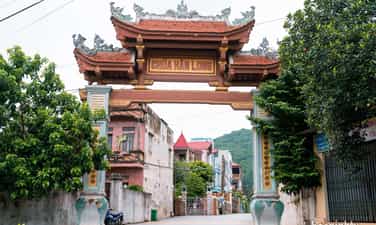
Historical and cultural relic of Hoang Long Pagoda
Cultural and historical relic Hoang Long Pagoda, An Dao commune - Phu Ninh district is an ancient pagoda dating back more than 300 years, is one of the typical cultural and historical relics, a convergence of historical values, outstanding culture, art, and spirituality, ranked as a relic by the state National level cultural history according to the decision dated January 19, 2001, has been given many policies of attention by the authorities at all levels from the province, district, and temple, creating a mechanism for the Provincial Buddhist Executive Committee to nominate monks. The teacher directly manages and invests in many investment policies to renovate, restore, embellish, and build many new construction items. SOURCE: PHU THO PROVINCE
Phu Tho
3664 view
Rating : National monument

Dinh Dam Xuyen
Dam Xuyen communal house is located in Tien Chau commune, Phuc Yen town, Vinh Phuc province. The communal house worships 3 gods: Cao Bi Hung Thanh Dai Vuong; Duong Uy Phan Vu Dai Vuong and Princess Thuy Tinh Than. The communal house is located on a land area of about 1,000m², with a construction area of 220m², facing southwest. The communal house consists of three main parts: the main communal house, the harem and the rear altar, forming the shape of the letter "Cong", a typical architectural style common in ancient temples and pagodas of Vietnam. The communal house is built of ancient square bricks, with a tiled roof with a funny nose and a sword head shaped like a rolled dragon, expressing majesty and tradition. The door system has convenient bars, helping the space inside the house to always be airy. The great communal house (front altar) has 5 compartments, where important ceremonies take place; The posthumous court has 3 rooms, and the harem has 2 rooms, which is the main place of worship. All columns and trusses in the communal house are made of ironwood, a type of wood famous for its high durability, bringing stability to the building. The communal house's wood carving art is very elaborate and sophisticated, taking the theme from the four sacred animals: Dragon, Lan, Quy, Phuong, symbols of prosperity and power. In particular, the carvings on the 4 "ports" in a "loose" style with a rolling dragon image are done in a soft, flexible way, clearly showing the charisma of the dragon rolling up and flying, creating an image lively and strong. In addition, some other carved details on the front and rafter panels such as the scene of "lion playing bridge" and "tung loc and apricot bird" bring vividness and excitement, demonstrating the talent of the artisans. . These details are not only aesthetic highlights but also reflect traditional cultural and artistic values, making an important contribution to preserving and promoting the architectural heritage of Vietnamese village communal houses. The existence of Dam Xuyen communal house is a testament to the creativity and enthusiasm of the ancients, while affirming the importance of preserving and developing national cultural values. Currently, Dam Xuyen village communal house still preserves three altar thrones, including one grandmother's throne and two grandfather's thrones, all of which are exquisitely painted and gilded. In the royal court, three ancient couplets dating back hundreds of years are still preserved. The communal house also has two palanquins, one of which belongs to the Le Dynasty and one belongs to the Minh Mang Dynasty. Notably, the remaining stone artifact is a stele established in the year Tu Duc 1870, recording the stories of the three gods worshiped at the communal house. In addition, the communal house also preserves eight ordinations, most from the Nguyen Dynasty (1810-1924). These artifacts not only have historical value but also reflect the culture and beliefs of the community over the centuries. The artifacts at Dam Xuyen communal house are not only symbols of tradition and respect but also evidence of the continuity of local culture in the flow of history.
Phu Tho
6308 view
Rating : National level relic
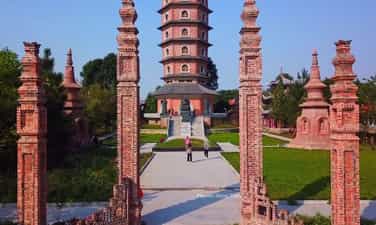
Bien Son Pagoda - Yen Lac
Bien Son is a beautiful pagoda of Yen Lac district, Vinh Phuc, ranked as a national historical relic since 1996, located on a high mound of about 1.5 hectares. In the past, the pagoda was called Doc Nhi, local people often called it Bien Mountain with a very strange shape. History books also record that in the 16th year of Thanh Thai's reign, the pagoda was built with Mon-style architecture. Due to changes in time, the pagoda no longer retains its original ancient architectural structure but was restored and embellished in the Dinh style, an architectural style bearing the Nguyen Dynasty's style including 2 worship halls and the main hall. Around the pagoda, the scenery is peaceful and charming, under many years old trees covered with a majestic green color. Coming from Provincial Road 303, visitors will be able to admire the first beauty of the pagoda, which is Tam Quan. The three-entrance gate is designed in the style of a three-storey, 12-roofed dome and is decorated very elaborately and sophisticatedly. From Tam Quan, there is the most straight path consisting of stone steps built along a gentle slope. The pagoda was built according to the internal and external principles. In the temple grounds, there are two long corridors connecting the front house in the front with the back house in the back, forming a rectangular area surrounding the incense burning house. Compared to other temples in the region, Bien Son Pagoda still preserves a system of more than 40 dharma statues and also preserves many valuable treasures and antiques. The statues here are beautifully crafted, gorgeously painted and gilded, meticulously crafted, imbued with the style of the Le Dynasty. A highlight of the Buddhist architecture at Bien Son Pagoda is the 12-ton monolithic bronze stupa, one of the largest stupas in the country, storing many Buddha relics, especially statues. Buddha Emperor Tran Nhan Tong is made of monolithic green jade... In addition, in the pagoda there are other houses such as the ancestral house, which is a place to worship the monks who once lived at the pagoda and have now passed away, and the monk's house, where the monks live. . Located right behind the upper palace, we can admire another extremely unique architecture, which is the rotating tower, also known as the mortar. Today, Bien Son Pagoda has become a stop, sightseeing, and research destination for many tourists on their journey to return to their national roots, and is the place where the Loan River - Bien Mountain festival imbued with national identity takes place. , attracting a large number of local people, tourists, and Buddhists from near and far to worship and enjoy. Source: visitvinhphuc
Phu Tho
6817 view
Rating : National level relic
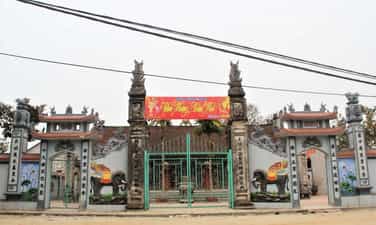
Holy Mother Temple
The historical relic of Thanh Mau Temple is located in Minh Luong residential group, Thanh Lang town, Binh Xuyen district, Vinh Phuc province. Thanh Mau Temple has a total area of 6,705 m2, of which the worship area is 3,114 m2, built a long time ago, and the current architecture still bears bold features of ancient architectural art. The temple has Dinh-style architecture with 5 compartments and 2 compartments and a 3-compartment harem. The overall layout of the relic includes: Nghinh Mon gate, fence system, front house, harem house, left vu house, right vu house, golden house, internal garden system. – Nghinh Mon Gate: includes the main passage and 02 side passages. The main walkway is formed by 02 large bronze pillars, bronze pillars, the base of which is covered with buddha vases, the top of the pillar is covered with fruit and wind wings made of four phoenixes, the body is covered with embossed thread and written with grapes on 03 sides of the pillar. The side walkway includes two symmetrical paths. The walkway is formed by small bronze pillars and a fence system, the side path is covered with 02 floors of small-sized roofs. – The altar house: built in the shape of a rectangle, with the architecture of a boat with a leaf roof, a husband's head, and a gong stand. The whole house is made of wood, has a door system, and a tiled roof. The building has very beautiful cultural and artistic value. – The harem house: built in the shape of a nail, in the style of a boat with a leaf roof, covering the harem part, inside with wooden structures like husband and wife, and a gong stand. – Historical stele: built in 1992, on it is written the preliminary history of the Holy Mother's behavior and the history of the temple. The stele is 1.8m high, the stele is engraved with yellow letters on one front side. The base of the stele sits on top of the turtle's back. The stele's base is made of square stone. – Left house and right house: the project was built quite a long time ago, the building is built in the most typical style. Thanh Mau Temple is the place to worship Saint Mother Trieu Thi Khoan Hoa. Holy Mother Trieu Thi Khoan Hoa belongs to the Trieu family. The genealogy records that "She belongs to the lineage of the 18th King Hung Vuong" and was once the concubine of King Ve Duong Vuong. Since the Trieu family lost their country, she had to hide from the Han army, lived in exile and then came to live at Quang Huu pagoda, An Lang commune, Chu Dien district; Now it is Thanh Lang commune, Binh Xuyen district. She was originally a beautiful and talented girl. She had 5 sons, all 5 of them had heroic talent, more courage than ordinary people, were skilled in martial arts, good at literature, and had a will as wide as the ocean. Legend has it that her 5 children were born in the same bundle due to a dream of love with the Duck god in this country, hatching from 5 eggs. Because of that, she named all 5 children with the word "ap Lang", meaning Duck. Later, the Holy Mother transformed into Minh Luong mound on the 10th day of the 11th lunar month and was buried by the people in Minh Luong area (Minh Luong residential group). When Hai Ba Trung raised the uprising flag, Thanh Mau's five children had grown up, and the five brothers all came to join Ba Trung at the mouth of the Hat River, bringing with them more than 1,000 indigenous people. Assigned by Hai Ba Trung to lead the navy and army to attack Luy Lau citadel, the five Ap Langs commanded the army to destroy a fierce battle, the Crown Prince To Dinh lost greatly and had to run back to the country. Because they accomplished many glorious victories, all 5 of them were rewarded and given titles by Hai Ba Trung, became 5 Great Kings, and named the mother of the 5 brothers "Queen of the country, Princess". Thanks to the help of the five Duck brothers and many other talented generals. In just a short time, the Hai Ba conquered 64 strongholds. Mrs. Trung Trac proclaimed herself king. The uprising of the Trung Sisters and their generals, with the help of the people of the whole country, won brilliantly, and the country returned to peace. Mrs. Trung Trac ascended the throne, her title was Trung Nu Vuong, and all the generals and soldiers were awarded. When the Han enemy returned to rob our country again, under the command of Hai Ba Trung, the five Ap Langs and their generals fought very bravely, but the enemy was so strong that our army could not resist. Hai Ba was defeated at Cam Khe, 5 generals from the enemy's siege brought their bodies and buried them in Hi Son (He village, Phuc Thang ward, Phuc Yen town), the year Ap Lang returned. Hamlet sacrifices his life to preserve the atmosphere. Remembering the merits of the five Ap Langs and the holy mother Trieu Thi Khoan Hoa, An Lang people built temples and shrines to worship. During the reign of King Le Thanh Tong, in the 12th year of Hong Duc's reign (1460-1497), the Holy Mother and 5 deities were worshiped: An Lang commune was divided into Xuan Lang commune, Hop Le commune, Minh Luong hamlet to serve the Holy Mother and 5 Gods. Later, all the dynasties granted beautiful letters and approved four communes (Yen Lan, Xuan Lang, Minh Luong, Hop Le) to serve them. Although Mrs. Trieu Thi Khoan Hoa did not directly stand under the banner of the Trung Sisters, with her upbringing, her five sons became talented and dutiful generals who helped the Trung Sisters gain independence. Later, she was honored by the people and a temple was established to worship her when she passed away. Her title of Mother Goddess is revered among the goddesses worshiped in some villages in Vinh Phuc. Through the dynasties, she was posthumously promoted to the position of Holy Mother in the 9th year of Khai Dinh (1924) and later as the "Higher God of Fortune" worshiped and commemorated by all people with reverence. Currently, in Thanh Lang town, the relics worshiping the Holy Mother Trieu Thi Khoan Hoa and the 5 Apangs are: Thanh Mau Temple (nationally ranked) worshiping the Queen Mother Princess Trieu Thi Khoan Hoa, Xuan Lang Temple (ranked nationally) national rank) worshiping King O Me, Hop Le communal house (provincial ranking) worshiping Quy Minh king and Yen Lang temple (provincial ranking) worshiping Trinh Ap Lang Nga royal king, Supervisor of royal affairs , Cuong guess the great king's avenue. With a respectful heart and remembering the gratitude of our ancestors, on May 11, 2017, the Management Board of Thanh Mau Temple Historical Relics, Thanh Lang town held a groundbreaking ceremony to build a memorial stele to commemorate the Five Great Kings. Vuong at the termite mound where five generals were martyred. Thereby not only contributing to enhancing the beauty of space and landscape for the relic, but also contributing to preserving and educating the tradition of "Drinking water, remember the source", helping today and future generations to always cherish gratitude. the contributions of our ancestors and forefathers to building and defending the country. Source: Vinh Phuc Department of Culture, Sports and Tourism.
Phu Tho
6850 view
Rating : National monument

Dao Xa Temple
Dao Xa communal house is located in Dao Xa commune, Thanh Thuy district; worship Hung Hai Cong (19th son of Lac Long Quan). Dao Xa communal house was built during the reign of King Le Gia Tong - Duc Nguyen era (1674-1675), Nhat-style architecture, a building with 3 rooms and 2 compartments, facing south. The communal house was built over 300 years ago but still retains almost its entire value as a relic. In terms of architecture, it is mainly made of wood and the ancient art of wood carving on a system of lines (12 lines carved on both sides) with the themes: "Dragon Horse Serves", "Four Spirits", "Dragon Roll". Thuy", "Banh Trung", "Banh Giay Lang Lieu"; Classic stories: "Vuong Van Dieu Diep", "Cao Bien Tam Dia", "Dragon Ham Burial", "Mother Dragon Huan Tu", "Gao De Enters the Mandarin", "Ly Ngu Vong Nguyet"... With these values With sophisticated and precious architecture and wood carving art, Dao Xa Communal House was ranked as a national historical relic by the Ministry of Culture, Sports and Tourism on March 13, 1974. Dao Xa Temple (also known as Tam Cong Temple) is about 400m northeast of Dao Xa Communal House. According to the temple's genealogy, this place once marked the water management work of Duc Hung Hai Vuong and was the place where Ly Thuong Kiet trained his navy against the Song invaders and was the place where Ly Thuong's famous divine poem originated. Kiet. Dao Xa Temple has Tam-style architecture. The temple consists of three buildings: front altar, middle altar and back palace, arranged in harmony and balance, creating an elegant and majestic appearance, airy and bright but still quiet and secluded. Dao Xa Festival was recognized by the Ministry of Culture, Sports and Tourism as a national intangible cultural heritage on November 21, 2016. The Dao Xa Festival is a Vietnamese belief inseparable between communal house and temple, and is associated with the legend of worshiping Duc Hung Hai Cong (Lac Long Quan's 19th child) and his wife, Mrs. Trang Hoa, and the three great kings. Son of Hung Hai Cong. Dao Xa Communal House and Temple also worship Mrs. Que Hoa, a princess of the Tran family who was instrumental in entertaining Mrs. Trang Hoa with dancing and singing before giving birth to the three Concubines. Dao Xa communal house and temple festivals are held on lunar days of the year: On the 3rd of the first lunar month, the "Xuan Nguu" dance festival (called buffalo dance), is a religious folk dance, simulating Mrs. Que Hoa's entertainment (humorous) for Mrs. Hung Hai; January 27, 28, 29 is the Elephant Procession Festival; In March, a celebration day is held to commemorate the Holy Father's transformation and a marriage ceremony with Dau Duong village; In April, there is a ceremony to pray for peace; May 5 commemorates the birth of the Holy Father. In particular, Dao Xa has a July prayer festival held from the 9th to the 15th called: "Dedicating to King Ly to fight the Song invaders", with a swimming festival at midnight reenacting the scene of the Ly army. Thuong Kiet welcomes the gods' army ships into the temple to hold a special god-praying ceremony of the midland region, bearing the mark of the Hung King period. On December 10, the village holds a spring festival, a ceremony at the temple of Mrs. Que Hoa, and is also a ceremony to end the only rice crop in Dao Xa village. Dao Xa Festival is a sustainable environment to nurture and preserve good traditional cultural values; to satisfy the religious, spiritual and entertainment needs of generations of Dao Xa people and communities near and far. Community attachment based on traditional cultural values is always sustainable, a source of solidarity strength that has been proven through the history of building and defending the country of the Vietnamese people. Source: Phu Tho Tourism
Phu Tho
4801 view
Rating : National monument

Lac Long Quan National Ancestor Temple
To commemorate the merits of our ancestors who publicly founded the country and to bring together the spiritual and cultural values of the era of the Hung Kings and to commemorate the merits of our ancestors and predecessors who have contributed to building the country and Defending the country, Lac Long Quan's Father Temple is a new cultural institution located in the historical relic complex of Hung Temple, which was started construction on March 26, 2007 at Sim hill, Chu Hoa commune (Viet Tri) and Khanh Hoa province. It was completed on March 29, 2009, right on the occasion of Hung King's death anniversary in the year of the Ox. According to the book Dai Viet Complete History: "Lac Long Quan's full name was Sung Lam, he married De Lai's daughter, Au Co, gave birth to a sac of a hundred eggs, which later hatched into 100 sons, who were the ancestors of Bach Viet. One day, Lac Long Quan told Au Co that I am like a dragon, she is like a fairy, water and fire are incompatible, it is difficult to get along, so they said goodbye and divided 50 children to follow their father to the sea, 49 to follow their mother to the mountains, honoring her. The eldest son became the next king, Hung Vuong. Hung Vuong ascended the throne, named the country Van Lang, established the capital in Phong Chau, and divided the country into 15 parts. The king's residence is Van Lang, the king's son is called Quan Lang, the king's daughter is called My Nuong, the general is called Lac Hau, the military general is called Lac general, the mandarins are called Bo Chinh, passed down from father to son. connection is called Tutoring. Legend has it that 18 generations of people have been called Hung Vuong. The Temple of the Father of the Nation, Lac Long Quan, was invested in a new construction with synchronous architectural items. The decorative motifs are modeled after the patterns on Dong Son bronze drums, stylized as: Image of a person pounding rice, images of peanut birds... are shown in unique vividness, bringing the temple's unique architectural features without losing its majestic antiquity. The architecture of Lac Long Quan temple includes: Main temple, gate, symbolic pillars, symbolic gate, communal house, left vu, right vu, golden pavilion, auxiliary works and technical infrastructure with a total land area of 13.79 hectares. Main temple: Construction area of 210m2, nail-shaped architecture, made of wood in the traditional ancient architectural style. The front hall has 3 compartments, 2 left, 4 rows of legs. The harem has 3 rooms, 4 rows of legs, the wall is built at the back, and the door is a table. In front of the front hall is the altar with 1 compartment, 2 left, 2 rows of legs. Temple gate (ritual gate): Built in traditional architectural style, the gate has 4 columns, the main gate is 4.2m wide, the side gate is 2.05m wide. Symbolic gate: Located in front of the communal house, reinforced concrete column structure covered with stone and chiseled carved patterns. Phuong Dinh: Located behind the ceremonial gate, at courtyard level II. The structure is made of wood, the roof is stacked with matches, the floor is tiled with Bat Trang tiles. Left vu, right vu: Located at yard level III, built in traditional ancient architectural style, house with 5 compartments, 2 rows, construction area of 54m2. Symbolic pillars: Two pillars located symmetrically on both sides of the main axis, 9.2m high. Structure made of reinforced concrete, covered with green stone carved with stylized bird patterns. Golden Tower: Located on both sides behind the main temple. The structure of the building is built of stone blocks, cement mortar, reinforced concrete pillars, and an antique tiled roof. Altar objects similar to Lac Long Quan temple include: Hammock doors, incense burners, gong stands, precious bowls, horizontal panels, parallel sentences... made of wooden pillars, carved with patterns, painted with gold lacquer. Especially worth mentioning is the worship statue of Lac Long Quan. The statue of the Father of the Nation Lac Long Quan is cast in bronze, weighs 1.5 tons, is 1.98m high in a sitting position on a throne, placed on a stone pedestal made of block stone with carved patterns following literary motifs. Dong Son transformation. On both sides are 2 statues of generals (Lac Hau, Lac Tuong) with a height of 1.80m in standing position, each weighing 0.5 tons. Coming to Hung Temple today, visitors will not only burn incense to pay tribute to the merits of the Hung Kings but also visit the temple of Lac Long Quan and the temple of Au Co's Patriarch - a gathering of spiritual and cultural values. full of meaning, expressing the consciousness and filial piety of the Vietnamese people. Source: Phu Tho Newspaper
Phu Tho
4345 view
Rating : National monument

Communal houses, temples, and shrines in Ha, Phu Tho province
The cluster of relics of Ha communal houses, temples, and shrines (often called Dinh as Ha communal house, called Ha temple as Ong temple and Ha temple as Ba temple) was built in a flat, airy location in Huong Nha commune, Tam Nong district. , Phu Tho province. The cluster of relics worships the female general Xuan Nuong and the Ten Ministry of Gods who helped Hai Ba Trung defeat To Dinh and win victory. Currently, the relic complex still preserves a jade genealogy compiled by Nguyen Binh Phung in 1572, recording the behavior of the Gods in the relic. 1. Ha Communal House: Built on a large area of land, facing East-South, in front of the communal house is a pond and fields. The communal house has Dinh architecture, the Dai Bai consists of 5 rooms, 2 left (currently only 5 rooms remain) and the Harem has 2 rooms, is structured with 4 rows of wooden pillars, currently there are only 16 columns, including 8 main columns and 8 columns of troops. 2. Ha Temple (Ong Temple): Built on a high mound, facing East - South, in front and to the right of the temple is a pond (called a semi-circular lake), Nhat-style architecture, including 5 worship spaces Vertical, the door opens at the gable end, built in the style of a gate with 3 arched doors and two copper pillars shaped like gardenia. The great inscription in front of the communal house's door reads three words: "Toi Linh Tu". 3. Ha Temple (Ba Temple): Built on the same land of Don Ha, facing East - South, in front and behind are ponds and lakes, the architecture is 3 vertical altars, 5.10m long, 4.0m wide. 80m, including 16 wooden columns (8 main columns, 8 sub-pillars). The Ha communal house, temple, and shrine relic cluster is a complex of relics with historical and artistic value. In particular, the relic complex still preserves many valuable artifacts such as: ordination, jade genealogy, 3 ancient thrones, 2 palanquins, a collection of bowls, bowls, water hyacinths, porcelain trays and many sacred objects. value. The traditional festival is preserved and maintained at the relic complex on the 10th day of the first lunar month with many folk performances and games, especially the buffalo bridge festival. The cluster of relics of Ha communal houses, temples and shrines was recognized by the Minister of Culture and Information as a national historical, architectural and artistic relic on December 28, 2001. Source: Department of Cultural Heritage
Phu Tho
3800 view
Rating : National monument

Au Co Mother Goddess Temple
Located on the sacred land of outstanding people (Hien Luong commune, Ha Hoa district, Phu Tho province), Au Co Temple is a special historical and cultural work, a symbol of patriotism and great tradition. national unity. The image of mother Au Co giving birth to Lac and the Red son of Vietnam in a bag of hundreds of eggs has become an immortal image that lives forever in the thoughts, feelings and minds of generations of Vietnamese people. When Lady Ngoc Nuong gave birth to Au Co, she saw auspicious clouds protecting her, and fragrance spread everywhere, a sign of "Fairy coming to earth". Growing up, Miss Au Co was very beautiful, "Compared to flowers, she could speak, compared to pearls, fragrant pearls", diligent in reading, good at playing the flute, and proficient in phonics. After getting married, Lac Long Quan took Au Co from Lang Suong cave to Nghia Linh mountain. Au Co went into labor and gave birth to a sac of a hundred eggs that hatched into a hundred children. When the children grew up, Lac Long Quan told Mrs. Au Co, "I am a Dragon, she is a Fairy, water and fire are difficult to get along with... so 50 children followed their mother up the mountain, 50 children followed their father down to the sea. In order for it to be passed down for a long time, all of you will later become gods. Of the 50 children who followed their mother, the first son succeeded to the throne, took the title of the first Hung King, named the country Van Lang, established the capital in Phong Chau, and passed down 18 generations of Hung kings to rule the country for 2,621 years (From Nham Tuat year 2879 to 258 BC). Wherever Ms. Au Co and her children went, they won people's hearts and minds, teaching people to grow rice, plant mulberries, raise silkworms and weave cloth. On that mile-long road, one day he arrived at Hien Luong site, Ha Hoa district, Son Tay town. Seeing beautiful natural scenery, with high mountains and wide fields, long rivers, and vast blue lakes, Lush grass, flowers, and abundant fish and animals. He reclaimed land and established hamlets, taught people to grow rice, plant mulberries, and raise silkworms to weave cloth. Loan well, Phuong well, Thi mound, Cay Dau mound... are names from ancient times that still remain in the memories of the people here. When the farm was stable, he and his children set out for new lands. When the country had recovered and the frontier had expanded, he returned to Hien Luong, where he had chosen to spend his life. Legend has it that on the 25th day of the twelfth month of the year Nham Than, Mrs. Au Co and her flock of fairies flew back to heaven, leaving a silk bib under the banyan tree, where the people built a temple to worship, eternal incense and smoke. To express gratitude for the merits of Mother Goddess Au Co and educate the nation's traditions, more than 500 years ago, in the 15th century in the post-Le era, King Le Thanh Tong conferred deity and built the Temple of Mother Goddess Au Co in Hien Luong commune. - Ha Hoa district; Au Co Mau Temple was recognized as a national historical and cultural relic in 1991. The main holiday of Au Co Temple is the "Fairy's Day" on the seventh day of the first month. In addition, there are other holidays during the year such as February 10 and 11, March 12, August 13... Source: Electronic Information Portal of Ha Hoa District - Phu Tho Province
Phu Tho
3987 view
Rating : National monument
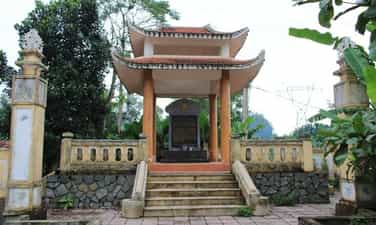
Tu Ly revolutionary base area, Hien Luong
Here, during the pre-uprising period in August 1945, along with Hien Luong commune, Tu Ly and Hien Luong revolutionary base areas were formed, one of the province's four revolutionary base areas located in the Hoa and Hien war zone system. Ninh, Thanh (Quang Trung War Zone). At this base, the province's first military training class was held. From here, the revolutionary movement spread to surrounding areas. Going back in history, in February 1945, the Party Central Committee decided to establish the Hoa - Ninh - Thanh war zone. According to the Directive of the Party Central Committee, the establishment of base areas to quickly prepare for the uprising and welcome the Southern liberation army advancing through Hoa Binh by way of Phu Tho into the Tu Ly - Hien Luong area is one of the opportunities. Important conditions and conditions for the formation and development of the Hien Luong - Tu Ly revolutionary base area. Under the direct direction of the Northern Party Committee, the Provincial Party Committee decided to establish the Tu Ly - Hien Luong revolutionary base area. On February 10, 1945 (the 28th day of the Lunar New Year, Year of the Rooster), led by Mr. Dinh Cong Hau, comrade Vu Tho went to meet Mr. Dinh Cong Sac in Tinh Trang hamlet - Tu Ly commune to find connections to build a revolutionary base. . From here, Mr. Dinh Cong Sac's family became a place to contact, meet, discuss plans to build the Tu Ly - Hien Luong base area and open the first military training class for the province's armed forces. On the basis of the well-developed movement and having enough conditions to establish a base area, the Provincial Party Committee decided to open the first military training class at Mr. Xa Van Binh's house, Dong Lam village, Giang Seo village with 20 teams. National self-defense member of Hoa Binh town and Mai Da district. Under the protection and concealment of the people of Hien Luong - Tu Ly, the students who completed the course quickly returned to establish and develop self-defense teams to save the country, preparing for an uprising to seize power. The successful military class brought the prestige of the Viet Minh to a high level, spreading widely throughout all classes. The leaders were subdued, the people were excited and believed in the revolution. The revolutionary force in the base area grew stronger, making an important contribution to the victory of the uprising to seize power in August 1945 in the provincial capital, Cho Bo district, Suoi Rut, Vang street (Hoa Binh) and Moc Chau (Son La). In 1946, the forces of the Tu Ly - Hien Luong revolutionary base coordinated closely with other revolutionary forces of the province to completely destroy the Dai Viet Duy Dan Party that had come to occupy Muong Diem as its headquarters and plot to overthrow it. revolutionary government in Hoa Binh. To mark historical evidence, in Ma hamlet - Tu Ly commune and Rong hamlet - Hien Luong commune, memorial stele houses were built at the Tu Ly - Hien Luong revolutionary historical relic site. These are works of historical and cultural significance, a place to educate revolutionary traditions for generations of Tu Ly - Hien Luong regions to follow in their father's footsteps in protecting the achievements of the revolution, building, renovate the homeland. The relic site has been ranked as a national revolutionary historical relic. Source: Hoa Binh Electronic Newspaper
Phu Tho
6065 view
Rating : National monument
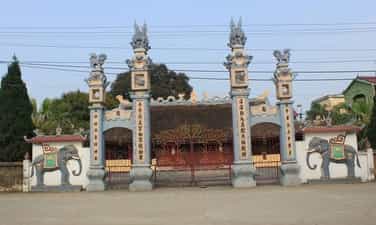
Dinh Kha Do
Kha Do communal house is located in Viem Nam Viem ward, Phuc Yen city, built in the Later Le dynasty (Le Canh Hung - 1741) to worship Tam Giang Dai Vuong - Famous general who helped Trieu Viet Vuong defeat the Luong invaders; Queen Minh Phi - Holy Mother who gave birth to Duc Tam Giang; Assistant Assistant Nuong Tu - Duc Tam Giang's younger sister, was instrumental in being in charge of military provisions. Legend has it that Saint Tam Giang was appointed General of the Army by King Trieu Viet to fight against the Luong invaders (6th century). He and his three younger brothers used guerrilla tactics to defeat the Luong invaders led by Tran Ba Tien. King Trieu Viet ascended the throne for a while, but due to not listening to his advice, he lost his throne by Ly Phat Tu. Ly Phat Tu sent someone to summon his brothers to become mandarins, but he did not accept them, saying: "I am loyal and do not worship two lords" and then he and his entire family perished on the Nhu Nguyet River. Remembering his merits as well as his example of loyalty, along the three rivers Thien Duc, Nhat Duc, and Nguyet Duc, there are 298 villages and communes worshiping and honoring him as village tutelary god. Kha Do communal house is an ancient, massive architectural work built in the architectural style of the Later Le Dynasty. The communal house's carvings are concentrated in the middle space, the area with the harem, the holy place, the place where military and theocratic power gathers, and mainly depict dragons and cosmic animals, along with the ceiling and worship relics. , the decorations make Kha Do communal house extremely solemn, expressing the authority of royal culture, concentrated and promoting its full strength. With ingenious art and tight layout, cosmic animals such as dragons, lyches, turtles, and phoenixes express the aspirations of human life here more than 200 years ago. This is the outstanding success of the art of carving wooden ceilings at Kha Do communal house of our people during the Le Trung Hung period. Currently, Dinh Kha Temple still has many valuable worship relics of ancient folk art, arranged in the middle of the communal house and on the harem, from the bottom up and according to the material. Wooden items include: altar palanquins, altar altars, altar thrones, altar horses, floating trays... Paper items include: Jade family tree, ordaining... Porcelain items include: incense bowls, water vases, wine bottles. Bronze objects include cranes, candles, and pedestals. Fabric items include pipe fans, ashes, clothes, etc. Nowadays, Kha Do communal house has main holidays during the year such as: 1st and 15th full moon days of every month; January fifteenth and August 2nd are the main parties; May 2 and October 15 are side parties; April 10 is the death anniversary of the village's tutelary god. Kha Do village communal house has a very unique custom: The custom of "Buying Quan Vien", today called "Buying Tu Van" of the young men in the village. In feudal times, the way to buy was to have chicken sticky rice, betel and areca nuts, and incense sticks waiting for the occasion to be placed on a tray and brought to the temple to celebrate the tutelary god and present to the village to buy officials. Nowadays, it's a bunch of bananas, betel and areca nuts, and incense cards to buy documents. Every young man in the village wants to be bought because they feel proud that they have a seat in the village communal house, so they have to live ethically - the family style lest the villagers laugh at them for being ordinary. Currently, the book for monitoring documents continues to follow the old book for officials, very closely and fairly. Those who buy first will be seated first in order (called Table), regardless of age and dignitary. The first two tables, called the Nhat table, sit in the middle of the pavilion, each table seats 3 people. The next two tables called the Second table also sit next to the First table in the middle of the pavilion, each table seats 4 people. After the First and Second tables come the tables of village and commune dignitaries, each with 4 people sitting in the middle of the communal house. Next, there are 4 people sitting at the tables of the officials (Tu Van) on both left and right sides of the pavilion. All tables are covered with mats and the meals are arranged the same according to the instructions of the organizers. Officials (Tu Van) can only change seats or tables to the next or upper table when the person sitting in front is dead or absent. Just like that, seat rotation is not a priority, no matter who it is. Thanks to the strict and fair order, there is no disunity or competition for each other's seats. This is a beautiful local custom still preserved to this day. Source: Information Portal - Electronic Communication of Phuc Yen City
Phu Tho
6377 view
Rating : National monument
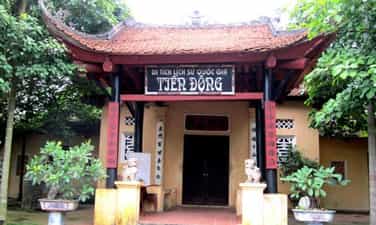
Tien Dong Base Ngo Quang Bich Temple
Tien Dong Base National Historical Relic Area is located in Tien Luong commune, Cam Khe district, Phu Tho province. Tien Dong in the past (when General Ngo Quang Bich chose it as a resistance base) was a swampy, sunken field, surrounded by rugged mountainous terrain. From Tien Dong base, when advancing, you can use boats to follow the Gianh river to the Red River to Thanh Ba, down to Cam Khe district town, or up to Ha Hoa. When you quit, you can go to Yen Lap, go to Nghia Lo to the Northwest. Famous person - General Ngo Quang Bich was born on May 7, 1832 in Trinh Pho village, Truc Dinh district, Kien Xuong district, Nam Dinh province (now Trinh Nhat village, An Ninh commune, Tien Hai district, Thai Binh province) . According to official history, his original family name was Ngo, a descendant of King Ngo Quyen, but because his grandfather changed his maternal family name to Nguyen, so history books also called him Nguyen Quang Bich. In 1858, he passed the baccalaureate exam; In 1861, he passed the bachelor's exam and was appointed as a mandarin by the Nguyen court, but he submitted a petition asking that he temporarily not take office to continue his studies and open a teaching school. In 1869, during Tu Duc's reign, he passed the Second Giap Doctoral Examination of Dinh Nguyen (ie Hoang Giap). After that, he was successively appointed to the positions of Tri Phu Lam Thao (present-day Phu Tho); Dien Khanh Tri Phu (present-day Khanh Hoa); Murder in Son Tay province; Teu Quoc Tu Giam (Hue); Murder case in Binh Dinh province; Chief envoy of the mountain room and patrol of Hung Hoa province (including present-day Phu Tho province). When the French colonialists sent troops to attack Hung Hoa, Mr. Ngo Quang Bich, as "Chief of mountain defense and patrol of Hung Hoa province" led the army and people to fight against the French, winning many important victories. However, with the superior strength of the French army, on April 12, 1884, Hung Hoa citadel fell. Ngo Quang Bich withdrew his troops to Tien Dong, Tien Luong commune, Cam Khe district, established a base, raised an uprising flag, and responded to King Ham Nghi's Can Vuong Edict against the French. The flag of the insurgent army was embroidered with the four words "Binh Tay Bao Quoc" and the oath "Vietnamese nation will never change, Lac Hong immortal restores its integrity" affirming national sovereignty. King Ham Nghi issued an edict appointing him the position of General of Tonkin as a military minister, with the title of Thuan Trung Marquis, in charge of organizing the resistance in Tonkin (literature from Counselor, martial arts from De Doc were given the right to use the official documents). Since then, with his prestige, General Ngo Quang Bich not only directly commanded the Tien Dong uprising, but also sought to contact and coordinate with other resistance leaders such as Phan Dinh Phung in Thanh-Nghe; Deo Van Tri, Nong Van Quang, Cam Van Hoan, Cam Van Thanh were scholars and chiefs of the Kinh, Thai, Muong, and Mong ethnic groups in the region who participated in the fighting or supported the resistance. While the resistance war was going smoothly, on January 5, 1891, General Ngo Quang Bich suddenly became seriously ill and passed away at the age of 58. His body was buried by soldiers at Ton Son mountain, Yen Lap district. Not only was Ngo Quang Bich a patriotic scholar and resistance leader, he was also a poet and cultural activist. He left behind the work "Ngu Phong Thi Tap" (Ngu Phong Poetry Collection), including 112 poems in Chinese, most of which were composed during the years he led the insurgent army against the French in Tien Dong. In addition, he also wrote poems and couplets to pay tribute to his fallen comrades. Especially the "Letter in reply to the French army" with its clear words and determination to sacrifice for national independence. (When the French sent him a letter urging him to surrender, promising to grant him a title and high benefits, he firmly replied: "If I win, if I live, I will be a court soldier. If I lose unfortunately, if I die, I will also act as a demon and kill the enemy. I would rather be guilty of a temporary offense than a sin of the world!") In 1884, after Hung Hoa citadel fell and withdrew his troops to station at Tien Dong, General Ngo Quang Bich built this place into a continuous fortress system, ensuring reasonable defense and attack. became a solid base for the resistance war against the French in the Northern Midlands and Mountains. The base's headquarters is located on a high mound that people now call Quan Dai mound. This is a hill about 150m high above the level of the area, bordering Tong Hai mountain. The top of the hill is quite flat and has a convex mirror surface with 3 peaks. The middle peak is Tuong Quan hill, where the headquarters of the insurgent army is located (and also where the Ngo Quang Bich temple is built today). On the right is Ho Gia peak, blocking the road through Tong Hai mountain to Yen Lap (he later withdrew his troops to Yen Lap via this road). On the left is the Cong Don mound (this is the guard post protecting the headquarters). Each hillock is about 300m apart. Near the foot of the current hill, there are traces of a well and a place where the insurgents' horses were tied in the past. In the Tien Dong base area, there are also famous landmarks such as: Tuong Quan hill, Flag Pillar hill, Mai mound, Don hill, Muc mound, Co Rac hill... which are places associated with the names of famous people and generals. Ngo Quang Bich army with Can Vuong martyrs and the anti-French uprising movement at the end of the 19th century. On February 12, 1999, Tien Dong base was ranked as a national historical and cultural relic by the Ministry of Culture, Sports and Tourism. In the temple, there is a statue worshiping General Ngo Quang Bich, and epitaphs record the will and courage of him and the Can Vuong martyrs. On the stele on the road leading up to the temple, there are lines of poetry written by the Regent Ton That Thuyet, praising the will and patriotism of the General: Artifacts on display in the gallery include: 1 set of teapots, 1 eel-skin colored porcelain rice bowl, 1 Hoa Mai gun and some bullets and shells of the insurgents. Regarding the tea set and porcelain rice bowl, these are utensils that served General Ngo Quang Bich in daily activities, found in 1979 by Ms. Tuan Hue's family in Tien Dong while digging in the garden ( When finding the artifact, through information from the family, researchers confirmed that in the past, her grandfather was a bodyguard of Mr. Ngo Quang Bich, and still used this Phung to brew rice for him). Tien Dong is the resistance base of the entire northern midland and mountainous region, led and operated directly by the North's military minister Ngo Quang Bich, so it is also a gathering place for many literati and intellectuals. Famous patriots throughout the country such as Tong Duy Tan, Ton That Thuyet, Nguyen Thien Thuat, Ngo Quang Huy, Nguyen Cao... came here to discuss the restoration of the country. Therefore, this is a historical relic marking the history of the glorious resistance against the French of the Can Vuong movement. Source: Cam Khe District Electronic Information Portal
Phu Tho
3699 view
Rating : National monument
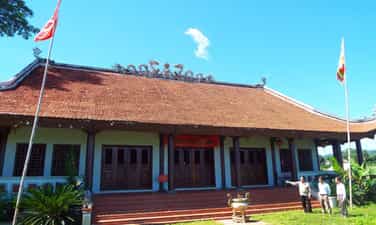
Cao Phong - Thach Yen revolutionary base area
Cao Phong - Thach Yen revolutionary base area belongs to Cao Phong district, Hoa Binh province. Because the activities of the base took place in the two communes Cao Phong - Thach Yen (old), the base was called Cao Phong - Thach Yen (now the relics belong to the communes Yen Lap - Yen Thuong - Cao Phong district). Ranked as a national monument in 1996. From mid-1944 onwards, after the Directive of the Party Central Committee on building guerrilla warfare bases in Hoa Binh province, especially after the Directive of the Standing Committee of the Party Central Committee (January 1945). ) on the construction of the Hoa - Ninh - Thanh war zone to proactively provide good areas for Vietnam's propaganda and liberation troops to advance through; At the same time as preparing militarily for the uprising to seize power, the revolutionary movement in Hoa Binh province developed quickly and strongly. The construction of the Viet Minh base progressed at a faster pace, until the end of 1944 and early 1945, in addition to Hoa Binh town, the Viet Minh base also spread to surrounding communes such as Quynh Lam and began to spread to Cao Phong region. Cao Phong - Thach Yen base area is located in a rugged mountainous area, although the base's operating area is very wide, including historical locations such as: 1. Khanh Pagoda Hill in Khanh hamlet, Yen Thuong commune. This is the training ground for the armed unit - the first team of officers of the base. After completing training here, the unit spread out to the hamlets to build self-defense teams. Comrades in this unit became squad leaders of self-defense teams of the hamlets. 2. Mr. Bui Van Y's family, Dai hamlet, Yen Thuong commune. It is a trusted base for comrades Vu Tho and Truong Dinh Dan... to travel and rest during the time participating in activities. His family contributed a lot of food and money to support the revolution. 3. Mr. Bui Van Hoanh's family lives in Trang hamlet, Tan Phong commune. It is a reliable base for comrades Vu Tho and Truong Dinh Dan... to go, return, eat, rest, during their time of operation at the Cao Phong - Thach Yen base area. 4. Trang village pagoda, Tan Phong commune. This is the location where the Party Committee of Hoa Binh province met in April 1945. During this meeting, the Staff decided to establish base areas. After the successful resistance war against the French, due to many reasons, the pagoda was damaged. 5. Mr. Pho Vien's family (aka Dang Chi Vien). He was instrumental in helping comrade Vu Tho to enlighten the tribes of the Cao Phong - Thach Yen region. During his time working at the base, his family became a trusted place for comrades participating in activities at the Cao Phong - Thach Yen revolutionary base. Mr. Pho Vien's family was also the location where the Provincial Party Committee convened the Provincial Conference of Representatives of the Viet Minh Front in July 1945 to implement the Directive of the Viet Minh General Headquarters on urgently preparing for an uprising to seize power. in Hoa Binh province. Cao Phong - Thach Yen war zone is one of the points to build the revolutionary base of the Party Committee of Hoa Binh province. The Cao Phong - Thach Yen base area is truly a solid base of the Hoa Binh province revolution and the Hoa - Ninh - Thanh war zone system, contributing a significant part to the overall victory of the Hoa Binh province revolutionary movement. . Source: Hoa Binh province electronic information portal
Phu Tho
6692 view
Rating : National monument
Outstanding monuments
See all
Bac Cung Temple
Bac Cung Temple (literally known as Thinh Temple) in Tam Hong commune, Yen Lac district is one of four large temples around the Ba Vi mountain region and the Red River Delta worshiping Saint Tan Vien. The temples: Tay Cung, Nam Cung, and Dong Cung are on the other side of the Red River in Son Tay territory. These are four temples that were built and preserved relatively carefully by the people. The temple is located in the middle of fertile fields on a 10,000 square meter plot of land next to winding canals, surrounded by rich and densely populated villages. On both sides, the left desert and the right desert stand majestically and silently, covering a large brick yard, looking up to a unique architectural work. Thinh Temple was built 20 centuries ago on the foundation of a small temple worshiping Saint Tan, where he had previously let his troops stay during a mission to help people clear land and manage water. The divine genealogy passes down that: Saint Tan (still called Son Tinh), whose name is Nguyen Tuan, was born on January 15, Dinh Hoi year in Lang Xuong cave, Trung Nghia commune, Thanh Thuy district, Phu Tho province. He lost his father at a young age and lived with his mother and two cousins, Nhuy Hien and Nguyen Sung. Every day, the three brothers crossed the Da River and went to the Ba Vi mountains to clear fields and farm, looking for a living. Here, Nguyen Tuan met Princess Thuong Ngan, was adopted by her, and gave her a walking stick and many magic spells to save humanity. After defeating Thuy Tinh and marrying Princess Ngoc Hoa, he refused the throne that King Hung wanted to give him, and with his two younger siblings traveled everywhere, helping people clear land and water, and was respected by people everywhere. When passing through the Tam Hong area, he let the troops rest and taught the people to grow rice and fish... After he left, the villagers came to the place where the Holy One rested and saw that there were still some packets of hearing left there, so after This temple is called Thinh temple. There is also a story that: when letting the army stay here, Saint Tan taught the people to butcher Thinh, so the people called the temple that name. From a small temple, during the reign of King Ly Than Tong (1072-1128), the temple was rebuilt into a large temple. This is where the king came to pray for longevity. During the reign of King Minh Mang (1820-1840), the temple was repaired many times. During the reign of King Thanh Thai, the Tri of Yen Lac district appointed monk Thanh At to restore the temple. The project lasted until the 6th reign of Khai Dinh (1900-1921). Through many ups and downs, the temple continues to be preserved and preserved by local people. On January 21, 1992, the temple was recognized by the Ministry of Culture and Information as a cultural and historical relic. Every year, the Thinh Temple festival is held from the 6th of the first lunar month to the 20th of the first lunar month. The festival includes sacrifices, palanquin processions from villages inside and outside the commune and many folk games will be held. Source: Vinh Phuc province electronic information portal
Phu Tho
12385 view
Rating : National monument

Bao An Pagoda
Bao An Pagoda, the full name in ancient documents is Bao An Thien Tu or Tu Gia Bao An, the popular name is Cam Pagoda, formerly belonging to Thap Mieu commune, Bach Tru canton, Yen Lang district, Phuc Yen province, Now belongs to Trung Nhi ward, Phuc Yen city, Vinh Phuc province. The pagoda was built in the 12th century during the reign of King Ly Cao Tong (1176-1210). This is one of the few pagodas dating back to the Ly Dynasty until today. The pagoda is built on a high hill, with luxuriant trees, windy on all four sides, beautiful scenery, quiet, full of solitude, a place of meditation. In the past, this area was called Tieu Dao Mountain, and is commonly called Cam Forest, perhaps that's why the pagoda is famous as Cam Pagoda. According to inscriptions and genealogies, the pagoda has existed for a long time. In the 12th century, the crown prince, son of King Ly Cao Tong, donated more than a hundred acres of fields, two thousand francs of money to repair the pagoda, and 700 francs of merit for a banquet. worship easily. Assign martial general Nguyen to directly direct and mobilize donations to repair the pagoda. As a result, the pagoda was restored with "seven newly built closely spaced rooms, columns painted with bright flowers, bright jade colors, a high and precious palace, bright sunlight and moonlight, a splendid Buddha statue, and a poised lotus throne." , the big bell towers over the phoenix, the noble king holds the dragon, the splendor and majesty are clear...". The military general of the Nguyen family also had the merit of a thousand francs to buy more than a hundred acres of fields to donate to the pagoda for farming. In the 14th century under the reign of King Tran Anh Tong, Bao An Pagoda was given a lot of money to repair and embellish by Princess Hung Nuong. To remember his merits, like many other pagodas in the area, people built a shrine to Princess Hung Nuong in the pagoda. Having gone through the ups and downs of thousands of years of history, Bao An Pagoda is still at the old campus but has had many changes. Ancient architectural buildings such as the front hall, incense burner, upper palace, ancestral house, Hung Nuong princess shrine and mother shrine were demolished due to deterioration. Currently, the pagoda has been renovated and rebuilt on a large scale, with reinforced concrete architecture and tiled roof. The pagoda also preserves valuable relics and antiques such as: Dharma statues, altars, bronze bells, and stone stele. Among them, the most typical is the stone stele "Bao An Zen Tu Bi Bi Ky" (inscription of Bao An Pagoda's stele). Up to now, according to review, survey and statistical data, this is the only Ly Dynasty stele remaining in the province. The stele was engraved in December of the year Tri Binh Long Ung (1209) and re-engraved later, probably at the end of the 18th century, placed at Bao An pagoda. The stele was mentioned and published by many researchers in Ly Tran Poetry (Social Sciences Publishing House, H.1977) and Ly Dynasty Epitaph (VNU Publishing House, H.2010). This is the oldest stele in Vinh Phuc and one of the 18 Ly Dynasty stelae remaining in our country today. The stele is 1.4m high, 0.85m wide, 0.14m thick, placed on the back of a smooth-shelled stone turtle, its head protruding, its four-clawed feet spread out in all four directions. The stele is engraved on both sides with 50 lines including 1498 Chinese - Nom characters, sharp handwriting in the style of Ly Dynasty script, very beautiful. The content of the memoir was composed by Wei Tu Hien in a parallel, parallel, and concise writing style. At the end of the memoir is an essay written in the style of Buddhist verse. The content of the stele describes the splendid and splendid scene of Bao An Pagoda in the 12th century, recording the merits of repairing the pagoda of Prince Sam, son of King Ly Cao Tong, military generals of the Nguyen family, along with Buddhists and people there. This. According to Nguyen Huu Mui (Research on Vinh Phuc Inscriptions, 2013), although the epitaph is still full of exaggeration, the image of a Ly Dynasty pagoda is clearly shown: the pagoda was restored by just one person. , the scale of the pagoda is large, inside the pagoda there are Buddha statues and lotus flowers, outside the pagoda there are bells and openings; The pagoda owns a lot of land and has a Thich Giao Zen Association (a type of Buddhist association, offering temple protection) to manage the meditation area. Based on this stele, it can be seen that the construction and restoration of pagodas took place on Vinh Phuc land since the Ly dynasty. The construction and restoration of pagodas was encouraged, not prohibited, by the royal court and assigned to the mandarins and aristocracy to preside and organize. The construction and restoration of pagodas is also considered an important event in the spiritual life of the people, attracting the whole region and even the whole country to join in the merit. This proves that during the peak development of Buddhism during the Ly Dynasty, Vinh Phuc area was also a popular center of this religion. The special thing is that among the nearly 1,500 words on the stele, there are mixed Nom words, these Nom words are used to write people's names and land names. It is said that this is one of the oldest evidences of Nom script found in Vietnam. Before this stele, traces of a few Nom characters were only found in two places: on the bell of Van Ban pagoda, Hai Phong (year 1076), and in an inscription at the pagoda of Huong Non commune, Tam Nong district, Phu Tho province. (year 1173). Bao An Pagoda was ranked as a provincial historical-cultural relic in 1995. In the period 2021 - 2025, Vinh Phuc province plans to build a scientific dossier to request recognition of the National Treasure for the pagoda steles. Bao An and upgrading the national monument ranking for Bao An Pagoda relics, these are activities to further strengthen the management, conservation and promotion of heritage values. Source: Bao An Pagoda Vinh Phuc
Phu Tho
11893 view
Rating : Provincial level relics

Tran Nguyen Han Temple
Tran Nguyen Han Temple, also known as Ta Tuong Temple or Thuong Temple, is an artistic architectural work built in the Later Le Dynasty over 200 years ago. This relic is associated with the life and career of national hero Tran Nguyen Han. He was originally from the royal family of the Tran Dynasty and was a talented and virtuous general who made great contributions to helping Le Loi defeat the Ming invaders and win the Lam Son uprising. The temple is in Da Cai village, Son Dong commune, Lap Thach district. The temple worships General Tran Nguyen Han, who supported Le Loi in defeating the Ming invaders to liberate the country in the 15th century. The temple was built on a flat, wide and high ground, and is said to be the place where Tran Nguyen Han's old palace was located. The temple is structured in the style of the letter "Dinh", surrounded by walls forming a square "dien" campus. The construction works consist of 3 parts: Temple gate, pre-sacrificial house, and harem. Since its construction, the temple has been repaired and built many times, mainly during the Nguyen Dynasty. Architectural art in the style of the Nguyen Dynasty: Smooth, chiseled, simple decoration. Related to the relic, legend has it that there are two ancient objects: the Sword and the sword sharpening stone. The story goes that: During the period when the Ming invaders dominated our country, Tran Nguyen Han had just entered his youth. Because his parents went to reclaim land and set up camp at the top of Son Dong farm, Tran Nguyen Han still plowed and hoeed every day. While plowing in the Go Rach fields, Tran Nguyen Han plowed an iron bar as long as a sword. At night, he sharpened his sword on a large stone on the bank of Son pond, so that stone was called the sword sharpening stone. The stone had a dent that looked like a slash mark. Legend has it that it was the test cut of Tran's sword. Nguyen Han. The sword was carried by Tran Nguyen Han. By chance, Tran Nguyen Han was given a wooden stick shaped like a sword hilt from the riverbed by a raft owner at the mouth of the Phu Hau River. When the blade was inserted, it fit perfectly. That's the effect. That legendary sword was associated with the glorious victories of the first national founder of the Le Dynasty. Legend has it that Ton That Thuyet later borrowed that sword and took it to Can Vuong to fight against the French. As for the stone slab, after a long time being filled with silt from the Lo River, on January 12, 1998, people of Da Cai village found it at a depth of 2m leaning towards the lotus pond, about 2.49m long, about 1 meter wide. .6m, about 0.4m thick and weighs about 2 tons. This fairy stone was salvaged by the government and people of Son Dong commune and placed in the grounds of the Ta Tuong Quoc temple so that everyone can admire the remaining traces of the old hero. In 1984, the Ministry of Culture ranked the historical relic temple of Left General Tran Nguyen Han as a National Monument. Every year, on the anniversaries of his birth and death, especially at the beginning of Spring, people in the region and all over the country often come here to offer incense to commemorate the contributions of the National Hero. Source: Vinh Phuc Electronic Newspaper
Phu Tho
11346 view
Rating : National monument

Binh Son Tower
Binh Son Tower (Then Tower, Then Pagoda Tower, Vinh Khanh Pagoda Tower) is located in Tam Son town, Song Lo district, Vinh Phuc province; is a Buddhist architecture bearing the mark of a rather long period (approximately from the 14th to 16th centuries). Binh Son Tower - Vinh Khanh Pagoda is located on a high and spacious mound, the area of the protected area is 17,200m2, including: Binh Son Tower, old Tam Bao building, new Tam Bao, ink well, house Guesthouse, lotus pond, gate, auxiliary works. 1. Binh Son Tower The tower is currently 16.5 meters high, (only 11 floors and 1 pedestal remain because the top of the tower was broken), and is constructed with a square plan that gradually gets smaller towards the top, with the side of the bottom floor being 4. 45 meters, the side of the 11th floor is 1.55 meters. The entire tower is built of unglazed fired bricks. From the base of the tower to the end of the 2nd floor, it is less than 6 meters high with the most complete pattern. On these two floors, there are carefully decorated motifs with rows of chrysanthemums, lotus petals, leaves, smooth-faced flowers, embossed dragons, and the "whispering lion" motif... From the third floor up, the decoration is still the same. However, the higher you go, the narrower the width of the tower's face is, and the decorations also gradually decrease. 2. The old Tam Bao Palace: was majorly restored in 1976, in the shape of the letter Dinh, with an area of 131.5 m2, including 5 rooms for the front hall and 3 rooms for the harem. In particular, the building has 2 bronze pillars in front, stretching out 6m, forming like the arms of a throne. The system of worship statues here is mainly made of painted soil, dating from the late 19th and early 20th centuries, with a few statues dating to the 20th century. 3. New Three Jewels: built in 2012, on the foundation of the old Three Jewels house, the architectural form is Zen monastery style. 4. Ink Well: Legend has it that this location was once the base of an ancient blue tower. When this ancient tower disappeared, it left behind a deep round well-shaped hole. 5. Guest house: newly built in 2012, area 283.5m2 with square floor plan, curved roof architecture, consistent with traditional ancient architecture. 6. Lotus pond: located in the garden in front of Binh Son tower, currently growing lotus 7. Gate to the relic site: consists of 4 brick pillars, attached with 2 iron gates in the middle, two side paths are temporarily fenced with trees and bamboo as protection gates. 8. Some decorations of Binh Son Tower Lion whinnying: One of the projects that has puzzled researchers is the "lion whinnying", because it is very different from the "jewel-catching crocodiles" wearing lotus crowns on Buddhist pedestals during the Ly Dynasty. Dragon: has horns, curls in a "nest", head turns to the center of the circle, body does not curl but forms a sinusoidal shape, so does not "tie the bag", legs kick out, or cross over the body to kick out, The spine has a "saw-tooth" shape, one front leg is raised to grasp the "hair"... Some of the details just mentioned are reminiscent of the dragons of the late Tran, but other details do not allow the dragon to be attributed to the Binh Tower. Paint in a certain pattern at all. What's more important is that Binh Son dragons often put their front legs up to grab their hair, in a funny, very mischievous pose, thus quite "folk": in this case, it has taken on the style of the dragon motif. stroking the beard in the post-Le period. The card: is a relatively popular type, with motifs that contain many meanings. Binh Son's "leaves" belong to many styles, but all styles are simple and not as elaborate as the "leaves" of the Ly Dynasty. String chrysanthemum: has been around since the Ly Dynasty in the form of a round frame, the inside of the frame neatly accommodates other decorative projects. The Tran Dynasty inherited that circular layout. Three-pronged (mountain) fighting: an interesting point is that this fighting has appeared since the Ly dynasty (Thap Chuong Son, Nam Dinh) and was even more popular under the Mac dynasty (Ty Dang Communal House, Ba Vi, Hanoi). ). Binh Son Tower has many unique features in terms of architecture, art, and construction techniques. Binh Son Tower not only has artistic architectural value, but also has high aesthetic value, called "The pearl of the national treasure", on the bricks there are many types of decorative patterns, places The shape is circular, some are circular, some are deep, some are shallow, some are dark... proving that the craftsman's hands are extremely skilled. Binh Son Tower is a work with unique architecture. According to the French, this is the most beautiful tower in Tonkin. Currently, the Festival at Binh Son Tower Relic - Vinh Khanh Pagoda is organized by the locality on January 15 every year, called "Pagoda Festival", including rituals: palanquin procession, prayer ceremony. for good weather and wind, a safe and peaceful country and cultural and artistic programs, sports, folk games (Chinese chess, human chess, cockfighting...) Binh Son Tower (Song Lo district, Vinh Phuc province) was ranked by the Prime Minister as a special national monument on December 23, 2015. Source: Department of Cultural Heritage
Phu Tho
11156 view
Rating : Special national monument

Hoa Duong Pagoda
Hoa Duong Pagoda is in Tuan Lo commune, Tuan Lo district, Bach Hac district, Tam Doi district, Son Tay town. Now it is Thuong village, Tuan Chinh commune, Vinh Tuong district. The pagoda was built in the first year of Chinh Hoa (Canh Than 1680), during the reign of King Le Hy Tong Duy Hiep. Hoa Duong Pagoda was built in the Later Le Dynasty, in 1680. What remains today is a relic with quite massive and magnificent architecture, with a "cong" shaped floor plan consisting of 3 main buildings: Front Street (7 compartments). ), the upper palace (4 compartments) and the ancestral house (5 compartments), total area of 262m2 with 2 corridors including 20 compartments with an area of 196m2, in front of the yard is a hundred year old Bodhi tree and tree species: Dai, Ngau, Lan, and Crocodile create a solemn, somber atmosphere at the meditation door. Architecturally: The structure of the rafters is in the style of "stacking beams and gongs", the load-bearing column system is all made of large ironwood, the column circumference is 1.5m and is placed on square stone bases, each 75cm big to Anti-termite and anti-moisture. Regarding fine arts: The outstanding value of Hoa Duong Pagoda is the art of sculpture, expressed in the system of round statues and wooden sculptures (y subjects, shelf paintings, horizontal panels, parallel sentences). These are the basic classes of statues, generally representing the system of statues arranged in a Buddhist temple according to the Mahayana sect in Northern Vietnam, including the following classes: Set of statues of the Three Buddhas, Amitabha Buddha, Three Buddhas, Sakyamuni Buddha, Four Bodhisattvas, Four Heavenly Kings, Statues of Monsignors, Saints, Dharma Protectors and Patriarch Buddha statues. All Buddha statues are made from old, intact jackfruit wood, with elaborate, meticulous techniques, creative and skillful art, demonstrating high artistic aesthetic thinking ability and perfect harmony in perception. the absolute "emptiness" value of Buddha Dharma. The values of truth, goodness, and beauty of Buddhism originate from the simple truths of everyday life through thousands of years of cultivation, fostering, and transmission, and have become a fundamental part of the Vietnamese soul. The soul of the artist when giving life to statues made of wood, stone, or soil becomes shimmering, fanciful but very real for each person when entering the temple to worship Buddha. The wood sculptures include: 8 paintings of y mon (horizontal sea) all of the same size (3.0m long, 0.6m wide) embossed, lacquered and gilded with natural themes: flowers, leaves, clouds, Ancient trees, birds and animals are extremely close, natural and lively, in the middle are carved "great characters" with the meaning of praise and teaching, interwoven between Buddhism and Confucian philosophy. The 8 "Shelf paintings" engraved with verses in Chinese characters with content about natural landscapes and topics related to the propagation of Buddhism, are excellent poems embedded in talented sculptures, on The background of carving techniques, liberal decoration, harmonious layout, and beautiful painting is worthy of being a legacy for future generations to admire and reflect on. 8 sets of horizontal panels, parallel sentences lacquered with gold, precise and neat sentences, profound meaning, comprehensive semantics, sincere heart, true goodness. Along with ancient relics: bronze bells, incense sticks, stone stele, etc. are also ancient written documents on stone that will be preserved forever for future generations, tourists from all over, Buddhist monks and nuns to find opportunities to admire. worshiping in the quiet meditation scene hidden in the countryside. Hoa Duong Pagoda has a history of over 300 years old. The pagoda was ranked as a national historical relic on December 12, 1994. Source: Vinh Phuc electronic communication portal
Phu Tho
11005 view
Rating : National monument

Huong Canh communal house
Huong Canh was originally the name of a commune of An Lang district, Son Tay town in the Later Le dynasty, then was taken as the general name of the Nguyen dynasty and the name of today's town - Huong Canh town (in Binh Xuyen district, Vinh Phuc province). According to folklore, Huong Canh is also called Tam Canh because this is the common name of three Canh villages including: Huong Canh, Ngoc Canh, Tien Canh. The place name Huong Canh also has the ancient name Ke Canh. This name comes from the local rice variety, which has two pointed rays on both sides of the grain. People call those two sharp rays WINGS and the grain of rice is called WINGS, taking the word WING as the name of the village. Initially, there was only one Huong Canh village here. Gradually, the population grew and the village was separated and named Ngoc Canh - a place with Gie Canh rice, rice grains as beautiful as pearls. Finally, when both villages Huong Canh (fragrant Canh rice) and Ngoc Canh (beautiful Canh rice) were densely populated, they expanded to the West and Northwest with another village and took the name Tien Canh, meaning "rice". Early wings”. Three communal houses in the three villages of Huong Canh, Ngoc Canh and Tien Canh are all ranked as national historical and cultural relics and are currently in the process of preparing documents to request special national ranking. The communal houses are located 50m to 100m apart, forming a monumental relic complex, adjacent to National Highway 2A, convenient for sightseeing, tourism and pilgrimage. Regarding the gods worshiped, according to local people's legend, after defeating the invading Southern Han army, Ngo Quyen became king and established the capital in Co Loa (now in Hanoi). The country was independent and at peace, but Ngo Quyen still did not forget to be vigilant and train soldiers and horses to prevent enemies. At that time, hunting was also a form of exercise, so once Ngo Quyen sent his two children, Ngo Xuong Ngap and Ngo Xuong Van, along with his close general Do Canh Thac, to bring troops to conduct an exercise in the form of hunting. They marched through Huong Canh, camped at a mound in the middle of the field, the people called Go Ngu. To record the sacred mark and pay tribute to the heroes of the Ngo Dynasty, the people of Huong Canh built a temple in Go Ngu to worship them, according to the concept of "life is a general, death is a god" (living is a good general - death is sacred). During the Later Le Dynasty, the people of the three villages of Huong Canh, Ngoc Canh and Tien Canh built a communal house in each village, took the sacred names to worship at the communal house and held festivals and offerings every year like today. 1. Huong Canh Communal House Formed the earliest, Huong Canh village built its communal house before the other two villages. Although not larger than Ngoc Canh communal house and Tien Canh communal house, Huong Canh communal house is crafted and shows more decoration and carving. The communal house is located in the south of Huong Canh town, the facade faces southwest, overlooking Diem Lang lake, the river arena and Cau Treo river. Through time and the ups and downs of history, for nearly 300 years Huong Canh communal house still stands there as if challenging the sun and rain, fighting with nature with its massive, graceful roof. The communal house's roof is covered with funny-nosed tiles, arranged in an orderly manner in the style of dragon-scale screws, very tight and beautifully flat. The roof of the communal house is built straight and the tips of the blades are curved. The entire roof of the communal house looks like a giant kite moving, about to fly into the air. 2. Ngoc Canh Communal House was built in the Later Le Dynasty and restored in the early Nguyen Dynasty. On the first sentence in Ngoc Canh communal house, there are two embossed words: "Twenty years in Gia Long, ten years in Quy Dau, ten moons, twenty-six days in old Thuong Luong, restoring earth and wood Giap Tuat years, five moons , the fifteenth day is completed, peace and prosperity are great." (Meaning: The 12th year of Gia Long is the year of the Rooster, on October 26, erect the roof tree as before. Repair the wood and door in the year of Giap Tuat. Complete on May 15, hoping for good harmony). According to the solar calendar, Quy Dau is in 1813 and Giap Tuat is in 1814, the restoration lasted 7 months. The second first sentence engraved is: "The year of Minh Menh, the year of Canh Thin, six moons, ten days, starting the golden cycle jewelry, ten months, ten days, completed great auspicious and prosperous" (Meaning: The first year of Minh Menh was the year of Canh Thin, construction started on June 11, painted golden, and completed on October 10, wishing good luck and prosperity. According to the solar calendar, Canh Thin is the year 1820, the first year of Minh Menh. The decoration lasted 4 months. 3. Tien Canh communal house was built last, but Tien Canh communal house is larger in scale than Ngoc Canh and Huong Canh communal houses. Regarding the construction date, when Thuong Luong's back house was dismantled for restoration, the engravings were still clearly clear: "Canh Hung thirty-seven years, five years Binh Than, twelve moons, twenty-two days, zodiac time, Receiving a high salary, great benefits and prosperity" (Meaning: Canh Hung year 37, year Binh Than, December, day 22, zodiac hour, building a roof tree is very auspicious, brings much prosperity). According to the solar calendar, the year Binh Than is 1776. So the communal house's back house was built 300 years ago (2022). The old first sentence of the great bow is engraved "Year of the Goat, ten months of At Hoi, twenty days of Dinh Mui, At Ty of the year, the great worship of Thu Thuong Luong" (Meaning: Year of the Goat, October of At Hoi, day 20 Dinh Mui, 10 a.m. At Ty, build a tree on the roof of the house to worship). Thus, the Tien Canh communal house was built in the 8th Canh Thinh era, Tay Son Nguyen Quang Toan dynasty - 1799, 223 years ago (2022), 23 years after the post house. These are three typical ancient communal houses of Northern communal house architectural art, built around the late 17th and early 18th centuries. The architectural and artistic relic of Huong Canh communal house cluster was recognized as a special national monument on December 29, 2022 by the Prime Minister. Source: Compiled by Vinh Phuc Newspaper
Phu Tho
9172 view
Rating : Special national monument

Monument to hero Cu Chinh Lan
The relic marking Cu Chinh Lan's victory in destroying tanks is currently located on Giang Mo slope next to Road 6A (old) in Giang Mo hamlet, Binh Thanh commune, Cao Phong district, Hoa Binh province. Heroic martyr Cu Chinh Lan (real name Cu Van Mau), was born in 1930 in a poor farmer family in Quynh Doi village, Quynh Luu district, Nghe An province. In 1946, the French army returned to invade our country. Cu Chinh Lan, then only 16 years old, applied to join the National Guard and volunteered to go fight the enemy. In November 1951, the French colonialists expanded their attack into our free zone in Hoa Binh with a plot to reconnect the "East - West corridor" to cut off our communication between Viet Bac and Areas 3 and 4. to regain the initiative on the main battlefield. In Hoa Binh, they carried out a plot to establish an "autonomous Muong Land" to sabotage national unity. On November 24, 1951, the General Military Commission decided to open the Hoa Binh campaign. In the battle on December 13, 1951, when the French army entered the battlefield, the whole unit opened fire fiercely, destroying an enemy company. When preparing to withdraw, enemy tanks came to reinforce and fired fiercely at the team. our formation, blocking the escape route and causing many soldiers casualties. Mr. Cu Chinh Lan quickly jumped on the tank, placed the submachine gun into the gap in the turret and pulled the trigger, but unfortunately the submachine gun choked, the tank was still running and shooting. He shouted to his teammates to gather grenades for him, then continued to jump into the car, pull the lid and throw the grenade into the car. The enemy picked up the grenade and threw it back and drove the tank to change direction. The opportunity to destroy the enemy tank was right before his eyes, Mr. Cu Chinh Lan boldly opened the grenade latch, waited for the smoke to escape for a few seconds before throwing it into the cockpit. The grenade exploded, the enemy soldiers in the car died on top of each other. The tank branded "B2885498 USA", stopped on the spot, the battle ended successfully. The resounding victory at Giang Mo slope with the heroic spirit of Hero Cu Chinh Lan and the soldiers of Battalion 353, The 66th Regiment destroyed the tanks of the French invaders equipped by the US imperialists, starting the movement to defeat the enemy's modern battle tanks with conventional weapons. On December 29, 1951, when participating in a fierce battle on Route 6, Luong Son - Hoa Binh section. Even though he was seriously injured, Cu Chinh Lan still did not leave the battlefield, commanding the squad to continuously break open layers of barbed wire fences into the enemy bunker, clearing the way for his teammates to destroy the enemy. When the enemy's Co To post was completely destroyed by our troops, that was also the time he breathed his last. He died when he was just 21 years old. On May 19, 1952, at the first National Congress of Emulation Soldiers, martyr Cu Chinh Lan was one of the first 7 people nationwide to be posthumously awarded the title of Hero of the People's Armed Forces by the President. people . To remember the victory of Hero Cu Chinh Lan, in 1993, the Ministry of Culture and Information issued a decision to recognize the location marking Cu Chinh Lan's victory in destroying French tanks as a national revolutionary historical relic. . In 1994, construction began on the relic site, erecting the Tank Destroyer Hero Monument. Source: Hoa Binh Electronic Newspaper
Phu Tho
7701 view
Rating : National monument
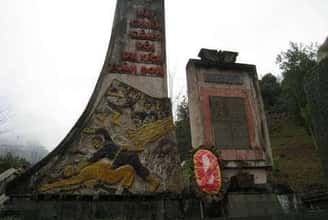
Monument to Trieu Phuc Lich
Trieu Phuc Lich monument at Tra slope, Toan Son commune, Da Bac district, Hoa Binh province. The monument was built in 1979, painted by artist Nang Mai. The monument is more than 3 meters high, located on the hillside to the right of the road to Da Bac town, and was recognized by the Ministry of Culture and Sports as a national historical relic in 1996. Perhaps the people of Toan Son commune do not know the captain Trieu Phuc Lich, who was always courageous and cunning in commanding the guerrilla team that fought to block many raids by the French invaders into his homeland. Especially the event of September 10, 1947 will forever be passed down to generations. That was when they received news that the French enemy at Che hamlet post (formerly Tu Ly commune) mobilized a platoon of over 20 legionnaires and soldiers to sweep the area of Toan Son commune. The commune's guerrilla team led by Trieu Phuc Lich, consisting of 30 people, quickly deployed an ambush plan to attack the enemy. The members' rudimentary weapons were crossbows, bows and arrows laced with poison, stone traps, bamboo poles, bamboo poles, rifles, and grenades stolen from the enemy. Near noon, the enemies arrived en masse. Waiting for them to fall into the ambush, Trieu Phuc Lich ordered an attack. The sound of gunshots, the sound of grenades exploding, a series of poisoned arrows flying at the enemy; Stone traps fell from halfway up the mountain onto the enemy's formation, causing them to panic and run away. In this battle, Toan Son commune's guerrilla team destroyed 14 enemies, captured 4 alive and captured 7 guns... History books write: Being attacked unexpectedly, advancing unsuccessfully, retreating was blocked, the enemy tried to flee along the trail through Sau stream to retreat to Tu Ly. Cleverly knowing the enemy's intentions, Trieu Phuc Lich sent guerrillas to pursue with the determination to completely destroy the enemy platoon. The captain himself chased after the enemy commander with his bare hands, then knocked the legionnaire down and quickly stole the submachine gun. Immediately after that, he discovered that the direction of the enemy's retreat was our base area. To ensure the secret of the base area and the safety of the guerrilla team's forces, Trieu Phuc Lich quickly distracted the enemy by running back to the rice fields. The enemy discovered him and immediately chased him and shot him, seriously injuring him. Even so, he still tried his best to pull out a dagger and stab the soldier standing nearby. Crazy about Trieu Phuc Lich's brave actions, the enemy soldiers discharged a magazine of bullets at him, the outstanding son of the Dao people of Toan Son commune heroically sacrificed his life. Trieu Phuc Lich's actions of robbing the enemy's guns with his bare hands, fighting tenaciously, and sacrificing heroically have ignited the patriotism and hatred of the enemy and encouraged the fighting spirit and victory over the French invaders of the Dao people in particular. and People of all ethnic groups in the province in general. Martyr Trieu Phuc Lich was posthumously awarded the first-class Resistance War Medal against the French. On June 11, 1999, Trieu Phuc Lich was posthumously awarded the title of Hero of the People's Armed Forces by the State. To commemorate the great contributions of him and the guerrilla team of Toan Son commune, and at the same time contribute to traditional education for future generations, the Provincial People's Committee directed the construction of the Victory Monument of Toan Son guerrilla team and it was inaugurated. September 2, 1991, on the 46th anniversary of National Day. The memorial was built on the exact spot where hero Trieu Phuc Lich fell in the past. His grave is located at the highest position on the Memorial grounds. Today, on holidays and New Year, officials, party members and people of Toan Son commune respectfully offer incense and flowers to commemorate the outstanding children and have more determination to join forces and unite to build a better homeland. renew. Source: Hoa Binh Electronic Newspaper
Phu Tho
7665 view
Rating : National monument

Historical relic of Hoa Binh Prison
Hoa Binh Prison is located on the True stream, on the left bank of the Da River, in Tan Thinh ward (Hoa Binh city). The prison was built in 1896 to detain common criminals. In 1943, the French colonialists transferred a number of political prisoners from Son La Prison to detention here. Hoa Binh Prison relic has an area of 1,500 square meters, was restored by the province many years ago and was ranked as a national relic in 2000. There are almost no remaining traces of the prison except a round guard tower. made of concrete, built by French soldiers on the Da Giang dike slope that still exists. According to historical records, Hoa Binh prison was originally built on a rectangular area of land, surrounded on the outside by 4 3-meter high walls, with barbed wire on the walls, 4 wall corners were 4 guard towers. In March 1943, the French colonialists transferred a number of political prisoners from Son La prison to Hoa Binh prison to reduce the number, while waiting for favorable conditions to transfer and relocate a number of prisoners. Detained in Con Dao. In the years 1943 and 1945, the activity movement of the Hoa Binh prison cell, led by comrade Le Duc Tho as Secretary, flourished and had a profound influence on the revolutionary movement in Hoa Binh province. In 1943, the prison cell had a plan to recruit new party members. This was the first class of party members the cell developed in Hoa Binh prison. In March 1945, seizing the opportunity of Japan's coup against France, under the direction of the Party Central Committee and the Northern Region Party Committee, the prison cell successfully launched and organized the struggle demanding the release of political prisoners. Within a week, the majority of political prisoners at the prison were released, and were actively helped by cadres and revolutionary masses of Hoa Binh town. Party cell members have returned to contact the Party Central Committee and the Northern Region Party Committee. A number of comrades were added to the province's revolutionary force... In August 1945, joining the offensive spirit of the whole country, the Muong people simultaneously shook off the mud and stood up brightly. The communist soldiers in Hoa Binh prison that day were also important factors contributing to creating momentum for the day the revolution rose. Hoa Binh Prison is evidence of a tool of repression, representing the crimes of the French colonialists, and is the place where revolutionary soldiers were detained and tortured. At the same time, this place has fostered and trained resilient and indomitable communist soldiers, keeping the revolutionary spirit and fighting for the independence and freedom of the nation. Every year, many visiting groups inside and outside the province come to learn about revolutionary traditions at Hoa Binh prison. The rebuilt Hoa Binh Prison relic not only contributes to illuminating history, but also shows the deep gratitude of the Party Committee, army and people of the province to the previous generations of ancestors; contributing to educating revolutionary traditions, helping each person become more deeply aware of the nation's history, thereby appreciating, preserving and promoting the value of the nation's history in the new era. Source: Hoa Binh Electronic Newspaper
Phu Tho
7536 view
Rating : National monument
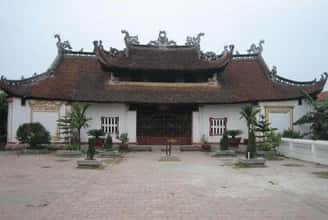
Coi Pagoda
Coi Pagoda, formerly located in Coi village, Hop Thinh commune, Tam Duong district, now belongs to Hoi Hop ward, Vinh Yen city. Coi Pagoda relics are a complete complex of a Buddha hall including: Three gates, pagodas and towers. The three-entrance gate of Coi Pagoda has an architecture of 3 small, compact compartments, with the main load-bearing system being 10 meticulously carved monolithic blue stone columns, 0.25m in diameter, 2.0m high, with 3 rows of column bases, In which, the 2 columns of the middle compartment use ironwood columns extending beyond them to serve as common columns for the 2 roof rafters in a stacked-rail style architecture. Instead of the bottom row of rafters, there is a wooden trap head that comes out to support the roof ship. , the 4 corners of the roof are curved, graceful knife heads hidden in the canopy of green leaves, creating a charming scene. On the two stone pillars in the middle, which are beveled flat on one side, there are inscriptions on each side. Although they have faded over the years, if you look closely, you can still read "Canh Ty, strong spring, auspicious day". According to documents of the Vietnam Fine Arts Museum, the three-entrance gate of Coi Pagoda was built along with Coi Pagoda in the 13th century. The original Coi Pagoda no longer exists, now there are only 12 ancient statues kept at the temple that was rebuilt in the late 20th century, including: 3 Buddha statues, the Amitabha Tam Ton set (Amitabha, Quan). Amitabha Buddha and Mahasthamaprapta Bodhisattva), statues of Venerable Ananda and Shakyamuni Buddha preaching the Dharma, all made of wood, lacquered with gold, round sculpture style of the late 18th century. Tower: A type of Buddhist architecture, one of the characteristics of Buddhism, the tower can be a place to contain relics, paintings, statues or have symbolic meaning, for example: 4 steps up to the tower represent the concept The concept is loving kindness - compassion - joy - renunciation or the 10 levels are statues of the ten realms,... The tower floors represent the means of propagating Buddhism. If it is a tomb tower, the statue represents the grave of a monk or nun, and the 5-petal lotus symbolizes the "Five Buddhas". The Papyrus Tower has 7 floors, 7.70m high, gradually shrinking from the base to the top, each floor shrinks by 20cm on both square sides and height (1 square side of the base is 1.70m long) - the bricks used to build the tower are Bat Trang bricks. , square brick type, 3cm thick, the bricks at the 4 corners of the tower are all beveled up, giving the tower a gentle, elegant curved shape, the adhesive mortar is made from shell lime mixed with molasses - the tower body is plastered. covered with a protective layer of mortar. Legend. Coi Tower was built around the middle of the 18th century, related to the event of the uprising of the Heo District (Nguyen Danh Phuong, 1740 - 1751): In just one night, Nguyen Danh Phuong had his troops finish building the tower and The entire Tien restaurant, in order to gain prestige and win people's hearts against Le Trinh's court, over hundreds of years, an ancient moss color covers the entire tower, further increasing the desire to learn about a new species. Buddhist architecture in Vinh Phuc. Thus, Coi Pagoda was built in the 13th century, and in the 18th century after erecting two towers (now only one remains, due to war destruction) became an architectural whole with artistic value recognized by the Far East. Uncle Co was ranked as a valuable cultural heritage in Vietnam (in 1939). Located in a complex of relics: Dong Dao communal house, Quan Tien, Tien communal house, Ha pagoda, stone bridge... and in the center of Vinh Yen town, Coi tower pagoda will be a destination for sightseeing and research. A large number of tourists from near and far inside and outside the province. Source: Vinh Phuc Tourism Information and Promotion Center
Phu Tho
7525 view
Rating : Provincial level relics
 AI Travelviet