
 vn
vn en
en ja
ja ko
ko zh
zh




















List of tourist attractions (1430)

Tuan Chau Island
Tuan Chau Island is a super famous tourist resort destination in Ha Long city, Quang Ninh. Located about 2km from Ha Long city center, the island has an area of about 400 hectares with many beautiful landscapes, beaches, and tourist areas for tourists to visit. Tuan Chau Island is a super famous tourist resort destination in Ha Long city, Quang Ninh. Located about 2km from Ha Long city center, the island has an area of about 400 hectares with many beautiful landscapes, beaches, and tourist areas for tourists to visit. Tuan Chau Island is a beautiful beach tourist destination, so the ideal time to visit will definitely be in the summer. The time from March to October will be the most suitable time, at this time the sky is clear, the sea water is cool blue, the beach is white sand and the sunshine is extremely beautiful. However, you should note that the summer period from May to July will have very high temperatures, possibly up to 40 degrees Celsius. For those of you with weak health or families with children and the elderly, remember to be careful. kidney. When traveling in the summer, don't forget to bring sun protection items for yourself. Coming to Tuan Chau island, you can participate in activities such as swimming. Swimming is definitely always the first activity when coming to Tuan Chau island area. With a super beautiful artificial beach of up to 5km, fine white sand, cool blue sea water, Tuan Chau beach will definitely be a great medicine to forget daily fatigue. You can immediately dive into the cool ocean water, freely swim or participate in exciting activities. In addition, you can participate in the Tuan Chau water music program. Tuan Chau Island Water Music Performance Palace is a venue for many water music shows combined with extremely spectacular lighting. This place is designed with very special architecture inspired by the Roman school. The area of the Water Palace is 15 hectares with 12,000 seats. The programs here are very professionally invested, on average a performance will last about 40 minutes. And there are many other attractive activities.
Quang Ninh
8127 view



Ha Long Bay
Ha Long city, Quang Ninh province, about 180 km from Hanoi, is known as the tourist paradise of the North. With a convenient location, modern infrastructure and developed transportation system, Ha Long city attracts tens of millions of domestic and foreign tourists each year. Ha Long Bay has an area of 1,553 square kilometers including 1,900 large and small limestone islands with vivid shapes. The bay has been honored many times by UNESCO as a world natural wonder and is a tourist destination not to be missed. The weather in Ha Long is divided into two distinct seasons: summer - from May to October and winter - from November to the end of April. The average annual temperature is 25ºC, quite ideal for outdoor tours. With diverse vegetation and favorable climate, you can travel to Ha Long Bay at any time of the year. However, according to experience traveling to Ha Long Bay, you should avoid stormy times in July and August to have the most complete trip. Regarding travel costs from Hanoi to Ha Long city or Ho Chi Minh City. Ho Chi Minh to Ha Long, you can refer to below: Regarding accommodation costs, depending on the area you choose, the room price will have a certain difference. Ha Long room prices usually range from 200,000 VND/night to 2,000,000 VND/night. Food costs also depend on the number of dishes you order, and the number of people eating. However, in general, the cost per meal is not too high. If you eat seafood in a restaurant, the cost is from 150,000 - 500,000 VND/person. The cost of visiting Ha Long Bay is about 250,000 VND - 2,000,000 VND depending on the type of tour you choose. Normally, people who have experience traveling to Ha Long Bay on their own will choose to visit the bay by boat for 250,000 VND/person. It can be seen that the cost for a trip to Ha Long Bay is not fixed but depends on the individual's schedule and entertainment needs of each tourist. However, if you choose to travel on your own, the most suitable cost to eat, rest and visit places for about 2 days will range from 3,000,000 VND to 5,000,000 VND. According to Ha Long Bay travel experience, there are many convenient means of transportation to visit every corner of Ha Long city: Motorbike: You can easily rent a motorbike to explore Ha Long city by yourself at a reasonable price. However, for many tourists, you should ask in advance the price of the car rental and remember the time to return the car to avoid "unjustly losing money". Bus: Ha Long has a bus system connecting famous tourist destinations. The average bus ticket price in Ha Long city is about 7,000 - 10,000 VND/way. Electric vehicle: Electric vehicle is quite a popular means of transportation, especially in the center and tourist destinations in Ha Long. According to Ha Long Bay travel experience, the price of a tram ticket is about 500,000 - 900,000 VND for one trip. You can use this service from 7:00 a.m. to 10:00 p.m. every day. Taxi: This is a convenient means of transportation and suitable for most tourists. Tourist destinations in Ha Long Bay are not far from each other so the cost of traveling by taxi is not a problem. Taxi prices in Ha Long Bay range from 5,000 - 11,000 VND/km, depending on the car company and distance traveled. Ha Long Bay has majestic and poetic natural beauty with thousands of large and small islands and many unique caves. The bay is also recognized by UNESCO as a world natural wonder and attracts a large number of tourists every year. When going around the bay, you can admire beautiful natural scenery with beautiful destinations such as Sung Sot cave, Con Coc island, Dragon Eye island, Ti Top island, Ngoc Vung island,... Bai Chay Beach is an artificial beach located next to Ha Long Bay. This is the most beautiful beach in the city, with clear blue water and fine white sand stretching nearly 1,000 meters. According to Ha Long Bay travel experience, you can freely swim, check in and experience water games. Located on Tuan Chau island, Tuan Chau tourist area attracts tourists with its beautifully decorated and poetic space. When coming to Tuan Chau, you should attend a water music performance and have fun at the outdoor amusement park or the newly opened dinosaur park. Kayaking leisurely on the cool water, hidden behind the Luong cave mountain range will make you feel extremely peaceful. After visiting Luong cave, you can walk to Ti Top island and watch the sunset with friends on a yacht. Quang Ninh Museum is considered a miniature model of Quang Ninh province, a place that preserves the culture and peaceful life of Ha Long people. Young people traveling to Quang Ninh all have "lifetime" photos at this attraction.
Quang Ninh
9056 view


Xuong Giang ancient citadel
Xuong Giang ancient citadel, located exactly in Xuong Giang ward, right in the center of Bac Giang city, Bac Giang province. When talking about Bac Giang, people think of a land of outstanding people, with a rich history of building and defending the country, marking resounding victories. Among them, it is impossible not to mention the magnificent place Chi Lang - Xuong Giang. Since then, Xuong Giang Citadel has become a spiritual and tourist destination, honored as a special historical relic. National level, an interesting destination when visiting Bac Giang. Xuong Giang is the name of the ancient citadel built by the Ming army in the 15th century (1407). The citadel was built of soil. According to the remains excavated, the citadel was built in a rectangular shape, along the East - West direction with a measured length of 600m, width measured in the North - West direction. South is 450m and with a total area of 27ha. Surrounding Xuong Giang Ancient Citadel is a thick and sturdy high earthen wall, with four corners surrounded by a fortress and a wide moat, with four open doors, the main door facing west. According to the actual survey and relic records left behind by Xuong Giang Ancient Citadel, there are not many vestiges of the ancient citadel left, in which the citadel wall is about 3-4m higher than the surrounding ground, the base is 25m wide and the front is 16-20m wide. The 4 corners of Xuong Giang ancient citadel have 4 fortresses 4 meters higher than the citadel surface, protruding completely outside and outside the citadel is a surrounding trench system running around to ensure the ancient military strategy. According to historical books, Xuong Giang Citadel is a place associated with the Xuong Giang victory of the famous Dai Viet army and people led by Le Loi. Here, the army defeated 100,000 Ming invaders in a battle lasting nearly a month stretching along the areas of Lang Son and Bac Giang today with four major victories: October 10: Defeated the enemy and finished off Crown Prince Lieu Thang at Chi Lang gate; The battle on October 15 defeated the military service in the Can Tram area, today Huong Son - Lang Giang, causing enemy general Bao Dinh Ba Luong Minh to commit suicide; The battle of Ho Cat on October 18, located in the area of Voi, Xuong Lam, Phi Mo - Lang Giang today, caused Minister Ly Khanh to commit suicide. Especially the battle of Xuong Giang on November 3, 1427, on Xuong Giang field (today in Tan Dinh, Xuan Huong, My Thai communes, Lang Giang district and Tho Xuong, Bac Giang city), our army won after 10 days of siege. In that battle, the insurgent army defeated up to 70,000 enemy troops, led by two talented generals Thoi Tu and Hoang Phuc, forcing the Ming army at that time stationed in Dong Do - Hanoi to withdraw to the country. Last year's victory of the Lam Son insurgent army led by the talented general Tran Nguyen Han to take over Xuong Giang citadel and destroy Lieu Thang's powerful army made an important contribution to drawing a historic victory from which to continue. The foundation to help our country overthrow the brutal rule of the Ming Dynasty that lasted for 20 years, deciding our country's independence in the 15th century. At that time, Xuong Giang Citadel was considered the center of the battle and was continuously a historical witness to many important historical events of the homeland at that time, especially the famous uprising with its leadership. The leadership of general Nguyen Huu Cau, also known as District He, occurred in the second half of the 18th century. As a historical witness of many illustrious historical events, Xuong Giang Ancient Citadel is still chosen every year by Bac Giang province as a festival venue, usually on January 6-7. During the festival, there are many unique rituals and fun games to commemorate the historic victory of the Lam Son insurgent army at Xuong Giang Citadel that year. Before the opening day of the festival, usually on the evening of January 5, young people here organize campfires and at communal houses, pagodas and cultural houses, they will light torches all night to wait until the fifth watch to line up. party, banging gongs and dancing drums and bringing them back to the gathering place to open the festival. Therefore, every year in the early morning of the 6th day of the first lunar month, we will enjoy the wonderful festive atmosphere with groups of people from the wards and communes, raising flags, beating drums, and all kinds of floats and pants. Brightly dressed, one after another poured from the streets towards the festival center and started the biggest festival of the year here. With that historical significance, on January 22, 2009, the Ministry of Culture, Sports and Tourism issued a decision to classify Xuong Giang Citadel as a national historical relic, with 14 relic sites: northeast, east gate, north gate, southwest gate, south gate, central area, traces of the citadel, the section of Xuong Giang river flowing through the citadel; Archaeological excavation sites No. 2, 3, Phu well, Thanh temple and 2 points outside the protected area: southeast gate, west gate.
Bac Ninh
6059 view


Cam Son Lake
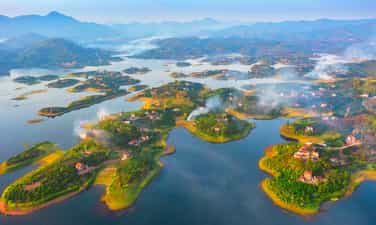
Cam Son Lake is located in Son Hai commune, Luc Ngan district, Bac Giang province, and is considered the fourth largest irrigation project in the country. The main task of the lake is to provide water for agricultural production. Although it has an average area of 2,600 hectares, in the summer and during times of heavy rain, the lake surface can expand to more than 3,000 hectares. Cam Son Lake is surrounded by majestic high mountains and lush green forests, creating a enchanting natural space. To get to Cam Son Lake, you can drive from the center of Hanoi along a road about 100km long. On the way, you will have to pass Long Bien bridge and Tu Son town, then go to Bac Ninh and drive about 22km to Bac Giang. Here, you will continue to follow Highway 31 to Chu town (Luc Ngan) and find a left turn to go to Khuon Than lake (provincial road 289). When you arrive at Kien Thanh commune committee, you are only about 15km away from Cam Son Lake. However, because the road is quite far and includes many different sections, to ensure the safety of your trip, you should go with a large group of people and rest periodically along the way. In addition, you can also ask local people for more specific directions to avoid getting lost and wasting time. Cam Son Lake is a suitable tourist destination to visit at any time of the year. However, according to the experience of those who have been here, summer is the best time to experience the open space and enjoy the beautiful scenery of the lake. You can camp with friends or experience swimming in the lake here. In addition, autumn is also a great time to travel to Cam Son Lake, at this time the climate is cool and the trees begin to change leaves, creating a romantic natural space. If you want to experience the bright red lychee crop of Luc Ngan hills, you can plan to come here around June or July. This is also the time to immerse yourself in the harvest atmosphere of the residents. local. Cam Son Lake is like a charming natural painting of mountains and water, with the special feature of this place being that the lake shore is surrounded by overlapping mountains. People travel mainly by boat, preserving many traditional cultural features. When coming here, visitors will admire the wild beauty of high mountains and rows of green trees creating shadows on the fresh lake surface. In addition, hundreds of large and small islands undulating in the middle of the lake surface enhance the feeling like you are living in a miniature version of Ha Long, in Bac Giang. You may not know, the romance and poetic nature here once inspired musician Pho Duc Phuong to create the song "Lake on the Mountain", which has become a famous work to this day. In addition, you can travel with your loved ones to small islands and admire the majestic clouds and mountains at Cam Son Lake by motorboat. In addition to admiring the beautiful nature, visitors can also participate in many interesting activities at Cam Son Lake such as boating, climbing, fishing,... This will definitely make your trip more enjoyable. becomes full of excitement and meaning. Not only that, Cam Son Lake tourist area is also a "hot" destination in Bac Giang, attracting many young tourists to come here for camping and picnics. After exploring the island on the boat, you can stop by the fishing village to buy specialty products such as shrimp and fresh fish. In addition, you can visit the surrounding houses to buy hill chicken and rent the homeowner's kitchen to cook the typical dishes of this land yourself. This is truly a great experience to learn about local culture, customs and feel the warmth and friendliness of the people here.
Bac Ninh
7682 view


Duc La Pagoda
Duc La Pagoda (also known as Vinh Nghiem Pagoda) is located on a low hill in Duc La Pine, Tri Yen Commune, Yen Dung District, Bac Giang Province. Duc La Pagoda is located about 18 km from the city center. Maybe that's why this place is free from the hustle and bustle of the city. The pagoda was built from the beginning of the reign of Ly Thai To (1010-1028) until the reign of King Tran Thanh Tong (1258-1278). The pagoda was a place where many high-ranking monks practiced. Therefore, the pagoda has been renovated to be more magnificent and splendid. The pagoda is also the place where King Tran Nhan Tong came to receive ordination and founded the Vietnamese Zen Buddhist sect. At Duc La Pagoda, King Tran Nhan Tong, Phap Loa and Huyen Quang created the Truc Lam Tam To of the Truc Lam Zen sect. Duc La Pagoda stands out with its charming and poetic natural landscape. The pagoda is located on a low hill, at the confluence of Luc Nam and Thuong rivers. Surrounding the pagoda is Co Tien Mountain. A great location, meeting the mountains and rivers. Not noisy or bustling, standing here, people seem to be immersed in the vastness of heaven and earth. Duc La Pagoda is located on a large campus with an area of about 10,000 square meters. The beginning is Tam Quan gate and then Tien Duong. Entering the temple yard, the old imprints that are still preserved appear right before your eyes. Among them, the large 6-sided stele of Hoang Dinh year is considered the oldest. Duc La Pagoda has a unique architectural style, preserved for thousands of years. The pagoda has a structure with 4 blocks: the pagoda is shaped like the letter "cong", on both sides there are rows of Ta vu and Huu vu. The rows in the pagoda are spacious with 18 compartments. Duc La Pagoda is also known for its sophisticated and artistic sculpture values. Shown most clearly through the system of Buddha statues arranged in 3 main blocks: Three Jewels, First Patriarch's House and Second Patriarch's House. Besides, the pagoda also retains many valuable relics. Notable to mention are the horizontal panels - couplets and the epitaph system with 8 panels recording the historical and development process of Vinh Nghiem Buddhist Center.
Bac Ninh
8828 view


Suoi Mo tourist area
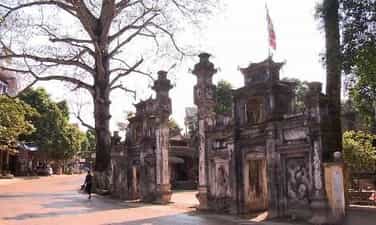
Suoi Mo eco-tourism area is located on the spiritual route from Bac Giang city to Thanh Son town (Son Dong) connecting with many attractive tourist areas and destinations such as: Vinh Nghiem Pagoda (Yen Dung); spiritual - ecological tourism area of West Yen Tu, Khe Ro (Son Dong), and adjacent to Quang Ninh and Hai Duong provinces, becoming a tourist destination connecting transit with tourist destinations in the relic complex - scenic spots in the East and West of Yen Tu, along with Con Son - Kiep Bac relics and other tourist attractions of the 3 provinces. Suoi Mo eco-tourism area has historical, cultural and religious value, including a system of 3 main temples: Lower - Middle - Upper worshiping the Holy Mother of the Upper Thousand Princess Que Mi Nuong, daughter of the second Hung King. IX - the person who publicly opened the fat abyss, brought water to the fields, and taught people how to grow crops and raise livestock. Suoi Mo Temple with its ancient features and historical cultural values preserved here was recognized as a National Historical Site in 1988. Suoi Mo Temple Festival takes place every year on the 30th of January. The 3rd and 1st and 2nd days of the 4th lunar month are to pray for good harvests and are also an opportunity for people to express their gratitude to Princess Que My Nuong, attracting thousands of tourists from all over to pray for blessings and fortune. .. The festival imbued with national identity was recognized by the Ministry of Culture, Sports and Tourism as a national intangible cultural heritage in 2015. At the same time, Suoi Mo Ecotourism Area also has relics Other nearby areas such as: Tran Temple, Boy Lech Temple, Co Be Xanh Temple, Quan Temple...; Historical relics of a heroic time of the nation such as Quan Ngua Beach, Ba Dinh Bay Platform area during the Tran Dynasty...; Relics bearing the mark of Buddhism in Truc Lam Yen Tu such as: Ho Bac Pagoda, Hon Egg Pagoda... create Suoi Mo cultural and spiritual tourism complex. One of the things that any tourist who has ever been to Suoi Mo cannot forget is the ecological beauty of the mountains, forests, streams, and waterfalls here. Stretching over an area of thousands of hectares, Suoi Mo's primary forest system is extremely rich and diverse, creating a condition for sustainable development of eco-tourism - resort. Suoi Mo has two main waterfall systems: Suoi Mo waterfall and Thum Thum waterfall with majestic and poetic beauty. Each waterfall system has many majestic waterfalls, each step has its own beauty, and especially at the foot of these waterfalls there are extremely interesting natural baths. Coming to Suoi Mo on hot summer afternoons, visitors will be able to soak in the cool water and then let the water from above pour down caressingly all over their bodies like a physical therapy to help dispel the pain. stress and fatigue after hard working days or choose your own space on chairs and stone beds to rest and feel the beauty of Suoi Mo mountains and forests. In Suoi Mo Ecotourism Area, there is also Suoi Mo reservoir with a total water surface area of more than 30 hectares, around the lake are flat green lawns suitable for various types of tourism such as: camping picnics, fishing, boating... At the same time, with a system of primeval forests, Suoi Mo rocky plateau is an attractive destination for young people who are passionate about backpacking and mountain climbing to explore the beauty of nature here. Suoi Mo is identified as an important highlight in tourism development of Bac Giang province, always receiving attention for construction investment. Recently, the infrastructure of Suoi Mo Ecotourism Area has gradually been completed. Many important investment items with a total amount of hundreds of billions of VND such as: Suoi Mo lake project, Suoi Mo landscape protection forest, tourist area infrastructure investment project; upgrading and repairing Ha Temple, Van Theater and campus; Tran Temple suspension bridge; tourist route construction around Suoi Mo lake; The work of repairing and embellishing the Trung Temple relic area...
Bac Ninh
8950 view


Suoi Mo Temple
"Father's death anniversary in August, Mother's death anniversary in March", every year on March 30 and April 1 of the lunar calendar, people of all ethnic groups in the foothills of the West slope of Yen Tu, Luc Nam district (Bac Giang) enthusiastically celebrate Suoi Mo Association. The festival commemorates the goddess My Nuong Que Hoa, revered as the Holy Mother of Thuong Ngan, who publicly cleared land, opened cool streams, and taught people to cultivate for a prosperous life. According to ancient documents, Suoi Mo Temple worships the Holy Mother Thuong Ngan who was once ordained: "Extremely powerful divine powers, twelve goddesses of Vuc Mo". The Mother Goddess Thuong Ngan worshiped at Suoi Mo is My Nuong Que Hoa, daughter of King Hung Dinh Vuong and Queen An Nuong. The Queen gave birth to her under a cinnamon tree and then passed away. Growing up, Que Hoa always missed her mother, so she went into the deep forest to find traces of her gentle mother. Coming to the valley that is today's Nghia Phuong commune, the land was flat and spacious but the vegetation was withered and ragged due to frequent droughts. Que Hoa thought that she had to find water for the people to live. After many days of hard travel, the princess came across a vast lake, wondering how to open a way to bring the cool water to the dry place, when an old man with white hair and beard gave him a book to practice life-saving miracles. Que My Nuong then set up a palace as a place to practice and was successful. She spread out her five fingers and pressed down, creating a strange force that caused the mountain to crack, rocks to rumble, and water from the ravines to rush downhill to the lowlands and then flow into a smooth stream. Since then, trees have grown, birds have come, and people's lives have become increasingly prosperous. At that time, My Nuong Que Hoa and her 12 maids flew to the sky on five-colored clouds. To commemorate her gratitude, the villagers built an altar at the place where she brought water from the source and called it Suoi Mo temple. Later generations were honored as the Holy Mother of the Thousand. Suoi Mo has murmuring water all year round, originating from the Da Vach and Ho Chuoi area and then flowing downstream through five consecutive mother and child waterfalls. Legend has it that it is the five-finger mark of Princess My Nuong. Along the sacred stream, people built a complex of relics including: Ha Temple, Middle Temple and Thuong Temple. Old vestiges show that the relic complex dates back to the Le - Mac dynasties and has been repaired and embellished through many stages. Coming to Suoi Mo festival means coming to the charming beauty of mountains and water. With a distance of 7 km, visitors can admire the panoramic view of this place with fresh spring water and green trees and a system of works: Ha Temple, Trung Temple, Thuong Temple, Quan Ngua Beach, Tran Temple, Ba Area. Bay Platform Palace, Hon Trung Pagoda, Xoan Communal House and Ho Bac Pagoda... Thuong Temple is located halfway up Vuc Mo mountain. From here you can cover the entire Trung Temple area, Ha Temple area and part of the valley of Nghia Phuong commune. The temple was originally created from the stone roof of the mountainside. Looking down at Suoi Mo flowing from Thum Thum waterfall. From here down, Suoi Mo gradually widens and has many large and small waterfalls. Trung Temple at the foot of Vuc Mo mountain on the right bank of this stream, has a spacious and airy space. Cool spring water flows down to Ha Temple. The larger-scale Ha Temple is located in the middle of the valley. During the festival, this is the place where visitors from all over gather to pay their respects to the temple. Suoi Mo Temple Festival is a cultural festival of ethnic people from many villages and communes at the foot of the mountain on the western slope of Yen Tu (Luc Nam). Dum and Quynh villages in Nghia Phuong commune from ancient times to the present, on festival days, there is a procession of colors, tablets and offerings to Suoi Mo temple. In addition, the temple festival also organizes competitions in archery, ethnic martial arts, wrestling, chess, swinging, cockfighting... A unique and distinctive cultural feature indispensable in the Suoi Mo festival, associated with The main worship figure at the temple is the ritual of serving the Saint on festival days. In recent years, with the attention and direction of the cultural industry, Suoi Mo Festival also organizes a festival of adoration rituals, to honor and preserve the cultural beauty of Mother Goddess worship.
Bac Ninh
8951 view


Khe Ro primeval forest
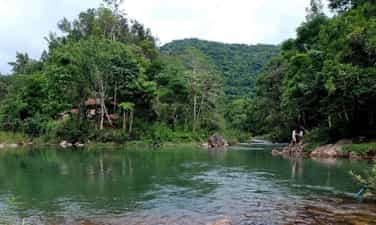
Each province and city in Vietnam is blessed with rich natural scenery and unique landscapes. Bac Giang is no exception to that favor. Referring to Bac Giang, we think of spiritual relics such as Vinh Nghiem Pagoda, Bo Da Pagoda, Lo Hanh Communal House, Dinh Huong Tomb, and Ho Ngo Tomb associated with a unique and long-standing traditional culture. Referring to Bac Giang, we mention famous tourist destinations such as Dong Cao, Suoi Nuoc Vang, Cam Son Lake,... and we cannot help but mention Khe Ro Primeval Forest. The reason this place has such a name is due to the terrain characteristics with deep ravines, high mountains, old forests and especially when the weather changes, sounds like waterfalls can be heard in Khe Ro. That's why the people here call it "Giant Khuoi Lo" which in Mandarin means Khe Ro. Located in the West Yen Tu conservation area, the natural scenery in Khe Ro primeval forest is extremely wild and a bit mysterious enough to make tourists curious. Therefore, this place is quickly becoming an interesting destination for tourists who love to explore and want to relax with nature. Khe Ro primeval forest has a total natural area of 7,153 hectares, located in three basins: Khe Ro, Khe Din and Khe Nuoc Vang. The forests here are very rich in animals and plants, especially rare species. In particular, Khe Ro primeval forest is very famous for its over 500-year-old love tree, which is both a dating place, a place to get married, and a place to witness many beautiful love stories of boys and girls. An Lac. Due to the terrain characteristics, this place quickly became an attractive weekend resort and eco-tourism area. Coming to Khe Ro, visitors can not only immerse themselves in the clear spring water, but also experience many interesting fun activities, especially activities to experience the life and culture of the people. Currently in the village, there are many households with overnight accommodation services for tourists with a capacity of several dozen guests per night.
Bac Ninh
9189 view


Ho Khuon Than
The famous Khuon Than tourist area is located in Luc Ngan district, Bac Giang province. The current destination is about 100km from Hanoi and about 50km from Bac Giang city (Chu street). From the center of Chu town, turn left about 10 km, a beautiful scene appears before your eyes. The clear blue lake reflects the clouds and sky along with undulating islands. Khuon Than Lake not only has simple beauty but also makes visitors captivated. This place has the beauty of harmony between air - sky - earth. A fresh landscape and ecological environment. Khuon Than Lake appears prominently in the midst of a colorful natural painting. That painting was woven from the vast green of the forest, sky, clouds, and mountains. With an area of about 240 hectares, this place is surrounded by lush pine, indigo, and acacia mangium forests. That scene is further enhanced by the brilliant red color of the lychee hills in harvest season. In addition, there are trees leaning over to shine. The beauty of Khuon Than Lake becomes even more attractive by the large and small islands emerging in the middle of the water. The islands are covered with pine trees and various fruit trees. The Creator has given Khuon Than tourist area a wonderful scenery. Coming here, visitors can relax on a yacht. Floating in the middle of the lake, feel the immensity and peace and immerse yourself in the magical natural scenery. The beauty of sky, clouds, and water blend together before your eyes. When reaching the top of Khuon Than Lake dam, visitors can feel the vast, majestic, and poetic scenery of the forest. In particular, during the rainy season, water flows from the top of Khuan Than dam rushing down into the valley along the lake, creating a spectacular scene. On the way, visitors can stop to visit floating islands. On these islands are planted pine trees and fruit trees: lychee, longan, etc. The space is vast, peaceful, lyrical and poetic. Sitting on the cool green grass, under the shady rows of pine trees. Or lie down in swinging hammocks under the longan trees. Immerse yourself completely in nature, the gentle breeze blowing away all your worries. Each place will have its own time to fully display its inherent beauty. With Khuon Than Lake, this place has cool, fresh air so you can come at any time of the year. However, summer is probably the most ideal season to come here. Contrast to the dusty heat of the city. In the summer, you can take the time to go to Khuan Than area. This place brings you the coolness of the lake and fresh air. Not only that, you can also admire the red color of the brilliant lychee hills and enjoy delicious lychees. A comfortable, pleasant feeling here. The space, scenery, and people here have made Ho Khuon Than tourist area an interesting destination. Experiencing Khuon Than Lake will definitely be an unforgettable memory with the beauty of the people, the dreamy scenery with a strange appeal in the middle of a mountainous landscape. This place is an ideal destination for those who love and explore nature. It is also a stopping place for those who want to find a peaceful and relaxing place.
Bac Ninh
8353 view


Tan Cuong tea hill
Coming to Thai Nguyen, the famous place of Tan Cuong tea hill - the perfect place for tourism, you will enjoy the scenery of tea trees layer upon layer under the clear blue sky. The high tea hills are difficult to move by vehicle, so tourists should walk to see the surrounding scenery and feel the fresh air of the hills. Along the way up the tea hill, on both sides are forest trees and forest trees. The rocky mountains are precariously built into walls or the hills have collapsed into yellow soil. You will be able to stride on small dirt roads, climb steep slopes and meet people working in the fields and tea hills. When arriving in front of the tea hill, a vast green color will appear before your eyes. The tea beds and tea rings are aligned one after another; In the middle there is a path to make tea picking more convenient. Young green tea buds rise. When standing in the middle of a tea hill, looking around you will feel like you are standing in the middle of a vast green forest. You can enjoy drinking tea with a light, cool taste and eye-catching yellow-green water color, bringing the gentle experience of Tan Cuong tea. Coming to the tea hill, you not only see the green tea hills, feel the wild nature and fresh air, but also understand more about the people here. To get delicious cups of tea, tea growers work hard every day to take care of each tree and catch insects. People can tell you how to grow the greenest and most delicious tea. In addition, tourists can also go to Tan Cuong tea processing facilities to admire the process of creating delicious tea pots to enjoy every day. If you go to Tan Cuong tea hill, you cannot help but buy some fresh tea and a few pounds of dried tea to take home as gifts for everyone. The lush green Tan Cuong Thai Nguyen tea hill is a place that attracts tourists when coming to this land. Come here to have wonderful experiences and the most beautiful memories.
Thai Nguyen
6344 view


Duom Temple
As a temple with a long history, Duom Temple was built in the 12th century, in 1180 during the reign of King Ly Cao Tong. The temple is located at the foot of Duom Mountain, a majestic range of rocky mountains, an undulating mountain wall consisting of 6 peaks, converging all 4 elements: Early Chu Chuc, Late Huyen Vu, Left Thanh Long, Right White Tiger, considered a strange mountain emerging in the middle of the flat land of Dong Dat rice fields. With its unique history and spiritual elements, Duom Temple is a famous scenic spot of Thai Nguyen. This place attracts many visitors not only during festivals but also on weekdays. In 1993, Duom Temple relics were ranked as National Monuments, and in 2017, Duom Temple Festival was also recognized as a National Intangible Cultural Heritage. Duom Temple worships a Tay soldier named Duong Tu Minh. According to historical records, Mr. Duong Tu Minh was a mandarin during the Ly dynasty, he governed the land of Phu Luong (today the provinces of Thai Nguyen, Phu Tho, Vinh Phuc, Tuyen Quang, Cao Bang, Bac Kan, Lang Son). ). He is a famous general with many contributions in reclaiming land from the Song invaders and protecting the country. Legend has it that he contributed greatly to maintaining the unity of the nation and reclaiming wasteland. Thanks to that, the Ly dynasty ordained him as "The official god of Cao Son Quang Do". Later, he was also personally married to Princess Dien Binh by King Ly Nhan Tong. In 1144, King Ly Anh Tong married Princess Thieu Dung to him. According to estimates, he lived in the late 11th and early 12th centuries. With the great contributions he made, local people built a temple to worship him at the foot of Duom Mountain. And that was the birth of Duom Temple today. Although built in the 12th century, after hundreds of years of existence and many restorations, Duom Temple still retains its traditional, ancient and majestic beauty. Duom Temple was built in the traditional three-step style including the Lower Temple, Middle Temple and Upper Temple in order from low to high along the mountainside. Each temple in the Duom temple complex will worship one person. The Ha temple area worships the two princesses Dien Binh and Thieu Dung, the Middle temple worships Mr. Duong Tu Minh and the Thuong temple is the place to worship his mother. The overall structure of Duom Temple is not too large, but it makes a strong impression with its unique and solemn architecture. Some festivals of Duom Temple include: the 6th day of the first lunar month - the birthday of the Saint; April 24 of the lunar calendar - Summer Festival; 7th day of the 7th lunar month - Thuong Dien ceremony; December 14 - year-end ceremony. Among them, the biggest festival is held on the 6th day of the first lunar month every year, because legend has it that this is the birthday of Saint Duong Tu Minh. If you have the opportunity to travel to Thai Nguyen, especially in January, you can participate in the Duom temple festival on the 6th day of the lunar calendar every year. This is the time when people in the region organize festivals with many solemn rituals such as: torch procession, water procession, erecting the Tay tree,... There are also some ceremonies such as Moc Duc, Gia Quan, Procession of offerings into the Temple, the Great Priest Ceremony. One day before, the 5th day of the lunar calendar, people gathered in front of Duom temple yard to prepare for important rituals. The purpose of the festival is to pray for peace, luck and good weather, while also expressing gratitude to Duong Tu Minh's reputation. The travel guide tells you to come here on the 5th to have more interesting activities.
Thai Nguyen
6548 view


Phoenix Cave
When it comes to Thai Nguyen tourism, Phuong Hoang Cave is definitely a destination you cannot miss. This place has been invested in building the Phuong Hoang Cave Tourist Area with full facilities and places for visitors to park their cars, eat, and rest. Besides, the location next to Highway 1B is also very favorable, you can easily combine your schedule to visit the Phoenix cave for a few hours and then move to the next tourist destination. Phuong Hoang Cave is located on the top of the mountain of the same name, famous for its beautiful stalactites and unique shapes. Next to the cave there is also the clear and cool Mo Go stream. Therefore, this place attracts many tourists to explore and experience. Phuong Hoang Cave is about 130km from Hanoi city. For groups of young people specializing in backpacking, this distance is very suitable for weekend trips. By motorbike, it will take you about 3 hours to travel, you can depart on Saturday afternoon, have fun for a day and then return on Sunday afternoon. If not, you can also take a bus from Hanoi to Thai Nguyen and then rent a motorbike to go out and explore this peaceful land. As a relatively new locality on Vietnam's tourism map, the destinations in Thai Nguyen have in common their wildness and simplicity, and the cost of accommodation and travel will also be cheaper than other places. As for those of you from remote provinces of the South and Central region, the fastest way to travel is to buy plane tickets to Noi Bai, Hanoi. Then from Hanoi go to Thai Nguyen. This trip you can combine to visit additional destinations in Phu Tho, Yen Bai, Bac Giang, Bac Ninh, fully discovering the beauty and nature of the Northeast mountains. According to some local people, the name Phuong Hoang cave comes from the fact that inside the cave there are many rocks and stalactites with magical shapes. This makes them think of the image of a phoenix flapping its wings majestically and powerfully. That's why the name Phuong Hoang cave was born. However, there is another legend associated with the name of this cave. Legend has it that once upon a time there was a pair of phoenixes who chose this mountain to live. They gave birth to two eggs in the cave, the father bird went looking for food and the mother bird was in charge of incubating the eggs at home. Then one day disaster struck, and this pair of birds was punished by heaven. The father bird returned from looking for food to find his wife had turned to stone. The father bird was sad but still hoped that his wife would come back to life, so he waited until he was exhausted and followed. That's why phoenix-shaped stalactites appear in this mountain cave, which is proof of the couple's unfortunate love story. Phoenix Cave is endowed with a very unique beauty with three separate floors. The first floor is called the rooftop, people still call it the Bat cave. This floor is located at the top, is the easiest to access and is also praised by many visitors. There are many strange stalactites here, and the afternoon light becomes even more sparkling and magical. The second floor is the middle floor, called Sang cave. The structure of the middle floor is quite unique with three doors from all sides and many openings to the outside. Therefore, sunlight can penetrate through and shine down on the shimmering rows. Coming here around noon, the rays of sunlight shine down beautifully so you can freely take photos. The third floor is also the deepest, called Dark cave. It is called this because sunlight cannot reach here. The space of Dark Cave is quite dark and lonely, so few visitors come down. Phoenix Cave is cool all year round, no matter how hot the sun is outside, the temperature inside the cave is only 15°C. Therefore, entering the cave you will feel extremely refreshed and comfortable, like entering an air-conditioned room without being cramped and stuffy.
Thai Nguyen
6613 view


Nam Rut Waterfall
Nam Rut Waterfall - a place likened to a sleeping princess in the forest, is one of the tourist destinations in Thai Nguyen that young people are "rushing" to explore this summer. The "attracting" point of the waterfall is the green, fresh natural space and the dreamy beauty of a natural waterfall in the legendary land of tea. Nam Rut waterfall is located in Than Sa commune, Vo Nhai district (Thai Nguyen), so if you choose this location to avoid the heat, the journey to explore here will not be too difficult. Tourists can travel by motorbike or car depending on their own needs and preferences to make the journey to explore and travel to Nam Rut in the direction of Highway 3 or along Highway 1 to move from Hanoi to Thai Nguyen. In addition, if starting from Hanoi and do not want to travel by other means, visitors can also choose the train - an interesting choice to explore the Hanoi - Thai Nguyen route. If you follow provincial road 242, visitors will see many natural scenery here. Typically, the quiet hills or the beautiful winding Rong/Nghinh Tuong river. The most prominent are the eye-catching tea hills, giving visitors the feeling of being lost in a cool green world that can only be found in the legendary land of Thai Nguyen. On the way to Nam Rut waterfall, visitors will see the Rong/ Nghinh Tuong river famous for its clear blue water. Along this river are images of small fishing boats diligently casting nets. All create a very attractive natural scenery that everyone who sees it will fall in love with. The emotion of looking at the landscape paintings here will make your soul more open, happy and loving life. After following this route, visitors will reach Nam Rut waterfall in Thai Nguyen - a place considered like a sleeping princess in the forest. Hidden deep in the cliffs, Nam Rut Thai Nguyen waterfall possesses a very special, pristine and attractive beauty. In the rainy season, in the middle of majestic mountains, on top of limestone mountains with many forest trees, streams of white water rush down the Nghinh Tuong river, creating a large waterfall. All around this waterfall are surrounded by forests and mountains, the sound of falling water is really pleasant. If you come here in the fall, you will see the image of water pouring from above, whitening the entire sky. All blend together to create an extremely interesting orchestral music of this Thai Nguyen mountainous region. “The image of white water flowing down makes us feel relaxed and carefree. This place not only brings feelings of peace and quiet but also gives me the feeling that there is only nature and people surrounding each other without any noise, hustle and bustle of everyday life. The dreamy beauty of Nam Rut will make me fascinated and just want to stay forever" - Ms. Tran Tuyet Nhung (Tran Nhan Tong, Hanoi) expressed. "Nam Rut will definitely be the ideal destination for a weekend getaway for those who love to travel" - shared Mr. Nguyen Thang, a tourist from Dong Da (Hanoi). At the same time, Mr. Thang said that for those who love to participate in excursions and explore the beauty of amazing nature, Nam Rut waterfall will be a great choice. We will discover many interesting things here, because this waterfall is very magical and has a unique shape, it is a mixture of many different waterfalls with water spraying down into blurry white foam. Virtually beautiful like a fairyland. All create small streams of water flowing down below that look even more attractive and interesting. Along the riverbank are large, undulating rocks so visitors can sit and fish and enjoy the scenery. Here you will see life absolutely separate from the outside world. Also according to Ms. Nhung, if in the dry season, in Nam Rut, the water is only enough to seep through the moss on the cliffs, falling into the green river, creating sparkles all over the river surface under the golden sunlight, making the scenery of Nam Rut memorable. So beautiful, strange and rare. If you explore Nam Rut waterfall in Thai Nguyen in the dry season, the water at the waterfall only has a single small stream. However, in this season, visitors can also participate in fishing experiences or sit on large rocks at Nam Rut Thai Nguyen waterfall to admire the scenery. Sitting and admiring the scenery and breathing the green air here also makes visitors feel more relaxed. In particular, the scenery here will bring a more comfortable and relaxing feeling. You will feel that coming here is the right decision for your vacation and that of your loved ones.
Thai Nguyen
6294 view


Museum of Cultures of Vietnam's Ethnic Groups
Thai Nguyen was considered the land of "the capital of thousands of winds" during the resistance period. Coming to this place, we have the opportunity to find the origin of humanity with the Nguom Than Sa Stone Roof, with the majestic wild Duom Mountain, immerse yourself in the romantic love story of Cong and Coc... And one of Addresses not to be missed are the Museum of Cultures of Vietnam's Ethnic Groups - a place that preserves the identity of the Vietnamese ethnic community. About 80km from Hanoi, the Museum of Vietnamese Ethnic Cultures is located at 1 Doi Can, Thai Nguyen city. The museum was established in 1960 with the original name Viet Bac Museum. In 1990, it changed its name to the Museum of Cultures of Vietnam's Ethnic Groups and became one of the 7 National Museums of Vietnam. Built on a 40,000m² campus next to the romantic Cau River, at the intersection of Doi Can, Hoang Van Thu, Bac Kan and August Revolution streets, the Museum of Culture of Vietnam's Ethnic Groups is A large-scale architectural work with many artistic features, it won the Ho Chi Minh Prize for architectural works in the first phase of 2006. After more than 50 years of establishment and development with hundreds of research and collections, the Vietnam Museum of Ethnic Cultures is managing nearly 30,000 valuable documents and artifacts, which are the basis for perfecting the system. Indoor and outdoor display systems, well serving the public's visiting needs. Entering the Museum grounds, we will stop at the Solemn Pavilion. This place introduces general features of Vietnamese culture. In the large lobby, we can see the portrait of President Ho Chi Minh, the beloved leader of the Vietnamese people. The person holds three babies, representing the three regions: North - Central - South. The statue represents Uncle Ho's boundless love for the children of the three regions, while also demonstrating the policy of unity, diversity and solidarity of the Vietnamese people. Behind the statue of Uncle Ho is a large relief carved in wood simulating typical traditional festivals of ethnic groups from North to South: Khen dancing in the highland market, lion dancing in the spring festival in the valley, festivals Ka Te of the Cham people, buffalo stabbing festival of the Central Highlands people and ngo boat racing festival of the Southern people. Next, visitors will take turns visiting a system of 5 galleries including: Displaying and introducing the culture of ethnic groups of the Vietnamese - Muong language group (Kinh, Muong, Tho, Chut). The people live mainly by growing rice and fishing. In spiritual life, there is the custom of worshiping ancestors and traditional crafts are developed at a high level; Display and introduce ethnic groups of the Tay - Thai language group (Tay, Thai, Nung, Giay, Lao, Lu, San Chay, Bo Y). The people live mainly in stilt houses, grow rice in valleys, along rivers and streams, with a water supply system of ditches, ditches, cans, cans, and water troughs. The crafts of blacksmithing and weaving are quite developed with beautiful and delicate products. In particular, they have a rich spiritual life with many unique xoe dances and then songs; Display and introduce the culture of ethnic groups belonging to three language groups: Hmong - Dao (Hmong, Dao, Pa Then), Ka Dai (La Chi, La Ha, Co Lao, Pu Peo) and Tibetan Burmese (Lo Lo, Phu La, Ha Nhi, La Hu, Cong, Si La). The people are good at farming on upland fields and terraced fields. The market is a place to clearly express the cultural identity of the highlands, culinary culture, clothing culture, embroidery art, flower printing, music performances, flute dancing... Display introduces the culture of 21 ethnic groups belonging to the Mon - Khmer language group (Ba Na, Brau, Bru - Van Kieu, Cho Ro, Co, Co Ho, Co Tu, Gie Trieng, H're, Khang, Khmer , Kho Mu, Mang, Xinh Mun, Mnong, O Du, Ma, Ro Mam, Ta Oi, Xo Dang, Xtieng). The people reside scatteredly in the Northwest, Central Highlands and Southern regions. The economic life is mainly slash-and-burn cultivation, which is at a relatively high altitude, and fields are cultivated using the method of poking holes and planting seeds. Architecture of communal houses in the Central Highlands and pagodas of the Khmer people; Wicker crafts and community cultural festivals are unique cultural features of Mon - Khmer residents; Display and introduce the culture of ethnic groups belonging to the Austronesian language group (Cham, Gia Rai, Ede, Raglai, Chu Ru) and Han language (Hoa, Ngai, San Diu). Ethnic groups belonging to the Austronesian language group reside concentrated on the red soil plateaus of the Central Highlands and the Central coastal strip; Austronesian culture is strongly matriarchal. Ethnic groups belonging to the Han language group reside in all three regions: North, Central, and South; Han culture is strongly patriarchal. Each gallery with a rich and diverse system of documents and artifacts realistically recreates the residential landscape and cultural life of 54 ethnic groups, from the northern tip of Ha Giang to the cape of Ca Mau. with familiar images such as: highland markets, wild elephant hunting scenes, images of hole-punching and seed removal of northern ethnic groups, gong festivals of the Ede and Ba Na people in the Central Highlands; rivers and waters of the Southern people; traditional crafts, forms of cultural activities in costumes, music, cuisine, festivals in labor production... A special highlight of the Museum is the outdoor display system with spaces of 6 cultural regions: Northern high mountains, Valley, Midland - Northern region, Central region - Coastal region, Truong Son - Central Highlands, and Dong Nai. Nam Bo will bring very interesting experiences to visitors. Each cultural region has a festival space, a landscape structure with regional characteristics and a specific, original house as a highlight to introduce Vietnamese cultural values to visitors. . Here, visitors can also easily see with their own eyes many very familiar tools of the nation from ancient times such as a rice mill woven from bamboo slats, a plow made of rudimentary trees, thatched roofs, mud walls... It can be said that the Museum of Vietnamese Ethnic Cultures in Thai Nguyen is like the "common roof" of the community of 54 ethnic groups on the S-shaped strip of land. Visitors will have the opportunity to admire a panoramic picture. , learn about the origins, traditions, and cultures of ethnic groups across the country. Along with the Nui Coc Lake Ecotourism Area, the ATK Safe Revolutionary Base, the Museum of Cultures of Vietnamese Ethnic Groups has been and will be an attractive destination for all domestic and foreign tourists.
Thai Nguyen
6991 view


ATK Resistance Safe Zone
Dinh Hoa (Thai Nguyen) - where 76 years ago (1947), President Ho Chi Minh and the leaders of the Party Central Committee and the Government chose to be the place to establish a safety zone (ATK), where important and landmark decisions of our Party were born during the August Revolution and the resistance war against the French colonialists. Journeying to historical places in the relic complex on historic autumn days, every Vietnamese person will feel the historical imprints and Uncle Ho's teachings still echoing somewhere. The first impression when arriving at ATK Dinh Hoa is a semi-mountainous land with mountainous terrain mixed with fields, streams, and villages of the Tay ethnic people. Cho Chu Valley is surrounded by rolling rocky mountains that look like sturdy, fortified trenches. Here, when stopping at dawn on May 20, 1947, Uncle Ho realized the advantages of the terrain to choose secret operating locations. Uncle Ho affirmed: "If there are good people and a good political base, there is a place where "advancing can attack, retreating can defend" (advancing can attack, retreating can hold). In particular, when choosing Tin Keo hill in Na Lom village, Phu Dinh commune (Dinh Hoa) as a place to set up a base, Uncle Ho affirmed: "Up above there are mountains, below there are rivers/There is land we can plant, there is a beach we can play on/Convenient way to the Ministry of General/Thuan The way to the Central Government/The house is airy, dry, with a closed roof/Near people, not near the road". Therefore, among the hundreds of relics in the ATK Dinh Hoa Special National Historical Relic Area, every location is associated with the image of Uncle Ho, comrades in the Party Central Committee and the Government and historical events during the arduous years of resistance. Historical places have left their mark in the ATK Dinh Hoa relic area such as: Chu Market, Hang Pagoda, Khau Ty hill, Khuon Tat waterfall, De pass, Hong mountain, Diem Mac, Dinh stream, Dinh Bien, Bao Bien, Pu Don hill, Tin Keo, the stilt houses where Uncle Ho lived and worked, AKT exhibition house... During the revolutionary activities at ATK Dinh Hoa, Uncle Ho along with the Party Central Committee and the Government outlined the strategic path for the nation's long-term resistance war. In particular, Uncle Ho drafted the "Modification of working style", chaired the Politburo meeting to approve the Winter - Spring campaign plan of 1953 - 1954, determined to destroy the Dien Bien Phu stronghold group, successfully ending the nation's long, arduous 9-year resistance war. During the arduous days of the resistance war, Uncle Ho's poem "Night Scene" was born in the mountains and forests of Dinh Hoa: "The sound of a stream is as clear as singing in the distance/The moon of ancient trees, the shadow of flower cages/The late night scene is like a painting, people have not slept yet/Not sleeping because of worries about the country." Today, at Hang Pagoda (Cho Chu Town), Uncle Ho's altar is placed in a solemn position with infinite respect. It was here that Uncle Ho lived in 1950 to direct the Winter - Spring war of 1953 - 1954.
Thai Nguyen
6263 view


Nui Coc Lake
Located in Thai Nguyen province, Nui Coc Lake tourist area is one of the most attractive destinations in the Northern region. This large eco-tourism area is about 16 kilometers from Thai Nguyen city center, and about 70 kilometers from Hanoi centers. Nui Coc Lake is an artificial lake, with an area of up to 25 hectares, with 89 large and small islands in the lake, creating a poetic natural landscape. Along with the touching love story of Nui Coc Lake between Coc and Cong, this place becomes more attractive than ever. Not only that, the tourist area also has many unique attractions for you to explore. Thai Nguyen is a northern province of Vietnam, so the weather here also changes according to the four seasons of the year. According to Klook's experience, traveling to Nui Coc Lake is most beautiful from March to September. During this time, the weather in Thai Nguyen is sunny, little rain, very suitable for participating in outdoor activities. Besides, this is also the time when Nui Coc Lake tourist area organizes many art and entertainment activities, creating a vibrant atmosphere for this place. The remaining months fall in winter, which is the cold season in Thai Nguyen, not suitable for outdoor entertainment and exploration activities. However, if you just want to find a resort with pure nature, Nui Coc Lake is still a suitable choice. Coming to Nui Coc Lake, you can participate in experiences such as: Playing at the Water Park, enjoying water music performances, visiting wildlife gardens, visiting caves,... and many other attractive experiences.
Thai Nguyen
6232 view


Mau Son
Coming to Mau Son, visitors can not only see the floating clouds wrapping around the mountains but also the golden terraced fields during harvest time. Mau Son is one of the few places in Vietnam where snow and ice appear in winter, creating extremely impressive multi-colored paintings. Mau Son is located in 3 communes: Cong Son, Mau Son, Cao Loc district and Mau Son, Loc Binh district, with a total area of 10,470 hectares. The highest area of the Mau Son mountain range is about 30 km east of Lang Son city center, less than 180 km from Hanoi capital, and close to the Vietnam-China border. This is the highest mountainous region of Lang Son province and in the Northeast region of our country, with an average altitude of 800 - 1,000m above sea level, including a complex of about 80 large and small mountains. The highest peaks are Phia Po (Father Mountain) at 1,541m high, Phia Me (Mother Mountain) at 1,520m high. Mau Son's climate is typical of the subtropical and temperate regions with an average annual temperature of 15.6 degrees Celsius with 2 distinct seasons. Summer is from April to October, the weather is cool, the average temperature is from 16 - 21 degrees Celsius. Winter is from November to March of the following year, with an average temperature from 7.2 - 13.2 degrees Celsius, the coldest year is -5 degrees Celsius, often covered with fog, with ice and snow on cold days. This is a famous tourist destination of Lang Son province, an ideal resort attracting hundreds of thousands of tourists each year. Many people think that traveling to Mau Son must be in the summer to be beautiful. In addition to bathing in waterfalls, they can camp in primeval forests with fresh, cool air. But after going a few times, visitors will realize that there are four seasons of beauty here. If spring is the season of festivals, the season of pear, plum, and peach blossoms blooming, then autumn is with golden waves of majestic terraced fields, pristine forests changing color, and winter is mountains and villages shy in the clouds. Visitors to Mau Son in April - May every year will see people working the land and cultivating rice on terraced fields interspersed with hillsides and among anise forests. Around June, Mau Son becomes an ideal tourist destination to avoid the heat. In the photo, there is a 3 km traffic jam on the opening day of the Mau Son Tourism Festival taking place in June 2019. In addition to bathing in the waterfall, camping in the forests to enjoy the fresh air, visitors can admire hydrangeas, a typical flower on Mau Son that blooms every summer. From July to August, the terraced fields are in harvest, creating an impressive picture of the golden season. The most beautiful cloud season in Mau Son is from December of the previous year to March of the following year. Because of this period, the temperature is extremely ideal for the accumulation of clouds. Viewed from above, Mau Son appears with rolling mountains and hills, interspersed with narrow valleys. With a mother mountain peak of 1,520 m high, in winter, Mau Son is always submerged in clouds. Clouds wrap around the mountains. Clouds swoop down into the primeval forest, crawling into the leaves. Clouds move with the wind. Not only that, the clouds this season are very quiet, you can admire a beautiful scene created by thousands of clouds. Mau Son is beautiful all year round, but spring can be said to make people ecstatic. At this time, the mountain takes on the shape of a beautiful princess changing into a colorful dress. The tender and passionate red peach blossoms are a bit passionate but even more seductive, making visitors who arrive in the spring surprised. Mau Son peach blossoms are single-petaled peach blossoms, more fragile and special than peach blossoms anywhere else. They have a strange vitality, clinging deep to cliffs and enduring the harshest climate, growing up drinking dew and wind, just waiting for spring to show off their sweet beauty in the middle of the wild.
Lang Son
6784 view


Nhi Thanh Cave
Nhi Thanh Cave is located on Nhi Thanh Street in Tam Thanh Ward, Lang Son City, part of the most famous relic complex in Lang including: Nhi Thanh Cave, Tam Thanh Cave, Mac Dynasty Citadel and To Thi Mountain. The cave is marked by majestic stalactites thousands of years old, and is also one of the spiritual destinations that attracts tourists in Lang Son city. Nhi Thanh Cave has a length of about 500 m, discovered by famous man Ngo Thi Si when he worked as a governor here. The cave is quite large, inside many different large and small passages, in the middle of the cave is Ngoc Tuyen stream flowing through. Nhi Thanh Cave relic area has two main parts: Tam Giao Pagoda and Nhi Thanh Cave. Tam Giao Pagoda worships 3 people: Shakyamuni Buddha, Confucius and Lao Tzu, located on the right, hidden in the rocks, at a higher position than the cave entrance. The altar to worship famous person Ngo Thi Si is located at the entrance to the cave. Above the wall is a carved picture of his leg in a sitting position leaning against the cliff. Nhi Thanh Cave still retains many stone inscriptions engraved on the cave walls, the content mainly praising the landscape, people, and the process of discovering and embellishing the cave by predecessors. Nhi Thanh Cave is very easy to explore. The paths inside are spacious and easy to walk. The deeper you go inside, the wider the road becomes. Stalactites of various shapes hang down from the ceiling and walls of the cave, making the cave look wild and mysterious. The "Stage" area is located in the middle, has a spacious flat floor, and above the ceiling there are "Heavenly" doors leading to the outside to welcome natural light. This is considered the most beautiful place of the cave. Stalactites appear everywhere, named after their shapes and inspired by old stories.
Lang Son
6993 view


