Relic point Vietnam
Việt Nam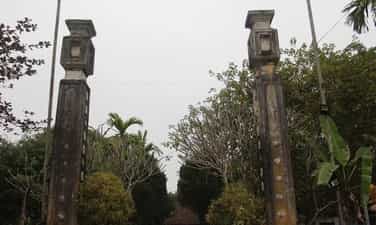
Set village communal house
Set village communal house is located in Set village, Dinh Tan commune, Thanh Hoa province, a land formed around the 14th - 15th centuries. According to village history, Mr. Truong Canh Tuong, a native of Yen Vuc, Hoang Hoa, was the first person to reclaim land and establish a hamlet at Quy Son mountain. From the original land named Ap Sat, residents gradually expanded to the plain, forming Sat village, now Set village. Prominent in the cultural space of the village is Set village communal house, built in 1595, under the reign of King Le The Tong. After more than 400 years with many historical changes and restorations, the communal house still retains many ancient architectural features. The communal house gate stands out with two nearly 10m high columns and a pair of parallel sentences, creating a majestic look for the monument. Set village communal house is the place to worship Admiral, Duke and General Truong Canh Phuc, Truong Dinh Le and Ngoc Goddess Truong Thi Phuong - figures revered by local people. Not only is it a place for religious activities, the communal house is also closely associated with community life and the development history of Set village. Every year, from the 10th to the 12th of the third lunar month, local people organize the Ky Phuc festival, praying for good weather and a peaceful and prosperous life. Source: Thanh Hoa radio and television newspaper
Thanh Hoa
238 view
Rating : National monument
Phu Da Communal House
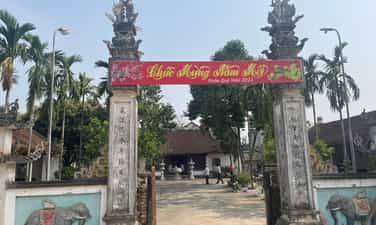
Phu Da communal house is an ancient communal house in Binh Phu commune, Hanoi city, ranked as an architectural and artistic relic by the Ministry of Culture and Information in 1993. This is also a place associated with the famous water puppetry tradition of Gia village, the Nom name of Phu Da village, which used to regularly perform water puppetry at Thay pagoda. The communal house has the architecture of a horizontal building consisting of 5 compartments, 2 wings, four curved roofs and a system of 7 trusses in the style of upper and lower beams. The wooden structures in the communal house still preserve many traces of ancient architecture. In particular, the carvings of dragons, figures riding horses, and young women singing demonstrate a sophisticated artistic level, typical of 18th century fine art. The dragon image with bulging eyes, large nose, bat ears, lanceolate mane, and vividly curved body bears the artistic style of the Later Le period. Phu Da communal house worships Dao Khang, a general of the Trung sisters. According to legend, he was instrumental in helping Hai Ba Trung fight the To Dinh invaders, at the same time establishing a farm in the Phu Da area, teaching people to farm, open ditches, dig streams, contribute to building the lives of local residents and was revered as a god. Besides historical and architectural value, the communal house also preserves many worship objects with artistic value from the Le and Nguyen dynasties, especially a set of ancient water puppet statues used in performances. The altar to the ancestors of the singing and dancing profession, customarily called the Saint Nha Tro, is also a testament to the village's long-standing folk art tradition. Every year, the village festival is held on the 3rd day of the 4th lunar month, with ceremonies commemorating Dao Khang and stick dancing and water puppetry activities at the pond in front of the communal house. Source: Hanoi Landscapes and Monuments
Hanoi
258 view
Rating : National monument
Phu Dien Communal House
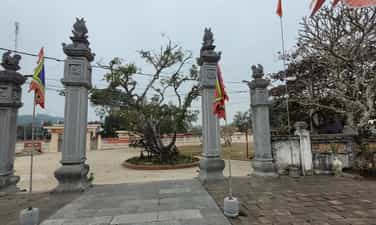
Phu Dien Communal House is a typical ancient architectural work located in the Ba Trieu Special National Monument Complex, imbued with the traditional village culture of Thanh Hoa. The relic is associated with the worship of Trieu Thi Trinh - Ba Trieu, the national heroine who stood up against the Ngo army in the 3rd century. According to legend, after Ba Trieu sacrificed on Tung Mountain, Phu Dien people built a temple to worship her and honored her as the village's tutelary god. By the 18th century, the communal house was built in the traditional village communal house architectural style. Over the centuries, the project has been preserved relatively intact by the people and has become a place for cultural and religious activities of the community. Phu Dien communal house includes main items such as Nghinh gate, Great communal house, front hall and harem. The highlight of the relic is the sophisticated wood carving art with many images of the four sacred animals: dragon, lyre, tortoise, phoenix, along with motifs of plants, flowers and images of elephants, horses, deer, chickens... The carvings not only create artistic beauty but also express the people's desire for a peaceful, prosperous life. In particular, the communal house still preserves 64 ancient decrees from feudal dynasties, which are considered precious documents reflecting the history and beliefs of the local community. Every year in the second lunar month, a traditional festival is held in Phu Dien to commemorate the merits of Ba Trieu, with sacrificial rituals, palanquin processions and many cultural activities and folk games. Source: Thanh Hoa radio and television newspaper
Thanh Hoa
245 view
Rating : Special national monument
Bich Cau Dao Quan
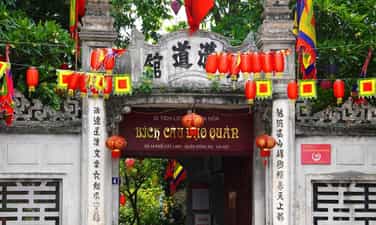
Bich Cau Dao Quan, located on Cat Linh street, Hanoi, is a cultural - historical relic associated with the legends of Tran Tu Uyen, which is considered a "fairyland" in the middle of the ancient capital Thang Long. According to legend, in the past, Tran Tu Uyen was a scholar who built a reading shop on a high hill at the top of Bich Cau street. While attending a festival, he met a beautiful girl and fell in love. After that, he bought a painting of a girl resembling that girl and took it home. Strangely, from the painting came out a fairy named Giang Kieu. The two of them fell in love, together they took medicine to save people, practiced immortality, studied religion, and did many good deeds. After attaining enlightenment, Tran Tu Uyen was posthumously awarded the title of "An Quoc True Person" by King Le Thanh Tong. From the late 15th and early 16th centuries, this place was developed into a Taoist temple with strong Taoist imprints. Bich Cau Dao Quan used to be a place where Taoists practiced, and at the same time was also a place where guests, mandarins and scholars came to enjoy the scenery and recite poetry. Through many upheavals, the relics were degraded and destroyed, but were later restored by people many times. Today, Bich Cau Dao Quan has an architecture including Nghi gate, front altar, harem, Mother's house and guest house, and also holds many worship statues, stone steles and valuable artifacts. Source: Dan Viet Newspaper
Hanoi
250 view
Rating : National monument
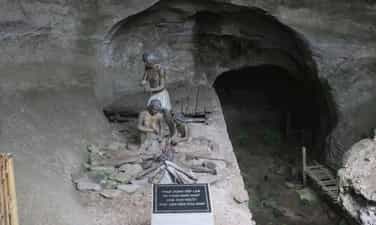
Xom Trai Cave and Lang Vanh Stone Roof
Xom Trai Cave and Lang Vanh Stone Roof are two special archaeological relics typical of Hoa Binh Culture, distributed in Phu Tho province according to the current administrative unit. The two relics have special value in studying the process of residence, living and development of prehistoric people in Vietnam and Southeast Asia. Xom Trai Cave is located on the bank of Lan stream, in the area of Trai Sao hamlet. Here, archaeologists have discovered a thick cultural layer, containing many traces of prehistoric habitation such as fires, burial mounds, stone tools, bone tools, animal bones, snail shells and fruit seeds. In particular, a series of stone tools bearing the characteristics of Hoa Binh Culture shows that this place was once a space for residence, tool making and long-term activities of people from about 21,000 to 2,500 years ago today. The relic is also considered a special repository of primitive fruit seeds, valuable for research on the environment and the lives of prehistoric residents. Not far away, Lang Vanh Stone Roof is a large, open stone roof with a cultural layer about 3.7 meters thick. Excavations have discovered many stoves, stone tools, bone and horn tools, stone tables, animal bones and mollusk shells. These findings vividly reflect the livelihood activities, food processing, tool making and spiritual life of Hoa Binh Culture residents. With a thick cultural layer, rich relic system and important archaeological evidence, Xom Trai Cave and Lang Vanh Stone Roof are considered the original and central locations of Hoa Binh Culture in Vietnam, contributing to clarifying the development history of prehistoric inhabitants in Vietnam and Southeast Asia. According to: Department of Cultural Heritage
Phu Tho
65 view
Rating : Special national monument
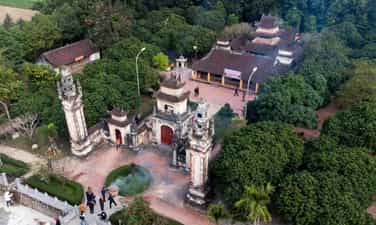
Nguyen Xi's Tomb and Temple
Nguyen Xi's Tomb and Temple is a typical historical and architectural artistic relic of Nghe An, associated with the life and career of Cuong Quoc Cong Nguyen Xi - a famous general and prominent politician during the Later Le Dynasty. Nguyen Xi was born in 1397 in Thuong Xa, now in Dong Loc commune, Nghe An province. He participated in the Lam Son uprising from the early days and together with the insurgent army achieved many great victories such as Bo Dang, Tra Lan, Tot Dong - Chuc Dong, Xuong Giang and Dong Quan. After the country gained independence, he continued to assist during the four dynasties of King Le, making many contributions to building and protecting the Dai Viet nation. Not only his achievements in politics and battle, Nguyen Xi also focused on reclamation, establishing villages, developing transportation, markets and people's lives, especially in the Cua Lo - Cua Hoi area. Those contributions have left a deep mark in the history of formation and development of Nghe An. Nguyen Xi died in 1465, at the age of 69, and was buried in his hometown. Two years later, King Le Thanh Tong built a temple to worship him. Today, the mausoleum and temple are about 300 meters apart, located in the middle of a peaceful village space. The temple has an "internal, foreign" architecture, outstanding with a semicircular lake, ritual gate system, exquisitely carved wooden structures and many traditional themes of four sacred animals, four precious animals and flowers. This is an important cultural and historical address, contributing to educating patriotic traditions, moral loyalty and pride in the homeland of Nghe An. Source: Department of Cultural Heritage
Nghe An
240 view
Rating : Special national monument
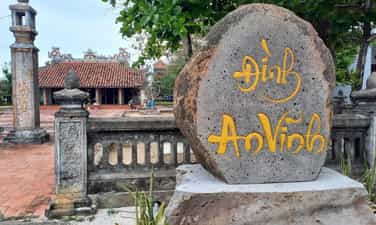
An Vinh Communal House
An Vinh communal house is one of the typical ancient communal houses on Ly Son island, carrying special value in terms of history, culture and sovereignty over Vietnam's islands and islands. The communal house was built around the 18th century, went through many upheavals of time, war and natural disasters but is still preserved, restored and preserved by generations of people. The communal house is located near Ly Son seaport, has a campus of about 2,000m², the communal house faces the mainland. The project has the architectural style of the Nguyen Dynasty, with a Tam-shaped structure with a lower, middle and upper communal house linked together. The four sacred and five blessings motifs are shown on the roof and architectural structures, conveying the desire for a peaceful and prosperous life of the island community. An Vinh communal house is also a place to worship ancestors and a community center for 13 families on Ly Son island. In particular, this is one of the important locations where the Commemoration Ceremony of Hoang Sa soldiers takes place in the third lunar month every year. The ceremony commemorates the soldiers who obeyed the royal court's orders and crossed the sea to Hoang Sa and Truong Sa to carry out their duties, contributing to protecting and affirming Vietnam's sovereignty over the sea and islands. Along with architectural values and traditional cultural activities, An Vinh Communal House is a place to preserve historical memories of the Ly Son community, expressing the ethic of "when drinking water, remember the source", patriotism and the sense of preserving sovereignty over the sea and islands. An Vinh Communal House has been classified as a National Monument, while the Hoang Sa Soldiers' Commemoration Ceremony has been recognized as a National Intangible Cultural Heritage. Today, the relic is a meaningful destination for tourists coming to Ly Son, contributing to introducing unique cultural values and the tradition of protecting the sovereignty of the sea and islands of the Vietnamese people. Source: Quang Ngai Newspaper and Radio and Television
Quang Ngai
263 view
Rating : National monument
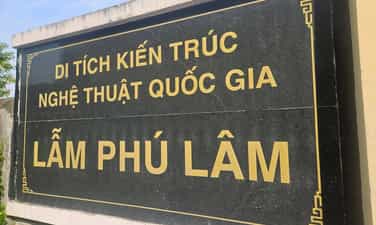
Lam Phu Lam
Lam Phu Lam is a unique relic of Phu Yen, with outstanding historical, cultural and architectural value. The relic is located in Phu Yen ward, Dak Lak province, on a campus of about 4,000m². Lam was formed a long time ago, initially as a place to store agricultural products of Phu Lam village, and at the same time as a place to worship the sage Huynh Duc Chieu - the person who was instrumental in exploring and creating this land. This was also the workplace of the village management apparatus and meetings to discuss common matters of the community. The most special feature of Lam Phu Lam is the thatched-roof house architecture, a traditional architectural style typical of Phu Yen and the South Central region. The temple consists of 3 main compartments and 2 auxiliary compartments, with a solid wooden frame system with 26 columns. In particular, the building has two layers of roof: the lower roof is made of rammed earth on a bamboo slat foundation and the upper roof is thatched, creating both durability and adaptation to the harsh climate of the Central region. Inside, there are still many sophisticated wood carvings with traditional themes such as dragon, phoenix, pine, apricot, bamboo, chrysanthemum, longevity, and pine loc, demonstrating the artistic and technical level of ancient artisans. Within the relic grounds, there are also religious works and an ancient ordination system with historical and cultural value. As one of the traditional wooden houses still relatively intact, Lam Phu Lam has special significance in researching the history of exploration, community life and folk architecture of the South Central region. Source: Dak Lak Electronic Newspaper.
Dak Lak
275 view
Rating : National monument
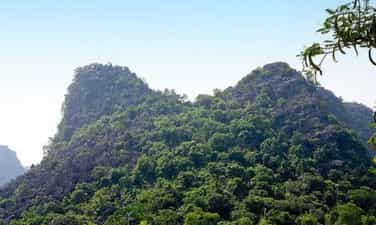
Ma Yen Mountain
Ma Yen Mountain - the resting place of two kings of the Dinh and Early Le dynasties. Ma Yen Mountain is a limestone mountain located in the Hoa Lu Ancient Capital Special National Monument, Ninh Binh province, shaped like a saddle, about 80–200m high. The mountain is associated with the history of the Dinh - Early Le dynasty, the dynasty played a particularly important role in the nation's history in the 10th century. This is also where the tombs of King Dinh Tien Hoang and King Le Dai Hanh are located. On top of Ma Yen mountain is the mausoleum of King Dinh Tien Hoang. To reach the mausoleum, visitors must pass more than 200 stone steps along the mountainside. From above, you can see a panoramic view of the ancient capital of Hoa Lu with rolling limestone mountains, fields and peaceful villages. The elevated position also creates a space that is both spacious and sacred for the resting place of the king who had the merit of suppressing the rebellion of 12 warlords, unifying the country and establishing the state of Dai Co Viet in 968. At the foot of Ma Yen mountain is the mausoleum of King Le Dai Hanh, located in a large campus, leaning against the mountain and facing the field ahead. If King Dinh's mausoleum is located on the top of the mountain, then King Le's mausoleum is at the foot of the mountain, creating a special feature for the relic complex. Le Dai Hanh was the successor of the Dinh dynasty, and had great contributions in leading Dai Co Viet's army and people to defeat the invading Song army in 981, protecting the country's independence. Today, Ma Yen Mountain and the two kings' tombs are not only famous attractions of the ancient capital of Hoa Lu but also a place for tourists to learn about a turbulent but significant period in the nation's process of building and defending the country. Source: Dan Viet Electronic Newspaper
Ninh Binh
286 view
Rating : Special national monument
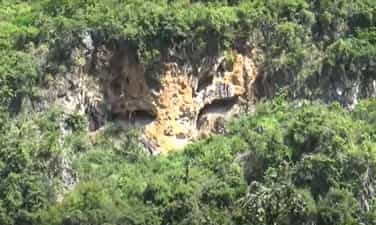
Ghost Gate Quan (Ghost Face Mountain)
Devil's Face Mountain is a relic site in the Chi Lang Special National Monument Area, in Chi Lang commune, Lang Son province, with many historical, cultural and landscape values, attracting tourists to learn about the land that once marked many victories in the nation's history. The mountain impresses with a natural cliff shaped like a devil's face, with stone cavities forming quite clear eyes and noses. According to folk legend, Devil's Face Mountain is not a symbol of evil but is considered a god who protects the people and the country, associated with victories against foreign invaders in the land of Chi Lang. Here, there is also a story about Lieu Thang, general of the Ming Dynasty, who after being beheaded at Ma Yen Mountain, ran north, but when he reached the foot of Devil's Face Mountain, he was frightened, fell off his horse and died in battle. These folk tales contribute to the mystery and appeal of this place. Source: Vietnam Law Electronic Newspaper
Lang Son
176 view
Rating : Special national monument