Relic point Vietnam
Việt Nam
Dong Nuoc Temple
Dong Nuoc Temple belongs to Ngoc Ha village, now Ngoc Ha ward, Hanoi. According to legend, in the past, this land often had springs of water gushing out from the ground into piles of water, so the people called it Dong Nuoc. Ngoc genealogy says that this place worships Princess Ngoc Nuong - who is said to be the daughter of the Dragon King, who once appeared to help King Tran Anh Tong fight the enemy. After winning the battle, the king repaired the temple and conferred divine title on her. The current temple bears many architectural marks of the Nguyen Dynasty, including three gates, garden, left moat, right moc, main temple and harem. Inside, the altars, hammock doors, and incense burners are exquisitely carved; especially the space to worship the Holy Mother of God and the gods in folk beliefs. Not only has architectural and religious value, Dong Nuoc Temple is also a place for community cultural activities for residents of Ngoc Ha village and neighboring villages. Every year, the temple festival is held on the 21st day of the third lunar month with incense offering ceremonies, palanquin processions and traditional cultural activities. With typical values of history, architecture and folk culture, Dong Nuoc Temple was ranked a national relic in 1993. This is one of the relics that contributes to preserving the mark of ancient villages west of the ancient capital of Thang Long. According to: Hanoi Landscapes and Monuments
Hanoi
336 view
Rating : National monument
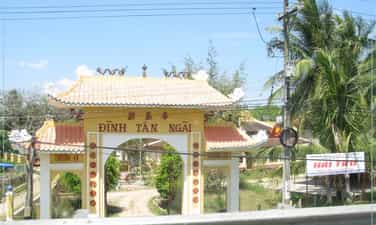
Tan Ngai Communal House
Tan Ngai communal house is located in Tan Ngai hamlet, Phuoc My Trung commune, Vinh Long province. The communal house was built in 1850, and was consecrated under the reign of King Tu Duc in 1852. After many wars and renovations, the communal house is still preserved by the people as a space for beliefs and community cultural activities. The communal house is a place to worship Bon Canh Thanh Hoang, the wise predecessors and later sages, praying for peace in the country and people, good weather and good harvests. In particular, this place also marks many important events in the two resistance wars against the French colonialists and the American imperialists. Since 1930, the communal house has been a place for organizing meetings and revolutionary propaganda. During the years of resistance, the communal house was the place to establish the government, organize conferences, open popular education classes, and mobilize people to contribute to the "Golden Week". In particular, from 1960 to 1975, the communal house became an important revolutionary base, a place to hide documents and weapons, receive wounded soldiers, gather military supplies and organize fighting forces. With typical values of folk beliefs and revolutionary history, Tan Ngai communal house is recognized as a historical-cultural relic. Source: Phuoc My Trung Commune People's Committee website
Vinh Long
312 view
Rating : National monument

Ba Si Pagoda
Ba Si Pagoda, also known as Pysey Varapram Pagoda, is located in Giong Chua hamlet, Phuong Thanh commune, Vinh Long province according to the new administrative boundary. The pagoda was built in the late 17th century, experienced by 11 generations of abbots and is one of the works that represents the cultural and religious life of the Khmer people in Tra Vinh. The pagoda has a campus of about 6 hectares, located under the canopy of ancient trees, including many buildings such as the gate, main hall, library, hallway and Pali school. The pagoda's architecture is characterized by Khmer culture, expressed through its layout and artistic decorative lines. Not only is it a living and practicing place for many monks, Buddhists and Khmer compatriots, during the years of resistance, Ba Si Pagoda was also a place to nurture and protect local revolutionary cadres. With outstanding historical and cultural values, Ba Si Pagoda was recognized by the Ministry of Culture, Sports and Tourism as a National Historical Site in 2012. Today, this place continues to be an important cultural and religious activity site, contributing to preserving the Khmer cultural identity of the South. Source: People's Police Newspaper
Vinh Long
306 view
Rating : National monument
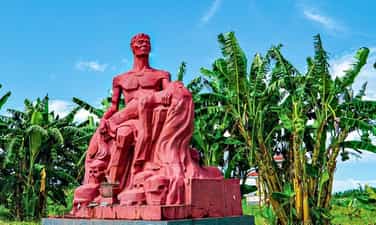
Hai Yen - Binh Hung special area
Hai Yen - Binh Hung special area is located in Thanh Dam hamlet, Tan Hai commune, Ca Mau province, next to Cai Doi canal, about 4 km from Cai Doi Vam town. This is a historical relic marking the painful years of war in the land of Ca Mau. In 1957, the US - Diem government brought Nguyen Lac Hoa and a number of households to migrate to this area, then gradually built up the armed forces and established the Hai Yen - Binh Hung special zone. From here, this area became the place of operation of an anti-revolutionary armed force, causing many terrorist incidents and killings of officials and people. According to data from the Ca Mau Provincial Museum, 1,675 officials and compatriots were murdered in this area. Those losses are evidence of war crimes and remind today's generations of the value of peace and the sacrifices of our ancestors. Today, the Hai Yen - Binh Hung Special Zone Memorial was built at the relic site, as a place to commemorate the victims and educate historical traditions for the young generation. With special historical values, Hai Yen - Binh Hung Special Area was recognized as a National Historical - Cultural Relic on November 24, 2000. Source: Ca Mau Province Electronic Information Portal
Ca Mau
277 view
Rating : National monument
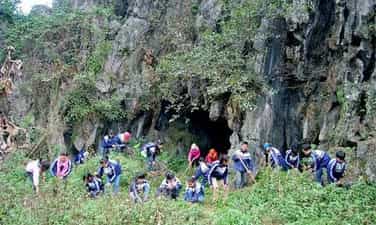
Phia Diem cave site
Phia Diem cave site - Remains of ancient Vietnamese residence. Phia Diem cave site located in Na Soong village, Yen Trach commune, Lang Son province, is a valuable archaeological relic, ranked as a national historical relic in 2003. Phia Diem Cave belongs to the Mai Pha cultural space, dating back to about 5,000–3,500 years ago, belonging to the late Neolithic - early Metal period. Through surveys, archaeologists have discovered many artifacts such as stone axes, flakes, bowls, ceramic bowls, and thousands of mollusk shells and animal bones and teeth. These vestiges show that ancient residents lived, worked and made a living here thousands of years ago. Not only has archaeological value, Phia Diem cave also possesses a quite unique natural landscape with stalactites and rocky mountains with interesting shapes. This is a suitable destination for those who love exploring history and nature. Today, preserving the Phia Diem site is important in preserving evidence of the residence and development of ancient residents in Lang Son land. Source: Vietnam Historical and Cultural Relics information page
Lang Son
205 view
Rating : National monument
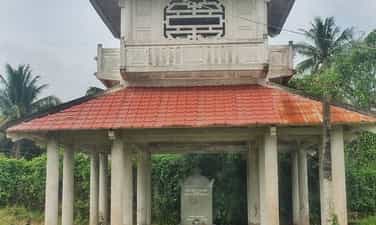
Truong Vinh Ky beer house
Truong Vinh Ky stele house is located in Vinh Thanh commune, Vinh Long province, a work built in his hometown, marking the birthplace of scientist Truong Vinh Ky (1837–1898). According to local documents, he was born on December 6, 1837 in Vinh Thanh village, also known as Cai Mon. The stele house is built in the style of four open sides, with 16 round columns and a tiled roof; In the center is a blue stone stele about 2.5 m high. The front of the stele is engraved in three languages: French, Chinese and National, creating a special feature for the monument commemorating a famous linguistic scholar. Not only has memorial value, Truong Vinh Ky Stele House is also a place to mark the homeland of a person who made many contributions to the Vietnamese language, education, academia and journalism. Today, the project continues to be preserved as a cultural site associated with Cai Mon land. Source: Vinh Long province electronic information portal
Vinh Long
289 view
Rating : National monument
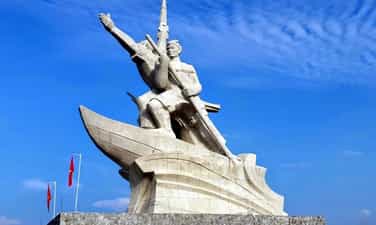
Giong Thi Dam - Go Quan Cung historical site
Giong Thi Dam - Go Quan Cung historical site, now in An Phuoc commune, Dong Thap province, is a place associated with an important victory in the revolutionary movement in the South. On September 26, 1959, Battalion 502 of Kien Phong province organized a battle at Giong Thi Dam, destroying and disintegrating a large part of the enemy force operating in the Dong Thap Muoi river area. Immediately afterwards, at Go Quan Cung, our troops continued to defeat the enemy forces that came to the rescue. With only 42 gunmen, Battalion 502 won against a force many times larger, capturing many weapons, vehicles and capturing prisoners. The Giong Thi Dam - Go Quan Cung victory has special significance, contributing to enhancing the prestige of the revolution, strengthening trust and encouraging the fighting spirit of the people of Kien Phong as well as the Mekong Delta provinces. This is considered one of the typical battles of the Dong Khoi movement in the South. To remember historical victories, relics were built and preserved at the place where the battle took place. On January 19, 2004, Giong Thi Dam - Go Quan Cung historical site was recognized as a national historical site. Source: Dong Thap Provincial Museum
Dong Thap
130 view
Rating : National monument
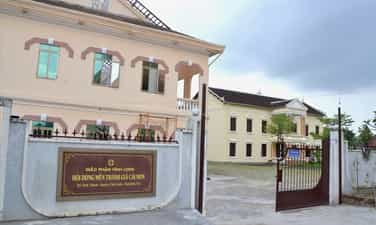
Cai Mon Church
Cai Mon Church is a religious building with a long history in Vinh Long, associated with the formation and development of the Cai Mon religion since 1702. The church is located on Highway 57, next to Cai Mon canal, standing out with its tall bell tower towering in the middle of the rich countryside. The special highlight of the church is the bell tower, which is over 54 meters high, weighs about 800 tons, and has 9 floors. The tower has a set of 6 bronze bells cast in France from the late 19th century, total weight about 4 tons. Among them, the largest bell weighs 1 ton. The bell not only signals the time of mass but also carries a spiritual meaning, reminding parishioners to aim for good things. The current church has Roman architectural style, with domes, thick walls, red tiled roofs and intricately carved wooden details, in harmony with the Southern river landscape. Not only is it a place for religious activities, Cai Mon church is also closely associated with community life and the famous local profession of growing fruit trees, ornamental flowers, and seedlings. With a history of more than 300 years, unique architecture and community cultural values, Cai Mon Church is a typical spiritual and cultural destination of Vinh Long. Source: Thanh Nien Newspaper
Vinh Long
319 view
Rating : National monument
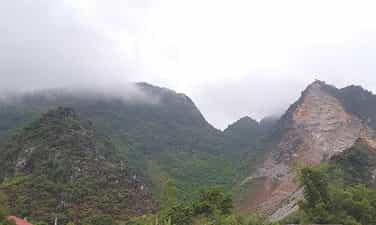
Lang Nac Cave
Archaeological relics of Lang Nac Cave - Lang Son. Lang Nac Cave, also known as Tiger's Mouth Cave or Pac Gac Cave, is an archaeological relic of special value in Lang Son province. The relic is currently located in Mai Sao village, Nhan Ly commune, Lang Son province. The cave is located in a limestone mountain range, about 100 meters above the valley floor, the cave entrance is about 18 meters wide and 16 meters high. In 1968, the relic was discovered by local people and reported to the cultural agency. Through many surveys, archaeologists have found thousands of relics, including prehistoric tools, pottery pieces and scraps dating back to earlier than the Bac Son culture. The discoveries at Lang Nac Cave are important in studying the history of prehistoric people's residence, showing that the land of Chi Lang was inhabited very early by humans. With outstanding archaeological values, Lang Nac Cave was ranked as a national archaeological relic in 2004. Today, the relic is still a valuable address in researching, preserving and introducing the long history of Lang Son land. Source: Dan Viet Electronic Newspaper
Lang Son
300 view
Rating : National monument
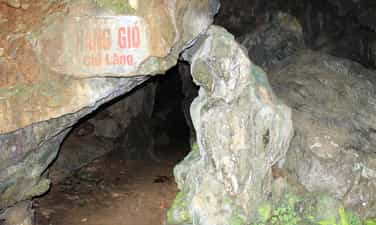
Wind Cave – Lang Son
Lang Son Wind Cave (also known as Thong Gio Cave, the literal name is Mai Sao Phong Dong or Thuy Van Dong) is a national-level archaeological and scenic relic complex, famous for the wild and magical beauty of natural stalactites. The cave is located in Sao Thuong B village, Nhan Ly commune, Lang Son province. The cave has a total length of about 700 meters, 50 to 70 meters wide, including two main floors and a basement. The cave entrance is located halfway up the mountain, where cool winds blow all year round. Inside the cave is an interesting world of stalactites with many shapes such as lotus flowers, stone curtains, inclined waterfalls, stone bells, stalagmites and stone columns. Groundwater dripping down over time creates iridescent stalactites, along with clear, cool "wells of fairy water", making the space here even more magical. With unique natural beauty, Gio Cave is an attractive destination for those who love exploring caves and learning about the wonders that nature has created in Lang Son land. Source: Lang Son Newspaper and Radio and Television
Lang Son
300 view
Rating : National monument