Relic point Vietnam
Việt Nam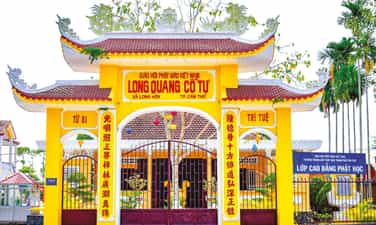
Long Quang ancient temple
Long Quang ancient pagoda is one of the typical ancient pagodas of Can Tho, opened in 1824, associated with the formation and development of Buddhism in the land of Binh Thuy. The temple is currently located in Long Hoa ward, Can Tho city, on the Binh Thuy river. Initially, the pagoda was named Long Truong Tu. Around 1875, the pagoda was renamed Long Quang, both inheriting the tradition of Long Truong and reminiscent of Linh Quang Ancestral Temple. A unique feature of Long Quang ancient pagoda is the system of worship statues made of sandalwood, created by Can Tho artisans, led by Tai Cong Kiem, in 1922. About 50 statues have vivid and sophisticated lines, especially the statues of Ho Phap, Tieu Dien and the Arhat statues. Not only valuable in architecture, art and sculpture, Long Quang ancient pagoda is also a place to hide, communicate and support revolutionary cadres during the anti-French and anti-American period. Today, the pagoda is still an ancient spiritual space, contributing to preserving the Buddhist cultural and historical values of Can Tho. Source: Can Tho Newspaper
Can Tho
366 view
Rating : National monument
Muong Va Tower
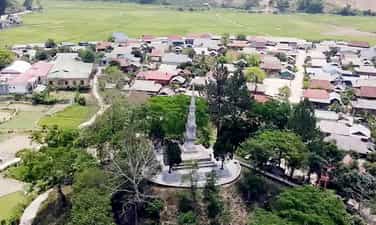
Muong Va Tower is an ancient architectural and artistic work, bearing the cultural and Buddhist imprint of the Lao ethnic community in the Northwest region. The tower is located in Muong Va village, Muong Va commune, Sop Cop district, on an artificial hill between the village space and a large field. According to local legend, the tower was built about 400 years ago, along with a pagoda to serve as a place for religious and community activities. The pagoda no longer exists, but Muong Va Tower is still preserved by people for many generations. The tower is about 13 meters high, shaped like a pen reaching into the sky, consists of 5 floors, built of bricks and linked with lime and sand. The floors are decorated with many typical patterns such as leaves, chrysanthemums, twisted strings and elephant shapes, creating a beauty that is both elegant and majestic. The top of the tower is shaped like a lotus bud, clearly showing the influence of Buddhist culture. Through wars and natural disasters, the tower was damaged and has been restored and preserved many times. Today, the tower is a unique cultural symbol of the Lao people in Sop Cop, and is also a destination associated with traditional festivals such as Xen Muong and Khau Ho, contributing to preserving and promoting community cultural values. Source: Son La province electronic information portal
Son La
369 view
Rating : National monument
Keo Quang Cave
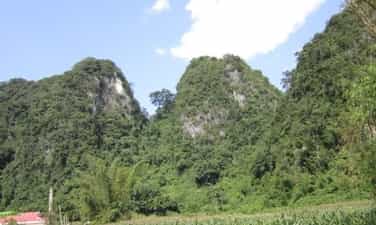
Keo Quang Cave is a national historical relic, associated with the activities of leader Nguyen Ai Quoc and the revolutionary movement in Cao Bang during the years preparing for the August Revolution. At the end of April 1942, after arriving in Gia Bang, Nguyen Ai Quoc opened a cadre training class at Keo Quang cave, now in Minh Tam commune, Cao Bang province. People named the cave Lenin cave. Here, revolutionary cadres learned about history, the struggle experience of the Communist Party of the Soviet Union and the basic principles of Marxism-Leninism. Although learning conditions are still difficult, students still actively study, practice and are imparted with valuable revolutionary experiences and ideas. The training class contributes to improving the political bravery and fighting spirit of local officials, creating an important foundation for the revolutionary movement in Cao Bang and the fight for national independence. With special historical values, Keo Quang Cave is ranked as a national historical and cultural relic, becoming a meaningful educational address for revolutionary traditions of Cao Bang. Source: Vietnam Historical and Cultural Relics information page
Cao Bang
352 view
Rating : National monument
Bat Cave
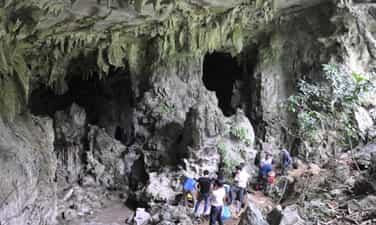
Bat Cave is an outstanding scenic spot in Cao Bang province, known for its majestic, magical beauty and still retaining its natural wildness. The cave is located in the heart of a limestone mountain, nearly 1,000 meters deep, consisting of 3 chambers and 2 floors, with a stalactite system built over time creating many unique shapes. In the first compartment, visitors can see clear blue underground water and colorful stalactites. The second compartment stands out with stalactites shaped like terraced fields, called "fairy fields" by locals, along with silver waterfall-like stalactites and calm water flows. The third compartment is the central area, with a large space with vividly shaped rocks and stalactites. In particular, the second floor impresses with its stone "terraces" and shiny golden stalactites. With pristine landscape and unique geological formations, Bat Cave is an attractive destination for those who love to explore nature and the amazing beauty of Cao Bang. Source: Cao Bang Newspaper
Cao Bang
371 view
Rating : National monument
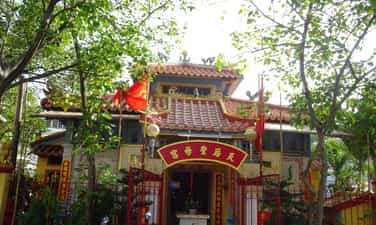
Thien Hau Palace
Thien Hau Palace, also known as Ba Thien Hau Pagoda, located in Bac Lieu ward, Ca Mau province, is a typical religious building, bearing the cultural imprint of the Chinese community in Bac Lieu and Ca Mau. The pagoda was built by Cantonese Chinese people to worship Thien Hau Thanh Mau, the sea goddess revered by seafarers and fishermen, with the wish that she would bless them with peace, smooth sailing, and favorable business. Thien Hau Palace was built spaciously in 1901, following traditional Chinese architecture. Many worship statues, stone pillars, decorations and patterns were crafted in China and then brought to Vietnam. After two renovations in 1970 and 2000, the monument still retains its ancient appearance and typical Chinese architectural features. Not only has architectural and artistic value, Thien Hau Palace also preserves many valuable artifacts and worship objects, notably the exquisitely carved set of "five things", belonging to a group of rare antiques at worship facilities in Vietnam. The grounds behind the pagoda also impress with ancient trees, with interwoven root systems creating a unique shape. Every year, traditional festivals take place here such as the Ky Yen ceremony on the nights of the 15th, 16th, and 17th of the twelfth lunar month and the worshiping ceremony of Ba Thien Hau on the 23rd of the third lunar month, attracting a large number of people and tourists to worship. Source: Ca Mau province relics
Ca Mau
356 view
Rating : National monument
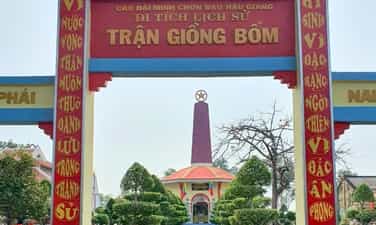
Battle of Giong Bom in 1946
Giong Bom Battle in 1946 - Tragic mark of the Southern resistance war The 1946 Battle of Giong Bom relic is located in the Ngoc Minh Holy See area, Phong Thanh commune, Ca Mau province. After the August Revolution in 1945, responding to the call for Southern resistance, the Cao Dai Minh Chon Dao force organized by Mr. Cao Trieu Phat chose Ngoc Minh Holy See as a base, gathering forces against the French colonialists. On April 6, 1946, the French army began to probe and was ambushed by Giong Bom's forces. In the following days, the enemy continuously used aircraft and infantry to attack. The climax was on April 13, 1946, about 100 French soldiers launched a raid on Giong Bom. With rudimentary weapons but resilient fighting spirit, Giong Bom's forces caused much damage to the enemy. However, due to the large gap in forces and weapons, 137 Giong Bom soldiers heroically sacrificed their lives, and many works at Ngoc Minh Holy See were destroyed. The Battle of Giong Bom was one of the major battles in the Southwest during the early days of the resistance war against the French, demonstrating the patriotism and will to protect the homeland of the Cao Dai Minh Chon Dao people. Every year, the death anniversary of the soldiers who died in the Giong Bom battle is held, becoming an occasion to commemorate and educate patriotic traditions for today's generations. Source: Department of Cultural Heritage
Ca Mau
365 view
Rating : National monument
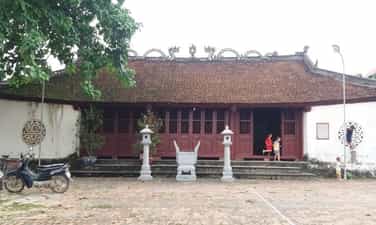
Safety zone II Hiep Hoa
Safety zone II Hiep Hoa - A mark of revolutionary history Safety Zone II Hiep Hoa in Bac Ninh province, is a particularly important revolutionary relic complex, associated with the activities of the Party Central Committee and the Northern Party Committee in the years preparing for the August Revolution in 1945. The relic includes 8 typical places such as Mr. Ngo Van Thau's house, Mr. Ngo Van Che's house, Mr. Ngo Van Dong's house, Soi Den, Van Xuyen communal house, Cho Van communal house, Xuan Bieu communal house and Y Son pagoda. Since the early 1940s, this place was chosen as a safe area, a bridge between the Viet Bac base and the midlands and plains. Thanks to the people's protection, many revolutionary leaders have returned here to operate, organize meetings, provide political and military training and build forces. In particular, many military training classes took place at Soi Den; At Mr. Ngo Van Dong's house, from April 15 to 20, 1945, the Tonkin Revolutionary Military Conference was held under the chairmanship of comrade Truong Chinh, setting out important policies to prepare for the General Uprising. The communal houses of Xuan Bieu, Cho Van, and Van Xuyen also marked rallies, propaganda, uprisings, and the early seizure of power in 1945. With special historical values, ATK II Hiep Hoa was ranked a special national monument in 2020 by the Prime Minister. This place is a red address for educating patriotic traditions, reminding of a period of vibrant struggle of the nation. Source: Department of Cultural Heritage
Bac Ninh
420 view
Rating : Special national monument
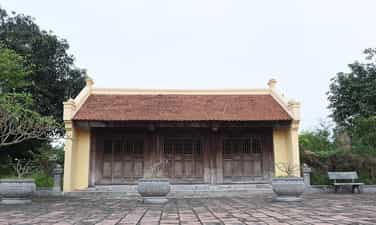
Phan Dinh Phung Church
Relics of the Temple of Former Doctor Phan Dinh Phung - Imprint of the hero Can Vuong. The relics of the Church of Former Doctor Phan Dinh Phung located in Dong Thai village, Tung Anh commune, Ha Tinh province, is a place to commemorate the typical leader of the Can Vuong movement at the end of the 19th century. The relic was ranked as a national historical relic in 2006. Phan Dinh Phung (1847–1895), from Dong Thai village, passed the Dinh Nguyen Doctor's degree and served as a mandarin under the Nguyen Dynasty. In 1885, in response to the Can Vuong Edict, he stood up to gather followers and lead the resistance movement against the French colonialists in the Ha Tinh region and the North Central provinces. For more than 10 years, he used Vu Quang as a base and stubbornly organized the resistance. He died on December 28, 1895, becoming one of the typical leaders of the Can Vuong movement. The church campus is about 3 hectares wide, including the entrance gate, adoration yard, lower palace, upper palace and two rows of left and right vu. The lower hall worships generals and insurgents who once stood side by side with Phan Dinh Phung. The upper palace is the main place of worship, made mainly of ironwood and jackfruit wood, still retaining many exquisite carved details. Inside there is a bronze statue of Phan Dinh Phung and worship objects such as a bronze crane, incense burner, a set of precious bowls and parallel sentences. About 3km from the church is Phan Dinh Phung's grave on Ne Son hill. The tomb was built of Thanh stone, in front there is a stele recording his life, career and contributions to the Can Vuong movement. Source: Ha Tinh Newspapers and Radio and Television
Ha Tinh
193 view
Rating : National monument
Dr. Truong Quang Trach Church
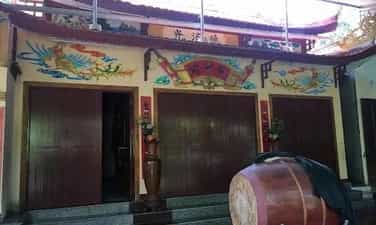
Dr. Truong Quang Trach Church - Saves the academic tradition. Dr. Truong Quang Trach Church is a historical and cultural relic associated with a typical academic celebrity of Ha Tinh region. The relic is currently located in Ha Huy Tap ward, Ha Tinh province, where traces of the life, career and studious tradition of the Truong Quang family are preserved. Truong Quang Trach was born in 1640 into a Confucian family. At the age of 20, he passed his Bachelor's degree; In 1670, when he was 30 years old, he passed the Third Rank of Dong Doctorate, and was listed on stele number 45 at the Temple of Literature - Quoc Tu Giam. After passing the exam, he held many positions, including Imperial Supervisory Institution and Cao Bang Governor. During his time as a mandarin, he was famous for being honest and resolute, daring to fight against corruption and flattery, and always promoting taking care of the people and the country. He died in 1677, when he was only 37 years old. After his death, the king ordained him, the people set up a temple and annually held sacrifices to commemorate him. This tradition has been preserved by families and people for many generations. The church currently has a compact but dignified architecture, including the entrance gate, church and surrounding grounds. Inside are placed dragon thrones, tablets, worshiping objects, horizontal panels, and parallel Chinese characters, expressing respect for the talented and virtuous doctor. In particular, the couplet "To the ancestors, honor the virtues of the millennium - Filial piety, respect the sages for great glory" conveys the wish for a good tradition to be passed down forever to future generations. Source: Ha Tinh Museum Electronic Information Portal
Ha Tinh
269 view
Rating : Provincial level relics
White Bridge Relics
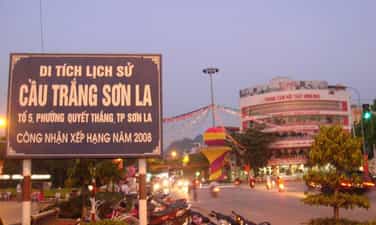
White Bridge Relics - historical evidence in the heart of Son La. The White Bridge relic is located in To Hieu ward, Son La province, across Nam La stream, on route 41, now National Highway 6. With an important location, the bridge once played the role of connecting traffic and providing support for the Northwest battlefield. During the Northwest Campaign in 1952 and the Dien Bien Phu Campaign in 1954, the French colonialists repeatedly bombed the bridge to prevent the transport and support of our army and people to the Dien Bien Phu battlefield. In 1963, Son La Traffic Department rebuilt the White Bridge in the style of an arch bridge, about 45m long, 7m wide, with railings on both sides. During the resistance war against the US, White Bridge continued to become the target of fierce attacks. US aircraft carried out 34 raids, dropping 874 bombs and hundreds of rockets, completely destroying bridges, bridge abutments and paths. After the war, the White Bridge was repaired and rebuilt many times to serve traffic and people's lives. Although its appearance has changed a lot, this place is still a testament to the years of arduous war and the resilient spirit of Son La's army and people in the cause of protecting the strategic traffic route. Source: According to Son La Geography
Son La
337 view
Rating : Provincial level relics