Relic point Vietnam
Việt Nam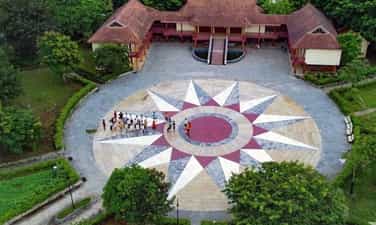
Ngoc Trao war zone
Ngoc Trao War Zone is located in Ngoc Trao commune, Thanh Hoa province, and is one of the typical red addresses associated with the revolutionary movement in Thanh Hoa. In early June 1941, the Thanh Hoa Provincial Party Committee selected the Ngoc Trao area to build a war zone. On September 19, 1941, at Hang Treo, the first 21 guerrilla soldiers took an oath to fight and sacrifice for the cause of national liberation. From here, the Ngoc Trao Guerrilla Team quickly developed, attracting patriotic youth from many localities, becoming an important revolutionary armed force of Thanh Hoa. At dawn on October 19, 1941, the French colonialists organized an attack on the war zone. The guerrilla soldiers fought heroically, engaged in hand-to-hand combat and proactively retreated to preserve their forces. Although it existed for a short time, Ngoc Trao War Zone contributed to laying the foundation for the armed struggle movement, leaving many valuable experiences for the revolution before the August General Uprising in 1945. Today, Ngoc Trao War Zone Relics is an educational address for revolutionary traditions, helping today's generation better understand the patriotism, strong will and sacrifices of revolutionary soldiers during difficult years. Source: People's Army Newspaper
Thanh Hoa
454 view
Rating : National monument
Muong Luan ancient tower
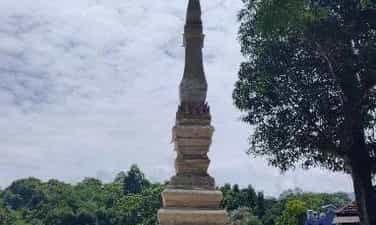
Muong Luan ancient tower located in Muong Luan 1 village, Muong Luan commune, Dien Bien province, is an artistic architectural work with typical value associated with the Lao community in the Northwest region. Built around the 16th century, the tower is about 15m high, has an elegant pencil shape, and consists of three parts: the base, the body and the top. The tower's body is decorated with many unique patterns such as dragons, lotus petals, sun shapes and stylized motifs, demonstrating the sophistication of architectural art and Lao folk beliefs. The project was built mainly with local materials such as bricks, lime, sand and molasses, showing the unique manual construction techniques of ancient highland residents. Not only has architectural value, Muong Luan tower is also an important vestige reflecting the long-standing cultural exchange process between the Lao community and ethnic groups in the Northwest region. Next to the tower, there used to be a pagoda that was a place for religious activities of the Lao community; Many traditional ceremonies, including the bathing ceremony of Buddha statues, were once held here. On February 9, 1991, Muong Luan Tower was ranked a national architectural and artistic relic by the Ministry of Culture and Information. After being restored and embellished, the monument today has become a destination rich in historical, architectural and cultural values, contributing to introducing the unique identity of the Lao community in Muong Luan to tourists. Source: Dien Bien Newspaper and Radio and Television
Dien Bien
466 view
Rating : National monument
Dai Lich ancient fort
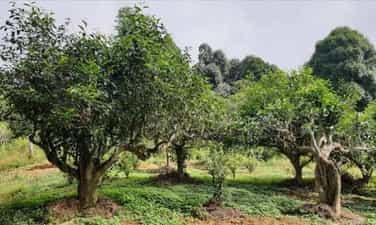
Dai Lich ancient fort is located on top of Khe Ga hill, in Chan Thinh commune, Lao Cai province today. This is a historical relic marking an important stage in the process of forming and protecting the ancient land of Dai Lich. The relic still retains traces of an ancient defensive structure such as vertical canvas walls, a spiral trench system, a water storage area, a military training ground and a mobile route through Khau But pass. These vestiges show that the post once played an important military role in the area. According to research, Dai Lich ancient post is related to the period when Dai Lich served as the capital of Van Chan district under the Nguyen dynasty, and can also be associated with the activities of leader Cam Hanh in the struggle against the Yellow Flag army. This area also circulates stories about figures participating in the Can Vuong movement led by Nguyen Quang Bich. Not only are they valuable in military history, places such as Khe Ga, Khe Lon, Khe Bo, Morning Glory Pond, and Granary around the ancient fort also contribute to reflecting the life and role of Dai Lich in the history of the Van Chan region. Source: Lao Cai Electronic Newspaper
Lao Cai
450 view
Rating : National monument
Tat Toong Cave
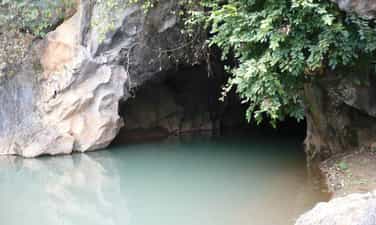
Tat Toong Cave, also known as Tham Tat Toong, meaning "copper waterfall cave", is located in Chieng An area, Son La province, about 2km from the city center. This is a unique natural cave, recognized as a national landscape. The cave includes a system of water caves and dry caves with unique landscapes. The water cave has clear blue water flowing all year round, the cave is 5-6m deep, and the cave dome is wide and high. Going deep inside, visitors can admire stalactites with rich shapes, shimmering in the light, creating a mysterious space like a fairy tale world. Not far from the water cave is a dry cave with three large compartments, highlighted by stalactites created by nature over time, evoking many vivid images such as lions, eagles or mothers holding children. With its pristine beauty and unique landscape value, Tat Toong Cave is an attractive destination, contributing to the tourism and scenic value of Son La. Source: Vietnamese historical and cultural relics information page
Son La
440 view
Rating : National monument
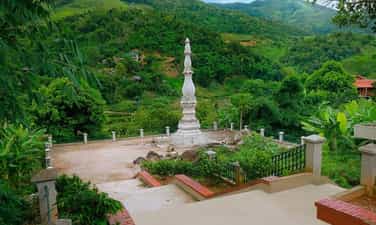
Chieng So ancient tower
Chieng So ancient tower Chieng So ancient tower located in Na Muong village, Chieng So commune, Dien Bien province, is a unique architectural and artistic relic, determined by researchers to date from about the 15th to 16th centuries. The tower is 10.5m high, built of bricks and lime mortar, shaped like a wine jar, with a sturdy square base and the tower body gradually shrinking towards the top. The highlight of the tower is the sophisticated decorative pattern system with lotus petals, birds, flowers and especially embossed dragons curving around the tower's body. The upper part is shaped like lotus buds, giving it a soft, elegant beauty. Not only has architectural and artistic value, Chieng So Tower is also a testament to the cultural exchange and longstanding solidarity between the people of Vietnam and Laos. This is a precious heritage that contributes to enriching the historical and cultural value of Dien Bien land. Source: People's Committee of Dien Bien province
Dien Bien
454 view
Rating : National monument
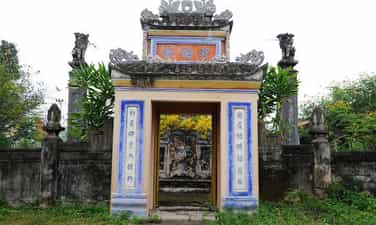
An Tan temple ruins
An Tan Temple is located in group 2, An Tan ward, and is a relic associated with the process of reclamation and village establishment of ancient An Khe village residents. With an area of more than 3,500m², the temple is not only a place for religious activities of the community but also preserves the long-standing cultural imprints of the land of An Tan. The main deity worshiped at the temple is Thien Y A Na, a goddess of Champa origin. Besides, there are also gods such as Tutelary God, Cao Cac Nguyen Quan, Bach Ma Eunuch, Son Quan, Tieu Dien and Lord Ngung Man Nuong. Every year, people celebrate the Opening Ceremony on January 10 and the Quy Xuan Festival on the 17th day of the second lunar month, expressing gratitude to the gods for protecting and protecting the peaceful life of the community. With unique historical and cultural values, An Tan Temple is a destination that contributes to understanding the religious life and the process of forming the resident community in An Khe land. Source: Gia Lai Newspaper and Radio and Television
Gia Lai
494 view
Rating : Provincial level relics
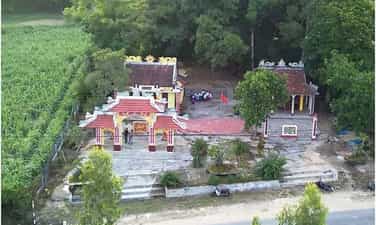
Cuu Dinh Communal House
Cuu Dinh communal house located in group 1, An Phuoc ward, is a relic associated with the formation and development of the Vietnamese community in An Khe land. With an area of more than 1,460m², the communal house is the religious center of ancient Cuu Dinh village. The communal house worships ordained gods such as Thien Y A Na, Tutelary God, Tho Dia, along with the predecessors and successors who had meritorious deeds to destroy, establish villages and build the homeland. Every year, the communal house holds ceremonies to worship Quy Xuan and Thanh Minh on February 16 and Quy Thu on the 16th of the 8th lunar month. Among them, the Spring Festival is an important festival, attracting a large number of people to attend. Not only has religious value, Cuu Dinh communal house is also a testament to the process of migration, settlement, and reclamation to establish villages of Vietnamese people in An Khe since the early twentieth century, contributing to preserving the local historical and traditional cultural values. Source: Gia Lai newspapers and radio and television
Gia Lai
490 view
Rating : Provincial level relics
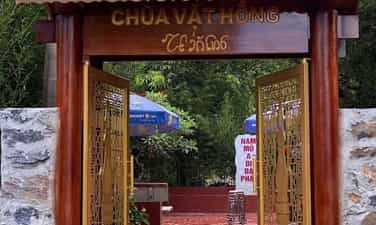
Vat Hong Pagoda
Historical and cultural relic of Vat Hong pagoda. Vat Hong Pagoda, also known as Chien Vien Pagoda, is located on a gentle hill in Vat village, Muong Sang commune, Son La province. The pagoda was built in the 13th century, during the period when Buddhism flourished in Vietnam. The building has traditional wooden architecture with three compartments and thatched roof; The temple once kept many Buddha statues made of bronze, tin and ivory. The pagoda is associated with the religious life of the local community through ceremonies to pray for rain, water, and ceremonies to wash and bathe statues held annually. In particular, in the pagoda grounds, there is still a stone stele engraved with Thai and Han Nom characters, marking the merits of the people of the Northwest region in renovating the pagoda. Over time, Vat Hong Pagoda now has only ruins, some artifacts are preserved at the Son La Provincial Museum. With unique historical, cultural and religious values, Vat Hong Pagoda was ranked as a provincial historical-cultural relic in 2012, becoming an important vestige in the cultural history of Moc Chau region. Source: Son La Geography
Son La
476 view
Rating : Provincial level relics
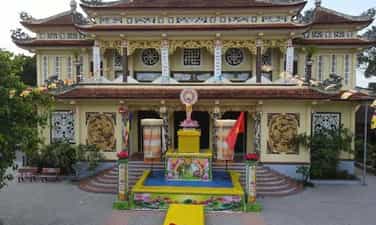
Uu Diem Pagoda
A long-standing cultural mark on the O Lau River Uu Diem Pagoda, also known as Uu Dam Pagoda or Ba Loi Pagoda, is located in Uu Diem village, Phong Hoa commune, Phong Dien district, Hue city. This is a temple with a long history, associated with the religious and cultural life of local people. According to O Chau Can Luc in 1555, the pagoda was mentioned with the name Am Uu Dam, showing that the monument has a history before the 16th century. Having gone through many upheavals, the pagoda was restored by the Nguyen Dynasty in 1821 and was built and repaired many times after the war. A special feature of the pagoda is the system of antiquities bearing the mark of Champa culture, notably the statue of goddess XiKa, reliefs of dancing girls and Linga stone pillars. These artifacts have historical, cultural and archaeological value, contributing to the uniqueness of Uu Diem Pagoda. Today, the pagoda is not only a place for religious activities but also a destination to learn about history, culture and traces of interference between cultures in Hue. Source: languudiem.com
Hue
470 view
Rating : Provincial level relics
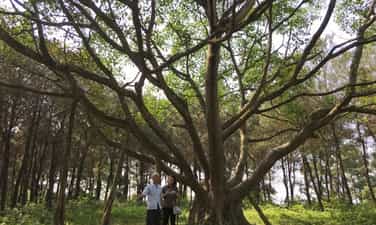
Uncle Ho's banyan tree planted in Tien Hoi
The location of Uncle Ho's banyan tree planted in Tien Hoi, now in Tien Hoi village, Dong Anh commune, Hanoi city, is the place that marks the event of President Ho Chi Minh's visit and participation in the local people's Tree Planting Festival. On January 31, 1965, at Dong Nhan mound, Tien Hoi village, Uncle Ho directly planted a souvenir banyan tree. He advised people when planting trees to take care of them so that they live well, and to actively plant more trees, contributing to creating shade and protecting the environment. After the event, the banyan tree was cared for and preserved by the local government and people. The place where Uncle Ho planted trees became a memorial for an event associated with the Tet tree planting movement initiated by him, while also carrying traditional educational meaning and remembering Uncle Ho's feelings and advice for the people of Dong Anh. Today, Uncle Ho's banyan tree planted in Tien Hoi is still preserved by the locality as a historical vestige, contributing to enriching the system of relics associated with President Ho Chi Minh in Hanoi. Source: Dong Anh 360 website
Hanoi
287 view
Rating : National monument