Relic point Vietnam
Việt Nam
An Hoa communal house relic
An Hoa Communal House is located in An Hoa village, Yen Hoa ward, is a historical relic, typical architectural art, associated with the long-standing cultural and patriotic traditions of this land. The communal house worships Bach Hac Tam Giang and King Ly Than Tong, who are respected and worshiped by the people as Tutelary Gods. In particular, Ly Than Tong had a deep connection with the land of An Hoa, because he was the son of Sung Hien Marquis and was said to be born here. The communal house still preserves many valuable relics such as Chinese characters, 14 ordinations from the Canh Hung to Khai Dinh period, along with dragon palanquins, tribute bowl palanquins and carved dragon tablets. These artifacts not only have historical value but also demonstrate the sophisticated carving art of our ancestors. Every year, the communal house organizes a festival with a palanquin procession and many folk cultural activities, contributing to preserving the traditional beauty of An Hoa village. Source: Hanoi Landscapes and Monuments
Hanoi
413 view
Rating : National monument
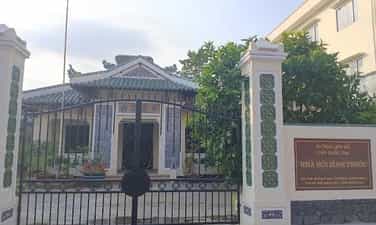
Binh Truoc Assembly Hall Relics
Binh Truoc Assembly Hall is a historical relic associated with important milestones of the Bien Hoa revolution in the early days of gaining power. The project was built around 1936, and was originally the place for the village's funeral function in Binh Truoc commune. The meeting house has a quite unique architecture, featuring decorative panels of Bien Hoa ceramics and delicate wood sculpture details, bearing bold Southern folk architectural art. In particular, on September 23, 1945, a conference of officials of Bien Hoa province took place here, deciding to establish the first Bien Hoa Provincial Party Committee after the August Revolution, with the participation of comrade Ha Huy Giap, representative of the Southern Party Committee. The conference proposed many important tasks such as consolidating the revolutionary government, stabilizing people's lives, building the armed forces and preparing for the resistance war against the French colonialists. With typical historical and architectural values, Binh Truoc Assembly Hall was classified as a historical relic by the State on December 30, 1991. This is a place that contributes to marking the formation and development of the Bien Hoa Party Committee in the early years of independence. Source: Dong Nai Electronic Newspaper
Dong Nai
443 view
Rating : National monument
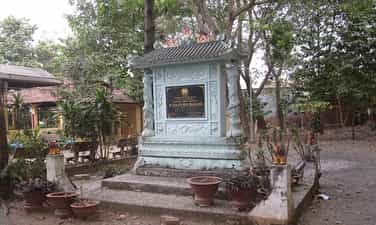
Binh An Temple
Binh An Temple is located in Dong Hoa Ward, Ho Chi Minh City, and is a valuable historical and cultural relic of the ancient land of Binh An. The communal house was built before 1852 and was granted royal status under the reign of King Tu Duc. This is the place to worship Thanh Hoang Bon Canh, expressing the tradition of folk beliefs and the ethics of local people when drinking water, remember its source. In 1945, the communal house was burned down by the French colonialists, and in 1950 it was rebuilt. After many restorations, the communal house still retains traditional cultural features and the tomb of Mr. Truong Cong Can, a talented general of the Nguyen Dynasty. In particular, during the years of resistance against the French colonialists, Binh An Temple was a place of refuge, meeting and gathering for local revolutionary soldiers. Therefore, the relic not only carries cultural and religious value but also marks the years of revolutionary struggle of the people here. On October 14, 2009, Binh An Temple was recognized as a provincial-level historical and cultural relic. Today, this place is a place that contributes to preserving traditional cultural values and educating the young generation about the history and traditions of the homeland. Source: Center for Trade, Tourism and Industrial Development Promotion of Binh Duong Province (Ho Chi Minh City)
Ho Chi Minh City
474 view
Rating : Provincial level relics
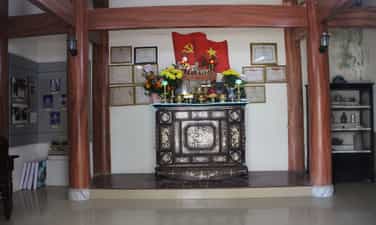
The site of Mother Nhu's house
Mother Nhu's house is located in a small alley on Tran Cao Van street, Thanh Khe Dong ward, Da Nang city. This is the place that marks the heroic sacrifice of Mother Nhu and the steadfast fight of 7 Second District special forces soldiers on December 26, 1968. Nhu's mother's real name is Le Thi Danh, born in 1912 into a poor fishing family. Since 1967, my mother's family dug two secret bunkers in the house to hide and protect revolutionary soldiers. Today, the relic has a memorial house, the grave of Mother Nhu and her husband, stele marking the event and artifacts related to the battle. With typical historical values, Mother Nhu's house was recognized as a National Historical Site in 2009. The monument is a place to commemorate the sacrifice of Mother Nhu and the soldiers, while also contributing to educating the patriotic tradition and resilient spirit of the army and people of Da Nang. Source: Da Nang electronic information portal
Da Nang
564 view
Rating : National monument
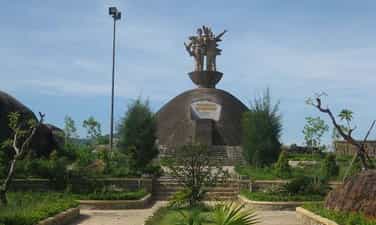
Victory over Ban Bats
The Cam Doi Victory relic site is located in Que Son district, Quang Nam province, now Da Nang, which marks an important victory in the resistance war against the US. Before 1972, Cam Doi was a fortified military base of the enemy, built with a system of underground bunkers, bunkers, command post and many surrounding defense points. With a large force and modern equipment, this base blocks the route from the west of Que Son to the plain, causing many difficulties for our troops and people. To break this defense line, Military Region V Command decided to open the Ban Bat campaign. After a period of preparation and careful study of the terrain, our army coordinated with the main force, local troops, artillery, infantry and special forces, simultaneously attacking from August 17, 1972. At dawn on August 18, important defensive posts were captured and the enemy's defense line was divided. Hundreds of artillery shells continuously fired at the base, destroying many gas depots, ammunition depots, motor vehicles and enemy artillery positions. After two days and nights of fierce fighting, at 3:00 p.m. on August 19, 1972, our army's victory flag flew over Cam Doi command post and Que Son district capital. The Cam Bat victory marked the maturity of our army and people in their ability to capture fortified defense bases, contributing to the failure of America's "Vietnamization of the war" strategy. Today, on the top of Cam Doi hill there is a victory monument, depicting the image of a liberation soldier and a female guerrilla raising a baby high together, symbolizing faith in peace and the country's future. Source: Da Nang electronic information portal
Da Nang
504 view
Rating : National monument

Tuc Dup historical relic site
Tuc Dup historical relic site in Tri Ton district, An Giang province, is an important base of An Giang's army and people during the resistance war against the US. Tuc Dup in Khmer means "night water", located at an altitude of about 300m, with a system of caves and rocky crevices like a giant "honeycomb". Since the 1940s, Tuc Dup has been a shelter for revolutionary soldiers. By 1960, this place became the base of the Tri Ton District Party Committee and An Giang Provincial Party Committee. Relying on the rugged terrain and the continuous cave system, our army and people stubbornly held on, fought and resisted many fierce raids and bombs by the enemy. Therefore, Tuc Dup is also known as "steel hill". Today, the caves that used to be the working places of the Military Command, Propaganda Department, Women's Union, Civil Medicine and hall C6 are still preserved. Visitors can explore the unique cave system, learn stories about the lives and battles of our people and soldiers during the war, and admire the wild beauty of That Son mountains and forests. Tuc Dup today is not only an attractive tourist destination but also a traditional "red address" for education, reminding of a period of resilient fighting and the great sacrifices of An Giang's army and people. Source: Vietnam National Tourism Administration
An Giang
508 view
Rating : National monument
O Ta Soc Base
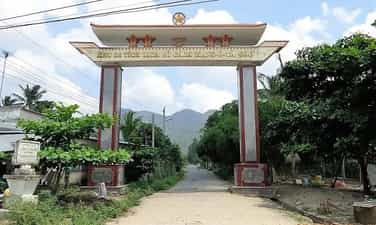
O Ta Soc base, Luong Phi commune, Tri Ton district, An Giang province, is a national revolutionary historical relic. O Ta Soc, in Khmer language means "Ong Soc Stream", located on Dai Mountain, outstanding with rugged rocky terrain, many caves, rock formations and year-round flowing streams. Since the end of 1962, O Ta Soc became an important base of the An Giang Provincial Party Committee and revolutionary agencies. Based on the rugged mountainous terrain, our army and people built defense systems, arranged anti-mines, shelters and organized many battles, resiliently resisting enemy raids. From here, the An Giang Provincial Party Committee directed the revolutionary movement, fought to destroy strategic hamlets, protected the people and organized fighting forces throughout the province. During the years 1965–1967, the enemy repeatedly launched large-scale operations to attack the base, but they all encountered fierce resistance from revolutionary forces. The soldiers took advantage of every rock hole, slope and dangerous terrain to fight the enemy and protect the safety of the Provincial Party Committee. By the end of 1967, the Provincial Party Committee moved its base to To - Tuc Dup mountain, but O Ta Soc continued to be the place of operation and combat coordination of revolutionary forces. Today, O Ta Soc base not only has the wild beauty of the mountains and forests but is also a red address for educating revolutionary traditions, helping today's generation better understand the resilient spirit, cunning and sacrifice of An Giang's soldiers and people in the resistance war against the US. Source: Management Board of Monuments and Attractions of An Giang province
An Giang
519 view
Rating : National monument
Cat Tuong memorial area
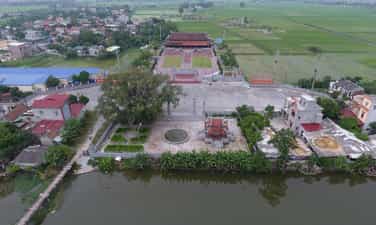
Cat Tuong Memorial Area - a place to preserve memories of Uncle Ho. Cat Tuong Memorial Area, Binh My commune, Ninh Binh province, was built on the exact spot where Uncle Ho visited and encouraged the people to fight drought on January 14, 1958. Here, Uncle Ho praised the people's working spirit and encouraged them to speed up the process of building dams and bringing water to save thousands of acres of rice that are suffering from drought. Following Uncle Ho's instructions, local people completed the Cat Tuong dam in less than 5 days. Today, the memorial area has a stele house, a temple to Uncle Ho and an area displaying many precious pictures and documents about his visit in 1958. In particular, the banyan tree planted by people where Uncle Ho once stood and talked is still green, becoming a sacred mark of the relic site. In 2018, Cat Tuong Memorial Area was recognized by the Ministry of Culture, Sports and Tourism as a national historical and cultural relic. This is not only a place to commemorate and remember Uncle Ho's feelings for the people, but also a "red address" for traditional education, attracting many union members and children to visit, offer incense and learn about the history of their homeland. Source: Nhan Dan Newspaper
Ninh Binh
549 view
Rating : National monument
Thien An Mountain
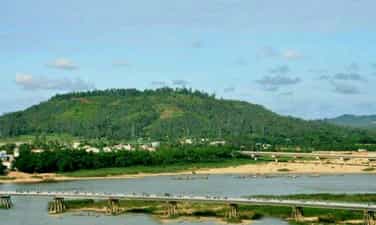
Thien An Mountain, also known as Ho Mountain, is a historical-cultural relic and the leading sacred symbol of Quang Ngai province. Located on the left bank of the Tra Khuc River, this unique isosceles trapezoid-shaped mountain is like a precious seal of heaven stamped on the riverbed, creating the famous "Nien An Thien Ha" mountain position in poetry. Over the centuries, Thien An Mountain has been a silent witness to the opening of the Southern realm of our ancestors. This place once retained architectural traces of ancient towers and deep laterite wells of the Cham people. The takeover and construction of works by the Vietnamese people on the old ruins is a clear historical proof of the cultural fusion between the two peoples. The stature of the scenic spot was further affirmed in 1717, when Lord Nguyen Phuc Chu personally conferred a golden plaque, honoring the mountain as the "first scenic spot". Not only does it have ancient feudal values, Thien An is also a revolutionary red address. On the windy mountain top, this is the resting place of Mr. Huynh Thuc Khang - a great patriot and former Acting President of the country. The presence of Mr. Huynh's grave has blended the soul of the mountains and rivers with the steadfast spirit of a great man. Today, Thien An Mountain still stands there, as an eternal symbol of the history, culture and national pride of the people of Quang. According to: Thanh Nien Newspaper
Quang Ngai
537 view
Rating : National monument
Van Tuong Victory Relic
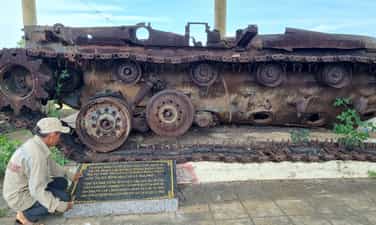
The Van Tuong Victory national relic complex is located in Binh Hai and Binh Hoa communes, Binh Son district, Quang Ngai province, and was ranked as a national historical and cultural relic in 1982. The complex includes 8 relic sites, including Loc Tu steel trench, Ngoc Huong hill, An Cuong beach, Phuoc Thien beach and the Liberation Army Regiment 1 headquarters. This place marks the battle of Van Tuong on August 18, 1965, when our army and people fought against the "Starlite" operation of the US army. With the coordination between the main force, local troops and guerrilla militia, the Liberation Army took advantage of the terrain, trenches and flexible fighting style to defeat the enemy's large-scale "search and destroy" operation. The Van Tuong victory has a particularly important meaning, proving that our army and people are capable of defeating the American army even though the opponent has superiority in numbers, firepower and war means. This is considered one of the typical battles, opening the "climax of destroying America" on the southern battlefield. Today, relics and the Van Tuong Victory Museum are places to store artifacts and images of historical battles, and are also places to educate about patriotic traditions and the resilient fighting spirit of Quang Ngai's army and people. Source: Quang Ngai Provincial Youth Union
Quang Ngai
486 view
Rating : National monument