Relic point Vietnam
Việt Nam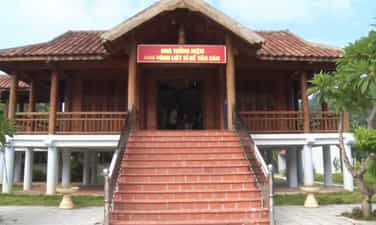
Be Van Dan Heroic Martyrs Memorial House
Be Van Dan Heroic Martyrs Memorial House - Red address in the revolutionary homeland of Cao Bang Be Van Dan Heroic Martyr Memorial House is located in Ban Buong hamlet, Trieu Au commune, Cao Bang province, on the foundation of the house where the hero was born and raised. This is a work of special significance, built to commemorate and pay tribute to Hero of the People's Armed Forces Be Van Dan - an outstanding son of the Tay people, who heroically sacrificed his life in the Dien Bien Phu Campaign. Be Van Dan was born in 1931 in a poor family, joined the army in 1949 and participated in many major campaigns. During the battle at Muong Pon in 1954, when his comrades had no support to use the machine gun, he bravely used his shoulder as a gun stand, encouraging his comrades to continue fighting. That brave action contributed to repelling the enemy's counterattack, before he heroically sacrificed his life. With a particularly outstanding victory, Be Van Dan was posthumously awarded the title of Hero of the People's Armed Forces by the State. The memorial house was built according to the traditional stilt house architecture of the Tay people, in harmony with the landscape of Cao Bang mountains and forests. Inside is a solemn worship space with an altar, portraits and documents and artifacts introducing the life, career and heroic fighting example of Heroic Martyr Be Van Dan. The spacious, green campus creates a solemn space, a place for people and tourists to offer incense and commemorate. Today, the Be Van Dan Martyrs' Memorial House is not only a place to pay tribute to the national hero but also a "red address" that educates patriotic traditions, gratitude and revolutionary spirit for generations. This is a destination with historical significance, contributing to preserving the nation's heroic memories and spreading good values of courage and sacrifice for the independence and freedom of the Fatherland. According to Cao Bang electronic newspaper
Cao Bang
134 view
Rating : Provincial level relics
Nam Lin historical relic site
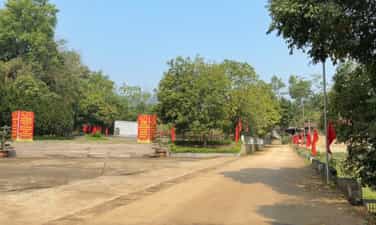
Nam Lin historical relic site, in Hoang Tung commune, Cao Bang province, is one of the typical "red addresses" of the Vietnamese revolution. This is the place that marked the establishment of the first Communist Party cell of Cao Bang province on April 1, 1930, marking an important turning point in the local revolutionary history. With great significance in history and traditional education, Nam Lin has become a destination not to be missed for those who want to learn about the revolutionary roots of Cao Bang. More than 90 years ago, under the leadership of the Communist Party of Vietnam and the direct direction of comrade Hoang Dinh Giong, the first Communist Party cell of Cao Bang province was established in Nam Lin with three party members: Hoang Van Non, Le Doan Chu and Nong Van Do. Comrade Hoang Van Non was elected Party Cell Secretary. From here, the revolutionary movement in Cao Bang was organized and developed strongly, making an important contribution to the cause of national liberation. To recognize the special historical value of this location, on February 13, 1995, the Ministry of Culture and Information recognized Nam Lin as a national historical site. Today, the relic site is preserved and beautifully restored, becoming a place to store documents, images and traces of the birth of the first Party organization in Cao Bang. The space of the monument looks solemn, quiet, and in harmony with the natural landscape of the midland region, creating favorable conditions for sightseeing and historical learning activities. Coming to Nam Lin Historical Relic Area, visitors will not only be introduced to the process of forming the province's first Party Cell but also have the opportunity to better understand the patriotic tradition, spirit of solidarity and resilient will to fight of the people of Cao Bang's ethnic groups. This is where resource-giving activities, incense offerings, thematic activities, admission of party members, union members and traditional educational programs for pupils, students, officials and the armed forces regularly take place. According to Cao Bang electronic newspaper
Cao Bang
563 view
Rating : National monument
To Thi Hoan Temple
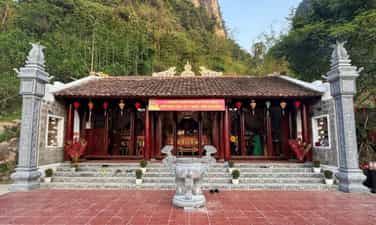
To Thi Hoan Temple Located in Dong Tam hamlet, Ly Quoc commune, Cao Bang province, To Thi Hoan Temple is a destination rich in historical, cultural and spiritual values. With a peaceful setting at the foot of Xuan Son mountain and unique traditional architecture, the temple is not only a place where local people place their religious beliefs but also an attractive attraction for tourists when coming to the borderland of Cao Bang. The temple was built to worship Mrs. To Thi Hoan (To Thi Hue), a character associated with the legend of Vietnamese women's loyalty. After her death, people built a temple to commemorate and pay tribute to her virtues. Over the centuries, the temple has always been preserved by the people, becoming a place for cultural and religious activities and a symbol of the local community's tradition of "when you drink water, remember its source". In 2011, To Thi Hoan Temple was ranked by the People's Committee of Cao Bang province as a provincial-level historical and cultural relic. Faced with the deterioration of the project over time, in 2025 the locality implemented a renovation and restoration project with a total cost of 6 billion VND. After the renovation process, the temple was built spaciously according to traditional architecture including three compartments, yin-yang tiled roof, main courtyard, steps to the temple and a solid embankment wall system. The interior is solemnly decorated with horizontal panels, couplets, hammock doors, worship statues, altar tables and worship objects made of ceramic and stone, creating a sacred and ancient space. Coming to To Thi Hoan Temple, visitors will not only admire the beauty of a traditional architectural work but also have the opportunity to learn about the history, culture and beliefs of local people. The peaceful space, blending with the green mountain and forest landscape, creates a peaceful feeling, suitable for sightseeing trips, offering incense and exploring local culture. According to Cao Bang electronic newspaper
Cao Bang
620 view
Rating : Provincial level relics
Sung Phuc Pagoda
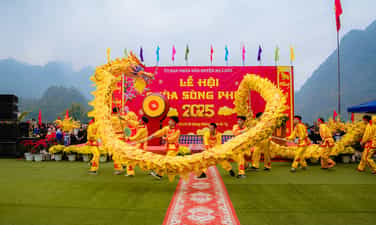
Sung Phuc Pagoda Located in Thanh Nhat town, Ha Lang district, Cao Bang province, Sung Phuc Pagoda is one of the famous ancient pagodas of the Northeast region, with a history of more than 700 years. The pagoda was built during the reign of King Tran Nhan Tong with the original name Sung Khanh, to develop Buddhism and assert sovereignty in the border area after the victory against the Yuan-Mongol army. In 1782, the pagoda was restored, moved to its current location and renamed Sung Phuc. The pagoda has bold Le Dynasty architecture with a Nhi-shaped main hall, traditional tiled roof and ancient campus. Not only is it a place to worship Guan Yin Buddha, the pagoda also worships Nghia Thanh Vuong Nguyen Dinh Ba - the person who publicly destroyed and protected the Cao Bang border area, and is associated with Nguyen Thi Due, Vietnam's first female doctorate, who practiced and taught here. The relic still preserves many precious artifacts such as stone stele, Nguyen Dynasty ordination and many valuable historical documents. Every year, from the 14th to the 16th of the first lunar month, the Sung Phuc Pagoda festival is held with incense offering ceremonies, Buddha procession and many unique folk cultural activities, attracting a large number of people and tourists. With outstanding historical, architectural and religious values, Sung Phuc Pagoda was ranked a National Historical and Cultural Relic by the Ministry of Culture and Information on January 29, 1993. Today, the pagoda is not only a famous spiritual destination of Cao Bang but also a symbol of patriotic tradition, studious spirit and cultural identity of the border region. Source: Journal of Buddhist Studies (compilation)
Cao Bang
580 view
Rating : National monument
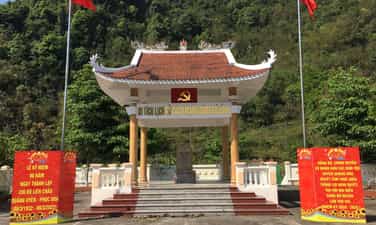
Historical Relics of Dong Bo Linh Revolution
Dong Bo Linh revolutionary historical relic On March 8, 1932, comrade Duong Cong Hoat, on behalf of the Cao Bang Provincial Party Executive Committee, introduced and admitted comrades to the Communist Party of Vietnam: 1. Comrades Ma Kien Kien (i.e. Ma Trung Lam) was born in 1914, Tay ethnicity 2. Comrade Ma Kien Moi (i.e. Hong Hai) was born in 1917, Tay ethnicity 3. Comrade Ma Kien Hoach (i.e. Hong Chi) was born in 1914 , Tay ethnic group 4. Comrade Ma Kien Tich (ie Hong Lac) was born in 1914, Tay ethnic group Coc Coc branch is the Lien Chau Quang Uyen - Phuc Hoa cell and is also the first Communist Party cell in the East Cao Bang province, officially recognized by the Cao Bang Provincial Party Committee; Comrade Ma Trung Lam was elected party cell secretary. The first task of the Coc Coc cell was to immediately carry out the tasks that the Long Chau Overseas Cell (China) and the Nam Lin cell were carrying out: Secretly transporting books, newspapers, documents, and transporting passengers. Soldiers engaged in revolutionary activities, studied between regions, actively developed the party, promoted the movement against taxes, against widowhood, abuse, against forcing husbands to work during the harvest season, and being a husbandman required money and rice. Dong Bo Linh revolutionary historical relic was built on March 7, 2012, completed on May 19, 2013. Decision No. 2917/Decision - People's Committee dated November 11, 2005 of the Provincial People's Committee recognized Dong Bo Linh as a revolutionary historical relic - the place where the first Communist Party cell of Pan-African was established. Quang Uyen - Phuc Hoa (now Quang Hoa district) on March 8, 1932. Source Electronic information portal of Quang Uyen district, Cao Bang province.
Cao Bang
6007 view
Rating : Provincial level relics
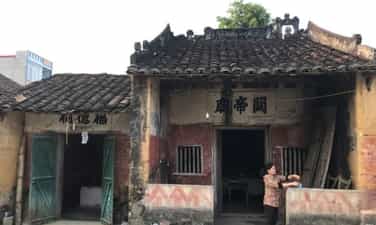
Quan De Temple
In Ngoc Dong commune (Quang Uyen), there is a Quan De temple that has been recognized as a provincial historical-cultural relic by the Provincial People's Committee. The temple has meaning and is associated with each ups and downs of historical periods in this land. Quan De Temple was built at the beginning of Dong Da market, Ngoc Dong commune to worship the figure Quan Van Truong, a general of the Three Kingdoms period (China). According to Vietnamese beliefs, worshiping Quan Cong is due to admiration and respect for his virtue. In Cao Bang today, there are many temples and shrines worshiping Quan Cong in districts: Bao Lac, Tra Linh, Trung Khanh... and Quan De temple in Ngoc Dong commune. According to the survey results of the Provincial Museum, the temple was probably built in the 36th year of Tu Duc's reign (ie 1882) based on the date recorded on the great letter in the temple and the decorative patterns of some remaining architectural pieces. left of the temple. Overall, the temple has a house with an area of over 40 m2, next to the temple there is a small room to worship the local people. The total area of the two rooms is over 57 m2, both are built in the style of a walled house. The main material that creates solid walls is fine red clay combined with lime and molasses, kneaded thoroughly to create a mixture with high adhesion, the wall layer is 30 to 35 cm thick. Tile roof system, wooden truss structure. The system of altars and statues in the temple includes: The outer altar is built of bricks, 73 cm high and 2.2 m long, used to hold incense bowls, candles and other offerings. The inner altar is 62 cm high, 1.8 m long, 1.4 m wide with 4 statues: The innermost statue is a 120 cm tall statue of Quan Cong wearing a yellow shirt, red dragonfly hat, long black beard, in sitting posture; The two statues of soldiers on both sides are 50 cm high, the statue on the right is wearing a light red shirt, holding a sword, the statue on the left is wearing a yellow shirt, holding a javelin, both statues are in a standing position; A 57 cm tall statue of Quan Cong's assistant wearing a blue shirt in a sitting position. The statues are all handcrafted from clay, plastered with cement, and covered with color on the outside. In the temple there are also many horizontal panels and couplets in Chinese characters. Outside the temple, there is a stone stele recording the kindness of the deity worshiped in the temple. Mr. La Van Quynh, who has lived for many generations adjacent to the west side of the temple, shared: Every year at the temple, there are holidays held throughout the year, such as: On February 2, there is a ceremony to worship the gods; Qingming Day; May 13 is the death anniversary of Quan Cong; August 2 celebrates the day of temple repair... to pray for good luck, happiness and peace for the people. On holidays, people in the area contribute money and rice to buy offerings to bring to the temple. To prepare for each holiday, people divide into groups and groups take turns preparing the ceremony tray, including: 1 pig, sticky rice, chicken, fruits, candies... The ceremony is conducted by the elderly. Only on the February 2nd holiday are priests invited to perform the ceremony. After the ceremony, everyone eats together and when they leave, there is a fortune distributed to the families. In addition to the main holidays of the year, on the first and full moon days of every month or when there is a big event at home, people in the area still come to burn incense and pray for peace and fortune. In April 2018, the temple was recognized by the Provincial People's Committee as a Provincial Historical-Cultural Monument. But due to a long period of time and the influence of many factors: weather, climate, people..., Quan De Temple can no longer maintain its original status. The relics in the monument, such as drums, bells... were lost in 1978, and the old statue system was demolished in 1979. On the other hand, because the temple foundation is 20 cm lower than the road surface, humidity leads to the wall system. , roof, rafters... are all in a degraded state so they are in dire need of repair. According to Ngoc Dong commune leaders, since the beginning of 2019, people in the temple area have voluntarily donated money and will carry out repairs, continuing to preserve, preserve and promote the value of the temple's historical and cultural relics. Guan Di is effective. Source: Cao Bang province electronic information portal
Cao Bang
6436 view
Rating : Provincial level relics
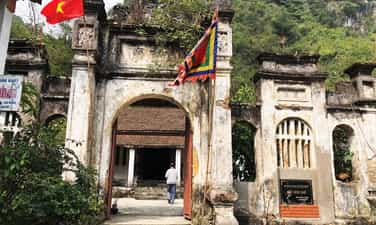
Bach Linh Temple.
Bach Linh Temple (local people also call Bach Linh Pagoda) is located in Old Street, Quang Uyen town (Quang Hoa). The shrine worships 100 of the most sacred things of many types of animals, the chief of which is the dragon - a divine animal with magical power, a symbol of mystical nobility that spits pearls and pearls, and is the head of the four sacred dragons. Ly, Quy, Phung. The dragon at the temple is deified to a supernatural level, along with precious things that become priceless spiritual values, beliefs, and aspirations of local people when they come to worship. Up to now, social and humanistic researchers have not yet determined when the temple was built. They only know that it appeared a long time ago and is deeply embedded in folk memory, associated with the Fireworks Festival. held at the beginning of spring every year. The current situation of Bach Linh Temple is quite similar to other temples, pagodas, and shrines in the province. It has gone through the historical ups and downs of the dynasties, so there have been changes and are no longer intact as before. Legend has it that the temple's architecture consists of 3 parts: three gates, front hall, and harem with the architectural appearance of the Nguyen Dynasty. The three-entrance part of the temple is built of brick material, has 3 doors in a rolling circle style, but for some reason the small doors on both sides have been covered, leaving only the middle door. On the pillars of the three-entrance gate, there are diaphragms and couplets that are now blurred and cannot be read. In the middle of the main gate, there are only the words "Bach Linh Temple" and on it is embossed a vivid curving dragon image. Step through the three gates to reach the front street. The connection between the three gates and the front street is a fairly large yard (now covered with cement), with a stone wall surrounding the yard about 1.5 m high. The frontage has a foundation 0.65 m higher than the yard level, wooden columns and rafters; The roof and porch are covered with tiled roofs and have carvings of a dragon holding a pearl and a dragon's head with sophisticated stylized patterns. In the middle of the front hall is a wooden door 1.6 m wide, 2.2 m high; In the front hall there are 3 altars. Bach Linh Temple is associated with the Fireworks Festival in Quang Uyen town held on the 2nd day of the 2nd lunar month every year. Before entering the festival, there is a ceremony held from the afternoon of the 30th day of the first lunar month. The opening ceremony begins at Coc Chu water mine near Bach Linh temple, the ceremony is celebrated by an elderly man with prestige in the community, family, and prosperous clan. On the afternoon of February 1 of the lunar calendar, the Festival Organizing Committee and people went to Bach Linh Temple to offer offerings, worship, and pray to the gods to bless every family and everyone in the new year with prosperity and prosperity. On the morning of February 2, there is a procession to process the gods, including 4 palanquins in order: the palanquin carrying Uncle Ho's image, the palanquin carrying the local spirit, the palanquin carrying fireworks, the palanquin carrying a roasted pig, and finally the dragon procession. The procession starts from Bach Linh Temple to Nung Tri Cao Temple, Tran Hung Dao Temple and then passes through alleys, families, offices, schools, production and business establishments. This is considered a spirit that acts, checks, observes people doing business and brings them fortune and luck. Therefore, wherever the procession went, everyone respectfully and warmly welcomed it with joy and excitement. The festival is held on the afternoon of the 2nd day of the 2nd lunar month with many folk games like dragon dance, unicorn dance, toss, sli singing, love exchange, traditional martial arts, Chinese chess, tug of war, stick pushing, volleyball. , football... attracts people to participate. In particular, the folk game of fighting for cannon heads is the most exciting. This is a game that demonstrates strong physical strength and trains the bravery, determination, agility, dynamism, martial spirit, and generosity of young people. year. The Festival Organizing Committee gathered youth teams into a circle around the central area of the playground. Whoever won the fortune ring at the top of the cannon would have fortune, peace, and luck all year round. The reward is a roasted pig with honey leaves for the whole team and the pig's head belongs entirely to the lucky bracelet owner. That day, everywhere we saw people serving five-color sticky rice and roasted pork, festival specialties and all kinds of candies, local food and drinks. Bach Linh Temple was also a place to store food, weapons, and classrooms during the two resistance wars against the French colonialists and against the American imperialist invasion. Along with the values of customs, beliefs, and spirituality imbued with national cultural identity, the temple was recognized by the Provincial People's Committee as a provincial-level relic according to Decision No. 2856/Decision - Committee of the Day. December 2, 2003. Source: Cao Bang province electronic information portal.
Cao Bang
6596 view
Rating : Provincial level relics

Dong Mu Fort historical relic site
It is an important historical relic of the Vietnamese revolution. This is where the battle of the Vietnam Propaganda Liberation Army Team took place on the night of February 4 and early morning of February 5, 1945. To attack the fort and destroy the enemy, comrade Xuan Truong (real name Hoang Van Nhung) heroically sacrificed his life, becoming the first martyr of the Vietnam People's Army. Over the past 70 years, the historical relic of Dong Mu post has always been an important evidence and a mark of the revolutionary history of the locality and the nation. Before the August Revolution in 1945, the French colonialists built a fortress at Dong Mu that was quite solid. Dong Mu Fort was located on a mound emerging between the fields of Na Doong and Ban Than hamlets in An Quang commune, now Xuan Truong commune. , Bao Lac district. According to the memoirs of General Vo Nguyen Giap: "Compared to Phai Khat and Na Ngan posts, Dong Mu post is much more "solid" in both fortifications and firepower. The station was located on a hill, built of stone and thick walls, with many bunkers, walls and thick stone with battlements"... From this station, the enemy prevented and suppressed the revolutionary movement and pursued hunt down and arrest revolutionary cadres. Because we were near the Vietnam-China border and often had to deal with bandits, the enemy built a quite solid defense system. On the night of the 4th and early morning of December 5, 1945, the Vietnamese Liberation Army Propaganda Team, after winning at Phai Khat and Na Ngan posts, marched to attack and destroy Dong Mu post. Taking advantage of the dark night, the Vietnam Liberation Army Propaganda Team secretly broke in. The battle took place fiercely from 11:00 pm on the 4th to 3:00 am on February 5, 1945. Our team destroyed many enemies, captured 5 guns and some other ammunition. Comrade squad leader Hoang Van Nhung, alias Xuan Truong, Tay ethnic group, from Soc Ha commune, Ha Quang district, heroically fought and died. In 1958, the alias Xuan Truong was named for An Quang commune to express gratitude and remember his contributions to the history of the revolutionary struggle of the Party Committee and people of all ethnic groups in Bao Lac district in general. and Xuan Truong commune in particular. Dong Mu post became the red address of Xuan Truong commune as well as Bao Lac district. Dong Mu Fort Relics was ranked as a National Historical Relic by the Ministry of Culture and Information, now the Ministry of Culture, Sports and Tourism, in 1995. In recent years, many groups have come to visit and learn about history. of Dong Mu station, expressing admiration for the fighting will of our army and people. Source Electronic information portal of Bao Lac district, Cao Bang province.
Cao Bang
6321 view
Rating : National monument
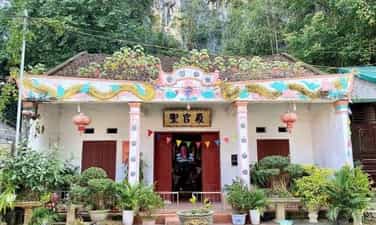
Quan Thanh Temple
The provincial-level cultural and historical relic Quan Thanh Temple is located at the foot of Phja Phu mountain, group 2, Trung Khanh town (Chongqing). The relic is associated with the Quan Thanh temple festival (also known as Co Sau street festival) held annually on the 15th day of the second lunar month. Quan Thanh Temple originally worshiped the mountain god Phja Phu with the concept of praying for the god to protect and protect the people from natural disasters. Currently, on the cliff of Phja Phu behind the temple, there is an engraved Chinese character transliterated "Quan Son protects the people" (roughly translated as mountain protects the people). According to historical records, in 1868, Ngo Con - "yellow flag" invaders from across the border invaded, looted, and killed civilians in the Cao Bang, Lang Son, Tuyen Quang regions, including the Trung Khanh area. To deal with the invaders, many healthy young men in the area gathered and chose Phja Phu temple as a place to practice their troops. Legend has it that one night, a large fireball flew across Co Sau street and fell in front of Phja Phu temple, right on the occasion when the soldiers who went to defeat the enemy "yellow flag" returned victorious. The people saw this and thought that the temple was sacred, so they contributed their efforts and money to renovate the temple to remember the merits of the heroic soldiers who fought against the enemy. At the same time, the statue of Quan Van Truong (Quan Vu, Quan Cong), a general of the Eastern Han period during the Three Kingdoms period who had great contributions in establishing the Shu Han dynasty, was worshiped. According to Vietnamese beliefs, worshiping Quan Cong is due to admiring and admiring his loyal and virtuous qualities and believing that worshiping Quan Cong will bring good luck and avoid unlucky things. From then until now, the temple has been named Quan Thanh Temple. In addition to worshiping Quan Cong, Son Than, Bach Linh, and Bodhisattva Guan Yin, during the resistance war against the French and Americans, Quan Thanh temple was also a place to evacuate local people and organize popular education classes. The monument has significance in educating patriotic traditions. Currently, there are no documents confirming the date of construction of Quan Thanh Temple. However, based on the date engraved on the stone stele in front of the harem, it shows that the temple was restored in the 6th year of Thanh Thai, Giap Ngo (ie 1894). Experiencing historical events, ups and downs, the temple was destroyed and rebuilt many times. Up to now, many items in the Quan Thanh Temple relics have been restored and renovated, creating a quite spacious appearance but still retaining the ancient and solemn features. The temple is built of bricks, tiled roof, wooden truss structure in the style of "Foreign Noi Cong", with a front hall in front and a harem in the back. Connecting the front hall and the back palace is a courtyard. The front hall has a level 4 house architecture, wooden trusses, tiled roof, brick walls, brown square tiled floor. In the middle of the front hall there is an altar, on the altar there is a stone incense bowl, engraved with some Chinese characters. Above the altar hangs a pair of yellow fabric parasols. Through the front hall, step up 4 steps to reach a yard more than 9 m long, 64 m wide, tiled with dark square tiles, which is the space separating the front hall and back palace, making the temple's view more airy but still maintain silence and solemnity. The harem is divided into 3 compartments where Quan Van Truong, Quan Am, Bach Linh and Son Than are worshiped. The middle compartment has a three-step altar, at the top in the middle is a statue of Quan Van Truong sitting on a throne. The left side worships Guan Yin, the right side is the altar worshiping Bach Linh god. The left compartment is the place to worship Son Than, separated by a brick canopy with 2 side doors made of wood. The right compartment is used as a way to burn incense, and at the same time, this is also the door leading to the back to go to Phja Phu cave. The historical and cultural relic of Quan Thanh Temple is ranked as a provincial-level relic according to Decision No. 2268/Decision of the Provincial People's Committee dated December 30, 2014 of the Provincial People's Committee. Source: Cao Bang province electronic information portal.
Cao Bang
6281 view
Rating : Provincial level relics
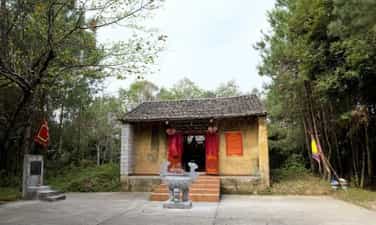
Hoang Luc Temple
The temple worshiping famous general Hoang Luc is located in Doong Luong - Chi Choi hamlet, Dinh Phong commune, Trung Khanh district (Cao Bang province), built by people in the 11th century to worship An Bien general Hoang Luc to educate love. country, determined to protect every inch of the Fatherland's sacred land. Legend has it that General Hoang Luc was a Tay chief, born in the 11th century in Lung Dinh area, Thuong Lang district (now Dinh Phong commune, Trung Khanh district). He is a talented man, knowledgeable in history books, and skilled in the art of war. At the age of 18, he was assigned to be a local prisoner to govern a region. During the resistance war against the Song invaders for the second time, implementing Ly Thuong Kiet's "Improvement and defeating the enemy" plan, General Hoang Luc sent troops to attack Song land, breaking through many strongholds and smashing rear bases. needed to serve the enemy's invasion of Dai Viet. When the Song army entered our country, with a bold guerrilla fighting style, the army he commanded raided the enemy's rear and caused a lot of damage to the enemy, contributing to the overall victory of the entire nation. With that great merit, he was appointed An Bien general by the court and assigned to guard a large border strip from Cao Bang to Lang Son today. To remember his merits when he passed away, people built a temple to worship him right in his hometown of Lung Dinh. The temple worshiping famous general Hoang Luc consists of 2 level 4 houses with an area of about 100 square meters arranged in the shape of the letter "Nhi". The temple has a yin-yang tile roof and rafters made of bamboo and wood. In particular, the temple still retains the same clay walls as when it was built. According to ancient people, when building, people used clay mixed with molasses and crushed sugar, molded boards, then stamped and pounded that soil mixture to form the surrounding walls. Many centuries have passed, the temple is still there on the Quay Son river as a cultural and historical address of the country. Mr. Ha Dinh Toan, a resident of Doong Luong-Chi Choi hamlet, Dinh Phong commune, said that every year, on February 28 of the lunar calendar, many people come to the ceremony. His family lived near the Temple, so every few days they went up to burn incense for the famous general Hoang Luc. Proud of a general guarding the border, the people here continue to promote patriotic traditions and unite to build an increasingly prosperous homeland; Participate in movements to ensure border security, protect national territorial sovereignty... Every year, on the day commemorating General Hoang Luc, many children of Dinh Phong commune who are far from home always return to their roots and make positive contributions to help build an increasingly prosperous and prosperous locality. The temple is also gradually becoming a familiar address for tourists when coming to Cao Bang. Coming to Dinh Phong commune, visitors can immerse themselves in the nature of a charming countryside; Experience the peaceful life of the people along the poetic Quay Son river; Especially, lighting incense sticks to commemorate those who have contributed to protecting the Fatherland's borders... With many historical significance and patriotic traditional education, in 2004, the Temple of famous general Hoang Luc was ranked as a provincial-level historical and cultural relic by the People's Committee of Cao Bang province. Source: Cao Bang province electronic information portal.
Cao Bang
6577 view
Rating : Provincial level relics