Relic point Vietnam
Việt Nam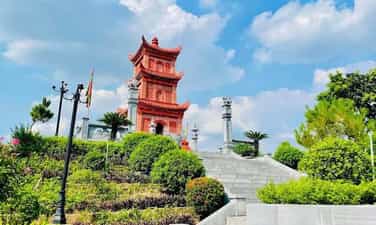
Temple of Female Doctor Nguyen Thi Due
Temple of Female Doctor Nguyen Thi Due - A place to honor the first female doctor in the history of Vietnamese academics. The Temple of Female Doctor Nguyen Thi Due is located at the foot of Phuong Hoang Mountain, Chu Van An ward, Hai Phong city. This is a historical-cultural relic associated with the life of Nguyen Thi Due (1574–1654), who is considered the first female doctorate in the history of Vietnamese academics. Born in Kiet Dac village, she was famous for being intelligent and eager to learn from a young age. Because women in feudal times were not allowed to take the exam, she disguised herself as a man to participate in the exam in 1594 and passed the PhD. With her talent and virtue, she was highly utilized by both the Mac dynasty and the Le - Trinh dynasty, making many contributions to training talented people, encouraging learning and developing education. The temple and mausoleum are a place to commemorate and honor an outstanding woman who overcame the prejudices of her time to affirm her intelligence and bravery. Every year, on the 8th day of the 11th lunar month, the locality holds an incense offering ceremony to pay tribute to her contributions and promote the tradition of studiousness and respect for teachers. Source: According to the Center for Culture, Sports and Communications of Chu Van An ward
Hai Phong
30 view
Rating : National monument
Vinh Quang Pagoda
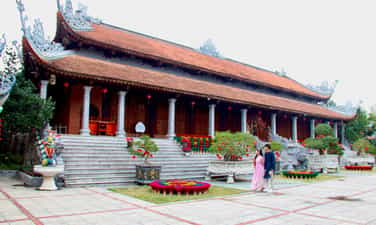
Vinh Quang Pagoda - An ancient pagoda that holds the unique title of Supreme Elder Elder. Vinh Quang Pagoda is located in Phu Noi area, Thanh Mien commune, Hai Phong city (formerly in Thanh Mien town, Thanh Mien district, Hai Duong province). The temple has a history of more than 350 years, and is one of the oldest cultural and religious centers of the locality. Having undergone many restorations, especially after being restored on the old foundation in 2004, the pagoda still serves as an important spiritual activity spot for the people. The outstanding value of Vinh Quang Pagoda lies in preserving 13 ancient ordinations, including 5 ordinations from the Le dynasty and 8 ordinations from the Nguyen dynasty, dating from the 17th century to the early 20th century. In particular, the Taoist decree conferred in 1657 under the reign Thinh Duc is a rare document when conferring the Supreme Elder Lao Quan (Ly Lao Dam) - the god of Taoism. This is a rare case in the ordination system in Vietnam, reflecting the interference between Taoism and Vietnamese folk beliefs over the centuries. Besides historical value, the pagoda also preserves traditional architecture with items such as the three treasures, the ancestral house and the model house. During the resistance period, the pagoda was used as a classroom and clinic to serve the people, contributing to affirming the relic's close role in community life. Today, Vinh Quang Pagoda is not only a place to worship Buddha and practice traditional beliefs, but also a place with humanistic significance when caring for and nurturing children with special circumstances. With historical, cultural, religious and social values, Vinh Quang Pagoda is a typical relic, contributing to preserving and promoting the cultural heritage of the Northern Delta region. According to: Vietnam Securities Economics Electronic Magazine
Hai Phong
234 view
Rating : Provincial level relics

Ha Lung Communal House
Ha Lung communal house is located in Dang Hai ward, Hai An district, Hai Phong city. The communal house also has the literal name Nhan Tho communal house, built by Ha Lung villagers around the 18th century. The architecture of the communal house still has some wooden specimens because some of the remaining ends of the two sets of the communal house were carved. engraved with the artistic style of the 18th century Later Le period. It has undergone many major restorations; But there are 2 times of restoration recorded in the first sentence, Thuong Luong Dinh was during the reign of King Khai Dinh (1924) and 1995. Ha Lung Communal House is an architectural work in the style of Cong Diagon Dao Tau Corner, including: 5-compartment grand worship hall (including 3 main rooms and 2 sub-compartments), a 2-compartment water spinach house and a harem (3 rooms). The structure of the temple buildings is made in the style of "stacking of beams and gongs with variations", because the armpits are carved pillars on both sides with the themes of dragon, fish, water, turtle, carp crossing the Vu Mon. . The rafters of the two rooms of the morning glory and the roof are all carved with themes of the four sacred animals and four precious things. In general, the architectural wood system of Ha Lung communal house is quite massive and strong, the architectural components are carved in relief and with many rich, diverse and vivid themes. SOURCE: HAI PHONG CITY SOCIO-ECONOMIC INFORMATION DATABASE PORTAL
Hai Phong
5604 view
Rating : National monument

Cat Ba archipelago
Cat Ba archipelago is 60km from Hai Phong city center by sea, has an area nominated for World Heritage of 31,150ha with 388 islands. Administratively, Cat Ba archipelago belongs to Cat Hai district, Hai Phong city. This place has been recognized as a world biosphere reserve (in 2004), ranked by the Government as a Scenic Spot - Special National Monument (in 2013) and became the Ha Bay World Natural Heritage. Long - Cat Ba Islands (2023). Rolling limestone mountains interspersed with pine forests and bays; majestic caves; has diverse biological values and geological and geomorphological landscapes, creating the Cat Ba archipelago as a natural masterpiece. This is also the habitat of more than 3,000 species of animals and plants on land and in the sea, many of which are included in the Red Book of Vietnam and the world. In particular, the Cat Ba Langur is an endemic species, currently only distributed here. The archipelago consists of 388 large and small islands located on an area of about 345 km². The largest island of Cat Ba has an area of 153 km², is the third largest island in Vietnam after Phu Quoc and Cai Bau, with the highest peak of 331m. The remaining islands rarely reach heights of 100-250m, most are small islands with heights under 100m and very small islands are usually only 20-50m high. This is a tropical terrain area submerged by the advancing sea with a unique landscape similar to Ha Long Bay, with Phong Tung-style peaks, Phong Linh-style peaks, and funnels common. The islands are single or clustered peaks or towers, with steep cliffs floating above the clear blue sea. Many island names are based on the shapes of things such as Chili, Bell, Turtle Shell, La Vong, Dragon Tail, Leopard and Lion. Biochemical and mechanical corrosion of sea water due to waves and tides creates a concave coastal edge all around. Islands increase the strange and unique shape of the islands. On Cat Ba island there are valleys such as Trung Trang, Gia Luan, Tai Lai and Viet Hai. They have a height of 5-8m, a width of 100-600m, in some places up to 1km wide, stretching a few to tens of kilometers, filled with late fluvial-marine sediments. CAT BA ISLAND has many beautiful caves in three groups: ancient underground caves, foundation caves and sea frog caves. Ancient underground caves such as Hung Son cave, Hoa cave, Trung Trang cave, etc. are often over 10m high. Platform caves are common but are usually small in size and usually less than 10m high. Sea frog cave sometimes penetrates limestone blocks to form caves such as Xich cave and Dung cave. The coastal bottom terrain of CAT Ba ISLANDS includes pine forests, coral reefs, bay bottom plains and channels. Tung and ang are valleys or karst funnels submerged by the sea. Tung has 26 pieces with elongated shape (Bear Tung, Chang Tung). There are 33 angs with isometric shapes (ang Mat, ang Vem and ang Ke, etc.) SOURCE: Hai Phong City Electronic Information Portal
Hai Phong
6180 view
Rating : National monument

Secret agency of Hai Phong City Party Committee
The secret agency of the Hai Phong City Party Committee (period 1936 - 1939), located at Mr. Dang Thi Sau's house in Nam hamlet, Du Hang Kenh commune on the edge of Hai Phong urban area (now Than lane, residential cluster number 2, Du ward Hang Kenh, Le Chan district). Here, Party officials directly direct the struggle movement of workers and workers in factories and offices in rural areas. In September 1936, comrade Nguyen Van Linh (late General Secretary of the Central Committee of the Communist Party of Vietnam) returned from Con Dao and was assigned by the Party to organize and lead the revolutionary movement in Hai Phong. Comrade Nguyen Van Linh and comrade Nguyen Cong Hoa chose this place as the place to direct the revolutionary movement in Hai Phong during the period 1936 - 1939. In April 1937, the Hai Phong City Party Committee was established by comrade Nguyen Cong Hoa is Secretary. Thanks to the results of the work of organizing and developing Party bases and revolutionary mass bases, the struggle movement of workers and other labor circles in Hai Phong - Kien An flared up strongly again. When comrade Nguyen Cong Hoa moved to another job, comrade Nguyen Van Linh was appointed Secretary of the City Party Committee and continued to live and work at Mr. Dang Thi Sau's house. Here, many policies of the Hai Phong City Party Committee were quickly implemented to direct the revolutionary movement. In early 1939, comrade Nguyen Van Linh was assigned by the Central Government to strengthen the Saigon Party Committee, and comrade To Hieu was in charge of the revolutionary movement in Hai Phong and the mining area (Quang Ninh). The secret agency of the Hai Phong City Party Committee (period 1936 - 1939) at Mr. Dang Thi Sau's house is the only remaining revolutionary historical relic, relatively intact, of the glorious revolutionary journey of 1936 - 1939. . This relic was ranked by the State in 1998. SOURCE: Hai Phong City Electronic Information Portal
Hai Phong
4870 view
Rating : National monument
Nam Temple
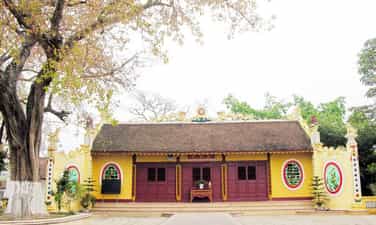
Nam Temple is a religious structure erected by the people of Bac Son commune, An Duong district, Hai Phong city many centuries ago to worship historical figures who contributed to the country in the resistance war against invasion. of the Northern feudal forces, contributing to the establishment of the first autonomous Van Xuan state in the history of our nation's struggle to build and defend the country in the 6th century. According to the legend engraved on the stone tablet Four-sided square pillar dated Tu Duc 19th century on display at the Hai Phong Museum said: The historical figure worshiped at Nam Temple, Bac Son commune is a famous general, his name is Nguyen Hong, a local person. During the uprising against the domination of the Liang Dynasty (China) in the 6th century, Nguyen Hong joined Ly Bi's army, making many contributions to the destruction of the invading army. Luong, helped Ly Bi establish the Van Xuan state, opening a period of independence and autonomy for our nation. Due to his merits, when he passed away, Nguyen Hong was built by the people of his hometown to worship and worship him as the village's tutelary god, worshiped with incense and smoke for thousands of years. Nam Temple was originally called Nam Communal House. Legend has it that Nam Communal House was built right at the place where Nguyen Hong died, and the traces left to this day are that his grave is preserved right in the communal house's harem, above which is a majestic idol placed in an altar. During the years of resistance against the French, Nam communal house was destroyed, only the harem remained. Perhaps because the scale is so small, the villagers call this a temple. But with respect, gradually the local people spent a lot of effort and money to rebuild the temple to become more and more spacious and clean. Today, visiting the ruins of Nam Temple, Bac Son commune, we will see here the charm of traditional Vietnamese village communal house roofs and beautiful, splendid golden altar items, including a palanquin with bowls of tribute. unique in An Duong district. With many tangible and intangible values, in 1990, the State ranked the Nam Temple relic (Nam communal house), Bac Son commune, An Duong district, Hai Phong city as a Cultural Historical Monument. SOURCE: Hai Phong City Electronic Information Portal
Hai Phong
5717 view
Rating : National monument
Dinh Nhu Thuong
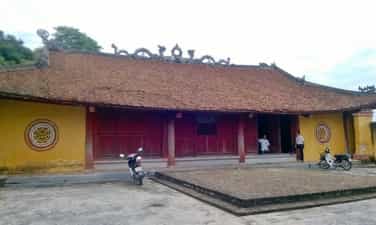
Nhu Thuong communal house in Quoc Tuan commune, An Duong district, Hai Phong worships two sisters Mai Thi Cau and Mai Ky Son, children of King Mai Hac De, the leader of the resistance against the Tang dynasty in the 8th century. Due to their existing friendship and close relationship with the Pham and Hoang families here, Mai Thi Cau and Mai Ky Son helped villagers with land, gold and silver, and recruited villagers to build camps. Joined the insurgent army, contributing to consolidating the dynasty of Mai Thuc Loan Dynasty. In the villages of Van Xa, Nhu Dieu, Kieu Yen Thuong today, they still have place names such as mandarin lagoon, soldier's land... originating from two sisters named Mai who provided each villager with 10 acres of arable land. After a fierce battle with the Tang Dynasty's colonial troops who came to suppress the uprising, Emperor Mai Hac sacrificed his life, and soldiers honored Mai Ky Son to succeed his father. Mai Ky Son's insurgent forces also occupied the Eastern and Southern regions of Tong Binh district for a long time. After more than 2 months, the enemy army was able to destroy the defense base of the two sisters Mai Ky Son in Kieu Yen Thuong, Nhu Dieu. Today, on the bank of an old tidal canal flowing into the Lach Tray River, in Quoc Tuan commune, An Duong district, there are still two small temples, one worshiping the older sister, the other worshiping the younger brother. Legend has it that this is the place where the villagers buried two people in the past, and this is where the tablets and incense bowls were placed. In the third month of the lunar calendar every year, the villagers hold the tutelage ceremony from the two temples to the communal house to hold the opening ceremony. Nhu Thuong Communal House has long become familiar with local people because of its grand architectural scale and delicate art of carving and engraving on wood, bearing the artistic style of the Nguyen Dynasty in the early 19th century. The communal house has a Dinh-style structure, consisting of 5 front halls and 3 majestic back halls built in the style of stacking matches, with roofs, 2 floors, 8 roofs much higher than the 5 front halls, built in the year of Tu Duc. 14 (1861). 20 years later, in the spring of Tu Duc 34 (1882), the villagers built 5 more front halls, connected to the back palace by taking advantage of wood and stone materials from the old riverside communal house. Nhu Thuong communal house was ranked as a historical and cultural relic by the State in 1991. SOURCE: Hai Phong City Electronic Information Portal
Hai Phong
5849 view
Rating : National monument

Dinh Nam
Nam communal house in Bac Son ward, one of the important religious buildings of the people of Do Son area, has just been restored. This is both a spiritual activity spot and a sacred destination in the city's famous tourist area. Located in the middle of a crowded residential area in the center of Do Son district, not far from the beach with waves crashing all year round, Nam communal house today has a moderate scale, bearing the appearance of ancient communal houses in the style of the Le Dynasty. The communal house has Dinh architecture, consisting of 3 compartments, 2 left, made mainly of wood and green stone. The curved, curved roof system with intricate carvings of four sacred animals bears the mark of the 15th century. In particular, all 38 wooden columns in the pavilion have a diameter of 34-45cm, carefully selected from tree trunks. Kien Kien - a precious wood, as hard as ironwood but tougher. Through the ups and downs of history, Nam communal house was completely destroyed twice. The first time around the 17th century, Nam Communal House was one of the military bases of He Nguyen Huu Cau District in Do Son. When Lord Trinh Doanh sent Hoang Ngu Phuc and Pham Dinh Trong to bring troops to suppress the uprising, the communal house was destroyed. After that, local people rebuilt the communal house with 5 rooms, 2 left, solemn and majestic. By the end of 1953, the communal house was destroyed again when the French colonialists forced the people here to move elsewhere, establishing a "white belt" in Do Son. In 1993, the Party Committee, PEOPLE'S COMMITTEE, Vietnam Fatherland Front and the people of Van Son ward rebuilt the communal house on the old foundation. At that time, due to economic difficulties, they only temporarily built a level 4 house and created a few wooden statues to serve as a place for people's spiritual and cultural activities. Since then, although it has been upgraded and repaired many times, the church space has seriously deteriorated, and the wooden statue system has been damaged by termites. In 2011, thanks to socialized funding, 6 worship statues were recast in gold-plated bronze. Based on the wishes of the people, the ward leaders were determined to restore the old communal house, starting construction in October 2014. The Nam Communal House Management Board is completing the grand pagoda, couplets and some details inside the communal house. The desire of the government and local people to continue expanding the communal house's grounds, restore the relic area and carry out relic recognition procedures SOURCE: Hai Phong City Electronic Information Portal
Hai Phong
5533 view
Rating : National monument

Trung Hanh
Trung Hanh is the name of a village in Trung Hanh canton, An Duong district, Kinh Mon district, ancient Hai Duong town, now belonging to Dang Lam ward, Hai An district, Hai Phong. In the past, it was the land where Ngo Quyen stationed his troops and mobilized human and material resources to fight the Southern Han invaders in 938, opening the country's long-term era of independence. As one of the 17 villages and communes with a system of guarding and storing military provisions of Ngo Quyen, Trung Hanh was conferred by successive dynasties and recognized the worship of Ngo Vuong. In particular, Trung Hanh is famous as a spiritual land with outstanding people - many people passed the exam, many talented civil servants and martial generals, which are still recorded on stele and family genealogies. There is a proverb that says: "An Duong - Trung Hanh, Kim Thanh - Quynh Khe, the language of many scholars", meaning: Trung Hanh village, An Duong district, Quynh Khe village, Kim Thanh district, generations have been said to have many mandarins. Trung Hanh Temple - Pagoda is a relic complex ranked by the Ministry of Culture and Information as a national historical and architectural and artistic relic according to Decision No. 57. This cluster of relics is located in a spacious and beautiful campus, Located next to the main road Le Hong Phong connecting Cat Bi airport with the city center. Trung Hanh Temple worshiping Ngo Quyen has a moderate scale. The temple was greatly restored around the 17th century, but traces were left on the four lacquered pillars at the altar. The highlight of the monument is the rationality and continuity of the entire monument campus. The temple has a closed scale, arranged in a foreign internal style including: three-entrance gate, worship hall, two sides of the dance floor and the harem court (inner palace and outer palace). But it creates an open space because the two sides of the pavilion stand parallel to the worshiping place with the outside porch. The temple also preserves 5 decrees dating from 1889 to 1924 (including 3 ancient decrees) and many other precious antiques dating to the 19th century. SOURCE: Hai Phong City Electronic Information Portal
Hai Phong
5705 view
Rating : National monument

Xich Tho communal house
Xich Tho communal house was built at the time of the village's founding about 300 years ago, at the end of the Le Trung Hung dynasty. Due to the passing of time, the old village communal house was ruined and could no longer retain its magic. Around the end of the 18th century, Xich Tho communal house and pagoda were rebuilt synchronously on the current ground. After many renovations, the village communal house now has an area of 1,200 square meters, a curved roof with tiled roofs, and is built in the Dinh style, including 5 front halls and 3 back halls. In the middle of the front hall is the altar to worship Nam Hai village's tutelary god Vuong Pham Tu Nghi. According to legend, he was born in the reign of King Hong Thuan, Le Dynasty, around 1509-1516, in Nghia Xa, Niem Nghia ward, Le Chan district today. As a person with extraordinary health, learning a little and understanding a lot, proficient in literature and martial arts, he had merit in fighting the Ming invaders and assisting the Mac dynasty. Xich Tho Communal House still retains five of his deity titles through the dynasties: Duy Tan, Thanh Thai, Dong Khanh, Tu Duc, and Khai Dinh. In 1924, King Khai Dinh ordained him Phuc Than, recorded it in court ceremonies, and passed it on to places of permanent worship. Therefore, in addition to Xich Tho, now in the villages along the Lach Tray river, there are communal houses, temples or tablets worshiping him. In particular, Xich Tho village communal house still preserves 3 ancient statues made of wood, dating back about 200 years of tutelary god Pham Tu Nghi (Mac dynasty), Bach Xich Dai Vuong (pre-Ly dynasty), Bo Quoc (Tran dynasty). ). In addition, the communal house also preserves the post-god stone stele (genealogical stele) from the early 19th century, during the reign of King Thanh Thai, in recognition of those who made many contributions to the renovation of the communal house, pagoda, and communal lake island. Next to the village communal house is Hung Khanh pagoda. If anyone has the opportunity to visit the pagoda and hear the temple bell ringing next to the vast countryside and windy Lach Tray stream, they will find their soul very peaceful and relaxed. This is a pagoda with ancient beauty, preserving many historical and cultural values of Xich Tho. The pagoda also preserves many rare wooden statues that are nearly 200 years old and a stone Buddha statue dating back 500 years. The big bell (big bell) of Hung Khanh Pagoda, cast in bronze at Kieu Yeu canton from the 19th century, is still intact. On the body of the bell, there is a vivid inscription rich in cultural meaning. After 1954, peace was restored, Xich Tho communal house and pagoda became the learning place for Xich Tho children. From 1965 to 1975, Xich Tho communal house and pagoda were meeting places, gathering to see off the village's children who left to join the resistance war against the Americans to save the country. This place was also the evacuation point of many units during that period such as: Information soldiers of Military Region 3, Hai Phong Construction Company, Dong Tam International Automobile Repair Enterprise Vocational School... Through two great resistance wars of the country, the communal house and pagoda of Xich Tho village are truly the revolutionary base of the An Duong region, and have become a historical witness, a place to mark and remind many generations of people. homeland about heroic and proud years. In 2013, the complex of communal houses, pagodas, and stele commemorating Vietnamese heroic mothers and martyrs of Xich Tho village was recognized by the city as a historical resistance relic. SOURCE: Hai Phong City Electronic Information Portal
Hai Phong
5917 view
Rating : National monument