Relic point Vietnam
Việt Nam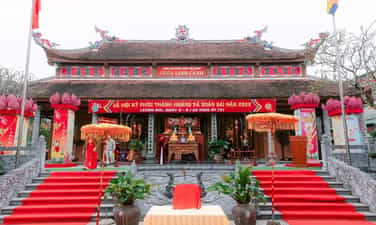
Chùa Linh Cảnh
Nằm tại xã Lam Sơn, tỉnh Thanh Hóa, chùa Linh Cảnh, còn gọi là chùa Bái, là một điểm sinh hoạt văn hóa, tín ngưỡng lâu đời của người dân địa phương. Chùa tọa lạc trên vùng đất giàu truyền thống lịch sử, cách Khu di tích quốc gia đặc biệt Lam Kinh không xa, gắn với không gian văn hóa của vùng đất phát tích vương triều Hậu Lê. Theo tư liệu hiện có, chưa xác định chính xác niên đại khởi dựng chùa. Tương truyền, ban đầu chùa là một ngôi chùa làng nhỏ dưới gốc đa cổ thụ. Đến năm 1937, chùa được nhân dân và Phật tử công đức trùng tu với quy mô lớn hơn. Sau những biến động của chiến tranh và nhiều lần tu bổ, năm 1996 chùa tiếp tục được tôn tạo trên nền cũ. Ngày nay, chùa có không gian khang trang với cổng tam quan, sân chùa rộng, chùa chính gồm tiền đường và thượng điện. Di tích vẫn lưu giữ một số dấu tích, hiện vật có giá trị như bia đá, tam bảo và chuông. Đây cũng là nơi diễn ra các hoạt động Phật giáo, sinh hoạt tín ngưỡng và lễ hội truyền thống của cộng đồng địa phương. Đặc biệt, vào đầu xuân, người dân và du khách tìm về chùa dâng hương, lễ Phật, cầu bình an và tham gia lễ hội kỳ phúc với các nghi lễ rước kiệu, tế lễ cùng nhiều hoạt động văn hóa, thể thao dân gian. Với không gian thanh tịnh và chiều sâu văn hóa, chùa Linh Cảnh góp phần tạo nên điểm nhấn tâm linh trong hành trình khám phá vùng đất Lam Sơn. Nguồn: Trung tâm cung ứng dịch vụ công xã Lam Sơn
Thanh Hoa
47 view
Rating : Di tích cấp tỉnh
Temple of Khuong Cong Phu
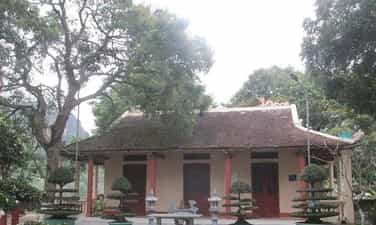
The Khương Công Phụ Temple – A Legacy of a First-Rank Scholar in China. Located in Định Hòa commune, Thanh Hóa province, the Khương Công Phụ Temple commemorates a special figure in the history of Vietnamese imperial examinations. Khương Công Phụ (731–805), from Định Hòa, was the first Vietnamese person to pass the doctoral examination in Chang'an, the capital of the Tang Dynasty, and was later revered as the First-Rank Scholar. Known for his intelligence and studiousness from a young age, Khương Công Phụ and his younger brother Khương Công Phục passed the examinations to go to Chang'an to take the imperial examination. In 780, he topped the list of doctoral candidates among thousands of other scholars. Afterward, he continued to demonstrate his talent in subsequent imperial examinations, earning the trust of the Tang emperor and successively holding many important positions in the court. A man of integrity, he repeatedly offered advice, contributing to the court's resolution of political issues. After his death, his hometown erected a temple to commemorate this talented son. The site once had a front hall and a rear hall in the shape of the Chinese character "Đinh". Today, the temple still preserves some valuable foundation traces, royal decrees, and Sino-Vietnamese documents. It was classified as a National Historical and Cultural Monument in 2001. The Khương Công Phụ Temple is not only a place of religious worship but also a center for educating future generations of Vietnamese people about the tradition of studiousness, pride in their homeland, and the spirit of striving for success. Source: National Museum of History
Thanh Hoa
62 view
Rating : National Monument
Đền thờ Lê Đình Kiên
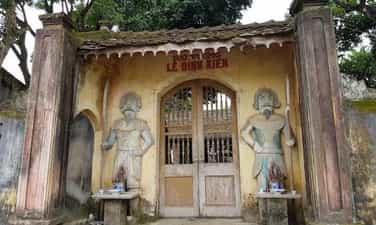
Đền thờ Đại vương Lê Đình Kiên – Dấu ấn một danh nhân xứ Thanh. Nằm tại khu phố Thiết Đinh, xã Yên Định, tỉnh Thanh Hóa, đền thờ Lê Đình Kiên là di tích lịch sử cấp quốc gia, gắn với cuộc đời và sự nghiệp của một vị quan có nhiều đóng góp cho đất nước vào thế kỷ XVII. Lê Đình Kiên sinh năm 1621, từng giữ chức Trấn thủ Sơn Nam trong khoảng 40 năm, từ năm 1664 đến 1704. Trong thời gian cai quản, ông nổi tiếng là người tài trí, nghiêm minh nhưng trọng dân, góp phần giữ gìn an ninh, ổn định đời sống và thúc đẩy hoạt động giao thương tại Phố Hiến. Ông cũng khuyến khích người dân phát triển nghề trồng nhãn, góp phần tạo nên vùng nhãn nổi tiếng của Hưng Yên. Sau khi qua đời năm 1704, di cốt của ông được đưa về quê nhà Thiết Đinh. Ngôi đền được dựng để tưởng nhớ công lao của vị quan được sử sách ghi nhận là người có tài trị nước, có công với dân. Di tích còn lưu giữ những tư liệu, dấu tích gắn với cuộc đời và sự nghiệp của ông; tên Lê Đình Kiên cũng được đặt cho một tuyến phố và trường học tại địa phương. Nguồn: Báo Thanh Hóa
Thanh Hoa
66 view
Rating : Di tích cấp quốc gia
Du Anh Pagoda
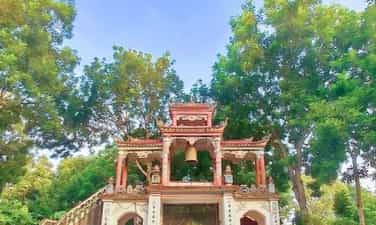
Du Anh Pagoda, located at the foot of Xuan Dai Mountain, within the Ho Cong Cave scenic area, is a long-standing temple dating back to the Ly Dynasty. During the Tran Dynasty, King Tran Nghe Tong brought Princess Du Anh to the pagoda to worship and recuperate. After the princess recovered, the pagoda was upgraded and subsequently named Du Anh. In the early 17th century, the pagoda was rebuilt by Quang Quan Cong Trinh Vinh Loc. The structure once harmonized with the landscape of Trac Phong Mountain, Ho Cong Cave, Nhat Ho Lake, and Nguyet Ho Lake. Notably, the pagoda still preserves stone elephants and lions, considered valuable relics from the Tran Dynasty, along with the "Restoration of Xuan Dai Mountain, Ho Cong Cave, Du Anh Pagoda" stele erected in 1605, recording the history of the pagoda's restoration and the scenic landscape of the area. Today, Du Anh Pagoda has been restored, including the main pagoda, the Mother Goddess house, the Ancestor house, and other auxiliary structures. Together with Xuan Dai Mountain, Ho Cong Cave, and Trac Phong Mountain, the pagoda forms a complex of historical, cultural, and scenic relics. Source: Thanh Hoa Pagoda
Thanh Hoa
134 view
Rating : National Monument
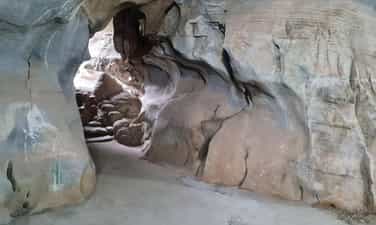
Ho Cong Cave
Ho Cong Cave – A wonder amidst the mountains and waters of Thanh Hoa province. The Ho Cong Cave complex, located in Vinh Loc commune, Thanh Hoa province, includes Ho Cong Cave, Xuan Dai Mountain, Trac Phong Mountain, and Du Anh Pagoda. Ho Cong Cave is situated halfway up Xuan Dai Mountain, boasting a unique landscape with natural rock formations and numerous cultural relics. The cave walls are preserved with many poems by kings, lords, and famous figures such as Le Thanh Tong, Le Hien Tong, Nguyen Nghiem, and Trinh Sam. Notably, it was once praised as "Ho Cong, the most beautiful" among the 36 most beautiful caves in Southern Vietnam. At the foot of the mountain is Du Anh Pagoda, believed to date back to the Ly Dynasty, contributing to the harmonious blend of mountains, caves, rivers, and spiritual space. With its outstanding historical, cultural, religious, and scenic values, the Ho Cong Cave complex was classified as a national historical site in 2009. Source: Thanh Hoa Newspaper
Thanh Hoa
139 view
Rating : National Monument
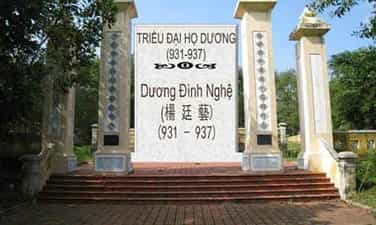
Duong Dinh Nghe Temple
The Dương Đình Nghệ Temple, located in Dương Xá village (now Giàng village), Hàm Rồng ward, Thanh Hóa province, is a historical site associated with Dương Đình Nghệ – a prominent local leader and general who made significant contributions to the struggle for national independence in the 10th century. Dương Đình Nghệ was originally a general of the Khúc clan. After the Khúc dynasty's defeat, he returned to Dương Xá, gathered forces, recruited heroes, and established a base. In 931, from his hometown, Dương Đình Nghệ led his army north, besieged and captured Đại La citadel, and defeated the Southern Han army led by Trình Bảo. This victory contributed to restoring national independence and laid the groundwork for the Bạch Đằng victory in 938 by Ngô Quyền, his son-in-law. Dương Đình Nghệ was assassinated by Kiều Công Tiễn in 937. After his death, he was revered as a benevolent deity by the people of his hometown, and a temple was erected to commemorate his contributions. The temple was classified as a national historical and cultural relic by the State in 1996. Despite numerous renovations, the temple retains its ancient and majestic appearance and preserves many valuable artifacts such as kneeling elephant statues, stone horses, a pair of stone statues, and a stone stele commemorating meritorious deeds. Next to the temple is Phuc Hung Pagoda, creating a cultural and religious space connected to the history of Duong Xa region. Every year, the Duong Dinh Nghe Temple festival is held in the spring, attracting locals and tourists to commemorate the famous general who repelled the Southern Han army, contributing to the era of national independence. Source: Ham Rong Ward website
Thanh Hoa
191 view
Rating : National Monument
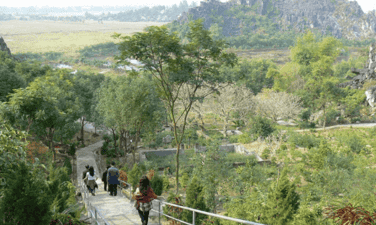
Ham Rong Mountain
Ham Rong Mountain, situated on the banks of the Ma River, is one of Thanh Hoa's most iconic landmarks, closely associated with the region's natural landscape, culture, and history. The mountain range consists of many interconnected peaks, winding along the river, with the final peak resembling a dragon's head holding a pearl, hence its name, Ham Rong or Long Ham (Dragon's Head). Opposite the mountain across the Ma River is Ngoc Mountain, creating a distinctive "dragon playing with a pearl" landscape. Within the Ham Rong mountain complex are Long Quang Cave and Tien Son Cave. Long Quang Cave was once a place where many poets and writers, including Nguyen Trai and Le Thanh Tong, left their mark. Tien Son Cave has a multi-tiered system with diverse stalactite formations, linked to folk tales about Buddha and immortals. Beyond its scenic value, Ham Rong is also an important cultural and historical space in Thanh Hoa. The image of Ham Rong Mountain, the Ma River, and Ham Rong Bridge has become a symbol associated with the battle to protect the bridge during the resistance war against the US. This area is also located near the ancient village of Dong Son – a place associated with the Dong Son culture and valuable archaeological discoveries. Today, Ham Rong Mountain is a destination that combines sightseeing, cave exploration, and learning about the history and culture of Thanh Hoa province. Source: Cong Ly Newspaper
Thanh Hoa
230 view
Rating : National Monument
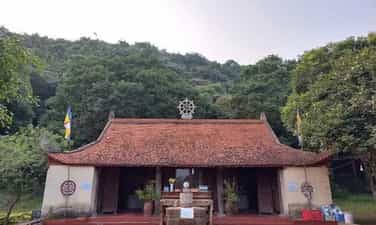
Am Cac Pagoda Complex
Am Cac Pagoda is located on the eastern slope of Cac Mountain, in Dinh Hai commune, Tinh Gia district, Thanh Hoa province. Ranked as a provincial-level historical site in 2013, it is considered one of the most significant and valuable ancient Buddhist complexes in Thanh Hoa. The Am Cac pagoda complex includes Trinh Pagoda, Ha Pagoda, Trung Pagoda, Thuong Pagoda, Ngoc Son Palace, and many ancient relics and artifacts such as foundations, tombs of monks, ancient wells, stone gongs, stone bells, and stone slabs carved with Buddha images. Ha Pagoda is the center of the complex, while Thuong Pagoda sits atop Cac Mountain – considered the "gateway to heaven." Over time, many ancient structures have been damaged, but the remaining relics and artifacts contribute to illuminating the history of Buddhism in this region. Some structures have been restored and renovated, making Am Cac an attractive pilgrimage, sightseeing, and cultural-historical destination in Thanh Hoa. Source: Thanh Hoa Newspaper
Thanh Hoa
344 view
Rating : Provincial-level historical site
Chùa Đót Tiên
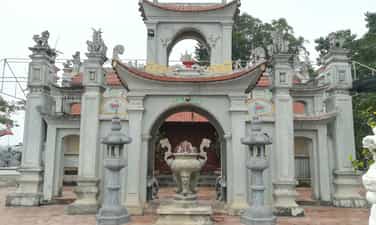
Chùa Đót Tiên (Đót Tiên tự) nay thuộc xã Hải Thanh, tỉnh Thanh Hóa, nằm trên sườn núi Tiên, trong không gian cảnh quan ven biển Lạch Bạng. Cùng với đền Lạch Bạng và đền Quang Trung – Nguyễn Huệ, chùa tạo thành một quần thể di tích lịch sử, văn hóa và thắng cảnh đặc sắc của vùng biển xứ Thanh. Chùa có từ thời Lê, trải qua nhiều lần tu bổ, trong đó kiến trúc còn lại chủ yếu mang phong cách thời Nguyễn. Chùa được xây theo hình chữ “Đinh”, gồm Tiền đường và Hậu cung. Trong chùa hiện còn 26 pho tượng Phật cổ, cùng nhiều di vật có giá trị như bia đá, đại tự, câu đối và hai chuông đồng cổ. Nằm giữa không gian núi và sông biển hài hòa, chùa Đót Tiên vừa mang vẻ cổ kính, thanh tịnh, vừa gắn bó với đời sống của cư dân vùng cửa biển Lạch Bạng. Đây là nơi sinh hoạt tín ngưỡng của nhân dân và điểm đến phù hợp để tìm hiểu giá trị kiến trúc, nghệ thuật và văn hóa Phật giáo truyền thống của Thanh Hóa. Chùa Đót Tiên thuộc cụm di tích thắng cảnh Lạch Bạng, có giá trị trong bảo tồn di sản và phát triển du lịch văn hóa – tâm linh địa phương. Nguồn: Chốn Thiêng – Danh bạ tâm linh đất Việt
Thanh Hoa
356 view
Rating : Di tích cấp tỉnh
Temple of the Grand Scholar Le Nhan Quy
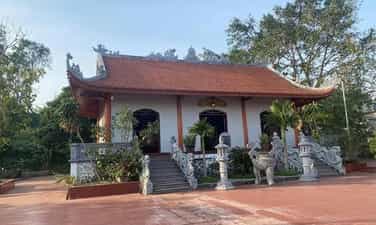
The temple dedicated to Grand Scholar Lê Nhân Quý, now located in Mai Lâm ward, Thanh Hóa province, is a historical site associated with a prominent figure of the early Lê dynasty. Lê Nhân Quý, originally from Kim Cốc village, held the positions of Grand Scholar of the Đông Các and Commander-in-Chief of the Imperial Guard. He played a key role in suppressing the Lê Nghi Dân rebellion, securing Lê Thánh Tông's ascension to the throne in 1460, and participating in the Champa campaign in 1471. Beyond his contributions to the court, he was also known for organizing the construction of the Hoàng Các dike, reclaiming coastal land, and contributing to the stability of production and the lives of the people. After his death, he was revered as the tutelary deity by the people, and a temple was erected in his honor. The complex includes the temple, his tomb on Tháp Mountain, and remnants of the Hoàng Các dike. The temple, built in the late 15th century, features traditional architecture and still preserves many valuable horizontal plaques, couplets, imperial decrees, and ceremonial artifacts. His tomb, located on Tháp Mountain, is where the local people maintain the tradition of offering incense and paying respects. The Hoang Cac dike is an important historical site associated with the water management and land reclamation achievements of Le Nhan Quy. It played a crucial role in preventing saltwater intrusion, leaching acidic soil, and creating arable land for coastal residents. With its historical, cultural, and architectural value, this complex of relics is a suitable destination for learning about the historical figure Le Nhan Quy, the scholarly tradition, and the process of developing the coastal areas of Thanh Hoa province. Source: Hanoi People Magazine
Thanh Hoa
263 view
Rating : Provincial-level historical site