Relic point Vietnam
Việt Nam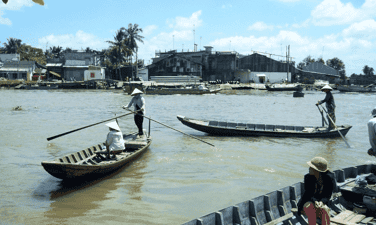
Tu Tong ferry station
Located peacefully on the red alluvial Red River, Tu Tong wharf (now in Tu Lien, Tay Ho ward, Hanoi) is a historical witness, marking the heroic history of the Capital during the resistance war against the French colonialists. Before the August Revolution, the ancient land of the Four Generals was one of the centers of the revolutionary movement in Hanoi, where many cadres were hidden and protected. When the guns of the National Resistance broke out, Tu Tong wharf quickly became a strategic traffic artery connecting the inner city with the safe base area of Dong Anh. The pinnacle of the victory here took place on the night of January 15, 1947, when the self-defense forces and people of Tu Tong bravely rowed boats carrying officers, soldiers and weapons across the Red River safely under a hail of enemy bullets. The silent sacrifice and the spirit of "death for the Fatherland" of the people here made an important contribution to protecting the core forces of the revolution in the arduous early days. Now that the war has receded, the old wharf has been labeled by the State as a historical relic of the revolutionary resistance. This place has become a sacred "red address", reminding today's young generation of the patriotism and resilient revolutionary tradition of their ancestors. According to: Hanoi New Newspaper
Hanoi
510 view
Rating : Provincial level relics
K9 Da Chong Relic Area
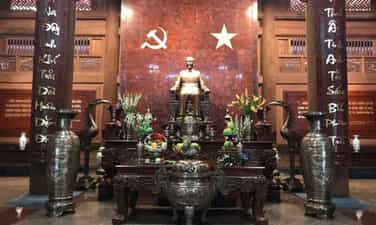
K9 Da Chong Relic Area - A red address marking the years of history Located at the foot of Ba Vi Mountain, about 70 km from the center of Hanoi, K9 Da Chong Relic Area is one of the special historical relics associated with President Ho Chi Minh and the resistance war against the US to save the country. In 1957, during a business trip to Ba Vi, Uncle Ho stopped at Da Chong area and realized that this place had an important strategic position. In 1958, he decided to choose K9 as the working base of the Party Central Committee. From 1960 to 1969, K9 was the place where President Ho Chi Minh and the Politburo met to discuss many important decisions of the country, and also welcomed many international delegations. After Uncle Ho passed away in 1969, K9 continued to undertake the special task of preserving and preserving his body during the war years, before being brought to Ho Chi Minh's Mausoleum in 1975. Up to now, K9 Da Chong Relic Area still preserves many valuable works and artifacts such as a two-story stilt house, office room, service house, area to preserve President Ho Chi Minh's body and pristine mountain and forest landscape. Not only is it a testament to a special historical period of the nation, this place is also a traditional educational address, contributing to helping today's generations better understand the life, thoughts and simple lifestyle of President Ho Chi Minh. According to: Tourist Information Center
Hanoi
678 view
Rating : Special national monument
Statue of King Le Thai To next to Sword Lake
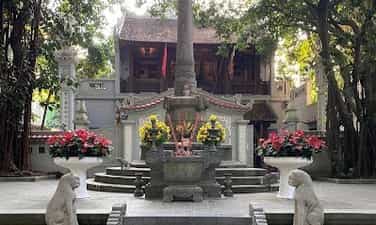
Statue of King Le Thai To next to Sword Lake The statue of King Le Thai To is located in the temple worshiping King Le Thai To located at 16 Le Thai To Street, Hang Trong Ward, Hoan Kiem District, Hanoi, in the green space on the banks of Hoan Kiem Lake. This is a historical relic associated with national hero Le Loi and the legend of returning the magic sword, a typical symbol of Thang Long - Hanoi. According to history books and legends, after leading the Lam Son uprising to defeat the Ming army, establishing the Later Le Dynasty, King Le Thai To returned the Thuan Thien sword to the Golden Turtle at Hoan Kiem Lake. From then on, the lake was named Hoan Kiem Lake (or Sword Lake), becoming a symbol of the desire for peace and national independence. The bronze statue of King Le Thai To was built in 1896, about 1.2 meters high, showing the king in a majestic posture, his right hand holding a sword, his left hand on his hip. The entire relic includes gate, garden, Phuong communal house and monument, in harmony with the landscape of Hoan Kiem Lake. In 2000, the project was restored and renovated on the occasion of the 990th anniversary of Thang Long - Hanoi. According to: Hanoi Landscapes and Monuments
Hanoi
355 view
Rating : National monument
Quan La Communal House
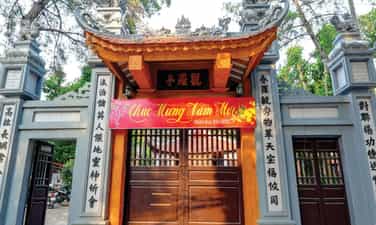
Quan La Communal House - Historical relic associated with a mysterious ancient underground tunnel. Quan La communal house is located in Tay Ho ward, Hanoi, is an ancient communal house with a long history of the West Lake region. According to Tay Ho 360 website, the communal house is also called Quan Gia La, Quan Khai Nguyen or Quan Chua Hang, worshiping the village's tutelary god with many ordinations from the Le and Nguyen dynasties, of which the earliest ordination is dated 1653. Along with Khai Nguyen pagoda, Quan La communal house was ranked a national historical and architectural and artistic relic in 1992. The communal house stands out with traditional architecture, ancient space and many hundreds of years old trees. This is also the place where President Ho Chi Minh visited twice in 1958 and 1964, and was also the place where the Capital's defense force was stationed during the resistance war against the US. A special feature of Quan La communal house is that below the harem there still exists Thong Thien Cave - an ancient underground tunnel built of brick arches. According to Tay Ho 360, this work is said to date back to the Ly dynasty. Some theories say that this was once a Taoist alchemy place, while archaeologists believe it could be a Han Dynasty burial tomb. To date, the origin and function of the underground bunker have not been determined, creating a mysterious and unique appeal for the monument. With historical value, architecture and unique archaeological vestiges, Quan La communal house is not only a place for religious activities of the community but also a destination to help visitors learn about history, culture and mysteries still preserved in the heart of the Capital. Source: According to Tay Ho 360 website.
Hanoi
681 view
Rating : National monument
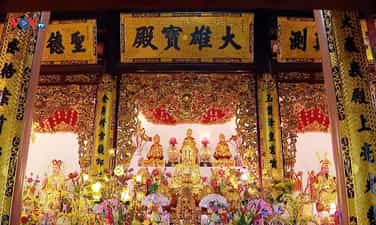
Historical and artistic relic Tho Lao Pagoda
Historical and artistic relic Tho Lao Pagoda. Tho Lao Pagoda has the literal name "Thanh Nhan Tu", located at 20 Tho Lao Street, Dong Nhan Ward, Hai Ba Trung District, now Hai Ba Trung Ward, Hanoi City. The pagoda also has the Nom name Bun Pagoda, the reason for its name is because Tho Lao village in the past had the profession of making vermicelli. Tho Lao Pagoda was built in the 18th century. During the resistance war against the French colonialists, the pagoda was destroyed by artillery shells and burned to the ground, leaving only 3 rooms of the Mother Church. After the liberation of the capital in 1954, the government, the abbot and all the people restored the pagoda to its old location. After many restorations in the year of Canh Ngo (1990), the year of Mau Dan (1998) and the most recent restoration took place in the year of the Dragon (2012), the architectural scale has been kept intact until now. Currently, the main pagoda has a "second" architectural layout with a scale of 2 floors and 8 majestic roofs, including: Trai hall, Dai Hung Bao hall, Ksitigarbha altar, Patriarch church, Mother church, Tu Grace house and Sutra room... In the pagoda, there are still preserved the statues of the Three Worlds, the Eternal Dharmakaya, the statues of the World-Honored Buddha, Amitabha, Avalokiteśvara and Mahasthamaprapta Bodhisattva, the thousand-armed Guan Yin, the Nine-Dragon throne and the statue of the newborn Shakyamuni... Two altars to worship the Monsignor and the Holy Monk are arranged in the two gables of the Tam Bao house. Most of these statues were created during the Nguyen Dynasty in the 19th century. The relics are crafted from wooden materials such as horizontal boards, couplets, incense burners... with the main theme being the four sacred animals and the four precious animals - mascots of the universe that symbolize the transformation of creation, and at the same time express human aspirations for natural life. The most unique is the Tay Son bronze bell dated Canh Thinh 6 (1798), indicating the early birth of the monument. In addition, during the period 1936 - 1944, Tho Lao Pagoda was the place of operation of patriotic organizations in Dong Nhan village such as: Elderly Association, Women's Association, Youth Association... During the years of national resistance, especially during "Hanoi - 60 days and nights of smoke and fire", the pagoda was a place to hide Viet Minh cadres and a place to station, gather, and transfer wounded soldiers of the Capital Protection Regiment - Inter-Region I. According to: 360° historical - cultural relics of Hai Ba Trung ward, Hanoi city
Hanoi
262 view
Rating : Provincial level relics
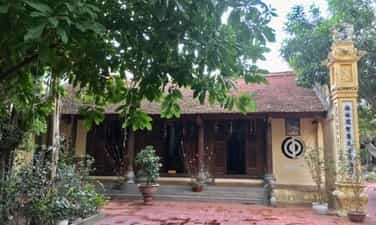
Huong Tuyet Pagoda historical site
Huong Tuyet Pagoda historical site. Huong Tuyet Pagoda is located at lane 205, Bach Mai street, Hai Ba Trung ward, Hanoi. On the post-Buddhist stele built in the year of Nham Ty, the 6th year of Duy Tan (1912), the history of the construction of this pagoda is clearly recorded as follows: "Mr. Nguyen Huu Quang on Hang Dao street, Dong Lac ward, and his wife Truong Thi Dieu, decided to buy a private garden in Bach Mai ward, Hoan Long district to build a pagoda to worship Buddha, paint statues, and cast pagoda bells. In the year of Tan Hoi (1911), October, on an auspicious day, the pagoda was completed and placed. named "Huong Tuyet Tu" (Perfume Tuyet Pagoda)". Pagoda buildings include: Gate, main pagoda, Patriarch's house, Mother's house and guest house. The main pagoda includes: Front hall; Middle Hall and Upper Palace. The most interesting thing about the pagoda is the system of Buddha statues arranged higher and higher in the upper house. The entire system of over 50 round statues was created in the first half of the twentieth century. In addition, the pagoda also preserves many precious relics such as: 3 bronze bells; 3 stone steles of the Nguyen Dynasty record the construction of the pagoda and meritorious people; and wooden relics include: Royal concubine, couplet, y door, hammock, scroll, incense burner, dragon throne, altar... carved with themes of four sacred animals, four precious animals, adoring dragons, tigers... all painted with gold and gilded, dating from the 19th - 20th centuries. Besides, the pagoda is also a historical site of the Revolution, making a great contribution to the resistance war against the French. At the pagoda gate, there is a stone stele carved in 1938 stating: "The Huong Tuyet Pagoda area was the contact place of the Vietnam Revolutionary Youth Comrades Association in 1929 and was the headquarters of the Steering Committee of the first strike of Avia Hanoi factory workers (from May 28 to June 10, 1929)". The relics of Huong Tuyet Pagoda and the struggle of Avia Hanoi workers were the direct driving force promoting the wave of revolutionary struggle of our people, leading to the birth of the Indochina Communist Party organization (June 17, 1929) - the main nucleus of the Communist Party of Vietnam, established on February 3, 1930. According to: 360° historical - cultural relics of Hai Ba Trung ward, Hanoi city
Hanoi
257 view
Rating : National monument
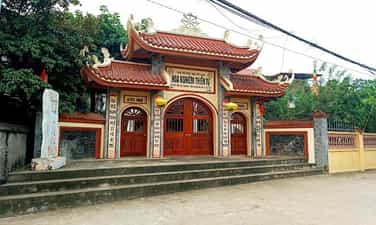
Hoa Nghiem Pagoda
Hoa Nghiem Pagoda - An ancient pagoda that preserves the artistic imprint of the Mac Dynasty. Located in Phuong Ban village, Phung Chau commune, Chuong My district, now Phu Yen village, Phu Nghia, Hanoi, Hoa Nghiem pagoda (Hoa Nghiem pagoda) is an ancient pagoda with a long history, closely associated with the cultural and religious life of local people. Located in the land of Doai rich in historical tradition, the pagoda is not only a sacred place to worship Buddha but also a relic that preserves many unique cultural and artistic values. The pagoda was built in the traditional architectural style of the Northern Delta with wooden structures, ancient tiled roofs and a peaceful space under ancient trees. In particular, the pagoda is located adjacent to Phuong Ban communal house, forming a relic complex that clearly reflects the religious life of ancient agricultural residents. The outstanding value of Hoa Nghiem Pagoda is its system of rare antiques dating back to the Mac Dynasty (16th century). Among them, the highlight are ancient Buddha statues with sophisticated sculpture style, demonstrating the soft, intimate beauty of Vietnamese Buddhist art. The pagoda also preserves a stone stele of the Mac Dynasty with records of the process of building and restoring the pagoda and those who contributed to it, which is a valuable source of material for studying history, culture and Han Nom. Having gone through many historical events, Hoa Nghiem Pagoda is still preserved and embellished, becoming an attractive spiritual and cultural destination of Chuong My district. With unique historical, architectural and artistic values, the ancient temple contributes to preserving the cultural heritage of the Doai region and is a meaningful address for tourists, Buddhists as well as researchers. Reference source: Institute of Sino-Nom Studies
Hanoi
709 view
Rating : Provincial level relics
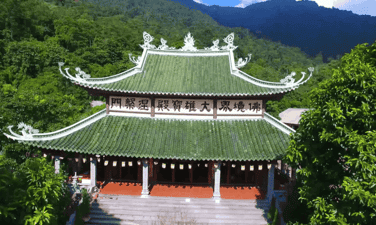
Tan Vien Pagoda
Tan Vien Pagoda - Sacred ancient temple in the middle of Ba Vi mountains and forests. Located on the slopes of Ba Vi mountain, in Minh Quang commune, Hanoi, Tan Vien pagoda (Tan Vien Son Quoc Tu) is an ancient pagoda associated with the sacred land of Tan mountain. According to the pagoda's documents, the pagoda has a history dating back to the reign of An Duong Vuong. Experiencing many historical events, the temple was damaged and became ruins before being restored by local people in 1993. In 2008, Venerable Thich Dao Thinh was appointed abbot and together with monks, nuns, and Buddhists gradually built and developed the pagoda into a center for learning and propagating Dharma in the Ba Vi area. After nearly two decades, the pagoda has been built spaciously with many items such as Tam Bao, Patriarch's house, Quan Am Thien Thu Thien Nhan palace, Dharma conference house, Dai Thong Tri Thang statue, Quan Am cave - well and many spiritual works in harmony with mountain and forest nature. Not only is it a place of worship, Tan Vien Pagoda also regularly organizes retreats for Buddhists, teenagers and students, contributing to spreading the values of compassion, wisdom and morality of Buddhism. With its pure landscape, unique architecture and sacred space between Ba Vi Mountain, Tan Vien Pagoda today is an attractive spiritual and cultural destination for tourists and Buddhists from all over. Source: People's Representative Newspaper.
Hanoi
719 view
Rating : National monument
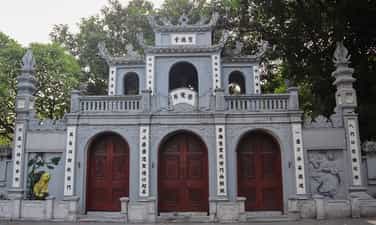
Ha Pagoda
Ha Pagoda - Historical relic, artistic architecture and famous spiritual destination of the Capital. Ha Pagoda, the name Thanh Duc Tu, is located on Chua Ha street, Cau Giay ward, Hanoi city. This is one of the famous ancient temples of the Capital, with historical, architectural and spiritual cultural value, attracting a large number of people and tourists to visit and worship. According to historical documents, the pagoda was built in the Later Le period and has been restored and embellished many times but still retains its traditional architecture. The relic complex includes three gates, front hall, upper palace, Mau house and To house, arranged harmoniously in a cool green space. The pagoda still preserves many precious artifacts such as a bronze bell cast in 1799, a system of Buddha statues, Mother Goddess statues, stone stele of the Nguyen Dynasty and many ancient worship objects of historical and artistic value. Not only is it a place to worship Buddha, Ha Pagoda also has a Mother Goddess shrine, reflecting the harmonious combination of Buddhism and Vietnamese folk beliefs. In particular, the pagoda is also a place marking an important revolutionary event when the Hanoi Party Committee and the Revolutionary Military Committee held meetings here to prepare for the August General Uprising in 1945. With outstanding historical, architectural and cultural values, in 1996 Ha Pagoda was ranked a national historical, architectural and artistic relic by the Ministry of Culture and Information (now the Ministry of Culture, Sports and Tourism). Today, the temple is not only a famous spiritual destination but also an address to help visitors learn about the history and culture of Hanoi. Source: Hanoi Landscapes and Monuments
Hanoi
793 view
Rating : National monument
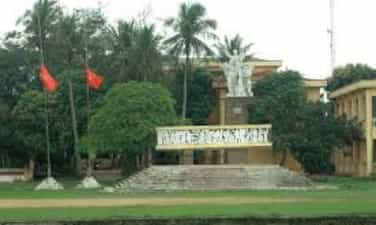
Fire Zone Museum
Fire Zone Museum Khu Chay Museum is located in Dong Tan commune, Ung Hoa district (now Dong Tien commune, Hanoi city), is a place to store and introduce documents and artifacts about the revolutionary struggle movement of the army and people of Khu Chay - a guerrilla base area including 22 communes in the south of Ung Hoa district and west of Phu Xuyen district during the resistance war against the French colonialists. According to historical documents, since the 1930s, Khu Chay soon became the base of revolutionary activities. During the resistance war against the French (1946–1954), this place was an important guerrilla base, despite being surrounded by the enemy and conducting many large-scale raids. The army and people of Khu Chay fought tenaciously, defeating many raids, notably the "Cangguru" raid in 1952, contributing to protecting the base area and supporting the resistance movement in Ha Dong (formerly). After 1975, the Fire Zone Museum was built on the land that was once a fierce battlefield to preserve historical values and educate revolutionary traditions. In 2004, the museum was upgraded with more modern display space. Currently, the museum stores nearly 1,000 documents, images and artifacts, displayed on the themes of Khu Chay's terrain, the patriotic traditions of the local people, the resistance war against the French colonialists and the process of building the homeland after peace. Many precious artifacts are being preserved such as the machete that comrade Do Muoi used during the August Revolution, the choke used by comrade Hoang Quoc Viet during secret activities, a letter of praise from President Ho Chi Minh to the guerrillas of Khu Chay, and many weapons, living utensils, and resistance artifacts. Today, the Fire Zone Museum is a typical red address of Hanoi, contributing to educating today's generations on patriotic traditions, the spirit of revolutionary struggle and the resilient will of the soldiers and people of the Fire Zone. According to: Hanoi Landscapes and Monuments.
Hanoi
873 view
Rating : Provincial level relics