Relic point Vietnam
Việt Nam
Sea Lily Fossil Area
The Ministry of Culture, Sports and Tourism issued official dispatch No. 3087,3088,3089/QD-BVHTTDL dated September 23 on the classification of a national monument for scenic spots for the Hue Bien Fossil area in Ha Giang province. As a border highland province, the terrain is difficult to travel and the climate is relatively harsh, but Ha Giang is blessed with many beautiful landscapes. The Sea Lily Fossil area - a scenic spot in the province has officially become a National Monument. The Sea Lily Fossil Area is a location where larger sea lily fossils have been discovered than elsewhere, and are also more densely distributed. The scientific name of the sea lily is Endoxocrinus parrae. The reason this flower is named Sea Lily is because its shape resembles a flower clinging to the bottom of the ocean. They are the oldest group of echinoderms still alive today. Scientists have found about 5,000 fossil specimens and more than 600 species currently live in this scenic area. SOURCE: MEO VAC DISTRICT ELECTRONIC INFORMATION PAGE
Tuyen Quang
6431 view
Rating : National monument

Ky Dai Square March 26
Ky Dai March 26 Square, is the old location of the former "Stadium" of Ha Giang City. In 1959, Ky Dai was built to meet the needs of cultural, arts, and sports activities of ethnic people in Ha Giang province. In the early spring of 1961, Uncle Ho visited Ha Giang province. On the beautiful morning of March 27, an important historical event took place in Ky Dai, that is, all officers, soldiers, armed forces and Ethnic people in the province met Uncle Ho. Ky Dai became a historical relic, here, the monument of Uncle Ho and Ha Giang ethnic people was built and inaugurated in 2005, to forever remember the historical event of Uncle Ho and Ha Giang. Ky Dai has been restored, the old Stadium has been upgraded into a Square of Ha Giang province and Ky Dai has become a traditional educational place for generations of children of ethnic groups in the province. SOURCE: HA GIANG CITY ELECTRONIC INFORMATION PAGE
Tuyen Quang
6619 view
Rating : National monument

Quan Ba Twin Mountains
Quan Ba Twin Mountains seem to be a very familiar destination for travel lovers. This place always has a strange attraction for tourists. The image of Quan Ba twin mountains has a very unique characteristic. This twin mountain is like a special highlight among the mountains and forests. The two mountains are located in the southwest area of the Dong Van Stone Plateau. The twin mountains are a symbol of the richness of the land they reside on. Quan Ba Twin Mountain is also known by other names: Twin Mountain or Co Tien Mountain. They were formed between 1.6 million and 2 million years ago. The mountain has a round shape, as full as the chest of a sleeping fairy. It seems that anyone who comes to Ha Giang will come and check-in with this natural masterpiece. Quan Ba Twin Mountains attract tourists not only because of the uniqueness of the two mountains. An equally impressive highlight is the rich and beautiful natural scenery that surrounds this place. The Creator has been very kind when giving this place a wonderful landscape. Visitors will be able to see the long stretches of rice fields. Mixed in there are green undulating mountain ranges. And at each different time, Quan Ba mountains and forests bring their own unique colors. This unique thing is the unique highlight that has attracted so many tourists. No matter how many times you come here, you always have different feelings. It can be said that Quan Ba twin mountains are like a symbol of Ha Giang. And this place was created hundreds of millions of years ago. This is a product created based on the creation of nature. Along with that, the faulting of the earth's crust has contributed to the creation of limestone mountains. Quan Ba Twin Mountains have been recognized as a national relic and scenic spot of our country. This typical image is like a highlight of Ha Giang land. It would be a pity if you come to Ha Giang and miss this attractive destination. Only once you have to come here and see it directly can you feel this wonderful beauty. Quan Ba Ha Giang Heaven Gate - Twin Mountains is considered the "gateway" that opens the way to conquer the Dong Van stone plateau area. You can review and research carefully to create a complete schedule. That will help you have a complete journey of discovery. SOURCE: Vietnam Booking
Tuyen Quang
6931 view
Rating : National monument

Hoang Su Phi terraced fields
As a highland mountainous district in the west, Hoang Su Phi has long been famous for the most beautiful terraced fields of Ha Giang, stretching across the mountain slopes, which are considered a testament to extraordinary determination. and the ability of the ethnic communities here to renovate and conquer nature. Since being recognized as a national heritage site in 2011 and 2016, Hoang Su Phi terraced fields have become increasingly famous, becoming one of the typical tourism products of Ha Giang thanks to its historical values. history, culture and artistic landscape. “The difference of Hoang Su Phi terraced rice landscape is that it has many levels, winding and running from the streamside to the top of the mountain. Mixed in there are primeval forests, ancient tea fields, houses and rivers and streams, creating a harmonious and colorful picture of nature. The entire Hoang Su Phi district currently has over 3,720 hectares of terraced fields spread evenly across 24 communes and towns, of which 675 hectares have been ranked as a National Monument of Scenic Rice Terraces by the Ministry of Culture, Sports and Tourism. ladders in 11 communes including: Nam Ty, Thong Nguyen, Ho Thau, Ban Luoc, San Sa Ho, Ban Phung, Thang Tin, Nam Khoa, Po Lo, Ban Nhung, Ta Su Choong. SOURCE: VIETNAM NATIONAL TOURISM BUREAU
Tuyen Quang
6613 view
Rating : National monument
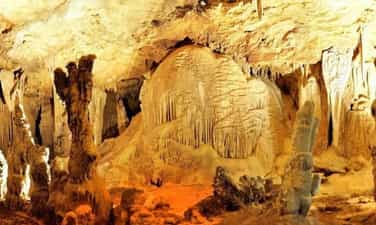
Na Luong Cave
The scenic Na Luong cave, located in Mau Long commune, Yen Minh district and Sung Trai commune, Dong Van district (Ha Giang) has officially become a National Monument. The above information has been confirmed by Deputy Director of the Department of Culture, Sports and Tourism of Ha Giang province, Trieu Thi Tinh. Na Luong cave scenic spot is located about more than 25 km from the center of Yen Minh town. This cave was discovered by scientists in 2010 and has been considered the most beautiful cave compared to other caves that have ever been discovered in Ha Giang province with majestic natural landscapes and poetic nuances. , shimmering and magical. The cave entrance is over 30 meters wide and is covered with rare types of wood such as: grinds, nails, slices... In particular, caves in limestone mountains are one of the most popular types of geological heritage of the Park. Global geology of Dong Van Karst Plateau. Over thousands of years of tectonics, the cave has created many stalactite columns with interesting shapes and sparkling colors like diamonds; The cave is very wide and deep, divided into many successive compartments, attracting a large number of tourists. According to Mr. Hoang Van Vinh, Secretary of Yen Minh District Party Committee, Ha Giang province: Immediately after being recognized as a National Monument, Yen Minh district deployed functional units to protect Na Luong cave in order to preserve the cave. original pristine beauty. The district also promoted propaganda and campaigned for ethnic minorities and tourists not to exploit stalactites in the cave; Do not hunt animals and birds to protect the ecological environment. At the same time, invest, upgrade and build the scenic Na Luong cave to become an attractive tourist destination for tourists coming to Dong Van Karst Plateau Global Geopark./. SOURCE: VIETNAM NATIONAL TOURISM BUREAU
Tuyen Quang
6918 view
Rating : National monument
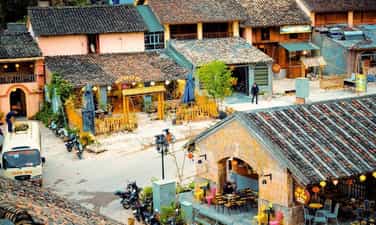
Dong Van ancient town
According to sources of the People's Committee of Ha Giang province, Dong Van ancient town (belonging to Dong Van town, Dong Van district, Ha Giang) formerly belonged to Dong Quan canton, Nguyen Binh district, Tuong Yen district, Ha Tuyen province. Afterwards, it merged into Bao Lac province, managed by a Tay mandarin named Nong in Bao Lac. When the French colonialists occupied, Dong Van was separated from Bao Lac. In 1887, the Dong Van area was occupied by the French colonialists and to facilitate colonial rule, they divided Dong Van into small continents, each headed by a ruling family. The land of Dong Van at that time was governed by the Nguyen family, Mr. Nguyen Chan Quay. Previously, the old town was just a wild, sparsely populated valley. By the end of the 19th century and the beginning of the 20th century, when the French occupied Ha Giang, with the intention of turning this area into a busy trading center, Dong Van old town was built and formed, the first person to plan It was decided and built by Mr. Luong Trung Tu - chief of Dong Van town at that time. After that, many ancient houses were built in two rows surrounding the market and extending to the foot of the mountain. In addition, in the ancient town there is also a market where people of all ethnic groups trade. On market days, Mong, Pu Peo, and Lo Lo young women dressed in ethnic costumes from far away villages come to the market to shop, meet, and exchange essential goods... Through many ups and downs of history, Dong Van old town still preserves about 40 ancient houses, most of which have 2-story walls and yin-yang tile roofs over 100 years old, especially houses over 200 years old. five to nearly 300 years old, along with a number of other unique ancient architectural works... With unique historical, cultural and architectural values, Dong Van ancient town has been recognized by the Ministry of Culture, Sports and Tourism as a National Architectural and Artistic Monument under Decision No. 4195/QD- BVHHTDL on November 16, 2009. SOURCE: Central Agency of the Communist Party of Vietnam
Tuyen Quang
6578 view
Rating : National monument
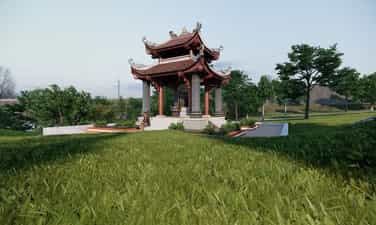
STONE CELEBRATING THE PLACE OF ESTABLISHMENT OF THE WOMEN'S ADVOCACY COMMITTEE OF HA GIANG PROVINCE
STONE CELEBRATING THE PLACE OF ESTABLISHMENT OF THE WOMEN'S ADVOCACY COMMITTEE OF HA GIANG PROVINCE - Location: Bo Loong village, Hung An commune, Bac Quang district, Ha Giang province. - Directions: Commemorative stele where the Women's Mobilization Committee of Ha Giang province was founded, 70km south of Ha Giang city center, from Ha Giang city follow National Highway No. 2 towards Ha Giang - Tuyen Quang, to Market No. 9, Hung An commune, turn left along the road to Bo Loong village for more than 2km to reach the Beer location. In March 1943, Viet Minh cadres from the north of Tuyen Quang province went to Bo Loong village, Hung An commune, Bac Quang district, Ha Giang province to propagate the revolutionary line of the Viet Minh front and build a base. local revolution. Here, the Women's Advocacy Committee was established with 5 members. After its establishment, under the direction of Viet Minh cadres, the women propagated and mobilized women in Hung An commune and neighboring localities to join the Women's Union for National Salvation and participate in the revolutionary movement. Actively contributing to the revolutionary struggle to expel the enemy, gain power, and liberate the homeland and the country. The establishment of the Women's Mobilization Committee in Bo Loong village, Hung An commune - is the first grassroots organization of the Association, marking the development of the women's activist movement, which is also the premise for the year 1945: Ha Giang Province Women's Association for National Salvation was established (later Ha Giang Province Women's Union). The construction of a commemorative stele where the Women's Mobilization Committee of Ha Giang province was established in Bo Loong village, Hung An commune is to remember the place where the first grassroots organization of the women's activist movement was established, and has educational purposes. Traditional education about the traditions of patriotism, fighting against invaders to protect the country for young generations to follow, thereby constantly learning and cultivating to be worthy of previous generations, contributing to protecting and protecting the country. Build a country that is increasingly rich in beauty and culture bright. SOURCE: ELECTRONIC INFORMATION PAGE OF BAC QUANG DISTRICT, HA GIANG PROVINCE
Tuyen Quang
5477 view
Rating : Provincial level relics

Lady Temple
Chua Ba Temple does not have stone stele and related documents and papers recording the year of the temple's original construction as well as the process of formation and development. However, through the process of learning through the stories of local elderly people and some related documents collected, it can be determined as follows: Chua Ba Temple has existed in Vinh Tuy town for a long time, at that time the surrounding temple area was still desolate and deserted. The temple is built of simple, simple bamboo and leaves. The main altar holds a statue of the Lady, also known as Saint Mother Lieu Hanh[8]. Currently at the temple there are three stone stele: One stele is covered by banyan tree roots, making it impossible to read and stamp the words; A stele's letters are too faded to be read; There is only one stele left that records the year of merit entering the temple, which is 1947. Through transcription and translation, it can be seen that the content of the stele records the names of those who contributed to donating to build the temple, thereby confirming The temple was built before 1947. During the research process of Ha Giang Provincial Museum to serve the work of building relic records, it has collected from National Archives Center I and National Archives Center III a number of relevant documents that can be collected. determine the time to build the temple in Vinh Tuy town, there are a number of French dispatches in 1931 written about donations from the people to build a temple in Vinh Tuy town, Bac Quang district, province Ha Giang. Thereby, it can be determined that the time of rebuilding the temple was around 1931. Through research and collected documents, it can be seen that Chua Ba Temple had the introduction of Mother Goddess worship from the lowlands, through merchants in the process of doing business on the river, they brought their feet with them. incense to worship at Chua Ba temple. At present, the year of the temple's origin is unknown. However, based on the period when lowland residents came to Ha Giang to trade and start a business, it can be said that Chua Ba Temple was established in the early twentieth century, 1931 was just the year of donations from the people to build it. back to the temple, not the year the temple was originally built. Over the course of history, the Temple has been restored many times, the most restored and repaired times were in 1982 and 2006, thanks to the merits of local people and tourists from all over, forming the current state. Since being recognized as a provincial-level historical and cultural relic, Chua Ba Temple has been directed and directed by all levels and sectors and directly managed, planned and protected by the People's Committee of Vinh Tuy town. and promote value. Vinh Tuy Town People's Committee has issued a Decision to establish the Temple Management Board and develop internal rules and operating regulations. The functional branches have surveyed, determined the boundaries and zoned into 2 relic protection areas with a total area of 710m2 (area I is 295m2, area II is 415m2) to ensure that the relic area is not encroached. occupy, invade and influence. Lady Temple has been restored, repaired and embellished many times since its construction until now, in which 1982 and 2006 were completely restored with funds from local people and visitors. Currently, the facilities are still in good use and are regularly repaired to meet the needs of people's religious and spiritual activities. 6. Value of ranked monuments and ranking time The cultural and historical relic "THE TEMPLE OF GOD" is ranked as a provincial cultural and historical relic according to Decision No. 244/QD-UBND dated January 29, 2011 of the People's Committee of Ha Giang province "Decision on ranking Provincial-level relics, historical and cultural relics SOURCE: ELECTRONIC INFORMATION PAGE OF BAC QUANG DISTRICT, HA GIANG PROVINCE
Tuyen Quang
6966 view
Rating : Provincial level relics

TEMPLE OF SAINT TRAN HUNG DAO
Tran Hung Dao Temple was built in Tan Tien village, Tan Quang commune, Bac Quang district, Ha Giang province. The location of the temple is shown on the map of plot number 10, plot 52 of Bac Quang district, specifically as follows: + The East side borders the residential road of Tan Tien village, with a length of 31m. + The West borders Mr. Vuong Xuan Thu's land, 34m long. + The South borders Mr. Vuong Xuan Thu's land, 32m long. + The North borders Mr. Dien Van Luc's house, 43.5m long. - Directions: From Ha Giang city, follow Highway 2 towards Ha Giang - Hanoi to Km 47, turn left along the road to Tan Tien village headquarters about 500m to Tran Hung Dao Temple. 1.3. Historical origins of formation and development: Tran Hung Dao Temple currently does not have a stone stele or other documents recording the year of construction of the temple. There are only 02 conferral documents talking about the merits of Tran Hung Dao, without recording the year of construction and historical origin of the temple. temple. Therefore, it is impossible to determine with absolute accuracy the origin of formation and development process. However, through the process of research and through the stories of local elders, Tran Hung Dao Temple was previously located in Vinh Quang village, Tan Quang commune. In 1947-1948, due to the war and the implementation of "scorched earth resistance", the Temple was forced to be destroyed, then the worship objects were moved to Nam Tuoc village, Dong Tam commune (about 3000m from the current location). At that time, whenever the rainy season occurred in Nam Tuoc village, floods often made it difficult for people to go to Temple ceremonies. Therefore, around 1948-1949, Mr. Vang Seo Cang and Do Van Doc stood up to transfer the incense bowls and tablets of Tran Hung Dao and bring them to Cam Son Temple (Temple at the foot of Cam Mountain) - the current location. From then on, people called it Tran Hung Dao Temple. Since settling here, the Temple has been restored many times, the largest restoration and repair in 2004 and 2008 thanks to the merit of local people and tourists from all over, forming the current status. now. The historical relic area "TRAN HUNG DAO TEMPLE" is ranked as a provincial historical relic according to Decision No. 243/QD-UBND, dated January 29, 2011 of the People's Committee of Ha Giang province "Decision on ranking relics". provincial level”. SOURCE: ELECTRONIC INFORMATION PAGE OF BAC QUANG DISTRICT, HA GIANG PROVINCE
Tuyen Quang
6433 view
Rating : Provincial level relics

God Emperor Temple
Than Hoang Temple in Coc Pai town has an area of nearly 4,000 square meters, built in the style of an ancient stilt house, with 3 compartments, 2 left with 2 stairs up and down; The total floor area is over 250m2, including the following items: The shrine is designed in the same style as the One Pillar Pagoda (Hanoi), poured with flat concrete, 3 gabled walls, red-tiled tiled roof, high quality. porcelain material; The Temple yard was built in 2010, cemented, 13m long, 2.5m wide, from the yard to the Temple there are 12 steps; On the upper floor, there is a statue of Quan Them, on the lower floor, there is an incense bowl to worship the local people...; Leaning against the mountain, facing south, there is a pair of beautiful stone dragons. The temple was built at a value of over 3.73 billion VND according to socialized capital, with Gia Long Co., Ltd. - the proactive unit that restored the monument - contributing 2.9 billion. This is the place to worship Mr. Hoang Van Thung, a son of the Xin Man people who publicly donated land, organized villagers to do business, and guarded the border many centuries ago... Every year, the people Organize a ceremony to commemorate Mr. Hoang Van Thung, considered the village God Emperor, on the first Dragon day of the Dragon month (3rd lunar month) with solemn folk rituals. On November 30, 2011, the Provincial People's Committee issued Decision No. 2644/QD -UBND recognizing Than Hoang Temple as a Provincial Historical-Cultural Relic. Source Ha Giang province electronic information portal.
Tuyen Quang
7444 view
Rating : Provincial level relics