Relic point Vietnam
Việt Nam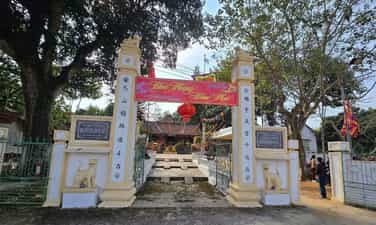
Tran Khat Chan Temple
The Tran Khat Chan Temple is located at the foot of Don Son Mountain, in Vinh Loc town, Thanh Hoa province, more than 2 km from Ho Dynasty Citadel. The Tran Khat Chan Temple is a national historical monument, associated with the life and career of General Tran Khat Chan – a famous general of the late Tran Dynasty. In 1390, during the war against the Champa army, Tran Khat Chan commanded the Dai Viet army to defeat Che Bong Nga's army at Hai Trieu, contributing to the defense of the borders. However, when the Tran Dynasty weakened, he participated in the resistance against Ho Quy Ly. The plot failed, and in 1399, Tran Khat Chan and many others were executed at Don Son. In remembrance of this talented and loyal general, the local people erected a temple in his honor around the late 15th – early 16th century and revered him as the tutelary deity. The temple features traditional architecture with main components such as the entrance gate, front hall, middle hall, and rear hall; it still preserves many valuable artifacts, including imperial decrees from the Nguyen Dynasty. Every year, the Trần Khát Chân Commemoration Ceremony is held on the 23rd and 24th of April in the lunar calendar, providing an opportunity for locals and tourists to remember the contributions of this renowned general, while also learning about and preserving the historical and cultural values of the Vĩnh Lộc region. Source: Thanh Hóa Newspaper and Radio & Television
Thanh Hoa
442 view
Rating : National Monument
Set village communal house
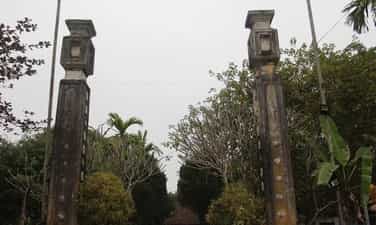
Set village communal house is located in Set village, Dinh Tan commune, Thanh Hoa province, a land formed around the 14th - 15th centuries. According to village history, Mr. Truong Canh Tuong, a native of Yen Vuc, Hoang Hoa, was the first person to reclaim land and establish a hamlet at Quy Son mountain. From the original land named Ap Sat, residents gradually expanded to the plain, forming Sat village, now Set village. Prominent in the cultural space of the village is Set village communal house, built in 1595, under the reign of King Le The Tong. After more than 400 years with many historical changes and restorations, the communal house still retains many ancient architectural features. The communal house gate stands out with two nearly 10m high columns and a pair of parallel sentences, creating a majestic look for the monument. Set village communal house is the place to worship Admiral, Duke and General Truong Canh Phuc, Truong Dinh Le and Ngoc Goddess Truong Thi Phuong - figures revered by local people. Not only is it a place for religious activities, the communal house is also closely associated with community life and the development history of Set village. Every year, from the 10th to the 12th of the third lunar month, local people organize the Ky Phuc festival, praying for good weather and a peaceful and prosperous life. Source: Thanh Hoa radio and television newspaper
Thanh Hoa
563 view
Rating : National monument
Phu Dien Communal House
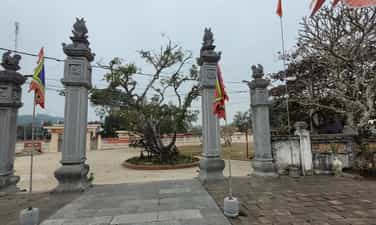
Phu Dien Communal House is a typical ancient architectural work located in the Ba Trieu Special National Monument Complex, imbued with the traditional village culture of Thanh Hoa. The relic is associated with the worship of Trieu Thi Trinh - Ba Trieu, the national heroine who stood up against the Ngo army in the 3rd century. According to legend, after Ba Trieu sacrificed on Tung Mountain, Phu Dien people built a temple to worship her and honored her as the village's tutelary god. By the 18th century, the communal house was built in the traditional village communal house architectural style. Over the centuries, the project has been preserved relatively intact by the people and has become a place for cultural and religious activities of the community. Phu Dien communal house includes main items such as Nghinh gate, Great communal house, front hall and harem. The highlight of the relic is the sophisticated wood carving art with many images of the four sacred animals: dragon, lyre, tortoise, phoenix, along with motifs of plants, flowers and images of elephants, horses, deer, chickens... The carvings not only create artistic beauty but also express the people's desire for a peaceful, prosperous life. In particular, the communal house still preserves 64 ancient decrees from feudal dynasties, which are considered precious documents reflecting the history and beliefs of the local community. Every year in the second lunar month, a traditional festival is held in Phu Dien to commemorate the merits of Ba Trieu, with sacrificial rituals, palanquin processions and many cultural activities and folk games. Source: Thanh Hoa radio and television newspaper
Thanh Hoa
569 view
Rating : Special national monument
Dong Son archaeological site
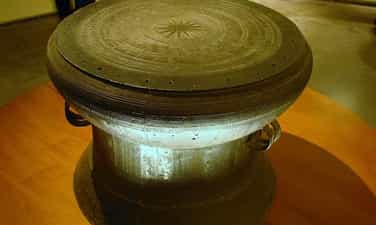
Dong Son archaeological site - a place where the quintessence of ancient Vietnamese culture is deposited. Located on the Ma River, in Ham Rong ward, Thanh Hoa province, Dong Son archaeological site is one of the most important sites of Dong Son culture, dating back more than 2,000 years ago. The site was discovered in 1924 when people accidentally found bronze artifacts on the banks of the Ma River. Through many surveys and excavations, a series of precious artifacts have been discovered such as production tools, weapons, ceramics, jewelry and especially bronze drums. These artifacts show that Dong Son residents have achieved high levels of metallurgy, agricultural production, handicrafts and spiritual life. In particular, Dong Son bronze drums are considered one of the typical symbols of ancient Vietnamese civilization, demonstrating sophisticated bronze casting techniques and the religious and festive life of ancient residents. Not only has archaeological value, Dong Son relics also contribute to clarifying the formation and development process of ancient Vietnamese culture in the Ma River basin, while affirming the position of Dong Son culture in the history of Southeast Asia. According to: Thanh Hoa Newspaper and Radio and Television
Thanh Hoa
668 view
Rating : National monument
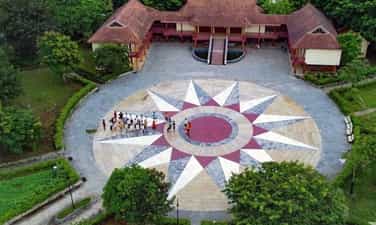
Ngoc Trao war zone
Ngoc Trao War Zone is located in Ngoc Trao commune, Thanh Hoa province, and is one of the typical red addresses associated with the revolutionary movement in Thanh Hoa. In early June 1941, the Thanh Hoa Provincial Party Committee selected the Ngoc Trao area to build a war zone. On September 19, 1941, at Hang Treo, the first 21 guerrilla soldiers took an oath to fight and sacrifice for the cause of national liberation. From here, the Ngoc Trao Guerrilla Team quickly developed, attracting patriotic youth from many localities, becoming an important revolutionary armed force of Thanh Hoa. At dawn on October 19, 1941, the French colonialists organized an attack on the war zone. The guerrilla soldiers fought heroically, engaged in hand-to-hand combat and proactively retreated to preserve their forces. Although it existed for a short time, Ngoc Trao War Zone contributed to laying the foundation for the armed struggle movement, leaving many valuable experiences for the revolution before the August General Uprising in 1945. Today, Ngoc Trao War Zone Relics is an educational address for revolutionary traditions, helping today's generation better understand the patriotism, strong will and sacrifices of revolutionary soldiers during difficult years. Source: People's Army Newspaper
Thanh Hoa
736 view
Rating : National monument
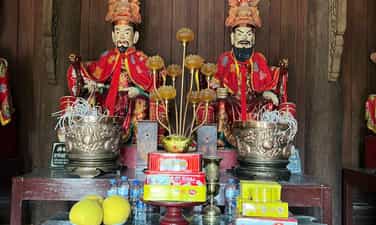
Phu Trinh National Historical Site
Phu Trinh National Historical Site - The mark of the Le - Trinh Dynasty in Thanh Hoa. Located in Vinh Hung commune, Thanh Hoa province, Phu Trinh National Historical Site is a destination rich in historical value, associated with the Le - Trinh dynasty and the period when the Trinh lords played an important role in running the country. This is not only a place to worship the Trinh lords but also a work imbued with cultural, architectural and historical imprints of the land of "kings and lords' palaces". Trinh Palace was built on the hometown of the Trinh family, used to be the headquarters and place to worship the ancestors of the Trinh lords during the period of "supporting Le and destroying Mac". Experiencing many historical events, the relic has been preserved, restored and embellished with many architectural items in the traditional royal style, contributing to recreating the majestic space of the ancient lord's palace. Visiting Trinh Palace, visitors will not only admire works of artistic and architectural value but also have the opportunity to learn about the nearly 250-year historical period of the Trinh lords. Every year, the death anniversary of Minh Khang Thai Vuong Trinh Kiem takes place on the 18th day of the second lunar month, attracting a large number of people and tourists to offer incense and commemoration. Today, Phu Trinh is one of the typical historical destinations of Thanh Hoa. When combined with a visit to the Ho Dynasty Citadel, Ho Cong Cave and neighboring landscapes, this place contributes to a journey to discover the unique culture and history of the Thanh Hoa region. According to: Thanh Hoa Tourism Newspaper
Thanh Hoa
778 view
Rating : National monument
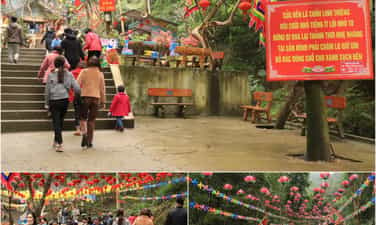
Phu Na historical relics and landscapes
Phu Na historical relics and landscapes - A spiritual destination among the mountains and forests of Thanh Hoa. Located at the foot of Nua Mountain, in Xuan Du commune, Thanh Hoa province, Phu Na (Na Son Dong Phu) is one of the famous spiritual tourist destinations of Thanh Hoa. The relic is associated with the belief in Mother Goddess worship and preserves the unique interference between Vietnamese and Muong beliefs, attracting a large number of tourists and Buddhists to worship and sightsee all year round. Built during the Nguyen Dynasty, Phu Na includes many architectural items such as Co Ba temple, Mother Goddess main temple, Ba Chua Thuong temple, Co Chin temple, Quan Hoang temple and Co and Cau floors. The most prominent is Mau Nghi Thien Temple with traditional architecture, solemnly decorated altars and exquisite carvings, creating a sacred space in the middle of the mountains and forests. Not only has historical and religious value, Phu Na is also attractive because of its pure natural landscape with lush green forests, rolling mountains and clear underground water flowing year-round from the heart of the mountain. The charming mountain scenery and peaceful atmosphere give visitors a feeling of relaxation when visiting and pilgrimage. Today, after being restored and embellished, Phu Na is increasingly spacious and has become a typical cultural and spiritual destination of Thanh Hoa. This is an ideal place for visitors to learn about historical values, folk beliefs, and enjoy the harmonious beauty between traditional architecture and majestic nature. According to: Thanh Hoa Tourism
Thanh Hoa
485 view
Rating : National monument
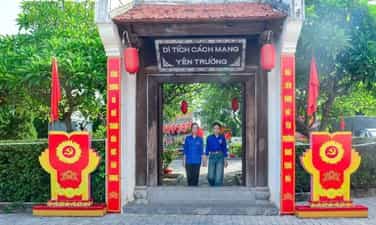
Yen Truong revolutionary historical relic site
Yen Truong revolutionary historical relic site - Red address of Thanh country. Yen Truong revolutionary historical relic site is located in Tho Lap commune, Thanh Hoa province. This is one of the local representative revolutionary historical relics, associated with important milestones in the formation and development of the revolutionary movement in Thanh Hoa. This place marks the establishment of the first Party Cell of the old Tho Xuan district on July 22, 1930 and the Conference to establish the Party Committee of Thanh Hoa province on July 29, 1930. After nearly a century, the relic site still preserves many valuable artifacts, documents and historical spaces, contributing to recreating the difficult but heroic years of struggle of previous generations. In recent years, the relic has been invested in restoring and embellishing with many items such as traditional houses, relic houses, campuses and infrastructure systems, both preserving historical value and meeting the needs of sightseeing, studying and researching. Today, Yen Truong Revolutionary Historical Relic Area is a familiar destination for delegations of officials, party members, pupils, students and tourists on their journeys back to their origins. This place regularly takes place incense offering activities, political activities, and traditional education, contributing to fostering patriotism and national pride for generations. Not only does it have profound historical significance, Yen Truong Revolutionary Historical Relic Area is also a destination to help visitors better understand the glorious revolutionary tradition of Thanh Hoa. Each work, artifact and story at the monument contributes to preserving historical memories, becoming a meaningful "red address" in the journey to learn about the culture and history of the Thanh Hoa region. According to: Thanh Hoa Newspaper
Thanh Hoa
632 view
Rating : Provincial level relics
Ngoc Doi Pagoda
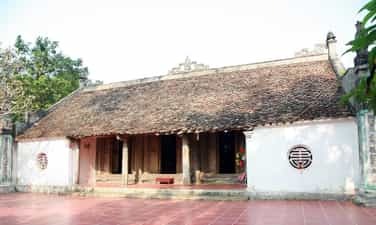
Ngoc Doi Pagoda - An ancient pagoda that preserves the history and art of Thanh Hoa Ngoc Doi Pagoda is located in Dong Thanh commune, Thanh Hoa province, and is one of the typical ancient pagodas of the Thanh Hoa region. Built in the 13th century under the Tran dynasty, the pagoda is associated with the legend that King Tran Nhan Tong gave a jade belt to build the pagoda after inspecting the defense line against the Mongol army. Since then, the pagoda named Ngoc Dai Tu (now called Ngoc Doi Pagoda), has become an important religious place for local people. The pagoda was built in the traditional architectural style "before the temple, behind the palace", with a Dinh-shaped main hall consisting of a five-compartment front hall and three-compartment main hall. The building is made of ironwood, has a tiled roof, and stands out among the green space with a semicircular lake and hundreds of years old pine trees, creating a pure, ancient beauty. Not only has architectural value, Ngoc Doi Pagoda also preserves many precious artistic heritages such as 32 ancient statues, including one bronze statue and 31 exquisitely carved wooden statues. Besides, there is a system of horizontal panels, parallel sentences, stone stele, bronze bells, Long Dinh palanquin, Hoa Banh palanquin and many valuable worship artifacts, reflecting the unique traditional sculpture art of Vietnam. Throughout history, Ngoc Doi Pagoda has also been associated with patriotic movements. At the end of the 19th century, this place was the base of the Ba Dinh insurgent army during the Can Vuong movement. In the years before the August Revolution, the pagoda was a base for raising revolutionary cadres and actively participating in resistance activities, contributing to the fight for national independence. Reference source: Thanh Hoa Newspaper and Radio and Television
Thanh Hoa
1113 view
Rating : National monument
Lam Kinh historical relic site
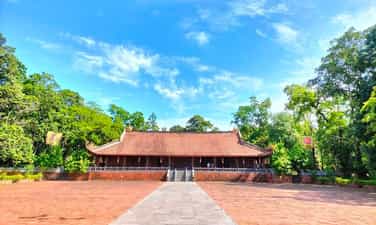
Nestled in the heart of a land of outstanding people, Lam Kinh Historical Relic Area (Tho Xuan district, Thanh Hoa) has typical royal architecture and bold historical and cultural imprints, a testament to a period of time. brilliant development of the country. Located in Xuan Lam commune, Lam Son town, Tho Xuan district, 50km west of Thanh Hoa city, Lam Kinh historical relic site not only retains intact the works of the Later Le dynasty, but also preserves many precious antiques of a time considered the most prosperous in Vietnamese history. Lam Kinh historical relic site carries many sacred cultural values not only for the people of Thanh Hoa but for the entire nation. This is a unique artistic architectural work, bearing the mark of royal culture along with all the inscriptions and tombs, demonstrating each step of the brilliant development of the country's architecture. The temples and mausoleums are arranged according to Confucianism and feng shui perspectives, with harmony between hills, streams, and trees, creating a beautiful environment, balanced between natural landscape and architecture. . The ancient Lam Kinh citadel was built according to the terrain "located on the mountain facing the water", a gold standard in feng shui of Asian people. The north of the citadel is based on Dau mountain, the south overlooks the Chu river, has Chua mountain as a screen, the east is Phu Lam forest, and the west is protected by Huong mountain and Ham Rong mountain. The royal citadel, palace and temple of Lam Kinh citadel are still kept intact to this day, with a chessboard layout including the noon gate area, dragon yard, main hall, temple... The road leading to the royal citadel has a dug river called Ngoc River, this flow originates from Tay Ho, loops around the front of the citadel and Lam Kinh palace. Bach Bridge (Tien Loan Kieu Bridge) over Ngoc River is the main path leading tourists to visit Lam Kinh ancient citadel. The bridge has a bow shape, made in a unique architectural style called Thuong Gia Ha Kieu, meaning above the house, below the bridge. Cross the bridge about 50m to an ancient well, the well water is clear and full all year round, the North bank is paved with stone steps up and down, providing water for Lam Kinh palace. In the past, the well was filled with beautiful and fragrant lotus flowers, while keeping the water cool during the summer days Right behind the main hall are 9 Thai temples decorated solemnly and sacredly with a bow shape embracing the main hall. This is the place to worship the kings and queen mothers of the Later Le Dynasty, mainly the Early Le Dynasty, with a majestic and sacred scene all year round filled with incense smoke. In 1962, Lam Kinh Historical Relic Area was recognized as a National Historical Site, and in 1994, the Government approved a restoration project. In 2012, this place continued to be recognized as a special National Monument. SOURCE: VIETNAM NATIONAL TOURISM BUREAU
Thanh Hoa
3589 view
Rating : Special national monument