Relic point Vietnam
Việt Nam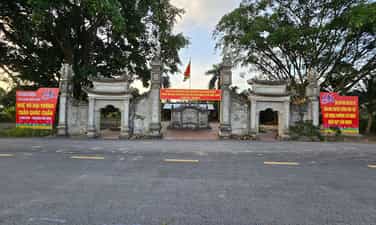
National Father's Temple
Quoc Phu Temple is one of eight relics belonging to the famous "Chi Linh bowl" recorded by many history books. Previously, the temple belonged to Kiet Dac commune, Chi Linh district. Now the relic belongs to Neo village, Chi Minh commune, Chi Linh district, Hai Duong province. This is the temple of the Imperial Father Tran Quoc Chan - one of the outstanding generals of the Tran Dynasty, with impeccable talent and virtue, wholeheartedly devoted to the cause of building and protecting the country. Tran Quoc Chan was the second son of Tran Nhan Tong, younger brother of Crown Prince Tran Thuyen, who later became Tran Anh Tong. He was a political figure, official and prince of the Tran dynasty during the reigns of kings Anh Tong and Minh Tong, considered one of the outstanding political figures and a talented man. But the end of life is full of injustice. Tran Quoc Chan was convicted of treason and starved to death. His death left behind a lot of criticism from historians towards Tran Minh Tong. By the year Giap Than (1341), during the reign of Tran Du Ton, the case of Tran Quoc Chan was completely exonerated. The court restored Tran Quoc Chan's position: Introducing the Supreme Patriarch of the State to Tran Quoc Chan, returning dignity to the deceased. The National Father Temple was established after he was exonerated and restored to his honor and title. The temple was built from his old house, so it is also called Thuong Thuc Co Trach (ie the old house of the High Lord). The temples were all ordained by later feudal dynasties. The monument was built on a high mound in the middle of rice fields running north-south. According to the "feng shui" theory, Quoc Phu Temple has "Kim Xa" (Golden Snake): in front there is a road to the stone wharf along the Kinh Thay river, on the left is Lang Tri field and Ao Va, legend has it that this is the bathing place of the king. Tran Quoc Chan, on the right there is Giai Phuon field, here is Dong Do relic, there are many piles of natural lipstick and behind is Dong Lang field. In 1951, the French enemy from Trung Ha post (Nam Hung - Nam Sach) shelled the main temple area in an attempt to destroy our secret resistance base, causing many construction items to be ruined, leaving only a part of Hau Hau. The palace and some worship objects were hidden by people last year. In 1953, the monument collapsed completely. By 1958, local people continued to mobilize merit to rebuild the Harem on the old foundation to stabilize religious activities and continue to honor people with meritorious services to the country. In 1997 - 1998, according to the wishes of many officials and people, and with the consensus of all levels and functional sectors, the Commune People's Committee organized a merit campaign, mobilizing all local resources to restore Restore the Quoc Phu Temple. The project was completed in a short time of no more than 60 days and nights. The temple was built in a 2-letter style, including 5 pre-sacrificing spaces, 3 back-hall spaces, along with a number of three-entrance gate items, temple grounds... Particularly, the 5 pre-sacrificing spaces were built with ancient wooden house frames in Hung Yen. The entire front and back halls are built with walls, wooden columns supporting purlins, and roofed with red tiles. Quoc Phu Temple: Recognizing the merits of Tran Quoc Chan, the royal court assigned the commune to repair the old house in his hometown in Kiet Dac, Chi Linh as a temple. Throughout the dynasties, the feudal state ordained Tran Quoc Chan and allowed localities to follow and worship and honor those who had contributed to the country. Based on the historical value of relics and famous people, Quoc Phu Temple was ranked by the Ministry of Culture and Information with Decision No. 15/2003/Decision - Ministry of Culture and Information dated April 14, 2003. Classified as a national historical relic according to the provisions of the Law on Cultural Heritage. This is the 127th relic of Hai Duong province to be ranked protected. Source Electronic information portal of Chi Linh city, Hai Duong province.
Hai Phong
6522 view
Rating : National monument
Ba Chua Sao Sa Temple (Ba Due Temple)
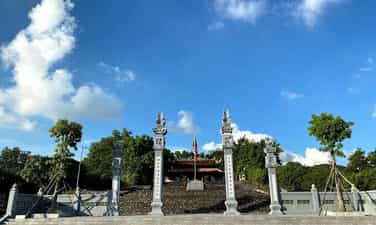
Nguyen Thi Due also has the names Nguyen Thi Ngoc Toan, Nguyen Thi Du, her name is Dieu Huyen, the king's name is Tinh Phi or Sao Sa, she was born in Kiet Dac commune (now Van An ward, Chi Linh town, (Hai Duong province) Ngoc Toan is a talented and beautiful girl, exceptionally intelligent and virtuous beyond others. She was born at the end of the 16th century into a studious family. From a young age, she showed bravery and determination, and her family invited a teacher named Cao to teach. The older Ngoc Toan grows, the more beautiful he becomes, smarter than others, and more ambitious. In the year Quang Hung 15 (the original year of Mac Bao Dinh), the army of Le Trinh's court captured Thang Long, the Mac army withdrew to the East in Hai Duong town. At the beginning of the year Quang Hung 16 (1593), Le Trinh's army attacked the Nam Sach region, the Mac dynasty fell and had to withdraw from Hai Duong, fleeing to Cao Bang to establish a base... That year, 20-year-old Nguyen Thi Due and her father ran after home. Mac went to Cao Bang. Even though she had to run around, she still studied hard, showing a person with great ambition. After building the citadel and ramparts to stabilize its position in Cao Bang, the Mac dynasty opened an examination to select talented people, with quite a large number of candidates applying. Binh Thin Exam In 1616, Nguyen Thi Due pretended to be a boy to take the exam with her teacher. After marking the test, she received a high score and passed first, while her teacher passed second. Impressed by the talent of his excellent student, he said: "The color green comes from blue but is more beautiful than blue." When attending the banquet, King Mac saw that her appearance resembled a woman. Upon questioning, he learned the truth. He did not punish her, but encouraged her and made her his wife, named Tinh Phi, named Sao Sa. Nguyen Thi Due's beauty is unmatched in the world. In the eyes of Lord Mac, Ms. Due is "a shooting star that has fallen from the sky". When Le Trinh's army attacked Cao Bang and the Mac army was defeated, she hid in a mountain cave, was captured by Trinh's army and brought to the Lord, she was immediately loved and respected. The people of her commune, from top to bottom, received her affection and were grateful for the exception, so they all respected her and respected her as her successor. She read the Bible widely, understood Buddhism, enjoyed many benefits but lived a frugal life. She established a convention, determining that the anniversaries of her ancestors' deaths and birthdays (March 14), her birthday when she When a person is a hundred years old, they all use vegetarian food and oan quai to worship, and that custom will be passed down forever. When she was old, she returned to become the abbot of Vu Nong pagoda, Gia Lam district. When Trinh Tac (royal ancestor Duong Vuong) ascended the throne and ordered a female scholar to teach the palace staff, all the mandarins nominated her. Duong Vuong invited her into the palace and taught the palace staff to call her Duc Lao Master. At nearly 80 years old, she built a small hut in front of her ancestors' graves, on a low hilltop at the foot of Phuong Hoang Mountain, 200m south of Huyen Thien Pagoda. She passed away on November 8, when she was over 80 years old, having experienced three kings: Le Than Tong (1619 - 1643), Le Chan Tong (1643 - 1649), Le Than Tong (second king, 1649). – 1662). After her death, her remains were buried next to her ancestors' graves, on top of which was a pink tower made of bricks, clearly visible from afar. By the end of the Later Le Dynasty (18th century), her tomb was classified by contemporary historians as "Chi Linh eight ancient relics", meaning one of the eight ancient relics of Chi Linh district, named Tinh Phi ancient tower. Since 2004, we have realized the importance of relics, especially the historical value of famous people. On June 28, 2006, the Provincial People's Committee signed Decision No. 2283/Decision -People's Committee approving the project to build Nguyen Thi Due temple. The project includes the following items: Main Temple, Ta Huu Vu, Tam Quan, 2 golden temples and renovating and upgrading the Tomb. After a short period of construction, three items have now been completed: the main temple, two golden temples and the front yard. Nguyen Thi Due Temple was built on the basis of the old temple on top of Mam Xoi hill. facing southwest. According to feng shui theory, the land of the temple is like a pearl surrounded by the Phoenix mountain range. In front is a vast dam, fluttering with storks and cauldrons at sunset, confirming that this place is truly a good land. The temple to worship Princess Sao Sa has Dinh-style architecture, including three compartments, two compartments and one harem compartment. Behind the Harem is Tinh Phi ancient tower. Source Electronic information portal of Chi Linh city, Hai Duong province.
Hai Phong
6211 view
Rating : National monument
Chu Van An Temple
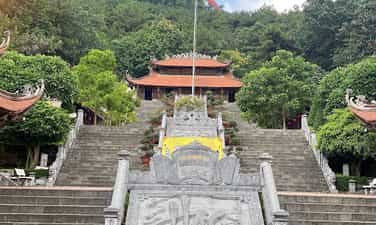
Chu Van An Temple is located on Phuong Hoang Mountain, in Van An commune; about 4 km from Con Son relic site. This is a cultural relic and scenic spot that you can visit, with beautiful pine forests, old and new temples built in 2007. Chu Van An mausoleum is located in this relic area. The festival is in August and January, the main festival is on August 25 and November 26. The relic was ranked in 1998. The mausoleum is hidden deep in the Phoenix ravine, about 600m from the temple. Teacher Chu Van An's mausoleum was renovated with funds from teachers and students in the education sector of Hai Duong province. A small path with uneven gravel layers shaded by forest pine canopy will take visitors to visit the master's grave. Legend has it that when Master Chu Van An died (1370), his students buried him at the top of Phuong Hoang Mountain and built a house next to the grave to worship him all year long to show their condolences. The main hall of the temple is located on a high, airy position, with a nail (J) architectural style, overlapping 8 roofs, curved belt ends creating an elegant, sacred look, the roof embossed with ''two dragons''. Adoration of the Sun", in front is a pair of large stone dragons and high stone steps. The special thing here is that when tourists visit the temple, in addition to offering vegetarian and salty offerings, they often also offer pens and books to pray for fame, fortune, and education. Source Electronic information portal of Chi Linh city, Hai Duong province.
Hai Phong
4886 view
Rating : National monument
Sinh Temple – Hoa Temple
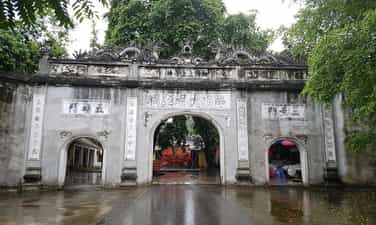
Sinh Temple - Hoa Temple relic is located on the slopes of Ngu Nhac mountain, An Mo village, Le Loi commune, Chi Linh district. The temple is an ancient architectural work, leaning against Ngu Nhac mountain overlooking the Northeast amidst vast forests mixed with lush lychee hills. Sinh Temple worships the place of birth, Hoa Temple worships the place of transformation of general Chu Phuc Uy - an angel of the pre-Ly Dynasty (544). Sinh Temple - Hoa Temple (Mother Sinh Temple - Thanh Hoa Temple) today is also called Thanh Phi Bong Temple, Thanh An Mo Temple is now in Le Loi commune - Chi Linh district. The temple is on the slopes of Ngu Nhac mountain, in the middle of a vast forest. Here and there are strange rock formations next to the underground stream, murmuring underground, mixed with the sound of pine trees. On the surface of the stream, large pebbles that have been smoothed by time and spring water are stacked on top of each other. Far away on the top of the mountain, a few ancient temples are glimpsed in the gently flying white clouds. This scene makes people think of mystical stories. Based on history and legends, Sinh Temple - Hoa Temple was established in the 11th century. But the relics were still recreated in the 19th and early 20th centuries. Sinh Temple was built in a Tam shape with 3 consecutive buildings. together, the harem is built over the strange stone block described in the legend. There is a statue of the Mother Goddess here - the statue of Mrs. Hoang Thi Ba. At the temple, there are many antiques and two steles talking about the miracle and the temple restoration process. Hoa Temple has the same form and architecture as Sinh Temple but is larger in scale on a relatively flat land. The middle word recreates the year of Tu Duc Ky Mao (1879). The harem has a statue of general Chu Phuc Uy and many valuable sacrificial items. During the pre-uprising period, Sinh Temple - Hoa Temple became a secret meeting place for the revolutionary base (1943-1944). In 1947, Sinh Temple - Hoa Temple became a meeting place for local revolutionary organizations. In late 1947 and early 1948, the military weapons factory of Chi Linh - Nam Sach - Kinh Mon district chose Hoa Temple as a place to produce weapons. During the resistance war against the US (1969 - 1972), Sinh Temple - Hoa Temple was a temporary place for teaching and studying of staff and students of Forestry University. In terms of landscape, architecture, historical and cultural significance and events during the revolutionary resistance period, the Ministry of Culture and Information issued Decision No. 295/QD - BT dated December 12, 1994 to rank Sinh Temple - Hoa Temple relic area aims to preserve a cultural heritage, a natural beauty, and expand tourism space and sightseeing content for tourists when coming to Chi Linh land. Nowadays, at Sinh Temple and Hoa Temple, every year comes May and August of the lunar calendar. The land of An Mo is bustling and jubilant, creating a festive atmosphere. The May Festival is the main festival at Sinh and Hoa temples. From all over the country, pilgrims return to the Sinh and Hoa temple festivals, bringing their thoughts and wishes to return to the spiritual place. Source Electronic information portal of Chi Linh city, Hai Duong province.
Hai Phong
4753 view
Rating : National monument
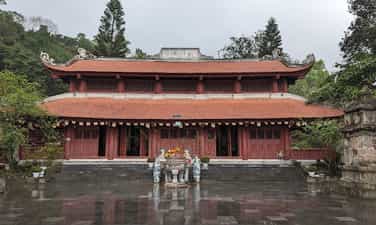
Thanh Mai Pagoda
Thanh Mai Pagoda belongs to Hoang Hoa Tham commune. Thanh Mai Pagoda is a very ancient pagoda, built in 1329 by Zen Master Phap Loa - Second Patriarch of the Truc Lam Yen Tu Zen Sect. The pagoda was recognized as a national historical site in 1992. Thanh Mai Pagoda was built on a mountainside, next to a small stream, looking south. In front of the pagoda is Bai Vong Mountain where there is the grave of Nguyen Phi Khanh - Nguyen Trai's father. Currently, the pagoda is being partially restored on the remains of a large project including: 7-compartment front hall, 5-compartment Tam Bao, two corridors, ancestors' house, monk's house. Behind is Vien Thong tower, built in 1334. In front there are 7 towers. At the relic, there are 7 valuable steles, of which the Thanh Mai Vien Thong marble tower has the greatest value. It can be said that this is a national treasure. The stele talks about the life and career of the second patriarch of the Truc Lam Zen sect, but through it we can see the contemporary political, religious, and land situation and the activities of the third Truc Lam patriarch: Tran Nhan Ton. , Phap Loa and Huyen Quang. According to the epitaph: Phap Loa was originally Dong Kien Cuong, born on May 7, Giap Than year, the 6th year of Thieu Bao (1284), in Dong Hoa village, Cuu La village, Nam Sach Giang, now in Ai Quoc commune. Nam Sach district. In the year Hung Long 13 (1304), on the occasion of Tran Nhan Ton's visit to Cuu La village, Dong Kien Cuong came to worship. Nhan Ton realized that Kien Cuong was a man with a religious eye, meaning he had the ability to practice and attain enlightenment. He let Phap Loa follow him to study Buddhism and gave him a new name: Hy Lai, meaning one who brings joy. He was intelligent and studious and enthusiastic about Buddhism, so just one year later, he died as a Ky Unicorn. Chi Linh) he was given the dharma name Phap Loa by Dieu Ngu Dau Da Tran Nhan Ton. In February of the year Hung Long 15 (1307), Tran Nhan Ton gave Phap Loa the treasures. And on the first day of the first month of the year Hung Long 16, he handed over the right to inherit the career of the Truc Lam Tam To Zen sect. From then on he became the second founder of this Zen sect. On the 5th day of the second month of the second year of Khai Huu (1330), Phap Loa was preaching sutras at An Lac hospital when he suddenly fell ill. On the 13th, the monk returned to Quynh Lam Institute (Dong Trieu) to recuperate. On day 19, the illness became severe. Seeing that it was difficult to survive, Phap Loa invited Huyen Quang to give him the treasures that Tran Nhan Ton gave him 22 years ago before his death, such as robes, verses describing the mind... and said: "Huyen Quang will be the guardian." maintain and inherit". On the night of March 3, Phap Loa passed away at Quynh Lam Institute. According to the monk's will, his relics were placed in the tower behind Thanh Mai pagoda. Emperor Tran Minh Tong wrote in his pen, naming the monk Tinh Tri Venerable and the tower name Vien Thong, gave 10 taels of gold from the treasury to build the tower, and wrote an emotional poem of tribute. This is a rare grace in Vietnamese history. Since then, the career of the Truc Lam Zen sect was presided over by Huyen Quang and became the third patriarch of this Zen sect. Huyen Quang served as the Abbot of Thanh Mai Pagoda for 6 years. Thanh Mai Pagoda is a religious center of the Truc Lam Zen sect in deep forests and high mountains. The presence of the relic has proven the extraordinary nature of Tran Dynasty religion. There is also an ancient forest planted by humans in the middle of nature, a system of valuable towers and inscriptions, typically the stele "Thap Vien Thong". Therefore, the relic site and natural forest have been zoned for protection by the state, gradually restored and embellished to preserve a cultural heritage, creating an attractive tourist attraction in terms of culture and landscape. nature. The anniversary of Phap Loa's death has become an annual pagoda festival. The festival starts from March 1 to March 3. Source Electronic information portal of Chi Linh city, Hai Duong province.
Hai Phong
4608 view
Rating : National monument
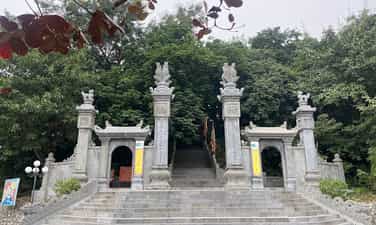
Cao An Lac Temple
Cao Temple belongs to An Lac commune. There are four ancient sacred temples here, worshiping the five brothers of the Vuong family who helped King Le Dai Hanh defeat the Song army led by Hau Nhan Bao and Ton Toan Hung in 981. The temple is a cultural site, historical relic, and famous landscape of our country. Cao Temple worships 5 Vuong brothers named: Vuong Minh, Vuong Hong, Vuong Xuan, Vuong Thi Dao, Vuong Thi Lieu who fought against the Song invaders in the 10th century. The temple was built according to the architecture of the word "nail" located on Thien Bong mountain. Surrounding the temple is an old ironwood forest. Near the relic there is a bamboo forest where storks reside in large numbers, creating a lively landscape. This was once Le Hoan's military base during the resistance war against the Tong in 981. The temple was built in the pre-Le period, the relics are still being restored in the Nguyen dynasty, in a three-letter style, on a small scale. The architecture and sacrificial items are still quite consistent, typically the system of parallel sentences and great characters. This is a long-standing devotional center of local people. Every year there is a festival from January 22 to 25. The relic has the following works: pre-sacrifice, middle-class and post-harem works; There are many valuable antiques such as inscriptions, dragon swords, precious bowls, thrones, etc. Especially the system of great characters and couplets praising the merits of the 5 Vuong brothers and the nation's victorious resistance war against the Song army. When climbing over 100 mossy brick steps, visitors will see 99 elephants. made of stone. According to legend, these are elephants that have just returned from victory. They roared with their trunks and rushed down to the soft Nguyet Giang river to drink water. In the main hall, there is a great script written in stone style with four large cursive letters "Thanh Tho Vo Cuong", on the left "Cao Son Nguong Tu" and on the right "Cao Cao Tai Thuong". In front of the temple door, under the canopy of an ancient ironwood tree, are two rows of stone elephants and stone horses. In addition, Cao Temple is also a temple with a quite unique architectural style. Cao Temple is a meeting place for those who respect the nation's cultural history. Cao Temple worships General Vuong Duc Minh, who was instrumental in fighting the Song invaders. The project belongs to the Cao Temple relic complex worshiping the 5 Vuong brothers, and was ranked national by the State in 1988. Source Electronic information portal of Chi Linh city, Hai Duong province.
Hai Phong
4794 view
Rating : National monument
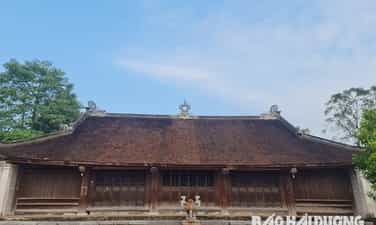
Bo Duong Communal House
Bo Duong communal house, Hong Phong commune, was built during the Le dynasty, Chinh Hoa era, over 300 years ago. The communal house is called Dinh Dong "East facing communal house" located in the center of Bo Duong village, Hong Phong commune, and is one of the three remaining communal houses in the ancient temple architectural complex of the Village. The communal house was built in the year Ky Ty (1689) of the Le dynasty, the reign of Chinh Hoa, the Dong communal house has the shape of the letter Dinh (J), the architecture is in the style of a traditional belt communal house in the Northern Delta, structured with a system of pillars. , bunk, truss bed, massive boat, including harem, ancient prize and 5 great worship rooms, low-slung roof, roofed with funny-nosed tiles, wooden pavilion covered with dragons flanking phoenixes, in the middle of the roof are 2 cows. Nghe, the roof of the communal house are two Lac dragons expressing the majestic power of creation. From a distance, the roof of the communal house looks as elegant as a kite taking flight; The interior of the pavilion has many pieces of delicately carved art on wood: Dragon, Ly, Quy, Phuong, Pine, Plum, Chrysanthemum, bamboo with philosophical features like a mother dragon teaching her children; Describes Village festival scenes such as: water puppetry, bowing, wrestling, boat racing... and many precious worship objects such as: thrones, war horses, octagons, lacquered and gold lacquered couplets. Bronze bells and many other worshiping objects have historical connections. In front of the communal house is a large yard, on both sides there are 14 banquet spaces, adjacent to the communal house in the front are the east tru and west tru gates; Entering the communal house yard through three gates including: the main gate, two gates on the left and right, the corner parallel to the three gates is two soaring pillars, on top covered with leaf buds that look like a giant pen writing poetry into the blue sky. The architectural complex of communal houses, temples, and temples in Bo Duong village is ancient and magnificent, one of the most magnificent in the region. But due to historical events, the weathering process caused a lot of loss. In 1993, with financial support from the state and contributions from local people, the communal house was restored and repaired. In 1995, Bo Duong and Hong Phong communal houses were decided by the Ministry of Culture and Information. decided to rank it as a National Historical and Cultural Relic. In 2010, the state supported over 10 billion VND and Bo Duong communal house continued to be restored and embellished. In 2011, the Department of Culture and Sports of Hai Duong province supported the locality to restore the ancient traditional festival, thereby serving as a basis for the people of Bo Duong village, Hong Phong commune, to preserve and promote the values culture at monuments. According to legend, the communal house worships General Cao Xuan Huu in Tam Hoang Village, Sieu Loai district, Thuan Thanh district (ancient name is Thuan An, Kinh Bac religion), he was born on the 13th of the first month in the year of Giap Ty, belonging to a family of virtuous people. core. Mr. Cao Xuan Huu is a talented man. Since he was a child, his parents sent him to pursue a university degree. He is famous for being intelligent and good at literature and martial arts. When his parents passed away, at that time in the 18th Hung Due Dynasty, at an old age, the king gave birth to 20 princes and 6 princesses, all of whom were immortal, intending to cede the throne to his son-in-law, Son Thanh, in the court. There was a General of the Thuc family who rebelled and asked for help from a neighboring country, intending to usurp the throne. Mr. Cao Xuan Huu went to help the King suppress the bandits. He was a talented man and was appointed by the King as a striker and general in command of the envoy. He and his soldiers were stationed in Bo Duong and Hong Phong and from there spread out everywhere to suppress the enemy. Wherever the troops went, the enemy dispersed. The country returned to peace. On the occasion of his trip, he visited his old place of Hong Chau. On the 13th day of the third lunar month, he held a party to celebrate the victory "Song of Triumph" and then passed away in Bo Duong, Hong Kong. Phong on November 12 (lunar calendar). General Cao Xuan Huu was bestowed by the King with the title: "Linh Ung the King conferred the title of Duong Dinh Linh Ung Pho Huu, Propaganda, Trach Chieu Thong, Resolute, Brave, Heroic, Protector of the Nation, Mighty, Talented, and Strategic, Superior Deity". The edict allows Bo Duong village, Hong Phong commune, to establish a temple to worship the gods and enjoy blessings with the country as a permanent ritual in the future. Since ancient times, every spring on the 13th day of the 3rd lunar month, remembering the day of his "Triumph Song", the Village people have had the custom of holding a festival to celebrate: carrying palanquins, offering sacrifices to pray for the country and people. peace, favorable weather, lush vegetation, good harvests, and a warm home. The village festival also has many fun activities such as: cheo singing, dum singing, lighting fireworks, hitting clay fireworks, cockfighting... most especially the water puppet show. Bo Duong Communal House Cultural and Historical Relic was built in a central location in the middle of Bo Duong village with an architectural complex and a campus of 1783.1 m2. The communal house faces East. In front, there is the main inter-village road running through and there is a Water Puppet House. The southeast is adjacent to the house displaying puppet shows and the village's central Cultural House. The west borders the residential area. To the north is a large pond, which was also a place for water puppetry in ancient times. Source Electronic information portal of Ninh Giang district, Hai Duong province.
Hai Phong
4645 view
Rating : National monument
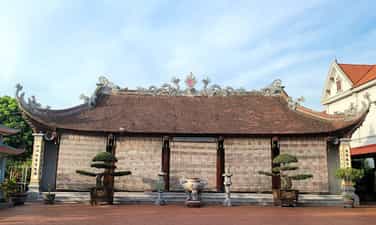
Ca Communal House, Tan Huong Commune
Dinh Ca is located in the center of village 5, Tan Huong commune, Ninh Giang district, Hai Duong province. Tan Huong is a land deposited by alluvium from the Red and Thai Binh river systems, so the land is fertile and convenient for agricultural production. According to legend in Nhan Dan, Ca communal house has been located at the same location since its inception, however there has been a change in the scale and space of the monument. Previously, the relic was surrounded by a residential area, behind was a communal pond, and in front was a residential road. Today there are changes compared to before: The East is adjacent to a residential area; The West and North border the inter-village road; The south borders the residential area. During the years of resistance against the US, Ca communal house was the place where the delivery and receipt of troops to serve the Southern battlefield took place. In the years 1957 - 1958, this place organized and implemented the popular education movement. "Popular education" is a movement to eliminate illiteracy among the entire population, launched by the Provisional Government of the Democratic Republic of Vietnam on September 8, 1945 (Decree 19/SL and 20/SL). Right after Vietnam gained independence, this movement solved "Ignorance" - one of Vietnam's most urgent problems at that time. Based on the legend - the spirit of ancient Nam Boi village (today separated into two villages: Village 3 and Village 5), Dong Boi canton, Ninh Giang district, Hai Duong province, compiled by Nguyen Binh Phung in the year of Hong Phuc. (1572), currently kept at the Institute of Social Science Information under the Vietnam Academy of Social Sciences, said: Dinh Ca, village 5, Tan Huong commune, Ninh Giang district, Hai Duong province is a place to worship 7 the Tutelary God including: 4 are human gods, 2 are angels and 1 is an earth god. The gods include: Quy Minh Dai Vuong, Phan Trac Mai Vy, Pham Mai Chinh Thien and Phan Mai Khai Quoc. The angels include: Thien Hoang Linh Thuong Great King, Thien Quan Hanh De Great King. The earth god is: Earth Spirit Great King. The Village Tutelary Gods are people who have contributed to helping the people and the country. Through many feudal dynasties, they have been awarded ordained and established communal houses to worship. - Before the August 1945 Revolution: At the relic, two festivals take place: From the 5th to the 15th of the 11th month (lunar calendar): This is the main festival of the year - Tutelary God's Transformation Day; On the 2nd day of the first month (lunar calendar) and the full moon day (lunar calendar) of every month, the monument is open for people and tourists to offer incense. + Main festival - Tutelary God's Transformation Day: Takes place in 10 days, starting from the 5th to the 15th of the 11th month (lunar calendar), (in which the 5th and 6th are the main festivals). During the festival, activities take place such as: Organizing the "Ong Pig" contest, the procession of the Holy Set is held solemnly and solemnly. The procession departs from the Ca communal house, the procession goes to the North temple, then organizes incense offerings here, after offering incense, the procession continues to the East temple, the procession to the Nam temple, then the procession returns to the communal house. During the days of the festival, in addition to the sacred and solemn ceremony. The festival is exciting, organizing many forms of participation in games such as: Chess; Cockfighting; Praying for ducks, catching ducks; Earthen artillery; Wrestling; Tug of war... + January 2 (lunar calendar): In addition to the main festival on the 5th and 6th of the 11th month (lunar calendar), every year on the 2nd day of the New Year, a market is held at the communal house yard - this is a typical event of the Tan Huong people. It has become a custom that on the 2nd day of Tet, people in Tan Huong commune gather at Ca communal house to hold a market to pray for good luck. Each year the market only holds one session. People come to the market, in addition to buying and selling, they also go to the village communal house to burn incense to pray for luck and happiness throughout the year. - Today's festival: In recent years, the organization of festivals at Ca communal house has been organized by the Commune People's Committee. The festival is held for 3 days: From the 5th to the 7th of the 11th month (lunar calendar). Source Electronic information portal of Ninh Giang district, Hai Duong province.
Hai Phong
4592 view
Rating : Provincial level relics
Tran Xa communal house
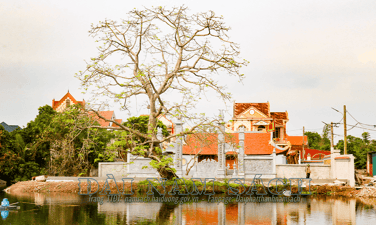
Tran Xa village communal house, Nam Hung commune (Nam Sach) has a long history, is the place to worship 3 Tutelary Gods of the Pham family during the Ly dynasty and worship the famous general Tran Quang Khai - a man who had great contributions to contribute to the victory of the Tran dynasty's army and people. victory in the resistance war against the Mongol invaders in the 13th century. The communal house has been ranked as a provincial historical relic since 2007. However, due to the deterioration of the building, it has received attention from all levels, and according to the wishes of officials, party members and people. , Tran Xa communal house has been renovated and renovated. Tran Xa is a famous historical place. During the Ly Dynasty, Tran Xa was called Tran Xa Trang, located on the left bank along the Kinh Thay River, creating a large area called Tran Xa pool. During the Tran Dynasty, the Tran Xa site was changed to Tran Xa loan. Legend has it that in 1282, King and I of the Tran Dynasty returned to this area to hold a conference in Binh Than to discuss plans to fight the Mongol invaders for the second time. Today, in the Khoai No pile of Tran Xa village, there are still 2 doi trees. Legend has it that this is where the king lived. Tran Dynasty mandarins tied their horses when getting off the boat to hold the Binh Than conference. These two trees are conserved and preserved by the people and are recognized as heritage trees in 2021. Tran Quang Khai (1241-1294) was the third child of King Tran Thai Tong, his mother was Queen Ly Thi Thuan Thien (eldest daughter of Emperor Ly Hue Tong). He is the younger brother of Crown Prince Tran Hoang, also known as King Tran Thanh Tong. In 1258, King Tran Thanh Tong appointed him the title of Lieutenant, Chieu Minh Vuong and ruler of Nghe An province. In Thieu Long's 14th year (1271), he became a lieutenant-general and became the head of the court in charge of state affairs. In the 4th year of Thieu Bao (1282), King Tran Nhan Tong promoted Tran Quang Khai to the position of Senior General and Grand Master, holding full power over internal affairs. He was a politician, military man, and a member of the Dai Viet royal family during the Tran dynasty. Legend has it that when King Tran Nhan Tong returned to open the Binh Than conference in Tran Xa area, Tran Quang Khai was assigned the responsibility of general commander to protect and keep the conference secret. After his death, to commemorate the talented general, the people of Tran Xa site (Tran Xa loan) set up a temple to worship and burn incense forever. Tran Xa Communal House was built in the Later Le Dynasty on a high mound in the middle of the village. At the same time, the people brought Grand Master Tran Quang Khai to worship at the communal house along with the three village tutelary gods. During the Nguyen Dynasty, the communal house was restored and was spacious and beautiful, including 5 main worship rooms and 3 back palace rooms made of four-iron wood. In 1953, the great hall was demolished by the French colonialists, leaving only 3 harem rooms remaining. Through the changes of time, the harem was damaged and was restored by the people in 1992. In 1999, 5 great worship rooms continued to be restored. In 2007, Tran Xa communal house was recognized as a provincial cultural and historical relic. Overcoming the changes and ups and downs of history, Tran Xa communal house still retains a number of valuable antiques such as a 12th Chinh Hoa stone stele (1691); 1 altar throne, 1 altar sword, 1 coffin, 1 incense bowl of Phu Lang ceramic of Nguyen Dynasty (19th century). Up to now, some items such as Tien Bai House, courtyard, and communal house walls have seriously degraded. Based on the actual situation and according to the wishes of the people in the village, Nam Hung commune proposed and was allowed to restore the monument. Up to now, the project of restoring and embellishing Tran Xa communal house has been completed. The unique and impressive feature of Tran Xa Communal House when renovated is the relief of the 13th century Tran Dynasty village painting, with images of Luc Dau Giang branch, Ben Binh Than Conference, banyan tree, and well. , communal house yard, hero Tran Quoc Toan with a flag embroidered with six golden words "Destroy the enemy's strength, report to the king's grace", two duoi trees - where the Tran dynasty's kings and mandarins tied their horses when getting off the boat to hold the Binh Than conference... Tran Xa village communal house was renovated and renovated to be spacious and beautiful, meeting the wishes of the people of Tran Xa village in particular and the people of Nam Hung commune in general. This is the bond that unites the community and the beauty of village culture. In the minds of Vietnamese people, "banyan tree, water wharf, communal house yard" are familiar images, attached to the souls of all people, a symbol of homeland and country. Source: Electronic information portal of Nam Sach district, Hai Duong province.
Hai Phong
4636 view
Rating : Provincial level relics
Nghe Coc Village Pagoda
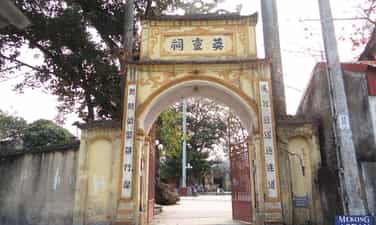
The Gia Coc Pagoda relic cluster is located on flat, high land, running from Northwest to Southeast, in Gia Coc village, Tu Cuong commune, Thanh Mien district, Hai Duong province. According to the Chinese legend copied by the Minister of Rites Nguyen Hien on the king's orders in the year of Thuan Thien, the third year of the eighth month, the first three days (August 3, 1430) and left at the relic, it is said that in the past, The cluster of relics and Gia Coc pagoda (currently the cluster of relics is located in Gia Coc village, Tu Cuong commune, Thanh Mien district, Hai Duong province) is located on an area of land with unusually beautiful scenery, running from Northwest to Southeast , in front there is a pile of golden turtles as a project; Behind the converging tides, on the left there is a dragon, on the right there is a tiger, behind there is an elephant. Currently, although the landscape of the relic complex has changed a lot, it still retains many characteristics from ancient times. And according to folk beliefs, the Neo river branch running from Northwest to Southeast of Gia Coc village is the image of a dragon. Many mounds in front of the monument are traces of golden turtles and tigers. Historical sources say that during the Ly dynasty, Gia Coc village was called Gia Coc site. Later changed to Gia Coc commune, Phu Me district, Thanh Mien district, Hai Duong province. After the August 1945 Revolution, it was changed to Gia Coc village, Tu Cuong commune, Thanh Mien district, Hai Duong province as it is today. The cluster of relics and Gia Coc Pagoda are associated with the name of a Ly Dynasty mandarin named Le Trung Hoa. He was born on March 10 and died on August 10 (year unknown). From a young age, he had great ambition and was perfect in literature and martial arts. At that time, the Song invaders sent their general, Hoang Phuc, to bring troops to invade our country. The court appointed Le Trung Hoa as Grand Master to command 10,000 troops to fight the Song invaders. At this time, the Song army was stationed in Hai Duong town. Grand Master Le Trung Hoa commanded the army to attack the East side and support the West side. The enemy army was defeated, the country was peaceful again, he brought his troops back to Gia Coc site to reward the soldiers. At Gia Coc site, seeing the unusually beautiful scenery, he decided to set up camp and station his troops here. After his death, the court provided money to build communal houses and temples for worship and he was granted the title of "Supreme God" by the dynasties and titled "Great King and Grand Master". He was honored by the people here as the Village's Tutelary God and had a statue made for worship. Currently, at the cluster of relics, there are still 5 decrees conferred by King Tu Duc in the 6th year (1853) on November 10; King Tu Duc in his 31st year (1878) conferred the second title; King Dong Khanh in his 2nd year (1887) conferred on July 1; King Duy Tan's 3rd year (1909) was conferred on August 11; King Khai Dinh in his 9th year (1924) conferred the title on July 25. Nghe Coc is made in the shape of the letter Nhi, the outer part has 5 rooms and the harem has 3 rooms, the rafters are all made in the style of the husband's children, the heads of the husband's children are carved with the theme of four sacred animals, the ends of the porch levers are carved. four-quarter engraving. Inside the harem there are 3 altars, on the left worshiping Tran Hung Dao, in the middle worshiping Le Trung Hoa and on the right worshiping Pham Ngu Lao. Next to Gia Coc Pagoda is Gia Coc Pagoda with Dinh-shaped architecture including a 5-compartment front hall and 3-compartment Tam Bao... With unique historical, architectural and artistic values..., the Gia Coc Pagoda and Pagoda relic complex was granted Decision No. 281 by the Ministry of Culture and Information (now the Ministry of Culture, Sports and Tourism). Certificate of recognition of the Gia Coc Pagoda relic cluster as a national historical-cultural relic cluster on April 14, 1993. Source Electronic information portal of Thanh Mien district, Hai Duong province.
Hai Phong
4334 view
Rating : National monument