Relic point Vietnam
Việt Nam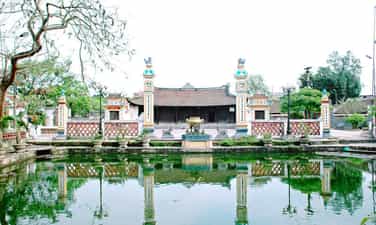
Giap Ba Temple
Giap Ba Temple, also known as Cam Nang Temple, is located in Nam Giang town, Nam Dinh city. The project includes the main temple worshiping King Trieu Viet and two temples worshiping two generals of the Doan family. Since the Later Le Dynasty, this place was called Cam Nang village, Chau Nguyen commune, now Ba village, Nam Giang town, people still call it Giap Ba. The origin of the name Cam Nang temple or Giap Ba temple today is like that. Giap Ba Temple was ranked as a national historical-cultural relic in 1994. According to historical sources and legends, in Phat Noi commune, Chu Dien district, Tam Doi district, Son Tay religion, there was Mr. Trieu Tuc whose wife was Han Thi Sieu. One night, Mrs. Sieu dreamed of a flying dragon, and then she became pregnant. In the spring of the year Mau Thin, she gave birth to a handsome boy named Quang Phuc. As a child, Quang Phuc studied very hard and was proficient in literature and martial arts. At the age of seventeen, his parents passed away. He followed famous general Ly Bon to defeat the invaders of the Luong Dynasty and win independence for the country. In 544, Ly Bon ascended the throne, proclaimed himself Ly Nam De, and settled the capital in Long Bien. Not long after, the Luong Dynasty sent Tran Ba Tien and Duong San to invade our country; Ly Nam De lost the battle and fled to Khuat Lieu cave, handing over military power to Trieu Quang Phuc. In 547, Trieu Quang Phuc retreated to Da Trach swamp (now Khoai Chau region, Hung Yen), a large swamp area with luxuriant reeds; He ordered his army to set up a barracks on a mound in the middle of the lagoon, and used dugout boats to snipe every day, causing the Luong army to lose a lot of troops and become extremely confused. Gradually, our army won a great victory and wiped out the Liang army from the territory. After defeating the enemy in 548, Trieu Quang Phuc ascended the throne, calling himself Trieu Viet Vuong, with the capital in Long Bien. In 570, he was ambushed by Ly Phat Tu - who had the same surname as Ly Nam De - and had to retreat, then drowned at Dai Nha estuary on August 14. Legend has it that when fleeing, Trieu Viet Vuong stopped at Cam Nang village to set up a barracks but was still pursued and had to flee to Dai Nha seaport (now in Doc Bo village, Yen Nhan commune, Y Yen district). Currently, in Ba village, Nam Giang town, there are still vestiges of the time when Trieu Viet Vuong stopped, such as: An Ma Chien land - where the soldiers let their horses eat grass and drink water; The place where horses run is called Ma Khoi, in the southeast of the village there is Ma Run street, the old military barracks is Cua Cua area... After Trieu Viet Vuong passed away, to commemorate his great contributions, the people of Cam village Nang built a temple right on the land where he stopped. His temple is on a large scale, with many solemn and splendid sacrificial offerings. Through many feudal dynasties, Ba village temples were all ordained to serve. Right next to the temple of King Trieu Viet Vuong, there are two temples worshiping mandarins Doan Tuong Cong and Doan Cong Thuong. These are two people who lived in the 18th century, belonging to the Doan family in Cam Nang. During their lifetime, the two of them took on many important responsibilities at the Royal Court. Among them, Doan Cong Thuong, also known as Doan Cong Thuong, was promoted to the position of General Eunuch, in charge of the admiral of the Cong District under the reign of King Le Du Tong (1740-1786). To their homeland, the two men left behind many contributions. Therefore, the mausoleum as well as the temple of the two men are preserved, incense, and revered by the village people as the village's blessings. Source: Nam Truc District People's Committee
Ninh Binh
8056 view
Rating : National monument
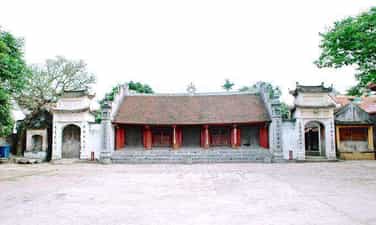
Dai Bi Pagoda
Dai Bi Pagoda is located in Nam Giang town, Nam Truc district, Nam Dinh province. In addition to worshiping Buddha, the pagoda also worships Saint Tu Dao Hanh. Through Han Nom documents, it is said. Saint Zen Master Tu Dao Hanh's family name is Tu, his family name is Lo; His father was Tu, Huy Vinh... from Lang village, held the position of Tang Quan Do Sat. At a young age, there are many unusual things, he has an immortal spirit, is generous and generous, has great ambition, and no one can predict his actions or words. He became close friends with Confucian scholar Phi Sinh, Taoist Le Toan Nghia and the singer Vi At (some documents say Phi At). At night he diligently read books, during the day he played shuttlecock, played the flute, and gambled for fun. His father was killed by Dien Thanh's servant who asked Dai Dien to use magic. The Saint failed to take revenge. He found a way to Tay Truc to study magic. The road to Kim Xi country was difficult, so he returned to Phat Tich mountain to practice, read the Da La Ni mantra eighteen thousand times, and completed the Dharma. Find Dai Dien to take revenge. From then on, washing away the hatred, the monk went everywhere in the forest to find a teacher to confirm. Thanh met Zen Master Tri Huyen and Zen Master Sung Pham to learn and expand his knowledge. After that, the monk was reincarnated as the son of Sung Hien Marquis, later King Ly Than Tong. Dai Bi Pagoda is located on a large flat area of land with unique architecture. According to legend, the pagoda's land has the shape of a dragon's head. On both sides of the pagoda's door are two round wells that people here often call two dragon eyes. The architectural system of the pagoda has many unique features. Tam Quan (temple gate) is not located in the middle but was built slightly to the east. Although it has undergone many restorations, the Tam Quan gate still retains many carvings from the Later Le period (17th - 18th centuries). The temple is decorated with Buddha statues like any other Vietnamese temple. The difference in Dai Bi Pagoda is that on the right side of the Three Jewels, there is an altar to worship Patriarch Tu Dao Hanh and Zen Master Giac Hai, who have made many contributions to the country's Buddhism. In the field of Buddhism, Zen masters are considered holy monks; In the social field, they are considered village tutelary gods, people who have the merit of teaching vocational skills to the people... The statues at Dai Bi Pagoda are carved quite perfectly. In addition, there are many altar objects and couplets with historical and artistic value. Behind the pagoda there is a bell tower with match bell style architecture, 8 roofs with high, soft and elegant blades. This is the most valuable work of Dai Bi Pagoda. Behind the bell tower is the ancestral temple, which worships Bodhidharma, the 28th patriarch and master of the Zen sect. Dai Bi Pagoda also has a space to worship Mother Goddesses, a national belief that Vietnamese people have practiced for many generations. Dai Bi Pagoda also preserves many valuable relics, antiques, and ancient books, most notably 10 steles, of which the oldest stele was engraved in the year of the Goat (1679) during the reign of Le Hy Tong; 10 ordinations; The large bell is 2m high and was cast in the 18th year of Minh Mang's reign (1838). The belief of worshiping Saint Tu Dao Hanh on the land of Nam Truong, along with the unique architecture of Dai Bi Pagoda, hundred-room pagoda, purely Vietnamese, flourished in the 17th century and exists to this day, demonstrating the eternal vitality of the Vietnamese. With typical values of history, culture and artistic architecture, Dai Bi Pagoda was ranked as a National Monument in 1964. Source: Nam Truc District People's Committee
Ninh Binh
8083 view
Rating : National monument
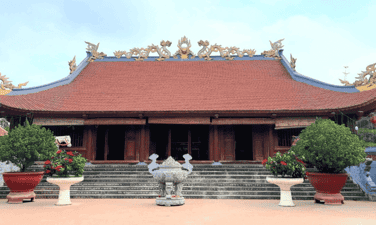
Gin Temple
Gin Temple, Nam Duong commune, Nam Truc district, Nam Dinh province is a relic with typical historical and architectural and artistic value, and has been ranked at the National level by the Ministry of Culture since 1962. The temple is a place to worship and express gratitude to the local people for the holy Long Kieu - Kieu Cong Han, who helped Ngo Quyen defeat the Nam Han invaders on the Bach Dang River in 938. period of national autonomy. Later, when the Ngo dynasty collapsed, probably due to historical conditions at that time, General Kieu Cong Han became one of the 12 warlords in the context of the country's chaos and division. He soon died in the chaotic war between local sand forces. After General Kieu Cong Han passed away, to commemorate his contributions, local people built temples to worship him; Currently there are 72 temples worshiping generals, extending from Phong Chau, Bach Hac, Phu Tho province to Nam Dinh province, of which in Nam Truc district there are 2 temples worshiping generals: Gin temple, Chien village, Nam Duong commune and Tay Lac temple, Dong Son commune. During the period of fighting against the invading Song invaders, King Le Dai Hanh led his army through here. Staying overnight, the king dreamed that Kieu Cong Han promised to help the king fight the Song invaders. After defeating the invading Tong invaders, King Le Dai Hanh returned to grant him fields and was appointed Thanh Hoang. Later feudal dynasties provided sacrificial fields and repaired temples to engrave stone stele to record the work, as well as promulgate the title "Holy Long Kieu". Gin Temple's large-scale architectural work is arranged symmetrically and harmoniously, including items: temple wells, shrines, screens, ritual gates, external temples, front doors, internal temples and buildings. Central architecture (front street, forbidden palace), located on a campus of 3,290 m2. Gin Temple is a relic that still preserves almost all of the architectural and artistic style of the Later Le period, 17th-18th centuries, demonstrating the talented working hands and creative minds of folk artists. Artifacts preserved at the relic are extremely rich and diverse, especially antiquities of the Later Le and Nguyen dynasties such as: miracles, ordinations, incense tables, thrones and tablets, worship statues, stone sculptures, etc. .. The decorative art at Gin Temple is very rich and lively with sharp carved lines and diverse decorative themes, combined with carved styles such as: pine wind, bong canal, contributing to the theme. making the decorative themes at the monument more vivid and imbued with traditional national style. Shown through architectural items such as Tien Cac, Tien Duong, and Forbidden Palace. Themes (Dragon, Ly, Quy, Phuong), turning leaves, patterns of seals and leaves, phoenix flanking; Dragons rolling water, two dragons flanking the moon and dragon-shaped apricot patterns... are decorated on the architectural components of Gin temple, crafted by ancient artisans with a tight layout and rich themes. , vividly contribute to honoring and affirming the architectural and artistic value of the monument. Gin Temple Traditional Festival is one of 10 typical festivals of the entire Nam Dinh province. The festival takes place on the 8th, 9th, and 10th days of the December month (lunar calendar) every year with unique rituals and folk cultural activities such as palanquin procession, water procession, cheo singing, tom whore nest, cockfighting ... Source: Nam Truc District People's Committee
Ninh Binh
7410 view
Rating : National monument
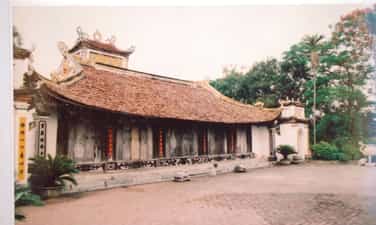
Am Temple
Am Temple is located in Nhat village, Nam Giang town, Nam Truc district, Nam Dinh province. Am Temple is where local people worship and pay tribute to the merits of the Holy Patriarch, Zen Master Bui Hue To (1566 - 1641). The belief in worshiping the Holy Patriarch Bui Hue To at Am Temple, in addition to the meaning of worshiping a true monk and a blessed god, also has another meaning, because this is his hometown. After the Holy Patriarch "transformed Buddha into fire", to remember his merits, local people built a temple to worship. The temple was built right on the hermitage ground that the Holy Patriarch had previously created. Although many centuries have passed, the worship of the people in Nam Truc countryside in general, and Nhat village in particular, towards the Holy Patriarch has remained unchanged. That demonstrated the gratitude and deep respect of the people for his merits, a lifelong true practitioner for the sake of the nation's Dharma, for the peaceful and prosperous life of the people. With typical values of history, architecture and art, on December 14, 2012, the Ministry of Culture, Sports and Tourism recognized Am Temple as a national historical architectural monument. Am Temple is located on a land area of 2,685 square meters, facing southwest. Around the temple there are many perennial trees creating cool, fresh air. Looking at the overall plan, Am Temple includes the following main architectural items: Lake, gate, ritual gate, yard, guest house, main temple building and two rows of internal dance halls. All construction items are spread along the north-south axis. The main temple has a "cong" style architecture including the front hall, middle hall and forbidden palace. The front hall has 3 rooms and 2 wings. The two porches in front of the front door are built with two bronze pillars made of stone, three sides are engraved with parallel Chinese characters praising the merits of the Zen Master. The roof of the front hall is a flat curved roof, consisting of the following components: diaphragm, rafters made of ironwood, and male tile roofing. The roof is decorated with dragon motifs, and the two gables are also decorated with tiger face motifs. The middle building has arched architecture, stacked brick columns, 2 floors and 8 roofs, renovated in the year of the Snake (1989). On the ancient part of the house, the front is embossed with 4 great characters: Holy Ancestor Linh Tu, the two sides are decorated with motifs of dragon scrolling water, phoenix jaw letter, dragon horse... The middle of the hall is where the communal altar and the altar are placed. decorated with many valuable worship objects, especially a throne in the artistic style of the Later Le period, 17th - 18th centuries. Connecting behind the middle road is the forbidden palace with 3 rooms. The most notable artistic decoration here is in the first sentence of the room on the right, which has motifs of fire leaves, suns, and clouds in the art style of the Later Le period, 17th - 18th centuries. The forbidden palace is the most important worship space of the temple: In the middle, there is a tablet and a statue worshiping Zen Master Bui Hue To, in the right space there is a tablet worshiping the Holy Mother, and in the left space there is a tablet worshiping the Holy Father. The inner courtyard is divided into 2 rows, each row consists of 4 compartments, built symmetrically with each other in the style of reclaiming the dome, the rafters are designed in the style of a bridge truss, wooden hitch, and is a meeting place for villagers. . In addition to its architectural and artistic value, Am Temple also preserves many valuable relics and antiques, typically: The throne and tablet worshiping Zen Master Bui Hue To; statue of Zen Master Bui Hue To; stone stele "Spirit of Compassion" and "Hundreds of Worlds, Hundreds of Thousands"; visiting the temple of compassion; ordained; Book of Holy Patriarch Thuc Luc; conical hat. Every year, on the 10th day of the first lunar month (lunar calendar), which is the birthday and also the transformation day of the Holy Patriarch, Zen Master Bui Hue To, local people hold a big festival. In addition, April 27 is the holy day of the Holy Mother, November 16 is the holy father's holy day, villagers organize incense offerings and offerings at the temple. Source: National Tourism Administration
Ninh Binh
5587 view
Rating : National monument
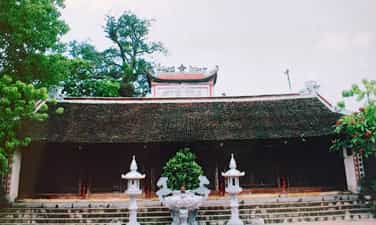
Van Chang communal house is a historical and architectural relic, traditional art and blacksmithing
Van Chang communal house is located on the territory of residential group number 16, Van Chang village, Nam Giang town. Van Chang village communal house is a place of worship and gratitude to the local people for the Six Patriarchs of blacksmithing. The genealogy of Van Chang village communal house said that the six craft ancestors together with 15 ancestors from the following families: Doan, Tran, Vu, Nguyen, Do, Ngo... recruited people to explore the fields and develop production. and career expansion. In the Year of the Ox (1373), during the reign of King Tran Due Tong, the reign of Long Khanh 2, after teaching the profession to the people here, the six ancestors returned to their old hometown of Hoa Chang village (Ha Tinh) to continue teaching the profession. forging. To pay tribute to the merits of the ancestors of the profession, local people named the village Hoa Chang - the original hometown of the Patriarchs (during the Nguyen Dynasty, it was changed to Van Chang village); set up a temple to honor: Phuc Than - Six Patriarchs - Tutelary God and take the 15th day of the 11th lunar month, the day the six Patriarchs from Van Chang village returned to their old hometown, as a taboo day. Currently, Van Chang village communal house still retains 6 decrees conferred with the title Khai Dinh 9 (1924) affirming the merits of "Protecting the country", "Ty people" and conferring on the Six Patriarchs: Duc Bao Trung Hung Linh Phu Van Son Saint Ancestor. In addition to the ordinations, Van Chang communal house also preserves many parallel sentences praising the merits and careers of the Six Patriarchs. Currently, along with Van Chang village communal house, Nam Giang town, Nam Truc district, Nam Dinh province worshiping the Six Patriarchs, other localities such as Ha Tinh and Ho Chi Minh City all have places to worship the Patriarchs. forging. Blacksmithing in Van Chang village, Nam Giang town was formed at the end of the 14th century, nearly 7 centuries ago. Initially, blacksmithing was just a side job alongside agricultural production. Through many historical periods, blacksmithing has gradually developed, separating from agriculture to go deeper into specialized production, becoming a traditional handicraft. In 1426, when the Lam Son insurgent army advanced to the North, a young man from the Doan family gathered villagers to stand up to kill the enemy and was awarded the title of Brave General. Knowing that there was a blacksmithing profession here, King Le Loi of Binh Dinh assigned the villagers the task of forging weapons for the insurgent army. Since then, Van Chang forging profession has continuously existed and developed. Also during the period of fighting against the Ming invaders, a group of Van Chang workers came to the Lam Son insurgent army to use the method of forging iron cannon tubes. This type of artillery was a signal for the insurgents to rise up and destroy the enemy. Currently, at Van Chang communal house, two cannons cast in iron are still preserved. During the Nguyen Dynasty, Van Chang blacksmith joined the army, many people were given the title "Tuong Muc", some were given the title "Water Ministry of Water Affairs" as the leader of the soldiers repairing weapons for military barracks, including both the navy and the land army. When the French invaded the North, many Van Chang workers stood in the army and people's ranks against the French. More than 2,000 Can Vuong troops commanded by Dr. Vu Huu Loi (1836 - 1886) were stationed in Giao Cu village (Dong Son, Nam Truc, Nam Dinh), all weapons were produced by blacksmith Van Chang. Up to now, after nearly 7 centuries, the traditional craft of blacksmithing has developed and spread strongly, forming the Nam Giang mechanical industrial cluster. Van Chang blacksmithing and Nam Giang mechanical engineering have become a key local economy, contributing to creating jobs, improving living standards, and building the local economy - culture - society today. a development. With typical values of history and artistic architecture, Van Chang Communal House has been ranked as a National Historical and Architectural Monument in 2018. Source: Nam Truc District People's Committee
Ninh Binh
9442 view
Rating : National monument

Bao Loc Temple
Bao Loc Temple, My Phuc commune (My Loc) was built on the "wooden ladder" land of An Sinh Vuong Tran Lieu, father of Hung Dao Vuong Tran Quoc Tuan and brother of Tran Thai Tong - the first king of Tran dynasty. During the Tran Dynasty, with the appearance of the Emperor's regime, in 1262, Tuc Mac village was changed to Thien Truong palace and was built on a scale like the second capital after Thang Long. Besides building palaces and magnificent houses for the emperors, the Tran Dynasty also conferred a series of fiefdoms on nobles, surrounding them like a protective belt of Thien Truong. At that time, An Lac hamlet was 2km north of Thien Truong center (as the crow flies). Legend has it that An Lac hamlet is the place where Tran Quoc Tuan was born and raised. With his great contributions in three resistance wars against foreign invaders, in April 1288 he was given the title "National Duke of Hung Dao Great King". When he died, the court re-titled him: "Grand Master, Supreme Patriarch Thuong Quoc Cong Nhan Vu, Hung Dao Great King". Bao Loc Temple was originally built along the Chau River, consisting of three ironwood rooms with tiled roofs. After the river bank eroded, the temple was moved to its current position. Existing on a small scale for a long time, in the early 20th century, Bao Loc temple was raised by people to upgrade it into a solid structure, quite large in size and height. The temple was built according to the design of Dong Phuong Bac Co, but was repaired to suit the traditional architecture of the nation. Construction began in 1928, it took 5 years for the project to be completed. The temple is located in the middle, facing east, on the left is the temple worshiping Buddha, on the right is the palace worshiping the Mother Goddess, behind the temple is Khai Thanh worshiping the king's father, mother, and wife. The entire relic is designed to be symmetrical and harmonious, with airy space creating a feeling of serenity during the holy ceremony. Bao Loc Temple is located in the middle, built in the style of a zigzag letter, including a front hall with 7 wide compartments, a long middle hall with 5 compartments, and a harem with 3 compartments. The architecture of the temple is simple, the columns are made of bricks, many beams are filled with durable and imposing reinforced cement. Although there are not many carvings, scattered in each part there are still themes: four sacred animals, water-rolling dragons, flowers and leaves, pine trees, chrysanthemums, bamboo, apricot trees... In particular, six sets of doors in the harem with plaques. Exquisite carvings bearing the artistic style of the Nguyen Dynasty. In the temple, in addition to the tablets, there are also two statues worshiping Tran Hung Dao (one made of bronze, one made of wood). The bronze statue in a sitting position weighs 4.8 tons, placed in the middle of the street. On both sides there are statues of Hung Vu Vuong Nhien and Pham Ngu Lao, his son and son-in-law. The agarwood statue is placed in the harem, on both sides are statues of literature teachers and martial arts teachers. Khai Thanh Temple is located in the back, the architecture is similar to the main temple but the foundation is 3 meters higher, worshiping Tran Hung Dao's father, mother, wife and two daughters. The worship arrangement here shows the spirit of respect for the teacher, integrity and filial piety of the Great King Hung Dao. Among the relics worshiping Tran Hung Dao, Bao Loc temple has special significance because this land is associated with his childhood. That's why people have the saying "Sinh Kiep Bac, Tran Thuong waterfall, Bao Loc's hometown". Every year, on his death day (August 20 of the lunar calendar), many visitors from all over have the opportunity to attend the traditional Tran Hung Dao festival. Source: Nam Dinh historical and cultural relics
Ninh Binh
10502 view
Rating : National monument

Temple of the Great Saint (Vinh Lai Temple)
Vinh Lai temple and pagoda are located in Vinh Hao commune, Vu Ban district, Nam Dinh province. Vinh Lai Temple worships Mr. Bach Dang and Cao Loc who helped Hai Ba Trung fight the invading Han army. Legend has it that at that time in Phong Chau district, there were Mr. Bach Bang and Ms. Hoang Thi Dang who lived well and lived well. On February 10, the year Giap Ngo, she gave birth to a handsome boy named Bach Dang. When Bach Dang was 16 years old, both of his parents died. He followed the Trung Sisters in the uprising and was adopted by Trung Trac. Cao Loi was originally the son of Mr. Cao Dien and Mrs. Han Thi, from Dong Ngan, Tu Son district, Kinh Bac religion (born on the 15th day of the twelfth month, year of the Monkey). Legend has it that he had a voice like thunder, so he was called Cao Loi. His parents died early, so he lived with his uncle Han Cong Chieu to study and practice martial arts. After he was killed by To Dinh, he supported Hai Ba Trung and became brothers with Bach Dang. The two men returned to Vinh Phuc village, Thien Ban district, recruited troops and set up a station with Hai Ba Trung to successfully fight the enemy. The two men stayed in the ancient land, advising the people to do honest business. Not long after, Emperor Han Wu sent Ma Vien over. In the spring of the year of Quy Mao (43), Hai Ba Trung and their generals were in a weak position and had to flee. The two men and a number of generals jumped into the river to die. The people of Vinh Phuc mourned and built a temple to worship the two men on the land of the old military post. King Dinh conferred the title "Honorable Tutelary God Bach Dang" and "Honorable Lord Loi Vuong". In addition to worshiping the two men, Vinh Lai temple also worships the ancestors who founded the village and opened the land. During the resistance war, the Vinh Lai temple area was a protection point for officials and guerrillas. Vinh Lai Pagoda is located on high ground, facing south, consisting of 7 buildings with 21 compartments. In front is a system of three gates, a guest house and a large yard. The front hall of Vinh Lai temple was built in the year of the Snake, the 8th year of Gia Long (1809), and restored in the 3rd year of Duy Tan (1909). This was a project made during the Nguyen Dynasty, so the structure and seven figures are all gentle and elegant. In particular, the Vinh Lai pagoda area is the most artistically processed project: the armpit beams, the ends, and the beams all touch the channel of leafy leaves, jade leaves, chrysanthemums, and lemon flowers. On the pillars are carved images of hidden lyres, fire leaves, and images of a mother dragon and her children in the Nguyen style. The dragon throne worshiping Bach Dang and Cao Loi is a valuable carved work with stylized flower and leaf bands and dragons flanking many shapes. Here there is also a bronze bell cast in the 23rd year of King Tu Duc's reign (1870) with a strange ringing sound. Vinh Lai Pagoda, in addition to the Buddha statues worshiped at other pagodas, at the ancestral house there is a statue of an old man, wearing a robe, with deeply wrinkled forehead and eyes looking down... This is a statue. Beautiful and valuable statue at Vinh Lai Pagoda. Festivals at Vinh Lai temples are held on the saint's birth day or the beginning of spring to express gratitude to the ancestors who opened the land and gathered people. Source: Historical and cultural relics of Nam Dinh province
Ninh Binh
5918 view
Rating : National monument

Nam Ha Stone Temple
Stone Temple, also known as Stone Communal House, is located in Nam Ha village, Tan Thinh commune, Nam Truc district, Nam Dinh province. Stone Temple in Nam Ha village is a relic worshiping the three Vu brothers, who were generals during the Hung King period, of which the youngest brother, Vu Uy, was honored as the village's tutelary god. There are also tablets worshiping his two brothers, Chinh Ngo and Gia Suu. According to the book Kim Au Ngoc Pedigree written in the first year of Hong Phuc (1572), still kept at the temple, the ancient land of Kim Au, now the hamlets of Nam Ha, Vo Lao Thuong, Vo Lao Ha, belongs to Tan Thinh commune. During the reign of the 18th Hung King in the Ai Chau region (Hoang Hoa, Thanh Hoa), there was Mr. Vu Cong who left his hometown to find a new land to make a living. From Thanh Hoa, he went to the land of Kim Au. Being enthusiastically welcomed by the people, he happily stayed to build a house and open a school to teach. Some time later, Vu Cong was groomed by the villagers to marry a girl named Hoang named Loan. Not long after, Mrs. Loan gave birth to two sons. The older brother named him Gia Suu, the younger named Chinh Ngo. The following year, Mrs. Loan suddenly passed away, and Vu Cong had to marry Mrs. Tran Thi Thinh to raise her two children. A few years later, Mrs. Thinh gave birth to a handsome baby boy, but strangely the boy had the word Vu Uy on his forehead and a row of fish scales on his back. Vu Cong immediately named his child Vu Uy. Growing up, Vu Uy and his two brothers followed the teacher to study religion. The three men were all very intelligent, knowledgeable about astronomy, geography and good at martial arts. When his parents passed away, all three of them returned to the capital Van Lang to help King Hung rule the land for nearly 20 years. His father contributed a lot in the fight against the Shu army. When Hung Vuong ceded the throne to Thuc Phan, because he could not tame the new owner, all three of them returned to Kim Au land and divided the commune into three villages and each person governed one village, then helped the people develop agriculture, professions and continue to open schools for children of people in the area. Remembering that merit, after their death, the villagers built a memorial temple. In addition to worshiping the three generals of the Hung King period, Da Temple also worships 12 ancestors (twelve ancestors) of 12 families who came here early to establish the village. The temple also worships two great scholars named Hoang and Luu so that local people can remember their tradition of studiousness and encourage their children and grandchildren to promote that pride. Stone Temple in Tan Thinh commune is a large architectural work located on high ground, with an area of 2 acres (northern) in the middle of a field far from villages. There are many perennial trees surrounding it that integrate with the building's architecture into a complete whole. After many times of repair and embellishment, the current building still has 4 main buildings and a row of ceilings to the north. The 5-compartment hall was renovated more than 60 years ago, its architecture is completely made of stone, but still retains the traditional style of the nation. Inside the worship hall are the second and third buildings. The third court has 5 compartments, renovated in 1877. The second court also has 5 compartments, restored in the 4th year of King Thanh Thai's reign (1892). Currently, the second building still retains many traditional architectural looks, notably the set of ironwood doors embossed with motifs of two dragons on the two middle doors and dragons on the two sides. The Stone Temple Festival is held on the 3rd day of the third lunar month every year. Stone Temple is recognized by the Ministry of Culture and Information as a historical and architectural and artistic relic. Source: Nam Dinh Electronic Newspaper
Ninh Binh
5944 view
Rating : National monument

Am Tien Cave
Am Tien pagoda and cave are located in the Ngu Phong Son mountain range, southeast of the Hoa Lu ancient capital relic site, in Truong Yen commune, Hoa Lu district, Ninh Binh province. This is a cluster of relics containing many values of unique architectural landscape, history, culture, and beliefs. In 1998, the relic was ranked by the Ministry of Culture and Information as a national historical and cultural relic. Am Tien pagoda and cave, in addition to worshiping Buddha, also worship Zen Master Nguyen Minh Khong, who was instrumental in repairing the cave and building the pagoda. Not only was he proficient in Dharma, he was also skilled in medicine. Because of his great merit in treating King Ly Than Tong, he was awarded the title of National Teacher - the top monk of Buddhism during the Ly dynasty. According to local legend and documents preserved at the site, in the 10th century, this cave was originally a stone prison, where King Dinh Tien Hoang kept tigers and leopards to punish those who committed serious crimes. Later, the cave was no longer used as a prison, but it is said that the evil souls of the dead still remain in the cave. Local people passing by here often hear the sounds of ghosts crying, tigers screaming, and leopards roaring. No one dares to come close to the cave. During the Ly Dynasty, National Master Nguyen Minh Khong came here and used the cave as a pagoda. He recited sutras and preached Dharma every day to stop the demons from howling and harming innocent people. According to the epitaph "Dai Chu Ma Son Ang Dai Quang Thanh lava tragedy". The 4th Chinh Long Bao Ung date (year 1166) engraved on the cave door wall says: This cave is called Dai Quang Thanh cave, located on the large mountain Chu Ma Son Ang. According to the epitaph "Tien Am Tu Bi Tien Am Thach Lo Chi". compiled by Phan Dinh Hoa's Tuan Phu in the 7th Bao Dai era (1932), currently kept at the relic, says: "Since Dai Quang Thanh took refuge in this cave, the cave was later used as a pagoda. Relying on the Buddha and Saints, the prison turned into a wonder park, and the cave turned into a pagoda from there. The 32nd reign of Tu Duc (1879) was recently revised. Association leaders around the area always pay attention to making the pagoda more beautiful and the Tap Phuc association named the pagoda Am Tien. Am Tien pagoda and cave are located halfway up the mountain, facing southwest, in front is a large meandering lake, surrounded by rolling limestone mountains. Epitaph "Tien Am Tu Biography". The 2nd Dong Khanh era (1887) said that when you want to enter the cave, you have to climb over a "mountain about 8.9 meters high... in the village there is a field estimated at more than 10 acres that can be planted with rice, and on both sides of the mountain there are beautiful scenery." wild, animals, birds and animals contrast, so it is called Co Am. The mountain forms a wall surrounding the hermitage, and there are caves in the rocky mountain. From below, follow the edge up to the cave." This epitaph also adds. "I don't know when the temple was built. In the 32nd year of King Tu Duc's reign (1879), the pagoda was desolate and gloomy, so the village agreed to repair it. The rotten things were carefully sealed, repainted the statue of Dai Quang Thanh, repainted the statue of national dharma Zen master Nguyen Minh Khong on the right side, and the Buddha statue could not be repainted. By the reign of King Ham Nghi, all the decorations were completed." Am Tien Pagoda and Cave still preserve valuable relics. On the cliff on the right side of the cave, there is a ghost stele "Dai Chu Ma Son Ang Dai Quang Thanh lava bi". (Meaning: stele engraved on the wall of Dai Quang Thanh cave on the large Chu Ma Son Ang mountain). The stele is dated Chinh Long Bao Ung's 4th year (1166). On the left side of the cave are three steles, including two stone steles of the Nguyen Dynasty dating from the 2nd Dong Khanh (1887), the 7th Bao Dai (1932) and one without words. The content of the two steles talks about the history of the pagoda's name and the process of repairing the pagoda. The cliff to the left of the cave entrance has a small bell hanging. In addition to the beauty of architectural landscape space, Am Tien pagoda and cave also preserve many valuable relics and antiques. This is a valuable historical source in learning and researching about the ancient capital of Hoa Lu, about the Dai Co Viet state, about historical events and characters. Source: Department of Culture and Sports of Ninh Binh province
Ninh Binh
6014 view
Rating : National monument
Tam Diep line
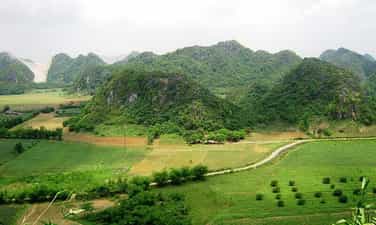
The Tam Diep defensive line relic area is called after the Tam Diep defensive line of the Tay Son insurgent army, built at the end of the Mau Than year (1788) to prepare forces for the speedy campaign, defeating 290,000 invaders. The Qing invaders and their gang sold the country to Le Chieu Thong in the early spring of Ky Dau (1789). At the end of the year Mau Than (1788), Le Chieu Thong's gang of traitors brought 290,000 Qing troops to invade our country. Faced with the initial strength of the enemy, Ngo Van So and Ngo Thi Nham and the Bac Ha generals retreated strategically to build the Tam Diep and Bien Son defense lines. The two water and land sides contacted each other to maintain the vulnerable position. . The Tam Diep Line is the final withdrawal limit of the Tay Son insurgent army, aiming to prevent and prevent enemy attacks, ensuring secrecy and safety for the rear in the South. When Quang Trung marched to the North, the Tam Diep line was the gathering place of the Tay Son insurgents (from December 20, Mau Than year, January 15, 1789 to December 30, Mau Than year, January 25, 1789). ). Temporary Line relic area, including 3 pass peaks of Tam Diep and a cluster of forts, Kem Do, Ong Ninh fort, Tam Diep fort, blocking Thien Ly road from the North to Thanh Hoa. Thien Ly road from North to South runs on 3 peaks of Tam Diep pass, the highest peak is about 110m. In the 16th century, taking advantage of the rugged terrain of the Tam Diep mountain range, the Le - Trinh feudal government built a number of ramparts on both North and South sides of Tam Diep pass and used Tam Diep as the boundary between the Southern and Southern dynasties. Northern Dynasty. At Kem That, on both sides of Thien Ly road, two ramparts were built connecting the cliffs to form a solid gate. About 400m north of Kem That is "Ong Ninh rampart", connecting two mountain ranges called Thanh mountain. In the middle of the rampart there is a path, on both sides there are stone embankments like "rampart gates". To the west of the rampart there is a moat about 8m wide, to prevent enemy attacks from coming in from Thien Ly road. About 100m away from this rampart is "Tam Diep post", about 1 acre in size, controlling the Thien Ly road north of the gate. When withdrawing from the strategy of building the Tam Diep defense line at the end of the year Mau Than (1789), the Tay Son insurgents used these strongholds, so there are many legends about Nguyen Hue and the Tay Son insurgents here. Local people believe that "Mr. Ninh's rampart" is the front door and "District Ke's rampart" is the back door of the Tay Son insurgents. The Tam Diep station in particular was used from the Le dynasty to the Tay Son dynasty and the Nguyen dynasty and belonged to the weakened Nguyen Quang Toan government, but was stationed in Tam Diep to fight against the Nguyen Anh government. When the Nguyen Dynasty was established, it also used Tam Diep post to control the Thien Ly road from North to South. At Kem That, two Thien Ly roads still have traces, two short ramparts connecting to the cliffs have been almost completely destroyed. Ong Ninh's rampart is still quite clear, 135m long, 15m wide, the main road, Tam Diep fort still have two faint traces on the eastern edge of the citadel. Currently, on the top of Tam Diep Pass, the highest pass (belonging to Thanh Hoa province), there is a stele with the poem "Qua Tam Diep Son" (through Tam Diep Mountain) carved in the 2nd year of Thieu Tri (1842), recording a poem written by Thieu Tri while on patrol here. On October 8, 1985, the Tam Diep defense line was recognized as a national historical relic Source: Department of Culture and Sports of Ninh Binh province
Ninh Binh
5852 view
Rating : National monument