Relic point Vietnam
Việt Nam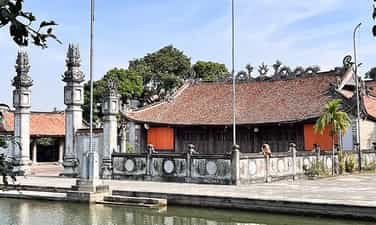
Dinh Dao Lam
Dao Lam Communal House worships four generals: Pham Van, Hoang Cong Binh, Vu Cong Tao and Crown Prince Ly Manh. All four men were instrumental in helping the Ly dynasty drive out the Luong invaders. According to the legend preserved at Dao Lam communal house, in the 6th century, the Liang Dynasty in China sent General Tran Ban Tien to bring troops to invade our country. Upon receiving the news, King Ly Nam De immediately gathered his court officials to find a plan to fight the enemy and recruit troops. Because of their talent in literature and martial arts, Messrs. Pham Van, Hoang Cong Binh, Vu Cong Tao, and Crown Prince Ly Manh were trusted by the king to entrust 2,000 soldiers to fight the enemy. When he arrived at Dao Tong village, Gia Phuc district, Thuong Hong district (now Dao Lam village, Doan Tung commune), he was happily welcomed by the people. Seeing that this place had beautiful scenery and beautiful people, the four men ordered the soldiers and villagers to set up a palace and hold a feast to welcome the army. That day, there were 20 young men in the village who asked to fight the enemy. A few days later, the army quickly set out straight to the banks of the To Lich river to fight the enemy. With their ingenuity, the army of four quickly repelled the enemy. Unwilling to lose, the Luong army asked for more reinforcements. In the second battle, due to the difference in forces and weapons, many of the four soldiers died. To complete the relationship with the young country, all four generals threw themselves into the To Lich river on the 20th day of the 10th lunar month. After the battle, some surviving soldiers returned to Dao Tong village and told the story. To commemorate their gratitude, Dao Tong villagers built a temple to worship the four people at the palace that the insurgent army established in the past (now the harem of Dao Lam village communal house). With great merit, the Ly Dynasty immediately conferred the title of Superior God on all four generals. King Ly ordered the people of Dao Tong village to bring the king's beautiful statue to the temple of the four kings. In 1288, O Ma Nhi and Thoat Hoan brought 500,000 troops to invade the Tran Dynasty. King Tran Nhan Tong assigned the National Registrar Tran Quoc Tuan to the temple of four people in Dao Tong village to worship and pray. Then he went to fight the enemy and won a glorious victory. In 1416, King Le Thai To chased away the Ming Dynasty and also went to the temple of the four monks to worship and pray and indeed won. Thanks to that, the Tran and Le dynasties both conferred the title of Superior God for four people. Dao Lam Communal House is located on flat, spacious land and was built on a fairly large scale. The communal house consists of three main buildings: the outer communal house, the middle communal house and the rear palace, in addition there is a bell tower. Over time, the communal house has been tinged with moss and has many ancient features. The outer communal house has 5 rooms and 2 wings with an area of over 250 m2 with 4 rows of large ironwood columns. The architecture of the rafters is in the style of stacking lotus mats and carved with stylized flowers and leaves. The husband's heads are shaped like dragon heads. At the 8 ends, the image of a poisonous dragon holding a jade is carved, creating a solid position and expressing sacredness. The outer roof of the communal house is covered with roof tiles, the corner blades are shaped like a softly curved dragon's head. On the roofs are arranged four sacred animals (dragon, lyre, tortoise, phoenix). At both ends of the roof of the communal house are two strong dragon heads with a plier-like posture to keep the communal roof more stable. The middle communal house is 2 m away from the outer communal house and also includes 5 rooms and 2 wings but the area is smaller (about 220 m2). The most outstanding architecture is the carved art at the ends of the traps with the theme of four seasons: spring, summer, autumn, and winter. On the murals are very sharp and lively long pants. On the central crossbar hangs the great inscription "Duc Phong Thuong Thuong Than". Below are arranged 1 set of bowl-shaped palanquins, 2 sets of dragon palanquins. On both sides are two rows of eight-precious dragon swords. All artifacts are painted. Like the outer pavilion, the middle pavilion was built in the Later Le dynasty and renovated in the Nguyen dynasty. Next is the middle pavilion, which is about 105 square meters wide and includes three back rooms At the back of the harem there is a large altar with four thrones to worship the four village tutelary gods. Each throne has a tablet with their names written on it. In March 1990, Dao Lam communal house was ranked by the State as a national historical and cultural relic. Source Electronic information portal of Thanh Mien district, Hai Duong province.
Hai Phong
4487 view
Rating : National monument
Luong Xa Communal House
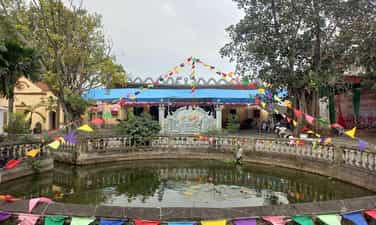
Luong Xa Communal House worships Mr. Dao Nha, who was instrumental in helping the Tran Dynasty fight against the Mongol invaders in the 13th century; His merits have been recorded in the legends, ordinations, and couplets that still exist and are kept at the monument. The communal house also worships Mrs. Tran Thi Huong, a supporter of the Can Vuong movement against the French at the end of the 19th century. Luong Xa communal house was built in the late 19th century and majorly restored in 1930. The architectural relics are quite consistent from the Great Temple. , Harem and Giai Vu, is a large-scale relic, with many carvings and reliefs of high artistic level. With this architectural style, it helps us study the history of ancient Vietnamese sculpture. Based on historical values, in 2001, Luong Xa communal house was recognized by the State as a national historical relic. For the locality, Luong Xa communal house is not only a place to worship people who have contributed to the country, it also marks the resistance war against the French and the Americans. It is a place that leaves a strong mark on culture and village beliefs. Researching the history of Luong Xa communal house relics brings us valuable resources in understanding the customs, traditions, and beliefs of the Vietnamese people. The festival has a sacrificial procession according to the long-standing custom of the local people and is held on March 8 (lunar calendar). Currently, the Festival has been completed by the Department of Culture, Sports and Tourism with its Profile and Festival script and has been organizing the Festival according to the script since 2014. Source Electronic information portal of Kim Thanh district, Hai Duong province.
Hai Phong
4380 view
Rating : National monument
Kien Lao Communal House
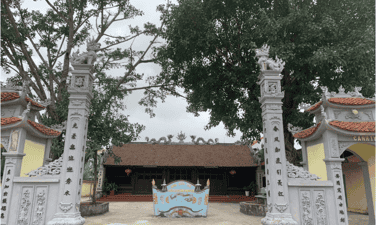
Kien Lao Communal House, also known as Xuan Quang Communal House. Kien Lao Communal House worships two gods who contributed to the country in the 10th century: Dao Cong Chieu and Dao Cong Hien. Kien Lao Communal House is located on a cool plot of land with the shape of a dragon flanking a tiger. Surrounded by bright green rice fields and shady trees, the communal house has an ancient and quiet look. Nguyen architecture, main side facing south, overlooking the rice fields near the village. The imposing three-entrance gate (renovated by the local government and people in 1992), the main gate rests on two pillars, with a double roof on top, and the two side gates are built with two overlapping roofs. The communal house is built in the shape of the letter Dinh (丁) and includes 5 front rooms and 3 back rooms. The roof is tiled, on the roof are two pincers, in the middle of which there is an image of two dragons flanking the moon. The two front gables and the back gables are embossed with tiger talismans. At the side door of the harem, there is also the words "Dong Khanh, the first year of the year, the year of the Dog, the first month, the first month, the first day, the first day, the first day of the year when the commune restored it," clearly showing that the communal house was built in 1886, restored in the 3rd year of Bao Dai's reign (1928). ) The main palace is decorated with hammock doors, on both sides are hung parallel sentences and placed a set of painted and gilded octagons. In the forbidden palace, there are two thrones and two bright red and gilded palanquins of the two Tutelary Gods The village also has an altar to worship Tran Hung Dao. This place still preserves 2 genealogies and 12 decrees conferred by the Le and Nguyen dynasties on the two village Gods and many valuable antiques and worship items such as: The altar of the Nguyen Dynasty, 3 great paintings, 3 parallel sentences, 3 incense burners of the Nguyen Dynasty... In front of the three-entrance gate, there is a yard more than a hundred square meters wide, with a green stone pillar as a flagpole next to the surface of a semi-circular lake about 500 meters wide. square meter. Cool and harmonious landscape, good feng shui. Based on historical values, in 1995, Kien Lao Communal House was recognized by the State as a national historical relic under Decision No. 2223-VH/QD dated June 26, 1995. The annual festival is held on November 15 (lunar calendar). There is a very special custom of worshiping gods and processions imbued with traditional culture that is admired by people and tourists. Currently, the Festival has been completed by the Department of Culture, Sports and Tourism with its Profile and Festival script and has been organizing the Festival according to the script since 2012. Source Electronic information portal of Dai Duc commune, Kim Thanh district, Hai Duong province.
Hai Phong
4560 view
Rating : National monument
Muong Pagoda (Quang Khanh Tu)
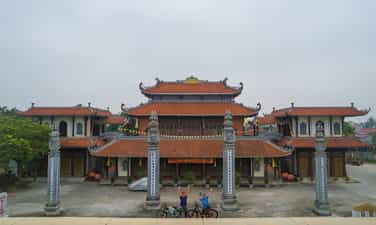
Muong Pagoda (Quang Khanh Tu) in Ngu Phuc commune is a major religious center of Kim Thanh district, Hai Duong province. The pagoda has experienced 7 centuries of existence, recorded in the history of Vietnamese feudalism. In addition to its rich history, Muong Pagoda is also known as the pagoda with the most towers in Hai Duong province. Having gone through the devastation of the war, the pagoda still retains a rather massive system of stone towers from the Le and Nguyen dynasties. Quang Khanh Pagoda is a large temple in the country belonging to the Truc Lam Zen sect. The pagoda dates back to the Tran Dynasty in the early 14th century and was presided over by Hue Nhan, the National Master Vuong Quan Vien. Hue Nhan was also a physician with talent in treating eyes. King Le Thanh Tong once came to the pagoda and wrote poems at the relic. The pagoda is the revolutionary and resistance base of the Party Committee and the province. By 1947, the pagoda still had 120 rooms, 32 stone and brick towers, about 50 Buddha statues and many antiques. This is the temple with the most rooms in the province. At the same time, it is the largest Buddhist religious center in Kim Thanh district. The pagoda was ranked as a national monument in 1992. Every year the festival is held for 3 days: the 24th; The 25th and 26th day of the first lunar month (lunar calendar) are often called Non Dong Festival. Due to the advantage of water transportation and being a famous ancient temple in the area, it attracts several thousand tourists to the Pagoda Festival every year. Source Electronic information portal of Kim Thanh district, Hai Duong province.
Hai Phong
5307 view
Rating : National monument
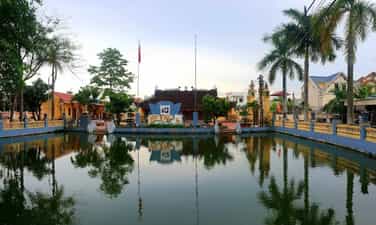
Dinh Quynh Coi (Dinh Goi)
The communal house is in Ngoc Lam village (Quynh Goi village), Tan Ky commune, Tu Ky district, Hai Duong province. The communal house worships the tutelary god Cao Son Dai Vuong, during the reign of Hung Due king, who fought against the Thuc invaders and kept the land peaceful. The communal house was built in the 17th century and restored many times in 1686, 1692, 1750, 1756, 1772, 1838, 1899. During the war, the communal house was severely damaged. The current communal house includes 5 rooms for Tien Bai, 3 rooms for Hau Palace, and 6 rooms for Giai Vu. In the communal house, there are still many antiques, including 9 steles dating from the 17th to 18th centuries, 15 steles from the Le Trung Hung and Nguyen dynasties. Annual festival from February 8 to 13 of the lunar calendar. The communal house was ranked as a national historical and cultural relic in 2001. Ngoc Lam village communal house is currently somewhat no longer in its original state due to time, but with the efforts of the village government as well as the people, they have restored the current status and preserved the traditional and ancient features of Quynh Coi Communal House. relics bearing the essence of the homeland "Banyan Tree-Water Well-Cathedral". Source Electronic information portal of Tu Ky district, Hai Duong province.
Hai Phong
4495 view
Rating : National monument
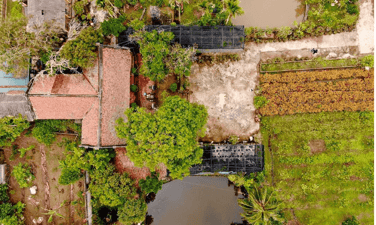
Khanh Linh Pagoda
Located in the unique historical and cultural relic complex of Phuong Ky commune, Khanh Linh pagoda is in Tan Hop village (formerly Tu Ky Ha village) about 20km from the center of Hai Duong city, 5km from the center of Tu Ky district. Nam, has been classified as a national historical relic since 1999. There is a system of statues carved from jackfruit wood, painted with gold, dating back to the 18th century, and a system of finely sculpted stone steles. Crafty, Khanh Linh Pagoda is considered a work of artistic character with heroic historical value. According to the stele kept at the pagoda, Khanh Linh Pagoda was built during the reign of Thieu Long of the Tran Dynasty in 1258. At first, the pagoda was small, with a thatched grass roof. In the following dynasties, people contributed money to repair, roof tiles, buy statues, and cast bells, creating a spacious and splendid scene as the poem described: "Khanh Linh Pagoda is majestic and towering/Sacred land." Talented people / Long-lasting prosperity / Front hall built in front / Glorious high roof / Shocking sound / Venerable Buddha ceremony...". The stele recording the restoration and embellishment shows that people's contributions amounted to 1,838 mandarins, 27 stone pillars, 8 columns and wooden diaphragms. In particular, the person who contributed the least amount of money was 1 coin, the person who contributed a lot up to 120 coins and a stone pillar. Having gone through wars and harsh natural disasters, the pagoda now has 5 front halls and 3 back halls. The front hall has a structure in the style of a stack of 6 trusses, with floral motifs carved into the ridges. Supporting the entire rafters and roof are 12 ironwood columns, 32 cm in diameter. Stone military columns include two types: round and square. Square columns are arranged in front of the door, round columns are behind. The names of the donors are written on the stone pillars. The central compartment is connected to the 3 harem compartments by a truss for fighting cocks and husbands. The harem court has 6 ironwood columns, 29 cm in diameter and 6 stone columns. The altars placing the statues in the three back rooms are all built of bricks. The pagoda's system of Buddha statues, stele, and stone incense sticks is imbued with sculptural art that represents the truth, goodness, and beauty of Buddhism. The statue system here is all carved from jackfruit wood, lacquered and gilded, dating back to the 18th century. The ancient statues in the temple have many different styles, sitting and standing. The statue is balanced and majestic, reflecting the diligence and meticulousness in its creation. In the temple grounds, there are a number of other supporting architectural works, which are a 3-compartment ancestral house, including statues of two monks who practiced at the temple. In front of the temple door is an orchid garden with many species and sizes that has been cared for and cultivated by abbot Thich Nu Thong Nhan for nearly 10 years. That scene created tranquility for the temple. In particular, the pagoda also preserves the steles "Renovating the front hall on the upper floor" and "Khanh Linh Tu Biography"; "Epic of the Ten Directions of Merit" and a stone incense stick with sophisticated decorative motifs. In 1999, Khanh Linh Pagoda was ranked as a national monument by the Ministry of Culture and Information (now the Ministry of Culture, Sports and Tourism). Source: Electronic information portal of Phuong Ky commune, Tu Ky district, Hai Duong province.
Hai Phong
4456 view
Rating : National monument
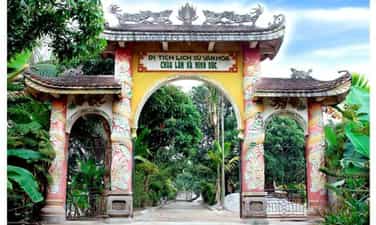
Dong Duong Pagoda
Dong Duong Tu is the Sino-Vietnamese name of Dong Duong Pagoda. People here often call Lam pagoda by name, because the pagoda is located in Phuc Lam village, Minh Duc commune. Local people also often call it by the name Trong pagoda, to distinguish it from another smaller pagoda behind the village, called Ngo pagoda. Trong Pagoda, also known as Dong Duong Tu, means the temple faces East, the direction of the rising sun. And the Outer Pagoda is called Man Nguyet Tu, the pagoda faces the moon, when the afternoon sun sets. Talking about its name, we can see that there is a balance and symmetry in the naming of the temple, in the harmonious architecture of the ancients. Like other temples in Vietnam, Dong Duong Tu is a temple worshiping Mahayana Buddhism. The pagoda was built during the Le Dynasty (around 1600) and with the contributions of money and merit from the Le Dynasty general Nguyen The My, who had the merit of engraving the merit stele at the pagoda. According to the stele engraved in the year of Duc Long (1632), it is said that Duke Nguyen The My's name was Van Phuc, and the king trusted and loved many important responsibilities in the inner government. When foreign invaders invaded, he was appointed marshal by the king to lead the army to defeat the enemy, bringing peace to the country and his homeland. He was greatly rewarded by the king. Although his fame was glorious everywhere, he still lived humbly and richly without being arrogant. He spent money to renovate Indochina Pagoda with 54 very spacious rooms. His merits were engraved on the stone stele, currently kept at the Hai Duong Museum, and he was enshrined in a statue at the Indochina pagoda area. Indochina Pagoda was recognized by the state as a cultural and historical relic in 1994. Source: Electronic information portal of Minh Duc commune, Tu Ky district, Hai Duong province.
Hai Phong
4748 view
Rating : National monument
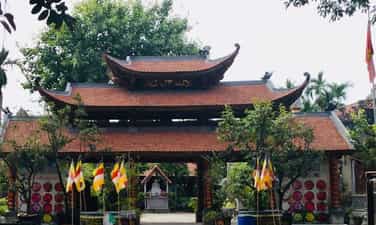
Phu Loc Pagoda
Phu Loc Pagoda, whose abbreviation is Ma Ha Pagoda, or Phu Loc Tu, is one of six relics of Cam Vu commune, Cam Giang district, about 12 km northwest of Hai Duong City. As a place with a convenient transportation location, since previous centuries, Phu Loc has soon become the center of economic and cultural exchange of the region, on that social basis, many traditional cultural institutions have been established. life and development. The pagoda was built in the early Le dynasty (15th century), which was also a period of brilliant economic and cultural development in local history. The pagoda was greatly restored in the 19th century (1898), with the relatively massive. Over the years of hardship, war and social events, the pagoda still has a nail-shaped (J) architecture including 5 front halls and 3 back halls, preserving the ancient architecture. Located on a spacious and flat piece of land in the center of Phu Loc village, in front there is a large pond, along the pond people plant many types of green fruit trees, the ancient pagoda roof is hidden in the groves of trees, creating a utopian landscape. quiet, solemn. The front hall is built with a dome, reinforced with pillars, has a frame structure with overlapping ridges, a chamfered roof top with a stylized "Tho" engraved on it, rectangular in shape, the husband's children are carved with fire swords, in the style of the Later Le and Late Dynasties. stylized lotus. The ends of the seven front halls touch the canal with dragon leaves wrapped around them, the swords and beards of the dragon's hair are shaped like clouds and fire blades. On the striped part is a system of dong leaves, decorated with "Dragon leaves" "Bamboo turning dragon" interspersed with playing weasels. In general, the monument has undergone many renovations, so the original architecture has been slightly changed, the two gables are in the style of gong stands interspersed with piles of beams, and the panels are carved with the theme of the four sacred animals. Connected to the front hall are 3 back rooms built with truss and pillars, with simple truss and buttress architecture. Phu Loc Pagoda worships Buddha according to the Mahayana sect. Before the August 1945 revolution, the pagoda had a very large scale, with up to 50 statues and many sacrificial offerings. Particularly, the system of worship statues in the upper hall has 6 layers and most The statue was created in the 18th - 19th centuries. In addition, in the side rooms there are statues of Quan Am To Son and Quan Am Tong Tu, according to Buddhist scriptures, these are the two forms of Avalokiteśvara. In the front hall, worship statues are arranged as follows: On the left side is the place to worship Saint Hien and the statue of Trung Evil, on the right side is the place to worship Duc Ong and the statue of Khuyen Thien. On both sides of the gable are worshiped the Vajra Prajnaparamita, Thai Thuong Lao Quan and Bodhidharma. The new Mother Goddess Church was built by the people in 1996, worshiping Mother Thoai, Mother Thien and Mother Thuong Ngan according to the belief of worshiping natural supernatural forces of the ancient Vietnamese people. With 35 statues of all kinds, most of which were created in the 18th - 19th centuries, Phu Loc Pagoda is not only a place for religious activities but also a place to store valuable works of folk sculpture. In addition to the Buddha statue system, Phu Loc Pagoda also retains many other antiques and worship objects such as parallel sentences, great characters, bronze bells, hammock doors, incense bowls... Worshiping Buddha for good luck is an indispensable activity for Buddhist people in Vietnam. On the full moon days and first days of the month, Phu Loc people go to the pagoda to worship Buddha. The offerings to Buddha are only hometown products but clearly show their sincere devotion. In addition, Phu Loc Pagoda also has a number of main holidays as follows: It is the 8th day of the 4th lunar month - Buddha's birthday. In Phu Loc, there is a custom of chanting sutras and holding Moc Duc ceremonies, bathing statues with fragrant leaf water and The statue is made of red silk, the silk is later torn into many small pieces for everyone to pray for good luck. On the 15th day of the 7th lunar month - Vu Lan holiday, a ceremony is held to worship the souls of Buddhists to help and forgive the sins of the dead. In recent years, local people have also held the "Buddha Return" ceremony for the deceased with the meaning of praying for the souls of the deceased to be liberated according to the concept of folk beliefs. Because Phu Loc communal house worships the Tutelary God, during festivals, people always go to the pagoda to worship Buddha and vice versa. Therefore, Phu Loc communal house and pagoda ceremonies have become an indispensable need of the people. here. Phu Loc Pagoda is a Buddhist relic built quite early on a land with a rich cultural history, an ancient architectural work imbued with the art of worshiping the Later Le Dynasty, with typical carvings of images. "Four Sacred Spirits" is incarnated with "Four Precious Elements". The lotus image with many different angles is stylized to create beautiful richness. The Buddha statue system is unique sculptures of the 18th - 19th centuries. The pagoda is also the revolutionary resistance base of Cam Giang district and Cam Vu commune. Researching and protecting relics has the value of demonstrating the revolutionary tradition of local officials and people and educating the younger generation in their responsibility to participate in building and protecting the homeland. With historical and cultural values as mentioned above, Phu Loc Pagoda was ranked at the national level according to Decision No. 04/2001/Quyet Dinh - Ministry of Culture and Sports, dated January 19, 2001. With that scientific and legal basis, along with the awareness of preserving the cultural heritage of the local people, Phu Loc Pagoda will be protected and promoted effectively to meet the aspirations of the local people. Source Electronic information portal of Cam Giang district, Hai Duong province.
Hai Phong
4755 view
Rating : National monument
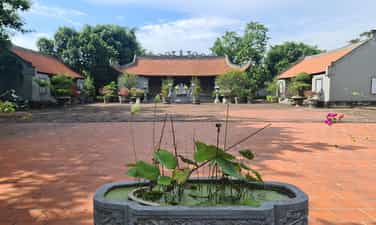
Long Dong Temple
Long Dong Temple, Nam Tan commune, worships 3 famous academicians: valedictorian of Minh Kinh scholar Mac Hien Tich, who passed the exam in the 2nd year of Quang Huu (Binh Dan, 1086), equivalent to Poinsettia; was selected as an Academician of the Academy, later promoted to Minister of Ministry, was a person with exceptional political talent, and had been an ambassador to Champa in the 4th year of Hoi Phong (1094). Dr. Mac Kien Quan (younger brother of Poinsettia Mac Hien Tich) passed the matriculation exam (year of the Snake 1089) and became an official to the position of Minister of Public Works. Binational Poinsettia Mac Dinh Chi (5th generation of Poinsettia Mac Hien Tich) passed the Poinsettia exam in the year Giap Thin (1304), during the reign of King Tran Anh Tong. The lives of the sages Mac Hien Tich and Mac Kien Quan are rarely mentioned in history, but Mac Dinh Chi has been mentioned in many books and newspapers and also has many anecdotes. Accordingly, Mac Dinh Chi was an extremely diligent, intelligent, and talented man in business and economics. He was the head of the court, going through three generations of kings Tran Anh Tong, Tran Minh Tong and Tran Hien Tong. Legend has it that he was an ambassador twice. With his erudite knowledge, eloquence and skillful behavior of a talented diplomat, he was greatly admired by the kings and mandarins of the Yuan Dynasty and made him a Poinsettia of the Two Kingdoms; "The immortal name of the two countries, the immortal name of the three sages, the valley of eternal happiness".... With its historical and cultural values, in 1995, Long Dong Temple in Nam Tan commune was recognized as a national historical and cultural relic. In 2019, Long Dong Temple was recognized as a provincial tourist destination. Long Dong Temple Festival is held in the Spring (from the 9th to the 11th of the second lunar month) to commemorate the death of Mac Dinh Chi on February 10, the year of the Dog (1346). The festival is imbued with traditional cultural values of the nation, expressing the moral principle "When you drink water, remember its source", contributing to preserving and promoting the nation's cultural heritage. Source Electronic information portal of Nam Sach district, Hai Duong province.
Hai Phong
4459 view
Rating : National monument
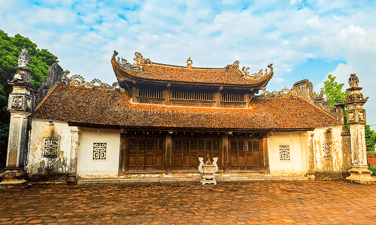
Hundred Gian Pagoda
Hundred Gian Pagoda is a historical and cultural relic in An Dong village, An Binh commune, Nam Sach district, Hai Duong province. The relic was formed about 1000 years ago, located in a peaceful countryside, near the romantic Kinh Thay river, pure space, moss tiled roof, ancient tower garden and was once a large pagoda. Buddhist center of the country, a school that teaches Buddhist scriptures to many Buddhists. The pagoda is called according to the scale and architecture of the monument. Up to now, it still retains its unique layout, architectural features and many antiques of scientific value. In addition to the name Tram Gian, the pagoda is also called An Ninh, named after the village's place name and the original name is Vinh Khanh pagoda. From Nam Sach town, go towards Binh bridge along Highway 37, reach the intersection turning into An Binh commune (next to the headquarters of the People's Committee of Quoc Tuan commune), visitors follow the commune's main road to An Dong village (away from the headquarters of the People's Committee of An commune). 400m) to reach the ruins. Like other temples, the Hundred Gian Pagoda was built to worship Buddha according to the Mahayana sect, with the idea of spreading Buddhism to everyone to aim for the good values of Truthfulness - Compassion - Beauty, people living together in harmony. peace, start the mind to do many good deeds, stay away from evil, love and care for each other. Mahayana is a "big vehicle" that can carry many Buddhists in practice and together to soon reach the shore of enlightenment. Hundred Gian Pagoda, in addition to worshiping Buddha according to the Mahayana sect, also worships the Zen sect of Truc Lam Tam To (Number of Giac Hoang Tran Nhan Tong (1st group), Venerable Phap Loa (2nd group) and Venerable Huyen Quang (3rd group). In addition, the pagoda also worships monks who took refuge and became abbots at the pagoda, who contributed to the restoration, embellishment and expansion of relics such as: Saint Patriarch Pham Thi Toan (Toan Nuong) who was abbot for 02 years (ordained in 1011, passed away in 1013), was a disciple of Zen master Tu Dao Hanh of the Bhikkhuni lineage. When the Tran dynasty reigned, she was bestowed the title "Trinh Khiet Doan Truc Trai Hoang Quy Phi, High Class Princess". "The next monk to be the abbot was a villager who studied according to the Truc Lam Zen sect, named Nguyen Dieu Quang, and was called To Rau (because he practiced the monkhood and only ate 1 piece of tofu and 2 bunches of vegetables every day). enter at noon). King Le Canh Hung conferred the title "Venerable Monk Luc Zen Elder". The next monk, Vien Giac, from the commune, took refuge and passed away at the pagoda on September 14. The next monk is Vien Tich, who first practiced at Bo Da Pagoda (Bac Giang), then became a disciple of Vien Giac and passed away on June 24, and a number of other monks now have tower tombs behind the pagoda. Not only is it a fairy tale landmark in the region, during the resistance war against the French colonialists and American imperialists, the pagoda was a revolutionary base, a training, meeting and shelter place for local guerrillas and soldiers. In 1965, the pagoda was the warehouse of the 7th branch and the military warehouse of Military Region III. After 1975, a part of the pagoda became the headquarters of the Commune People's Committee, library, radio station, commune traditional house... Currently, the pagoda has returned to being a cultural, religious and spiritual activity spot for the people in the area. . Legend has it that the Hundred Gian Pagoda dates back to the Ly Dynasty (around the 11th century). During the Tran dynasty, general Nguyen Huy Tinh stationed troops at the pagoda to block the Nguyen army from the direction of the Bach Dang River from attacking Thang Long. During the Le dynasty, in the year of Chinh Hoa (1691), King Le Hy Tong repaired the upper palace, in the year Vinh Thinh Nguyen (1705), the year of King Le Du Tong, the king continued to repair the upper palace; In 1740 and 1809, many works in the temple were repaired and renovated. In the 19th and 20th centuries, the Hundred Gian Pagoda was restored on a large scale and uniquely in the style of the Nguyen Dynasty. Currently, the entire campus of the monument is located on an area of 17,977m2, with main works such as: From the East, the bell tower (128m²) begins, with a large and unique scale. On the bell tower in the central space hangs a bronze bell cast in the 2nd year of Thanh Thai (1890), this is a rare bell in Hai Duong province. The bell tower consists of 05 compartments, of which 03 middle compartments have ancient architecture. The two gables are architecturally styled to create the shape of a pan handle. The roof of the match stack is two trusses and columns placed on the upper beams of the structure below. Above the match-stacked roof there are 4 knife heads with reliefs of a flanking dragon and dancing phoenix, and the roof is covered with a dragon at both ends. Roof-top system, soft flowing banks, decorated with stylized lemon flower umbrellas. Behind the bell tower, through a small yard is the main pagoda including: 07-compartment front hall, 16m long, 8m wide. The structure of the trusses is in the style of stacking lotus mats. Details such as main pillars, military columns, seven porches, armpit beams, main pillars, first sentences, pillars, rim pillars, and dou goi are meticulously crafted. The upper beams, lower beams, diaphragms, and rafters are all illuminated. The structure of the horizontal and vertical bracing system is reasonable and tight. The upper palace is 11m long and 8m wide. The carpentry part of the upper palace has the same structure and fabrication as the front hall, but the carpentry details are smaller. The walls are built of Bat Trang bricks, the inside is plastered, the outside is left to smooth woodwork, and the roof is tiled. On the left side of the upper palace are 7 compartments of the Mother Church, 14m long and 4m wide. The trusses are structured in a simple, bridge truss style. On the right are two Guest Houses connected together like a hallway. Behind the upper palace is the Tu An house, with a structure of lines overlapping the top, children-in-law, lotus lines, and intricately carved leaf paintings. The ancestral house is located behind the four graces house. The north of the pagoda has a yard of about 1,000m² with a number of buildings facing the yard such as: tower house, monk's house, inner temple, outer temple and many other auxiliary buildings. Behind the pagoda is a tower garden of 10 pagodas, of which 9 were built during the Le and Nguyen dynasties, one was built in 2003. Hundred Gian Pagoda is a pagoda belonging to the Truc Lam Zen sect, with many public works. The project and the most rooms still exist in Hai Duong province. Every year, the Hundred Gian Pagoda holds a festival on the 11th and 12th day of the 9th lunar month. With great historical, cultural, sculptural, and scientific values of relics and antiques being kept at the pagoda. On March 2, 1990, the relic was ranked as a national historical and cultural relic by the Ministry of Culture and Information (now the Ministry of Culture, Sports and Tourism) according to Decision No. 168/Decision - Ministry Sports Culture. Source Electronic information portal of Nam Sach district, Hai Duong province.
Hai Phong
4443 view
Rating : National monument