Relic point Vietnam
Việt Nam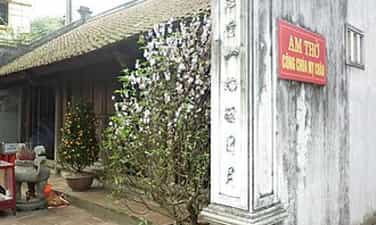
Am My Chau
Am My Chau is also known as Ba Chua am or My Chau temple, located west of Ngu Trieu Di Quy communal house. In front of the altar there is a banyan tree that is said to have been planted by Ngo Quyen. This banyan tree is so large that it is often called a thousand-year-old banyan tree. Now it is no longer there, only a brick arch is left, which is the vestige of the banyan roots from afar. The worship area is an architecture consisting of 2 main parts. The altar is a house built of wood with 3 rooms, gabled walls, and tiled roof. The turrets are made in the style of "high gong, low gong, and seven". All components do not have any engraved patterns, but are only planed. This architecture is of late date (late 19th and early 20th century). On the upper shelf, there is a line of Chinese characters clearly stating the date of renovation: Democratic Republic of Vietnam, year of Quy Suu (1973). The harem is a vertically rotating building, the main load-bearing structure is walls built on 3 sides, leaving only 2 side doors to connect with the altar. At the front of the altar, on both sides of the house's gable pillars, there are two parallel sentences: Faithful and single-minded to conquer the sun and moon; The spirit is as bright as the moon and stars; the spirit is as bright as heaven and earth forever. In the middle space there is an altar called "incense altar", above there is a letter with 4 Chinese characters: Ton Cung Dien Tuyen (the palace worshiping the girl) and there are 4 pairs of parallel sentences in this area talking about the loyalty of Princess My Chau. Pair of parallel sentences on the pillar next to the incense burner: faithfulness vows to fossilize body and mind; rise and fall, the hope of agarwood (the loyalty sworn in the heart turns the body into stone; tears crying about prosperity and decline turn into pearls in a deep well). In addition, there are a couple of other parallel sentences: The sect plays thousands of emperors, solemn and high, mysterious and ancient; Ba Truong Ngoc Tinh shines with pure light and pure heart (her descendants are Lac's children and Hong's grandchildren, her pure heart has been an example from far away; the jade well radiates sacred light, clearly showing her sincere heart). Continuing inside, in front of the harem there is an altar for the "twelve ladies" - the princess's servants. There are a pair of parallel sentences on the pillars on both sides of the altar: Thien Duc Thuong Thi Gia Phi Loi Nhang Biet Chi Quy Chao Co Co transmitting foreign history; Ngu Luan Chung's father kept the wife's husband and his wife's husband and wife together to open up the province with a deep love (thousands of years have passed, no one can justify what is right or wrong, the tortoise's claw used to make the magic crossbow bolt is just a legend; in the five roms, only the pearls and the water of the jade well can prove who is the father and the husband more closely). The harem is where the altar to worship Princess My Chau is located. Above is an altar throne. The innermost space is where stone statues are placed. This is the "My Chau stone statue" told in the legend. It can be added that: the place where My Chau was beheaded by her father was Mo Da pass in present-day Nghe An province, but according to the legend, the petrified statue drifted to the foot of Ngoai citadel. In Nghe An today there is also a temple worshiping An Duong Vuong, next to it is a temple worshiping My Chau. That place was called Cuong Mountain, now the temple is at the top of the mountain, also known as Cuong Temple. According to Co Loa Citadel Relics Management Board
Hanoi
761 view
Rating : Special national monument
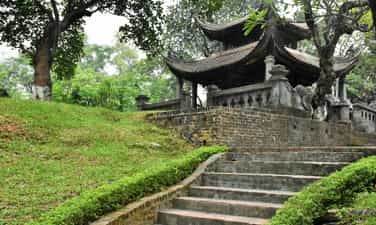
Temple of King An Duong Vuong
King An Duong Vuong Temple, also known as Thuong Temple, was built on a hill that legend says once had the king's palace. Thuong Temple relics have an area of about 19,138.6 m2, built in the south direction, the main architectural works of the temple are located on the Dung Dao (Shinto) axis. The lake in front of the temple area is quite large, circular in shape with a naturally curved bank embanked with stone, with paths and trees planted around the middle of the lake with a Ngoc well. Previously, the lake was connected to the moat of the two outer citadels and to the river wharf in the East - South of the Ngoai citadel. According to legend, this is the lake where My Chau - Trong Thuy often sailed from here before the war of invasion by Trieu Da. After the war, Trong Thuy jumped down here to commit suicide because he regretted causing the death of his beloved wife. In folklore, there is also the story of My Chau's bloodline, when her father's head was beheaded by her father, and she fell into the sea. The mussels that ate them turned into pearls. If they were washed in this well, the pearls would become even brighter and therefore the well in the middle of the lake in front of Thuong Temple is also called Ngoc Well. Thuong Temple has two ritual gates: the outer ritual gate and the inner ritual gate. The outer ritual gate is built of unplastered bricks, shaped like a city gate with two floors, the lower floor has 3 doors, built in a dome style, the upper floor is compact in the form of a 2-storey 8-roof gazebo. The entrance to the middle door has a pair of large stone dragons on both sides of the door steps, created in 1732. Past the outer Nghi gate is the lower dragon yard paved with Bat Trang tiles. In the middle of the yard there is a paved path running straight to the main door of the inner Nghi gate. Because there is a belief that the temple is built on the "dragon's head", people have created on both sides of the Dragon Yard 2 small wells called "dragon eyes" that match each other, next to them there are 2 high mounds of land called "dragon jaws". The inner gate is located higher than the yard, the entrance has 7 blue stone steps. On both sides of the steps are a pair of dragons made of compound mortar. Passing Nghi Mon inside is the dragon terrace paved with Bat Trang tiles. In the middle of the yard is a paved path leading to the Tien Bai house, also known as Dai Bai or Tien Bai. The front altar is a majestic structure, the roof is covered with funny-nosed tiles, has curved corners and is covered with Nghe statues. Two long corridors on both sides connect Tien Te and Middle Hall, between the two corridors is a Phuong communal house. The harem is a "mulpit" style building, roofed directly adjacent to the Central Hall. In the Harem there is a statue of King An Duong Vuong cast in bronze, weighing 200kg, dated 1897. The stele house is located in the overall architecture of the temple, built on a high area of land to the west of the terrace, facing the temple. This is a small architectural work in the form of Phuong Dinh, two floors and eight roofs - a quite harmonious and beautiful wooden architecture with a tiled roof. Based on the existing architectural pieces and artifacts, it is said that Thuong Temple was probably built around the 17th-18th centuries. According to the Loa Co Citadel Relics Management Board
Hanoi
548 view
Rating : Special national monument
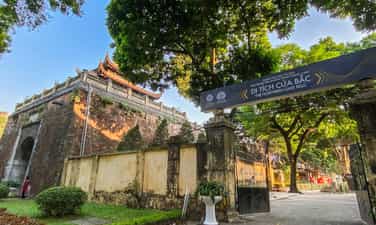
North Gate
Historical witness in the heart of Hanoi's Imperial Citadel Located on Phan Dinh Phung Street, Cua Bac (Bac Mon) is the only intact city gate of Hanoi Citadel during the Nguyen Dynasty. Built in 1805 on the foundation of Cua Bac during the Le Dynasty, the building is not only a precious vestige of ancient military architecture but also a symbol of the resilient spirit of Hanoi's army and people during the years of fighting against foreign invaders. The North Gate is built in a gazebo architecture with a massive gate below and an eight-roof watchtower above. From the gazebo, ancient soldiers could observe the entire area inside and outside the citadel to protect the capital. After more than two centuries, the building still retains many original architectural features with solid brick and stone walls, large wooden gates and the Chinese characters "Chinh Bac Mon" still intact on the gate. The special feature that makes Cua Bac a valuable historical relic is that two cannon bullet holes are still clearly visible on the outside of the city gate. This is a vestige of the attack carried out by the French army on Hanoi citadel in 1882, reminding of glorious battles in the nation's history. Inside the gazebo is currently the place to worship the two Governors of Hanoi, Nguyen Tri Phuong and Hoang Dieu - heroes who fought and sacrificed their lives to protect Hanoi citadel from the invasion of the French colonialists. The solemn space and exhibits help visitors understand more about the patriotic spirit and indomitable will of their ancestors in protecting Thang Long - Hanoi. Coming to Cua Bac, visitors will not only admire a unique ancient architectural work but also have the opportunity to explore the Thang Long Imperial Citadel complex, learn about the history of the capital with a thousand years of civilization and take impressive photos among the rows of ancient trees on Phan Dinh Phung Street - one of the most beautiful streets in Hanoi. Today, Cua Bac is a stop not to be missed on the journey to explore the Capital. Amidst the pace of modern life, the project still quietly preserves historical marks, becoming a symbol of patriotism, resilience and pride in a thousand-year-old Hanoi of civilization. According to the Management Board of Thang Long Imperial Citadel
Hanoi
729 view
Rating : Special national monument
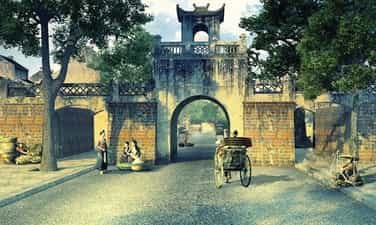
O Quan Chuong
The last doorway preserves the ancient soul of Hanoi Amid the bustling life of Hanoi's Old Quarter, O Quan Chuong still stands quietly as a witness of more than two centuries of history. As the only remaining doorway of Thang Long citadel, the building not only has unique architectural value but is also a symbol reminiscent of a thousand-year-old Hanoi of civilization. Built in 1749 and restored in 1817 under the Nguyen Dynasty, O Quan Chuong is also called Dong Ha Mon, located at the eastern gate of the ancient citadel. The building is built according to the gazebo gate architecture with a large main door, two side doors on both sides and a gazebo with four curved roofs above. On the gate there are still three Chinese characters "Dong Ha Mon", a historical mark that has existed over the years. Having gone through many historical events, O Quan Chuong still retains its ancient features with moss-covered brick walls, time-stained tiled roofs and a peaceful space in the heart of the city. Standing under the city gate, visitors feel like they are going back in time, returning to the image of old Thang Long - where groups of people and horse-drawn carriages used to bustle in and out through the doors every day. Not only is it a historical relic, O Quan Chuong is also a favorite stop for tourists when exploring Hanoi's Old Quarter. From here, you can easily combine visiting Dong Xuan market, Hang Chieu street, Hoan Kiem Lake walking street or enjoy typical dishes of Hanoi cuisine. In particular, in the early morning or late afternoon, the sunlight passing through the city gate creates an ancient scene, which is the ideal time to save typical photos of Hanoi. Today, O Quan Chuong is not only a national historical relic, but also a symbol of longevity, preserving memories of an ancient Thang Long in the heart of the modern capital. If you have the opportunity to visit Hanoi, don't forget to stop at O Quan Chuong to feel the rustic, peaceful beauty and listen to the historical stories that echo along each ancient brick. According to Hanoi magazine
Hanoi
724 view
Rating : National monument
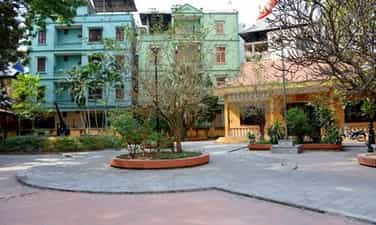
Lang Fortress historical site
Located on Fort Dai Lang Street, Lang Thuong Ward, Hanoi City, Lang Fort Historical Site is the place where the first artillery shots opened the nationwide resistance war against the French colonialists on the evening of December 19, 1946. This is also the place where the first victory of the Vietnam People's Army Artillery was achieved, becoming a "red address" of special significance in the history of the struggle to protect the nation's independence. The fortress was built by the French colonialists in 1941 on the fields of Lang Trung village for the purpose of defending Hanoi. Initially, the project was equipped with four 75 mm anti-aircraft guns and a solid command post system. After the Japanese fascist's coup in France in 1945 and the victory of the August Revolution, Vietnamese military forces collected, repaired and restored cannons to serve the task of protecting the revolutionary government. On June 29, 1946, the first artillery unit of the Vietnam Army was established. Lang Fortress became one of the important artillery battlefields protecting the Capital, where artillery soldiers urgently prepared for combat missions day and night amid the increasingly tense situation in Hanoi. On the evening of December 19, 1946, after the signal to start the National Resistance War was broadcast, from Lang Fort, the first artillery rounds simultaneously fired at French army positions in Hanoi citadel. The sound of artillery not only opened the long resistance war against the French colonialists but also marked the birth and growth of the Vietnam Artillery. During the 60 days and nights of fighting to protect Hanoi, the soldiers at Lang Fortress fought resiliently with the capital's army and people, contributing to holding back the enemy, creating conditions for the Party Central Committee, Government and headquarters to withdraw to a safe base, preparing for a long-term resistance war. After the war, traces of the fortress were no longer intact due to urbanization. However, the 75 mm cannon and part of the battlefield have been preserved and restored within the relic grounds. This place also has a gallery introducing images, documents and artifacts about the history of the formation of Lang Fortress, the early days of the National Resistance and the traditions of the Vietnam People's Army Artillery. In 1986, Lang Fortress was classified as a historical relic by Hanoi city, and in 1992 it was recognized by the State as a National Historical Monument. The building continued to be restored and renovated in 1994–1995 and 2006, contributing to preserving precious historical values for future generations. Today, Lang Fort Historical Relic is a meaningful destination for history lovers, especially the younger generation. Not only does it preserve memories of the early days of the National Resistance War, this place is also a symbol of the resilient will, determined fighting spirit and heroic tradition of the Vietnam People's Army Artillery. Source: Hanoi Sights and Monuments (compilation)
Hanoi
877 view
Rating : National monument
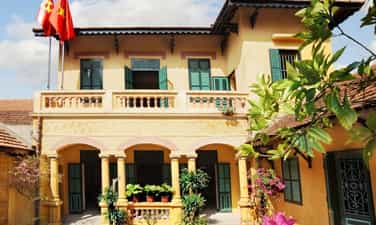
Memorial house of President Ho Chi Minh in Van Phuc
Located in Van Phuc ward, Hanoi city, President Ho Chi Minh Memorial House is where he lived and worked from December 3 to December 19, 1946, before issuing the National Call for Resistance. This is one of the special historical relics, marking the opening moment of the Vietnamese people's long resistance war against the French colonialists. The house was originally owned by Mr. Nguyen Van Duong's family, a family with a patriotic tradition in Van Phuc silk village. With a convenient location, both close to Hanoi and ensuring confidentiality and safety, this place was chosen by the Party Central Committee as the living and working location of President Ho Chi Minh during the days when the country's situation was extremely tense. During his time in Van Phuc, President Ho Chi Minh still went to Hanoi during the day to work with the Government, receive international delegations and direct work, and in the evening returned to this house to study the situation, meet with the Party Central Committee Standing Committee and prepare important decisions for the country's destiny. In mid-December 1946, in response to the escalating acts of invasion by the French colonialists, the Party Central Committee met many times in Van Phuc to decide on the policy of launching a nationwide resistance war. It was in the room on the second floor of the house that President Ho Chi Minh drafted and completed the National Call for Resistance, the historic document that opened the resistance war against the French colonialists with the immortal summons: "We would rather sacrifice everything, than definitely not lose our country, definitely not willing to be slaves." On the evening of December 19, 1946, the National Call for Resistance was broadcast on the Voice of Vietnam, starting a long-term nine-year resistance war and leading to victory with the Dien Bien Phu Victory in 1954. This event marked an important turning point in the nation's history, demonstrating the resilient will and desire for independence and freedom of the Vietnamese people. Mr. Nguyen Van Duong's family kept it absolutely secret, creating all conditions for President Ho Chi Minh to work safely during his stay. Before leaving Van Phuc, he thanked his family and encouraged the people to actively support the resistance war, expressing his strong belief in the nation's victory. Today, the Memorial House of President Ho Chi Minh in Van Phuc is still preserved almost intact. The second floor of the house holds a working room and many original artifacts associated with the days when President Ho Chi Minh lived and worked here; The first floor is a space to display documents and images about the National Resistance War event and local revolutionary traditions. During the journey to explore Hanoi, the Memorial House of President Ho Chi Minh in Van Phuc is a place to help each person better understand and appreciate the sacrifices and determination of the nation in the journey to win and maintain independence. Source: Hanoi Landscapes and Monuments (compilation).
Hanoi
362 view
Rating : National monument
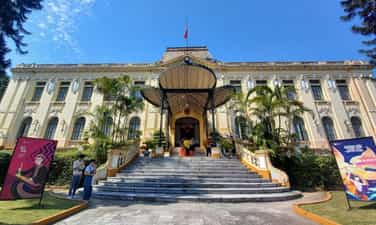
Northern Palace historical site
Northern Palace historical site Located at 2 Le Thach Street, Hoan Kiem Ward, Hanoi City, Bac Bo Phu is one of the special historical relics associated with the early days of the founding of the Democratic Republic of Vietnam. This is where President Ho Chi Minh and the Provisional Government worked after the August Revolution in 1945, and witnessed many important events in the process of building and protecting the young revolutionary government. The project was built by the French in 1918 in the style of ancient French architecture, initially as the Tonkin Governor's Office - the highest administrative agency of the colonial government in Tonkin. After the Japanese fascist's French coup in March 1945, the project was renamed Phu Kham Sai Tonkin. On August 19, 1945, in the boiling atmosphere of the August Revolution, tens of thousands of people from the rally at the Opera House Square marched to occupy the Kham Sai Palace. The event of seizing power here became one of the typical milestones of the General Uprising in Hanoi, contributing to bringing the August Revolution to victory and paving the way for the birth of the Democratic Republic of Vietnam. After the victory of the August Revolution, the project was renamed Bac Bo Phu. From the end of August 1945 to the day before the National Resistance, President Ho Chi Minh and the Provisional Government worked here, making many important decisions on building the state apparatus, domestic and foreign affairs, and preparing for the defense of newly won independence. In particular, on December 20, 1946, Bac Bo Phu became one of the fiercest fighting points in the early days of the resistance war against the French colonialists. The National Guard soldiers heroically fought to protect the Government's headquarters, contributing to the beginning of the nation's long resistance war. After the capital was liberated in 1954, the building was renovated and became the Government Guest House, continuing to serve the State's domestic and foreign affairs activities. In 2005, Bac Bo Phu was labeled a Revolutionary Historical Relic, recognizing its special historical and architectural values. Not only has historical value, Bac Bo Phu is also a typical French architectural work with elegant design, in harmony with the space of Hoan Kiem Lake and August Revolution Square. After more than a century, the building still retains many traces of the nation's early founding period and is a witness to important events in the nation's history. Today, Bac Bo Phu is one of the typical "red addresses" of Hanoi Capital. Preserving, embellishing and promoting the value of monuments not only contributes to preserving historical memories but also helps educate patriotic traditions and revolutionary spirit for present and future generations. For tourists who love history, Bac Bo Phu is a meaningful destination to learn about the early days of the formation of the modern Vietnamese State and the journey to protect the nation's independence. Source: Tuoi Tre Newspaper
Hanoi
818 view
Rating : Special national monument
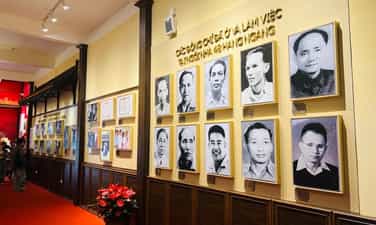
House number 48 Hang Ngang
Historical site 48 Hang Ngang - Where President Ho Chi Minh wrote the Declaration of Independence Located at 48 Hang Ngang Street, Hoan Kiem Ward, Hanoi City, the historic house at 48 Hang Ngang is where President Ho Chi Minh wrote the Declaration of Independence, the historical document that gave birth to the Democratic Republic of Vietnam on September 2, 1945. This is one of the typical relics associated with his life and career, and is also a "red address" with special significance in Vietnam's revolutionary history. The house is owned by patriotic business couple Trinh Van Bo and Hoang Thi Minh Ho, who have made many contributions to the revolutionary cause. Located in the middle of Hanoi's Old Quarter, connecting to both sides of Hang Ngang and Hang Can streets, the house has a convenient location, solid architecture and ensures confidentiality and safety. Therefore, from August 25 to September 2, 1945, this place was chosen as the living and working location of President Ho Chi Minh and the Party Central Committee Standing Committee. On the second floor of the house, President Ho Chi Minh chaired many important meetings, decided on domestic and foreign policies, established the Provisional Government and prepared for the Independence Day. In particular, it was in this room that he completed the Declaration of Independence - the historical document declaring to the whole world the birth of the Democratic Republic of Vietnam. On September 2, 1945, at the historic Ba Dinh Square, President Ho Chi Minh solemnly read the Declaration of Independence in front of more than half a million compatriots, officially giving birth to the first worker-peasant state in Southeast Asia, ending thousands of years of feudalism and nearly a century of colonial domination, opening a new era of the nation - an era of independence, freedom and nation-building. Currently, the first floor of the house is a space displaying many precious documents, images and artifacts related to President Ho Chi Minh, the August Revolution and the birth of the Declaration of Independence; The second floor is still preserved almost in its original state with original artifacts, helping visitors better visualize the historic days of the fall of 1945. Today, 48 Hang Ngang Historical Site is a destination that attracts a large number of domestic and international tourists. Not only does it have great historical value, this place also contributes to educating patriotic traditions, national pride and revolutionary spirit for today and future generations. On the journey to explore Hanoi, the house at 48 Hang Ngang is a meaningful stop for everyone to better understand the moment of the birth of an independent Vietnam and the immortal marks in the nation's history. Source: Hanoi Monuments and Scenic Management Board (compiled).
Hanoi
804 view
Rating : Special national monument

Vietnam Military History Museum
Established on July 17, 1956 with the original name of Military Museum, located next to the Hanoi Flagpole, opened to visitors from December 22, 1959. Through the process of construction, development and continuous growth, the Museum was renamed Vietnam Military History Museum in 2002 and officially welcomed visitors at the location of Thang Long Avenue, Dai Mo Ward, Tay Mo, Nam Tu Liem District, Hanoi City (now Xuan Phuong Ward, Hanoi City) in November 2024. The museum has the function of researching, collecting, inventorying, preserving, displaying and propagating the value of Vietnam's military cultural heritage. The display system introduces thousands of artifacts, organized and arranged in a modern, scientific and rich manner, applying modern technology and advanced equipment, comprehensively reflecting the history of fighting against foreign invaders and gaining independence of the Vietnamese people; the formation and development of the people's armed forces, the core of which is the Vietnam People's Army during revolutionary periods. Through the exhibition system as well as educational activities, the Vietnam Military History Museum contributes to helping visitors understand more about the treasure of Vietnam's military cultural heritage, feel a strong connection with the past, understand more about the heroic history of the Vietnamese people, appreciate the existing values and look forward to a brighter and better future.
Hanoi
1624 view
Rating : National monument

Hoa Giang Van Minh - Porcelain Porcelain on the Foreign Affairs Front
Hoa Giang Van Minh - Porcelain Porcelain on the Foreign Affairs Front The ancient village of Duong Lam is known as the "masterpiece of spirituality", which produces national heroes, celebrities, faculties, and talent. They are people who have made excellent contributions to the cause of national construction and defense of the nation. Hoa Giang Van Minh - the talented envoy is one of those elite children of the homeland of Duong Lam. Giang Van Minh was born in 1573 in Mong Phu hamlet. He passed the Detective Flower of Mau Thin, the reign of King Le Than Tong in 1628. This examination was no one passed the title of Poinsettia or the Table of the Label only had the title of Flower Detective. He is a broad, highly talented learner, is a diplomatic diplomat, and brave. After a period of being sent to the court in Nghe An until 1637. King Le sent a Chinese -Van Hoa Detective to the delegation to go to Chinese porcelain. Over a hard journey, the delegation reached Beijing. He and his accompanying people had to stay in translation for a long time. Thanks to the smart strategy, he was able to enter King Minh. When the audience, King Minh intended to try the talent of the Vietnamese god, so he raised a side: "Copper Chi Kim Dai Kim Luc" (Translation: The copper column has now covered the moss). The side of King Minh was arrogant, referring to the old Ma Vien to invade our country, after suppressing the Hai Ba Trung uprising, he built a bronze column to engrave the word "bronze with extraction, Giao Chi to kill" (meaning: bronze columns, the people Giao Thich only destroyed) as a curse of our people. After listening, Detective Hoa Giang Van Minh was very angry but he still calmly confronted: "Dang Giang self -necked by pink" (Translation: Bach Dang River from ancient times is still red). In the opposite of the steel, showing the heroic spirit and national pride, reminding King Minh to recall three times the Bach Dang River tinged with the blood of the Northern invaders: the victory of the South Han army of Ngo Quyen (938), the victory of the Song army of Le Dai Hanh (in 981) and the victory of the Nguyen Mong army of Tran Hung Dao (in 1288). Thought to humiliate the Ambassador of Vietnam, suspected that Giang Van Minh was humiliated. Despite the rules of the state, King Minh cowardly sent his troops to operate his stomach to see "how big the male An Nam was." After killing him, King Minh praised him as the secretor, so he sent merciful mercury, put the ginseng and put it in the coffin to closed to the Southern Water Mission to transfer his body to the country. Believing that Kham Jiang Yuan died heroically, King Le and Lord Trinh extremely mourn. The king personally went back to his hometown in Mong Phu village (Duong Lam) to attend the funeral and gave him some words: the ambassador of the army, the hero of the ancient hero means "going to the mission without humiliating the king's destiny, worthy of being the hero of the ancient Thien" and pursuing him as "the work of the Lang Thi Lang, the title of Vinh district". Currently, the tomb of Kham Giang Van Minh is still carefully cared for by the clan in the country of Go Dong - Mong Phu village, built a pedestal of the throne, surrounded by protective flower walls. As for the throne, the place of burial ceremony of him, called by the local people as Quan Giang to memorize the legend of the angel of the deity has made a glorious for the country. In 1845, the people in the area of Hoa Giang Van Minh Detective Church to commemorate his merits. The church area has an area of about 400 m2, which is architecturally in the style of the buds including the road and the back of the road. The buildings are built with bricks and roofs; The wooden roof is smooth, sharp, no sophisticated engraving station. The gate of the church style of beer, built of bricks, on the floating Chinese characters "Giang Tham Hoa Cong Tu" (Cong Lang Dynasty Church of Ta Thi Lang Tham Hoa Giang Van Minh). Hau Duong is the main place of worship, 3 spaces have a altar with beautifully painted altars. In the church also preserved a number of precious relics such as: 4 diaphragm paintings, 20 pairs of Chinese verses (10 pairs written on the golden lacquered wood, 10 pairs written on the wall column), 3 steles. Hoa Giang Van Minh Detective Church was ranked in 1991 national cultural and historical relics, which is a sacred place to record the situation of Tham Hoa and also a place of patriotic traditional education for the younger generation. At this church, in addition to being a place to honor the gratitude of Tham Hoa's merit is also the place to worship and honor many of the late Jiang family through the period when he passed the board of chief appointed as the mandarins and hold important positions with great merits for feudal dynasties. The last time the church has been remodeled with the State's capital, the construction was completed under the technical assistance of experts and volunteers of the Japan International Cooperation Agency in Vietnam (JICA), this renovation project was also honored to receive awards for wood construction techniques of UNESCO Asia -Pacific Committee in 2013. The ceremony of commemorating the death of the angel, in addition to the solemn and respectful rituals of his noble sacrifice, the family also held a study promotion ceremony to honor and encourage the descendants of Giang to Dat and win high prizes in all levels of education. Located in the center of Mong Phu ancient village close to the communal house and the People's Committee of the commune, the Giang church is currently an attraction that attracts a large number of domestic and foreign tourists.
Hanoi
2523 view
Rating : Updating