Relic point Vietnam
Việt Nam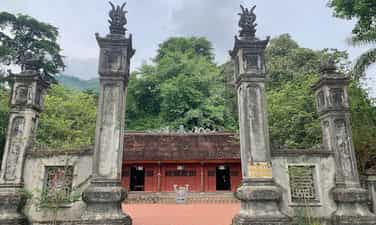
Trung Do Temple
Trung Do Temple is located in Trung Do village, Bao Nhai commune, Bac Ha district, Lao Cai province today, built by the people at the end of the 18th century, as a place of worship, commemorating the merits of three talented generals of the Le Dynasty - Khanh Duong Hau Vu Van Uyen (1479 - 1557); Gia Quoc Cong Vu Van Mat (1493 - 1571); General Hoang Van Thung - were the people who had the merit of commanding and leading the people to build citadels and ramparts to maintain the border areas of the Fatherland, developing the land of Trung Do and Bac Ha in the old Tuyen Quang town into an economic center. social economy at that time, and at the same time assisted the Le Dynasty in the work of building and protecting the country. According to records of old historical documents, Vu Van Mat is a historical figure who lived during the Le Dynasty (Le Mat) and was born in Ba Dong village, Gia Phuc district (now Gia Loc district, Hai Duong province). In the 30s of the 16th century, Vu Van Mat and his brother Vu Van Uyen left their homeland to defend the Dai Dong region, the ancient town of Tuyen Quang (now in Lao Cai province). After succeeding his brother Vu Van Uyen, he proclaimed himself Gia Quoc Cong, moved his base from Nghi Lang citadel and built a rampart on Mount Bau. From then on, people often called him "Lord Bau" or "The Gourd King". Vu Van Mat is a talented, courageous general who is "loyal to the army, patriotic, knows how to put the country's fortune above all else". Under the talented leadership of Vu Van Mat, the ancient land of Lao Cai has achieved a highly developed, prosperous economy, with bustling and prosperous trading activities. He was assigned by King Le Trang Tong to hold the position of General of Tuyen Quang, given the title An Tay Vuong and remained in the Dai Dong region. He gathered troops with the Le dynasty to attack the Mac dynasty to Kinh Su, causing Mac Phuc Hai to flee in defeat. Afterwards, the Mac Dynasty attacked, Vu Van Mat was unable to hold the occupied areas, so he withdrew his army to defend Tran Tuyen Quang (present-day Lao Cai) and died there. To commemorate the great contributions of the two brothers of the Vu family and the generals to the land of Dai Dong, Tuyen Quang town (present-day Lao Cai), the people built a temple to burn incense. Over time, the temple was destroyed, only a small part and some pillar stones (carved with images such as humans, apes, peacocks, unicorns...) with fine lines remained. Crafty and unique, in addition, there are bricks with wide plates and very high hardness, decorative bricks carved with elaborate patterns including leaves, spirals, return lines, winding wire shapes. ... In addition, many artifacts made from porcelain and ceramic materials were also discovered at the relic such as jars, lime jars, bowls, plates... and many artifacts whose names have not yet been determined are being kept and stored. preserved at Lao Cai Provincial Museum. All remaining traces and artifacts are traces that demonstrate the history of formation, existence and development of the Trung Do Temple relic. About 2 km north of the temple, there are vestiges of Trung Do ancient citadel made of soil and rocks covering a hill next to Nam Thin stream. Also in this area, in 1989, a villager while plowing the A cannon was discovered, weighing over 300 kg and 8 m long, currently being kept and preserved at the museum of Lao Cai province. In the forbidden forest behind the temple, there is a white stone stele. Legend has it that this is the place where soldiers gathered to take the oath before going into battle: "Death to the enemy" on the stele there are still 4 slash marks of the general's oath. command. On the left, behind the temple, in the forbidden forest is a double tomb that is said to be the tomb of General Hoang Van Thung and his wife. Because they were determined not to fall into the hands of the enemy, they sacrificed their lives and were saved by the people. The village used dirt to build a grave. Later, termites rushed up to form a large mound. Currently, the graves of the general and his wife are still worshiped here. With typical values in history, culture, education and tourism development, Trung Do Temple was ranked as a national monument on August 22, 2008 by the Ministry of Culture, Sports and Tourism. The temple has undergone two investments and renovations to have its present spacious appearance. Trung Do Temple has an overall architectural layout in the shape of the letter "Nhat" with the Tieu Tieu building, in front of both sides are the Left and Right Vu houses located on beautiful land, charming feng shui, gathering most of the earth's worlds. The location and direction are considered typical of geography such as: water gathering position, crouching tiger, left dragon right white tiger,... making the space here become even more sacred and pure. The temple's annual festival is held twice a year on the occasion of the Field Descent Festival on the full moon day of the first lunar month and the Khao Quan Festival held on the full moon day of the seventh lunar month. Through its history of formation and development, Trung Do Temple has become a place of spiritual and religious activities for people and tourists from all over to visit and worship, and is a place marking the heroic struggle tradition of the army. and Lao Cai people, educating national pride and the tradition of remembering the source when drinking water for today and future generations. Source: Bac Ha district electronic information portal
Lao Cai
4077 view
Rating : National monument
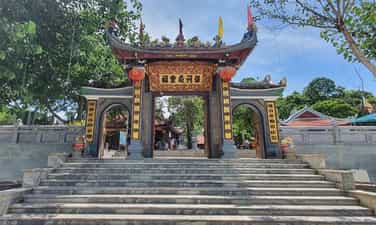
Ong Bay Bao Ha Temple
Located in the "Hoang Bay National Guard relic complex", Bao Ha temple is in Bao Ha commune, Bao Yen district, Lao Cai province. Bao Ha Temple was ranked as a national historical and cultural relic site in 1997. Bao Ha Temple, where the National Guard God Hoang Bay is worshiped, is also known by many people as Ong Hoang Bay Temple. Legend has it that at the end of the Le Dynasty (Canh Hung era 1740 - 1786), the entire land of Quy Hoa district, especially Chau Thuy Vy and Chau Van Ban, were always invaded by invaders from Yunnan (China). In the work "Dai Nam Nhat Thong Tri" of the National History Institute of the Nguyen Dynasty, it clearly states about Thuy Vy continent: "Cam Duong Cave has a gold mine, Trinh Lan Cave and Son Yen Cave in the past had copper mines. Earthly products include cardamom. Ngoc Uyen Cave has zinc and silver mines. On the An River opposite Bac Sat point, there is Tuan Ty station in Nguyen Duong area, collecting salt tax, each year one thousand taels of silver. Language and writing customs are similar to those of Van Ban province. The Nguyen family will forever serve as Tutors. The military name is called Ninh Nhat. After the chaos, the population was devastated and the land was abandoned. The old managers of Huong Son cave and Trinh Lan cave recruited green-shirted Nung people to work on mining fields to pay taxes. The chiefs gathered the Nung and Manh people to live together, but they were difficult to raise and easily followed the enemy. The road from Van Ban district to get there has to go through mountains, which is very difficult. The waterway from Thao River goes uphill, underneath the river there are many jagged and bumpy rocks." At this time, the enemy general, Phu Chan Tin Toong, regularly sent troops to attack Thuy Vy district and capture Van Ban town. Faced with that situation, the Le court sent famous generals of the Nguyen family to defend the border area and advance up the Red River to expel enemy officials to liberate Van Ban province and consolidate and build Bao Ha land into a large base. Here, the famous general Nguyen gathered local lords and chiefs and recruited soldiers to practice day and night. After that, he led the land and sea army to advance to Lao Cai, driving away the enemy troops and forcing them to retreat to the Yunnan - China border area. After liberating the Quy Hoa area, he recruited the local Thoi tycoons to organize a welcome for the Dao, Tho and especially the green-shirted Nung people to set up villages, develop fields, exploit mines and build their homeland. With the plot to take over Lao Cai, the Northern invaders often sent troops to attack the border areas, but those small invasions were fiercely resisted by the army and people in the border areas, driving them back to the country. But their intention to invade still did not stop. They sent a large army led by enemy general Ta Tu Vang Pet to invade the country. Famous general Hoang Bay once again personally sent troops to fight the enemy. However, because the enemy discovered our military secrets, on the other hand, the enemy army was large, the battle was uneven between our army and the invaders, so he and his generals heroically sacrificed their lives, and his body floated down the river. Hong reached Bao Ha commune and washed ashore. People in the area mourned him with sadness, brought his body to bury him and built a temple for people to offer incense all year round to commemorate his and his generals' contributions in fighting the enemy and defending the country. Afterwards, kings Minh Mang, Thieu Tri, and the Nguyen Dynasty bestowed upon him the title "Tran An Hinh Liet". and bestowed the title "Guardian of the Nation". Source: Electronic information portal of Bao Yen district, Lao Cai province
Lao Cai
4586 view
Rating : National monument
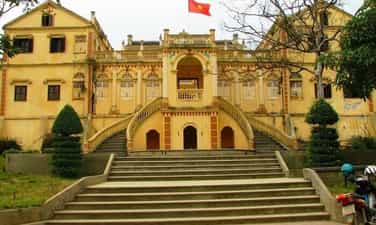
Hoang A Tuong Palace
Cat King Hoang A Tuong's palace is located in the center of Bac Ha district. The architecture is designed in a combination of Asian and European style. Cat King Hoang A Tuong's Palace was built in 1914 and completed in 1921. The owner of this Palace is Hoang Yen Chao of Tay ethnicity, father of Hoang A Tuong. After more than 80 years of existence at the same time, covered with layers of ancient moss, it still stands majestically and prominently in the middle of a densely populated place with bustling streets. The reason this place is also called the Meo King's palace is because before 1945, Bac Ha was under a semi-feudal colonial regime with a ruling and ruled class, exploiters and exploited. Among them, the exploiting class are the local tycoons, typically father and son Hoang Yen Chao and Hoang A Tuong. That's why Hoang A Tuong King Cat Palace was built to partly affirm his authority and wealth. Nearly 100 years have passed, Sa Pa King Cat Palace still stands tall amidst the vast mountains and hills, becoming a famous tourist destination of Bac Ha. Despite nearly 100 years of existence with sun and rain, the Asian - European architecture and beauty of Hoang A Tuong Palace are still the pride of the people here. The entire mansion is built in a closed rectangular shape, 4,000m² wide. To enter the palace, you have to walk up two circular stairs in front of the porch and then reach a large waiting yard. It is said that in the past, this yard was used for dancing for the king. The house consists of two floors with a main room, a common room and a private room for the wives and children. The next smaller rooms housed soldiers and servants. The entire mansion is built of terracotta bricks, bonded with lime and beeswax. Regulations on the tribute of beeswax and opium at that time were also very strict for each family on a monthly basis. The entire roof is covered with ceramic tiles, and the floor is paved with precious wood harvested from the forest. French-style tables and chairs combined with Chinese spiritual architecture. Behind the palace is the Hoang family's underground escape bunker. Hoang A Tuong Palace was ranked as a national historical relic by the Ministry of Culture, Sports and Tourism on June 11, 1999. Source: Vietnam Tourism
Lao Cai
5453 view
Rating : National monument

Thuong Temple - Lao Cai
Lao Cai Thuong Temple is also named Saint Tran Tu. Lao Cai Thuong Temple was built on land in Bao Thang street, Chau Thuy Vi, Hung Hoa province, now Lao Cai ward, Lao Cai city, Lao Cai province. Thuong Temple was built during the Le dynasty, Chinh Hoa era (1680 - 1705). It is a place to worship the temperate Duke Hung Dao Vuong - Tran Quoc Tuan, who made great contributions in the career of protecting the country's mountains and rivers. A great historical celebrity, a sacred and noble Saint in the minds of generations of Vietnamese people. Located on Hoa Hieu hill in Mai Linh mountain range with an altitude of 1200m above sea level. Thuong Temple was built in the ancient architectural style of the letter Cong, following feng shui theory which is both majestic and very dignified. The Thuong Temple area has a charming natural landscape and a harmonious combination of traditional architecture and indigenous culture, giving the temple a majestic and splendid appearance. Reflecting on the Nam Thi river, this place once had an extremely important position in the defense strategy against invaders. Today, near the trade gateway between the two provinces of Lao Cai (Vietnam) and Yunnan (China), this sacred land at the tip of the Fatherland welcomes tens of thousands of domestic and foreign tourists every year. commemorate the national hero. Right from the moment they step foot at the temple gate, visitors can admire the beauty of a 300-year-old banyan tree spreading its branches, under the shadow of the ancient tree is a shrine worshiping Ba Chua Thuong Ngan (Queen of the Green Forest). Legend has it that during the resistance war against foreign invaders, she contributed to fighting the enemy to protect the territory of the South. To thank her, the people built a shrine right under the banyan tree with lush branches and leaves. In the main temple area, the horizontal painting "Land of Literature" is hung in front of the Nghi gate, on both sides there are two parallel sentences: "Vietnamese spiritual spirit is not built, Dong A's spirit lasts forever", meaning: " Vietnam's sacred monument stretches across the sky, the Tran Dynasty's pride remains forever. On the back of Nghi Mon's interior, there are the words "Quoc Thai and Dan An" with two parallel sentences: "Heaven and earth are gentle, heaven and earth are old; The golden flower grass is different, the money flower grass" means: "Heaven and earth are still the same, heaven and earth are old; The grass and flowers today are different from the grass and flowers of the past." Thuong Temple was built spaciously with 7 main worship spaces including: The Palace for worshiping Buddha Shakyamuni, The Palace for worshiping the Three Courts of Thanh Mau; Altar of Saint Tran Hung Dao; The palace worships the King and his father Ngoc Hoang... and the altars on the Left Vu - Huu Vu sides worshiping Lady Nhi Son Trang, Twelve Fairies, Attending God and the Temple Boy... are all arranged. placed in order. Next to the Thuong Temple is a square communal house with 4 doors and 8 flanking dragons. In the middle of the communal house is a golden turtle with a stone stele engraved with the name "Holy Tran". This place used to be a resting place for military officers on patrol. Today, it is an ecological forest with all kinds of plants to protect the environment, serving tourists to visit and rest to enjoy the fresh climate. Thuong Temple is located in a cultural relic complex with Tan Bao pagoda, Am temple, Mau temple, Cam temple, Quan temple. In particular, Thuong Temple is one of the most famous sacred temples in the system of temples and pagodas in Lao Cai. Through many restorations and embellishments, in 1996, Thuong Temple was ranked as a National Historical and Cultural Monument. Every year, Thuong Temple holds a festival on the 15th day of the first lunar month, attracting the attention of many domestic and foreign tourists to visit and worship. Source: Vietnam Tourism
Lao Cai
11293 view
Rating : National monument

Ho Chi Minh Park
Located right in the center of Lao Cai city, the President Ho Chi Minh memorial site in Lao Cai is often known as "Ho Chi Minh Park", located in Lao Cai ward, Laos city. Cai, Lao Cai province. The relic site is a memorial site, marking the only visit of Uncle Ho and the government delegation to the Party Committee and people of Lao Cai. The relic's location is located on the foundation of the old Lao Cai Power Plant, where Uncle Ho spent time visiting and encouraging workers at the power plant construction project that was about to be completed. In the midst of the country's difficulties, despite being busy with thousands of jobs, President Ho Chi Minh took the time to visit and work with the Party Committee and people of Lao Cai on September 23-24, 1958. Remembering the great contributions of President Ho Chi Minh and appreciating his precious feelings for his homeland Lao Cai, on the occasion of the 40th anniversary of Uncle Ho's visit to Lao Cai (1958-1998), Lao Provincial People's Committee Cai built Uncle Ho's memorial area. In 2022, the Memorial Site of President Ho Chi Minh in Lao Cai was recognized by the Ministry of Culture as a national historical relic. The construction of a memorial to Uncle Ho in Lao Cai is a work of special significance that meets the aspirations of officials, party members and people of all walks of life in Lao Cai, expressing Uncle Ho's affection for the people of Lao Cai. people here, as well as the feelings, love and gratitude of the Party Committee, government and people of all ethnic groups in Lao Cai province towards beloved Uncle Ho. This is a spiritual work for people and tourists from near and far to have the opportunity to express their gratitude, respect, and offer incense to commemorate the great President Ho Chi Minh. Besides, the Memorial Area is also a "red address" to educate young generations today and tomorrow about the nation's history, his background, and his great career. This place is always open to welcome people from all over the country to visit and pay their respects and gratitude to President Ho. Source: Lao Cai City Relics Management Board
Lao Cai
4900 view
Rating : National monument
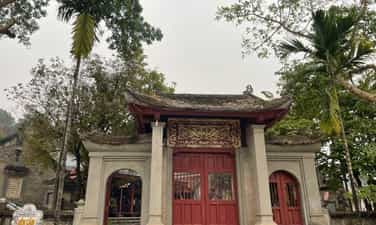
Lao Cai Forbidden Temple
Cam Temple is located in Soi Muoi village, Van Hoa commune (now the group of 3 Pho Moi wards - Lao Cai), the temple is located at the foot of a low hill, surrounded by lush fruit trees, in front of the temple are 3 ancient trees: the sycamore tree. , jackfruit trees and jade trees spread shade to the temple, creating an ideal landscape. The temple was built and existed nearly 200 years ago and is associated with the history of building and defending the country of the Vietnamese people in general and Lao Cai ethnic people in particular. The temple has a legend associated with the three times of resistance against the Mongol army under the command of the Tran Dynasty's king, general Tran Quoc Tuan - who was awarded the title "Van Co heroic spirit of the highest class of blessings". . Legend has it that in 1257, Tran Quoc Tuan marched to the border to command the defense against the Mongol invaders (13th century). Many generals fell on this border land. Cam Temple was built to commemorate 5 Tran Dynasty soldiers (names unknown). At that time, the station area (today's Pho Moi) was a dense primeval forest. During an inspection and command of border defense (around 1257), General Tran Quoc Tuan chose the location of the current Cam Temple. Now working as a 2nd line military medical station in border defense. Later in the battles, wounded soldiers were brought back to be treated in this forest. The indigenous people at that time, the Vietnamese, Tay and Giay people, also brought sick people in for military medical care. Then something thrilling happened: at night there was a young girl wearing a blue dress who came to treat everyone. The girl was very good at treating everyone. Everyone who received the medicine was healthy, but the miracle doctor just appeared. at night and not seen during the day. Learning about the local people, the people said that there was no such child in any family. Afterwards, the people and soldiers believed that it was the apparition of the Holy Mother of Heaven helping the army and people protect the country. Right below Phuong Dinh next to this ancient jackfruit tree are 5 graves of military officers who sacrificed their lives for a great cause. Cam Temple is located in the center of the ancient forest, formerly a small temple created by soldiers and villagers together, then officially started construction into a temple in the 16th century, after many advances. Agarwood still retains some ancient maple trees and jackfruit trees. Today, the temple has been beautifully restored and consists of two parts: the main hall and the harem. Meeting the needs of folk beliefs not only of the city's residents but also of tourists from all over, beautifying old legends - legends of military and civil love on the border. Cam Temple holds its main festival on the seventh day of the seventh month (lunar calendar) every year, celebrating the death anniversary of 5 Tran Dynasty soldiers. People consider this the death anniversary of "erasing the sins of the dead" for the five soldiers; Therefore, together we contribute rice and meat... to the organization. The ceremony of the relic is organized quite spaciously in order. Besides the ceremony, there is also a fun festival with traditional games such as shuttlecock throwing, swallow fighting... In addition, this is also the place where the annual field festival is held. On December 27, 2001, Cam Temple was recognized as a National Historical Site. Source: Lao Cai province electronic information portal
Lao Cai
5047 view
Rating : National monument
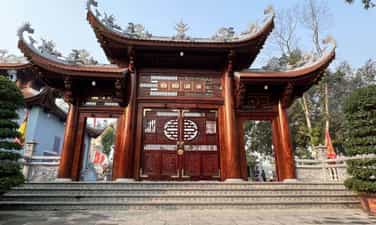
Mother Goddess Temple Lao Cai
Mau Temple is located in group 4, Lao Cai ward, Lao Cai city. The temple is located at the confluence between the Nam Thi and Red rivers flowing into Vietnam. This is also the international border gate of Lao Cai (Vietnam) - He Khau (Yunnan - China) and also the 102nd milestone in the Northwest border region. Mother Temple is a place to worship the Holy Mother Princess Lieu Hanh, a compassionate deity who exorcises evil spirits, helps poor people, and helps the court fight against foreign invaders and protect the sacred border areas of the Patriarchate. country. At the same time, she is a heroic mother in the folk subconscious of the Vietnamese people. The custom of worshiping Mother Goddesses in our country has gone through a long history. This is not only a worship custom imbued with national identity, but it is a common spiritual need of our people from the early period of building and defending the country until now. until today. Beliefs and customs of worshiping the Mother Goddess originate from the sense of ancestral remembrance, respect, gratitude, trust and have a profound moral educational meaning that is still of value to our generations today. . Holy Mother Lieu Hanh has been deeply imprinted in the subconscious of Vietnamese people in general and Lao Cai in particular since the 16th century. Through the ups and downs of history until today, our Vietnamese people have named her Mother Nghi. Thien Ha, always wish the Holy Mother to help "The world is peaceful - The country is peaceful and the people are peaceful - Phong Dang is in peace". Mother Goddess Lieu Hanh is a vivid symbol in daily life, but is very sacred in the mental life of Vietnamese people. In her subconscious, she is a Fairy, so she has Fairy magic; As a Buddha, one should carry Buddha's thoughts; As a Mother, she should have the qualities of a mother; is Holy so it is sacred; He is a child of good family, so he is educated, knowledgeable in history, and good at singing and poetry. In her, she has the filial piety of Confucianism and the magic of Taoism. That's why, Holy Mother Lieu Hanh is an image, one of the Four Immortals, the Mother of Heaven who has been reminded and educated to us for many generations: "In August, the anniversary of my father's death - in March, the anniversary of my mother's death." In Lao Cai, Mau Temple is located in the Thuong Temple Relics complex - a place to worship and remember the great contributions of the National Duke of Moderation - Hung Dao Dai Vuong - Tran Quoc Tuan. Mau Temple and Thuong Temple are also places with an important strategic position, a milestone in the Northern border of the Fatherland and a red address of the nation's historical and cultural roots. Mau Temple was built in the early 18th century, located in Lao Nhai village (now Lao Cai City), behind the temple is leaning against an ancient wall built by Liu Vinh Phuc insurgents to fight against foreign invaders. protect the borders of the land. Therefore, the Mau Temple was conferred three ordinations by the Nguyen dynasties: Tu Duc in the sixth year (September 24, 1853); Tu Duc in his 33rd year (November 24, 1880); Khai Dinh's 9th year (July 25, 1924). Located at the national border gate, on the international trade route, despite going through hundreds of years with many ups and downs of history, Mother Temple has not only become a sacred border landmark. Not only is it visited by people and tourists from all over the country and internationally, it is also a spiritual cultural milestone in the northern border region of the country. Mau Temple was recognized by the Ministry of Culture, Sports and Tourism as a National Historical and Cultural Relic on January 26, 2011. Source: Lao Cai province electronic information portal
Lao Cai
10560 view
Rating : National monument

Historical relic of Ben Au Lau
Au Lau Wharf (now located in Au Lau commune and Nguyen Phuc ward, Yen Bai city) is an important place to transport officers, soldiers, citizens, food and weapons to serve major campaigns. during the resistance war against the French colonialists, paving the way to the victory of the Dien Bien Phu campaign, restoring peace in the North in 1954. In 1953, the ferry wharf where people along the Red River traveled back and forth to exchange and trade was built into the Au Lau ferry wharf. Au Lau ferry terminal is a convenient connection point between Viet Bac and the Northwest of the country. From the early days of the resistance war against the French colonialists, Au Lau wharf was the place to gather and secretly transport revolutionary cadres and soldiers to prepare for the general uprising and then establish the Revolutionary Committee. temporarily and took over Yen Bai town. It was also here that the French colonialists escorted political prisoners from Nghe An (1943) and Thai Nguyen (1945) to prison at Cang Nghia Lo. On the night of August 16 and 17, 1945, according to the plan, the Au Lau Guerrilla Revolutionary Military Committee and the Au Co Guerrilla (Van Hoi) along with the soldiers on the right bank of the Red River crossed the river to attack the Security Camp to seize the government from their hands. Japan. In 1951, during the Ly Thuong Kiet campaign, one direction of the 312th Division crossed the wharf to attack Nghia Lo military zone (October 3, 1951). The Northwest Campaign took place on the night of October 10-11, 1952. Au Lau wharf was one of four wharves where the 36th regiment, 174th regiment of the 316th regiment and the 308th regiment crossed the Red River into Ca Vinh, Ba Khe, and Pass. Hong attacked Cua Nhi base. At the end of November 1952, according to the instructions of the Party Central Committee and the General Command, it was requested to urgently expand route 13 from Viet Bac through Yen Bai. Despite difficult circumstances and fierce enemy bombardment, we still opened the road 13 early 5 days through Au Lau wharf to provide reinforcements for the Northwest battlefield. Au Lau wharf has an important position connecting the Viet Bac transportation system with the Northwest, and is the only place where heavy weapons can be hoisted such as: ground artillery, anti-aircraft artillery, cars carrying ammunition. , military equipment crossed the river to reinforce the Dien Bien Phu battlefield. During this time, Au Lau wharf was reinforced in terms of both manpower and facilities to transport weapons, ammunition, food, foodstuffs, citizens, and soldiers across the Red River, and at the same time brace itself against the battles. fierce bombing by the French colonialists. At night is the time when most activities take place at Au Lau wharf to avoid enemy detection. Ferries travel back and forth as quickly as possible to clear the way for reinforcement vehicles. To prevent sabotage by enemy aircraft, during the day we had to drag the ferry upstream to Ngoi Lau to submerge the ferry, and at night we had to flood it again and pull it out. From November 1953 to May 1954, the French colonialists focused fierce bombardment on Au Lau wharf for more than 200 days and nights with 2,700 tons of bombs and ammunition, but we were only able to transport thousands of tons of food and goods for only 8 days and nights. hundreds of tons of ammunition and weapons for the Dien Bien Phu front. After serving the Dien Bien Phu campaign, from 1955-1965, the wharf was upgraded from a wooden ferry to a steel ferry with iron canoes. In 1965-1968, with the spirit: "Living by the bridge, dying courageously" the wharf 100 times brought 500 trucks across the river, transported nearly 200,000 cars, and thousands of tons of goods back and forth. During the years of fighting against the destructive war of the US imperialists, they used many groups of planes to attack for 4 hours, causing heavy damage to Yen Bai town and Au Lau ferry port on May 31, 1966. In 1967, Au Lau Wharf was honored to be visited by Prime Minister Pham Van Dong on the occasion of wishing New Year to the troops and people of Yen Bai and Nghia Lo provinces. On December 18, 1972, the American enemy continued to raid Yen Bai, including Au Lau wharf, but still could not stop ferries carrying people and food supplies to the southern battlefield. After the country was unified, Au Lau ferry continued to operate and became a key unit of the transportation industry in Yen Bai province. On August 7, 2012, Au Lau Wharf was recognized by the Ministry of Culture, Sports and Tourism as a national historical relic. Source: Yen Bai province electronic information portal
Lao Cai
6939 view
Rating : National monument
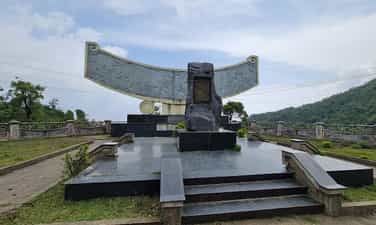
Place where Khau Pha guerrilla team was founded
Khau Pha guerrilla team (Cao Pha commune, Mu Cang Chai district) was established in October 1946 at Trong Tong Khua village on the top of Khau Pha pass (previously it was an armed team established in 1944 by the Vietnamese people). Hmong people to fight against the oppression and exploitation of the rulers, then became the armed forces against the Nationalist Party). Initially, the force had only 7 members and only 3 self-made guns were weapons: flintlock guns, sharp knives and bows and crossbows. After a period of fighting, the guerrilla team grew very quickly in number, up to 30 people, 50 people and then at its largest number of more than 200 members, the participating forces were mostly local people (Hmong people). ). This is a relic located on a rugged mountainous area, stretching from the foot of Cao Pha pass to the top of the pass (over 20km long). The guerrilla team's area of operation is wide, with many locations, including the three most important locations, where important events took place during nearly 8 years of operation of the Khau Pha guerrilla team. They are: Tong Khua Drum Village - where the Khau Pha guerrilla team was founded;. Mr. Ly Nu Chu's house - the revolutionary base of the Khau Pha Guerrilla Team (Lim Mong village) and Bat Cave - the site of the French ambush at the foot of Khau Pha pass, in 1948. During the years of operation (1946 - 1952), the guerrilla team fought many battles, causing France many difficulties and losses. Established in 1946, the Team not only organizes training but also performs the duty of guarding and protecting the people and protecting production at the top of the pass while relying on the rugged mountain and forest terrain, coordinating with the main force and the army. The local team heroically fought the enemy, achieving many outstanding victories. On October 8, 1947, the enemy swept and attacked Khau Pha. Under the command of Captain Ly Nu Chu, the guerrilla team used a small force to fight back, killing a second officer and wounding many French soldiers, forcing the enemy to abandon the operation. During the period 1947-1949, the guerrilla team starved and thirsted many times, lived in the forest, ate brown tubers and grated tubers, determined to fight the enemy. During these arduous years, the Team achieved many remarkable achievements. Typically, in the battle of Nam Khat, a guerrilla team ambushed, shot and ran away an enemy company, capturing 2 guns. Next, in two consecutive battles in Gia Hoi and Tu Le, the guerrilla team coordinated with the army to chase the enemy, capturing 2 guns, many mines and grenades. In March 1948, the guerrilla team coordinated with the Quyet Tien Assault Team led by comrades Hong Quan and Ly Bach Luan to organize an ambush to attack the enemy on the Tu Le - Gia Hoi road, capturing 3 rifles. and some ammunition. At the end of March 1948, the Inter-Zone Party Committee and the Inter-Zone Command 10 decided to open the Nghia Lo campaign, with the Khau Pha guerrilla team coordinating with Company 520 and the Quyet Tien assault team to attack Tu Le post and capture them alive. named Bang Colonel Lo Van Inh (commander of the station), and at the same time disbanded a unit of 27 soldiers, confiscating 2 machine guns, nearly 20 rifles and a number of other weapons. After this victory, the team was equipped with 50 more guns. Since 1949, realizing the effectiveness of the Khau Pha Guerrilla Team, the enemy became more and more terrorist, they tried to concentrate the population and strictly control the terrain. Therefore, the team's activities encountered many difficulties: lack of food, ammunition, complete loss of contact with the Party, the government, and the army, but still remained absolutely loyal, persistent, and fought continuously. custom. After 1951, France fiercely attacked our facilities in the enemy's rear area, most of them were disintegrated. But with courage and tenacity to hold on, the Khau Pha Guerrilla Team still maintained the fight, causing many losses to the enemy. The team has become an important connection point located at Mu Cang Chai gateway, connecting revolutionary bases in the region with the two ends of Nghia Lo - Than Uyen. In October 1952, the General Command launched the Northwest campaign to liberate Nghia Lo Subdivision and the subregions of Than Uyen, Phu Yen, and Son La. On October 16, 1952, the enemy parachuted a battalion into Tu Le, Cao Pha, but it was destroyed and pursued by a guerrilla team coordinating with the main army. On October 15, 1952, Than Uyen was liberated. On October 18, 1952, the enemy failed miserably in Nghia Lo Subdivision and found a way to flee to Son La. The remnants of the enemy army passing through Cao Pha were pursued and destroyed by guerrilla forces. Mu Cang Chai was completely liberated from French colonial occupation. On August 27, 2012, the place where the Khau Pha guerrilla team was founded was recognized by the Ministry of Culture, Sports and Tourism as a national historical site. Source: Yen Bai province electronic information portal
Lao Cai
6572 view
Rating : National monument

Nhuoc Son Temple
Located on the banks of the Red River, about 41 km from Mau A town, Van Yen district (Yen Bai) along provincial road 151 to the Nhuoc Son Temple Historical - Cultural Relic Area. This relic area in Ngoc Chau village, Chau Que Ha commune, is the temple to worship general Ha Chuong - a real figure in history, a talented martial general during the Tran Dynasty - who made great contributions to the defense and control of the war. kept the northern border area, contributing to our nation's glorious victory over the Yuan Mongol invaders. The relic site was classified as a national historical-cultural relic on November 16, 2005. Every year, on January 20 and September 20 (lunar calendar), local people eagerly prepare to welcome tourists from all over. Recently, not only local people, in the district, in the province but also many tourists from Hanoi and other provinces come to the temple. In the past two years, Nhuoc Son temple restored its festival activities and attracted more and more tourists from all over. Local people call Nhuoc Son temple by another name: Loong Meac, At Meac. According to "Records of Nhuoc Son Temple Relics" (Hoang Tien Long, Yen Bai Provincial Museum), in February of the year Dinh Hoi 1287, more than 300,000 Yuan Mongol troops attacked our country, the Yuan Mongol army led by Nat Toc Lat Dinh When the commander fled through Phu Ninh area, he was blocked and attacked by the local army and people led by brothers Ha Dac and Ha Chuong. When chasing the enemy to A La, the brothers Ha Dac and Ha Chuong were blocked by the enemy's rear army, Ha Dac heroically sacrificed his life, and Ha Chuong was captured. Taking advantage of the dark night and the enemy's loopholes, Ha Chuong took the enemy's flag and uniform to escape, asking the court to use the flag and uniform to pretend to be the enemy's soldiers at their camp. When the enemy was suddenly attacked, they were unable to take precautions and were attacked from the inside by Ha Chuong's army. The Mongol Yuan army was broken and withdrew its remaining troops to Yunnan. According to the genealogy of the Ha family, they were originally Tay Khao people, belonged to the Ha Dac and Ha Chuong lineages during the Tran dynasty, now residing in An Boi, Kien Xuong district, Thai Binh province. When fighting the Yuan army, Ha Chuong enthusiastically pursued the enemy. went to Yen Bai area and sacrificed. According to the elders in Chau Que Ha commune, Ha Chuong, during the second resistance war against the Mongol Yuan army, chased the Yuan army along the Red River to Yen Bai, arriving at present-day Chau Que Ha to recruit more soldiers to continue the pursuit. attack and destroy the enemy army. During the decisive battle, Ha Chuong was seriously injured, sacrificed and was taken to the river to be buried at the mouth of Nhuoc Son waterfall.... Source: Yen Bai province electronic information portal
Lao Cai
5551 view
Rating : National monument