Relic point Vietnam
Việt Nam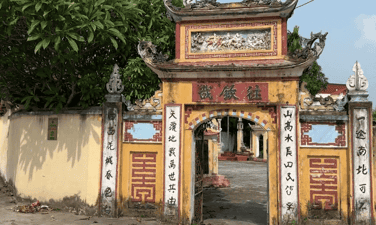
Quan Dao Communal House
Quan Dao communal house in Quan Dao village, Tan Tien commune, Gia Loc district, Hai Duong province is a place to worship Thien Tac Dai Vuong Ly Canh Ton, a famous general of the Ly Dynasty who was instrumental in helping the Ly Dynasty defeat the invading Song army. . Quan Dao in the past was originally Quan Dao site, a commune of Tong My Xa - Phu Tu Ky. From 1925 to 1944, it was a commune of the General Association of Gia Loc district. From 1945 until now, Quan Dao has been a village of Tan Tien commune, Gia Loc district. Previously, every commune and village had communal houses and pagodas. The communal house belongs to Quan Dao village, so it is called: Dinh Quan Dao. The communal house was built in the center of Quan Dao village, located on a high mound called the elephant pile. In front of the communal house is a large pond, previously connected to the river, boats could enter the communal house, and around were village roads. To the west of the communal house, there is also a temple built on a mound also known as the Snake pile. North of the Communal House, there is also a high mound called King Procession Heap, located about 500m from the Communal House. Thus, the communal house was built in the middle of the mounds, creating a posture of the dragon flanking the tiger. Just like every Vietnamese communal house. Quan Dao Communal House was built to worship the tutelary god and is a meeting place for villagers whenever there is a big event. The communal house was built during the Ly dynasty. Originally, it was a place to worship Thien Tac, whose hometown was Cao Xa Cam Giang. Following orders from the afternoon, the communal house returned to Quan Dao to recruit troops to fight the Song invaders. When he won, he was awarded the title "Ton Canh Linh Ung" by the king, and when he died, he was honored by the people of Quan Dao as a tutelary god and worshiped at the village communal house. Before the August 1945 revolution, the village festival was opened from the 10th to the 20th day of the first lunar month. At the communal house, many forms were held such as processions, sacrifices, ceremonies, Cheo singing... Especially here there was a pig worship competition. One of each armor. Quan Dao Communal House is also a special place that marks historical events associated with the local resistance war against the French colonialists. The people of Quan Dao in particular and the people of Tan Tien in general were famous for their resilience and courage as guerrillas fighting the French, and were recorded in the history of the province and district. The communal house is the soul of the local resistance war against the French. Here the commanders always make the right decisions and win. In August 1945, Tan Tien people gathered at the communal house to go to the district to participate in seizing power. In the years 1946, the communal house was also a place for people to learn popular education and eliminate illiteracy for people in the commune. The communal house is also where people come to donate gold and silver during the golden week that Uncle Ho and the government called for. The communal house was also the place where Tan Tien commune was established, including three villages, Dong Can, Quan Dao, and Tam Luong in 1946. On January 6, 1946, the communal house was also the place to witness the first National Assembly election of democratic Vietnam. commune republic. In consecutive years from 1946 to 1947, the Communal House was also a place for guerrillas to practice martial arts, to prepare for the local resistance war against the French. On December 23, 1946, enemy soldiers landed on canoes at the ferry wharf (2 km from the commune) and opened fire on the commune. Immediately after that, about 40 Tan Tien people holding weapons rushed to Street 191 to fight back. The first military battle demonstrated the people's determination to fight the enemy and was praised by the district. February 23, 1947. The enemy invaded the commune, burned 2/3 of the houses, shot dead 4 people, and captured 20 people. Turn hatred into action. The Tan Tien cell met at Quan Dao communal house and issued a resolution: "Organize strict guerrilla army staff, military training, each comrade must have a weapon...Propagiate the people of the entire commune to prepare to fight the enemy." ”. From then on, at the guerrilla camp, where they practiced day and night, the people stepped up production and participated in popular education. Since 1947, the enemy increased their raids. During the first 3 years of the resistance from 1946 to 1948, Party cells continued to develop and the government was consolidated. Since 1950, enemy troops suffered defeat at the border and returned to the plains, and military posts sprang up like mushrooms. Around Tan Tien commune, there were many enemy posts such as Binh Di, Dong Quan, Xuan Ngo, Luy Duong... Faced with this situation, the cell meeting at Quan Dao communal house issued a resolution to stick close to the people, maintain the base, and fight with the enemy during this time. During this difficult time, Quan Dao children's communal house hid hundreds of district, provincial and some commune officials. During difficult times, the love of the village and the neighborhood became deeper and deeper, everyone gave their food and clothes. From 1952 to 1954, our main battlefield expanded, the commune was developed one step further, including 42 comrades with 6 rifles, a machine gun, a submachine gun and many mines and grenades, always active to harass the enemy. During the 8 years of resistance against the French, Tan Tien people and other communes participated in 105 large and small battles, destroying 241 enemies. For that achievement, the commune was awarded the First Class Resistance Medal. Quan Dao village alone was awarded the 2nd class resistance medal, and 4 guerrillas were awarded emulation soldiers. Previously, the relic had many sacrificial items such as Long Dinh, Luyen, Bat Bieu, Fan flags, Broken heart, Sacrificial clothes, Worship items... Over time and especially the fierce resistance war against the French took place. A lot of things have been destroyed on this land, and now there are only: 1 Nguyen Dynasty Peak, 1 lacquer painting, 1 porcelain incense bowl, 8 porcelain flower vases, 3 altar sets, 1 Y Mon painting, 1 throne. worship wooden, 2 wooden couplets, 1 lacquered wooden altar, 1 coffin, 1 miracle, 3 great paintings. With great historical, cultural, sculptural, and scientific values of relics and antiques being kept at the pagoda. In 1995, it was granted the title of national historical and cultural relic by the state. Source: Electronic information portal of Gia Loc district, Hai Duong province.
Hai Phong
4246 view
Rating : National monument
Dong Tai village communal house
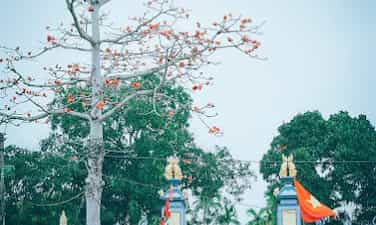
Before 1945, Dong Tai was the name of the commune, the commune had enough communal houses, pagodas and temples. In 1946, Dong Tai was a village of Thong Kenh commune (Gia Loc), Dong Tai communal house has since been associated with the village's name. Dong Tai Communal House was built in the center of the village, on a high, wide area of land, facing southwest, overlooking Nhi Ha River (now Thua River). According to the remaining genealogical records and through the words of the elders in the village, Dong Tai communal house worships 3 sisters of the Dao family: Dao Thi An, Dao Cong Hai and Dao Cong Thong, who had the merit of supporting King Due Vuong. The Thuc and Luong invaders defended the country... In the later years of resistance, Dong Tai communal house was a place associated with many important historical events of the locality and the province. In April 1995, Dong Tai communal house was recognized by the Ministry of Culture, Sports and Tourism as a national historical relic. "... Legend has it that Dao Cong Bot, from An Bang, Hai Dong district, was a deputy mandarin during the 18th Hung King's reign, held the position of minister of Chau Hoan (Thanh Hoa), and was later assigned by the king to the palace. Thuong Hong (Hai Duong town) was a minister. During his time in Thuong Hong, he married a female scholar named Nguyen, daughter of a famous family in Kenh Trieu, Gia Phu district (now known as Thuong Hong). Gia Loc). About 3 years Then Thuong Hong suddenly had a big flood, the Minister and the people had to build high huts to avoid the water. During the flood, suddenly 3 eggs floated to the front of the minister's hut. Seeing that it was strange, he picked them up Those 3 eggs were then taken away. Not long after, there was a heavy rain, thunder and lightning, the 3 eggs exploded like thunder and the flood water suddenly drained away, half happy, half worried, thinking that the 3 eggs were gone That egg is unusual, please order The soldiers held a ceremony to sacrifice the three magical eggs. That night, the minister dreamed of a man with a majestic appearance, riding on a Hoang Long (golden dragon) who gave him a brocade with a poem. available. Waking up, he saw the brocade placed next to him and was very happy. From then on, his wife became pregnant and gave birth to Dao Thi An, Dao Cong Hai and Dao Cong Thong. All three sisters are handsome, handsome, with unusual appearances, gentle personalities, and excellent martial arts skills. In particular, Dao Cong Hai and Dao Cong Thong have the power and strength to be able to scale mountains, block rivers, and walk on water waves like walking on land. People here consider three saints to come to earth. After their parents passed away, the three Dao sisters built a restaurant at the beginning of Kenh Trieu village to make a living. At this time, the Thuc dynasty sent a large army to invade Van Lang country. King Due Vuong and his officials directly went out to fight the enemy, but because of that and their forces were not balanced, they both fought and retreated. Arriving at Hau Bong commune, Gia Loc district, it was late afternoon, and the king issued an edict for his soldiers and officials to set up camp to rest. That night, the king sat down at Quang Minh pagoda, Hau Bong general. In his sleep, the king saw a tall man with neat clothes and hat approaching and saying: "I have obeyed the Emperor's orders and told the army to meet talented people to destroy the enemy." When I suddenly woke up, it was a dream and next to me was a brocade with a few verses written on it: The Emperor came down to help the army/ Went to Kenh Trieu to meet the Saint/ Dao Thi's brother was the one who helped save the country. people". The king immediately sent his troops to Kenh Trieu, invited the three Dao sisters back for an audience, and then appointed Dao Cong Hai as the acting head of international China; Dao Cong Thong is the General of the Army. The two men accepted the position, commanded a total of 300,000 soldiers and horses, divided into many columns to attack the enemy station. In just one battle, the Thuc enemy was defeated, and the survivors scrambled to escape. The country returned to peace, all people lived peacefully... Five years later, the Shu enemy's dream of invasion resurfaced, and they sent large troops to invade our country again. Dao Cong Thong and Dao Cong Hai asked the king to send troops to destroy the enemy. Grasping the enemy's weak point, the two generals arranged a covert attack at night, sending divers down to drill holes in the enemy's boat. Passive, the boat sank, the Shu army was once again defeated, and they fled back to the country in terror. After the complete victory, Dao Cong Thong and Dao Cong Hai did not stay at the court to enjoy the glory and wealth, but asked to return to Kenh Trieu to reside. On the way back, dark clouds suddenly appeared from somewhere, thunder and lightning were fierce, and in just a moment the two generals transformed into clouds and water. The king mourned the talented people and ordered the people here to build a temple and worship..." From the early days of the French colonialists invading our country, Dong Tai communal house was the headquarters of the Thong Kenh insurgent army, leading the people in the region to heroically resist the invasion of the French colonialists. The Thong Kenh insurgent army thrived, operating widely throughout the regions of Tu Loc, Kim Mon, Chi Linh, Chau Giang, and Hai Duong town, many times terrifying the French colonialists. In the years 1930 - 1945, when the revolutionary movement was rising and preparing for the uprising, Dong Tai communal house was the gathering place for representatives in the region, electing government agencies from provisional to official. The communal house is also the place where the commune's Party cell is established, and is the place for the cell to meet and direct resistance organizations and unions. Also at Dong Tai communal house, army units such as Tay Son, Bao Loc, B42, and 075 of the province came to practice. Later, Dong Tai Communal House was honored to be the place where the provincial and central leaders met, launched anti-American movements to save the country throughout the province and was the place to store important documents at that time... After many ups and downs of history, especially the years of resistance against the Dong Tai Court, which was much destroyed, the remaining offerings and harem remained. In the communal house, many artifacts of historical and artistic value from the Nguyen Dynasty are preserved such as: Long communal house, coffin, throne, hammock door, grand pagoda, scroll, sword worship... Continuing the heroic tradition of His father, today, the people of Dong Tai, in addition to being of one mind and working together to protect the relics, are also constantly studying, enthusiastically working and producing, contributing to building an increasingly rich, beautiful and civilized village. Source Electronic information portal of Gia Loc district, Hai Duong province.
Hai Phong
4377 view
Rating : National monument

Dau Pagoda.
Dau Pagoda has the Chinese name Sung Thien pagoda in Thi Duc village, Nhat Tan commune (Gia Loc). From afar, we saw a majestic pagoda appearing in the middle of a field along with a luxuriant area of trees. The pagoda is located on a high land, with unique architecture, bearing a strong Buddhist imprint. Around the pagoda there are lotus ponds and the winding Han River. According to the family tree, Dau Pagoda worships the saintly lady Pham Trinh Hien with the name Tien Dung, a princess who had the merit of helping Hai Ba Trung fight against the Eastern Han invaders. In the year 40, the Trung sisters raised a flag to rebel against the Han Dynasty. Once marching to this land, the two women stationed a military camp here. At night, they dreamed that someone called Princess Tien Dung, vowing to fight the enemy. The next day, the two women led their troops to battle on the Han River and won a resounding victory. The Trung sisters let the generals and local people celebrate and then issued a decree for the villagers to build a temple to worship Tien Dung, with the beautiful title Dieu Quang Hue Tinh Y Pham Trinh Hien, wife of Thuong class god. Over time, people built this place into a majestic pagoda that both worships Buddha and saints. The ancient Dau Pagoda had a scale of more than 100 rooms. The date of the pagoda's construction has not been determined, but based on the traces of bricks and tiles found, it can be determined that the pagoda was built at the end of the Ly dynasty and the beginning of the Tran dynasty. However, due to war and natural disasters, up to now, Dau Pagoda has lost many ancient architectural items. Currently, the pagoda has a nail-style architecture including 5 front halls and 3 back halls. The pagoda's roof has many reliefs with beautiful patterns of clouds, sun, and moon. In the pagoda there are 12 statues, made of wood, lacquered and gilded. In addition to the system of ancient Buddha statues, the harem also has a large temple, made of wood, exquisitely carved, and inside there is a statue of Princess Tien Dung. The statue is carved in a sitting position, calm and with a kind face. According to local elders, the entire statue system in the temple is carved from mulberry wood. Legend has it that the Han River next to the pagoda often floods. One time, the water was high, the flood came from upstream, carrying a large raft of mulberry wood with golden fibers like silk. Everyone thought it was a good omen so they picked it up and used wood to carve it into a statue. From then on, the pagoda was called Dau Pagoda. When visiting Dau Pagoda, we see that this place still preserves many valuable artifacts such as 2 steles of the Le Dynasty, some pieces of terracotta towers, terracotta pieces with phoenix heads, terracotta dragon heads, and patterned bricks and tiles. dating from the 13th-14th centuries. The most unique and special is the Tran Dynasty stele arranged right in front of the pagoda yard. The stele was created in 1331. The content of the stele was composed by Venerable Hue Van, a monk here, with about 1,180 words. This is a unique work of sculpture art. The stele is about 1.5m high, placed on the back of a rather large stone turtle. The stele's roof is moderately curved, and the stele's body has a border carved with dragons and vine flowers. The stele's forehead is decorated with many vivid leaves and lotus flowers, close to nature. Prominent on the front of the stele is a large cursive engraving of Buddha. Below the word Buddha are carved two images, on one side is a crane standing with a burning candle on its head. On one side is a humanoid demon wearing an incense burner. At the foot of the stele are carved patterns of water waves and mountains. On the back of the stele are engraved three Chinese characters "Sung Thien Pagoda", below are written the full names of those who donated fields and money to repair the pagoda. Not only unique in architecture and festivals, Dau Pagoda is also one of the important "red addresses". Dau Pagoda is a place that marks many revolutionary events. Before the August Revolution of 1945, the Viet Minh Front had a meeting at the pagoda to discuss seizing power and destroying the rice warehouses of the Japanese enemy in Thanh Mien district to give to the poor. In 1945, when the French invaded Hai Duong town, the Provincial Lien Viet Association chose the pagoda as the place to evacuate. In 1945-1950, Tay Son soldiers of Gia Loc district chose the pagoda as the location to open training classes. From here, our troops spread out towards Route 17 and Route 20 to conduct ambushes against the enemy during the resistance war against the French during the period 1949-1953. In the years 1951-1952, cadres, guerrillas of Pham Kha and Lam Son communes and soldiers chose the pagoda as a base to cling to the people to destroy the enemy, and destroyed the villains in Chuong and Ba Dong markets. Currently in the temple there is still a secret vault from the previous period. Dau Pagoda is a place to worship both Buddha and saints. The pagoda's traditional festival is held on the 8th to 10th day of the 8th lunar month. On this occasion, people and tourists from all over come to attend in large numbers. With its unique architecture and value, the pagoda was ranked as a national monument in 1992. Source: Electronic information portal of Gia Loc district, Hai Duong province.
Hai Phong
4076 view
Rating : National monument

Duoi Temple
National historical site Duoi Temple is located in Thong Nhat commune, Gia Loc district, Hai Duong province. This is the place to worship the Queen Mother Empress Dowager Y Lan. Princess Ỷ Lan also had another name Queen Mother Linh Nhan. She was the concubine of Emperor Ly Thanh Tong and the mother of Emperor Ly Nhan Tong - two kings of the Ly Dynasty (in the 11th century). National mother Ỷ Lan is honored by history as a female masterpiece, talented in ruling the country. During her lifetime, she was twice appointed regent, and made great contributions to building the Ly dynasty and developing Vietnamese Buddhism. With nearly a thousand years of existence, Duoi Temple has experienced ups and downs, influenced by nature, rain, sun and war. Many items of the temple are seriously degraded. At the end of the 20th century and the beginning of the 21st century, the relic still retained construction items bearing the architectural imprint of the Later Le Dynasty (17th century) and the Nguyen Dynasty, with "quoc" style architecture, including: the buildings of Tien Te, Trung Tu and Hau Palace, two rows of Giai Vu connecting the two buildings of Tien Te and Trung Tu. In the grounds of the relic complex, there is also Quynh Hoa pagoda and a model house that is also seriously degraded. To meet the expectations and needs of cultural and religious activities of local people and tourists from all over, the Duoi Temple relic complex has been invested in repairing and renovating basic items, including: the pre-mortem buildings. , Trung Tu and Harem, two left and right corridors, inner gate and some auxiliary items. The Tieu Tieu Court consists of three compartments, with "first" style architecture with four main trusses. The system of columns, ends, and rafters are made of ironwood, with a "stack of beams, gong stand" structure and exquisite carvings. The temple's two temples of Tien Sa and Trung Tu are connected by two rows of ceilings, forming a closed space. The harem building has three rooms, including a forbidden palace room, decorated with an altar and a statue of Queen Mother Y Lan. In particular, Duoi Temple still preserves many valuable worship objects, offerings and antiques, such as four palanquin sets, a dragon communal house, four altar thrones, a set of precious bowls, two parallel sentences, a bronze incense bowl and two Stone art since the 17th century. Continuing the mark of ancient history, at the 1943 - 1944 relic, the Liberation Army propaganda team as well as the commune's self-defense team regularly organize military exercises to prepare for the national revolutionary climax like comrade Thieu. , comrade Tue (currently a retired officer and teacher). In August 1945, revolutionary cadres and the masses gathered to seize power in Gia Loc district and then confiscated the diplomas and seals of mandarins, tyrants, and bureaucrats, abolishing the government of feudal colonialists. The provisional government was established amid the joy and excitement of the people. In 1946, the French colonialists turned their guns back to invade our country, the Hai Duong squadron evacuated to the temple in time to direct the resistance. The commune's guerrilla team used the temple area as a military training site. In 1947, comrade Tran Dua, head of the police department, and the Viet Hung team returned to the temple to eliminate traitorous Vietnamese traitors. In 1948, the resistance committee of Cam Giang district and the Quang Trung army unit evacuated to the temple to work and practice. After that, the resistance committee of Thach Khoi commune evacuated to maintain its activities. At the relic site, secret tunnels were also dug to hide and protect officers and soldiers. It can be said that during the two resistance wars, Duoi Temple in Thong Nhat Commune was the base of the local resistance and a line of communication to the Viet Bac war zone. To commemorate her, every year the 12th day of the second lunar month is her birthday; and July 25 is the day of her death, local people organize festivals to recall the merits and career of Queen Mother Ỷ Lan for everyone to remember and study. Source Electronic information portal of Gia Loc district, Hai Duong province.
Hai Phong
4083 view
Rating : National monument

Last Temple
Last Temple is a place to worship An Nghia Dai Vuong Nguyen Che Nghia - a famous general of the Tran Dynasty, a son of Hoi Xuyen village, Gia Loc district, Hai Duong province (formerly Coi Xuyen commune, Truong Tan district, Hong Chau road). ). He was born into a famous family. Since childhood, he had extraordinary health, was good at riding horses, used long spears, was proficient in astronomy and war, and loved to recite poems and write poetry. Thanks to his intelligence and talent, and at a time when the Tran Dynasty needed talented people, he was drafted into the army under Pham Ngu Lao and participated in battles against the Yuan army and at the Chi Lang pass. Going into battle, he rode a horse and carried a spear into the midst of the enemy's army, winning every battle... When the enemy was defeated, he was appointed as a great general of Khong Bac, with the title Nghia Xuyen Cong. Nguyen Che Nghia was recognized as having a loyal, straightforward personality, not afraid of hardship, so he was considered a loyal and talented general of the Tran Dynasty. King Anh Tong loved him and married his beloved daughter, Princess Ngoc Hoa. When he was old, he returned to rest in his hometown of Hoi Xuyen. Currently, within the Cuoi Temple relic complex, there is also La Khoi pagoda, a teaching school (where An Nghia Dai Vuong Nguyen Che Nghia trained martial arts and banditry for soldiers), an astrology pond (where he watched astronomy to weather prediction only for people doing business) and the tomb area. The existence to this day of these relics is a rare and proud thing for the Cua village people. The mausoleum of Princess Nguyet Hoa (the saint's wife), the mausoleum of Cong Sung Phuc (the saint's son) and the mausoleum of Phat Tich (the saint's parents) are made of stone built in the style of a dragon court, surrounded by stone walls, to this day. dating back hundreds of years. As for the Saint's mausoleum, located in the north of the village on a high hill, the 2-acre-wide "white elephant sucks water" built of bricks from the Tran dynasty is still intact. In front of the mausoleum, there is a gate with a marigold symbol on it, on both sides of the entrance there are dragons, and behind the mausoleum there is a white elephant. In the mausoleum there is a stone stele engraved with Chinese characters. Roughly translated: The tomb of a mandarin who entered the inner city, a Thai lieutenant, a lieutenant of the Tran dynasty, a deity named Nguyen, named Che Nghia, a villager and princess Nguyet Hoa who were ordained as emperors... History has gone back a long way, but with 31 ordinations in 300 consecutive years (21 ordinations in the Le dynasty, 2 ordinations in the Tay Son dynasty, 8 ordinations in the Nguyen dynasty), the people of Coi Xuyen are always proud of their homeland's hero. Cuoi Temple Festival takes place for 3 days, from 26 to 28 of the 8th lunar month, originating from the death anniversary of General Nguyen Che Nghia (August 27). Even though more than 600 years have passed and many ups and downs of history have passed, both the ceremony and the festival at Cuoi Temple still retain their own unique features. Source Electronic information portal of Gia Loc district, Hai Duong province.
Hai Phong
3674 view
Rating : National monument
Quat Temple
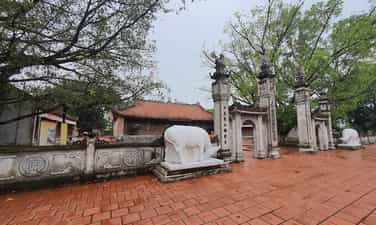
Quat Temple is a place to worship the famous general Yet Kieu, First Admiral of the Thanh Tran dynasty's navy. Yet Kieu's real name is Pham Huu The (1242-1301), from Ha Bi village, Yet Kieu commune. He was a famous general of the Tran Dynasty, talented and virtuous. He was a lieutenant general, one of the two generals holding the moderation flag of Hung Dao Vuong Tran Quoc Tuan. He had a special talent for swimming and diving. He repeatedly punctured the Mongol enemy's boats, creating famous victories in history. He was a man of great merit. Helped the Tran Dynasty destroy the Yuan army three times in the 13th century. He was awarded the title "Tran dynasty right general, first naval commander, marquis" by King Tran. After his death, King Tran ordained Ha Bi villagers to build a temple and honor him as the village's Tutelary God. Yet Kieu also has temples and shrines established in many places, but the largest is still Quat temple. Quat temple area has existed for more than 700 years. In the 17th and 18th centuries, the temple was spaciously embellished and repaired many times during the Nguyen Dynasty with a campus of 2,700 m2. Quat Temple relic area was ranked as a national relic on January 28, 1989. In 2017, Hai Duong province completed the renovation and repair of this temple. The temple has been renovated in 3 phases with a total cost of tens of billions of dong from contributions from tourists and local people. Quat Temple Festival takes place in Spring (from January 10 to 20), Fall (from August 14 to 16 of the lunar calendar). On this occasion, local people and visitors return to the Ha Bi river area to pay their respects to Thanh Hoang Yet Kieu. On October 1, Gia Loc district, Hai Duong held a ceremony to receive the Certificate of registration of Quat Temple Festival as a national intangible cultural heritage and organized the opening ceremony of the traditional Autumn festival of Quat Temple. Source: Electronic information portal of Gia Loc district, Hai Duong province.
Hai Phong
4146 view
Rating : National monument
Ngoc Lo Pagoda - Linh My Tu
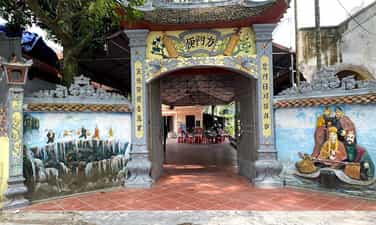
The pagoda's literal name is Linh My Tu, located in Ngoc Lo village, Tan Viet commune, Thanh Ha district, Hai Duong province. The temple worships Buddha according to the Mahayana sect. It is unclear when the pagoda was built, on a large scale with all the following items: Upper hall, incense burning, front hall, three gates. Through time and war, the pagoda was destroyed, then restored many times in 1781, 1797, 1817, 1826, 1908, 1912. The current pagoda has a 工 Cong style layout with 13 compartments, bearing architectural imprint of the Nguyen Dynasty. The pagoda currently preserves many valuable antiques, including 11 steles and 25 statues. Every year, the pagoda opens a festival on the 17th day of the 7th lunar month. The pagoda is ranked as a national monument according to Decision 04/Decision - Ministry of Culture and Sports - dated January 19, 2001. Source Electronic information portal of Thanh Ha district, Hai Duong province.
Hai Phong
3527 view
Rating : National monument
Tu Ha Temple
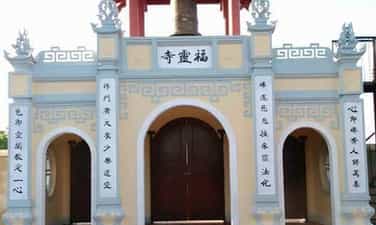
Tu Ha Temple is located in Phuc Gioi village (formerly Thanh Binh commune), now Thanh Quang commune. The temple worships three village tutelary gods: Dang Chan, Trinh Thi Khang and Dang Tri, who helped King Dinh Tien Hoang quell the rebellion of 12 warlords in the 10th century. Not only does it carry spiritual cultural values, the temple is also a place The leaders of the Provincial Party Committee chose it as a base for living, meeting, and leading the people in the province to fight against the French colonialists in the period 1946 - 1954. Here, in November 1951, the leaders of the Provincial Party Committee and The Resistance Committee of Hai Duong province had a meeting to discuss plans with the main force, deciding to attack Xuan Neo and O Me (Tu Ky), opening a new situation for the resistance war against the French in Hai Duong. Currently, Tu Ha Temple still preserves many antiques and worship objects of the Le and Nguyen dynasties, typically 8 ordinations of the Nguyen dynasties in 1887, 1889, 1909, 1911 and 1924; three statues of the Holy Father, Holy Mother and Holy Son painted in red and gilded, 2 scrolls decorated with stylized flowers and leaves, 1 stone throne of the Le Dynasty, 2 steles of the Nguyen Dynasty... With great historical and cultural values , Tu Ha Temple has been ranked as a national historical and cultural relic since 2001. Source Electronic information portal of Thanh Ha district, Hai Duong province.
Hai Phong
3843 view
Rating : National monument

Loi Dong Temple
Dinh Loi Dong Cultural and Historical Relic, Tan An Commune, Thanh Ha District, Hai Duong Province, was recognized by the Ministry of Culture, Sports, now the Ministry of Culture, Information and Tourism, as a Cultural Historical Relic in 1994. worshiping 3 famous people: General Yet Kieu, outstanding farmer hero Nguyen Huu Cau of the 18th century and Dr. Nguyen Nhu Ngu. Every year on the 12th and 13th day of the third lunar month. Tan An Commune People's Committee, Monument Management Board, officials and people in the commune organized an incense offering ceremony to commemorate the merits of three famous people who have contributed to the country and people and aroused cultural values. traditions of Tan An hometown. Electronic information portal of Tan An commune, Thanh Ha district, Hai Duong province.
Hai Phong
3516 view
Rating : National monument

Ngoc Hoa Temple
Ngoc Hoa Temple is located in the center of Van Tao village, Thanh An commune, the temple sits on a beautiful land, the gate faces south, its back leans against the flow of the Rang river. In the 9th year of Khai Dinh, it was recorded: The edict for Van Tao commune to serve, conferred on Ngoc Hoa as an upright and gentle deity, helping the country protect the people, allowing the villagers to serve the god. In February 1994, the temple was awarded the title of national historical relic by the Ministry of Culture and Information. In memory of the beautiful and beautiful girl Ngoc Hoa, who had a loyal love for her husband, Pham Tai. Every year, on the 4th to 6th day of the second lunar month, the locality organizes a traditional Festival with many exciting activities, imbued with unique spiritual cultural values. Ngoc Hoa Temple has been in Van Tao village for hundreds of years. At first it was just a temple, then people from all over contributed their resources to gradually renovate and upgrade it. With the help of the culture and information industry and the efforts of the people of Thanh An commune and even those living far from home, the temple has now become one of the most beautiful relics in the area. area. The temple has an area of 3,640 square meters. Outside is a nearly 1,000 square meter park with many giant trees creating a beautiful, spacious landscape. The temple's lake area has an area of 3,490 square meters, creating a quiet and peaceful space. The temple has a complex of many beautiful architectural houses, with terraces, left vu, right vu and harem. In addition to a number of stele engraved with Chinese characters erected at the temple gate and around the garden, there are also a number of unidentified tombs on the grounds. In 1980, people excavated an ancient tomb and discovered the remains of a girl wrapped in many layers of cloth. At that time, the museum had not yet determined the origin of the remains. The outer space of Ngoc Hoa temple has beautiful architecture, curved roofs, and columns built on stone slabs. The harem part is like a large hut, with two doors only about the height of a person's head. Ngoc Hoa statue is placed in the middle of the high altar. The statue is not large, about 60 centimeters high, but is carved quite delicately: round face, bright eyes, high nose, rosy cheeks exude the glitter, dignity and elegance of a beautiful woman in the countryside. According to the temple caretaker, the statue has been around for a long time, no one remembers its origin. Ngoc Hoa Temple and Ngoc Hoa Temple Festival with sacred rituals of reverence, a devotion to honoring traditional values, recognizing the merits of General Tran Cong for fighting the enemy and defending the country; At the same time, upholding the moral values of fidelity and virtue that need to be embellished and preserved. Source Electronic information portal of Thanh Ha district, Hai Duong province.
Hai Phong
3821 view
Rating : National monument