Relic point Vietnam
Việt Nam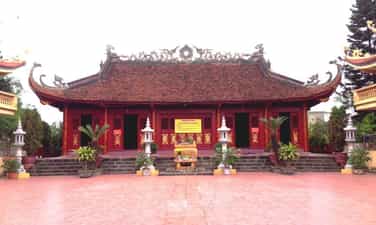
Tien Temple
Tien Temple is a sacred temple, located in Tien Cat ward, Viet Tri city. This is the temple worshiping the Mother Goddess, also known as the Mother Goddess, the first mother of the Vietnamese people. Mother is the Queen of King Kinh Duong Vuong, the mother who gave birth and raised King Lac Long Quan, and is the grandmother of the Hung Kings in a bag of hundreds of eggs. Tien Temple is an outstanding precious relic in the relic complex of the state capital of Van Lang. According to traditional genealogy, there used to be a 7,000m2 campus, looking to the southwest, in front of National Highway 2, outside the dyke was Thao River flowing to Bach Hac junction, the convergence of 3 large rivers: Red River. Ha, Da River, Lo River. The temple has a favorable geographical position in terms of feng shui, in front is a river, behind is a mountain, fully converging the atmosphere of rivers and mountains to bestow forever on the descendants of Vietnamese land. In July 2003, Tien Temple was recognized by the People's Committee of Phu Tho province as a provincial-level historical and cultural relic. Every year, on the occasion of the Mother's birthday, the 5th day of the 5th lunar month and the 10th day of the 10th lunar month, the Temple holds a solemn ceremony for people everywhere to worship and commemorate. As a temple, worshiping the first mother of the Vietnamese people, Tien Temple also symbolizes the eternal tradition of drinking water, remembering the source of the Vietnamese people. Source: Phu Tho Tourism Promotion Information Center
Phu Tho
4180 view
Rating : Provincial level relics
Du Yen Temple
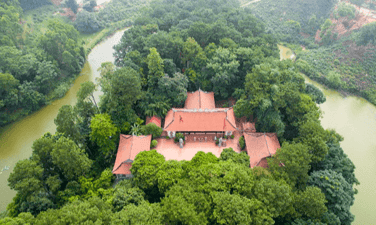
Du Yen Temple, Chi Tien commune is located in a spiritual land on a high hill, with lush green trees; At the foot is a clear blue lake all year round. The temple faces the Thao River, which is calm day and night, accumulating alluvium. This long dike strip is the provincial road, an important traffic artery of Thanh Ba district. In 1993, Du Yen Temple was recognized by the State as a national historical relic site. In 2003, Du Yen temple was restored to include a 5-compartment front hall and a 3-compartment harem like today. In the temple, there are still many precious artifacts such as: altars, palanquins, halberds, precious bowls, bronze plaques, written in Vietnamese on both sides... The statues are all carved from wood. In addition to the ordinations of the Dinh, Ly, Tran, and Le dynasties, this is the only temple that retains a genealogy recording two thousand years of development of a clan in Thanh Ba land. According to Ngoc Pha, in the past, in the Thao Giang area, at Bong Chau site, now Tien Chau village, Chi Tien commune, Thanh Ba district, Phu Tho province, there was a Nguyen family who lived a gentle and kind life and worked hard to do business. has great reputation in the region. Thanks to God's blessing, they gave birth to a daughter named Hanh Nuong. From a young age, Hanh Nuong was always well cared for and raised by her parents. She is a strangely intelligent girl, with stunning beauty, a gentle personality, eager to study literature, and passionate about martial arts. Many talented men in the village approached her, but she all refused, not wanting to get dusty to keep herself pure. She set up a flag to rally the righteous, practiced archery and sword day and night, and was known far and wide as the goddess who descended to earth. At that time, in the 40s AD, the Eastern Han invaders led by Governor To Dinh brazenly and brutally brought troops to occupy our country. When Hai Ba Trung raised the flag of insurrection in Me Linh, she chose 92 insurgents from Bong Chau to return with Hai Ba Trung. Seeing that Hanh Nuong was intelligent, talented in literature and martial arts, and was able to lead the army to win, Hai Ba Trung gave her the title of Princess Ngoc Loan and the title of Leader of the Front Army. After defeating the To Dinh enemy, female general Nguyen Thi Hanh returned to visit her hometown, where she held a banquet to welcome the army and reward the villagers. The merit festival was held on a promontory shaped like a white tiger lying drinking water on the banks of the Thao River. Here later, the villagers built a temple called Du Yen palace (today Du Yen temple, Chi Tien commune). Since then, every year on the full moon day of January, the villagers hold a prayer festival to remember her gratitude and pray for good weather and good weather for the family to be prosperous and happy. Du Yen Temple Festival is one of Thanh Ba's typical cultural events, attracting tens of thousands of domestic and foreign tourists each year. The festival opened with a ceremony and a festival held very solemnly. The offerings to the Mother Goddess are mainly vegetarian cakes and fruits... divided into 6 sections, each with 2 trays, carried by 2 young men and placed on the altar for the elders to pray for. During the prayers, there are fairy dances and money-making dances mixed in. Legend has it that on the day the Mother Goddess was born in the Thao Giang mulberry field, there were fairies descending to earth to dance and sing like a festival, so on the day of worshiping the Mother Goddesses, it is required to have a fairy dance team consisting of 4 unmarried girls under 16 years old, dancing the dances. Dancing beautifully like a fairy to serve the ceremony. This ritual has now been restored and has been slightly adjusted to suit the festival space. Then comes the palanquin procession, first is the flag team, followed by the eight-tone group, then the eight-symbol team, the lion dance, followed by the fairy dance and then the palanquin. Source: Phu Tho Tourism Promotion Information Center
Phu Tho
4816 view
Rating : National monument

Hung Temple
Hung Temple is the general name of the Hung Temple Historical Relic Area - a temple complex, The pagoda worships the Hung Kings and the king's royal family on Nghia Linh mountain, (Viet Tri, Phu Tho), associated with the Hung King's Anniversary - Hung Temple Festival is held at that location every year on March 10 lunar calendar. Currently, according to published scientific documents, most agree that the architectural foundation of Hung Temple began to be built during the reign of King Dinh Tien Hoang. By the Later Le Dynasty (15th century), it was completely built to the current scale. Going up from the foot of the mountain, through the temple gate, the tourist's stop is Ha Temple, which is said to be the place where Au Co gave birth to a sac of a hundred eggs. Those hundred eggs gave birth to a hundred children, fifty followed their father into the sea, forty-nine followed their mother up the mountain. The son who stayed behind became king, taking the name Hung Vuong (first). Past the Ha temple is the Trung temple, where the Hung kings used it as a meeting place to discuss with the Lac marquis and Lac generals. On the top of the mountain is the Thuong Temple and the sixth Hung Vuong mausoleum (known in folk as the tomb of the ancestors). From the Thuong temple to the southwest is the Well temple, where there is a stone well with clear water all year round. Legend has it that in the past, princesses Tien Dung and Ngoc Hoa, children of the eighteenth Hung King, often came to wash their hair there. Hung Temple Festival includes cultural and artistic activities of traditional ritual nature and other folk cultural activities... The remaining ritual cultural activities to this day are the palanquin procession. king and incense offering ceremony. According to Hung Vuong's Ngoc genealogy, recorded during Hong Duc's post-Le dynasty, from the Dinh dynasty, Le dynasty, Ly dynasty, Tran dynasty and then later Le, there was still the same incense and smoke in the temple, here people from all over the country came to worship to commemorate. The merits of the ancient Holy Patriarch... Vietnamese folk literature talks about the Hung Temple festival as follows: "No matter who goes back and forth, remember the death anniversary of the ancestors on the 10th of the third month". Source: Phu Tho Tourism Promotion Information Center
Phu Tho
4362 view
Rating : Special national monument