Relic point Vietnam
Việt Nam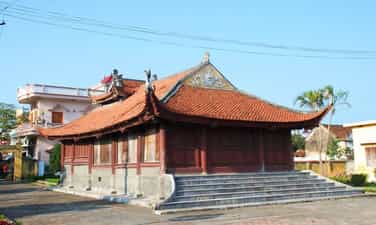
Kim Son Communal House
Kim Son communal house in Tan Trao commune, Kien Thuy district is a revolutionary historical relic of Hai Phong city that has been ranked at the national level. This place marks the establishment of the National Liberation Committee of the Viet Minh - the first revolutionary government organization of the ancient Northern Coastal region. The launching ceremony of the National Liberation Committee at Kim Son communal house on July 12, 1945 was welcomed by a large number of people. On the afternoon of July 12, 1945, the Kim Son Revolutionary Committee and self-defense forces went to Co Trai commune school to suppress the meeting of the Dai Viet Youth group. The governor and the counter-revolutionaries had to surrender and ask for forgiveness. The Que Ly flag of the pro-Japanese government was taken down. Their meeting became a forum for revolutionary propaganda, exposing traitors. The birth of the Kim Son revolutionary government made the Japanese enemy fear an unstoppable chain explosion. Therefore, the Japanese enemy actively prepared to suppress the Kim Son revolutionary movement. Judging that the enemy would terrorize Kim Son, the leaders of the self-defense organization and the people actively fenced the village, practiced combat, increased guarding, prevention, strengthened the base, and raised the spirit of vigilance. . In the north of the village, a large fortification was established. The self-defense forces prepared rudimentary weapons such as bricks and stones, bottled tobacco water, jars, sharp hammers, spears, machetes, flintlock guns, sharpened bamboo spears, ash traps mixed with chili powder... everything. Anything used for self-defense is used. All directions to the village were arranged, ready to fight and destroy the enemy. At six o'clock in the morning on August 4, 1945, the Japanese enemy, consisting of 50 security soldiers, led by 2 Japanese officers, rode 2 Camion vehicles from Kien An to Kim Son. Detecting the enemy's arrival at Ngoc Communal House, the sound of bells, gongs, horns and bells continuously rang throughout the village, urging everyone's fighting spirit and also signaling self-defense forces from everywhere to come to the rescue. . Self-defense forces in the region such as Doan Xa, Lao Phong, Kinh Truc, Sam Linh, Coc Lien and from Vinh Quang (Tien Lang) also enthusiastically headed to Kim Son to contribute to the fight against the Japanese fascists and protect the government. Revolution. With their indomitable will, Kim Son's army and people fought bravely for 5 hours, forcing the enemy to retreat. After that resounding resistance, the people and self-defense of Kim Son quickly returned to seize power in the capital city of Kien Thuy and in Kien An province, together with the whole country to make the great August Revolution. Source: Department of Culture and Sports of Hai Phong City
Hai Phong
5292 view
Rating : National monument
Du Hang Pagoda
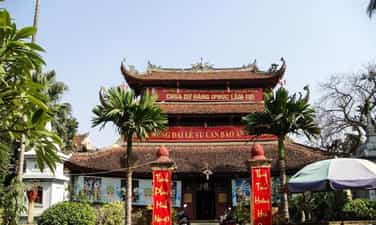
Du Hang Pagoda (literally called Phuc Lam Tu), belongs to Du Hang Kenh commune (An Duong district), now belongs to Ho Nam ward, Le Chan district. If based on the inscription records of Du Hang Pagoda, the pagoda originated from the Early Le Dynasty (980-1009). At the end of King Le Dai Hanh's reign, a monk came here to preach and enlighten Buddhist teachings. During the Tran dynasty (1225-1400), the monks of the Truc Lam sect founded by Tran Nhan Tong in Yen Tu Son had a relationship with Du Hang pagoda. Therefore, from ancient times until now, Du Hang Pagoda still has the tradition of celebrating the birthday of the first monk, "Dua Giac Hoang Tinh Hiep Zen Master Temple", King Tran Nhan Tong, on the 2nd day of the 11th lunar month. The third patriarch of the Truc Lam sect was Zen master Huyen Quang Ly Dao Lai on the 3rd day of the 11th lunar month. During the reign of King Le Gia Tong (1672), monk Nguyen Dinh Sach (self-named Chan Huyen) had money to buy land, build a large pagoda, complete with bell towers, ancestral temples, monks' houses... From From then on, despite having to go through many historical ups and downs, the pagoda was joined by generations of local monks, monks, nuns, and Buddhists to repair the pagoda to make it more spacious and beautiful. Compared to many Buddhist temples in Hai Phong, Du Hang Pagoda has a majestic architecture, a complete campus, including a 7-compartment Buddha hall, a 3-storey bell tower, a soaring peacock roof, a large bronze bell, and inscriptions. : “Phuc Lam tu chung”, meaning bell of Phuc Lam pagoda. At the Buddha hall, there are still many valuable ancient Buddha statues with precise shapes such as the Three Worlds, the Nine Dragons - Newborn Sakyamuni, the guardian of good, the evil, and the "Minh Vuong Buddha Palace" statues. ...the interior of the Buddha's Palace is decorated with many horizontal panels, parallel sentences, and bright gold-painted hammock doors, soft lines, sophisticated techniques, expressed through the themes of flowers, leaves, and grass. trees, animals, artistic style of the Nguyen Dynasty in the late 19th and early 20th centuries. The front hall of the Buddha's palace is decorated with many embossed carvings on the hammock doors, many with familiar themes: apricot blossoms. Birds, five blessings, cloud dragons...represent the wishes of all people for "good rain, peaceful winds, lush grass and trees", the wood-carved box depicts the scene of Tang monks and disciples on the way to Tay Truc to request sutras. Currently, Du Hang Pagoda still preserves many precious relics such as bells, gongs, copper tops, artistic decorations made of ceramics, blue stones, and the ancient "A Ham" scriptures passed down from many generations of monks. maintain. In the quiet tower garden, shaded by ancient green trees, in addition to the group of tower tombs of the monks who passed away at the pagoda, there are also tower tombs containing the relics of the ancestors of the Truc Lam Yen Tu Zen sect, and a tower of monks. Chan Huyen and many monks once lived at Du Hang Pagoda. In 1926, an important event took place at the pagoda, associated with the patriotic movement for civil rights and democracy of monks, nuns, Buddhists, and a large number of students, teachers, and workers. dynamic. They gathered at Du Hang Pagoda for a memorial service for patriot Phan Chu Trinh, when the whole country learned that he had passed away in Saigon. After the August Revolution (1945), the Hai Phong Sangha Association for National Salvation held a housewarming ceremony at the pagoda, the venue for the "Golden Week", and at the same time, revolutionary mass organizations met to discuss welcoming President Ho. Chi Minh on the way back to Vietnam from Phat, visiting compatriots and soldiers in Hai Phong. During 9 years of resistance, Du Hang pagoda opened its doors to meditate and raise troops. There were many monks at the temple who enthusiastically joined the army to save the country, notably the late monk Dinh Quang Lac who was awarded the Third Class Resistance Medal by the Government. Du Hang Pagoda was ranked as a historical and cultural relic by the state in 1986. Source: Department of Culture and Sports of Hai Phong City
Hai Phong
5225 view
Rating : National monument
Vinh Khe Communal House
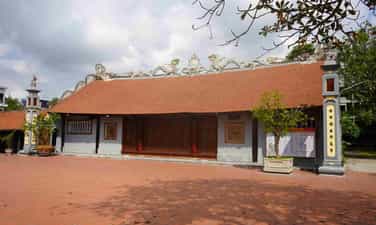
Vinh Khe communal house is located in Vinh Khe village, An Dong commune, An Duong district, suburban Hai Phong. Vinh Khe Communal House has a Cong-shaped layout including: 5 altars, 2 bridge rooms, 3 harem rooms. The main face of the communal house faces south, where the Lach Tray river meanders through the territory of Kien An and An Lao. The communal house worships the three blessed gods, Vu Giao, Vu Trong (two brothers born in the land of Vinh Khe) and Pham Tu Nghi, who have contributed to the people and the country, and were awarded beautiful titles by feudal dynasties. to honor their intelligence, strategy, courage, and bravery. Visiting Vinh Khe Communal House, the things that remain in the minds of visitors who have the opportunity to admire its beauty for the first time are the wooden frame whose architecture is entirely of four-iron wood, rich in color over time. The decorations and carvings here are not as many and dense as the Hang Kenh Communal House and the Du Hang Communal House, but the familiar themes are expressed quite creatively and flexibly by the artisans in the countryside in the set of four sacred animals: Dragon, Ly. , Quy, Phuong; and fragrant flowers and strange fruits, containing many desires for a peaceful life in the village. The rendering artists also successfully showed off themes with typical features of the river region: rolling water waves, next to the majestic shadows of pine and cypress trees. It can be said that folk carvings on wood along with many relics made of stone, metal, wooden sacrificial objects covered with lacquer and silver... have created the grandeur of the communal house today. Vinh Khe Communal Festival opens every year on the 7th of the first lunar month, commemorating the birth anniversary of two tutelary gods named Vu. The village festival is associated with the wrestling competition, which only lasts one day but also attracts many wrestlers from many famous wrestling studios in Vinh Bao and Tien Lang to compete. One detail that needs to be clarified is why Vinh Khe Communal House worshiped Pham Tu Nghi, a famous general of the Mac Dynasty who was from Vinh Niem (An Duong). Because he once passed through Vinh village and met him at a festival, he asked to attend and won a high prize, after he lost the villagers who worshiped him. According to the elders, the Vinh Khe village festival in the past was very crowded, because in addition to the procession of the tutelary god, there were also wrestling and boating competitions on the river flowing from the Sai River (Lai Vu - Hai Duong) through Re district town all the way to the bridge. An Duong now. Vinh Khe Communal House was ranked as a historical and cultural relic by the State in 1991. Source: Department of Culture and Sports of Hai Phong City
Hai Phong
5252 view
Rating : National monument
Thuy Tu Temple
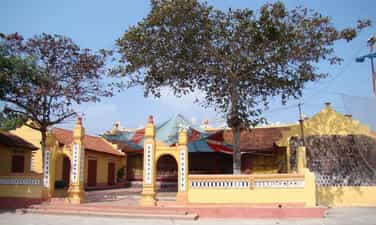
Thuy Tu Temple belongs to Thuy Tu village, formerly known as Ngoc Phuong village, Thuy Duong commune, Thuy Nguyen district, Hai Phong city. Thuy Tu Temple and other relics of Thuy Duong such as: Thuong communal house, Ha communal house, Luong Duong temple, Chim Phuong communal house (Hoa Binh commune) form a cluster of historical relics to remember the achievements of the four sons of the Pham family. Participated in fighting the Tong invaders in the 10th century (981) under the leadership of Le Dai Hanh. At that time, Thuy Duong commune had a family named Pham, who had four children. They are Pham Quang, Pham Nghiem, Pham Huan, and Pham Thi Cuc Nuong. They are two pairs of twins. When Mr. Quang and Mr. Nghiem were 18 years old; Mr. Huan and his 15-year-old sister Cuc Nuong lost both their parents. The four Pham brothers buried their parents in Ma Thuyen field, east of the site. When the Song army followed the Bach Dang River to invade our country, the king sent troops to defeat the enemy. The imperial army arrived at a high mound in Thuy Duong district and was warmly welcomed by the villagers. Especially the old people in the village told the king that there were 4 brothers and sisters of the Pham family who were all respectful and talented in martial arts. The king called all four Pham brothers to fight the enemy. Obeying the king's command, all four brothers happily paid homage to their ancestors and parents and then came to pay their respects to the king. Seeing that all four Pham brothers had unusual appearances and were good at martial arts, the king was happy, gave them titles and sent them to fight the enemy. After the victory, the four Pham brothers were all awarded titles and asked the king to let them visit their parents' and ancestors' graves and reward officers and villagers. The four invited the elders to the party and gave 300 denarii in money to show their gratitude. After the four Pham brothers died, the people of the villages built temples. Ngoc Phuong site (now Thuy Tu village, Thuy Duong commune) worships his eldest brother Pham Quang, Chiem Phuong site worships Pham Nguyen, Truong Son site worships Pham Huan and Cuc Nuong. The people of 3 pages all organize traditional festivals every year from the 9th to the 12th of the third lunar month. Thuy Tu Temple was ranked by the state as a historical and cultural relic in 1991. Source: Department of Culture and Sports of Hai Phong City
Hai Phong
9138 view
Rating : National monument
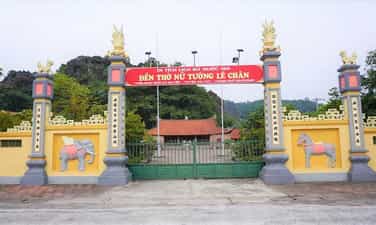
TEMPLE OF FEMALE GENERAL LE CHAN - ELEPHANT MOUNTAIN RELIC AREA
Hang Temple at the foot of Voi Mountain, An Lao district, Hai Phong city has long been a place to worship Female General Le Chan - who had meritorious contributions with people in the area to establish An Bien village during the Eastern Han Dynasty. After leaving her hometown of Quang Ninh to avoid being forced to become a concubine of the governor To Dinh. Le Chan set foot in the land of Hai An, Hai Phong, recruited soldiers to join them in farming, building a hamlet named An Bien site (today's inner city). Great ambition did not stop there. Disgruntled over the crimes committed by the enemy, causing the people's lives to be miserable and miserable, Le Chan silently prepared his forces, waiting for the day of the uprising. She went to the present-day Elephant Mountain area, gathered soldiers, actively practiced, stored food and herbs, and took advantage of the rugged terrain of the mountains and forests to hide from the enemy. Afterwards, receiving news of Hai Ba Trung's uprising, from the mountains and forests of An Lao, Le Chan contacted and officially brought his army to join the uprising. Due to its good fortified terrain, along with the commanding talent of a talented female general, the Elephant Mountain base quickly developed its forces, in a short time becoming an important base in the Northeast region. During that time, the surrounding area also had many insurgent troops, typically the insurgent army of Mrs. Tran Thi Trinh and her son Ngu Dao in Dai Dien, Tong Thuong Cau, An Lao district, (6km from Elephant Mountain), heard News of Le Chan's reputation contacted the Elephant Mountain base and became a general under her command. Although the uprising later failed and female general Le Chan had to commit suicide to preserve her reputation in the mountainous areas of Lat Son - Ha Nam, An Lao people still remembered her merits and kindness, so after hearing News of the female general's death, people in the area took her to worship in Hang Pagoda. Therefore, Hang Pagoda is also known as Hang Temple - which represents a wonderful combination of Buddhist religion and national hero worship. In the temple, King Thanh Thai still retains the title of female general as "Hoang Ba Long Hoi, Great King, Middle-Class Minister". On the basis of the old Hang Temple, in 2011 the government restored a new temple commemorating the Female General. The Temple of Female General Le Chan is located in the Hang Temple area, where the Buddha, the Holy Mother, the Monsignor and the Princess Thanh Chan were formerly worshiped in An Tien commune, An Lao district, on a large closed campus. more than 4000m2. The main temple has a Dinh-shaped structure with an area of 190 square meters, including five pre-sacrificing rooms and one back room. The front of the temple faces south, looking straight at Highway No. 10, beyond are undulating hills and mountains, the back side is based on a cliff creating a sustainable position. The temple is surrounded by city walls. The ritual gate is made up of 4 large pillars, the 2 tall central pillars at the top are converging purple phoenixes, the 2 slightly lower columns on both sides and at the top are 2 unicorns facing the center. The outside of the ritual wall is embossed with a white horse on the left and a large statue on the right. The renovation and embellishment of the Temple of General Le Chan was completed and put into use, not only meeting the visiting needs of people and tourists while also contributing to preserving the values of the monument for generations to come. next system. Source: Hai Phong Youth Union
Hai Phong
10828 view
Rating : National monument