Relic point Vietnam
Việt Nam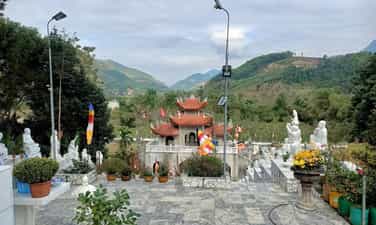
Black Y Tower Pagoda
Hac Y Tower Pagoda is a typical historical and cultural relic located in Tan Linh commune, Lao Cai province, associated with the Hac Y relic complex and historical and religious vestiges dating back to the Ly - Tran dynasties. The most prominent highlight at the relic site is the Black Y Tower, a work in the architectural style of the Tran Dynasty with a unique curved roof, tower base and floors decorated with patterns of lotus flowers, water waves, papaya leaves, phoenixes, chrysanthemums... The motifs are crafted on sophisticated terracotta, demonstrating the artistic level and cultural interference of the ancients. The Hac Y area still preserves many vestiges such as Ben Lan communal house, Than Ao Den mountain and Dai Cai temple. Among them, Dai Cai Temple is located on the Chay River, a religious space associated with folk legends about the black-clothed god who helped the Hung Kings fight against enemies. Legendary stories and archaeological traces have created a mysterious and sacred look for the whole area. Not only has architectural and religious value, Hac Y also preserves traces of military works, citadels and places associated with the activities of ancient residents. This is a valuable source of information that contributes to understanding the history of the Northwest region. Source: Buddhist News Newspaper
Lao Cai
211 view
Rating : National monument
Dai Lich ancient fort
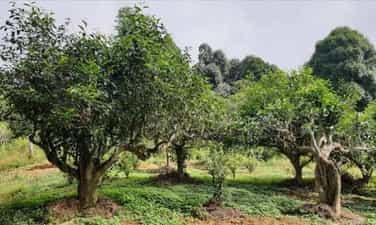
Dai Lich ancient fort is located on top of Khe Ga hill, in Chan Thinh commune, Lao Cai province today. This is a historical relic marking an important stage in the process of forming and protecting the ancient land of Dai Lich. The relic still retains traces of an ancient defensive structure such as vertical canvas walls, a spiral trench system, a water storage area, a military training ground and a mobile route through Khau But pass. These vestiges show that the post once played an important military role in the area. According to research, Dai Lich ancient post is related to the period when Dai Lich served as the capital of Van Chan district under the Nguyen dynasty, and can also be associated with the activities of leader Cam Hanh in the struggle against the Yellow Flag army. This area also circulates stories about figures participating in the Can Vuong movement led by Nguyen Quang Bich. Not only are they valuable in military history, places such as Khe Ga, Khe Lon, Khe Bo, Morning Glory Pond, and Granary around the ancient fort also contribute to reflecting the life and role of Dai Lich in the history of the Van Chan region. Source: Lao Cai Electronic Newspaper
Lao Cai
260 view
Rating : National monument
Trung Do Ancient Citadel
Trung Do Ancient Citadel - Border Shield Where the River Flows upstream. Besides the sacred ancient temple, Bao Nhai valley, Bac Ha also holds a majestic historical witness. That is Trung Do Citadel - a military fortress, a "shield" protecting the northern border of the country in the 16th century. Built by Gia Quoc Cong Vu Van Mat during Lord Bau's reign, the citadel possesses a peak geographical position: in front of the river, behind the mountains. The west side of the citadel leans on the Chay River like a deep natural moat to prevent the enemy; The east is protected by rolling limestone mountains forming an impregnable wall. After more than 400 years of collapse, although the ancient wall of earth and pebbles has now merged with the corn fields and tea hills of the Tay people, archaeological traces such as large bricks and funny-nosed tiles still prove a solid and bustling "resistance capital" of the past. Trung Do Ancient Citadel today is not only a National Historical Site, but also a living lesson about the military strategy of our ancestors. Standing here, listening to the sound of the waves of the Chay River, we can still hear the thousand-year-old spirit of a time when we protected the land. Source: Vietnam National Tourism Administration
Lao Cai
397 view
Rating : National monument

Co Ba Temple
Co Ba Temple is located in a charming mountainous location, with its back against the mountain, facing the clear blue Nhu stream, in Lang Den village, Phu Nhuan commune. Today, in Phu Nhuan commune, the story of Ms. Ba is still told. In the past, the land of Phu Nhuan had a princess named Ba who was extremely beautiful and often helped good people. She is very knowledgeable about river affairs, so she often teaches people in the area how to travel on rivers and how to catch seafood in rivers and streams, so she is deeply loved and respected by the people in the area. After the princess died, people built a temple to worship her. Co Ba Temple is an important cultural and spiritual activity site, associated with the religious life of ethnic people in Phu Nhuan commune, and has existed for hundreds of years. Every year, people in Phu Nhuan commune and neighboring localities often come to offer incense, worship, and pray for peace. With historical and cultural values, Co Ba Temple has been recognized by the Provincial People's Committee as a provincial historical and cultural relic to contribute to preserving and promoting cultural heritage values associated with development. tourism; Traditional education, meeting the spiritual needs of the people. On the day of receiving the Ranking Certificate, many spiritual and cultural activities took place associated with the annual festival on the 7th day of the 7th lunar month held at the temple. On this occasion, the People's Committee of Bao Thang district announced details of the temple area planning and the plan to develop the Co Ba temple historical relic area in the near future. Co Ba Temple is an important cultural and spiritual place, associated with the religious life of ethnic people in Phu Nhuan commune. Source: Lao Cai Newspaper
Lao Cai
6491 view
Rating : Provincial level relics

Pavie ancient stone route
The ancient Pavie stone road is more than 100 years old in Nhiu Co San village, Sang Ma Sao commune, Bat Xat district, and has been ranked by Lao Cai province as a provincial-level scenic relic. On December 11, news from the Department of Culture and Sports of Lao Cai said that the Provincial People's Committee had just issued Decision No. 3130/QD-UBND, ranking the ancient stone road Pavie in Nhiu Co San village, Sang Ma Sao commune, Bat Xat district is a provincial-level scenic relic. According to this decision, the Pavie ancient stone road protection area is determined according to the minutes of zoning of relic protection areas in the relic scientific records. The People's Committee of Lao Cai province assigned the Department of Culture and Sports and the People's Committee of Bat Xat district to develop a plan to protect, manage, restore and use the scenic relic of the ancient stone road of Pavie in accordance with regulations. According to many documents and records, in 1920, the Pavie stone road began to be built. Governor Auguste Jean - Marie Pavie is the one who surveyed and directed the construction of this route to transport food and agricultural products between the Northwest provinces of Vietnam. Therefore, the route is called Pavie. After 7 years, the road was completed with a total length of about 100km, crossing Gio Pass in the Nhiu Co San range, extending from Bat Xat district (Lao Cai province) to Lai Chau city (Lai Chau province) today. However, according to indigenous people, before the French built the road, their ancestors conquered Nhiu Co San peak by this path and explored Lai Chau land. The French only continued to borrow the route from the Mong people. for transportation. The ancient Pavie stone route used to serve the transportation of goods, agricultural products, weapons... from Lao Cai to Lai Chau during the French colonial period. Over time, although the path has been covered by grass and trees, the rocky road is still about 3 meters wide and stretches more than 20km through complex terrain. After more than 100 years of being almost forgotten, the ancient stone road has recently been rediscovered and has become one of the must-see journeys to discover the magnificent nature of tourists when coming to Lao Cai. SOURCE: SPEECH AGENCY OF VIETNAM JOURNALISTS ASSOCIATION
Lao Cai
6380 view
Rating : Provincial level relics

Ngoi Bo Temple
Ngoi Bo Temple now belongs to Thong Nhat commune, Lao Cai city, Lao Cai province. Overlooking the river confluence - the intersection of Ngoi Bo stream and the Red River, the temple is a place to worship Tan Vien Son Thanh - one of the Four Immortals of Vietnamese folk beliefs, "the most sacred deity of Vietnam". Southern Heaven". According to the elders, when the people from the lowlands in the village came here and were attached to this land, they built shrines and temples to worship Saint Tan Vien - a Saint who is worshiped throughout the midland and Northern Delta with devout belief in His blessing and protection. That trust is the pedestal and spiritual fulcrum of those far away from home on the path to creating a life in a new land, and at the same time a reminder and maintenance of memories of their homeland. about his ancestors' origins. Ngoi Bo Temple Festival takes place on January 11 every year. Ngoi Bo Temple was ranked as a Provincial historical-cultural relic in 2016./. SOURCE: LAO CAI CITY MONITOR MANAGEMENT BOARD
Lao Cai
6028 view
Rating : Provincial level relics

Quan Temple
Quan Temple is located in Lao Cai ward, Lao Cai city, Lao Cai province, which marks the resistance war against Mongol invaders in the 13th century. Legend has it that the location where the temple was built was where the Tran Dynasty army's prison camp was located during that great national defense war. Over time, with the interweaving of historical memories, legendary thoughts and current aspirations, the temple became a place to worship the Second Supervisor - a legendary figure, a saint. sacred in the temple of Vietnamese people's belief in worshiping Mother Goddesses of the Three Palaces and Four Palaces. According to the adoration texts: “He was originally in heaven The Son of the King of God came to earth No matter who has the order to cry May Mr. Second live a peaceful and prosperous life Talented, upright and intelligent The temple and the temple are filled with heroic spirits The word that the Saint descends and saves grace Many talents, many fortunes, long life in spring". Legend has it that the 11th day of the 11th lunar month is the main day of His Banquet. On this occasion every year, monks, religious officials, admirers of the Three Palaces and Four Palaces beliefs, along with people and tourists from all over, come to the temples, palaces, and shrines to pay their respects to him. incense, praying for His protection and support. Quan Temple was ranked as a Provincial historical and cultural relic in 2015./. SOURCE: LAO CAI CITY MONITOR MANAGEMENT BOARD
Lao Cai
6584 view
Rating : Provincial level relics
Temple of the couple
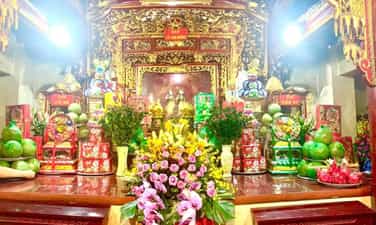
Located in Binh Minh ward, Lao Cai city, Lao Cai province, Doi Co Temple is a place to worship Cam Duong Doi Co - sacred goddesses in the religious temple of Mother Goddesses of the Three Palaces and Four Palaces. Legend has it that the aunts were "hometown in the ancient land of Dinh Bang/ Line after line trading silk fabric". The Cam Duong area (now part of Lao Cai city) is where the nuns, after their transformation, had their epiphany, "Saving people on land and in the river/ Going back and forth with smooth sailing." To commemorate the merits of their ancestors, people in the area built shrines and temples, where generation after generation they worshiped with incense and smoke. Every year, on the 13th day of the 9th lunar month, the local government and people respectfully hold a banquet to express their gratitude to the Ladies, and at the same time to honor the good qualities of women. Vietnam, affirming the nationality and humanity of the Vietnamese people's belief in worshiping Mother Goddesses of the Three Palaces and Four Palaces, consolidating and further strengthening the cohesion of the community on the foundation of shared beliefs and a sense of direction. source and compatriots. Double Co Cam Duong Temple was ranked as a Provincial historical-cultural relic in 2005./. SOURCE: LAO CAI CITY MONITOR MANAGEMENT BOARD
Lao Cai
6478 view
Rating : Provincial level relics

Van Hoa Temple
Legend has it that more than 700 years ago, when the Northern army invaded our country, the first place to suffer the destruction and harassment of the invaders was Bao Thang street, Thuy Vi district, Hung Hoa province (now Laos ward). Cai, Lao Cai city). At that time, Duke Tiet Hung Dao Dai Vuong Tran Quoc Tuan received orders from the court and soldiers along the waterway (along the Red River) to fight, suppress the Northern invaders, and keep the land peaceful. To commemorate and repay the debt of defeating the invaders, in 1940, the people of Van Hoa commune established a village communal house in Canh Chin village, worshiping Saint Tran and serving as a meeting place for the people. In 1947, also at Canh Chin village communal house, local soldiers chose it as their command post. In 1954, this place was again chosen as the venue for the first military-civilian Party conference of Lao Cai town after Lao Cai was liberated. In 1980, people in the area built a small temple to worship Saint Tran. By 2005, the Lao Cai City People's Committee decided to renovate and upgrade Van Hoa Temple. Next to the temple is a memorial stele house dedicated to the 49 martyrs of Van Hoa who sacrificed their lives for the cause of national liberation. Every year on the full moon day of the first lunar month and the 20th day of the 8th lunar month (the death anniversary of Saint Tran), people in the commune hold solemn ceremonies at Van Hoa temple to commemorate the merits of the past. Van Hoa Temple today is one of the historical and cultural relics located in the relic complex: Thuong Temple, Mau Temple, Cam Temple, Doi Co Temple, Cam Duong Revolutionary Base Area, Tan Bao Pagoda, Cam Lo Pagoda . This place is also an attractive destination for tourists in the spiritual tourism chain of Phu Tho - Yen Bai - Lao Cai. Every year, it welcomes hundreds of visitors and worshippers, contributing significantly to the development of the locality. With those great historical and cultural values, the ranking of Van Hoa Temple as a provincial-level historical and cultural relic contributes to preserving and promoting cultural heritage values associated with tourism development and restoration. serve the local political tasks well, ensuring security and politics; Traditional education, meeting the spiritual needs of the people. Source "Lao Cai Electronic Newspaper"
Lao Cai
6476 view
Rating : Provincial level relics

Vietnamese heritage banyan tree
Thuong temple banyan tree belongs to the multi-hairy variety. At the time of recognition, the tree was classified as a heritage tree with the largest trunk circumference in Vietnam, with a circumference of 44m, more than 36m high, and an age of over 300 years. Up to now, the tree has developed many additional roots and thousands of baby roots surrounding it. It is very difficult to distinguish which is the main stem and which are the secondary roots, because over time, the secondary roots have developed and become tightly attached to each other into giant root clusters no different from the main stem. Along with the regime of caring for heritage trees according to State regulations, the ancient banyan tree at Thuong Temple is always protected by the people. Every year the tree produces many roots, but no one breaks the branches, cuts the roots, or climbs. The tree has many mistletoe, many orchids clinging tightly to high branches, and large roots add to the ancient and natural beauty. When recognized as a "Vietnamese Heritage Tree", the banyan tree at Thuong Temple was the first ancient tree in the province to be recognized by the Vietnam Association for Nature and Environment Protection as a Vietnamese Heritage Tree. The tree stands tall and proud right on the banks of Nam Thi River, next to Thuong Temple - the place to worship the National Duke Tiet Hung Dao Vuong - Tran Quoc Tuan, who has made great contributions to the cause of protecting the land, mountains and rivers. water, becoming the pride of the people in the border land - Lao Cai. Source "Lao Cai Electronic Newspaper"
Lao Cai
6671 view
Rating : National monument