Relic point Vietnam
Việt Nam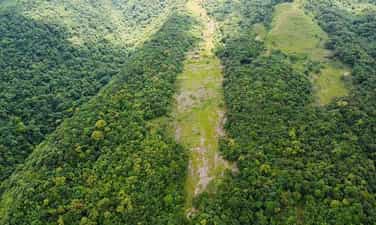
Mau Son Ancient Sacred Site
The ancient sacred site of Mau Son is located at an altitude of approximately 1,190 meters above sea level, on the southeastern slope of the Mau Son mountain range, in Lap Pia village, Mau Son commune, Lang Son province. The relics here date from around the 10th to the early 20th centuries, associated with the religious life of the communities living on the Mau Son range. According to archaeological records, the early inhabitants of the sacred site were the ancient Tay people; later, the Nung and Dao people also made their presence felt. The communities established a place of worship for the mountain god and maintained rituals and religious activities to pray for peace and prosperity. In 2003, the Lang Son Museum conducted excavations and discovered many traces of the sacred site. Currently, visitors can find remnants of ancient temple structures such as stone pillar bases, stone walls, brick walls, steps, stone doors, and stone tombs. A trip to the ancient sacred site is also an opportunity to explore the forest ecosystem of the Mau Son range. From the site, visitors can observe the vast mountain and forest landscape, and learn more about the history of settlement and religious life of ethnic communities in the mountainous border region of Lang Son. With its archaeological, historical, and cultural value, the Mau Son Ancient Sacred Site is a special destination on the Mau Son mountain range, contributing to clarifying the long-standing cultural layers of this land. Source: Lang Son Newspaper and Radio & Television
Lang Son
167 view
Rating : National Monument
To Thi Mountain
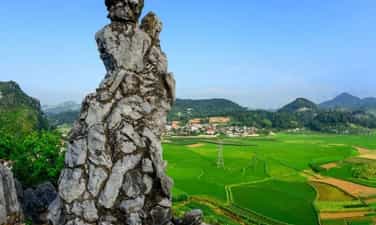
To Thi Mountain, also known as Vong Phu Mountain, is located northwest of Tam Thanh Mountain, in Tam Thanh Ward, Lang Son Province. On the mountain stands a natural rock formation resembling a woman holding a child, gazing into the distance. This image has long been associated with the folk tale of To Thi – a faithful woman who waited for her husband to return from war. According to legend, To Thi stood on the mountain, holding her child, waiting for her husband's return. After a long wait, the mother and child turned into stone. From then on, the image of the woman holding a child on the mountain became known as To Thi, a familiar symbol of unwavering loyalty and faithfulness in Vietnamese folklore. Over time, the rock formation was damaged by the elements. To preserve this image, which is associated with a cultural symbol of Lang Son, the local authorities have restored the image of To Thi. Today, To Thi Mountain is a tourist attraction associated with the Tam Thanh - Nhi Thanh scenic complex, drawing visitors to explore the landscape and unique folk tales of Lang Son province. Beyond its scenic value, To Thi Mountain holds significant meaning in Vietnamese culture, linked to stories of love, fidelity, and waiting. Source: Vietnam National Tourism Administration
Lang Son
165 view
Rating : National Monument

Nhi Thanh Cave
Nhi Thanh Cave, located in Tam Thanh Ward, Lang Son City, is one of the prominent tourist attractions of Lang Son province. Together with Tam Giao Pagoda, Nhi Thanh Cave forms a complex of scenic spots of special value in terms of natural landscape, history, and culture, and has been classified as a national monument since 1962. The cave is approximately 500 meters long, xuyên through a limestone mountain with a system of passages, arches, and diverse natural stalactites. Inside the cave, there is Ngoc Tuyen stream flowing through, Nhat Binh lake, bridges crossing the stream, and Thong Thien Gate – where natural light shines down into the cave, creating a unique atmosphere. Deeper inside, visitors can explore Giao Long Cave with many stalactite, stalagmite, and rock formations of rich shapes. Besides its cave scenery, Nhi Thanh is also associated with the famous figure Ngo Thi Si, who contributed to the exploration and renovation of the cave in the late 18th century. On the cave walls, there is still a system of inscriptions from Ma Nhai, with about 20 steles by famous figures and poets from various periods, including works by Ngo Thi Si. This is a valuable source of information about the history, literature, and culture of Lang Son province. With the combination of caves, rocky mountain landscapes, Tam Giao Pagoda, and the system of inscribed heritage, Nhi Thanh is a typical destination for tourists to explore nature and learn about the history and culture of Lang Son. Source: Vietnam National Tourism Administration
Lang Son
225 view
Rating : National Monument
The location marking the crimes of the French colonialists in Lan Ang
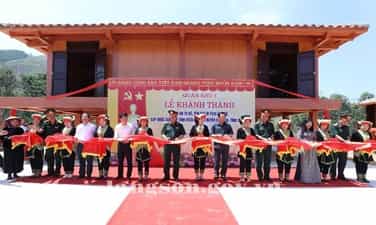
The site marking the crimes of the French colonialists at Lan Ang, Hung Vu commune, Bac Son district, Lang Son province is a revolutionary historical relic associated with the years of arduous struggle of the army and people of Bac Son. Lan Ang used to be a safe revolutionary zone, a place to hide and protect revolutionary cadres and agencies, and a military training location for guerrilla forces. In particular, on February 9, 1945, the French colonialists and their henchmen ambushed and murdered comrade Hoang Van Han - Commander of the Bac Son Guerrilla Team in 1940. Comrade Hoang Van Han's sacrifice aroused hatred for the enemy and strengthened the local people's determination to fight. Lan Ang was also associated with the development process of the Bac Son revolutionary force, from the Bac Son Guerrilla Team to the National Salvation Army I, contributing to creating an important premise for the August Revolution of 1945. Today, at the monument there is a stele marking the historical event in 1945. With typical historical values, this location was ranked a National Historical Monument in 2020 by the Ministry of Culture, Sports and Tourism. Source: Department of Cultural Heritage
Lang Son
312 view
Rating : National monument
Ghost Gate Quan (Ghost Face Mountain)
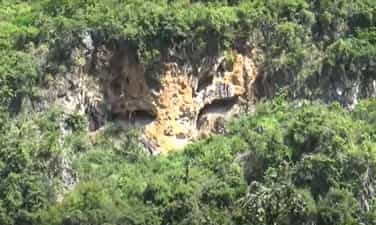
Devil's Face Mountain is a relic site in the Chi Lang Special National Monument Area, in Chi Lang commune, Lang Son province, with many historical, cultural and landscape values, attracting tourists to learn about the land that once marked many victories in the nation's history. The mountain impresses with a natural cliff shaped like a devil's face, with stone cavities forming quite clear eyes and noses. According to folk legend, Devil's Face Mountain is not a symbol of evil but is considered a god who protects the people and the country, associated with victories against foreign invaders in the land of Chi Lang. Here, there is also a story about Lieu Thang, general of the Ming Dynasty, who after being beheaded at Ma Yen Mountain, ran north, but when he reached the foot of Devil's Face Mountain, he was frightened, fell off his horse and died in battle. These folk tales contribute to the mystery and appeal of this place. Source: Vietnam Law Electronic Newspaper
Lang Son
454 view
Rating : Special national monument
Phia Diem cave site
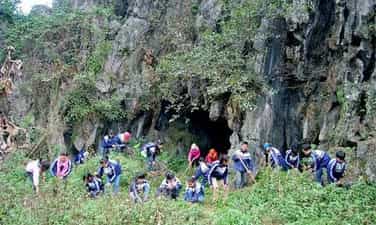
Phia Diem cave site - Remains of ancient Vietnamese residence. Phia Diem cave site located in Na Soong village, Yen Trach commune, Lang Son province, is a valuable archaeological relic, ranked as a national historical relic in 2003. Phia Diem Cave belongs to the Mai Pha cultural space, dating back to about 5,000–3,500 years ago, belonging to the late Neolithic - early Metal period. Through surveys, archaeologists have discovered many artifacts such as stone axes, flakes, bowls, ceramic bowls, and thousands of mollusk shells and animal bones and teeth. These vestiges show that ancient residents lived, worked and made a living here thousands of years ago. Not only has archaeological value, Phia Diem cave also possesses a quite unique natural landscape with stalactites and rocky mountains with interesting shapes. This is a suitable destination for those who love exploring history and nature. Today, preserving the Phia Diem site is important in preserving evidence of the residence and development of ancient residents in Lang Son land. Source: Vietnam Historical and Cultural Relics information page
Lang Son
475 view
Rating : National monument
Lang Nac Cave
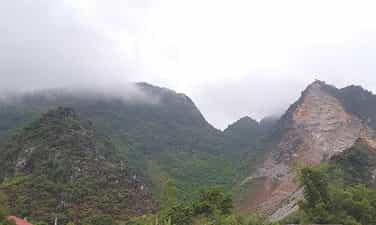
Archaeological relics of Lang Nac Cave - Lang Son. Lang Nac Cave, also known as Tiger's Mouth Cave or Pac Gac Cave, is an archaeological relic of special value in Lang Son province. The relic is currently located in Mai Sao village, Nhan Ly commune, Lang Son province. The cave is located in a limestone mountain range, about 100 meters above the valley floor, the cave entrance is about 18 meters wide and 16 meters high. In 1968, the relic was discovered by local people and reported to the cultural agency. Through many surveys, archaeologists have found thousands of relics, including prehistoric tools, pottery pieces and scraps dating back to earlier than the Bac Son culture. The discoveries at Lang Nac Cave are important in studying the history of prehistoric people's residence, showing that the land of Chi Lang was inhabited very early by humans. With outstanding archaeological values, Lang Nac Cave was ranked as a national archaeological relic in 2004. Today, the relic is still a valuable address in researching, preserving and introducing the long history of Lang Son land. Source: Dan Viet Electronic Newspaper
Lang Son
616 view
Rating : National monument
Wind Cave – Lang Son
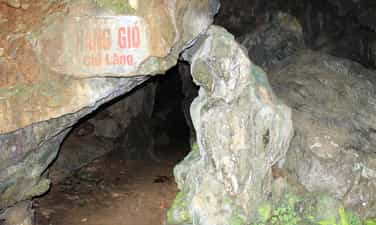
Lang Son Wind Cave (also known as Thong Gio Cave, the literal name is Mai Sao Phong Dong or Thuy Van Dong) is a national-level archaeological and scenic relic complex, famous for the wild and magical beauty of natural stalactites. The cave is located in Sao Thuong B village, Nhan Ly commune, Lang Son province. The cave has a total length of about 700 meters, 50 to 70 meters wide, including two main floors and a basement. The cave entrance is located halfway up the mountain, where cool winds blow all year round. Inside the cave is an interesting world of stalactites with many shapes such as lotus flowers, stone curtains, inclined waterfalls, stone bells, stalagmites and stone columns. Groundwater dripping down over time creates iridescent stalactites, along with clear, cool "wells of fairy water", making the space here even more magical. With unique natural beauty, Gio Cave is an attractive destination for those who love exploring caves and learning about the wonders that nature has created in Lang Son land. Source: Lang Son Newspaper and Radio and Television
Lang Son
625 view
Rating : National monument

Tham Khuyen Cave – Tham Hai
Tham Khuyen Cave – Tham Hai (Lang Son). Tham Khuyen - Tham Hai Cave is located in Tan Van commune, Binh Gia district, Lang Son province, in the Bac Son limestone massif and is one of Vietnam's typical archaeological sites. This is a place of special value in the study of human evolutionary history and is considered one of the cradles of prehistoric humans in Southeast Asia. Through archaeological excavations, scientists determined that about 500,000 years ago, the cave was inhabited by prehistoric people. Many precious fossils were discovered here, including teeth of Homo erectus, along with bones and teeth of many ancient animals such as Stegodon elephants, rhinoceroses, wild boars, dwarf orangutans and especially the giant ape Gigantopithecus. The highlight of the site is the discovery of remains of Homo erectus and Gigantopithecus coexisting in the same site. This is very rare scientific evidence, contributing to clarifying the evolution and migration of prehistoric humans and affirming the important role of the Lang Son area in the history of human development. Today, Tham Khuyen - Tham Hai Cave is not only an archaeological relic of national value but also a research, study and sightseeing site, helping visitors better understand human life hundreds of thousands of years ago and the traces still preserved in the heart of Bac Son limestone mountain. Source: Lang Son Province Investment, Trade and Tourism Promotion Center
Lang Son
856 view
Rating : National monument
Relics of house number 8
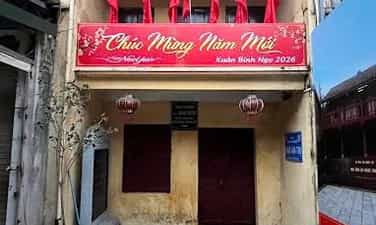
Relics of House No. 8 Chinh Cai Street, Ky Lua Street, Hoang Van Thu Ward, Lang Son City is where Comrade Hoang Van Thu stayed to study and participate in revolutionary activities from 1923 - 1927. Comrade Hoang Van Thu is a Tay ethnic person, born on November 4, 1909 in Phac Lan village, Nhan Ly district, Van Uyen district (now Nhan Hoa village, Hoang Van Thu commune, Van Lang district, Lang Son province). Comrade was born into a family with a tradition of patriotism, hard work and studiousness. As a patriotic young man with ambition, he participated in revolutionary activities from a very early age and devoted his entire life to the revolution. He is also a shining example of patriotism and the will to overcome all circumstances to realize the noble goals of the Party and the nation. To remember the merits of comrade Hoang Van Thu, all levels and sectors in the province have paid attention and focused on the construction and repair of revolutionary relics and cultural works related to him, including the relic of House No. 8 Chinh Cai Street, Hoang Van Thu Ward, Lang Son City. This is where comrade Hoang Van Thu stayed during his time studying at the French-Vietnamese school (from 1923 to 1927). Here, in addition to studying, he drafted a number of leaflets and slogans with the content of mobilizing the masses to fight for food, clothing, freedom and democracy and fight against colonial and feudal oppression. The original 2-storey boarding house has been restored, including the main house and yard area with an area of nearly 200 m2. After many renovations and embellishments, the house still retains many artifacts associated with the daily life of comrade Hoang Van Thu and remains intact in terms of architecture and layout. Currently, this place has become a "small museum" displaying the period of comrade Hoang Van Thu's revolutionary activities with more than 50 images, documents and artifacts, typically: a bed, copper pot, copper pot, bicycle frame, indigo clothes used by Comrade Hoang Van Thu during his revolutionary activities... According to: Lang Son Provincial Youth Union
Lang Son
1094 view
Rating : National monument