Relic point Vietnam
Việt Nam
The site of Mother Nhu's house
Mother Nhu's house is located in a small alley on Tran Cao Van street, Thanh Khe Dong ward, Da Nang city. This is the place that marks the heroic sacrifice of Mother Nhu and the steadfast fight of 7 Second District special forces soldiers on December 26, 1968. Nhu's mother's real name is Le Thi Danh, born in 1912 into a poor fishing family. Since 1967, my mother's family dug two secret bunkers in the house to hide and protect revolutionary soldiers. Today, the relic has a memorial house, the grave of Mother Nhu and her husband, stele marking the event and artifacts related to the battle. With typical historical values, Mother Nhu's house was recognized as a National Historical Site in 2009. The monument is a place to commemorate the sacrifice of Mother Nhu and the soldiers, while also contributing to educating the patriotic tradition and resilient spirit of the army and people of Da Nang. Source: Da Nang electronic information portal
Da Nang
385 view
Rating : National monument
Victory over Ban Bats
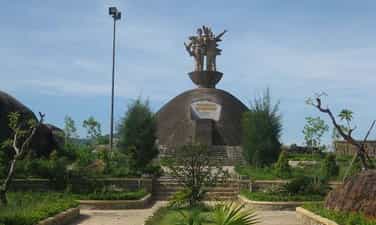
The Cam Doi Victory relic site is located in Que Son district, Quang Nam province, now Da Nang, which marks an important victory in the resistance war against the US. Before 1972, Cam Doi was a fortified military base of the enemy, built with a system of underground bunkers, bunkers, command post and many surrounding defense points. With a large force and modern equipment, this base blocks the route from the west of Que Son to the plain, causing many difficulties for our troops and people. To break this defense line, Military Region V Command decided to open the Ban Bat campaign. After a period of preparation and careful study of the terrain, our army coordinated with the main force, local troops, artillery, infantry and special forces, simultaneously attacking from August 17, 1972. At dawn on August 18, important defensive posts were captured and the enemy's defense line was divided. Hundreds of artillery shells continuously fired at the base, destroying many gas depots, ammunition depots, motor vehicles and enemy artillery positions. After two days and nights of fierce fighting, at 3:00 p.m. on August 19, 1972, our army's victory flag flew over Cam Doi command post and Que Son district capital. The Cam Bat victory marked the maturity of our army and people in their ability to capture fortified defense bases, contributing to the failure of America's "Vietnamization of the war" strategy. Today, on the top of Cam Doi hill there is a victory monument, depicting the image of a liberation soldier and a female guerrilla raising a baby high together, symbolizing faith in peace and the country's future. Source: Da Nang electronic information portal
Da Nang
375 view
Rating : National monument
Thuong Duc Victory Memorial Area
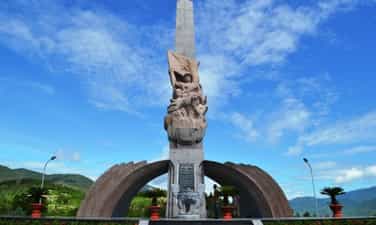
Thuong Duc Victory Memorial Area - A red address in the middle of a heroic land. Thuong Duc Victory Memorial Area is located in Dai Lanh commune, Da Nang city, which marks the resounding Thuong Duc victory on August 7, 1974 - one of the battles of strategic significance in the resistance war against the US to save the country. In 1974, Thuong Duc was a fortified military base of the Saigon government, known as the "steel door" protecting the west of Da Nang. After 10 days of fierce fighting, our army and people took control of the base on August 7, 1974, opening up an important defense line of the enemy. The victory not only created a turning point on the Quang Nam battlefield but also made an important contribution to the Politburo and the Central Military Commission planning strategies, moving towards the 1975 Spring General Offensive and Uprising, completely liberating the South and reunifying the country. To commemorate the heroic martyrs who sacrificed their lives, the Thuong Duc Victory Memorial Area was invested and built on a spacious scale on the basis of the old Thuong Duc district capital. The project includes a granite victory monument, a ceremonial yard, a green campus, and a system of trenches and bunkers preserved, recreating part of the old battlefield. The monument is over 18 meters high, facing Ai Nghia - Da Nang, expressing the nation's offensive spirit and desire for peace. Source: Da Nang Newspaper and Radio and Television.
Da Nang
284 view
Rating : National monument
Vinh Trinh massacre relic site
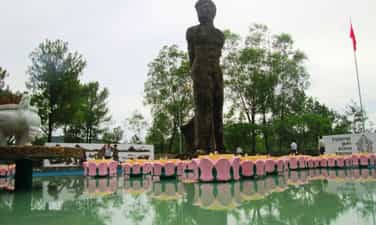
Vinh Trinh massacre relic site - Historical evidence of war crimes. The Vinh Trinh massacre relic site is located in Thu Bon commune, Da Nang city, which marks one of the most painful massacres in Quang Nam in the early period after the 1954 Geneva Agreement. On the night of January 21, 1955 (ie the night of the 29th and the 30th day of the At Goat Lunar New Year), the US - Diem government brutally murdered 38 officers, soldiers and patriots at Vinh Trinh Dam to suppress the revolutionary movement. The victims were tortured, tied with stones and then drowned in the lake to destroy their evidence. This crime shocked domestic and international public opinion, becoming a symbol of the brutality of the US-Diem regime as well as the indomitable spirit of patriots. After the country's reunification, Vinh Trinh Memorial was built right near the place where the massacre occurred. The work stands out with a statue of a proud soldier, a lake with 38 lotus flowers symbolizing 38 victims, in which an unopened lotus bud commemorates the pregnant woman who died. The solemn space between the pine hill and the lake is both a place to pay tribute to fallen heroes and contribute to educating patriotic traditions for today's generations. With special historical values, the Vinh Trinh Massacre Site has been ranked a National Historical Monument by the Ministry of Culture, Sports and Tourism according to Decision No. 309/QD-BVHTTDL dated January 26, 2011. Today, this place is a "red address" that attracts many groups of visitors, students and tourists to offer incense, learn about history and commemorate those who sacrificed for the nation's independence and freedom. Source: Thu Bon commune electronic information page
Da Nang
502 view
Rating : National monument
Tomb of Pham Phu Thu
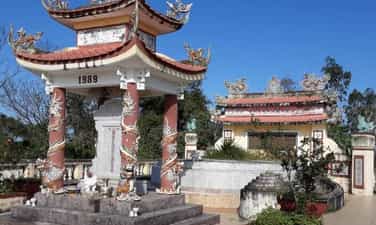
Tomb of Pham Phu Thu - A relic marking a typical reformer of the 19th century. Pham Phu Thu's tomb is located in Go Noi commune, Da Nang city (according to the new administrative boundaries), which is the resting place of the famous Pham Phu Thu (1821–1882) - a mandarin of the Nguyen Dynasty, diplomat, cultural figure and one of the pioneers who proposed the idea of national reform in the 19th century. Born in the ancient land of Quang Nam, Pham Phu Thu was famous for his intelligence, wide learning, high grades and held many important positions under the reigns of King Thieu Tri and Tu Duc. He and Nguyen Truong To are considered typical reform thinkers with many proposals on economic development, science and technology, education, diplomacy and trade to help the country develop and strengthen its internal strength against the threat of French colonial invasion. Throughout his life as an official, Pham Phu Thu was always known as an honest, upright, and dedicated mandarin for the people. He participated in the mission to France and Spain in 1863, from which he recorded many precious documents in the Western Diary, and left behind many valuable works on history, culture and reform ideology, making an important contribution to the treasure of Vietnam's academic heritage. After his death in 1882, he was posthumously awarded the rank of First Class by the court and recognized for his great contributions to the country. Pham Phu Thu's grave today is not only a place to commemorate a cultural celebrity but also an educational address for patriotic traditions, the spirit of innovation and the aspiration for national development. Source: Department of Cultural Heritage
Da Nang
619 view
Rating : National monument
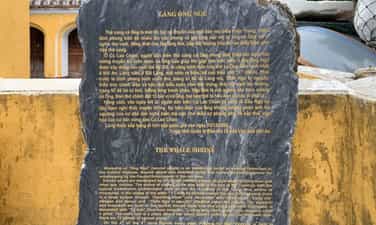
Tomb of Ong Ngu Cu Lao Cham
Tomb of Ong Ngu Cu Lao Cham Ong Ngu's mausoleum is located in Bai Lang village, Tan Hiep island commune (Cu Lao Cham), Da Nang city (formerly in Hoi An city, Quang Nam). The project was built in the late 19th century, located about 10 meters from the coast, with its back leaning against the mountain and facing the sea according to the traditional feng shui concept of coastal residents. According to folk beliefs, Ong fish (whale) is revered by fishermen as the god of the South Sea, always protecting and helping people in distress at sea. When the Ong fish washed ashore, people held a solemn funeral according to traditional rituals, then reburied and put the remains in the mausoleum to worship, showing gratitude to the fishermen's protective god. The mausoleum is built of bricks, lime and coral, with traditional architecture with yin and yang tiled roofs, low domed roofs and a post-mortar that holds the bones of Ong fish. The roof is decorated with motifs of four sacred animals, phoenix birds and tombstones. In front is a screen embossed with the image of "The Fish God plays the moon". Inside, there are three rooms: the main room worships the Ong fish with 13 gilded and lacquered tablets; The two side rooms worship the left, right, and supporting deities. Ong Ngu Mausoleum is not only a place of religious activities of the Cu Lao Cham fishing community but also a typical architectural work of art, reflecting the marine cultural life of local residents. Every year, on the 3rd and 4th day of the 4th lunar month, the Cau Ngu festival is held here with traditional rituals to commemorate the Ong fish, pray for favorable weather, calm seas and safe, bountiful voyages. With outstanding values of history, architecture and cultural beliefs, on December 13, 2006, Ong Ngu Tomb of Cu Lao Cham was ranked a national historical and cultural relic by the Ministry of Culture and Information (now the Ministry of Culture, Sports and Tourism). Source: Cu Lao Cham Marine Protected Area Management Board
Da Nang
871 view
Rating : National monument
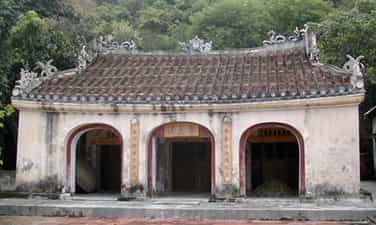
Tan Hiep Tien Thanh Communal House
Tan Hiep Tien Hiep Communal House - A relic marking the merit of establishing the village on Cu Lao Cham Tan Hiep Tien Hien Communal House (local people often call Tien Hiep Mausoleum) is located in Bai Lang village, Tan Hiep commune (Cu Lao Cham), Hoi An city, Quang Nam province. This is a typical religious structure of the island's residents, built around the end of the 18th century to worship the ancestors and descendants who had meritorious efforts to destroy and establish villages, and at the same time worship the gods protecting fishermen in their lives and making a living at sea. According to historical documents, Cu Lao Cham has long held an important position at the sea gateway of Hoi An, where domestic and foreign ships often stop to get fresh water, firewood and shelter from the wind before continuing their voyage. The formation of the island community is associated with the process of reclamation, hamlet establishment and marine industry development. Therefore, building a communal house to commemorate ancestors as well as pray for a calm sea is a cultural beauty that has been passed down through many generations. The communal house was built in a typical arched architectural style, using local materials such as stone, brick, coral, lime mortar; The roof is covered with yin and yang tiles. The roof is decorated with the shape of "two dragons painting pearls", the blade's head is softly curved with floral motifs, dragon faces and fish tails, reflecting the interference between traditional architectural art and island culture. The space inside is spacious, divided into many worship areas. The main space has tablets worshiping Phuc Ba General and a number of gods related to the marine industry. According to ancient beliefs, "Phuc Ba" is a title given to generals who have conquered waves or are talented at navigation, and are worshiped by people as gods protecting fishermen on every trip to sea. With unique historical, cultural and architectural values, Tan Hiep Tien Hien Communal House was ranked a National Monument in 2006. Source: Hoi An Cultural Heritage Management and Conservation Center.
Da Nang
460 view
Rating : National monument
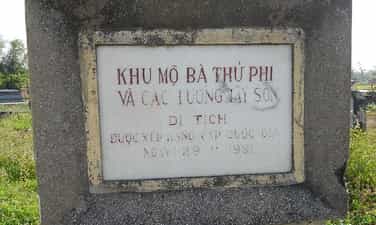
The tomb of King Quang Trung's concubine and Tay Son generals
The tomb of King Quang Trung's concubine and Tay Son generals The tomb of King Quang Trung's concubine and Tay Son generals is located in Thanh Dong village, Cam Thanh commune, Hoi An city, Quang Nam province. The relic is located on Rung Ray mound, where concubine Tran Thi Quy and a number of generals and mandarins of the Tay Son dynasty of the Tran Thanh Chau clan are buried. According to the Tran family genealogy and local documents, Tran Thi Quy was from Thanh Chau village and was recruited by King Quang Trung to be his concubine. After the Tay Son dynasty collapsed, she returned to her hometown to live and was buried in Cam Thanh. In the tomb area there are also the tombs of Tran Cong Thuc - Grand Admiral, Grand General and many other members of the Tran clan who held positions under the Tay Son dynasty. The tomb area not only reflects the typical ancient tomb type of Hoi An but also demonstrates the role of Thanh Chau village and the Tran clan in the Tay Son movement. This is a valuable source of information for researching local history and the late 18th century. In 1991, the tomb of King Quang Trung's concubine and Tay Son generals was ranked as a national historical relic. Source: According to Hoi An Cultural Heritage Management and Conservation Center.
Da Nang
288 view
Rating : National monument
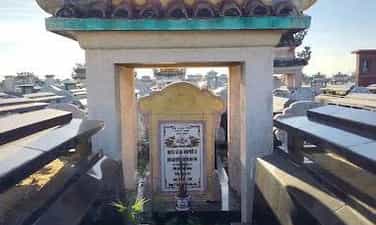
Le clan's tomb
Le clan's tomb - A relic marking the process of colonizing the land of Cam Thanh The Le clan's tomb is located in Thanh Dong village, Cam Thanh commune, Hoi An city, Quang Nam province. This is the burial relic of the ancestor of the Le clan - Mr. Le Duy Tri, a fifth-generation descendant of the Later Le dynasty, who came to Thanh Chau to settle down in the early 17th century. According to historical documents, Mr. Le Duy Tri is the eldest son of The Tong Emperor Le Duy Dam, brother of King Kinh Tong Le Duy Tan. In 1623, due to political upheaval and persecution by Lord Trinh Tung, he and his family went to the South, stopping in the Thanh Chau area (now in Cam Thanh commune). Here, he and his clan reclaimed land, established hamlets, developed production and became the sages who publicly reclaimed this land. The current tomb complex was built on a large scale in 1930 (the fifth year of Bao Dai). The tombstone is engraved with the names of the ancestors of the Le clan and recognizes their contributions to the exploration of ancient Thanh Chau lands. The monument is not only a place to commemorate ancestors but also an important testament to the process of migration and expansion of Dai Viet residents into Hoi An in the 17th century. With outstanding historical and cultural values, the Le ancestral tomb is a valuable source of material for researching the history of the formation of the Cam Thanh community in particular and Hoi An in general. The relic was ranked as a national historical relic in 1991. Source: According to Hoi An Cultural Heritage Management and Conservation Center.
Da Nang
961 view
Rating : National monument
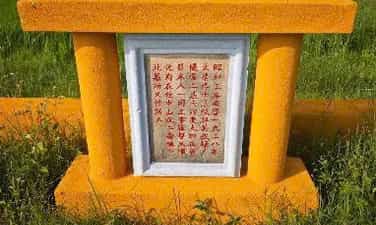
Tomb of Japanese merchant Tani Yajirobei
The grave of Japanese merchant Tani Yajirobei located in Hoi An Dong, Da Nang City, is a testament to the trade relationship between Vietnam and Japan during the period when Hoi An was a busy international trading port in the late 16th and early 17th centuries. Mr. Tani Yajirobei, from Hirado (near Nagasaki), came to Hoi An to trade, settled and passed away here. The tombstone was established in 1647, clearly stating Japan's hometown, and is a precious document about the presence of the Japanese community in Hoi An. The tomb was built in the style of ancient Hoi An tombs with tombs made of traditional compounds from lime, seashells, mussel shells, molasses and Litsea sap to create high durability over hundreds of years. This is one of the valuable historical, cultural and architectural relics, contributing to demonstrating the economic and cultural exchange between Vietnam and Japan in history. The tomb was built on a high mound, facing Northeast according to traditional feng shui concepts. The work includes sandstone walls, saddle-shaped graves and sandstone tombstones. In 1991, the Tomb of Japanese trader Tani Yajirobei was ranked as a National Historical Site. Today, the relic is an attractive tourist destination, especially for Japanese tourists and those who love learning about the history of Hoi An trading port. Source: Hoi An Ancient Town
Da Nang
480 view
Rating : National monument