Tourist destination
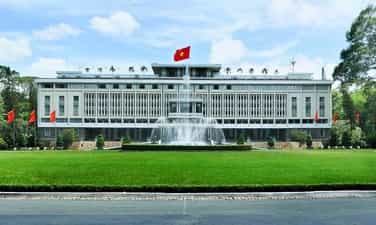
Independence Palace
Independence Palace is one of the most unique and famous architectural works in Ho Chi Minh City, having existed for more than 150 years. The construction stone was laid by Mr. La Grandière, the French Governor in South Vietnam, in 1868 and completed in 1871. In 1867, after the French occupied Cochinchina Luc Province, they immediately designed and built a new Palace on Norodom Avenue (now Nam Ky Khoi Nghia Street) for Cochinchina Governor La Grandière in Saigon, replacing the old Palace built of wood at the end of Catinat Street (now Dong Khoi Street) in 1863. In February 1868, Governor La Grandière held the ceremony of laying the first stone, starting construction of the Governor's Palace of Cochinchina according to the sketch plan of architect Achille Antoine Hermite. The project was completed in 1871 and was named Norodom Palace, after the name of the King of Cambodia who ruled during that time. In March 1945, Japan overthrew France, monopolized Indochina, and Norodom Palace became the workplace of the Japanese government in Vietnam. In September of the same year, Japan lost in World War II, Norodom Palace returned to the French government. In May 1954, France signed the Geneva Accords and withdrew from Vietnam, and the country was divided into two separate territories. Norodom Palace was handed over by the representative of the French government to the representative of the Saigon government, Prime Minister Ngo Dinh Diem. In October 1955, Prime Minister Ngo Dinh Diem deposed Chief of State Bao Dai, established the Republic of Vietnam government and then became President, and officially changed the Palace's name to Independence Palace. In February 1962, after the coup of the Republic of Vietnam army pilot, the Independence Palace was bombed and the entire main left wing was destroyed, unable to be restored. In July of the same year, President Ngo Dinh Diem decided to raze everything and build a new mansion right on the old ground according to the design project of Architect Ngo Viet Thu. In November 1963, the project was unfinished when President Ngo Dinh Diem was assassinated. In October 1966, the new Independence Palace was inaugurated, and the person who presided over and took over this building was Chairman of the National Leadership Committee Nguyen Van Thieu. From October 1967 to April 1975, the Independence Palace became the residence and working place of Second President of the Republic of Vietnam Nguyen Van Thieu. After the historical event in April 1975, the country was completely unified, the Independence Palace became a historical and cultural relic, a tourist destination not to be missed when coming to Ho Chi Minh City.
Ho Chi Minh City
6261 view


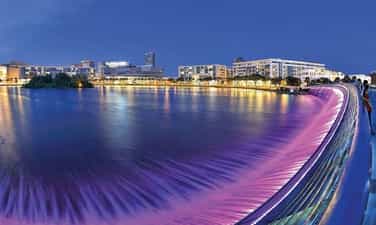
Starlight Bridge
Starlight Bridge is one of the impressive attractions in District 7, Ho Chi Minh City. This destination is located in one of the most luxurious neighborhoods in Saigon. Therefore, this place inherits the modern and luxurious beauty of the surrounding landscape. Although not a new name among attractions in Ho Chi Minh City, Starlight Bridge still retains the same heat as when it first debuted. Currently, next to Nguyen Hue Walking Street, Anh Sao Bridge is currently one of the hottest entertainment and entertainment venues in Ho Chi Minh City. Anh Sao Bridge was officially built in 2009 with a length of 170 meters. Together with Crescent Lake, Starlight Bridge creates a luxurious and modern landscape complex. The canal and square at Starlight Bridge simulate the shape of the moon. Meanwhile, the Crescent Lake area simulates the shape of the sun. Starlight Bridge has two sides equipped with a luxurious lighting system, creating the feeling of sparkling stars casting shadows onto the water. From a distance, the Starlight Bridge will stand out like a starry sky with sparkling lights of all colors. That image evokes a poetic, pure and extremely romantic feeling. Therefore, this place also attracts many couples to come here to stroll and visit. The highlight of Starlight Bridge is the uniquely designed lighting on both sides of the bridge. This lighting system combines with the water surface to create unique visual effects. In the sparkling space of Phu My Hung area, the light of Starlight Bridge creates a shimmering, magical and poetic scene. This is an ideal location for couples who like to stroll in a gentle, romantic space. The LED lighting system on both sides of the Starlight Bridge will evoke a sparkling feeling thanks to the scientifically calculated color range. At first glance, you will think of the brilliant rainbow colors creating a poetic space. In addition, the water spray effect on the side of the bridge makes it look like it is dyed in radiant colors, creating an impressive scene of harmony. This is also an impressive point that attracts tourists to Anh Sao Bridge. In addition to admiring the beauty of the light effects on Starlight Bridge, you can come here to stroll and enjoy the cool breeze in the afternoon. Anh Sao Bridge is located on a quite open and large area. Therefore, this place is often windy and quite cool in the afternoon. Walking on Starlight Bridge in that cool air will bring you a pleasant, relaxing and extremely gentle feeling. In addition to walking, you can take advantage of the large, airy space of Starlight Bridge for sports activities such as jogging to improve your health. In addition to being a comfortable place to stroll and play, Starlight Bridge is also a place of very special beauty. You can go on a date with your close friends to create great check-in photos here. With the scenery of a green lake and cool green trees, you will have plenty of space to check-in and create attractive photos. Some check-in points that many young people choose when visiting Starlight Bridge are the lawn at the bridge park, the bridge's square or the gentle space at Crescent Lake. In addition, if you are willing to walk a little, you can check-in at the luxurious space of Crescent Mall. Located in a luxury residential area, Cau Anh Sao Park is therefore designed to be quite luxurious and attractive. In the park, there are many trees and lakes that evoke a feeling of peace and serenity. In addition, this park also possesses lush, soft green grass. This is also a check-in point sought after by young people when visiting Anh Sao Bridge. In the beautiful space of this park, you can enjoy the breeze, check-in or enjoy interesting snacks. However, you also need to pay attention to preserving common space and throwing trash in the right place after use.
Ho Chi Minh City
6362 view



Saigon Square
Saigon Square launched its first branch in 2000, then opened two more branches in Ho Chi Minh City. However, later, due to business difficulties and the Covid-19 pandemic, currently only the branch on Nam Ky Khoi Nghia Street is still operating. Saigon Square shopping mall is located in the central area of District 1, so it has the opportunity to reach a diverse range of customers, both domestic and international. The plus point is that there is no situation of cutting corners on foreign customers, and prices are relatively transparent. Thanks to that, it is a shopping destination that is highly appreciated by tourists. The design of the stalls inside Saigon Square is like a high-end market, the shopping atmosphere is very close and bustling. The kiosks have traditional market colors but are spacious, airy, and display goods with eye-catching designs and colors. There is air conditioning that operates 24/7 and a spacious fitting room, which will bring you a truly satisfying experience. Entering Saigon Square shopping center, you will be overwhelmed by the space of fashion paradise with an countless number of stalls. If it's your first time coming here, just walk around and if you see an item you like, just ask the price. Here, there is no need to stop by a stall and buy anything. Saigon Square shopping complex brings together items from popular to branded goods, from new to second-hand items. There are also local brands that are loved by many young people. Therefore, if you come to Saigon Square, you will definitely find products that suit your taste and style. Another plus point of Saigon Square is that it always updates trends that are loved by young people. Any item that is hot will be brought home and sold by merchants immediately. Unlike other traditional markets, the clothing designs at Saigon Square are trendy and youthful. Saigon Square's items are also very stylish. You can find stalls that specialize in selling unique and personalized designs. Therefore, if you like to mix and match outfits and accessories, coming to this shopping area will definitely be a paradise to freely choose suitable products. When you go shopping at Saigon Square Shopping Mall, don't hesitate to bargain with the stall owners. Here, the challenge is not too much, some stalls even have prices listed. However, feel free to bargain to get the most reasonable price. If you buy more, you will get a bigger discount. When purchasing, you should try on items because many stores here do not accept returns. If you buy something to give as a gift, you should clearly tell the stall owner and ask them if the recipient is not satisfied or the wear does not fit, can they return and exchange for another product.
Ho Chi Minh City
6583 view


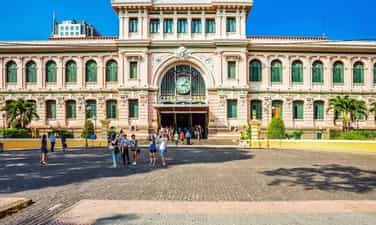
Saigon Central Post Office
It is one of the best-rated architectural works in Ho Chi Minh City. Every day many visitors come here to visit and explore. Located at number 2 on Paris Commune Square (Ben Nghe Ward, District 1), Saigon Post Office is located right next to Notre Dame Cathedral. Therefore, traveling here is very convenient, you can easily go by car, motorbike or bus to visit Saigon Post Office. Built from 1886 - 1891 by famous French architect Gustave Eiffel, visitors will see the Saigon post office wearing a layer of yellow paint that stands out in the afternoon sun of Saigon with rows of curved windows. In the middle of the Post Office is a large clock with gentle decorative lines that easily attracts the eyes of visitors when they first come here to visit. What impresses visitors the most are the roofs, the system of large domed windows along the ceilings of the building radiating out to all four sides for support. If you look for a long time, you will see the post office's long, curved ceiling that resembles the shape of a giant wine barrel and is covered with shiny cream-colored tile floors, making the space here large and airy. On both sides of the building are two historical maps of Saigon with many regions meticulously hand-painted on the walls by skillful and meticulous artisans. The unique architecture combining European style with Asian decoration has made visitors here passionately admire and not want to leave. Although it has existed for a long time, just coming here, you will still be impressed by the classic and modern beauty of the Saigon Post Office. On both sides of the entrance are straight rows of green iron columns with rows of long-standing polished wooden chairs. Sitting here, you will feel like you are waiting for the next train at a British railway station in the 20th century. In the middle of the Post Office center is the image of Revolutionary leader Ho Chi Minh. Looking inside, you will easily see four rows of large wooden tables lined up in the middle of the post office to serve people who need to carry out communication transactions, send parcels, express delivery... Especially On both sides of the main lobby of the Saigon Post Office, ancient mailboxes and old telephone booths still preserve visitors' nostalgia for a bygone era. On both sides of the hallway near the main entrance of the building, there are many souvenir shops selling thousands of souvenir products and postcards about the Saigon post office as well as Vietnam in general or Saigon in particular to serve. for tourists to buy as souvenirs for friends or relatives. You will think there is nothing special but it will be a wrong opinion if you do not once set foot inside the Post Office building and be overwhelmed by the space and unique architecture here. Just stepping inside, visitors feel like they can slow down, any corner of the Post Office or the classic architecture here seems to stop so you can imagine and feel a glimpse of old Saigon. This is also a great check-in point for young people to save beautiful photos when visiting the Saigon Post Office.
Ho Chi Minh City
6215 view


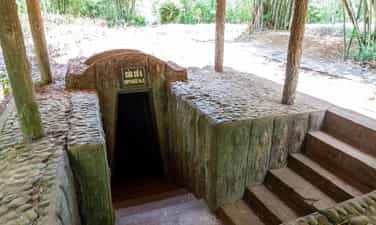
Cu Chi Tunnels
When it comes to war, Vietnamese people certainly have thousands of hours to tell stories, heroes, places, and bases that still leave traces to this day. And if you are near the Ho Chi Minh City area, you can choose a nice day and visit Cu Chi Tunnels, a famous national historical relic of the nation. Cu Chi Tunnels relic site is located at Provincial Road 15, Phu Hiep Hamlet, Phu My Hung Commune, Cu Chi District, Ho Chi Minh City. This is a place associated with the resistance war against the French during the period 1946 - 1948. The tunnels were jointly built by the army and people of Tan Phu Trung commune and Phuoc Vinh An commune to serve the process of hiding, storing weapons, ... The base has a total length of up to 250km, including 3 different depth levels, the deepest level is up to 12m above the ground. Initially, each village had its own base, then people connected with each other to facilitate communication from 1961 to 1965. Outside the tunnels are equipped with many nail pits, bell tunnels, minefields... to ensure safety. Inside the military tunnels, it is still easy to communicate, hide forces, weapons and hold meetings to discuss revolutionary plans. To date, the base has linked 6 communes north of the tunnel together. Cu Chi Tunnels is a special national historical site and one of six famous man-made structures in the world today. Along with that, the combination of tourism and visiting the tunnels has become a destination that attracts a large number of domestic and foreign tourists and is in the top 7 most exotic destinations in Southeast Asia. One of the main and most interesting activities that you must participate in when coming to Cu Chi tunnels is to explore the tunnels deep underground. Here, you will be able to recreate all the activities and life during the Indochina war that our ancestors experienced. Most especially, right under the tunnel, there are vendors selling dishes that people in ancient times often ate such as: Potatoes, cassava, tubers dipped in sesame salt,... With a strong local flavor, although simple. but it's especially delicious. In addition, you can explore the war zone re-enactment area. As a place associated with history and war, the Cu Chi Tunnels still retain traces of the war at the re-enactment area to this day. Here, the organizer will show you footage that recreates all the living and fighting scenes of our army and people in the tunnels. Furthermore, you can also admire many models of famous historical and relics of Vietnam such as: Long Bien bridge, One Pillar Pagoda, Nha Rong wharf, Saigon bridge,... It can be said, going to this place. With a unique tourist destination like this, you will feel the patriotism deep within you. When traveling to Cu Chi Tunnels, you need to note the following things. First, the opening time of Cu Chi Tunnels is from 7:00 a.m. to 5:00 p.m. daily to schedule accordingly. And the ticket price to enter the tourist area is about 20,000 - 30,000 VND/person, underground ticket is 20,000 VND/person, game ticket is 50,000 VND/person. Although there is no dress code, to be most comfortable during sightseeing activities, you should: Wear neat clothes, convenient for underground activities, dark colors to avoid dirt and choose comfortable sports shoes. more comfortable when moving. Remember to prepare some necessary cosmetics to avoid the sun and prevent insects. If you want to spend a lot of time to fully explore this destination, you should book a Cu Chi hotel room in advance to make the trip more convenient. For tourists who are afraid of tight spaces or low blood pressure, they should not go into small tunnels.
Ho Chi Minh City
6261 view


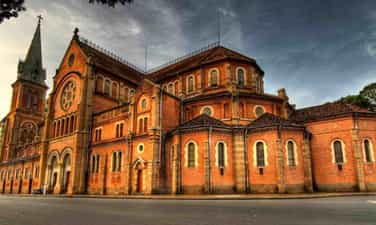
Notre Dame Cathedral
Notre Dame Cathedral or Saigon Notre Dame Cathedral is a name that people shorten for convenient use. The full name of this project is the Cathedral Basilica of the Immaculate Conception. The church is 91m long, 35.5m wide, and the main dome is 21m high. The two bell towers on both sides are nearly 57m high. Saigon Notre Dame Cathedral was built with classic French architecture, designed by talented architect J.Bourard. The outside space of the church is very large and airy, the inside is majestic and ancient. The history of Saigon Notre Dame Cathedral began with the French war of invasion at the end of the 19th century. The French government at that time wanted to build a large church to serve the community and religious activities for the government. French government and army. The first church was located on Ngo Duc Ke Street but was too small so the French Admiral Bonnard decided to build a larger church. Construction of this Saigon Cathedral began on March 28, 1863. After two years, the church was completed. In 1895, the French built two more bell towers. Around the tower there are six small bronze bells. At the top of each tower is a cross that is 3.5m high, 2m wide and weighs 600kg. At this time, the height of the building, from the ground to the highest point, was 60.5m. The French also cast a bronze statue of Pigneau de Behaine (also known as Bishop Adran) holding the hand of Prince Canh, the eldest son of King Gia Long. This statue is located in front of the church. In 1945, the statue was destroyed but its base still remains. In 1959, Bishop Joseph Pham Van Thien ordered the statue of Our Lady of Peace from Rome. On February 7, 1959, Cardinal Agagiianian came from Rome to solemnly inaugurate the statue. Since then, the church has been called Saigon Notre Dame Cathedral by the people. Saigon Notre Dame Cathedral was built with the neo-Romanesque Revival (or Neo-Romanesque) architectural style. This was a building style popular around the mid-19th century, inspired by 11th and 12th century Romanesque architecture. Buildings in this style tend to feature arches and portholes. simple disign. During the construction of Saigon Notre Dame Cathedral, all materials from cement, steel to screws were brought from France. The exterior of the building is made of bricks produced in Marseille. The advantage of this type of brick is that it is bare, not plastered, not mossy, and still retains its bright pink color after decades. The entire cathedral has 56 stained glass windows produced in Chartres province (France). The foundation of the cathedral is specially designed to bear 10 times the weight of the entire architectural volume. And a very special thing is that the church does not have fences or walls like the churches around Saigon Gia Dinh at that time. The interior of the cathedral has two main rectangular rows, with six rows on each side representing the 12 apostles. The altar of Saigon Notre Dame Cathedral is made of monolithic marble with six angels carved into the stone. The pedestal is divided into three cells, each cell is a sculpture depicting a relic. The walls are decorated with 56 glass windows depicting biblical characters or events, 31 round rose figures, 25 multicolored bulls-eye windows combined with beautiful images. All lines, edges, and patterns follow stately and elegant Roman and Gothic forms. However, out of these 56 glass doors, only 4 are still intact. The other glass doors were repaired in 1949 because they were destroyed during the war. The original design had two bell towers that were 36.6m high, had no roof and only had a narrow staircase of about 40cm. The interior is dark and the floor is lined with small pieces of wood. In 1895, the church built two more roofs to cover the 21m high bell tower designed by architect Gardes, for a total of 57m high bell tower. All six bells are hung on two bell towers. This bell was made in France and brought to Saigon in 1879. The bell is controlled electronically from below. On weekdays, Saigon Notre Dame Cathedral only rings at 5:00 a.m. and 4:15 p.m. On holidays and Sundays, the church often rings three bells. 6 bells ringing at the same time will have a very loud sound, you can even hear the bell from 10km away. Between the two bell towers is a very large clock. It was produced in 1887 and weighs 1 ton. Even though it is more than a hundred years old, the clock still operates very accurately. Paris Commune Square is located between Notre Dame Cathedral and Nguyen Du Street. In the center of the main square is where the statue of Our Lady of Peace is located. This is where visitors often stop to drink coffee, take photos, and watch pigeons. Especially on weekend mornings, many young people gather here to chat and have fun together. The image of Notre Dame Cathedral has long become a representative part of the magnificent land of Saigon. Near the church there is also the Independence Palace and the city Post Office. You can combine visiting these three famous destinations to explore Saigon to the fullest.
Ho Chi Minh City
7778 view


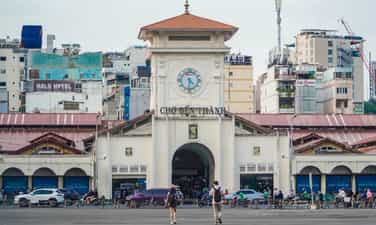
Ben Thanh Market
Ben Thanh market is located in the center of District 1, the most crowded and magnificent area in Saigon. Located near many famous Saigon tourist attractions such as the Independence Palace, City Post Office, City Theater... and many high-end 5-star hotels, Ben Thanh market attracts many tourists. Ben Thanh Market was formed in the mid-19th century. Through the ups and downs of history, this market has long become a symbol of the vibrant trading culture of Saigon in particular and Vietnam in general. Along with the economic and tourism development of Ho Chi Minh City, this market is also increasingly famous and especially attracts a large number of foreign tourists to visit. Vietnamese people are no strangers to crowded, bustling markets. But for foreigners, this is a very unique cultural feature. Therefore, foreign tourists love to go to the market to shop for souvenirs and try Vietnamese specialties. Gradually, Ben Thanh became a prominent symbol of Saigon, making everyone who comes to this city want to visit once. Ben Thanh Market was originally built in the 17th century near the Ben Nghe River to welcome tourists and soldiers into Gia Dinh Citadel. That is also the reason why the market was named Ben Thanh (river wharf + citadel). The market is made of brick, wood and thatched roof. Ben Thanh market in the past was very crowded and bustling, with boats and boats busy day and night. After a long period of use, the market gradually deteriorates and is at risk of collapsing at any time. Therefore, the French rebuilt it and expanded it to a larger scale after filling in a muddy pond named Bo Ret. Since 1912, it took another 2 years for the French construction contractor Brossard et Maupin to complete this project. The old architecture has since been preserved to this day even though Ben Thanh market underwent a major renovation and repair in 1985. Ben Thanh Market has 4 main gates and 12 side gates. Each main gate is located on a different street and displays many popular items for visitors to shop: South gate of Ben Thanh market: South gate is located on Le Loi street, opposite Quach Thi Trang park, this is the main gate of the market. The highlight of this market gate is the famous 3-sided clock tower. The entrance attracts many visitors with stalls selling all kinds of goods, mainly fabrics and dry foods. East Gate of Ben Thanh Market: East Gate is located on Phan Boi Chau Street, a paradise for cosmetics enthusiasts. The stalls here sell a variety of body, skin and hair care products. West gate of Ben Thanh market: West gate is located on Phan Chu Trinh street, this gate has many stalls selling shoes, crafts and souvenirs. North gate of Ben Thanh market: North gate is located on Le Thanh Tong street, this gate sells many types of fresh flowers and tropical fruits. During the day, Ben Thanh market bustles with stalls offering a variety of goods, including textiles, souvenirs, handicrafts, fresh produce, seafood, spices... Atmosphere This place has the true nature of a typical Asian market, bustling and rustic. Ben Thanh Market at night is still crowded but somewhat more peaceful. The stalls mainly sell food with local snacks and drinks. There are also some shops selling clothes, accessories and souvenirs. Bright torches and the sweet aroma of countless Vietnamese specialties are what attract tourists.
Ho Chi Minh City
10006 view


Dak G'Lun Waterfall
Dak G'lun waterfall eco-tourism area is located in Quang Tam commune, Tuy Duc district, about 29km from Highway 14, about 50km from Gia Nghia city towards the city. Ho Chi Minh. Dak G'lun Waterfall is surrounded by more than 1,000 hectares of special-use forest with a rich and diverse ecosystem with many ancient trees with wide green canopy. With a height of nearly 60m, water from above pours down in white sheets. At the foot of the waterfall are tens of thousands of undulating mountain rocks of various shapes and forms, creating Dak G'lun waterfall a majestic and poetic scene. In addition, this place also has beautiful mountain rocks for you to sit and watch billions of cool water bubbles, splashing like drizzle and colorful rainbows created from steam and sunlight, along with Ferns, moss and green vegetation... create a poetic space for visitors to admire and relax after busy, tiring days. Right next to the waterfall, there are large and flat grounds for tourists to camp overnight. This is also an ideal place for tourists to watch the sun rise... Tourists who like to explore and adventure can pass through the waterfalls. cool, smooth mountain rock to admire the panoramic view of the waterfall arch shaped like a giant frog mouth spewing water. Currently, the tourist area has invested in a number of items such as: welcome gate; the souvenir shop; duplex motel (10 rooms); mushroom house; zoo; parking lot, camping site... Here, visitors can stay overnight and enjoy the flavors of Central Highlands specialties such as: Bitter tomato soup, bep leaves, rattan buds; Lam rice, grilled meat...
Lam Dong
5946 view


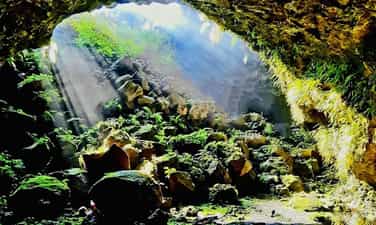
Chu Bluk volcanic cave
Coming to Dak Nong, a province of the Central Highlands, you are certainly no longer unfamiliar with the images of waterfalls flowing from the mountains, high mountains and caves hidden in deep forests. In recent years, exploring Chu Bluk volcanic cave has been the desire of many people when coming to Dak Nong, because this place has not had any human impact and there are many interesting things hidden deep inside waiting to be discovered. break. One of the ideal trekking spots for tourists coming to Dak Nong today is Chu Bluk volcanic cave. Chu Bluk Cave, also known as Bat Cave, is about 25km long, located in Buon Choah commune, Krong No district, Dak Nong province, about 20km from Krong No district center. The cave extends from the Dray Sap waterfall area to Buon Choah cave, inside divided into more than 100 large and small caves thanks to the flow of lava millions of years ago, hidden in basalt rock. According to researchers, the formation of large and small caves inside took place 3,700 years ago by volcanic eruption. The more you go inside Chu Blúk, the more clearly you see the separation between the inside and outside of the cave. This place is covered in darkness and only occasionally receives a few rays of light through the cracks in the rocks; The damp and cold air evokes something a bit ghostly. In addition, you will hear the sound of water drops trickling down from above and shattering when they hit the ground, creating a special sound in the quiet space of the cave, adding mystery and appeal to the cave. journey. According to TransViet Wanderlust, exploring Chu Bluk volcano has many interesting activities and to fully experience the "soul" of the great mountain, the first challenge for tourists is the trekking route about 9km long. The feeling of walking on uneven volcanic rocks, in the middle of a lava field with grass and trees hiding footprints is both scary and exciting. In return, the scenery of blue clouds and sky, endless mountains and forests, and poetic nature is so beautiful. Besides, visitors can also cycle to visit the village, pass through charming fragrant coffee fields for only about 3km and occasionally go through some winding roads with vertical slopes. Then relax with a warm cup of coffee next to the "muse" Dray Nur, pouring torrential, white waterfalls. Besides, lighting a fire, camping, roasting potatoes, grilling meat, singing, dancing... amidst the majestic mountains and forests gives a valuable moment. If you want to go to Dak Nong to participate in festivals, you can come in early spring, at this time there are many festivals taking place such as longevity ceremony, new rice worship ceremony, heart year ceremony, gong festival. gongs,... all are very attractive and imbued with indigenous culture.
Lam Dong
5933 view


Ho Dai Ninh
Located in the middle of the foggy land of the highland country full of cold winds, Dai Ninh Lake is likened to a beautiful fairy with many mysterious beauty that fascinates those who like to explore. The chilly wind wafting in the morning dew blends with the sunlight shining down on Dai Ninh Lake, creating beautiful light films that make visitors admire. If you have the opportunity to visit the mountains and forests here, you should stop by Dai Ninh and Duc Trong once to admire the floating scenery of this lyrical place. Dai Ninh Lake is located in Ninh Gia commune, Duc Trong district (Lam Dong) in the Dai Ninh hydroelectric lake project in the Dong Nai river area to supply water to Binh Thuan. It is a large project located in all three provinces, but perhaps only with the cold air of the plateau, Dai Ninh Lake in Duc Trong is considered a masterpiece. Dai Ninh Lake is about 50km from the flower city of Da Lat in the direction of Bao Loc, next to Highway 20. The scenery of Dai Ninh Lake is most beautiful in the early morning, when the mist still covers the entire Dai Ninh space. The dry trees in the middle of the lake appear alone, bringing a strange and mysterious feeling like being lost in the land of ancient fairy tales. As the water drops, the dry tree canopy appears more and more clearly, as an indispensable important highlight that creates the appeal of Dai Ninh Lake. The moonlight still hangs somewhere in the sky, as if shining down on the whole lake of Dai Ninh, which is both real and fake. When sunlight penetrates every corner of the lake, breaking through the fog, Dai Ninh reveals its clear, sparkling, poetic beauty. The gentle girl gently touches the heart of the beholder with an unforgettable, enchanting beauty, the silvery surface of the water ripples as if happily awaiting a new day. In the distance, there are a few fishermen starting their daily livelihood on small boats. Human silhouettes loom in the vast contrasts of Dai Ninh Lake, as if proving their strength in front of the vast nature. Besides sightseeing, the biggest pleasure that cannot be missed when visiting Dai Ninh Lake is fishing. There are a lot of fish here, which is why this elegant pastime is loved by many tourists. Just choose a certain corner of Dai Ninh Lake, visitors can gently let go of the rod to show their level. After getting the results, visitors can search for dry tree branches scattered around the lake to reward themselves with the delicious flavor of grilled fish fresh on the shore. If the morning mist covering Dai Ninh Lake is considered a beautiful scene, then the sunset gradually dyeing the whole area red and purple will also be memorable moments that need to be saved. This is also the time when many boats begin the work of setting up lights to release their nets at night. Under the darkness that began to invade the whole area, bright lights spread across the lake like flowers blooming gracefully. Currently, the Dai Ninh commercial and resort urban project is being promoted by Lam Dong, which will be an opportunity for visitors to fully feel the peaceful and quiet beauty of Dai Ninh Lake in the near future. service to serve tourists in the best way. Hesitatingly walked towards Dai Ninh Lake on a day when the mountain town was full of mist and wind, to fully feel the mystical, poetic beauty but also full of true simplicity. Let your whole body drink in peace and forget the fatigue of everyday life. Let the indelible impressions remain forever in your mind when you leave.
Lam Dong
5572 view


