Tourist destination

Cu Lao Cau – Tuy Phong
Cu Lao Cau (or Cau Islet) is a small island located in Tuy Phong district, Binh Thuan. This island is about 110km from Phan Thiet city, about 240km from Saigon. From the mainland, if you want to go to the island, you need to take a boat or a large ship or canoe. The area of this island is quite small, only about 10km. Currently, Cau Island is still a fairly pristine island, so it still retains its beauty and especially very little trash. The island is surrounded by blue sea water and the water color changes at different times of the day. In addition, under the sea there is also an extremely unique coral ecosystem. The time when the sea is beautiful and the waves are calm on Cau Island lasts from about March to August every year. Before going out, you should also check the weather forecast to have a more complete trip or contact the boat driver on the island directly for more accurate information. The area of Cau Island is quite small, only about 1.5km, so it will only take you about 1 - 2 hours to walk around the island. Cu Lao Cau still retains its wild appearance, with no houses, only 1 border guard station and 2 restaurant shacks. Surrounded on all four sides is a vast sea of water. This place is really suitable for those who love the blue sea and want to enjoy a quiet space. Walking around the island, you will easily see large cliffs with many unique shapes reaching out to touch the sea. Choose a beautiful corner for yourself to relax and listen to the sound of the waves crashing, inhaling the cool breeze carrying the breath of the sea. Don't forget to prepare some snacks and drinks. The sea is always a suitable place for you to watch the changing colors of the sky. On Cau Island, there are many high rocky outcrops. You can choose a suitable location to watch the sunrise and sunset. The sunset on the island will make you extremely excited as you admire the open blue sky, the rolling clouds create a shimmering curtain of light. The sea stretching out in front of me sparkles when the sun shines directly on it. The sea is always a suitable place for you to watch the changing colors of the sky. On Cau Island, there are many high rocky outcrops. You can choose a suitable location to watch the sunrise and sunset. The sunset on the island will make you extremely excited as you admire the open blue sky, the rolling clouds create a shimmering curtain of light. The sea stretching out in front of me sparkles when the sun shines directly on it. The most exciting time of the day is probably when the sun goes down, the space starts to cool and we gather together to prepare for dinner. If time is leisurely and you don't need to return to the mainland during the day, you can ask permission from the border station to set up camp on the beach. When going to the beach, of course the dishes that cannot be missed are seafood. Seafood dishes available on Cau Island are also very rich with red fish, oysters, snails... You can go to two shacks on the island to pre-order food for camping or buy fresh seafood on the way down. island.
Lam Dong
9467 view


Coco Beach Camp
Coco Beach Camp Lagi Binh Thuan belongs to a high-class camping area in Cam Binh beach and is about 160km from Ho Chi Minh City. This is a new beach that has been exploited to serve the tourism industry in recent years. Although this Coco Beach Camp Lagi Binh Thuan resort is not isolated from the surrounding world, it can still give you the feeling of being in another world. Say goodbye to the image of hotels, rows of houses,... like other resorts, coming here you will experience the feeling of sleeping in tents or resting in lovely small houses. In addition, Coco Beach Camp also has another large beach, a small white villa located on the beach, a large library, and a bar that makes you feel like you are on vacation in Hawaii. With the integration of so many interesting things, you can enjoy a 2 days 1 night trip here without going anywhere else. For passenger vehicles: To get to Coco Beach Camp Lagi Binh Thuan, you can call a bus with fares from only 120,000 VND - 150,000 VND/person. You can refer to some bus companies with good service quality such as Ngoc My, Vinh Hoa, My Loan or A Liem sleeper bus... These are the bus companies that go directly to Coco Beach Camp Lagi Binh Thuan, so Very convenient for moving. If you use a self-driving car or motorbike, you can choose one of these two routes. Route 1: Runs along Highway 55, direction from Ba Ria to Lagi, to Cam Binh intersection. Then turn right, one block from Cam Binh beach is Le Minh Cong street. From this location, you just follow that road for about 700m to reach Coco Beach Camp Lagi Binh Thuan. Route 2: Go from National Highway 1 in the direction of Ho Chi Minh City - Long Khanh - Ham Tan. When you get to intersection 46, turn right and go straight to Nga Tu Quan Canh roundabout. Then turn right onto Highway 55 about 5km you will reach Cam Binh intersection, you turn onto Le Minh Cong street. Coming here, you only need to go about 700 meters further to reach Coco Beach Camp. If Cu Lao Thu has wild beauty, then Coco Beach Camp Lagi Binh Thuan is a masterpiece of the combination of nature and artificiality. Golden sand, blue sea and cool weather here make you relax and stay away from the noisy city. That's why Coco Beach Camp is considered a resort paradise. This tourist area pursues a wild decoration style like Hawaii with interesting items such as swings, colorfully painted wooden houses, white hammocks, especially images of small but full mobile housing vehicles. enough amenities. These are things that you can only find at Coco Beach Camp Lagi Binh Thuan. Do you believe that there is only one tourist area but you can experience all kinds of services? Coco Beach Camp Lagi Binh Thuan is just such a place. Here, you will experience sleeping in a tent, drinking coffee and chatting with friends and family, taking virtual photos, lighting a campfire, shining a lamp to catch handcuffs at night, organizing a BBQ party, and watching the sunrise and sunset. , rent a motorbike to explore La Gi Binh Thuan, learn to pull nets with fishermen, buy seafood from fishermen in the early morning, enjoy sports activities at sea... Make a list of activities you want to experience at Put this place in your travel guide so you don't miss it! You can take advantage of the swings and hammocks that Coco has arranged to watch the sunrise and sunset. By the way, you can also create virtual photos that will last a lifetime. Sip some cocktails and chat with the sisters, you will feel like you are relaxing at a luxury resort. Other activities such as rowing an inflatable boat, pulling nets with people, windsurfing, cycling around the Coco area, etc. are also enthusiastically participated by many active young people. In particular, young people should come here on Saturday to have fun with the Beach Party.
Lam Dong
10002 view


Mui Ne tourist area
Visitors can come to Mui Ne all year round, each season the "sea paradise" brings a different beauty. From April to August is the best time to travel to Mui Ne, at this time the sea water is clear and cool. August to December will be suitable for those who like surfing and adventure sports because of the timing. In December, it can rain, visitors should bring an umbrella if going out. From Ho Chi Minh City, visitors can now easily travel to Mui Ne by motorbike, bus or train. Travelers often follow coastal routes. From Ho Chi Minh City, you can follow the Cat Lai ferry direction, go to Long Thanh, then go to Ba Ria town, continue towards Ho Tram through Loc An, then follow the coastal road towards Phan Thiet. Total distance is about 230 km. If you don't ride a motorbike, you can also go to Mien Dong bus station to buy a ticket to Phan Thiet, travel time is about 5 hours, ticket price is 130,000 VND per person, depending on the bus company. Visitors can also take the SPT1/SPT4 train from Saigon station. Ticket price is 110,000 VND per person, departing in the morning. From Hanoi, visitors can fly to Ho Chi Minh City and move to Phan Thiet or fly to Cam Ranh, Nha Trang and then catch a bus to Mui Ne (nearly 200 km). From April 29, 2023, the Dau Giay - Phan Thiet expressway will come into operation, shortening travel time from Ho Chi Minh City to about 2 hours by car. It is expected that by the end of 2023, Phan Thiet airport will be put into use in phase 1. Mui Ne is not only an "entertainment paradise" with a beautiful stretch of coastline, it is also famous for many historical relics and rich Champa culture. Below are the 10 most famous destinations in Mui Ne, Phan Thiet. Below are 11 attractions you should visit when traveling to Mui Ne: Hon Rom, Red Sand Dunes, Hon Ghenh, Bau Trang - Bau Sen, Suoi Tien, Mui Ne Fishing Village, Duc Thanh School, Van Thuy Tu Palace, Bay Mui Ne, Poshanu Tower, Fish Sauce Museum of Ancient Fishing Village. In Mui Ne, there are many specialties that you can try such as: Seafood salad, Dong dishes, King crab, Sticky rice paper rolls, shrimp paste rice paper, Hot pot. Tourism is developing rapidly, so accommodation services in Mui Ne are also very diverse. Visitors can choose from affordable homestays to high-end hotels and resorts. Homestays are often located far from the sea and serve mainly young people and groups of foreigners who like new experiences, with an average price of 500,000 VND per night. Motels are often located deep in niches, concentrated mainly on Huynh Thuc Khang street extending towards Hon Rom. There are many hotels in Mui Ne, concentrated mainly on Nguyen Dinh Chieu street, with average prices ranging from 700,000 to 1 million VND per night. If you come to Mui Ne to relax, you should choose resorts. This type of accommodation here is very diverse, from budget to luxury. Visitors can consider depending on each person's needs and budget. Resorts in Mui Ne were built a long time ago. Recently, there have been a number of new resorts, including The Anam Mui Ne, the newest 5-star resort put into operation in early 2023, with more than 120 rooms. In addition, there is Anantara Mui Ne, with 89 rooms or other resorts such as Pandanus Resort, Muine Bay Resort, The Cliff Resort & Residences... These places all have modern amenities, located on the beach, spa and health care centers, private beaches, marine sports areas, outdoor BBQ gardens, convenient supermarkets, and children's play areas. .. From here, visitors can see the entire bay of Mui Ne. When coming to Mui Ne, you need to pay attention to the following points to have a complete vacation. The waves are not too big but will be stronger than usual. You should find beaches that are calm and have safety signs for swimming. In the evening, at Hon Rom tourist area, there is an afternoon market with many grilled seafood dishes, very affordable prices. In the evening, there are many foreign guests in Mui Ne, most of them are Russian and Korean. Some hotels only let foreign guests rent cars, so don't be too surprised.
Lam Dong
10052 view


Co Thach Sea
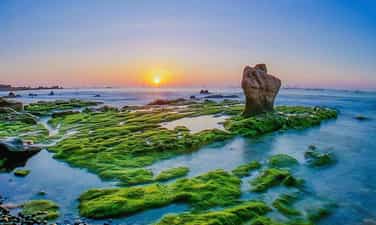
Co Thach Beach captivates the footsteps of travelers with its clear blue water and rocks of different sizes and colors, so it is also known as the 7-color rock beach, formed naturally by the impact of the tide. and sea water. Rocks rise and waves wash ashore, accumulating year after year, over hundreds of years, to create unique and strangely beautiful rocky beaches. However, if you do not find out information about Co Thach beach before coming, many tourists will have to extremely regret missing out on one of the extremely breathtaking natural beauty in their lives. It is a scene where all the rocks are covered with green moss. Every time the sunlight shines on it, this green moss changes color, making those lucky enough to witness it think they are in a fairyland. When the sun rises at noon, the moss will turn completely yellow, which is also very beautiful. People call this moss season at Co Thach beach. Trekkers who come here on this occasion will be called moss hunters. Moss hunting time usually falls in mid-February of the solar calendar. However, this year the climate is much sunnier and hotter, the moss is also greener, more abundant and covered earlier. Depending on the weather, moss season may start a little earlier or later. Layers of moss covering rocks can usually last for about a month and a maximum of two months. Therefore, if you are lucky enough to have friends or relatives living in Binh Thuan, contact them in advance to check if moss season is really over, then pack your backpack and go. If you don't come here in the right season, you will regret it. Standing on a high rock, inhaling the salty taste of the sea breeze, looking out into the distance to the boats bobbing on the waves, the working people with tough black skin are diligently floating. fishing net. Although this place has been exploited for a long time, it still retains its inherent wildness. At one time, people did not know about the existence of Co Thach Beach, but thanks to backpackers from other places who were constantly searching to go and experience places that were as obscure as possible, they were discovered. The long-forgotten beauty of this beach. Co Thach Beach is quite crowded at times, but most of the time it is quite deserted and quiet. Many times you will feel like you are the only one, standing in front of this vast and majestic natural space. This place only becomes vibrant during moss season. Co Thach Beach in moss season is as beautiful as paradise. Or the Nghinh Ong festival is held in the middle of the 8th lunar month by the Chinese community living in Binh Thuan to pray for a year of good rain and wind. The green moss of Co Thach sea has also created a lot of inspiration for both amateur and professional photographers to produce many beautiful photo sets that just by looking at them, they feel like their limbs are itching and they just want to carry a backpack. go in time. If you live in Hanoi and want to come to Co Thach during moss season, you can fly directly from Hanoi to Ho Chi Minh City. Then take a bus or rent a motorbike to get to Co Thach. When you come here, what you should definitely bring is a good quality camera or phone and a tripod, because no one can help but fall in love with Co Thach paradise in moss season. Only through photos or witnessing with their own eyes can people see all the beauty of the scenery here that no words can accurately describe, the beauty of this place must be called beauty. of heaven. But to hunt for beautiful photos of Co Thach moss season also takes quite a bit of effort. Because it has a lot to do with whether the sea level rises or falls. If the water level is too high, it will cover the moss-covered rocks, but if the water level is too low, it will make the moss look dry and lose its smooth beauty. Moss will have the best color when the sea is calm in the early morning or at sunset. Regarding the accompanying food, sleeping, and resting services, backpackers will definitely not have to worry about anything because you can absolutely use the above services right at Co Thach with extremely reasonable prices and high quality. Service quality is quite good. In addition to Co Thach beach, this place has many other places that you can conveniently visit such as Nam Hai's Tomb, Hang Pagoda - an ancient pagoda hundreds of years old, or Ganh Son for those who are passionate about climbing and like to Explore natural caves.
Lam Dong
9486 view


Mui Dinh Lighthouse
Mui Dinh Lighthouse is located in the south of Ninh Thuan province, about 40km from Phan Rang - Thap Cham city. Mui Dinh Lighthouse is a location located in the Mui Dinh scenic complex, belonging to Phuoc Dinh commune, Thuan Nam district. Built by the French in 1898, Mui Dinh Lighthouse serves the role of serving the passage of ships around the Mui Dinh area. For fishermen, the lighthouse is like a bright torch in the night sky of Mui Dinh, illuminating the way for ships to travel safely in the dark. According to the lighthouse staff, this is a lighthouse built by the French over a period of more than a year. The lighthouse stands tall on Dinh Mountain, surrounded by vast and endless sand dunes, creating a scene like the vast deserts of North America. To build the lighthouse, workers at that time had to use trucks to cross the sand dune terrain more than 4km to transport materials to the construction site, then continue to transport items up the mountain with high speed. altitude more than 70 m. Realizing the importance of the lighthouse in the movement of fishermen, after peace was restored, the government decided to retain the lighthouse and assigned officials to manage and maintain it. Today, the lighthouse still stands tall and has become an interesting destination for young people who want to explore Mui Dinh. The journey to explore Mui Dinh Lighthouse will pass through roads with beautiful and interesting views. On the way to explore Mui Dinh Lighthouse from Phan Rang - Thap Cham city, you can pass by Ninh Thuan Mongolian Village (Tanyoli Ninh Thuan), a quite beautiful village suitable for check-in and creation. create beautiful virtual live photos. The road to the lighthouse is nestled in a system of mountains and hills with quite complicated travel routes in the Mui Dinh area. Interspersed along the way are small deserts that can touch any travel-loving heart that wants to conquer this place. In the distance is a large beach with endless stretches of white sand. All make the road to the lighthouse more splendid like a fairyland. On the way across the desert, you will encounter clear freshwater lakes like a cool sound in the middle of the desert. Besides, the image of cactus branches stretching between heaven and earth or herds of goats leisurely on the hillside will also make you feel more interesting on the road. Besides crossing small deserts on foot, this area also has off-road vehicles suitable for crossing sand dunes at quite affordable prices such as off-road vehicles with prices ranging from 300,000 to 800,000 VND, depending on the type of car you choose to visit. The journey to conquer the small desert is only a short part of the challenge of exploring Mui Dinh Lighthouse. To get to the lighthouse, you have to cross a steep, quite challenging road. The journey to overcome this steep slope requires the traveler to have great perseverance and endurance. This is the stage that makes it easy for riders to give up because of the high level of challenges and many thorns. However, this is also a road full of beautiful scenes that seem to erase all the fatigue of those who are passionate about conquering. After about 20 minutes of conquering the lighthouse, the scenery interacting between land, sky, and sea will make all the fatigue of the steep climb gradually disappear into the unknown space. On the towering lighthouse, you can completely see the picturesque landscape of Mui Dinh. The scene ahead is a long deep blue sky and a vast sea. Below are rolling white sand dunes that follow each other like painting wonderful paintings. The coastline is dotted with rocks with strange shapes stacked on top of each other as if challenging the conqueror's imagination. On the sea surface, ships and boats suddenly pass through the water towards the shore. Everything blends together to create a color like a fairyland that momentarily descends to the world and immerses itself in human life. The architecture of Mui Dinh Lighthouse seems to retain traces of color mixing over the years. The hundred-year-old lighthouse seems to stand tall against the erosion of the sun and wind. The existing landscape still bears the color of the buildings that have come along over the years, although somewhat ancient, they are not degraded or old. Around Mui Dinh Lighthouse is a beautiful natural landscape with rows of blooming plumeria flowers as if welcoming the feet of young people who accidentally set foot here. Because Ninh Thuan's weather is quite hot and sunny and windy, you need to pay attention to time if you want to conquer this lighthouse. Often young people will choose to go to the lighthouse in the morning and afternoon to avoid heat and exhaustion. At this time, the sun is not too harsh, suitable for check-in photo sessions at the lighthouse. You should also choose clothes that are convenient for moving and have good ventilation because the journey is quite strenuous and challenging. Besides, to protect your body under the sun, you should also bring a hat, sunglasses and sunscreen. If you are not properly equipped, your skin can easily get sunburned under the harsh sunlight here. When starting out, you also prepare two extra bottles of water to use while climbing uphill as well as crossing small deserts. Conquering the steep road is quite tiring and can easily cause dehydration. Bottles of mineral water will help you rehydrate and feel less tired during the trip to the lighthouse. To fully experience the exciting feelings when traveling here, you should try riding a tractor when crossing the deserts to reach the lighthouse. This is an experience that doesn't cost too much if you go in a large group and will become an unforgettable memory when you visit Mui Dinh Lighthouse.
Khanh Hoa
5769 view


Red Island
Hon Do is a fossil coral complex located in My Hiep village, Thanh Hai commune, Ninh Hai district, Ninh Thuan province, about 17 km from Phan Rang - Thap Cham city center, on the famous coastal route. Vietnam, with places that surely everyone who loves backpacking knows about. From Phan Rang - Thap Cham city, follow the coastal road, you will meet Thanh Hai Commune People's Committee on the left, go a little further, there is a trail on the right, follow it and you will reach Hon Do. If you are not confident in your ability to use Google Map, when going on this road, you can ask the locals, who are extremely friendly and enthusiastic. A small trick when you use Google Map in this area : you should use in satellite mode. This will help you easily determine your exact location on the map. Once you have entered and met the sea, congratulations on your arrival. You will experience interesting activities when stopping here. Follow the trail, it will lead you all the way to the cape area. However, because it is a sand road, the most suitable vehicle is a motorbike and you need to drive a little steady. For those who are afraid of driving on sandy roads, or want to trek, you can ask for a ride at people's houses or border guard stations. Otherwise, you can still drive straight to the cape and start your exploration journey. Except for stormy days, all times of the year are suitable to explore Hon Do Ninh Thuan. However, depending on the amount of time you have and the purpose of the trip, you can choose the time to visit Hon Do. Different red. If you go in one day, you can visit Hon Do in the early morning or afternoon to catch the sunrise and sunset. Because this is one of the most beautiful sunrise and sunset spots in Ninh Thuan. If you have a lot of time, you can come here in the afternoon to watch the sunset, then camp overnight, catch the sunrise and swim here. The entire Hon Do Ninh Thuan area is covered by poplar forest, with no people living, so the wild features still remain. Therefore, trekking here is a suitable activity for those who love to explore and are healthy. Go through the border station and reach the beach and you can start your trekking journey. On the trekking route, you will see many trails, so rest assured, it is very difficult for you to get lost. If you have enough time, you should enjoy all your time at Hon Do with camping activities. If you want to camp overnight, Hon Do Ninh Thuan is an ideal place. However, you should avoid the lunar calendar year, this is the time when Cham people come here to pray for the island (praying for rain). And so, when setting up camp here, you should pay attention to cleaning up before leaving. When setting up camp, you should choose a location suitable for weather conditions (wind direction) and combine it with your other purposes. In the Northeast: There is a beach, best suited for camping, swimming and catching the sunrise (because sunrise happens in a very short period of time). In the southwest direction: The beach is very calm and calm, so it is best for you to avoid the wind, set up camp and swim. When traveling to Hon Do, you need to note the following points. For peace of mind and comfort when exploring, you can park your car at a local person's house or at a nearby border station. Because the rock at the top is very sharp and pointed, remember to be careful, it's best to wear shoes. To get down to the steps below and take beautiful photos, you need to arrive at low tide and need a pair of sandals to ensure safety. Moss is most beautiful from January to February of the lunar calendar, so if you want to "hunt" for moss, you should go during this time. Indigenous fishing activities will take place at low tide. So if you want to fish here, you should check the tide schedule in advance to arrange a reasonable time. This is a pristine area without any services, so remember to bring enough water for your trip.
Khanh Hoa
5609 view


Chap Po Waterfall
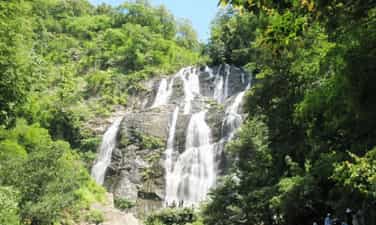
Chaper waterfall, also known as Cha Po waterfall, Cha-per (according to the name of the Raglai - Pôr people: Flying; can be understood as "flying waterfall") is a majestic, pristine waterfall in Phuoc Tan commune. , Bac Ai district - Ninh Thuan. The waterfall is located about 60km northwest of Phan Rang Thap Cham city center, about 10km from National Highway 27B. First, if you are from other provinces, you can choose bus, plane, train... to Phan Rang City - Ninh Thuan. Then, to get to Chaper waterfall most easily, you have 2 ways to move as follows: Method 1: From Phan Rang city, you go along Highway 1A to the North for about 5km, you will see Ca Du intersection, turn left, then continue about 40km to meet Highway 27B, continue to turn left about 3km and there will be a road. only to Ma Lam village. From the village, there will be a sign leading to Chaper waterfall, just follow and you will reach it. Method 2: you can run along Highway 27A to Highway 27B, turn into Phuoc Tan commune, go through the villages of Da Trang, Ma Ty, Ma Lam along the forest road, you will reach Chaper waterfall. For the most convenience, turn on google location, then search for the destination Chaper waterfall, the system will automatically guide you to your destination quickly and accurately. Usually people go to the waterfall in the morning and end the trip in the afternoon. However, to have a trip full of experience, you can ask to stay at a local people's house, prepare and enjoy regional dishes that are local specialties, and listen to stories. legendary epics or simply listening to the sounds of the mountains and forests. The story goes that Chaper waterfall is the incarnation of a beautiful woman in the majestic mountains and forests. According to legend, in the past, people living here lived a nomadic lifestyle, having to move to many places, looking for places near streams and river banks to earn a living. A family on the way to find a place to live saw this small waterfall and decided to choose this place to live. Time passed by, they lived happily and not long after gave birth to a little daughter named Chaper. The older she got, the more beautiful and gentle she became, making many boys in the area fall in love with her. Then one day, the sun god was away, the rain god appeared and sent torrential rains that continued day after day, continuously washing away all the crops of the villagers and even Chapo. When the sun god returned, everything was too late, Miss Chaper was no more, but people saw her image hidden in the rainbow light with her long hair flowing along the water. And to commemorate that girl, the villagers named the Chaper waterfall. Chaper waterfall in Ninh Thuan is over 50m high and nearly 40m wide, nestled in the middle of the mountainous region with the quiet and mysterious beauty of the Raglai people. Coming here, visitors can watch the cool, clear waterfall from above flowing down the rocks like a fairy with long, gentle, beautiful hair amid the vast mountainous landscape. This is a beautiful check-in location, preserving memories of memorable backpacking trips. Besides, when coming here, visitors can also immerse themselves in the cool waterfall with the breath of the mountains and forests, the waterfall is clean and completely natural. Next to the waterfalls there are large rocks where visitors can rest and admire the wild and mysterious mountain scenery. What could be better than after sightseeing, exploring, bathing under the waterfall, you and a group of friends can organize a party on a stone table, under the waterfall with pre-prepared dishes or enjoy local products on the spot? foods made by local people such as: baking potatoes, noodles, eating forest fruits; Enjoy grilled wild boar, grilled fish, can wine, etc. Besides, coming here, you can also hear the resounding epic melodies or the legendary Chapi guitar, along with the whispers of the mountains and forests of Bac Ai. With the beauty that nature bestows, Chaper waterfall has been a destination for eco-tourism development associated with the cultural identity of the Raglai ethnic group being embellished and protected. This is a destination that promises to please everyone. every tourist.
Khanh Hoa
5812 view


Hang Rai
Hang Rai is a tourist attraction located in the Marine Protected Area of Nui Chua National Park. Possessing a wild, spacious beauty mixed with a bit of mystery that touches people's hearts, this destination is likened to a fairyland lost in the human world. This is one of three locations on the tourist tour route: Vinh Hy - Hang Rai - Vuon Grape. When hearing the name Hang Rai, surely everyone is curious because of its uniqueness and a bit of strangeness. Legend has it that this is a place that attracts many sea otters to live in caves formed from stacked rock populations. The name Hang Rai was born from there. Not only is the name strange, Hang Rai also possesses an extremely unique and novel beauty, with strangely shaped rocks eroded by ocean waves over time. They stack on top of each other to form majestic and wild caves, large and small. Hang Rai is known as a waterfall on the sea. Over time, the rocks congealed and eroded to form a lithic table suspended in the middle of the sea. When the ocean waves hit, they suddenly turn into waterfalls with silver streams sparkling in the sunlight, extremely beautiful. The most special feature of Hang Rai is the ancient coral reef that is thousands of years old and has special geological and historical value. As the sea receded, the water receded, revealing a coral reef with rough traces and many caves. It is these ancient coral reefs that crystallize the wild, majestic and somewhat rustic beauty of Hang Rai. You can also visit Karang Ninh Thuan rock beach to admire similar ancient coral reefs. Coming to Rai Cave, you can quietly sit on the strangely shaped rocks and watch the very poetic scenery of sea and sky merging into one. In addition, anyone who comes here must be amazed by the clear blue water reflecting sparkling streaks of sunlight, creating a poetic, magical, and incredibly splendid scene. Hang Rai is a very special destination with a beauty that cannot be mixed with anywhere else. The majestic, wild scene suddenly becomes extremely magical and dreamy when sunset falls.
Khanh Hoa
6031 view


Vinh Hy Bay
Vinh Hy is a small bay located in the Northeast in Vinh Hai commune, Ninh Hai district, Ninh Thuan province, about 40km from Phan Rang city. This place is known for the beauty of the sea, mountains and pristine bays, bringing the pure rustic beauty of nature. This place has pristine beauty, calm waters, calm waves, and the emerald green color of the bay is as beautiful as a watercolor painting. As a place that has not been affected too much by human hands, coming here visitors will admire the most poetic and majestic landscapes. Vinh Hy Bay is located in Ninh Thuan province, characterized by the climate of the Central South region. However, the bay is surrounded by mountains and forests on all sides, so the sea area in the Bay is quite calm and peaceful all year round, the weather is mild and pleasant, you can visit here at any time of the year. year. But with Vinh Hy travel experience, the ideal time for you to explore Vinh Hy is summer from May to August. This is the time when Vinh Hy beach is wonderfully beautiful, sunny, calm, clear blue water. Jade color, convenient for you to enjoy the island space. With the experience of traveling to Vinh Hy, there are many impressive places to visit, let's take a look at the places and activities that you should not miss during your trip to Vinh Hy. The first is Hang Rai, a place located on the pass route to conquer Vinh Hy Bay, in Nui Chua National Park, a place blessed by nature with extremely impressive landscapes, with stacked rocks. on top of each other and the lava fields have strange shapes. It is a very cool virtual living location, with mountains and oceans, a majestic but also poetic space. You should especially experience watching the sunrise here, to admire the sight of the sun dyeing the entire sky pink. wide. Next is Nui Chua National Park. This is a location about 15 minutes from the bay across the suspension bridge, where there is a rich and diverse flora and fauna ecosystem. Coming here you will feel the fresh air, a peaceful space of the mountains and forests. You will be immersed in nature, the green forest, the cool stream will make your soul more refreshed, throwing away all the worries out there to enjoy the most peaceful moments. When coming to Vinh Hy and skipping the scuba diving activity to see coral, your trip will not be truly complete. With only diving goggles and a snorkel, you will be guided to dive and explore the colorful world at Vinh Hy. Bay. Please once explore the underwater world, admire the colorful splendor of the coral system and beautiful fish. Along with the activities of exploring and experiencing ideal places in Vinh Hy, don't forget to enjoy fresh seafood dishes in Vinh Hy waters at extremely cheap prices, but the quality is unquestionable. You can enjoy seafood on rafts at sea, restaurants or you can buy seafood from fishermen early in the morning, with many options such as squid, fish, snails, shrimp, crabs,...
Khanh Hoa
6127 view


Suoi Do Pagoda
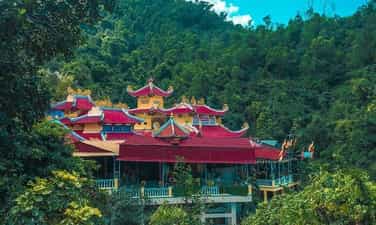
Suoi Do Pagoda is located west of Hoang Khuu mountain, and about 30 kilometers south of Nha Trang city center. Tourists need to follow National Highway 1A for about 10km, then turn left onto a village road. Here, the ancient Suoi Do Pagoda will gradually appear before your eyes. If it is the first time coming, visitors will certainly be impressed by the uniqueness and majesty, when Suoi Do Pagoda Nha Trang is located on a high mountain, with a stream flowing down, looking very majestic. great. Local people often consider this a "divine" source of spring water because it is very sacred. To get to Suoi Do Pagoda, the first thing you have to do is get to Nha Trang city. From here there will be 2 popular routes for you to choose from: Starting from Nha Trang city, you will go about 10km to reach Thanh, then move south to reach Chat Dot intersection. Here, you ask the locals about Ba Tung slope and turn onto that slope. From here, you continue going another 700m then turn right, follow the main road towards the mountain, move about 20 minutes and you will see the stream. Starting from Nha Trang city, moving towards Dien Khanh about 9km. At Hinh Nhu cafe, you will come across a large road and turn left. From here, go another 500m to the intersection near Thien Quang Pagoda, turn right there and go another 500m to see the large cement yard of Dien Toan commune. Finally, turn left towards the mountain and you will reach your destination. Suoi Do Pagoda Nha Trang also has another name: Ba Suoi Do Pagoda. The reason is because this ancient pagoda is located next to a large stream pouring water from above, flowing through mountain rapids and rocks of large sizes and all shapes, creating a scene that makes many tourists wonder. captivated" by the majestic beauty. Because of the mild climate, you can visit Suoi Do Pagoda Nha Trang at any time of the year. The ideal time to visit Suoi Do Pagoda in Nha Trang is in September and October, because this is the rainy season, so the water here flows white and there are many columns of water smoke rising high, bringing with it the cool breath of heaven and earth. , like a "fairyland". Note, according to MIA.vn's research, during the high water season, tourists should only visit Suoi Do Pagoda in Nha Trang, not bathe in the stream because the water flow at this time is very strong and swirling more than ever. , would be very dangerous. Every year on the 8th, 18th, 28th of the first lunar month (Ba's day), many people and visitors from all over come to Suoi Do Pagoda in Nha Trang to pray for peace and luck for the new year. Things to note when visiting Suoi Do Pagoda Nha Trang: Coming to Suoi Do Pagoda Nha Trang, visitors should choose modest clothing to show respect for local beliefs and religions. Note that visitors are not allowed to bathe in the stream during high water season. You should only go to the temple for pilgrimage and admire the beauty of the landscape here. You should choose shoes that are suitable, comfortable, and avoid being too tight because you have to walk on hundreds of stone steps from the stream to the temple. Because traveling to Suoi Do Pagoda Nha Trang will make you move and be active outdoors a lot, applying sunscreen is essential to help avoid harmful UV rays.
Khanh Hoa
4890 view


