Tourist destination

Vung Ro
Vung Ro Phu Yen Beach is a beautiful bay area that blends the majestic beauty of the mountains and the poetic beauty of the sea along the S-shaped curve of the Central Coast. Away from the dust and smoke of the city, this is an ideal peaceful place for you to stop and rest and relieve stress. Vung Ro Bay has an area of up to 16.4 km2, is the maritime boundary of Khanh Hoa and Phu Yen provinces. The sea is surrounded by three majestic mountain ranges and islands in the vast sea and sky, including Deo Ca in the North, Hon Ba in the West, Da Bia in the East and Hon Nua Island in the South. The cool green atmosphere, along with the cool breeze from the sea or the winding slopes are attractions that attract thousands of backpackers to conquer. Along the coast of Vung Ro Bay, Phu Yen, there are many small and medium-sized sandy beaches such as Bai Chua, Bai Bang, Bai Lau... This place is blessed by nature with hundreds of different types of seafood and especially these seas. The coral reef is so beautiful. This place is recognized by the World Tourism Organization as one of the most beautiful landscapes in Asia and can be compared with masterpiece landscapes in the world. Possessing rugged terrain, this place was once a place that left a majestic historical mark. Vung Ro used to be an address for receiving secret weapons from the North transferred via historic numberless trains. From 1964 to 1965, Vung Ro received 4 ships that safely landed, bringing thousands of tons of weapons and ammunition to support the battlefields of the South Central Coast and the Central Highlands. Vung Ro was recognized by the State of the Socialist Republic of Vietnam as a national historical and cultural relic in 1997. The weather in Phu Yen province is divided into two distinct seasons of the year: the sunny season and the rainy season. From March to September, the weather here is cool and sunny, suitable for fun activities on Vung Ro beach as well as exploring attractions in Phu Yen. Furthermore, coming to Vung Ro beach at this time, you have the opportunity to experience fishing activities with fishermen and enjoy the freshest seafood dishes. The rainy season usually starts from September to December, when there are often storms, floods and the weather is quite cold. Therefore, please check the weather forecast before deciding to travel to Phu Yen at this time. About 33 km from Tuy Hoa - Phu Yen city, there are many means of transportation to Vung Ro for you to choose from such as car, tour bus or motorbike. However, to fully feel the cool, airy atmosphere and lush green vegetation along the road, a motorbike is the perfect choice for you. How to get to Vung Ro beach: Starting from Tuy Hoa city center, you go along National Highway 1A. Halfway up Ca Pass, you will see a sign indicating the turn to the small road leading down to Vung Ro beach. Don't forget to check Google Map in advance to avoid getting lost. It can be said that this place is a perfect masterpiece bestowed by mother nature on the beautiful Phu Yen province. At any time of the day, Vung Ro beach has a strong attraction that captivates people's hearts. If at dawn the beach is bustling with fishing boats landing, at noon it is sweltering and peaceful under the clear blue sky, then when night falls, Vung Ro beach sparkles and is poetic under the moonlight. . From the top of Ca Pass, looking toward the Northeast, a fresh, vibrant natural picture appears before your eyes. The blue of the sky, clouds, and water blends with the majesty and majesty of the rocky mountains and islands that are protecting Vung Ro Bay, creating a special attraction of this coast. Coming to Vung Ro beach, you will freely roam on the smooth white sand beach, let yourself wander with white clouds floating in the blue sky, listen to the murmuring waves and chirping birds. Surely this is an ideal space for you to rest and relieve all stress. To fully explore Vung Ro beach, you need to note the following points. - You should choose cool, comfortable clothes to easily move around and experience the fun activities here. Ask carefully and negotiate the price of boat rentals, coral diving, and other activities to avoid being forced to pay higher prices. You can also hire a boat driver as a tour guide to accompany you on your journey to explore Vung Ro Bay to learn about the geography, lifestyle and many interesting information here. Bring a backup charger to keep your phone and camera fully charged so you can enjoy "virtual living" all day.
Dak Lak
9479 view


Mon Beach
Mon Beach Phu Yen is located between two mountains, from a distance it looks like a giant bow. Every time waves hit the shore, they create whirlpools that look "scary" but being a little careful is okay. There are two ways to get here. If you come from Tuy Hoa city, follow Highway 1A about 23km Southeast and if you come from Nha Trang city, you will also move along Highway 1A, but go Northeast when you get close. In the middle of Ca pass, go straight on Phuoc Tan - Nga beach about 12km, you will reach Dai Lanh cape - Mon beach. The scenery on Mon beach makes many people admire and praise, the long white sand winding along the coastline, the clear water reflecting the sky... all combine to create extremely charming beauty. In particular, there are not many people living here, only boats are anchored, so the scenery still retains its original wildness. Being blessed by the Creator with beautiful natural scenery, pleasant climate, and fresh air, coming to Mon beach, you not only have the opportunity to immerse yourself in the sky and earth, diving under the water. The sea is clear and cool, but you can also get your own unforgettable memories. This place is most beautiful at dawn, around 5 a.m. when the first morning light on the S-shaped strip of land begins to shine, Bai Mon Phu Yen beach appears more sparkling than ever, golden rays of sunlight shine down. The vast sea surface reflects the image of the endless sky... When traveling to the beautiful Mon beach, don't forget to visit Dai Lanh lighthouse on the tip of Burma - the easternmost point of the country, to take in the countless beautiful scenes on Mon beach, Phu Yen. Located to the west of Mon beach, there is also a stream flowing through the cliffs, through the primeval forest of North Deo Ca, flowing towards the beach and then merging into the endless ocean. With charming mountain and water scenery, this place is also one of the favorite places for tourists when traveling to explore Mon beach. With harmonious natural scenery and fresh air, Mon beach Phu Yen is not only a beautiful tourist destination but also a suitable place to organize ideal picnic activities.
Dak Lak
8763 view


Tam Giang Dam
Tam Giang Dam is located about 30km from the center of Tuy Hoa city, about 1km from Mang Lang church - one of the famous tourist destinations of Phu Yen, and is a spillway blocking the Cai River. The place where three rivers meet is usually called Tam Giang, but here there is only one river flowing through. Before 1945, when there was no dam, local people had a hard time bringing water to their fields. They had to go to the forests to find the biggest trees to bring back to block the river. But during the rainy season, the floodwaters flow rapidly and these temporary embankment trees are swept away. And in the years that followed, that job kept repeating. After that, the government built a dam about 800m long made of sturdy cement with a three-step design, with 3 water-blocking embankments. Seen from a distance, Tam Giang Dam looks like a waterfall with streams of water flowing down and creating white foam. Although the scale is not as large as the Dong Cam dam, the Tam Giang dam plays a very important role in bringing irrigation water to the vast fields in An Thach, An Ninh and An Dan communes of Tuy An district. Furthermore, this dam also helps a lot by becoming a road connecting the two sides of the river. People can easily walk, ride bicycles or motorbikes across the Cai River without having to take a boat across the river, helping to save time and effort. Thanks to the Tam Giang dam, traveling between the two banks has become more convenient (Photo: Collected) Coming here, you will feel a peaceful space, quietly watch the people in the river countryside and feel like you have let go of all the worries and fatigue of life. Not only can you immerse yourself in the charming nature of the river, when you come here you can also enjoy attractive specialties. Cai River eel is a dish you should not miss. Eel meat is firm, fragrant, skin is crispy, chewy and fatty with high nutritional value. Cai River eel is often processed into dishes such as eel hotpot, grilled eel with lemon leaves, eel cooked with melon, roasted eel with salt and chili,... Tam Giang Dam is not only an important irrigation project of Tuy An district but it is also an attractive tourist destination because of its wild and rustic beauty like the people here.
Dak Lak
9060 view


Bai Xep
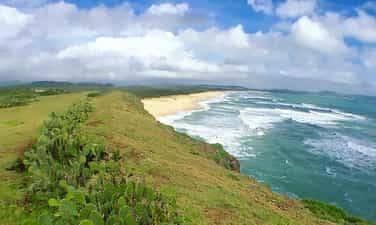
Bai Xep is a beach in An Chan commune, Tuy Hoa city, Phu Yen. The beach at Bai Xep is only 500m long but possesses unique harmonious natural landscapes with sparkling golden sand and pristine rocky beaches, giant black rock headlands protruding into the sea, grasslands and casuarina forests. run endlessly long. To come and admire the beauty of Bai Xep, go straight on Le Duan street to Tuy An. This beach road is paved with flat asphalt with green poplar trees along both sides of the road, which is extremely beautiful. Before you get there, it makes you feel extremely cool and relaxed. It was only when it became a scene for the popular movie "I see yellow flowers on the green grass", that Bai Xep really became known to a large number of tourists, so this place has not been exploited much for tourism. The landscape still retains its original wildness. Bearing the characteristics of a beautiful beach, Bai Xep possesses a brilliant golden sand beach embracing clear jade green water. Taking each gentle step into the sea, you will feel the clear, cool water as if you were in an ice lake, dispelling the heat and so much stress and fatigue. Follow the trails to go up the big rocks and admire the captivating beauty of Bai Xep, "blue mountains and blue water", all in your sight. On these majestic stone steps, dense cactus fields protrude right in front of the sea mixed with patches of dry grass soaked in rain and sun, along with the sound of the wind blowing and the murmuring waves resounding. poetic sea. Perhaps the most impressive is still the vast green lawn like a small steppe on top of Ganh Xep. Not only do you come to admire the poetic natural scenery, but you can also immerse yourself in the rustic, simple life and quiet rhythm of Phu Yen's coastal people. On summer afternoons, you will see innocent children roaming around, having fun and flying kites on the vast lawns, or people diligently working hard on the beach. During your visit to Bai Xep, combine exploring Ghenh Da Dia and Ganh Den as well as don't forget to enjoy Phu Yen's attractive seafood dishes such as oyster porridge, squid hotpot, tuna... to have Phu Yen experiences. Complete peace.
Dak Lak
8873 view


Ganh Da Dia
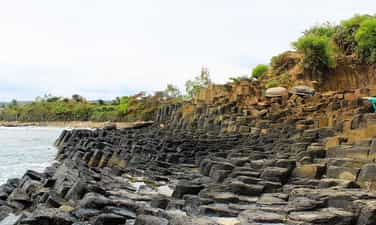
Ghenh Da Dia is a place in An Ninh Dong commune, Tuy An district, Phu Yen province. This place is unique with its landscape in that the rocks here are either round or square, creating a natural scene that seems to have been intentionally arranged by nature. Based on many surveys and studies, it is believed that about 200 million years ago, during volcanic activity in the Van Hoa plateau, lava erupted along the flow leading to the sea. When encountering cold sea water, combined with the phenomenon of stress, the frozen lava blocks crack largely along longitudinal veins, creating rock blocks with different shapes. From above, the rapids look like a giant honeycomb, shiny black and rugged. Or it can be compared to plates, jagged, stacked on top of each other in a brick kiln. This place is blessed by nature with poetic, lyrical beauty, harmonious with water and mountains, as beautiful as a watercolor painting. Ghenh Da Dai is a beautiful wonder that attracts and holds tourists. From Tuy Hoa city, you drive 30km north, to Chi Thanh town, turn right to the east, go another 15km to reach Da Dia rapids. If you want to enjoy the fresh sea breeze and idyllic scenery of the Central Coast, the Tuy Hoa coastal road, about 35km long, will be a great choice for you. From Tuy Hoa city, you drive 30km north, to Chi Thanh town, turn right to the east, go another 15km to reach Da Dia rapids. If you want to enjoy the fresh sea breeze and idyllic scenery of the Central Coast, the Tuy Hoa coastal road, about 35km long, will be a great choice for you. Every year, at the beginning of February and August of the lunar calendar, fishing festivals often take place. Visitors coming here on this occasion will have the opportunity to admire Da Dia rapids and participate in special festivals. Only by coming here, standing on the beach and witnessing it with your own eyes, can you truly believe the magic that nature brings to this place. Stones with different shapes lie haphazardly like piles of cups and plates in ceramic kilns. The sea waves here are also strangely strong. Day and night it hits the shore, creating white foam that covers the entire area. Along Da Dia rapids, you will occasionally encounter some low spots. Every time it rains, sea water accumulates. This place suddenly became like an artificial lake. You can lean your back against the rocks, immerse yourself in the sea water and enjoy the fresh air, watching some trapped crabs, starfish or jellyfish. Or down below the edge of the rapids is a large cave deep into the mountain. Legend has it that this is a consequence of war. At noon, if you want to find somewhere to rest, Bang beach is an ideal place. Under the spreading eagle canopy, enjoy fresh seafood and the typical flavor of Tuy Hoa sea. Not far away is Ganh Den lighthouse. From here you can enjoy a panoramic view of the sea as well as Phu Yen Da Dia rapids. Despite the wind still blowing, the waves still lapping, even the bombs and bullets, Da Dia Rapids still stands there proudly and mysteriously. If you have the opportunity to come to Phu Yen, please visit Da Dia, listen to the wind tell stories, listen to the waves write poetry. Compared to Nha Trang or some other famous tourist destinations, Ghenh Da Dia is much cheaper and more affordable. You can easily feel comfortable choosing a motel or hotel that suits your budget. You can both relax and enjoy the beautiful scenery here. Some hotels you can choose from are: Saigon Phu Yen hotel for 800,000 VND/night; Anh Tuan 2 hotels for 550,000 VND/night. If you are a lover of wild nature, you can choose for yourself relaxing spaces to camp or sleep in tents at Bang beach near Ghenh Da to enjoy a wonderful night. The sunny and windy land of Phu Yen has been generously gifted by nature with beautiful landscapes and amazing natural wonders that fascinate people - Ghenh Da Dia Phu Yen is one such wonder. The talented hands of the creator have created a beautiful and wild natural landscape, attracting tourists from all over to admire the beauty and admire the beauty of this place. If you are truly a lover of the purest beauty of nature, you should not miss Ghenh Da destination in your travel guide.
Dak Lak
9083 view


Cape Vi Rong
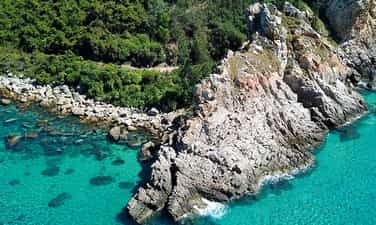
Cape Vi Rong, also briefly known as Cape Dragon, legend has it that in the past, this mountain was still intact, shaped like a carp's fin, so it made people think of a rocky mountain with dragon scales and called it a mountain with dragon scales. is "Dragon Scale Stone". Cao Bien - a general at that time - saw that the mountain had a lot of spiritual energy condensed, so he cast a spell to cut off the dragon's scales to eliminate bad things - while he was looking for a land of prosperity. When slashed, the dragon's blood poured down, condensing into many small red rocks mixed in the nearby sandbanks. If you walk on the sand, there will be times when you accidentally see vermillion stones, which are the dragon's blood as the legend says. When viewed from afar or from above, you will see that Quy Nhon Vi Rong Cape jutting out into the sea is a very proud, indomitable rock amidst the vast ocean waves. A dragon seemed to want to break out of its confinement, leaning towards the sea. The silver waves crashed into the rapids, releasing white foam like the dragon's mouth was spraying water. You will feel fascinated when looking at that scene and want to have a camera to capture the beautiful moments that nature has carved and sculpted very skillfully. And that's just the outside, in the heart of the mountain there is a cave that goes out to the sea. If you like to experience it, you can go inside to explore, but it's still very difficult. You can admire the extremely vivid natural scenery. You can also climb to the highest point of the mountain, have a panoramic view of the sea, you will see fishing boats coming in and out, undulating rocky mountains, mountains one after another, you will see the beach. White sand stretches as far as the eye can see with cool green trees planted along the shore,... just standing and looking at it will give you a feeling of relaxation, comfort, being immersed in nature, hearing the sound of crashing waves. rocky rapids, the sound of the wind blowing from afar brings with it the characteristic taste of the sea. In addition to conquering the mountain and admiring the majestic scenery of Mui Vi Rong Binh Dinh, don't forget that you can swim right at the foot of the mountain. This place has long stretches of pure white sand dunes and beaches with cool, clear blue water that you can see through to the bottom for you to have fun with. There are also small rocks near the shore so you can sit on them to rest, splash in the water or check in for beautiful sparkling photos with relatives and friends. In addition, in winter, this is an extremely ideal surfing location for those who love this adventure sport. Swim in the sea and then enjoy rich seafood dishes such as squid, shrimp, fish,... right into the village you can explore and visit Tan Phung market with the most delicious and fresh seafood caught. from the sea every day. If you have delicious bait, you must definitely drink My Tho wine, a specialty of this place that you cannot help but try. Sip a few cups of wine and grilled dried squid with friends, sit around for a while and see how happy life can be. The road to Mui Vi Rong is like the road to a fairyland. You can climb mountains to see nature, swim, have fun and eat delicious food, but it doesn't stop there, if you come in April. Every year in the lunar calendar (from the 11th to 14th day of the 4th lunar month), you can also have fun and explore the "Fishing Festival" to pray for favorable weather and good business with many activities taking place during the lunar calendar. Festivals such as racing, boi singing, cheo mau at Ong Nam Hai mausoleum,... to experience the culture rich in national identity.
Gia Lai
9419 view


Eo Gio
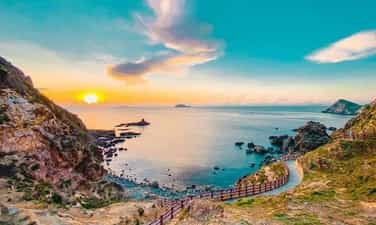
Located in Nhon Ly commune, only about 20km from Quy Nhon city, Binh Dinh province, Eo Gio is a famous tourist destination that attracts tourists because of the wild and harmonious natural beauty of the river. Water, clouds and mountains converge. As one of the ideal backpacking destinations, Eo Gio still has a wild beauty with a blue strait, surrounded by high rocky mountains with many strange shapes, creating a curved position as if to hug the waist. This beautiful inlet sea. Is that why this place is called Eo Gio? Located in the east of Phuong Mai peninsula, surrounded by Quy Nhon city with a long coastal rocky mountain range and a number of high peaks such as Den Mountain, Hon Mai, Hon Yen, Hon Chop The highest area is about 200-300 and At the farthest point of the arc is Eo Gio. Right from the road to Eo Gio, you will admire the magnificent natural scenery through rows of casuarinas along both sides of the long asphalt road, in the distance are majestic mountains, towering in the sea space. Blue, white sand is wonderfully beautiful. Coming closer, Eo Gio Quy Nhon looks like a small strait surrounded by high, graceful rocky mountains, "hugging" the beach. Not inferior to any beach in the Central region, Eo Gio possesses clear blue water on the shore of sparkling golden sand, whispering and rushing waves crashing against the rugged rocky shores, emitting cool white foam. . Under the clear blue water are schools of small fish swimming freely among beautiful and colorful coral reefs. At the foot of the mountain is De rock beach with bumpy roads and countless rocks covered with rocks eroded by sea water over the years. The stones here come in many sizes and interesting shapes, creating an extremely unique masterpiece of stone and water. The unique and attractive feature of Eo Gio is created from rocks and water. Over the years, water has eroded the rock, and the weathering process of the sea breeze has created 19 bird's nest caves with very funny names such as Ky Co cave, Ba Nghe cave, Bat cave, Suc Khoe cave... Thanks to that. Phuong Mai peninsula has become the locality with the second most bird nest caves in our country after Nha Trang. Coming here in the early morning, you can lie down comfortably on the large, flat rocks and watch the beautiful sunrise amidst the poetic and splendid natural space of sea, sky, mountains and water. In the morning light, the sound of ocean waves crashing against the shore mixed with the gentle sound of the wind creates a wonderful harmony, dispelling many worries of everyday life. Coming to Eo Gio, don't forget to experience walking on the coastal walking path halfway up the majestic mountains. The road is made up of thousands of long steps, built with white and red handrails, both safe and beautiful so you can freely admire the scenery and take "shimmering" pictures. From here, looking out into the distance, you will feel overwhelmed by the wild, majestic and "picturesque" natural scenery of Eo Gio. In addition, you can also travel by canoe to explore Ky Co beach or visit the fishing village not far away and enjoy extremely fresh seafood caught by the people here. . Located right near Eo Gio is an ancient fishing village famous for its majestic pagoda named Tinh Xa Ngoc Hoa, a majestic pagoda located peacefully on Eo Gio. This place is also known for the largest two-faced Guan Yin Buddha statue in Vietnam, facing the ocean, carrying the wish of peace, prosperity and happiness for the honest fishermen here. Every year, Tinh Xa Ngoc Hoa Pagoda always attracts many tourists from all over to make pilgrimages to worship Buddha and admire the peaceful and sacred pagoda. With the majestic natural beauty of rolling mountains, vast blue sea and white sand, Eo Gio will certainly be a destination that brings many unforgettable impressions to visitors. Especially for young people who love to explore and adventure, this place is truly an interesting check-in place with friends.
Gia Lai
9658 view


Ky Co
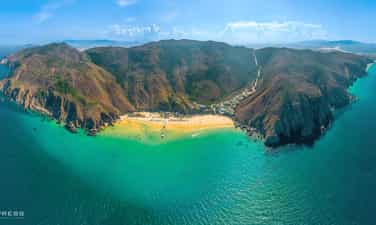
Ky Co is located more than 20 km southeast of Quy Nhon city center. This is considered the most interesting tourist destination in Quy Nhon with two sides facing the mountains and one side facing the sea. Very suitable for motorbike travelers. You can travel by car, but traveling by motorbike will be more convenient for visiting and exploring this place. Quy Nhon has a temperate climate, so you can come here at any time of the year, but for the most convenience, you should go from February to August. At this time, the weather is cool, with little rain. Rain makes it easier to travel and visit. Coming here, you will be overwhelmed by the majestic wild beauty and harmony of nature. Standing from afar, you will see the majestic mountains, the shady green trees, the air is clear, the wind blows strongly on you, bringing with it the typical salty and acrid breath of the sea. Ky co has an arc like the crescent moon of everyday days. You will feel the interesting thing when coming to Ky Co beach: the water here is very cool and shallow. You can freely immerse yourself in the jade water, swim 100m away and the water is only up to your neck. White, soft sand strips, cool green trees, green coconut trees hanging down on the sand. What's more interesting than when you're bored of playing around in the clear blue water, you can walk barefoot next to the coconut trees and idly sing a few love songs to the sea. The whole scene becomes sparklingly beautiful under the sunlight. Ky Co beach is sparklingly beautiful like a treasure chest filled with precious stones. The sunlight shines on the sparkling blue sea surface, making it look like it's silver from afar, and the grains of sand sparkle like tiny diamonds. The rocks here are linked together. When the tide rises, water rushes in between the rocks, creating beautiful artificial swimming pools. The water does not flow down, but seems to want to hold and settle into the rocks, playfully playing and caressing the foot of the mountain like naughty children. The artificial swimming pool is very cool, the water is so clear you can clearly see the bottom of the pool. An artificial swimming pool can accommodate 5-7 people. Very suitable for family exploration. It's very safe for children to swim in it. In the morning, when the sun just rises, the water in Ky Co sea is as clear as a mirror reflecting the sky. You can go to the beach early to watch the romantic sunset. The drops of morning dew that remained on the fallen leaves dripped drop by drop into the smooth sand. So quiet, so peaceful and pleasant. The red sunlight gradually appeared behind the mist and clouds. The boats float on the sea with peaceful songs for a bright and bountiful day. Not only that, there are also cliffs and large rocks, the higher the square base, the sharper they become, rising in the middle of the sea, looking like small towers or spikes poking into the sky. When the tide recedes, a path along the cliff will appear. You can also walk along the mountain range near the shore to visit the sea. Wading in the cool water, playing with the ocean waves, turning over seaweed stalks to catch small sea animals. In particular, you should schedule to fully enjoy Ky Co Quy Nhon beach by watching coral at Bai Dua. Going by boat to Bai Dua is very popular, you can ask and make an appointment with the boat owners in the beach area on the first day of arrival to plan to go to Bai Dua on a sunny day, avoiding cloudy and gloomy days. . If you come here, you must definitely immerse yourself in the clear blue water to clearly feel the excitement and wonderfulness of Ky Co beach. Dubbed the Maldives of Vietnam, Ky Co has a wild beauty that captivates people's hearts. For those who love to experience and explore, camping overnight in Ky Co will definitely be a memorable experience. You can bring a tent, some snacks and choose specialties of Nhon Ly beach to BBQ right on the beach. In addition to swimming, visitors here can also comfortably participate in activities and games held on Ky Co beach such as parachutes, water motorbikes, banana floats, etc. And if you go in a large group, Can also organize interesting team building games for everyone.
Gia Lai
9694 view


Hon Kho
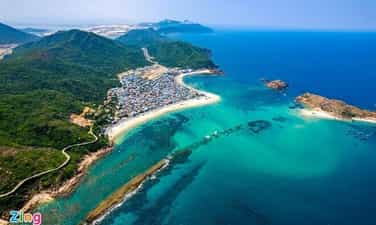
Hon Kho Island, also known as Hon Kho Island, is located in a complex of 32 islands near the shore of Binh Dinh province, about 19km from Quy Nhon city. Hon Kho is beautiful, peaceful, soft, not dry like its name. How to go to Hon Kho is also extremely simple. From City. From Ho Chi Minh City, you can take a plane, bus or train straight to Quy Nhon. Then rent a car to go all the way to the end of Thi Nai bridge, through Nhon Hoi Economic Zone, along Mai Huong Bay to reach the fishing village of Nhon Hai commune. Then you continue to rent a boat to get to this beautiful island. There are many boats with different services and prices for you to choose from. The price of a dry island ticket from the mainland to the island by boat ranges from 100K - 1200K. The biggest highlight of this island is probably the beautiful wilderness that has been preserved until now, with almost no human intervention. Not only that, this island also has many rocks and stones scattered throughout the island in many different shapes and sizes. Hon Kho is peaceful and pristine without too much human intervention. Therefore, when you come here, you can feel freedom, generosity, and simplicity. Around the island there are not many tall shady trees, but only green grass mixed with rocks, creating a very special wild scene. The most impressive thing about Hon Kho is the beautiful sea road. When the tide recedes, a cliff mixed with sand gradually reveals itself, creating a more than 500m long sea path leading from Nhon Hai fishing village to the island. This is a unique sea route that only exists in fairy tales but cannot be found anywhere else. However, it is not always possible to see this mysterious sea route because the water level fluctuates depending on the season. The wooden bridge around the strait is also a favorite place for many young people. Standing on the bridge, you can see the extremely impressive blue sea. On one side are majestic rocky mountains, on the other side is a romantic blue sea, creating a charming and unforgettable scenery. Hon Kho also has a clear blue sea on a white sand beach like any other beach in Quy Nhon, but what makes visitors excited is the feeling of freedom and generosity because they are separated from the city and immersed in nature. nature that this island offers. This is considered an ideal day trip destination for groups of friends who love to explore, or for those who want to have a relaxing day after all the fatigue of work. Not only that, you can also rent fishing boats from fishermen here to take them around the island or visit places with coral beaches at extremely affordable prices. For those who rent a boat from the mainland to the island and want this service, the price will range from 200,000 - 300,000 VND depending on the boat owner, for groups of about 5 - 10 people. The time to go from Quy Nhon to Hon Kho is only about 15-20 minutes, very fast. If you travel to dry islands on your own, you can rent a taxi from Quy Nhon city center for comfort and coolness. If you want to join a boat to the dry island, you should go early between 8 and 10 am because this is the most crowded time, making it easier to find people to join the boat. Going on a wooden boat costs about 100k/1 round-trip ticket, renting a private boat (10 seats) is about 500k/boat/1 round-trip ticket, joining a canoe costs about 200k/1 round-trip ticket, renting a private canoe (15 seats) is about 1200k/canoe/ 1 round trip ticket. Hon Kho has very few trees and almost no trees are taller than your head so it is extremely sunny. So if you don't want to come home from going out with tanned skin, you should be fully equipped with hats, hats, and sunscreen! The cafes here are just small temporary huts, so you can proactively prepare some drinks and snacks to bring along.
Gia Lai
10033 view


Cu Lao Xanh
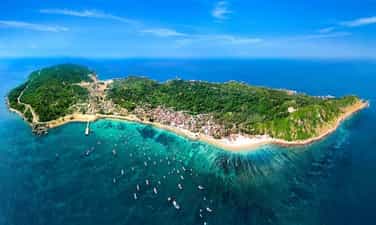
Cu Lao Xanh is beautiful all year round, but you should avoid the end of July and August because this is the time when many storms will endanger your trip to Quy Nhon. Also, you should not go in the winter. The remaining ideal time to explore the island is February to June, September to October. Cu Lao Xanh is located in Nhon Chau island commune, Quy Nhon city, Binh Dinh province, only about 12 nautical miles from the mainland, equivalent to about half an hour by speedboat. But if you want to have an interesting experience, you can spend 2 hours traveling by wooden boat with local people to the island. In the bright yellow sunlight, Green Island appears with a clear blue color, the The boat anchored near the shore waiting for time to set sail. The first time you set foot on the island, visitors will be extremely surprised and delighted by the wild and peaceful beauty of the island. The island appears with endless green mountain ranges, majestic rocks in front of countless ocean waves, clear sea water, clearly revealing colorful coral reefs; fresh seafood dishes... With what nature bestows, Cu Lao Xanh is an ideal destination for tourists who love to explore amazing natural tourism. Once you arrive at Cu Lao Xanh, don't forget to go to the Harbor Bridge to watch the sunrise and see the bustling market scene every morning, or immerse yourself in the clear water, go snorkeling to see coral at Nho beach and Bon beach. .. In particular, coming to Cu Lao Xanh, many people cannot help but enjoy being introduced, visiting and exploring the lighthouse that is more than a hundred years old. History also records that in 1890, after a ship sank because it hit a reef in the Quy Nhon sea area, the French decided to build a lighthouse on Cu Lao Xanh, named Plogam Bir. . The purpose of the French building a lighthouse on Cu Lao Xanh was to guide ships and boats into and out of Quy Nhon port conveniently and safely. The lighthouse is located on the highest mountain on the island, 119m above sea level. Cu Lao Xanh Lighthouse is a wonderful blend of East and West architectural styles; It has both the "breath" of Gothic architecture and the appearance of Eastern architecture. The lighthouse consists of 4 parts, harmoniously distributed: The base of the tower has 32 steps made of bricks; cylindrical tower body, 19m high; Inside there is a 58-step spiral staircase and headlights that illuminate 27 nautical miles (nearly 50km). The entire lighthouse architecture is built of large boulders, with walls more than 1 meter thick. This is one of the earliest and most modern lighthouses built in Vietnam Those who have the opportunity to go to Cu Lao Xanh lighthouse once cannot help but be ecstatic about the morning dew, sunrise on the sea, or the red sunset at dusk. If you don't mind the night sea, experience fishing with fishermen in the nearby waters. It will be great to follow the rhythm of pulling fresh fish into the boat, to see with your own eyes, to handle the fresh fish that have just left the sea. The experience of working with fishermen is a wonderful experience. In addition, Cu Lao Xanh has many rocky beaches such as Thao Nguyen beach and Dong beach. There are large blocks of stone, of various shapes and colors, and arranged next to each other in a very orderly manner. All create a harmonious landscape picture combining rocks and sea and sky.
Gia Lai
9514 view


