Tourist destination

Than Tai hot mineral spring
It can be said that Da Nang is a place blessed by nature with many mountain and river landscapes. Da Nang has the sea, rivers, and majestic wild mountains and forests. Than Tai Mountain is surrounded by Thanh Long Mountain and Bach Ho Mountain, located within the campus of Ba Na Nui Chua nature reserve, in Phu Tuc village, Hoa Phu commune, Hoa Vang district, Da Nang city. At this mountain, thousands of meters deep underground, there are faults and deformations of lava layers due to the strong movement of the earth's crust. The violent underground changes cause high temperature and pressure to erupt hot mineral water through the rocks, creating nature's precious hot springs. Taking advantage of the precious resources bestowed by nature, Than Tai Mountain has been exploited into a majestic eco-tourism area. Than Tai Mountain Hot Springs Park (Hot Springs Park) is an attractive tourist destination in Da Nang for tourists to cool off in the summer, as well as a place to enjoy healthy relaxation. Located about 30 km west of Da Nang city, Than Tai Mountain hot spring park is not difficult to find for tourists. Coming here, you can go on a tour, or you can make a self-guided trip because the way to get here is quite easy. Young people often design short trips for themselves to come here to relax with friends. Just run along Highway 14B, heading up to Dong Giang mountainous district after reaching Tuy Loan intersection, you will arrive. Because it is quite close to Ba Na Hills, tourists will often combine travel routes to come here. Natural hot mineral springs are the most special and unique feature that Than Tai Mountain tourist area owns. This type is an advantage for this tourist area, when previously Da Nang only invested in beach tourism, islands, forests and eco-tourism areas. Hot mineral springs can be said to be the main reason for any tourist to come here. Than Tai Mountain Hot Spring Park will allow visitors to enjoy and experience hot mineral baths in the Japanese bathing style (Onsen bath). It is known that this is an extremely beneficial activity for your health. Hot mineral bath is the best solution to regulate and excrete the body, detoxify the body, and beautify your skin. For women, Than Tai hot spring is always the first choice. Understanding the needs of women, Than Tai Mountain regularly discounts on holidays and Tet, especially on holidays for women such as March 8 or October 20. No need for expensive cosmetics, no need for chemical treatments for sensitive skin, going to hot mineral springs is the most affordable and most effective choice. Hot mineral spring water is the combined effect of three physical treatments: hydrotherapy, thermotherapy and mineral therapy. What could be more wonderful than coming here, immersing yourself in the hot mineral water, listening to the chirping of birds in the tropical forest, inhaling the smell of the jungle, wandering around and enjoying the beautiful scenery in harmony with nature? . The stress and fatigue of everyday life will disappear in an instant, leaving a peaceful and relaxing space for the soul.
Da Nang
7104 view


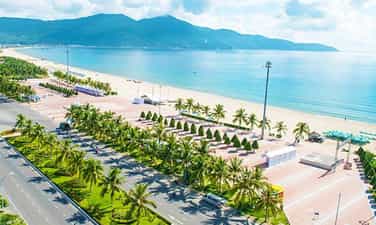
East Sea Park
With a convenient central location right near Pham Van Dong beach, My Khe beach - One of the most attractive beaches on the planet, East Sea Park is an attractive place to visit not only for people in the city. city but also for many tourists when traveling to Da Nang city with many interesting and vibrant activities taking place every day. The park is geographically located directly overlooking the East Sea and the Hoang Sa archipelago, so the city's people named the park East Sea as a way to express pride, patriotism and affirm democratic sovereignty. clan. In addition, the park is also known with many different names such as "Peace Park", "Love Park" or "Festival Park". Each name partly represents a unique characteristic of this tourist destination. One of the special things that attracts visitors to East Sea Park is the thousands of white pigeons fluttering in the sky. Coming here, you will admire the image of flocks of pigeons flying in the air and then swooping down gently next to the large yard next to the immense waves of My Khe beach, creating an extremely beautiful and peaceful image. right in the heart of the city. In addition, you can also feed them, harmonize and play with these friendly pigeons to "rediscover" the feelings of peace and relaxation in your soul. These will definitely be experiences you should not miss when coming to East Sea Park - Da Nang. Not only is it known as "Hoa Binh Park", people here also refer to East Sea Park as "love park" perhaps because the park's extremely romantic and poetic scenery has a magical attraction. with everyone. The rows of green coconut trees swaying in the wind on the clear blue seashore and the sparkling golden sand beach dyed in sunlight stretching to the smooth green grass, all seem to blend and create a poetic, autumnal natural space. attracts many couples to visit, go on dates as well as choose it as a wedding photography location, marking their hundred years of happiness. From here, visitors can also look out into the distance and admire the fishing boats and oil tankers operating peacefully on their homeland's waters or look to the Northeast, on the Son Tra peninsula is the statue. The tallest Avalokiteshvara Buddha in Vietnam. Furthermore, East Sea Park is also a place to organize many festivals, culinary festivals, cultural events, exhibitions and participate in teambuilding activities, game shows and exciting sports such as surfing, kayaking, parachuting. hovering in the air,... The park's public amenities are also gradually being equipped to serve visitors from everywhere.
Da Nang
10489 view


Son Tra Peninsula
Son Tra Peninsula has an area of about 4,439 hectares, with a tropical monsoon climate, average annual rainfall of 2,184mm, in the hot season the temperature is about 28-29 degrees Celsius, in winter the temperature is about 18-22 degrees Celsius. Son Tra Peninsula is a giant shield, the green lung of Da Nang city. Here is Tien Sa port, one of the three largest ports in Vietnam, a place for economic exchange, where many large international cruise ships welcome tourists to visit Da Nang. Coming to Tien Sa beach with fine sand and blue water of the sea is an eternal, serene beauty with ecological values voted by the world as one of the most beautiful beaches on the planet. From the top of Son Tra, visitors can admire the entire city of Da Nang in the shape of a bow, the Marble Mountains, Ba Na Mountain Chua and the majestic Hai Van Pass. Son Tra Peninsula is a diverse and rich nature reserve. Son Tra forests are almost in pristine form with unique flora and fauna. Here there are rare animals recognized by the world such as the red-shanked douc langur, red-faced chicken, etc. There are many stops to attract tourists such as Ban Co peak where there is an extremely interesting statue of a fairy sitting playing chess, Linh Ung Pagoda where the largest statue of Avalokiteśvara in Vietnam with a height of up to 67m, Thousand-year-old banyan tree... And right at the foot of the mountain, visitors can go to the poetic Da stream, or immerse themselves in the cool water of the sea, watching the clean and smooth sand beaches around the peninsula, the rocks piled up along the shore being eroded and wiped clean by the steady rising and falling tides. The whole area of But beach, Rang beach, Nam beach, Om beach, Bac beach... in addition to scuba diving services to see coral and cruises at sea, visitors can also visit and explore nature, have entertainment such as water motorbikes, parachutes, and participate in fishing festivals of coastal residents, which will certainly leave an unforgettable impression and satisfy tourists coming here. The appropriate time to travel to this place is from March to September. At this time the weather is sunny, dry, and there are rarely storms. If you go in the winter, there will often be fog, making it very difficult and unsafe to travel.
Da Nang
9136 view


Ngu Hanh Son
Ngu Hanh Son Mountain - an impressive tourist destination in Da Nang, also known by the people here as Non Nuoc Mountain, is formed by a complex of five limestone mountains according to Metal - Wood - Water - Fire - Earth with many legendary stories that still resonate today. The name Non Nuoc mountain has been around for a long time and is included in local people's songs: "In the afternoon, clouds cover Son Tra, Thunder rumbles in Non Nuoc, the sky turns to rain". Visitors coming here will be amazed by the majestic and magical natural scenery that the Creator has bestowed on this place. Ngu Hanh Son is located on a vast, vast white sand beach near the coast stretching from Cat Tien Sa peninsula to Non Nuoc beach, in Hoa Khue village, Son Thuy hamlet, Hoa Vang district, now Hoa Hai ward, Ngu Hanh Son district, less than 8 km drive southeast from Da Nang city center. Ngu Hanh Son is famous throughout the country for the unique beauty of a sky, sea, and water with long-standing profound historical, cultural, and spiritual values. Walking on the mountains of Ngu Hanh Son, visitors can freely pick up beautiful marbles. The interesting thing here is that each mountain has a different color of stone, such as the stone in Kim Son is quiet blue, the stone in Tho Son is earthy brown, the stone in Moc Son is pure white, the stone in Thuy Son is pink and the stone in Hoa Son is bright red, each type of stone is a color corresponding to the five elements in feng shui of the Orient and perhaps its name. of those five mountains was also placed for that reason. Ngu Hanh Son is not only diverse in gemstones but also has many rare and valuable herbs such as: Thien Tue, Canh Thien, Moc Tinh, Truong Sinh Agar, Cung Nhan Thao, and Ly Ly. Coming to Ngu Hanh Son - one of the tourist destinations in Da Nang, visitors can also improve their knowledge about many rich animal species such as bats, sea swallows, gentle monkeys, etc. Walking slowly, breathing fresh, airy air and seeing many colorful wild flowers giving off fragrant scents, most of which are wild orchids, there is nothing more enjoyable. The land of Ngu Hanh Son is not only legendary, not only five elements, spiritual, not only a land of natural talent, spiritual land, but also a piece of history, associated with people and names that have entered the history books. Tourists will visit the grave of General Tran Quang Dieu's mother and the temple of Princess Ngoc Lan - King Minh Mang's younger sister, or visit the poetic autographs of the Le and Tran dynasties printed on cliffs covered with moss over the flow of time, all creating an eloquent testament to a legendary Marble Mountains, a land of spiritual masterpieces. Walking along the trails, tourists who are passionate about exploration will have the opportunity to visit the unique and amazing cave system, which is one of a kind beauty here. To explore and admire all the main caves of Ngu Hanh Son, visitors will have to invest 2 to 4 days with a tight schedule such as visiting Quan Am cave of Kim Son, Huyen Vi cave of Hoa Son or Am Phu, Linh Nha, Huyen Khong, Van Thong, Thien Long, Thien Phuoc Dia caves of Thuy Son, visitors will experience many different levels of emotions when going to those caves. According to many tourists, the most outstanding of all are Am Phu cave, Huyen Khong cave and Van Thong cave. Am Phu Cave of Kim Son Mountain with many legends that are both real and virtual, has long been spread everywhere, inherently all things always exist in two opposing directions: day must have night, when people are born, there must be death, if there is heaven, there must be hell because the cave has two corners to heaven and to the underworld. The cave was named that way during the reign of King Minh Mang in the early 19th century, when the king visited this mountain. The underworld is understood as the world of the dead, but according to Buddhism, death is not the end but a transition to reincarnation to another realm. Good and evil will be clearly defined in black and white. Huyen Khong Cave at a tourist destination in Da Nang is an open-air cave with a flat floor, a circular dome with 5 ventilation holes to the outside. On sunny days, the cave glows with natural light pouring in, creating a shimmering mysterious space. At the top, there is a statue of Shakyamuni Buddha, below is the altar of Ksitigarbha Bodhisattva, on the left is the altar of Lady Fairy, where business tourists come to pray for wealth and fortune. The temple of Lady Thuong Ngan is where most tourists come to pray for health and peace. Around the dome of the cave, there are many rocks clinging to the walls, creating strange shapes such as: the face of an old man, the image of a crane, an ostrich, the image of two elephant heads with trunks hanging down to the ground, the image of a stork with a long sharp beak pressed against the cave wall... Van Thong Cave is located in the heart of a circular mountain with a pipe slanting up towards the mountain. In the cave, there is a stone stele with the three ancient words "Ngu Uan Son" written on it. In the middle of the cave is a very large Buddha statue. Behind it is a road leading up to the cave. The deeper you go, the narrower it gets and towards the top of the mountain. Visitors must cling to the rocks to get up. At the end of the cave is a door to the outside about the size of a porch with a diameter of about 1 meter. From the top, light shines in, creating a brilliant and magical aura. When visitors stand at Vong Giang Dai on Thuy Son mountain, they can see far away and see the famous river that once entered the poetry of the Truong Giang River with its blue water, stretching endlessly. In addition to the beauty of mysterious caves, Ngu Hanh Son is also mentioned a lot for its pagodas leaning against the mountain. Although not too high, the space is very peaceful, quiet, and sacred. On Kim Son mountain there is a pagoda in Quan Am cave, on Hoa Son mountain there is Linh Son pagoda, on Tho Son mountain there is Long Hoa pagoda, Hue Quang pagoda, on Thuy Son mountain there is Tam Thai pagoda. Tam Thai Pagoda in Da Nang tourist destination is an ancient pagoda and Buddhist relic, the main hall worships a large bronze Maitreya Buddha sitting on a lotus, on both sides are statues of Quan Thanh and Bodhisattva. The pagoda is also a place where many pilgrims visit and pray to Buddha on holidays. Visiting the pagodas, standing quietly looking at the space with mountains and green trees, breathing the pure atmosphere at the pagoda door, visitors will feel their mind relax, a moment of silence lets their soul wander, harmonizing with heaven and earth, a rare thing in the bustling life of a noisy city.
Da Nang
9444 view


Golden Bridge
The Golden Bridge with the support of giant hands is being shared rapidly on social networking sites and travel communities, making many people surprised. Golden Bridge, a new project of Sun World Ba Na Hills. Construction started in July 2017 and was completed in April 2018. It recently went into operation and welcomed the first visitors to Da Nang. Possessing an extremely unique and novel design, unprecedented in Vietnam, the bridge was built at an altitude of more than 1,400 meters above sea level, with a total length of about 150 meters, with 8 bridge spans, the largest span being 21.2 meters. The bridge's surface is made of wood, 3 meters wide and 5 cm thick. Along both sides of the walkway are planted many Green Queen flowers, above is a railing made of gold-plated stainless steel. It can be seen that this bridge is designed and shaped to resemble the image of a woman using her hands to support a golden silk strip across. With its unique image, the Golden Bridge in Ba Na Hills has made many people surprised and admired the creativity of the designers and builders of this project. Not only can you admire the beauty of this unique project, coming here you will also be able to freely admire the majestic and breathtaking beauty of the surrounding mountains and forests. The feeling of walking above the floating clouds, admiring the beautiful scenery below will be an extremely wonderful experience for many visitors. Many beautiful photos have been taken by tourists coming here, many viewers thought this was some foreign tourist destination. But when they learned that it was the Golden Bridge on top of Ba Na, everyone was extremely surprised and excited and wanted to come immediately to admire this beautiful scene. It can be seen that Da Nang not only possesses amazing natural landscapes, but also works built from the human mind and hands are also presented in this city in an extremely unique way, in which it is impossible not to mention the Golden Bridge in Da Nang, a highly artistic work.
Da Nang
10505 view


Ba Na Hill
Da Nang has transformed itself into an interesting tourist and resort destination, no longer the barren Central region as before. Explore and enjoy unique experiences at the tourist destination Da Nang - Ba Na Hills. The shopping area at the tourist destination Da Nang - Ba Na Hills has up to 20 souvenir shops, offering more than 2,000 diverse products. They are distributed throughout the tourist area, from the train station, wax statue display area, to Doumer restaurant and Fantasy Park... Here, you can easily find unique and meaningful souvenirs to give to your loved ones such as gemstone paintings, sand paintings, pebble paintings, embroidery paintings, lacquer paintings, scroll paintings, origami paper folding. , hand-painted dresses... In addition, you can also choose high-end gifts such as 3D statue carvings, cosmetic lines, high-end essential oils produced specifically for Ba Na... Especially at French Village, there is a shopping area with a full range of high-end goods from fashion, cosmetics, jewelry, and branded handbags. After experiencing Da Nang destinations at Fantasy Park or Love Flower Garden, visit the luxurious European cuisine area to enjoy unique delicacies. You can enjoy fast food and grilled food from famous restaurants such as Morin, Kavkaz, Buffet Club, La Crique&Café Postal, KavKaz Vista... Du Dôme Square is located atop the Medieval Castle in Fantasy Park, with creative architecture and panoramic views of Ba Na Mountain. Four tall columns and classic colors at this culinary square take you back to the Middle Ages. To fully experience the beauty of Ba Na overnight, you can stay at 3-star or 4-star hotels. These locations provide luxurious spaces, comfortable rooms and many good services. The 3-star Morin Hotel and the 4-star French Village offer distinct architecture but common luxury in a classic, elegant French style. The interior is meticulously decorated, with beautiful views and fireplaces in each room, ensuring coziness on cold winter nights. Shopping, enjoying cuisine and experiencing relaxation are three great experiences to explore the majestic beauty of Ba Na mountain.
Da Nang
9264 view



Tam Giang Lagoon
Known as the brackish water lagoon with the largest area in Southeast Asia, Tam Giang lagoon is a favorite destination for tourists from far away when visiting the dreamy land of Hue as well as an ideal place to attract photographers. Photographers come to capture wonderful images and moments of nature. Tam Giang Hue Lagoon - The beauty of Vietnam's homeland. Be captivated by the peace of Thai Duong Ha fishing village. Thai Duong Ha fishing village is a small oasis located right on the lagoon, this is where fishing households live by catching fish and seafood. This place is known to have existed for a long time and has many traditional cultural beauties of our nation that are still preserved. Coming to Thai Duong Ha fishing village, you will enjoy many fresh brackish water seafood dishes at cheaper prices than other places. In addition, you can also experience and visit Vietnamese communal houses, festivals associated with the people here such as Cau Ngu festival and peaceful and quiet countryside life. Perhaps the most attractive beauty of Tam Giang lagoon is its poetry, a beautiful but sad place, the vastness of nature and the stillness of the scenery that easily catches the eye of those who love landscape photography. Coming to Tam Giang lagoon at every time of the day, you will be attracted by its unique beauty. If in the morning the sunrise shines brightly, reflecting on the sparkling water surface, then in the late afternoon, this brackish lagoon has something magical. , very soulful of Vietnamese countryside like the old days. Vietnam's homeland is beautiful, there are many peaceful and beautiful places like Tam Giang lagoon that you need to explore. If you come to Hue, don't forget to visit Tam Giang to see how beautiful and peaceful our country is.
Hue
5632 view


Bach Ma Mountain
Bach Ma Mountain is located at the end of the Truong Son range and is the center of the only strip of green forest in Vietnam stretching from the East Sea to the Vietnam - Laos border. Unlike the guardian of Phu Yen's land and sky, who stands alone like Da Bia Mountain, Bach Ma Mountain appears like a charming landscape painting that makes visitors come here still reluctant to return. Hue is a city with pleasant, fresh weather. So conquering Bach Ma Mountain in Hue will be great because it is covered all year round with mountains and forests, so the climate here is easy to breathe, the higher you go, the cooler it gets. With the advantage of being close to the sea, the average summer temperature here ranges from 20 - 26 degrees Celsius, and in winter from 4 degrees - 10 degrees Celsius. Therefore, the weather in Bach Ma mountain range is mild and cool. On mild sunny days, it is not too harsh and makes you feel uncomfortable or hot. On days with a few thunderstorms, the weather will become calmer. Conquering the 1450m high mountain peak is not easy. Looking up from afar, visitors will be overwhelmed by the majestic beauty, hidden behind layers of fog, making Bach Ma Mountain more poetic and magical than ever. Having the advantage of being a place with a wonderful climate, the nature and flora here are very rich and diverse with more than 2,000 species of plants and about 1,500 species of animals, including many species of animals and plants named in books. Vietnamese red. Get lost in the vast, natural space of Bach Ma Mountain. Visitors can also enjoy the famous beauty of streams and breathtaking high waterfalls. Standing tall in the Bach Ma mountain range, flowing day and night. Do Quyen Waterfall is 400m high, 20m wide with a rolling white waterfall, highlighting a corner of Bach Ma mountain and forest like a girl who fell asleep and never woke up. The cool, fresh water mixed with the cool air here gives visitors a very comfortable feeling, all worries seem to disappear. On sunny summer days, visitors will see that on both sides of the waterfall are the precious Rhododendron flowers blooming, glowing red and the whole sky looks like it is covered with a long red silk carpet with no end in sight. Stop here, take some beautiful nature photos, it won't be a mistake to get lost in this place. Standing from the top of the waterfall, looking out into the distance, it's like seeing a white sky with sparkling afternoon sunlight shining down, making this scene sparklingly beautiful and magical. The vertical waterfall is up to 250m high, it is very interesting when you check-in with a few friends or your family when coming to Do Quyen waterfall.
Hue
5784 view


Lap An lagoon
To fully admire the beauty of Lap An lagoon, you should come here from March to June. At that time, the sunlight is somewhat harsh, but it brings out the sad beauty of the lagoon for you to enjoy. You can fully admire the poetic scenery of this place. From the center of Hue city, you can travel to Lap An lagoon by motorbike. The journey starts from the center and follows National Highway 1A, goes through Hai Van Pass a little further and will reach Lang Co Bay. When traveling by motorbike, remember to fully equip gloves, masks, and hats to avoid being exposed to dust or harsh sunlight that will affect your health. In addition, you can also travel by car on the way to Hai Van Pass, stop by Lang Co Bay and stop at Lap An lagoon to watch the sunset. Lap An lagoon (also known as An Cu lagoon) is located near National Highway 1A, passing through Lang Co town, Phu Loc district, Thua Thien - Hue province, with an area of about 15km2. Lap An Lagoon is located in a beautiful location, right at the foot of Phu Gia Pass, surrounded by the majestic Bach Ma mountain range, in front is the gentle Lang Co Bay with jade green water. All give Lap An lagoon a dreamy beauty that makes many tourists stare in amazement. Lap An Hue Lagoon is perhaps most beautiful in the late afternoon, when the last rays of the day shine down on this place, creating a romantic and peaceful beauty. Coming here at sunset, you will not be surprised by the scene before your eyes, both majestic and mixed with a special "very Hue" quality. In addition, this place not only possesses poetic natural scenery, the lagoon is also home to many species of aquatic plants and animals, and among them, the most numerous are oysters, a specialty of the surrounding people. Lap An area. The work of local people is mainly fishing, especially oysters. Oysters in Lap An lagoon are famous for being delicious and fatty, so when coming here, visitors will enjoy delicious dishes from this type of seafood such as grilled meat, porridge, stir-fried onions, salad... The flavors of the dishes will make you happy. Tourists cannot forget. Besides, worms and sea cucumbers are also two types of seafood that appear a lot in Lap An lagoon, often used as ingredients for delicious, nutritious dishes, in particular, worms are also used as food. medicine.
Hue
6086 view


Thien Mu Pagoda
Thien Mu Pagoda, also known as Linh Mu, is located on Ha Khe hill, next to the poetic and lyrical Perfume River in Kim Long ward, Hue city, Thua Thien - Hue province. The pagoda was officially established in the year Tan Suu (1601), during the reign of Lord Nguyen Hoang - the first Nguyen Lord in Dang Trong and this is also one of the oldest pagodas in the ancient capital. A symbol associated with the image of Thien Mu Pagoda is Phuoc Duyen Tower. The tower is 21m high, with seven floors, built in front of the pagoda. Each tower floor has a Buddha statue. Inside there is a spiral staircase leading to the top floor, where a golden Buddha statue used to be worshiped. In addition to Phuoc Nguyen Tower, Thien Mu Pagoda also has architectural works such as Dai Hung Palace, Dia Tang Palace, Quan Am Palace... along with stone stele and bronze bells. In addition, the pagoda is also home to many valuable historical and artistic artifacts. The Dharma Protector statues, the Ten Kings statue, the Maitreya Buddha statue, the Tam The Buddha statue... or the horizontal panels and parallel sentences here all mark the golden historical periods of Thien Mu Pagoda. Located on the banks of the romantic Perfume River, Thien Mu Pagoda with its ancient architecture has contributed to making the natural picture of this place even more charming, solemn and sacred. Under the reign of Lord Nguyen, Thien Mu Pagoda Hue went through many major renovations, of which the most prominent was the restoration under Lord Nguyen Phuc Chu (1691-1725). In addition, Nguyen Phuc Chu also had a large bell cast with a weight of more than two tons in 1710 and an inscription was engraved on the bell. In 1714, he continued to restore dozens of other buildings at the pagoda such as Thien Vuong Palace, Dai Hung Palace, Dharma Lecture House, Tang Kinh Floor... In particular, Lord Nguyen Phuc Chu also sent people to China to buy more than 1,000 sets of Buddhist scriptures with the purpose of praising Buddhist philosophy located at the Tang Kinh Floor. In addition, the scriptures also clearly recorded the story of Venerable Thach Liem, who had great contributions in helping Lord Nguyen revive Buddhism. in Dang Trong. According to legend, in the past, when Lord Nguyen was still ruling in Dang Trong, the idea of feudal etiquette "where parents put their children is where they sit" was very heavy. At that time, a couple loved each other passionately. However, the girl was a noble lady, beautiful and the daughter of a rich mandarin, while the boy was an orphan and poor. Therefore, her family strictly forbade it. Too miserable, the two went to Mu boat wharf (in front of Thien Mu pagoda) to commit suicide. Ironically, the boy died in the Perfume River, while the girl washed ashore and was saved by villagers. After that, her family took her home and forced her to marry a rich man. As time passed, she gradually forgot the memories she had with the boy from years ago, and he lay in the Perfume River, waiting for his lover but did not find him, so he resented his fate and "entered" Thien Mu Pagoda, cursing that any couple who loved each other who came here, their love would be broken and break up. The curse has been passed down to this day, making Thien Mu Huet Pagoda more sacred and mysterious. However, a monk practicing at Thien Mu Pagoda said: "The story that people say that the pagoda carries a curse of love is not true. In the past, there were many trees in the pagoda grounds. Couples often invited each other to the pagoda, took advantage of the green trees in the pagoda, and did things that were against morality. Unable to accept that, people made up stories about the curse to keep the pagoda pure." Sharing the same opinion as the monk, Hue scholar Phan Thuan An shared: "Those who love each other go there and do bad things in the solemn and pure setting of the temple, which has a negative impact on the Buddha's door. If we truly love each other and maintain our dignity in front of the solemn world, I think there will be no problem." Thus, if you go to the temple to sightsee, worship, enjoy the pure scenery, and pray for good things, it will be a welcome action, however, if you do the wrong thing, you will encounter "breakdown". Through this, the local people, as well as the monks in the temple, hope that Buddhists can come to the temple to do good things, not to commit acts contrary to morality and ethics.
Hue
6128 view


