Tourist destination

Vung Chua – Yen Island
Located in Tho Son village, Quang Trach district, Quang Binh province and about 3km from National Highway 1A, Vung Chua - Yen Island is known as the resting place of the heroic general of the nation Vo Nguyen Giap. This area has an area of about 10 hectares and is located right at the foot of the majestic Ngang Pass. Vung Chua is a clear blue beach with long stretches of white sand and surrounded by a peaceful scene of endless green forests. Vung Chua faces the East Sea but is quite sheltered from the wind, so this place is said to be a land with a quite prime location. Yen Island is a small island about 1km from Vung Chua shore. If you go by boat, it will only take about 20 minutes to get here. Many people commented that Yen Island is like a screen emerging in the middle of the sea with the belief that this place will guard the land and sea, protecting human life. Vung Chua - Yen Island has now become a pilgrimage destination attracting many tourists to visit and burn incense to commemorate the heroic general every year. Local people have recounted that in the past this land was called Hon Nom based on the direction calculation. However, later a company brought the bird's nest here to raise it to exploit the bird's nest, so from here a lot of bird's nest came to live. The name Yen Island, Quang Binh, also came from there. So where does the name Vung Chua come from? According to local people, in the past there was a large pagoda in this area, but now through ups and downs of time, only traces of the pagoda's foundation remain, but the name Vung Chua comes from that. This area is also surrounded by three islands: Hon La, Hon Gio and Hon Nom, forming a three-legged triangle so it is quite airtight so ships often anchor when there is a storm. In addition to the tomb of General Vo Nguyen Giap, many people may still not know that on the island there is also an ancient tomb that has been passed down orally from people as the tomb of famous general Tran Dat, who had meritorious service in the Lam Son uprising against enemy from the North with Le Loi. After learning more about the history books left behind, we learned that the family of famous general Tran Dat was very famous in the area because there were many people who were awarded the title of marquis, duke or academician... However, the church they are currently in Thuan Bai village, Quang Thuan commune, Quang Trach district. So Quang Binh is honored to welcome two generals about 500 years apart to rest here. The grave of General Vo Nguyen Giap is located on the shore, at a 110m high point on Dragon Mountain, overlooking the sacred Yen Island, and the grave of famous General Tran Dat, who was instrumental in defeating the Northern invaders and saving the people, is also nearby. That area makes Vung Chua - Dao Yen more majestic.
Quang Tri
9227 view


Bai Da Nhay - Bo Trach district
When coming to Quang Binh, you must definitely visit Bai Da Nhay - located at the foot of Ly Hoa pass in Thanh Trach area, Bo Trach district, Quang Binh province. With a long coastline, fine golden sand and blue sea water, it creates a beautiful "background" with no dead corners, suitable for virtual living. The best time to go to Quang Binh is from the first months of the year until May (according to the solar calendar). June, July, and August are quite sunny and hot, while September, October, November, and December are rainy and cold seasons. You can rent a motorbike in Dong Hoi to go to Da Nhay beach, which is also quite ok. From Dong Hoi City, you run towards Dong Hoi Airport and then go straight about 25 kilometers to get there. When you arrive, park your car at a convenient restaurant to eat lunch. The first impression that appears when coming to Da Nhay Beach is that the beach is clean with little trash, the sea water is clear and blue, and the air is cool. You walk a bit to reach the rocky beach. Attached is a set of stairs to climb to the top. Stand from above and look down to see the panoramic view of Da Nhay Beach. Rest assured that in Da Nhay Beach, there are many shops and restaurants close to the beach, with very reasonable prices, so you can eat and drink to your heart's content, always with fresh seafood. After finishing eating, you can rest in the hammocks under the hut and enjoy the cool sea breeze, which is also not a bad idea.
Quang Tri
8297 view


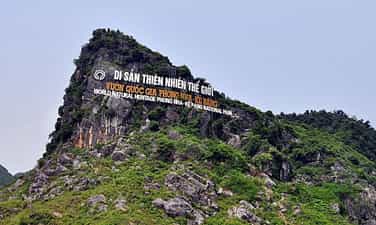
Phong Nha - Ke Bang National Park
Famous as one of the world's largest natural wonders in Vietnam today, located in Quang Binh province and chosen by many tourists. This place not only contributes greatly to preserving nature, flora and fauna, but also creates an impressive tourist destination for tourists right from the first visit. Phong Nha Ke Bang National Park is located about 45 km from Dong Hoi city center. With a structure consisting of two main parts: Phong Nha cave and the majestic Ke Bang limestone mountain range many years old. Brings the feeling of being lost in a separate sky, both wild and imbued with the natural beauty of an attractive ecosystem. Located in Quang Binh province, a city in the Northern region, it has a tropical monsoon climate with two distinct dry and rainy seasons. To have a convenient trip to Phong Nha Ke Bang National Park, you should choose the time from April to August. At this time the weather is dry, little rain and beautiful sunshine, suitable for sightseeing and activities. interesting. As for the period from September to December, the weather is prone to rain and even storms. If you visit at this time, it will be quite disadvantageous to travel and cause many potential dangers. Besides, from January to March the high water season also causes disadvantages when visiting Phong Nha cave and other cave systems. Currently, choosing a hotel when visiting Phong Nha Ke Bang National Park is quite popular among tourists. Because this also affects the tourism process more or less. If you have questions about choosing a Quang Binh hotel, you can rest assured because this is currently a developed tourism province. When coming here, it is not too difficult to choose a hotel that suits the needs, interests and financial capabilities of visitors. To be more proactive about your time, you can choose to consult and book hotel rooms in advance at websites, or through the convenient Traveloka app. Referring to one of the attractions not to be missed when coming to Quang Binh national park, Phong Nha cave is known as "Thien Nam's first cave" with its majestic and wild beauty. After following the clear blue water, you will reach the cave entrance with a height of 10m, then proceed to explore the 8,000m long cave system, with 12 different large and small caves. Bringing unexpected experiences to visitors while visiting the national park. Through many changes, golden sand beaches, blue underground lakes and impressive stalactites have formed inside the cave. It all seems to create a vivid picture created by nature over hundreds of millions of years. To get in, you need to buy a ticket for about 120,000 VND/adult, free for children and rent a boat for about 550,000 VND/12-seat boat. Possessing an area of more than 40 hectares, the botanical garden is a diverse ecosystem and is also a conservation area not to be missed when visiting Phong Nha Ke Bang national park. Here, you can experience the process of Trekking to explore and check in to Thac Gia, Vang Anh Lake, and animal raising area. In addition, you can also visit the model exhibition house to see rare animals and plants. The ticket price to enter the botanical garden will be about 40,000 VND/adult and 20,000 VND/child. This promises to be an interesting and memorable experience for nature lovers who always want to discover the beauty and wonder of flora and fauna. Thien Duong Cave is known as the longest dry cave in Asia, with a total length of 31.4km, naturally formed in a limestone complex and surrounded by pristine, rich primeval forest. To reach the cave, you need to pass 524 wooden steps, then comfortably enjoy the cool atmosphere and the magical beauty of the impressive stalactites. Therefore, this place has become an indispensable tourist destination when coming to Phong Nha Ke Bang national park.
Quang Tri
9032 view


Mooc Spring – Bo Trach
Mooc Stream is located in Phong Nha Ke Bang National Park, about 60 km from Dong Hoi city. To get here you can follow the Ho Chi Minh Trail, the stream flows into the Con River towards the delta. At Khe Gat intersection, turn west and go about 5 km to Mooc stream. The stream is covered with vast green forests, the climate is cool, and the air humidity is high. Summer travel here is very suitable, you will feel like you are lost in a giant natural air conditioner. Mooc Stream in Quang Binh originates from a large lake about 80 - 90 square meters wide, downstream the stream flows into a large river. There are many rugged rocky beaches here, creating an interesting landscape. Along the stream, the shade of trees spread out into the middle of the stream like umbrellas above the water. Trees that grow well help retain water and humidity, making the air cool and fresh. Mooc Spring appears in the wild natural landscape of deep forest, tourists seem to be overwhelmed by the beautiful scene before their eyes. Each stream, tree branch and green grass is full of life, the tingling sound of nature blends with the sound of flowing water to create a lively harmony. On this S-shaped strip of land, there are places where people and nature can harmonize so closely. You can immerse yourself in the space of the mountains and forests to enjoy the feeling of relaxation, stretching all your senses to hear, to see, to feel the fragrance of life. Coming here, you can also participate in many entertainment activities, there are many thrilling games, requiring the player's flexibility and dexterity: Kayaking, hanging bridge, zipline... Sitting on a kayak, skillfully controlling the oar along the water flow to the fast-flowing sections, the player must brace themselves to keep the oar going through the strong current. The ticket price for kayaking at Nuoc Mooc spring is about 50,000 VND per session. Going on the suspension bridge is for those who are not afraid of heights. Take each step carefully on each wooden slat of the suspension bridge if you don't want to fall into the water. Not only are you careful, you also have to be very skillful to participate in this entertainment. Many rustic dishes are served here made from native ingredients: Stir-fried wild vegetables with garlic, grilled eel, grilled chicken, porridge soup. Sitting on thatched huts enjoying dishes brings a very new feeling. In the summer, Mooc stream truly becomes a wonderful ecological area, with cool spring water and fresh scenery. Going here with friends for a picnic on weekends or holidays will be a great idea, the wild nature will give you memorable photos. The tourist destination is quite new so everything seems "intact", seemingly separate from outside life. In addition, you can visit places near Mooc stream such as Chay river and Dark row. Dark Cave has deep underground streams flowing through creating air conditioning. Inside there are many multi-shaped stalactites and stalactites with almost no light, complete darkness. If you turn off the flashlight, it feels like everything is swallowed by darkness, the eyes are filled with suffocating blackness.
Quang Tri
8740 view


Bao Ninh Beach
Coming to Bao Ninh, you will be immersed in an extremely open, wild and quiet natural space. You will only hear the whispering waves and the whirring wind in your ears without being crowded. like other key beaches. In addition, around are green coconut palms swaying in the wind and scenes of simple activities of people in Bao Ninh fishing village. You should come here in the early morning to catch the brilliant sunrise on the sea, when the first rays of the day begin to appear in the distance, the illuminated sea surface becomes beautifully iridescent. Or you can also walk barefoot on the beach in the late afternoon, when the sunset closes the day and the fishing boats return after a day at sea. Bao Ninh Beach is right next to Nhat Le beach, so if you want to visit Nhat Le, you just need to go through Nhat Le bridge to get there. In addition, standing on Nhat Le bridge and looking down at the water and sea surface of Bao Ninh is extremely beautiful and peaceful. After the morning watching the sunrise on the sea, you can also move to Bao Ninh square located right on the beach with extremely attractive and attractive entertainment activities. If you are lucky enough to come during the festival season, you can also witness the fishing and harvest festival that the fishing village people set up. Some attractions around Bao Ninh beach that you can visit are the ancient Citadel relics, Ca Ong temple or Mother Suot monument, Quang Binh Quan, General Vo Nguyen Giap's tomb or especially if there is one. Maybe Son Doong cave... Historical sites around this area will be an opportunity for you to gain more historical knowledge as well as social understanding, so you can learn more deeply about the war years. The arduous struggle of our army and people.
Quang Tri
9001 view


Huong Tich Pagoda
Huong Tich Pagoda is located on top of Hong Linh mountain, in Thien Loc commune, Can Loc district, Ha Tinh province. The road to the top of the famous Hong Linh mountain is praised for possessing extremely beautiful and charming feng shui scenery. The pagoda is located on a mountain with a reputation for being sacred, so this place attracts a large number of pilgrims from all over every year. Legend has it that the pagoda was built in the 13th century and is a place to worship Princess Dieu Thien, daughter of King Trang, King of So. Initially, a fire unfortunately burned down almost the entire temple in 1885, but the architecture we see today was rebuilt in 1901 by Dao Tan, governor of An Tinh. The latest restoration was in 2003. What creates the beauty of Huong Tich Pagoda is probably the mystery, the mystery from the sounds of birds chirping in the middle of the forest, the mystery from the wild and lush forest landscape, the mystery from the gurgling streams between the rocks. Therefore, even though they are only on the journey to the top of Hong Linh mountain, pilgrims can immediately feel the sacredness and peace. Reaching the top of the mountain, you will suddenly see the sacred Huong Tich Pagoda, Ha Tinh, deep in the shadows of towering trees, amidst the clouds floating at the top of the mountain, a spiritual beauty worth admiring. What is more special, Huong Tich Pagoda is not just an individual simple pagoda but it is a complex divided into 3 main parts including the Upper Palace, Thien Vuong Temple and Thanh Mau Temple. Among them, Thanh Mau hermitage is said to be the place where King Dieu Thien's daughter came here to practice righteousness and become Buddha. In addition to the three main areas, there are also Fairy Cave, Phun May Am, Tien Tam Stream and Co Temple... All of these create a beauty of silence, solitude and moss. Huong Tich Pagoda is often mistaken by many people that this is a version of Huong Pagoda in Ha Tay. However, Huong Tich Pagoda in Ha Tay inherited and was built on the foundation of the meaning of Huong Tich Pagoda in Ha Tinh. This is because Huong Pagoda in Ha Tinh was destroyed three times by the Ming invaders, the French colonialists and forest fires, so there were times when this place became deserted and there were no monks to preside. Perfume Pagoda in Ha Tay was built for that reason. Since 1990, Huong Pagoda has attracted a large number of pilgrims from all over the country again. In particular, at the beginning of the new year, this place is chosen by local people and visitors as a sacred spiritual place to pray for a year of peace and prosperity like never before. If you are someone who always wants to explore famous spiritual tourist destinations, the stop at Huong Tich Pagoda allows you to admire the majestic, quiet and sacred mountains.
Ha Tinh
7480 view


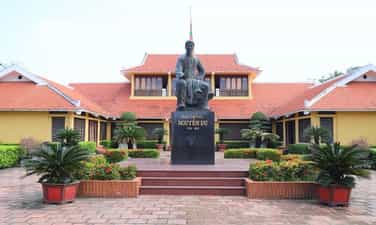
Memorial area of great poet Nguyen Du
The Great Poet Nguyen Du's Special National Monument is located in Tien Dien town (Nghi Xuan district, Ha Tinh province). This is where precious documents about the life and career of world cultural celebrity Nguyen Du and testimonies of the Nguyen Tien Dien family are kept. Ha Tinh has implemented many solutions to make this relic site an attractive destination for tourists. Nguyen Du (1765 - 1820), full name To Nhu, nickname Thanh Hien, originally from Tien Dien village, Nghi Xuan district, Duc Quang district, Nghe An town (now in Ha Tinh province) but was born and raised in Thang Long (present-day Hanoi). His father is Hoang Giap Nguyen Nghiem and his mother is Tran Thi Tan from Hoa Thien village, Dong Ngan district, Kinh Bac region (now Bac Ninh province). Since childhood, Nguyen Du has deeply absorbed the cultural essence of all three regions: Nghe An - Thang Long and Kinh Bac. That's why Nguyen Du grew up to become a well-educated, highly talented person, proficient in both Buddhism and connoisseurs of exams and drawing. The work The Tale of Kieu is a clear testament to Nguyen Du. This is a great contribution to Vietnam's literary treasure. Historical relic Nguyen Du's memorial area was built so that scholars, writers and domestic and foreign tourists who love The Tale of Kieu can come and burn incense at the grave of Nguyen Du - a great national poet and a world cultural celebrity. This is a cultural relic site located in the Nguyen Tien Dien family relic complex. This relic complex is a complex including many relics: the temple of the Great King Dr. Nguyen Hue; temples of Nguyen Nghiem and Nguyen Trong; Nguyen Quynh altar; 2 Tu Van houses; Great poet Nguyen Du's tomb, Nguyen Du museum and Nguyen Du church. Nguyen Du church was built in 1825, right on the garden of his house in Tien Giap hamlet. Inside there is an altar built of sand lime, above is hung a horizontal panel with the four words "Hong Son The Pedigree" given by Hoang Phu Phai, a filial grandmaster of the Qing Dynasty in the 55th year of the Qianlong Dynasty (1790) and a stone tablet engraved with the words "Thanh Hien Nguyen Tien Sinh". Next to Nguyen Du church is Nguyen Du museum - a place to display many precious original documents and artifacts directly related to the life and career of the great poet Nguyen Du. Currently, this is an area displaying nearly 1,000 documents and artifacts, typically the pen of Nguyen Du, the Kieu version printed from the 1866 engraving, the book The Tale of Kieu written in calligraphy style (unique), the longest calligraphy of The Tale of Kieu in Vietnam (unique), the collection of The Tale of Kieu published in many languages, a collection of books about Nguyen Du... Coming to Mr. Nguyen Du's Memorial Area, visitors will not only have the opportunity to admire the scenery here but also have the opportunity to learn more about the historical and cultural value and humanity of the Nguyen Tien Dien relic complex. In particular, if you come here in the early days of spring, you will enjoy Nguyen Du's poetry nights at the Literature House in the Nguyen Du Memorial Area. The Great Poet Nguyen Du relic site is a complex of architectural works to worship and commemorate Nguyen Du and the outstanding talents of the Nguyen family in Tien Dien, such as Gioi duong Nguyen Hue, Xuan duke Nguyen Nghiem, Lam Khe marquis Nguyen Trong, Dich Hien Cong Nguyen Dieu, Que Hien Cong Nguyen Ne... The cultural heritages in the relic site are still preserved and have special historical and cultural value. Culture, science... helps us learn about the origin, formation, development, cultural traditions, academics... of the Nguyen family in Tien Dien as well as a look at the life, career, and contributions of the great poet Nguyen Du and the Nguyen family in Tien Dien to Vietnamese literature. This is also a reliable source of information to learn about beliefs, customs, spiritual and cultural life of Tien Dien village in particular, and Vietnamese village culture in general in the development of national history.
Ha Tinh
7069 view


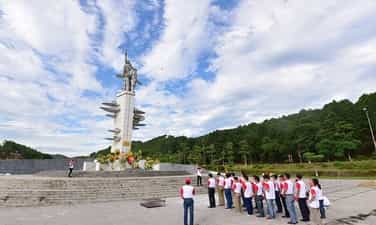
Dong Loc intersection
Dong Loc intersection is an extremely famous place in Ha Tinh associated with heroic historical stories of the nation. Currently, this location attracts many tourists from near and far with its vibrant natural scenery and is a place to preserve good traditional values of the nation during the years of resistance. Coming to the Dong Loc Junction relic site, visitors will learn about the heroic stories of young girls full of courage and determination to fight against the enemy, will appreciate today's peace more and be able to explore a fresh and extremely peaceful land. Dong Loc intersection is known as a monument to the iron will and noble sacrifice of the youth volunteer force during the years of fighting against America to save the country. Around the end of April 1965, Dong Loc Junction became the focus of the fiercest raids of the US empire when National Highway 1A was divided, goods transported by road to support the southern battlefield had to pass through here. Thanks to the spirit of resilience and effective organization of the fight against the enemy, the soldiers, self-defense militia and young volunteers together shot down many American planes, destroyed thousands of bombs, and ensured the safety of traffic and supply routes to the Southern battlefield. Among many typical examples, the one that stands out is the image of 10 young female volunteers of Team 4, Company 552, General Team 55 led by Ms. Vo Thi Tan as Team Leader. Arriving at the relic site, visitors will hear heroic stories as well as visit works of great historical value. Making the first impression is the Victory Monument - a symbol of the will to win and the heroic spirit of our people. Surrounding the monument are bas-reliefs recreating scenes of our troops shooting enemy planes, urgently filling bomb craters, detonating bombs, opening roads, and guiding vehicles through. In the relic, there is also a stele memorial to the national youth volunteers, engraved with the names of nearly 2,000 heroes, martyrs of the national youth volunteers and heroic martyrs who sacrificed their lives here. In addition, the National Youth Volunteer Traditional House and the Traditional Gallery are also places that store and display many artifacts, documents, and images. Some extremely precious artifacts such as a letter from Ms. Vo Thi Tan to her mother, food bowls, resume books, notebooks, clothes, bomb disposal magnets, leftover bombs, airplanes, artillery, etc. The cluster of statues of 10 female martyrs and young volunteers is located near the center of the relic site. This cluster of monuments recreates the image of women rushing out onto the road with ragged bomb craters, some carrying carts, some holding shovels, some holding guns, holding flags to show the way... At the relic site, there is also a bell tower that shows the gratitude of the current young generation to the previous generation of their fathers. Visitors can move up to the top of the tower to see the extremely peaceful panoramic view of Dong Loc Junction.
Ha Tinh
6943 view


Ke Go Lake
Ke Go Lake is considered the largest lake in Ha Tinh, part of the Ke Go nature reserve spread over 3 districts of Cam Xuyen, Ky Anh and Huong Khe. Ke Go Lake was completed in 1979. Ke Go Lake not only serves human life but it has become a peaceful destination that attracts tourists here after the tiring pressures of life and work. Ke Go Lake is located less than 20 km southwest of Ha Tinh town center. Transportation here is also very simple, visitors can ride a motorbike, which will be very suitable for tourists who like to travel or take a car or bus to come here. From Ha Tinh center, tourists follow National Highway 1A to Cam Binh, then turn right along Cam Xuyen Street to reach Ke Go Lake. However, visitors should be careful when coming here because the road to Ke Go Lake is quite deserted, there is a section of dirt road that is quite slippery so visitors should move carefully. Ke Go Lake is an artificial lake, but the beauty here is no less than that of natural lakes, captivating the hearts of tourists when they come here. The mountains and forests seem to embrace Ke Go Lake, reflecting a multi-colored picture on the lake's surface: The yellow color of the sunset in the late afternoon, the green color of the mountains and forests, and the vast, airy sky make visitors filled with emotions when coming here. On hot summer days, when you need to find peace. Visitors can come here to immerse themselves in the vast space of the mountains and forests, breathe fresh air, look at the vast lake surface and listen to the sound of the wind dispelling all worries. A special feature, Ke Go Lake has a bridge curved like a shrimp. This is the place that attracts many tourists coming here. Standing from the bridge, looking out into the distance at the poetic scenery of heaven and earth. There are large and small oases looming on the lake surface. Visitors feel like they are lost in a strange, mysterious fairyland. Visitors can immerse themselves in the vast space and watch the golden sunset sparkle on the lake's surface, making Ke Go Lake look like a dreamy wanderer holding someone's feet to this peaceful place. An evening of camping, eating grilled food, and chatting happily with family or friends is truly an unforgettable memory when coming here. The nature of Ke Go Lake is like a traveler's soulmate, always by your side and giving you a feeling of comfort after the troubles of urban life. Ke Go Lake is part of the large Ke Go nature reserve, covered with many blue sky forests, and the flora is also very rich and diverse. To date, there are more than 300 species of vertebrates and many rare species are in danger of extinction. This place is also the land of many precious flowers. Ke Go Lake is increasingly invested and completed with many services, visitors can participate in many other activities: boating along the vast lake, enjoying local specialties, boat racing, fishing or playing other activities such as badminton, volleyball, etc. To make your trip more complete, visitors can also visit and burn incense at the memorial site of late General Secretary Le Duan. The pure atmosphere of the mountains and forests gives visitors a feeling of calm in their souls. Or enjoy wonderful moments at the fresh, cool Thien Cam beach with wild large and small rocks. The sound of waves lapping and embracing the rocky beaches, inhaling the fresh sea breeze are truly unforgettable moments.
Ha Tinh
7736 view


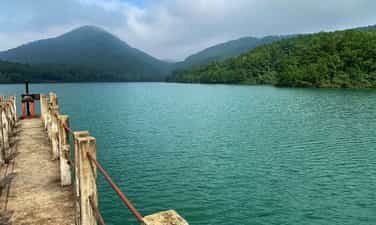
Hong Linh Mountain
In addition to the well-known name Hong Linh, this ancient mountain also has another name in Vietnamese called Ngan Rong (Roar) with a measured length of about 30km, the mountain direction is Northwest - Southeast. According to local people, Hong Linh includes 3 mountain groups: Dun Ngan, Thien Tuong and Eo Bau and a system of a series of caves and streams. There are quite famous caves that are often mentioned such as Ham Rong, Che Hai, Da Hang... It is not for nothing that this place is called "the symbol of the sacred soul of rivers and mountains", Hong Linh has existed over time, associated with the ups and downs of history. The top of the Flag Tower on the mountain was once the place where Mai Thuc Loan's son built a base, or Lau Mountain was the place where Ly Thanh Tong chose to build his palace. There are many different myths and legends still passed down by people related to this mountain and the years it has passed. Because of this, many pagodas, temples, and shrines, numbering up to more than 100, were built here by people. Some places have become famous pilgrimage destinations that many visitors from near and far visit for incense sticks every holiday such as Huong Tich Pagoda, Chan Tien Pagoda or Tien Son historical relic cluster. People come to Hong Linh mountain not only for pilgrimage, but also for spring travel, sightseeing, and enjoying the cool and peaceful mountains and forests. More specifically, Tien Son has been recognized by the State as a national historical relic cluster. Every year there is a traditional festival with many different activities to welcome tourists from all over. On the 15th day of the first lunar month every year, pilgrims from all over come here to worship and pray for peace.
Ha Tinh
8704 view


