
 vn
vn en
en ja
ja ko
ko zh
zh


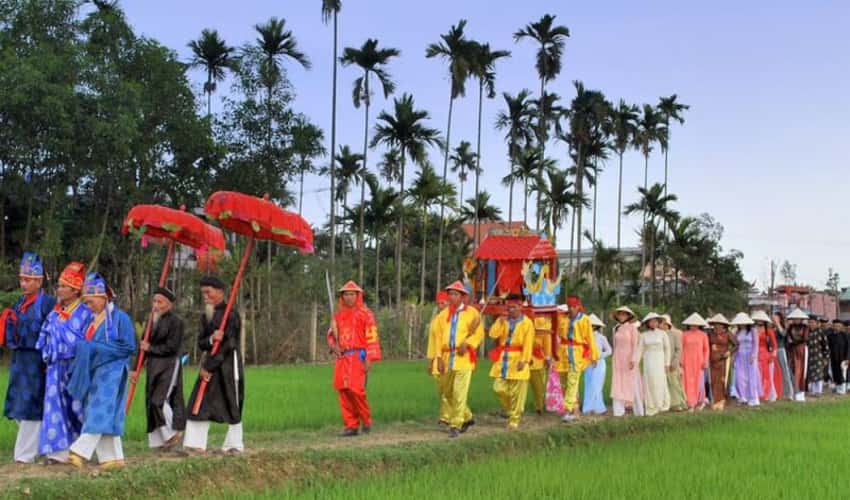








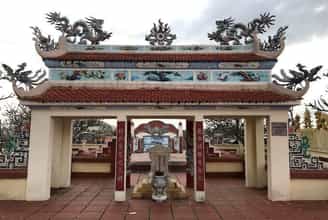
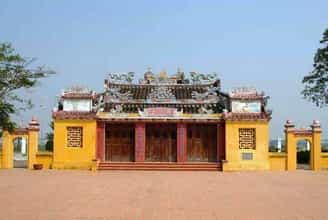
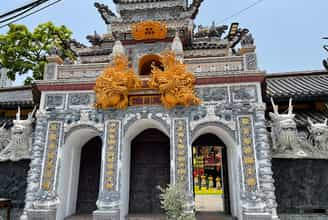
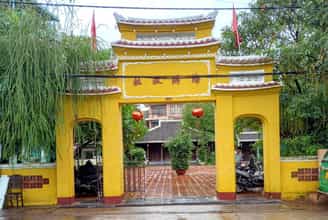
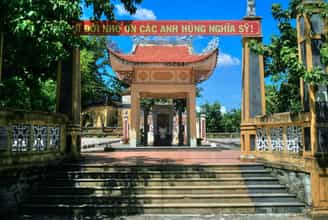
Tuy Loan communal house festival Tuy Loan village is considered one of the few villages that still retains the most ancient vestiges in Vietnam. Tuy Loan village is currently over 500 years old. Located on the Tuy Loan river, less than 1 km from National Highway 14B through Hoa Khuong commune (Hoa Vang, Da Nang), through many ups and downs of time, Tuy Loan village communal house, although no longer able to maintain its original state, still retains its inherent majesty. Every year, on the 9th day of the Lunar New Year, residents of the East and West villages of Tuy Loan village in Hoa Phong commune, Hoa Vang district, Da Nang city and tourists from all over gather here to open the traditional festival of the village communal house. Tuy Loan village festival usually takes place on the 9th and 10th days of the lunar calendar. Tuy Loan village communal house was built by the ancestors of five clans including: Dang, Lam, Nguyen, Tran, and Le, who mobilized the people, estimated to have been built in 1470 (Le Dynasty, original name Hong Duc), around the second half of the 15th century. According to historical descriptions, at that time, Tuy Loan village communal house was made of bamboo leaves. In 1787, the communal house was restored for the first time, and again in the winter of Mau Ty (1888). This time it was completed in 8 months and was organized by General Dang Van, holding the position of deputy director of Quang Nam Hai Phong. It is said to be restored, but in fact, because the communal house burned down, it was completely redone this time. After more than half a century of change, the village communal house has been renovated many times, but still retains the old architectural features, bearing the architectural nuances of village beliefs, evidence of a long-standing cultural village on the outskirts of the city. Da Nang. Tuy Loan Communal House, a place for cultural activities and folk festivals. Every year there are two big festivals: spring worship and autumn worship on February 14 and 15. On February 14, the first ceremony is held. At the hour of the Ox, February 15, the first ceremony is held. Autumn Festival is on the 14th and 15th days of the 8th lunar month. The autumn festival is usually a prayer for national peace and prosperity (referred to as praying for peace). On August 14th, the opening ceremony was held. At the hour of the Ox, August 15th, the first ceremony is held. The autumn ceremony usually has a colorful procession on August 14th; procession from Mr. Thu Sac's house to the communal house. The procession has a table carried by 4 people, surrounded by red and yellow cloth, with a parasol, accompanied by 9 flags, 1 square flag and 8 crossed flags. Accompanied by an octagonal band and gongs and drums. The procession goes around the village, then returns to the communal house. On the way, many villagers joined the procession. Sacrifices include buffalo or pigs. If the buffalo is sacrificed to the gods, then on the afternoon of the 14th lunar month of February and August, the villagers lead the buffalo back and forth a few times in front of the communal house's yard, meaning to report to the gods. If you kill a pig, put it in a basket and carry it to the front yard of the communal house. When taking buffalo blood, leave a bowl of fresh blood. Buffaloes are cleaned with a broom. After being shaved, the sacrificial buffalo is placed on the Council altar (common worship) at the hour of the ox, and the blood is dipped in blood to apply to the buffalo's body. The pig is boiled and cut into pieces, butt and slices are placed on a plate. The pig's head, 4 legs, tail, and intestines (a little of each) are placed on a large plate to worship the gods. In addition to the above must-have offerings, there are also rice, sticky rice and locally prepared dishes with hometown flavors. Preparing for the sacrificial ceremony from 1945 onwards, the feudal state provided public fields called self-filled fields for a few people in the village to produce and use for the sacrificial purposes. Every year, Tu Duc's reign granted 12 acres of fields. One day before the ceremony, there is a procession of flowers from the Thu Sac house to the village communal house, attended by village officials along with the clans. The ceremony is similar to the procession in localities in the district. During the ceremony, there was a poem praying for the peace of the country and the people of the village, and for the people in the village to be prosperous, peaceful, and productive all year round. After the ceremony, people in the village gathered in the communal house yard to eat together with a high spirit of solidarity. Here, folk entertainment activities associated with wet rice agriculture are organized such as tug-of-war, rope jumping, bracing, tree-pushing contests, rice cooking, Chinese chess... In some years, boi singing, repartee chanting, hut card games are organized... At the communal house, people in the village exchange new rice varieties, new seedlings, farming methods and harvest times. Through that, people in Tuy Loan can exchange, borrow, rent... for the next crop.
From 25/02/2026 - 26/02/2026




 AI Travelviet