
 vn
vn en
en ja
ja ko
ko zh
zh


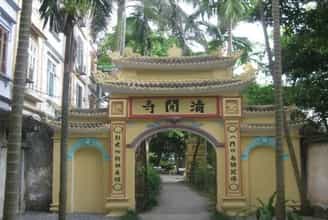
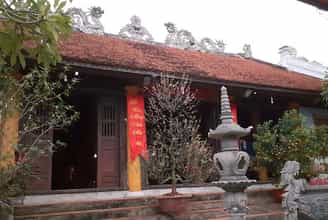
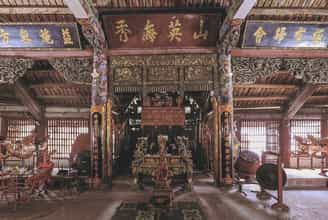
Thuong Phuc Village Festival Time: February 16 of the lunar calendar, April 14 and April 27 of the lunar calendar. Location: Thuong Phuc Village, Ta Thanh Oai Commune, Thanh Tri District, City. Hanoi. Objects of worship: Prince Ly Tham, Zen master Ho Ba Lam. Characteristics: Boating competition on the river, one year is wooden boat swimming, another year is basket boat swimming. In the rice blowing competition, a couple of men and women blow rice while dancing. In the evening, there is military drum singing on the boat. Thuong Phuc village is now a village of Ta Thanh Oai commune (Thanh Tri district), which was originally two villages Nguyen Thuong and Ngu Phuc (with the Nom name Ha village). In the early 19th century, these two villages were two independent villages in Ha Thanh Oai commune, Ta Thanh Oai district, Thanh Oai district, Ung Thien district, Son Nam Thuong town. In the second year of Minh Mang (1821), the Bac Thanh governors proposed merging these two villages into one village named Thuong Phuc. According to the "Essentials of History" compiled by Ngo Thi Nham in the second year of Canh Thinh (1794), the village was formed a long time ago. By the mid-fifteenth century, a part of Champa prisoners were exiled here to clear the lowlands and expand the villages. Thuong Phuc was formerly a low-lying agricultural village. The fields are white all year round, so cultivating rice is very difficult and not sure how to make a living. In 1939, the French colonial government adjusted the Nhue River section, from Sieu Quan village to Dan Nhiem village, making the river's water drain faster during the rainy season. The fields of Thuong Phuc and 16 villages in the area (water drainage is easier, flooding has decreased significantly, farming is more convenient. In addition to farming, villagers also exploit abundant aquatic resources in low-lying fields, combined with trading. Thuong Phuc village has Bao Thap pagoda, which people often call Bodhisattva pagoda. This is an ancient pagoda, legend has it that it was built by Monk Ly Tham - younger brother of King Ly Hue Tong (1211 - 1224) and practiced here. This is also demonstrated through some parallel sentences on the bronze pillars of the Three Jewels Pagoda. Near the end of the Tran dynasty, there was a noble monk named Ho, a descendant of royalty who gave up his salary and mandarins to come here to practice. In addition to spending money to renovate the pagoda, this monk also recruited hundreds of orphans and helpless old people to take care of, and the children were fed to them. The Venerable's reputation spread far and wide. Grateful to the Venerable Monk, the villagers, especially the aunts who carved a living statue of Him. When the Venerable attained enlightenment, the people and the court honored him as a Bodhisattva and called Bao Thap Pagoda after his honored name. Later, King Tran's Queen Mother Minh Tu came here to take refuge from the Champa invaders who destroyed the capital. Seeing that she was a virtuous and devout person, the Venerable entrusted the pagoda to her, then he immediately set up a fire altar, climbed up on the altar to chant sutras, and ordered his disciples to light the altar. The fire was burning all around, but the Bodhisattva still calmly recited the Tripitaka Sutra and then his whole body turned into charcoal. That day was April 14, so every year, people in the village and around the area take this day as the death anniversary of the Pagoda's Patriarch. To this day, people in Thuong Phuc village and in the region still offer sacrifices to Bodhisattva with the Nom poem in the six-eight form. After the Bodhisattva was cremated, the Queen Mother became a nun, burning incense every morning to worship Buddha, taking care of and expanding the temple. The villagers of Thuong Phuc respected her and asked to be allowed to set up a shrine in front of the pagoda to worship her later. Three years later, there was an order for her to return to the capital. Before returning to the capital, the Queen Mother held a banquet for the villagers on February 16. While the party was having fun, the Queen Mother caught wind and passed away. King Tran heard the news and ordered Thuong Phuc village to worship the Queen Mother as a God of Happiness along with Bodhisattva, at both the pagoda and communal house (established later). Comparing with records in official history (the Complete History of Dai Viet book), we see that the Champa army led by Che Bong Nga destroyed the capital Thang Long took place in the year of Tan Hoi - 1371 under the reign of King Tran Nghe Tong. Therefore, the Queen Mother who took refuge in Bao Thap Pagoda in Thuong Phuc village was King Nghe Tong's wife and Ho Quy Ly's biological aunt. These few documents contribute to supplementing the rich history of Thang Long - Hanoi during the Tran Dynasty.
From 02/04/2026 - 03/04/2026

 AI Travelviet