
 vn
vn en
en ja
ja ko
ko zh
zh


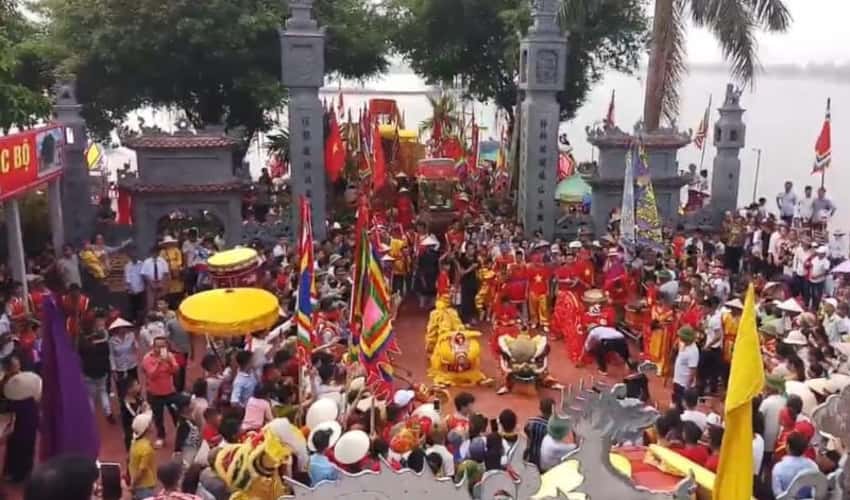
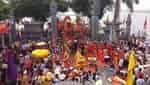
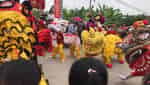
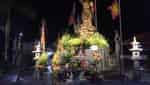
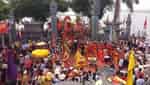
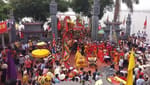
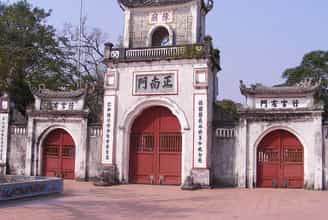
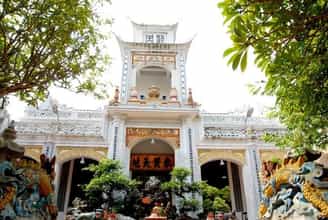
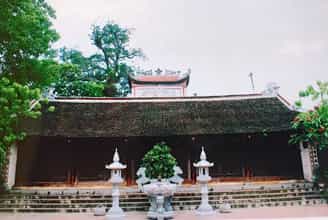
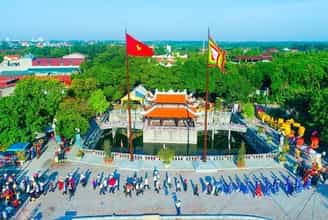
The Doc Bo Temple Festival - the largest autumn festival in the Northern Delta. In the ancient land at the confluence of three rivers - Doc Bo village, Yen Nhan commune, Yen Yen district, Nam Dinh province, the villagers hold an annual festival to commemorate the martyrdom of Trieu Viet Vuong. Besides that, the festival also aims to enhance the spiritual life of the people. The Doc Bo Temple is dedicated to Trieu Viet Vuong. The Doc Bo Temple Festival is held from the 11th to the 15th of August in the lunar calendar every year, in Yen Nhan commune, Yen Yen district, Nam Dinh province. In the years before the August Revolution (1945), although the lives of the vast majority of people in the region were still difficult and lacking in many ways, suffering under the oppression of colonial and feudal rule, the festival was still held annually to express gratitude for the merits of their ancestors and to remind descendants to uphold the traditions of their homeland. Also in the riverine region considered the sacred site of Trieu Viet Vuong, for hundreds of years, the festival at Doc Bo Temple has transcended the level of a village festival, becoming a renowned autumn festival for hundreds of villages in the southern Red River Delta, with a wide influence and spreading to many neighboring areas. It is no coincidence that almost all villages with historical relics in the region come here to bring incense sticks to worship the sacred Trieu Viet Vuong at their village temples; and whenever they hold their village festival, they must come here to offer prayers and ask for permission before the festival begins. Due to the scale of the festival, in the past, all rituals were organized by the district officials. Therefore, the rituals are conducted with great solemnity. From the beginning of the eighth lunar month, the district officials assign tasks to the villages, especially the preparation for the Tam Ky Giang ritual at the confluence of the rivers on August 13th. To prepare for the festival to be solemn, the people of the villages hold meetings to discuss the organization of the rituals. Merchant fleets from Thai Binh, Ninh Binh, Thanh Hoa, and Nghe An sailed to Doc Bo wharf, anchoring months in advance, waiting for the main festival day to participate in the ceremonial boat procession. According to folk beliefs, the boat chosen to be the ceremonial boat would have good fortune that year. The festival organizing committee (formerly the Council of Village Elders) met to select the chief and assistant officiants for the festival. They appointed people to directly perform the rituals and two people to lead the East and West chants. By custom, each village selected two people to participate in the three-stage ceremonial procession, often abbreviated as "Three-Stage Ceremony." According to ancient custom, the villages of Doc Bo, Pham Xa, Doai, Duong Xo, Dong Cao (Yen Loc), and Thuc Vu (Yen Cuong) would take turns each year carrying palanquins onto boats to perform the ceremony. The villages participating in the "Three-Stage Sacrifice" are responsible for preparing offerings, palanquin bearers, and ceremonial texts. According to annual tradition, the festival usually takes place over five days: On the 11th, the atmosphere is lively, with people from all over the region offering gifts and participating in the opening ceremony. In the villages, almost every family and clan busily prepares cakes and pork to welcome their children, relatives, and friends to the festival. On the morning of the 12th, the villages of Duong Xa, An Duong, Pham Xa, and Doai Thon (Yen Nhan commune) noisily carry palanquins from their villages to Doc Bo to participate in the festival. Among them, the village of Phu Sa Thuong on the other side of the river (belonging to Hoang Nam commune, Nghia Hung district) is only allowed to carry the incense burner dedicated to Trieu Vuong's daughter, Cao Nuong, to the riverbank facing Bo Dau, setting up an altar facing the temple of the king to offer sacrifices. Also on the 12th, from early morning, around 5 AM, people from the villages of Dong Quy, Thach Cau, and Lac Chinh (all belonging to Nam Tien commune, Nam Truc district) gathered in large numbers, with flags and vehicles bustling at the Doc Bo temple courtyard to perform the ritual of requesting incense sticks, carrying them back to their village temples for worship, and inaugurating the festival commemorating Trieu Quang Phuc. Throughout the 12th and the following days, people from Nam Truc, Hai Hau, and southern districts of Yen Yen (in Nam Dinh province), districts along the river in Nghia Hung and Yen Khanh (in Ninh Binh province), and many villages in Thanh Hoa and Nghe An provinces... flocked by waterways and land to offer prayers and participate in the festival. On the 13th, a procession of villages in Yen Nhan commune (formerly part of a district) was held to the temple to offer prayers and commemorate the martyrdom of Trieu Viet Vuong. Leading the procession were teams carrying five-colored flags and sacred flags. Next came the procession of palanquins, carried by young men in red attire, with red leg wraps, red sashes, and red headscarves. Following them was the traditional music ensemble with various ancient instruments. Next came the procession carrying the eight sacred objects, spears, cymbals, and two teams of male and female ritual officials. Following them was the procession of village elders, local dignitaries, and people from the surrounding area. Along the procession route, people displayed their family offerings on the roadside to pay homage to the deity. After the processions had gathered in the temple courtyard, all the palanquins were positioned facing the river confluence, and the procession of incense burners was carried into the temple for the initiation ceremony. At noon on the 13th, the Tam Ky Giang ritual was performed at the temple. Villages in the commune, such as Pham Xa, Duong Xa, Doai Thon, and Doc Bo, carry palanquins onto their village boats, sailing out to the confluence of the three rivers, where the clear water (belonging to the Day River) and the muddy/alluvial water (belonging to the Dao River) meet, to hold a grand ceremony. The ceremony takes place about a kilometer from the Doc Bo Temple. The village of Doc Bo always plays the role of performing the ritual. The Tam Ky Giang ritual is essentially a ceremony to worship heaven and earth, and the deities at the river confluence, and to bring holy water back to the temple. This ritual is performed over two weeks: The first week is dedicated to worshipping heaven and earth, praying for favorable weather, calm seas, abundant harvests, and flourishing life. The teams offer incense, burn votive paper, and burn horse offerings, then release them into the river along with other offerings such as sticky rice cakes and sweet soup. The second week is dedicated to worshipping the deities; the teams read prayers and pour water into a jar covered with red cloth, making it holy water to be brought back to the Doc Bo Temple for the ceremony. After about two hours of rituals on the river, the Tam Ky Giang ritual teams returned to the temple to perform other ceremonies. On the 14th, while the village-level ritual teams performed thanksgiving ceremonies, the district-level procession, including groups from Dong Cao, Vu Sai (Yen Loc commune), Ba Thuc Vu communal house (Yen Cuong commune)... carried the palanquin to Doc Bo for a friendly exchange ceremony. Besides the solemn rituals during the festival, in the afternoons, many folk games such as tug-of-war, cockfighting, card games, chess, climbing a floating bridge, and competitions in vegetarian dishes, chicken fighting, and cake making were held concurrently. In the evenings, villagers enthusiastically gathered to compete in Cheo, Ca Tru, and Quan Ho singing between the village's performing arts groups right in the temple courtyard. Inside the temple, spirit medium rituals and folk singing were organized, contributing to a vibrant and attractive cultural atmosphere. Many years ago, people in the riverine areas of Yen Cuong and Yen Dong communes (Yen Yen district) and villages in Nghia Hung, Giao Thuy, and Nam Truc districts traditionally held boat races, creating a vibrant and lively festival atmosphere for the riverine communities. On the 15th, in the morning, villages/hamlets in the commune held thanksgiving ceremonies, and in the afternoon, the people of Doc Bo village performed a thanksgiving ceremony in their role as local residents, closing the temple and concluding the main festival of the year. Today, the custom of carrying palanquins from various places to participate in the festival still takes place according to the old tradition; however, to suit the social conditions and regulations of the traditional festival, the duration of the festival has been shortened to 2 to 3 days, and some cumbersome rituals have been simplified. Nevertheless, the highlights of the current Doc Bo festival are still emphasized in the Tam Ky Giang ritual, boat races, singing competitions, feast competitions, and folk games, creating a magnificent cultural festival space that vividly portrays the unique character and vitality of a rare festival held during the Mid-Autumn Festival, making it one of the largest festivals in the Red River Delta.
From 21/09/2026 - 25/09/2026





 AI Travelviet