
 vn
vn en
en ja
ja ko
ko zh
zh


A Journey Through Time: Discovering Over 20 Historical Treasures in Khánh Hòa

Beyond its stunning beaches and turquoise islands, Khánh Hòa also proudly boasts a rich tapestry of historical and cultural sites, some dating back hundreds, even thousands of years. Join 63Stravel as we delve into and marvel at over 20 of these historical landmarks across Khánh Hòa – this enchanting coastal city!
If you want to learn aboutthe historical sites in Khanh Hoa, join63S Travelto discover a list of over 20 prominent historical sites in this city. These cultural heritage sites have stood for hundreds of years, witnessing the many ups and downs of the nation's history. When you visit, you'll gain a deeper understanding of Vietnam's heroic past.
Top 20+ Famous Historical Sites in Khanh Hoa
Below is a list of famous and captivating historical sites in Khanh Hoa that attract visitors. Save this list to ensure an exciting and memorable trip to this beautiful coastal city.
Am Chua Temple
Am Godis nestled on Dai An Hill, serving as a place of worship for Holy Mother Thien Y A Na, the patron deity who taught people how to live and prosper. The worship of Thien Y A Na originates from the Cham people's tradition of worshipping Lady Ponagar, later adapted by the Vietnamese into the legend of Thien Y A Na descending to Dai An Mountain and achieving sainthood at Ponagar Tower in Nha Trang. Today, the saying "Am Chua manifests humanity, Ponagar Tower manifests divinity" is still widely circulated in Khanh Hoa, affirming the sacred connection between these two sites.
At Am Chua Temple, you'll feel a sense of transcendence and gratitude towards the ancestors who chose this place to worship Holy Mother Thien Y A Na, revered throughout the South Central Coast and Central Highlands. The architecture of Am Chua Temple shares many similarities with communal houses in Khanh Hoa, reflecting the local people's religious characteristics.
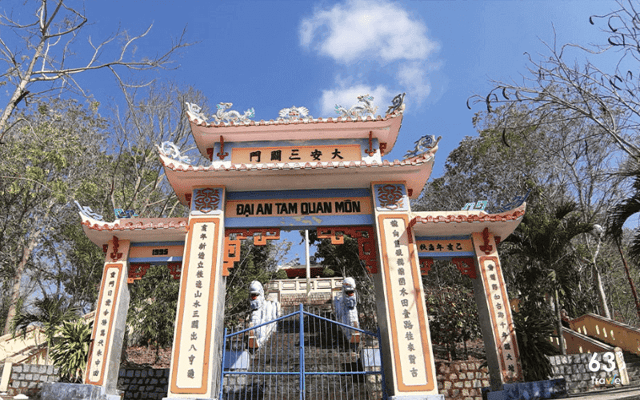
Am Chua Nha Trang – A Famous Sacred Site in Vietnam
The structures at Am Chua Temple include the Tam Quan (triple gate), the tomb of Mr. and Mrs. Tieu, inscribed steles, Son Lam Shrine, Ngu Hanh Shrine, and the main sanctuary, each holding special spiritual and cultural significance. Before entering the Dai An Tam Quan Mon gate, you'll ascend over 100 granite steps, a gesture of sincerity. Beyond the gate, a pair of majestic, intricately carved stone dragons will greet you. Am Chua Temple's layout comprises a ceremonial hall and the main sanctuary, adorned with embossed images of the four sacred creatures: 'Dragon, Unicorn, Tortoise, Phoenix.' Notably, the ceremonial hall also features a pair of Hán Nôm couplets recounting the legend of the Holy Mother.
Am Chua Temple is a renowned spiritual tourist destination in Nha Trang, hosting many unique festivals that attract a large number of visitors. It preserves distinctive cultural aspects of Khanh Hoa's spiritual life. If you have the chance to visit Nha Trang, Am Chua Temple is certainly an unmissable attraction.
Thanh Trieu Pagoda
Thanh Trieu Pagoda (also known as Thanh Son Pagoda) is located in Thuy Trieu village, Cam Hai Dong commune, Cam Lam district. Although the exact construction date is unknown, it has become an important spiritual center for Buddhists in Khanh Hoa.
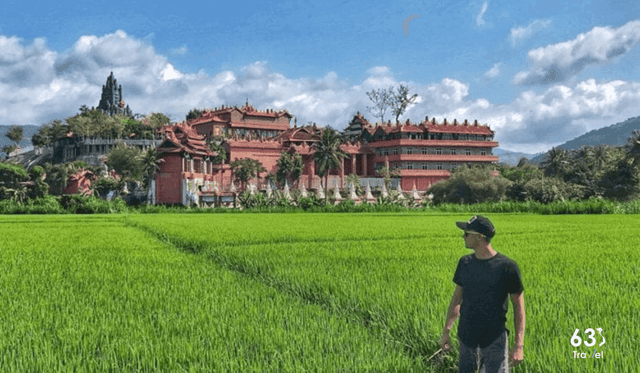
Be Awed by the Exquisite Architecture of Thanh Son Pagoda - Khanh Hoa
This pagoda is not only a sacred destination but also renowned for its compassion, serving as a sanctuary for orphans and lonely elderly individuals with no one to rely on. The pagoda's benevolence and mercy have made it a respected institution, offering hope and comfort to many unfortunate lives.
Alexandre Yersin Memorial Site
The cluster of memorial sites dedicated to the scholar-doctor Alexandre Yersin includes four important locations:
The Yersin Library at Pasteur Institute, Loc Tho Ward, Nha Trang City
Linh Son Pagoda in Suoi Cat Commune, Cam Lam District
Yersin's Tomb in Suoi Dau, now part of Suoi Cat Commune, Cam Lam District
His workplace on Hon Ba Mountain, 47km from Nha Trang, in Cam Lam District.
Dr. Alexandre Yersin dedicated over half a century to living and working at the Pasteur Institute in Nha Trang, leaving behind 55 valuable research works not only for Khanh Hoa province but for all humanity. In Khanh Hoa, three sites commemorate his contributions, including the library housing important research documents in Nha Trang and two other structures in Dien Khanh district. To honor him, a street in Nha Trang also bears the name Yersin. If you are passionate about medicine, this is certainly an unmissable destination.
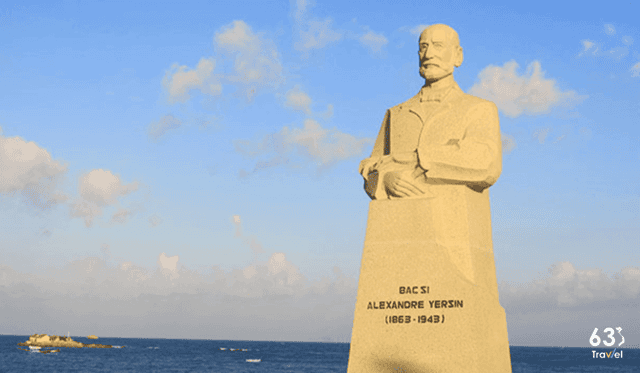
Visiting the Alexandre Yersin Memorial Site
Memorial area of Dr. Alexandre Yersinin Suoi Cat Commune, Cam Lam District, Khanh Hoa Province, marks the life and great medical career of Dr. Yersin. Built in 1985 on a plot of land spanning over 20 hectares, the memorial preserves many artifacts connected to his life.
This site was recognized as a National Historical and Cultural Relic in 1990. It is not only an attractive tourist destination but also a place for visitors to learn about Dr. Yersin's life and great medical career, while also paying tribute to his immense contributions to Vietnamese and global medicine.
Khải Huyền Mansion
Khải Huyền Mansion, also known as Dragon Villa or Serpent Mansion, is a unique architectural masterpiece in Nha Trang City, designed entirely based on images and events from the Book of Revelation, dating back nearly 2000 years. With its dominant white and gold colors, Khải Huyền Mansion evokes a sense of reverence and mystery from the moment visitors step inside.
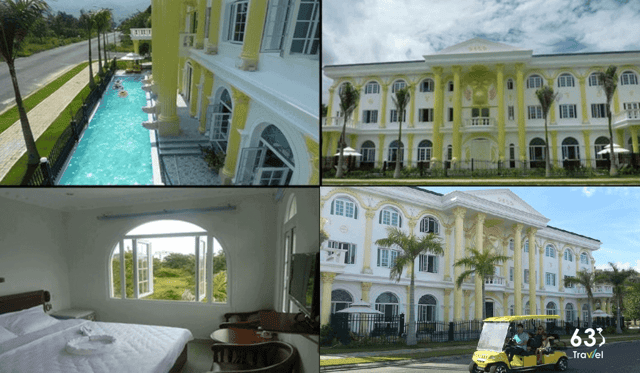
Khải Huyền Mansion Nha Trang – Unique Architecture in the Coastal City
Situated in a majestic location, Khải Huyền Mansion is not just an architectural structure but also a symbol of elaborate and meticulous craftsmanship. Hundreds of intricate design details, such as cobras and dragon imagery, adorn every corner from column capitals and balconies to the staircase at the back of the house, all recreating sacred creatures from the Book of Revelation.
The second floor of Khải Huyền Mansion is divided into a hotel area, comprising 9 rooms representing the planets of the Solar System, each uniquely and exquisitely designed. From the 'Heavenly Emperor's Palace' to the paintings and interior furnishings, every detail expresses reverence for the events and prophecies in the Book of Revelation.
Phu Vinh Ancient Village
Alongside the bustling and vibrant rhythm of a lively coastal city, visitors have the opportunity to enjoy a completely different atmosphere – Phu Vinh Ancient Village. With its array of old houses, this village offers visitors an emotional experience of ancient Central Vietnamese architecture and is particularly appealing to international tourists.
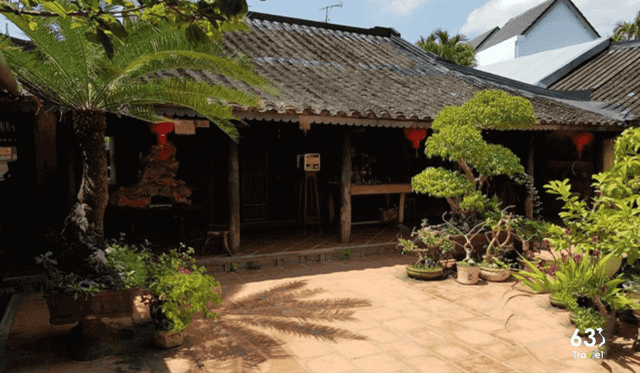
Travel Back in Time” to Phu Vinh Ancient Village, Steeped in History
Stepping into Phu Vinh Ancient Village, visitors feel as if they've entered another world, where memories from over 200 years ago vividly come to life. The beautiful village path is shaded by two rows of tall trees, alongside lush green rice fields stretching to the horizon. During harvest season, the fields glow with brilliant golden rice; in the young rice season, they are vibrant green, and the cheerful chirping of birds fills the air, offering visitors a sense of peace and relaxation, like returning to childhood.
Amidst the hustle and bustle of the modern city, Phu Vinh Ancient Village retains the pristine beauty of a traditional countryside, with old houses featuring yin-yang tiled roofs, ceramic tiled floors, and polished black ironwood pillars, exquisitely adorned with meticulous carvings. Large ceramic vases decorating the interiors not only add to the luxurious aesthetic but also reflect the wealth and rich decorative art of these ancient homes.
>> See also:Vietnam's Top 10 Most Beautiful Beaches, as Recommended by International Media
Dien Khanh Temple of Literature
Dien Khanh Temple of Literature(also known as Phuoc Dien Temple of Literature) is an architectural complex dedicated to Confucius – the founder of Confucianism in China – and honors outstanding local individuals who achieved academic titles. Established under the guidance of Emperor Gia Long in 1803, the Temple of Literature is located in Phu Loc commune, Hoa Chau district, now part of Phu Loc Tay hamlet, Dien Khanh town. It is one of the oldest provincial-level temples of literature remaining in Central Vietnam, playing a crucial role in preserving and developing the local historical and cultural heritage.
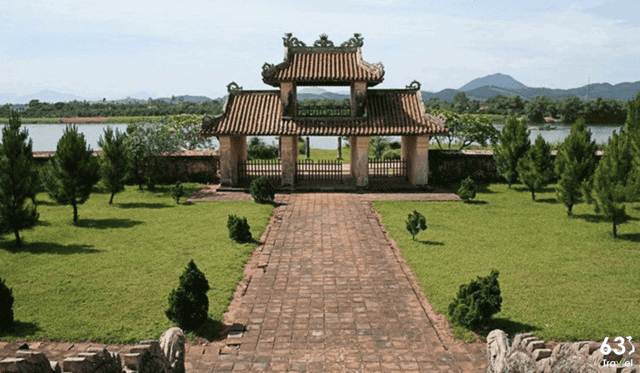
Dien Khanh Temple of Literature – The First Confucian Temple in Khanh Hoa
The Temple of Literature complex has undergone several renovations from 1892, 1904, 1941, until 1959, yet it has retained its traditional architectural features. Notably, two stone steles from the reign of Emperor Tu Duc (1858) are still preserved here, offering valuable insights into the history, culture, and daily life of the people of Khanh Hoa. The inscription in the ceremonial hall also records a list of local students and teachers from the Nguyen Dynasty to the Tu Duc era, further highlighting the region's literary and academic prowess.
Recognized as a National Historical and Cultural Relic by the Ministry of Culture and Information in 1998, Dien Khanh Temple of Literature is not only a place of worship but also an attractive destination for tourists, offering them the opportunity to explore and learn about Khanh Hoa's culture and history through its ancient yet robust architectural structures.
Dien Khanh Ancient Citadel
Thang Long Imperial Citadel, Hue Imperial City, and Dien Khanh Citadel are three ancient citadels in Vietnam that remain relatively intact compared to their original architecture. Among them, Dien Khanh Citadel once held a crucial strategic position in the South Central Coast. Since the time of the Nguyen Lords, the Dien Khanh area was a prefecture and is now a district of Khanh Hoa province, located 10km west of Nha Trang city center and 35km north of Cam Ranh.
Dien Khanh ancient citadelis a vivid tableau of significant historical events of the Vietnamese nation. Initially the capital of the Champa kingdom, it later became the political and military center of the Nguyen Dynasty for 150 years. The citadel was built in the 18th century during the reign of Emperor Gia Long, following the French Vauban architectural model, with a hexagonal shape, a perimeter of over 2,500m, walls 3.5m high and 6m wide. Inside the citadel were many important structures such as official residences, treasuries, and prisons, serving as cultural museums preserving many precious historical artifacts.
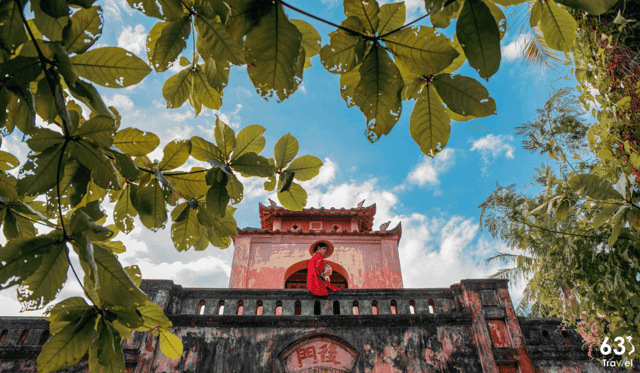
Dien Khanh Ancient Citadel – A Remaining Historical Site from the Nguyen Dynasty
Dien Khanh Ancient Citadel has witnessed many fierce wars and is a place that records the heroic sacrifices of our army and people in defending the nation. Recognized as a National Historical and Cultural Relic in 1988, Dien Khanh is not only a testament to the nation's glorious history but also an attractive tourist destination drawing visitors from both within Vietnam and abroad, offering them the opportunity to explore and understand the beauty and cultural value of this land.
Long Son Pagoda Nha Trang
Long Son Pagoda (also known as White Buddha Pagoda) is one of Nha Trang's famous historical sites. Built in the early 19th century, Long Son Pagoda once served as the Buddhist headquarters for Khanh Hoa province and is now the largest pagoda in the city. With its sacred ambiance and unique landscape, Long Son Pagoda is an unmissable destination when traveling to Nha Trang.
Upon entering Long Son Pagoda, visitors will be amazed by the beauty of the Shakyamuni Buddha statue, cast from bronze and weighing 700kg, and the Thousand-Eyed, Thousand-Armed Avalokiteshvara Bodhisattva statue. The reclining Buddha statue, 7m long and 5m high, atop Long Son Pagoda hill, along with a 1.5-ton bronze bell tower and a 14m-tall Golden Body Buddha statue, are impressive highlights that must be mentioned.
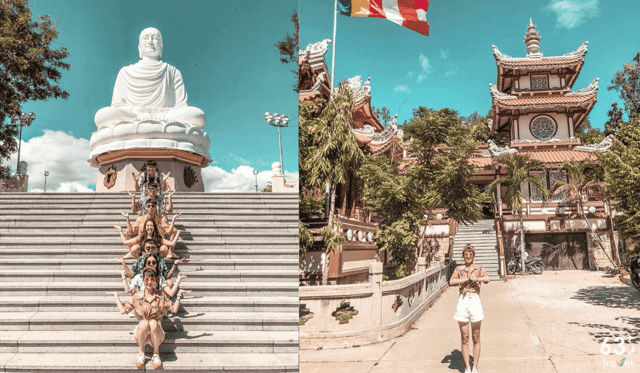
Be Awed by the Beauty of Vietnam's Largest White Buddha Statue
Despite undergoing several renovations, Long Son Pagoda has maintained its majestic and solemn appearance. When visiting Long Son Pagoda, visitors should remember to dress respectfully and modestly, and to honor the sacred atmosphere of the site.
The pagoda also houses many exquisitely carved statues of Buddhas, Bodhisattvas, and Arhats, rich in artistic value. With a main hall spanning 1670m², designed to be airy and solemn, Long Son Pagoda is a place for daily worship and the organization of important ceremonies on lunar holidays each month.
Nha Trang Stone Church
Nha Trang Stone Church (also known as Mountain Church) is one of the special historical sites not to be missed in the coastal city of Nha Trang. Standing out with its distinct French Gothic architecture, the church has long become a cultural and religious symbol of the locality.
Built during the French colonial period, Nha Trang Stone Church has retained the elegant and refined architectural beauty of its early days. From Thai Nguyen Street, visitors must ascend 53 steps to reach this structure, or from the six-way intersection, choose the split-stone path leading up to the church courtyard, which is about 8m above street level.
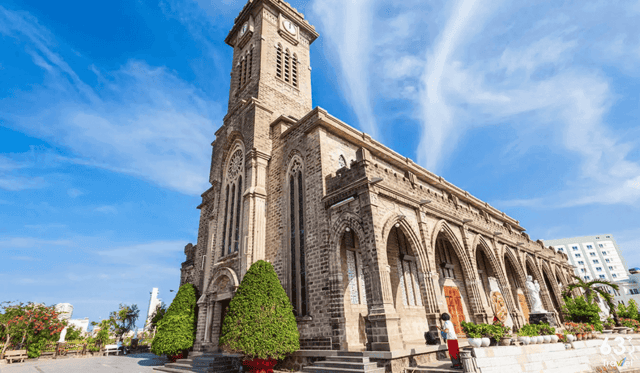
Admire the Masterpiece of Nha Trang Stone Church
Perched atop Hoang Lan Hill, Nha Trang Stone Church boasts a robust composition of cubic stone blocks, soaring high into the blue sky. The highest point of the church is its bell tower, housing the Holy Cross, reaching a height of 38m from street level. This architectural style not only conveys elegance but also celebrates the strength and steadfastness of the Catholic faith.
The interior of the church is spacious and airy, divided into the sanctuary area and the area behind the sanctuary, offering a solemn and tranquil space. With its Gothic-style rose windows, Nha Trang Stone Church proudly stands as a wonderful destination not only for Catholic faithful to pray but also an ideal spot for young couples to take wedding photos or capture stunning Instagram-worthy shots.
In addition to its prominent architectural features, the church is equipped with two heavy bronze bells, hanging in the bell tower and manufactured by the French company Bourdon Carillond. The large clock on the tower is also an unmissable detail, serving as an important time marker not only for the local community but also for visitors from all over.
With over 90 years of history, Nha Trang Stone Church has become a unique architectural and religious symbol, an unmissable destination for those who appreciate and honor Vietnam's cultural values.
Tran Quy Cap Temple
Temple of Tran Quy Capin Dien Khanh, Khanh Hoa, is a historical and cultural relic imbued with profound spiritual value and national significance. Built in 1970, the temple is located beside Song Can Bridge, also known as Go Chet Chem (Beheading Hill), affirming the important role of the patriot Tran Quy Cap in the Duy Tan (Modernization) movement.
With an area of only about 12m², Tran Quy Cap Temple has a small, low structure, built in the ancient pavilion style with four equally sized roofs. In front of the temple are two stone pillars with couplets expressing deep reverence for the ancestors. In addition to worshipping Tran Quy Cap, the temple also houses altars for General Binh Tay Trinh Phong and Military Counselor Nguyen Khanh, hence it is also known as Trung Liet Dien (Hall of Loyal Heroes).
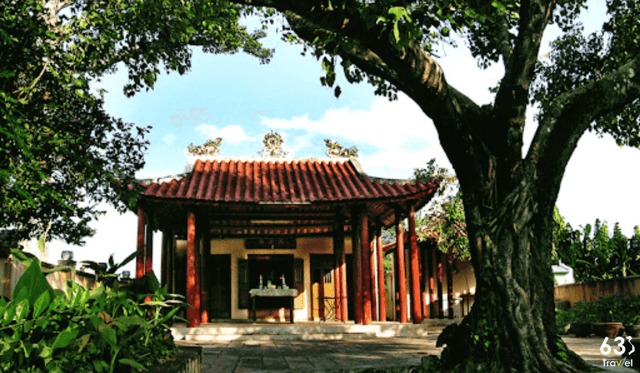 Visit the Famous Tran Quy Cap Temple in Khanh Hoa
Despite being relocated in 2003 to facilitate the reconstruction of Tran Quy Cap Bridge and to commemorate the 350th anniversary of Khanh Hoa province's establishment, the temple has retained its beauty and historical character. The temple's modern and contemporary architectural style skillfully blends tradition with modernity.
Inside the temple, each roof corner is adorned with modern-style embossed dragon patterns and motifs. In front of the temple stands a 3.5m high flagpole on a hexagonal water basin, flanked by two 'Lu Vong Lieu' (incense burners) reaching 1.5m, where incense is typically burned during ceremonial days.
Visiting Tran Quy Cap Temple, tourists not only appreciate its unique architectural beauty but also immerse themselves in a solemn atmosphere, commemorating heroes who sacrificed for national independence and freedom. This place expresses the deep gratitude of the local community towards the heroic figures who gave their lives for their homeland.
Tran Quy Cap Temple was recognized as a National Historical and Cultural Relic in 1991, serving as a source of pride and an indispensable cultural symbol in the hearts of the people of Dien Khanh - Khanh Hoa, deeply connected to the history of struggle, construction, and defense of the nation.
>> Read also:5 reasons you should experience Nha Trang - Vietnam's coastal gem
Nha Trang Oceanography Institute - Khanh Hoa
The Institute of Oceanography is a specialized research center focusing on oceanography, marine resources and environment, aquaculture technology, marine flora and fauna, physical oceanography, meteorology-hydrology, and marine dynamics. It is not only a destination for scientists but also an attractive stop for tourists wishing to explore and expand their knowledge of Vietnam's marine environment and resources.
Inaugurated in 1923 during the French colonial period, with a vast area of up to 20 hectares and its symbol being the Lionfish – an emblem of the Ocean. Since 1952, the institute has been managed by Vietnamese people and belongs to the specialized system of the Vietnam National Centre for Natural Science and Technology.
The location of the Institute of Oceanography in Nha Trang was chosen primarily because its coastline is among the deepest in Vietnam and close to international shipping routes, creating the most favorable conditions for nurturing, preserving, and researching marine life. Nha Trang's waters are also renowned for their biodiversity, mild climate, and as a convergence point for two warm and cold ocean currents, creating an ideal habitat for many marine species. It is also a destination for thousands of creatures during breeding season and boasts rich coral reefs.
The museum at the Institute of Oceanography comprises diverse areas such as the marine organism domestication zone, artificial mangrove forest, natural transformation zone, large marine specimen zone, and oceanographic research equipment, providing important and detailed documentation for research and education for interested scientists and visitors.
Trinh Phong Temple
Temple of Binh Tay Great General(also known as Dau Tree Temple), is one of the prominent historical and cultural relics of this region. Recognized as a national site in 1991, Trinh Phong Temple symbolizes the patriotic spirit and heroic sacrifice in the struggle against French colonialism.
Nestled beneath the shade of a pair of 200-year-old oil trees, Trinh Phong Temple faces west, looking up at the towering Hon Dung peak. This is not only a place of worship but also where local people symbolize their admiration and gratitude for a national hero. Every year on the sixteenth day of the third lunar month, the temple hosts a grand ceremony, attracting a large number of local residents.
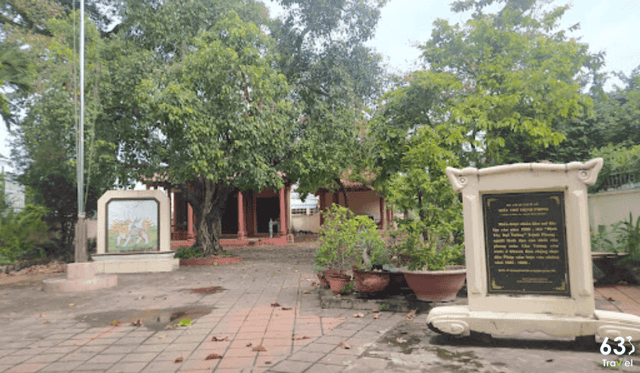 The Temple Dedicated to General Trinh Phong
The Trinh Phong Temple historical site spans a total area of 639.1m², featuring an architectural structure deeply rooted in the traditions of Khanh Hoa. Four main pillars and auxiliary columns are meticulously carved, with patterns and couplets painted in vermilion and gilded, creating a solemn and ancient atmosphere for the temple. In the center of the ceremonial hall, a simple yet dignified altar is adorned with a horizontal lacquered board inscribed with the Hán Nôm characters "Vạn An Miếu" (Ten Thousand Peace Temple), symbolizing enduring peace and well-being for the temple and the entire community.
Trinh Phong Temple is not only a place of worship but also a source of pride for the people of Khanh Hoa, deeply connected to the history of struggle, construction, and defense of national independence. The preservation and restoration of this relic are not merely a responsibility but also a profound expression of gratitude and reverence for the heroes who sacrificed for the country.
Truong Sa Archipelago Sovereignty Steles on Song Tu Tay Island and Nam Yet Island
Under the dazzling sun of the East Sea, twoSovereignty stele of the Truong Sa archipelago at Song Tu Tay island and Nam Yet islandin the Truong Sa (Spratly) Archipelago stand firm as indelible historical witnesses. Ranked as national historical relics since 2014, these two sovereignty steles are not only a source of pride for the Vietnamese people but also a testament to the steadfastness of national sovereignty over the Truong Sa islands, recognized and respected by the world.
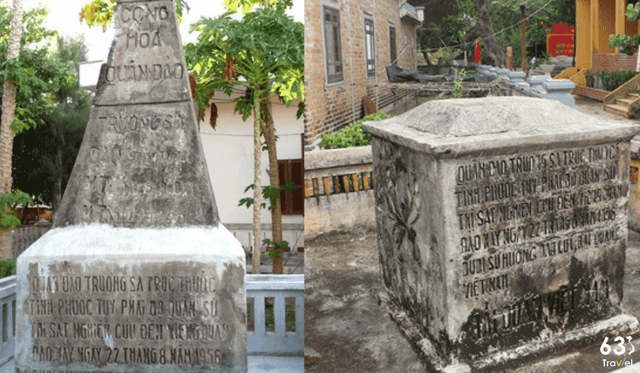
Sovereignty Stele Historical Sites on Song Tu Tay Island and Nam Yet Island
The sovereignty stele on Song Tu Tay Island, part of Song Tu Tay Commune, Truong Sa District, Khanh Hoa Province, features ancient lines deeply carved into its concrete body, retaining its tall tower-like appearance and main body, enduring with a clear message: "The Truong Sa Archipelago belongs to Phuoc Tuy Province. A military mission for observation and research visited this archipelago on August 22, 1956, under the guidance of the Vietnamese Navy." As for the sovereignty stele on Nam Yet Island, part of Sinh Ton Commune, Truong Sa District, Khanh Hoa Province, only its main body remains today, but it still clearly records the presence of the Vietnamese military on this territory in 1956. Both steles are distinct historical markers, serving as solid evidence of Vietnam's sovereignty over its islands and seas to the world.
Phu Cang Communal House
Located in Van Phu Commune, Van Ninh District, Phu Cang Communal House is an invaluable cultural and historical heritage of the Vietnamese people. This communal house was built in the 17th-18th centuries, marking the land reclamation and village establishment by the Vietnamese. During the Nguyen Dynasty, Phu Cang Communal House was bestowed with many royal decrees and precious artifacts, including the 'Thuong Dang Than' (Highest-ranking Deity) decree, commemorating the merits of the village's tutelary gods and an ancient bell.
Spanning approximately 1,700m², the Communal House has preserved the intact cultural and historical values of the Vietnamese community. Its architecture clearly reflects the traditional Vietnamese countryside style, with fish-scale tiled roofs, a brick-paved courtyard, and lush greenery surrounding it.
The main hall, covering over 70m², is structured according to the traditional communal house model, with 16 evenly distributed four-pillar wooden columns. In front of the communal house's entrance, exquisite and elaborate patterns are carved into the wood, with a "Phu Cang Dinh" (Phu Cang Communal House) plaque placed in the center.
Phu Cang Communal House worships tutelary gods with the title Duc Bao Trung Hung Linh Pho, including the Mother Goddess Thien Y A Na, a deity revered and worshipped by the people of the South Central region. It also preserves the altar of Deputy General and Governor Tran Duong, who led the people in the Can Vuong movement against the French in the late 19th century. During the feudal period, Phu Cang Communal House received many royal decrees and precious artifacts from the Nguyen emperors, testifying to its important role in the history of resistance against French invasion.
Khanh Hoa Provincial Museum
Khanh Hoa Provincial Museum, located at 16 Tran Phu Street, is not only an attractive tourist spot in Nha Trang but also a repository showcasing over 10,000 artifacts and 5,000 rich photographic documents from various historical periods of Khanh Hoa province, especially Nha Trang city. The museum is an impressive cultural treasure trove, featuring ancient coins from the 9th to 18th centuries, bronze drums dating back over 2000 years, and resistance weapons used against the French and Americans.
Although it only has two exhibition rooms with a total area of over 200m², the museum still attracts and deeply impresses visitors with the diversity and value of its precious artifacts. These artifacts are the result of extensive excavations and in-depth research conducted over the past 20 years in Khanh Hoa.
Upon entering the museum, visitors will encounter the Vo Canh stele, a stone tablet inscribed with Sanskrit script, dating back to the 2nd century AD, excavated in Vinh Trung commune, Nha Trang. The center of the museum features the Cam Thinh Dong stele from Cam Ranh town, where visitors can admire precious stone artworks from the Champa era and other important artifacts such as the Khanh Son lithophone – a unique ancient musical instrument of the Rac Lay people, rediscovered in 1978.
Khanh Hoa Provincial Museum is not only a place to discover ancient cultural heritage but also a window for visitors to gain a deeper understanding of the richness and diversity of the local cultural history, making it an interesting and unmissable stop when exploring Nha Trang.
Ninh Hoa Administrative Palace
Ninh Hoa Duong Palaceis a historical architectural work built in 1820 during the Nguyen Dynasty, clearly showcasing the beauty of traditional Vietnamese architecture. The palace comprises a main hall with two wings and several auxiliary rooms, with the overall structure built according to the traditional house model of the Khanh Hoa delta region, including three main compartments and two lean-to sections.
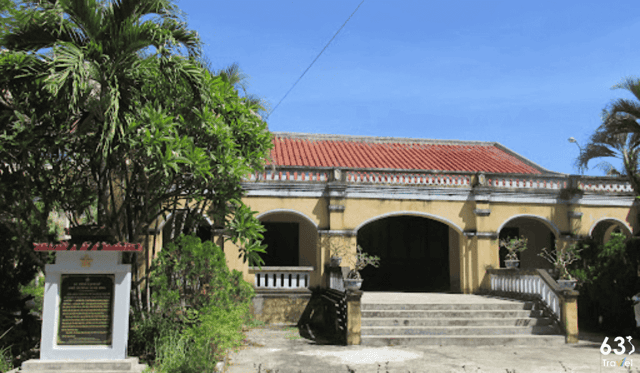
Discover the Historical Architecture of Ninh Hoa Administrative Palace
This place has witnessed significant historical events of the nation. On July 16, 1930, over 1,000 people from Tan Dinh district (now Ninh Hoa) organized a protest, struggling against colonial and feudal rule, demanding a reduction in high taxes and supporting the Nghe Tinh Soviet movement. At the Administrative Palace, Prefect Dinh Ba Can signed a document abolishing various taxes, marking a turning point in the struggle against oppression.
The architecture of the Administrative Palace not only boasts ancient charm but also exhibits solemnity and high artistic value, serving as a symbol of harmony and the traditional cultural beauty of the Vietnamese people.
Bao Dai Villa
Bao Dai Villa (also known as Cau Da Villa) was where Emperor Bao Dai and Empress Nam Phuong would stay when visiting the coastal city of Nha Trang. Perched on a hill jutting out into the sea, it is one of Nha Trang's special historical sites. Spanning a vast area of approximately 12 hectares, Bao Dai Villa comprises 5 separate villas built in 1923 on Canh Long Mountain (also known as Chut Mountain), a location famous for its stunning natural scenery.
Each villa at Bao Dai Villa is named after the surrounding plants, such as Les Agaves (Cactus), Les Frangipaniers (Plumeria), Les Bougainvilliers (Bougainvillea), Les Flamboyants (Flame Tree), and Les Bada Miners (Indian Almond Tree), creating a distinct and colorful living space. With French-inspired architecture, the villas harmonize with the surrounding natural landscape, offering an elegant and luxurious beauty.
Located next to Nha Trang's famous Institute of Oceanography, Bao Dai Villa is likened to a green dragon embracing Nha Trang's sea. From the hilltop, you can admire panoramic views of this coastal city, with its endless blue sea and smooth white sand beaches.
Ba Vu Mausoleum
Lang Ba Vu(also known as the Royal Nursemaid's Mausoleum), is one of the famous national historical and cultural relics, attracting a large number of visitors due to its historical value and unique architecture. Built in the early 19th century during the reign of Emperor Gia Long, it stands as a symbol of profound gratitude towards the woman of great merit, Mrs. Nguyen Thi Hoan.
Once, when Nguyen Phuc Anh (later Emperor Gia Long) was being pursued by Tay Son forces, he arrived at My Hiep village, hungry, thirsty, and exhausted. Mrs. Nguyen Thi Hoan helped him by providing food, water, and medicine. This assistance was considered crucial, helping Emperor Gia Long escape danger. Mrs. Nguyen Thi Hoan was later honored by Emperor Gia Long with the title "Nhu Mau" (Royal Nursemaid), and the mausoleum was built to commemorate her immense contributions.
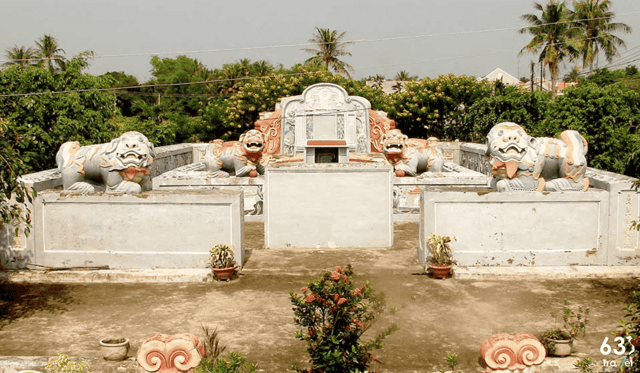 Ba Vu Mausoleum Nha Trang – The Mausoleum of Emperor Gia Long's Royal Nursemaid
The mausoleum complex is built with magnificent and splendid architecture, featuring multiple layers of enclosing walls. The outermost wall has a perimeter of over 200m, with a spacious rectangular pond inside. Following this is the second layer of walls, housing a shrine dedicated to Ba Chua Thai San (Goddess of Childbirth) and 18 Arhats. The innermost layer contains the tomb of the Royal Nursemaid, built in the style of a three-compartment house with two lean-to sections. The mausoleum's architecture bears strong imprints of both Champa and Vietnamese cultures, with exquisitely intricate decorative patterns, expressing reverence and gratitude towards the meritorious individual.
C235 Ship Memorial Site
Souvenir location for the C235 ship eventis a place that records the moving stories of the heroic sacrifices of People's Armed Forces Hero, Martyr Nguyen Phan Vinh, and his comrades on this ship, transforming them into legends intertwined with the nation's history and literature.
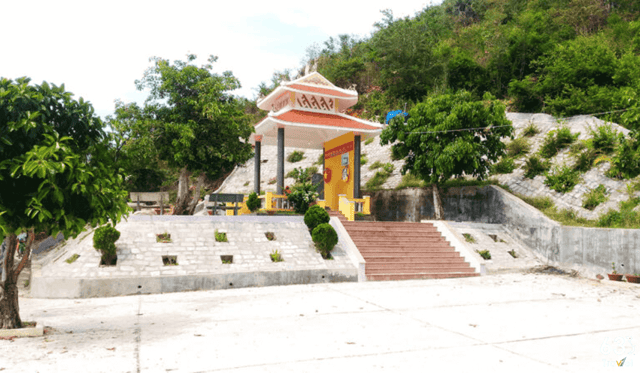
C235 Ship Memorial Site – A Red Address for the Young Generation to Connect with Their Roots
During the great resistance war against America for national salvation, to support weapons and equipment for the Southern battlefield, following the directive of the Politburo, the Central Military Commission established Group 759, the predecessor of Group 125, which organized sea transportation routes, known as the "Ho Chi Minh Trail at Sea." This was one of the extremely important strategic missions in the struggle for the liberation of the South.
To supply the army and people during the General Offensive and Uprising of Tet Mau Than 1968, Group 125 selected 4 ships, including Ship C235, to carry out the mission. This ship was granted seven days of passage, a memory still cherished from the past.
Ponagar Tower
Ponagar Tower(also known as Yang Po Inu Nagar) is a Cham Pa temple situated atop a small hill, approximately 10-12 meters above sea level, at the mouth of the Cai River (Nha Trang River), in Vinh Phuoc Ward, Nha Trang City, Khanh Hoa. Built between the 7th and 13th centuries during the reign of King Po Nagar Dara Vijaya, Ponagar Tower is currently the largest Cham Pa architectural symbol in Vietnam.
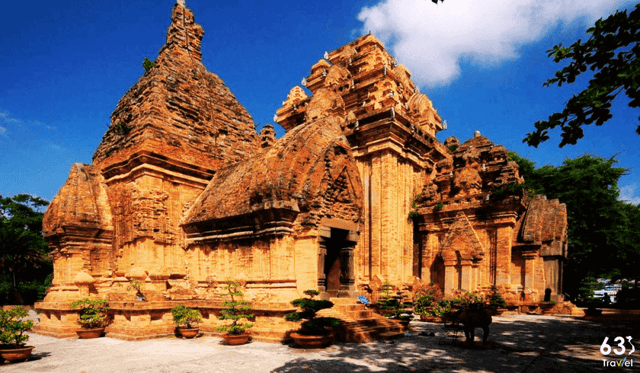
Ponagar Tower Nha Trang – A Famous Cham Pa Cultural Heritage Site in Khanh Hoa
Ponagar Tower was recognized as a National Historical and Cultural Relic in 1979 and is a potential UNESCO World Cultural Heritage site. It is dedicated to the goddess Ponagar, the supreme deity in Cham beliefs, connected to the legend of the Cham Mother of the Country and the goddess Thien Y Ana of the Vietnamese people in Central Vietnam since the late 17th century.
Architecturally, the tower complex consists of 3 main levels, each with several smaller towers dedicated to different deities. The main tower stands 28 meters tall, built with fired brick and sandstone, bearing strong imprints of Cham Pa architecture with intricate decorative details such as linga, yoni, deity statues, and traditional patterns. The historical site also preserves many precious artifacts like deity statues, jewelry, and inscribed steles, contributing to shedding light on Cham Pa history and culture.
Ponagar Tower is not only a memorial and place of worship for the Cham people but also a destination that attracts a large number of tourists each year, eager to explore the profound beauty and cultural value of the Cham Pa ethnic group.
Tu Van Pagoda
Tu Van Pagoda, known by its nicknames Coral Pagoda or Snail Pagoda, is a unique architectural marvel with towers and gardens built from coral stones, seashells, and snail shells. The monks themselves designed and constructed these structures, creating a peaceful and distinctive space for Tu Van Pagoda.
Stepping into Tu Van Pagoda, you will immediately feel the meticulousness and artistry derived from the sea snails; each detail shines as clear evidence of many years of construction and refinement. The pagoda is regarded as a symbol of the monks' dedication and introspection, with a belief in carrying Buddhist teachings in their hearts.
The structures at Tu Van Pagoda were meticulously handcrafted over many long years. This demonstrates that every coral stone, every seashell, every snail shell carries a part of the mind and dedication of those who built the pagoda. This is not just a prominent architectural work but also a declaration of respect and spiritual connection between humans and nature.
Summary of20+ Historical Sites in Khanh Hoashared by63S Travelabove will help you have a truly fascinating trip here. Be sure to add this list to your itinerary for a wonderful journey!
Khanh Hoa 7439 view
Update day : 17/07/2024



Monuments close by
See all
Chongshan Ancient Temple
Trung Son ancient pagoda is a monumental architectural complex created by monk Thich Buu Hien in 1973 at the historical site of Da Chong mountain (Phung Hoang mountain), in Ninh Hai district, Ninh Thuan province. Initially, the pagoda was just a simple Buddhist church on the mountain, a place where monk Buu Hien used every day as a place to practice, and also a place for relatives and Buddhists to visit, pray to Buddha, and pray for peace. Gradually, the small hut was expanded by the monk, adding additional items and miniatures to serve as a place to rest and enjoy the scenery for relatives and Buddhists from near and far when visiting the Buddha. Through the life of Venerable Thich Buu Hien, to the life of Venerable Thich Tam Tuong. The temple was built on an expanded area and grand scale, including many items such as the three-entrance gate, the main hall, the ancestral hall, etc. In 2012, due to budget constraints, the pagoda only completed the main item first. the temple, the ancestral temple, the courtyard, the three-entrance steps up and down... the three-entrance, miniature landscapes, the area for worshiping outdoor Buddha and Bodhisattva statues,... are still in the process of being completed. Due to the construction in mountainous terrain, it is difficult to distinguish between the front hall, the main hall, the main hall, the three-entrance gate or the ancestral church. That's why the overall pagoda project not only creates vividness with a unique architectural motif, but also creates complexity when identified. After more than 40 years of construction and completion. To this day, the pagoda has had three generations of abbots. These include: Venerable Thich Buu Hien (founder), Venerable Thich Tam Truong (second successor and also a disciple of Venerable Thich Minh Tam, senior brother Thich Buu Hien), Venerable Thich Nguyen Minh (current abbot, disciple of Venerable Thich Tam Truong). In general, the generations of abbots of Trung Son Pagoda all have the bond of "dharma sect". Trung Son Co Tu is more than 60m above sea level. The path leading to the pagoda is a steep, vertical three-step road with nearly 500 steps. Going to the end of the three-step road, the first scene that opens up is the three-entrance gate that is still being built in the pure Vietnamese ancient architectural style. Although not yet completed, when viewed as a whole, the Trung Son Co Tu three-entrance gate is a solid, durable and large project with materials made from concrete, reinforced steel and green stone. Passing the three gates, continuing up is the terrace below, with the highlight being many ornamental trees and a pair of majestic and powerful dragons of the Ly Tran Dynasty. From the terrace, going up the steps, is the architectural complex including the yard, main hall, ancestral church, guest house,... that three generations of abbots built. Ancient Trung Son Pagoda is also famous as a very sacred place as it is the home of two Zen pagodas Truc Lam Vien Ngo and the To communal house of Trung Khanh pagoda. This convergence represents a land of spiritual energy of heaven and earth. Source: Ninh Thuan Tourism
Khanh Hoa
11347 view
Rating : National monument

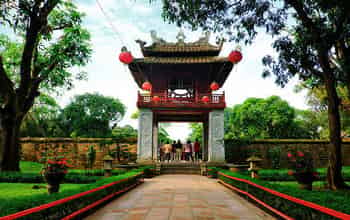
Dien Khanh Temple of Literature
Dien Khanh Temple of Literature is located in Phu Loc Tay cluster, Dien Khanh town, Dien Khanh district, Khanh Hoa province. The Temple of Literature is a place to worship Confucius, the founder of Confucianism, and the sages who were his students; At the same time, it is also a place for activities of local scholars and scholars, honoring those who successfully passed the examinations. In 1803, King Gia Long issued an edict to establish a Temple of Literature in Phu Loc commune, Hoa Chau district - Binh Hoa town, now in Phu Loc Tay cluster - Dien Khanh town - Khanh Hoa province. The Temple of Literature was built on a large scale in 1853 and by the following year it was basically completed: in front there was a pavilion, in the middle there was a high and wide front hall and main hall, made of wood and surrounded by brick walls. The rafters are carved with beautiful and majestic gilded lacquer. Dien Khanh Temple of Literature was built on a large, flat area of land, with a total area of 1,500 square meters. When it was first built, the Temple of Literature had the following architectural works: Chinh temple and Khai Thanh temple, roofed with thatched grass. In 1849, the Temple of Literature had its roof system renovated, replacing thatched roofs with tiled roofs and building Ta Vu, Huu Vu, Khai Mieu, Quan Cu, Tu Mieu... with a very large and solid scale. In 1959, the Temple of Literature was rebuilt on the old foundation in Phu Loc village, but on a smaller scale, including: the outer gate and city walls; Internal Nghi Mon; stele house (Thach Bi communal house); temple yard; flag pole; Eastern and Western houses (Ta Vu - Huu Vu); Worshiping the road; Chief of soaking. Basically, the structures of Chanh Tam and Bai Duong compartments were transferred from Van Chi Phuoc Dien, and Ta Vu and Huu Vu were built in the style of a four-level, three-compartment house. The walls are built of bricks, there are no wings. The roof is covered with yin and yang tiles, later restored and replaced with Western tiles; The wooden door system is built in a plank style, replacing the ancient style of upper and lower sides; Do not rebuild Khai Mieu, Quan Cu and Tu Temple. Currently, the Temple of Literature only retains two stone steles from the Tu Duc 11 period (1858), which help us better understand the history, culture, and activities of the people of Khanh Hoa and the process of completing the Temple of Literature area in 1854. There is also an article in Bai Duong that speaks more clearly about the achievements of literary and martial arts scholars, scholars, notables, dignitaries and local students from the beginning of the Nguyen Dynasty to the Tu Duc period. With a rich history, the Temple of Literature area carries great value in the process of learning, receiving knowledge and expressing respect for teachers, enriching the treasure of national cultural heritage. Dien Khanh Temple of Literature relic was ranked a National Monument by the Ministry of Culture, Sports and Tourism on October 15, 1998. Source: Department of Culture and Sports of Khanh Hoa province
Khanh Hoa
11095 view
Rating : National monument

Thap Cham train depot relic
Thap Cham train depot is the infrastructure of the Railway Department established by the French, including: Station, maintenance and repair area for rolling stock, and civil servant housing area. Ninh Thuan people are familiar with the name Thap Cham train depot (in Do Vinh ward, Phan Rang - Thap Cham city today). Thap Cham train depot serves the transportation of passengers, goods, maintenance and repair techniques... It is known that the Trans-Vietnam railway has been operating smoothly since 1936. Before that, there were sections completed and in operation. For example, the Nha Trang-Thap Cham-Saigon railway has been in operation since 1903, and the railway from Thap Cham to Da Lat is 84 km long, including 16 km of cog railway, construction started from 1906 to 1996. 1933 started operations. With this characteristic, Thap Cham train depot was one of the best railway facilities in our country at that time such as Gia Lam (Hanoi), Ben Thuy (Vinh), Touran (Da Nang), Di An (Saigon). -Binh Duong)... According to historical data, with about 200 workers, Thap Cham Train Depot is a passenger station and a technical station that performs technical operations on locomotives, carriages and a number of other functions. Therefore, this is the place where many outstanding individuals from other provinces gather to work, from here they become the nucleus of propagating progressive political ideas. At the end of 1928, they established the Tan Viet Cell in Bao An village. In April 1929, the Tan Viet party changed into the Indochina Communist Federation, the Tan Viet party base in Ninh Thuan also changed its name and operated in a new direction. After February 3, 1930, the Communist Party of Vietnam was established. In April 1930, Tan Viet cells in Ninh Thuan transformed into Communist Party cells according to the general policy of the whole country, including the Decree Party Cell. - Thap Cham train station and Cau Bao Cell, Ca Na Salt Department Cell. From then on, the Party organization led the People's struggle, typically organizing protests on International Labor Day on May 1, 1930. Early in the morning of May 1, workers going to work saw the red hammer and sickle flag appearing on the top of the Thap Cham station water tower and on the ancient tamarind tree in Bao An village; Leaflets were scattered in many station areas and Bao An residential areas. At the same time, 120 Thap Cham Railway Depot workers held a rally to celebrate International Labor Day and asked employers to implement labor regulations. It can be said that, as soon as it was born, the Party cell at Thap Cham train depot organized a direct struggle with the French. With the above events and historical marks, Thap Cham Train Depot was recognized as a Provincial Revolutionary Historical Relic in 2003. Source: Ninh Thuan Newspaper
Khanh Hoa
10916 view
Rating : Provincial level relics

Lang Ba Vu
Ba Vu Mausoleum (also known as Nhu Mau Mausoleum) is located in group 9, Ninh Hiep ward, Ninh Hoa town, Khanh Hoa province. Mausoleum of Ba Vu is the burial place of the woman who helped Lord Nguyen Phuc Anh (later King Gia Long) overcome the hardship during the war with the Tay Son Dynasty. The project was directed by the king to be built according to the mausoleum architecture to repay gratitude, so the people call it a mausoleum. Going back in history, from 1775 onwards, Khanh Hoa was a land where disputes frequently occurred between the Tay Son army and the Nguyen Lord army. The book "Dai Nam Thuc Luc" of the National History Office of the Nguyen Dynasty records: Nguyen Anh led troops 5 times to attack Binh Khang district (present-day Khanh Hoa) and in all of those times, Nguyen Anh was defeated by the Tay Son army. scattered and chased everywhere, typically in the naval battle in the Hon Thi area (1784). When fighting with the Tay Son dynasty, Nguyen Anh failed many times and had to pull the remnants of his army to flee. One time when running to My Hiep village, the food was exhausted, he was sick, the soldiers were both hungry and exhausted. …the situation is extremely dangerous. In the dark of night, Nguyen Anh and his entourage knocked on a resident's door to ask for a bowl of rice to ease his stomach. The homeowner (legend is Mrs. Truong Thi Tiem) felt compassion and invited Nguyen Anh and his entourage to the house to rest. After that, she sent her maids to kill the pigs, cook rice for everyone, and provide extra food for the journey. As for Nguyen Anh, in addition to taking good care of his medicine, she also had someone milk the cow for him to drink to quickly restore his health. Thanks to that dedicated care and kind treatment, Nguyen Anh soon recovered, and the generals gradually recovered their health to continue pulling troops to the South. After Nguyen Anh unified the country, ascended the throne and took the title Gia Long (1802-1819). Remembering the help of people in the past, the king sent someone to My Hiep village to bring the old lady to the capital to take care of her. However, when the messenger arrived, the old woman had passed away. To show his gratitude, King Gia Long posthumously awarded her the title "Nhu Mau" (nanny). At the same time, the king ordered the Ministry of Public Works to send a number of skilled workers who were building the king's palace in the capital at that time to My Hiep to coordinate with local workers to build a mausoleum for the Nanny according to the mausoleum specifications of the King. Royal. The mausoleum was built in two years, from 1802 to 1804 and completed. The inauguration ceremony was held in a grand manner and was directly presided over by the provincial governor. Besides, because she had no descendants to burn incense and worship, the king also granted land to people in the area to cultivate without having to pay taxes to pay for her death anniversary (oral tradition is December 16). Every year, on the anniversary of her death, dignitaries and villagers gather to hold a very solemn death anniversary ceremony, complete with music and rituals like royal mausoleums. Since then, the incense burning and offerings at Ba Vu's mausoleum are still conducted by the Tuan Vu Khanh Hoa mandarin following the two-period Spring and Autumn custom. Today, the Relics Management Board along with the local government and people still organize the death anniversary of Ba Vu on December 16 every year. Lang Ba Vu is a cultural heritage ranked by the Ministry of Culture and Information (now the Ministry of Culture, Sports and Tourism) as a National Historical - Cultural Monument on February 12, 1999. The relic not only has moral significance "When you drink water, remember its source" but also has great architectural and artistic value, reflecting the talent of artisans under the Nguyen Dynasty more than two centuries ago. Source: Khanh Hoa Province Monuments Conservation Center
Khanh Hoa
10892 view
Rating : National monument

National revolutionary historical relic Pi Nang Tac Stone Trap
Pi Nang Tac stone trap, also known as "Bac Ai stone trap", is located on the slopes of Gia Tuc mountain, in Phuoc Binh commune, Bac Ai district, about 70km northwest of Phan Rang - Thap Cham city center. At the end of 1959, at this location Pi Nang Tac - Hero of the Armed Forces sought to prevent the enemy from entering deep into the Phuoc Binh area to wreak havoc. Taking advantage of the danger of Gia Tuc Pass with high slopes, one side is a steep cliff, below is the fast-flowing Truong River, deep abyss, with only the road leading to Phuoc Binh, Mr. Pi Nang Tac built 17 boats. Continuous stone traps on a road about 500 meters long. Below the road, spikes are placed, traps are rubbed, and poisoned bows are carried. Here, the ambush of the enemy with stone traps at noon on August 10, 1961 by Raglai guerrillas led by Pi Nang Tac - Hero of the Armed Forces who commanded the militia and guerrillas to simultaneously trap the trap, was recorded here. Rocks on the cliffs fell onto the enemy formation. The enemy fled in panic, but were shot by slingshots, were trampled on, and fell into traps set by guerrillas, causing more than 100 enemy soldiers to die on the spot. The Pi Nang Tac Stone Trap has shown us the great value of the history of the resistance war, which speaks to the courageous, intelligent and creative spirit of the Raglai ethnic people. The victory on August 10, 1961 is one of the typical battles of the art of people's war with only rudimentary weapons. Over the past few decades, the old battlefield has undergone many changes, but the stone trap is still there and has entered the local traditional history, in the hearts of all Raglai people, is the pride of a past. Past hero of the nation - Pi Nang Tac. To remember the feat of hero Pi Nang Tac, Ninh Thuan Provincial Museum erected a stele commemorating the feat at Gia Tuc Pass with the name of Hero of the Armed Forces Pi Nang Tac and was approved by the Ministry of Culture, Information and Sports. Sports (now the Ministry of Culture, Sports and Tourism) ranked Pi Nang Tac Stone Trap as a National Revolutionary Historical Monument on August 31, 1992. Currently, Pi Nang Tac Stone Trap has become an address to visit and educate historical traditions for generations of students. Although time has gone back more than 63 years, traces of the stone traps still exist vividly, eloquently demonstrating the art of guerrilla warfare, the spirit of intelligence, great creativity and will. determined to fight, determined to win by the army and people of Ninh Thuan. Source: Ninh Thuan Provincial Museum
Khanh Hoa
10883 view
Rating : National monument
Nearby tourist attractions
See all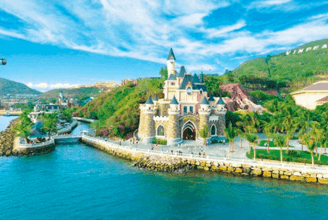
Vinpearl Land tourist area
Stretching across the most beautiful bay in the world, Vinpearl Nha Trang is a resort complex and attractive destination today. Vinpearl system in Nha Trang owns a system of luxurious and high-class hotels & resorts, VinWonders Nha Trang amusement park, golf course and all-in-one service ecosystem, fully meeting the needs of relaxation. , cuisine, entertainment, shopping to professional meetings. Nha Trang is considered the most beautiful bay in the world with more than 300 sunny days a year. Therefore, you can choose to travel to explore Vinpearl Nha Trang at any time of the year. However, the dry season from January to September is still the most ideal time to come to the coastal city. From February to May, Nha Trang has cool weather suitable for vacation trips. From June to August, the weather is sunny, Nha Trang is suitable for swimming, jet skiing, parasailing... To get to Nha Trang, you can choose to travel by plane or bus. After that, you will arrive at Vinpearl Nha Trang port so you can go to the Vinpearl Nha Trang entertainment resort complex by canoe or speedboat. When you arrive at Hon Tre island, you will travel by Vinpearl Nha Trang's electric car system to get to the resort and entertainment venues. As the world's leading beach resort destination, Vinpearl Nha Trang offers visitors many choices of accommodation. It is a system of high-class hotels and resorts with luxurious, modern space and full amenities. Vinpearl Resort Nha Trang possesses pure Asian beauty with luxurious Indochine architecture. The resort is located on Hon Tre island next to a natural beach with white sand and golden sunshine. Here you can immerse yourself in the cool blue water of the large swimming pool, snorkel to see coral and admire the colorful beauty of fish. Standing out in the Vinpearl Nha Trang resort complex, Vinpearl Resort & Spa Nha Trang Bay possesses a modern and graceful bow-shaped architecture stretching on a beautiful beach with white sand and blue sea. The resort has the most beautiful and vivid view from the bed overlooking the entire Nha Trang Bay. Vinpearl Resort & Spa Nha Trang Bay was honored by the prestigious World Travel Award as Vietnam's Leading Beach Resort in 2018. Particularly attractive amenities that the resort offers visitors are spa huts with therapeutic treatments. Relaxation and body care program. Vinpearl Luxury Nha Trang is a place to stay that gives visitors a peaceful place of soul with every moment passing peacefully with their loved ones. The resort is located on a paradise beach with 84 beautiful villas amidst a fresh tropical garden. There are also many other resorts. Coming to Vinpearl Nha Trang, visitors can enjoy breakfast, lunch, and dinner at the restaurants in each hotel and resort. In addition, you can experience very unique flavors in the unique and magnificent space of Vinpearl's restaurant system. Coming to Vinpearl Nha Trang, don't miss the fun journey at VinWonders park with 6 game zones including nearly 100 rich entertainment activities. The amusement park is located on Hon Tre island with an area of more than 50 hectares. There are also many other attractive experiences such as: Vinpearl Diving Club Nha Trang, Vinpearl Golf Nha Trang and epic art performances... waiting for you to explore.
Khanh Hoa
8935 view
From January to December
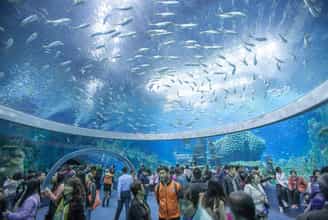
Nha Trang Institute of Oceanography
With a history of more than a century, Nha Trang Institute of Oceanography was founded by the French in 1923 in this beautiful coastal city. With a temperate environment and a rich diversity of marine life, this is a place specializing in ocean research and is also an ideal destination for tourists who want to learn about the region's culture, history and marine specialties. this land. The Museum of Oceanography of Nha Trang Institute of Oceanography is also one of the must-see attractions in Nha Trang city. Nha Trang Institute of Oceanography is Southeast Asia's largest research institute on marine plant and animal life, founded in the early twentieth century by French scientists. This place was chosen because of its favorable geographical location and optimal natural conditions for marine creatures to live and develop. The Museum of the Institute of Oceanography owns a massive collection, typical of the marine ecosystem with about 4,000 species of creatures and more than 20,000 specimens stored extremely carefully here. In addition to the specimen display area, the institute also owns areas for keeping, taming and preserving many other diverse and unique marine species. It will definitely be an interesting experience for those who love oceanography and want to explore the mysterious ocean world. Entering the aquarium of Nha Trang Institute of Oceanography, you will be fascinated by more than 10,000 individuals of more than 300 diverse and abundant marine species. In particular, many species are listed on the IUCN red list such as sharks, sea turtles, corals and giant squids. From adorable little fish to giant sharks, from sparkling seashells to beautiful corals, all are recreated realistically and vividly in this aquarium. If the aquarium is a place that attracts all classes of visitors because of the vivid beauty of marine creatures, the marine biodiversity display area is considered a place that creates value and characteristics for the museum. Stepping into the Museum of Oceanography, you will be immersed in the magical world of the ocean. With more than 23,000 specimens of 5,000 marine species collected and preserved for many years, the marine life museum has become the place "storing the largest collection of marine specimens" recognized by VietKings. Here, you will admire rare creatures, see beautiful corals and learn about the ocean ecosystem in the most authentic way. Once you visit this museum, you will not only find a passion for the ocean but also gain an invaluable amount of knowledge about the diversity and richness of the marine ecosystem. When visiting Nha Trang Institute of Oceanography, you need to note the following points. When visiting the Institute of Oceanography, you should arrive early to have plenty of time to explore the entire area of the institute. You should prepare comfortable clothes and shoes to be able to move and visit easily. You should also bring a bag to hold personal items such as drinking water, tissues and camera. If you plan to go sightseeing at sea or snorkel to see coral, please register in advance and carefully refer to the staff's instructions to ensure safety. Hospital areas can be crowded on weekends or holidays, so you should plan and book tickets in advance to avoid crowding or sold out tickets.
Khanh Hoa
9500 view
From January to December

Hon Mun Island
The scene at Hon Mun Island is a harmonious combination between the vast blue of the sea and the cool green of the forest trees. All create an airy and extremely peaceful natural scene. Hon Mun is also home to many types of coral, with more than 2,000 species of coral and 1,500 species of marine life. This is also the only marine conservation area in Vietnam. According to the World Wildlife Fund (WWF), Hon Mun is the island with the most marine biodiversity in Vietnam. With a total area of 160km2, Hon Mun island is located in the southeast of Bong Nguyen island, about 14km from the coastal city of Nha Trang. This place is 10km south of Cau Da port, one of the most famous islands in the Khanh Hoa sea, and also one of the most famous tourist destinations in Nha Trang. Not only does it possess impressive natural scenery with the blue of the sea and sky. This is also a famous place with an extremely rich marine ecosystem. The name of the island "Hon Mun" is given according to the characteristics of the rock color on the island, with the jet black rock color resembling ebony here, it has created a difference and is the formation of the island's name. Coming here, you will see steep cliffs or high rocky outcrops that stand out against the blue sky and sea. Create an impression and uniqueness that cannot be compared anywhere else. Nha Trang is blessed by nature with a mild climate. With weather that is not too harsh, you have many ideal times to visit the island. Except for stormy days, you can almost visit Hon Mun easily. According to Hon Mun Nha Trang travel experience, the most ideal time to travel to Nha Trang as well as visit Hon Mun is from July to September every year. At this time, the weather in Nha Trang is beautiful and sunny, the sea water is clear and cool, it is a great time to watch the ocean on scuba diving trips. Hon Mun Island is still quite wild, services are not yet developed. Therefore, it is very difficult to find restaurants and eateries on the island. To enjoy delicious dishes, tourists often buy seafood from local fishermen's fishing boats and ask them to prepare it. Or you can also buy food, borrow a stove or oven to prepare delicious dishes your own way. Organize barbecue parties with friends, with a wonderful peaceful ocean space. Hon Mun Nha Trang is one of the most beautiful sightseeing and diving paradises in Vietnam. It is a place worth experiencing, it will definitely leave many good impressions on you. With much development potential, Nha Trang promises to become a leading tourist destination.
Khanh Hoa
9786 view
November to April
Dai Lanh Beach
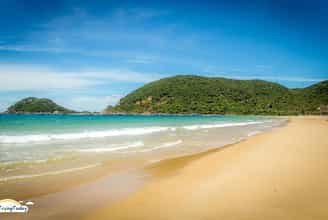
The beach is located in Dai Lanh commune, Van Ninh district, Khanh Hoa province, right next to National Highway 1A, about 80km north of Nha Trang city center. Dai Lanh's scenery is very beautiful thanks to nature's gift of a long white sand beach with great slope so visitors can swim and dive far from shore. In particular, this tourist destination in Nha Trang has blue sea water that can be seen to the bottom and still looks wild and clean. Next to it is a source of fresh water that flows into the sea all year round without drying up. Dai Lanh beach is likened to a princess sleeping in the middle of the vast ocean because few people live here and the surrounding scenery is quite peaceful and quiet. Although, in 2010, a travel company invested in building a resort here, this place still appears as an exciting, pristine beach. That is an interesting thing for tourists who want to find a space to rest after months of hardship and hard work. In particular, with a comfortable, airy, fresh space, you can also come here with your family and friends to have fun and organize group games. One of the joys of tourists when visiting Dai Lanh is following the light keepers or fishermen hunting eels at sea. This species of fish was once compared to the streamers of the ocean. Eels often reside in places with dangerous terrain, fast-flowing water, and deep and dark rock holes. There are 3 types of eels: coconut eels (yellow), black eels and cotton eels (black and white spots). Eel hunting is very difficult, but for visitors who love adventure, this will be an opportunity to try their hand at exploring the sea. Although it still has its inherent wild beauty, today, tourists can find restaurants and hotels to serve their meals and relaxation more quickly and easily. These areas are built around the beach, just a short walk, you and your loved ones will find an ideal place to rest. Dai Lanh beach is considered the most beautiful beach in the central region and the whole country. For such an ideal tourist destination, Nha Trang cannot help but exploit and serve the tourism industry. Therefore, in the near future, the beach will be centrally planned to further promote local tourism development to exploit all the advantages here, making Dai Lanh a tourist destination in Nha Trang. The site is not to be missed for visitors.
Khanh Hoa
9637 view
From January to December

Doc Let tourist area
Doc Let Nha Trang, also known as Doc Let, is located in Ninh Hai ward, Ninh Hoa town, Khanh Hoa province, Vietnam. Doc Let beach stretches with high white sand beaches, separating the mainland from the sea with rows of green poplars swaying in the wind. About 49 km south of Nha Trang city center, Doc Let is famous as an ideal Nha Trang tourist destination in the summer, very suitable for those who want to have a vacation on a pristine beach. There are many explanations for the name Doc Let. Many visitors who hear this name for the first time cannot help but be curious about its reason and story. To visit Doc Let, you are required to cross large, high sand slopes to reach the beach. Due to the terrain with those high sand dunes, every time you move, it is as if there is a natural sand wall blocking you, slowing you down. Every step you take, every time the sand sinks deep, it seems to hold your footsteps and make it difficult to take a step. Every time I walk through Doc Let, I feel like I just want to "drag" away because I'm so tired. Although it's hard, you will be rewarded when you cross the sandy slope and reach the beach, where the wind blows gently as if waking up after a sweltering summer sleep. The waves waved to welcome the "miracle" of overcoming the high and steep sand dunes. Currently, most of the natural sand slopes are gradually being flattened to facilitate travel and transportation to serve the expansion of tourism services. You can even see locals riding motorbikes along the beach, because the sand is flat and very rough. Although there are many different ways to explain the name Doc Let, they all originate from the topography and soil properties of these places. Learning about the name Doc Let is quite interesting, you can encounter many different stories from local people when talking about this name. Doc Let Nha Trang belongs to the coastal plain climate sub-region, characterized by a tropical monsoon climate and influenced by sea breeze weather, so the climate is temperate all year round. The average annual temperature is 26.6 degrees Celsius. The rainy season is mainly concentrated in October and November, the average rainfall is about 1350 mm/year. The number of sunshine hours is quite high, about 2482 hours/year. The best time to come to Doc Let is from January to September, when there is a lot of sunshine, sometimes combined with southwest winds, so the scenery is very airy and dry. October to December is the time of the northeast monsoon, traveling at this time is mainly for sightseeing because Doc Let sea water is so cold that it is impossible to carry out fun activities along the coast or in the water. Of course you cannot bathe on the beach this season because the water is very cold. If you go to Doc Let in the fourth lunar month, in nearby Ninh Diem there is a quite interesting Cung Dinh festival with many customs to learn and participate in. If you go on this occasion, it will be very interesting. Each time you go at a different time is a completely new experience. Doc Let Beach appears with a pristine beauty covered with pure white sand that captivates the hearts of any visitor coming here. Doc Let is still quite pristine, with dense green trees surrounding the coast, clear blue sea water like turquoise, a blue color that northern beaches rarely have. The sea water is so clear that you can see small fish swimming below and glittering grains of sand rolling along the water. Doc Let Beach is very quiet because it is shielded by a series of surrounding hills, making the sea surface very peaceful and rarely having strong winds. Most of the hills still retain lush green primary forests, creating a feeling of closeness to nature. Doc Let beach stretches about 8 km. Unlike other beaches, Doc Let seabed gradually slopes away from the shore, the water level is not high, up to 100 m away from the shore but the water level is only about chest level. Usually the farther you go on beaches, the deeper the water becomes, but because they are filled with sand, you can still see the "bottom" as you go. Another point, if you bring small children, you can freely let them play on the shallow beach, the reason it is called shallow beach is because the water level is very low, children and people who cannot swim can bathe without worrying about drowning. . The white sand is as smooth as a young woman's skin, gently patted by white ripples. The waves are not too fierce, the water is clear blue but very salty, just take a sip and you'll know right away. The vast, green casuarina forest whispers in the wind as if creating a natural wall of green trees, creating a cool feeling. After swimming, wearing sunglasses and walking barefoot under the casuarina trees, each step placed on the smooth sand brings a gentle feeling as if each acupuncture point is being massaged under the soles of the feet. As far as the eye can see, there is a blue color, catching every ray of sunlight shining through the shady tree canopy, giving you an indescribable feeling of comfort. A beautiful beach with pure white sand, clear blue water, clearly visible white sand grains at the bottom. This place will be an ideal place to help you leave stress and sadness behind and open your soul to receive a wonderful vacation with Doc Let. If you want to see the name "Doc Let" directly, go to the sand dunes to try the feeling of sandboarding from the top down. Believe that this feeling only comes when you go to the sand dunes. My body was covered in sand, sand in my ears, sand in my hair, and even sand in my mouth because of sandboarding. The space here gives you a feeling of freedom and freedom more than ever, basking in the golden sunlight, immersing yourself in the blue sea, your eyes seem to be immersed in a dreamy scene, your mind is full of inspiration, the space Airy, close to nature, all senses are fully open to feel every moment.
Khanh Hoa
9299 view
From May to August
 AI Travelviet