
 vn
vn en
en ja
ja ko
ko zh
zh

















List of relic sites (120)
Phu Da Communal House
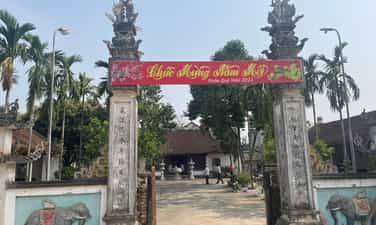
Phu Da communal house is an ancient communal house in Binh Phu commune, Hanoi city, ranked as an architectural and artistic relic by the Ministry of Culture and Information in 1993. This is also a place associated with the famous water puppetry tradition of Gia village, the Nom name of Phu Da village, which used to regularly perform water puppetry at Thay pagoda. The communal house has the architecture of a horizontal building consisting of 5 compartments, 2 wings, four curved roofs and a system of 7 trusses in the style of upper and lower beams. The wooden structures in the communal house still preserve many traces of ancient architecture. In particular, the carvings of dragons, figures riding horses, and young women singing demonstrate a sophisticated artistic level, typical of 18th century fine art. The dragon image with bulging eyes, large nose, bat ears, lanceolate mane, and vividly curved body bears the artistic style of the Later Le period. Phu Da communal house worships Dao Khang, a general of the Trung sisters. According to legend, he was instrumental in helping Hai Ba Trung fight the To Dinh invaders, at the same time establishing a farm in the Phu Da area, teaching people to farm, open ditches, dig streams, contribute to building the lives of local residents and was revered as a god. Besides historical and architectural value, the communal house also preserves many worship objects with artistic value from the Le and Nguyen dynasties, especially a set of ancient water puppet statues used in performances. The altar to the ancestors of the singing and dancing profession, customarily called the Saint Nha Tro, is also a testament to the village's long-standing folk art tradition. Every year, the village festival is held on the 3rd day of the 4th lunar month, with ceremonies commemorating Dao Khang and stick dancing and water puppetry activities at the pond in front of the communal house. Source: Hanoi Landscapes and Monuments
Hanoi
11 view
Rating : National monument
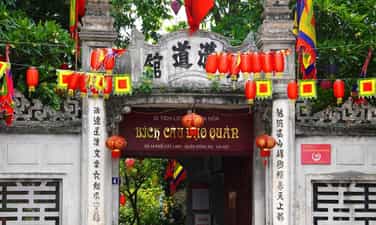
Bich Cau Dao Quan
Bich Cau Dao Quan, located on Cat Linh street, Hanoi, is a cultural - historical relic associated with the legends of Tran Tu Uyen, which is considered a "fairyland" in the middle of the ancient capital Thang Long. According to legend, in the past, Tran Tu Uyen was a scholar who built a reading shop on a high hill at the top of Bich Cau street. While attending a festival, he met a beautiful girl and fell in love. After that, he bought a painting of a girl resembling that girl and took it home. Strangely, from the painting came out a fairy named Giang Kieu. The two of them fell in love, together they took medicine to save people, practiced immortality, studied religion, and did many good deeds. After attaining enlightenment, Tran Tu Uyen was posthumously awarded the title of "An Quoc True Person" by King Le Thanh Tong. From the late 15th and early 16th centuries, this place was developed into a Taoist temple with strong Taoist imprints. Bich Cau Dao Quan used to be a place where Taoists practiced, and at the same time was also a place where guests, mandarins and scholars came to enjoy the scenery and recite poetry. Through many upheavals, the relics were degraded and destroyed, but were later restored by people many times. Today, Bich Cau Dao Quan has an architecture including Nghi gate, front altar, harem, Mother's house and guest house, and also holds many worship statues, stone steles and valuable artifacts. Source: Dan Viet Newspaper
Hanoi
17 view
Rating : National monument

Dong Nuoc Temple
Dong Nuoc Temple belongs to Ngoc Ha village, now Ngoc Ha ward, Hanoi. According to legend, in the past, this land often had springs of water gushing out from the ground into piles of water, so the people called it Dong Nuoc. Ngoc genealogy says that this place worships Princess Ngoc Nuong - who is said to be the daughter of the Dragon King, who once appeared to help King Tran Anh Tong fight the enemy. After winning the battle, the king repaired the temple and conferred divine title on her. The current temple bears many architectural marks of the Nguyen Dynasty, including three gates, garden, left moat, right moc, main temple and harem. Inside, the altars, hammock doors, and incense burners are exquisitely carved; especially the space to worship the Holy Mother of God and the gods in folk beliefs. Not only has architectural and religious value, Dong Nuoc Temple is also a place for community cultural activities for residents of Ngoc Ha village and neighboring villages. Every year, the temple festival is held on the 21st day of the third lunar month with incense offering ceremonies, palanquin processions and traditional cultural activities. With typical values of history, architecture and folk culture, Dong Nuoc Temple was ranked a national relic in 1993. This is one of the relics that contributes to preserving the mark of ancient villages west of the ancient capital of Thang Long. According to: Hanoi Landscapes and Monuments
Hanoi
99 view
Rating : National monument
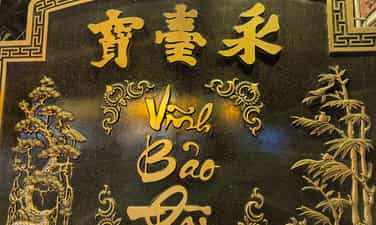
King Ba Temple
King Ba Temple, also known as Vinh Bao Dai Temple, is located next to Lang Pagoda, in a cool green space with many ancient trees such as Muom, Dai and pine. The temple has a traditional architecture consisting of three compartments, facing south, inside is a harem where a throne is placed to worship the nursemaid of King Ly Than Tong in his childhood. Therefore, local people have long known this place as King Ba Temple. According to folk beliefs, after her death on December 3, the royal court granted her the title "Tu Phuc Hoa, Ly Mau Cung Than". In addition to the main worshiped figures, the temple also worships the Three Holy Mother Goddesses, Thap Nhi Son Trang and a number of figures and altars according to folk beliefs. King Ba Temple has a close connection with the cultural space and festival of Lang Pagoda. Every year, on the 7th day of the third lunar month, when the Thanh Lang palanquin passes by, the procession stops to hold a worshiping ceremony. On the first and full moon days, people and tourists coming to Lang pagoda often visit King Ba temple as a ceremony site, contributing to preserving the traditional religious beauty of Lang land. With its historical, religious value and connection to traditional festivals, King Ba Temple is a destination that contributes to enriching the cultural relic system of the Lang area, Hanoi. Source: Hanoi People Magazine
Hanoi
264 view
Rating : National monument
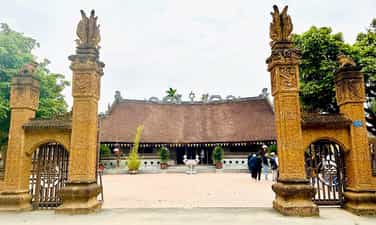
Dinh Tuong Phieu
Dinh Tuong Phieu, also known as Dinh Ca, is located in Tich Giang commune, Hanoi city. This is a long-standing religious building, worshiping four tutelary gods, including three saints Tan Vien and Quan Son tutelary god. The communal house was built in the southwest direction, towards Ba Vi mountain - a place associated with the legend and belief of worshiping Saint Tan. The building has a "Nhat" shaped architecture, consisting of three compartments and two wings, outstanding with a curved roof system, soft knife heads and many delicate carvings. The themes of dragons, phoenixes, unicorns, deer, water clouds and flowers are vividly expressed, bearing the mark of the art of the Le Trung period and later renovation periods. The communal house still preserves many precious relics such as procession palanquins, altar thrones, ordinations, ancient incense bowls and worship objects dating from the 17th century to the early 20th century. Every year, the communal house festival is held on the full moon day of the first lunar month, an opportunity for people to commemorate the merits of the Tutelary Gods and preserve traditional cultural values. With outstanding values in history, architecture and art, in 2018, Tuong Phieu communal house was ranked a special national monument by the Prime Minister. Source: Department of Cultural Heritage
Hanoi
240 view
Rating : Special national monument
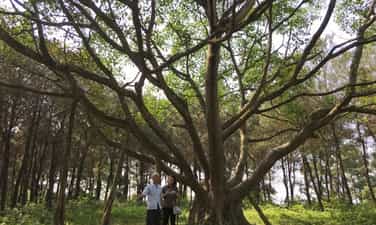
Uncle Ho's banyan tree planted in Tien Hoi
The location of Uncle Ho's banyan tree planted in Tien Hoi, now in Tien Hoi village, Dong Anh commune, Hanoi city, is the place that marks the event of President Ho Chi Minh's visit and participation in the local people's Tree Planting Festival. On January 31, 1965, at Dong Nhan mound, Tien Hoi village, Uncle Ho directly planted a souvenir banyan tree. He advised people when planting trees to take care of them so that they live well, and to actively plant more trees, contributing to creating shade and protecting the environment. After the event, the banyan tree was cared for and preserved by the local government and people. The place where Uncle Ho planted trees became a memorial for an event associated with the Tet tree planting movement initiated by him, while also carrying traditional educational meaning and remembering Uncle Ho's feelings and advice for the people of Dong Anh. Today, Uncle Ho's banyan tree planted in Tien Hoi is still preserved by the locality as a historical vestige, contributing to enriching the system of relics associated with President Ho Chi Minh in Hanoi. Source: Dong Anh 360 website
Hanoi
173 view
Rating : National monument
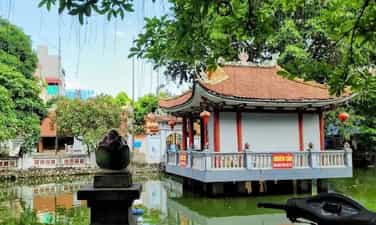
An Hoa communal house relic
An Hoa Communal House is located in An Hoa village, Yen Hoa ward, is a historical relic, typical architectural art, associated with the long-standing cultural and patriotic traditions of this land. The communal house worships Bach Hac Tam Giang and King Ly Than Tong, who are respected and worshiped by the people as Tutelary Gods. In particular, Ly Than Tong had a deep connection with the land of An Hoa, because he was the son of Sung Hien Marquis and was said to be born here. The communal house still preserves many valuable relics such as Chinese characters, 14 ordinations from the Canh Hung to Khai Dinh period, along with dragon palanquins, tribute bowl palanquins and carved dragon tablets. These artifacts not only have historical value but also demonstrate the sophisticated carving art of our ancestors. Every year, the communal house organizes a festival with a palanquin procession and many folk cultural activities, contributing to preserving the traditional beauty of An Hoa village. Source: Hanoi Landscapes and Monuments
Hanoi
278 view
Rating : National monument
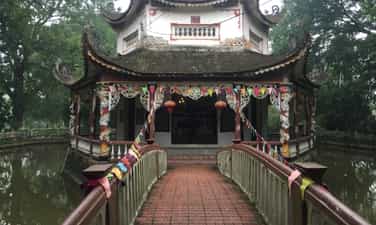
Dam Temple
Dam Temple - Sacred Mother Goddess temple in Hanoi. Dam Temple (or Xam Duong Temple) is located in Xam Duong village, Ninh So commune, former Thuong Tin district, Hanoi city. This is one of the typical temples worshiping Mau Thoai (Holy Mother Aquarium) in Vietnamese people's belief in Mother Goddess worship. According to legend, Mau Thoai is the daughter of the Dragon King, who appeared to help King Tran Nhan Tong defeat the Yuan-Mongol army. After the victory, the king built a temple to commemorate her achievements. Over many dynasties, the temple was bestowed with many ordinations and became a famous spiritual relic of the Thuong Tin region. Dam Temple has an ancient space with a lake, many ancient trees and items such as the Mother Goddess main hall, Tran Trieu palace, Son Trang cave, Co pavilion and Cau pavilion. Every year, the temple festival takes place in the second lunar month with incense offering ceremonies, water processions and many unique folk cultural activities, attracting a large number of tourists and people from all over. Source: Focus Asia Travel
Hanoi
472 view
Rating : National monument
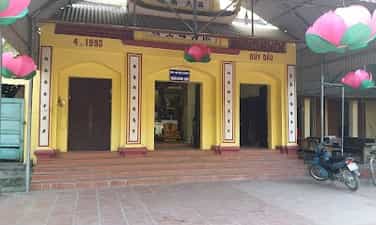
Dai Lo Temple
Dai Lo Temple (also known as Mother Dai Lo Temple, Lo Temple) is located in Ninh So commune, Thuong Tin district, Hanoi city. The monument was built around the 17th century, initially worshiping the Four Holy Mothers of the Song Dynasty, but through the process of formation and development, it has become one of the typical Mother Goddess temples of the Northern Delta region. The temple has a fairly complete architectural scale with items such as the ritual gate, the temple to worship Saint Tran, the front altar, the communal house, the central palace, the harem, the bell tower, the left - right corridor, the Co floor and the Cau floor. Among them, the two-story, eight-roofed communal house is the most prominent item with its sophisticated carving art, imbued with the architectural style of the Nguyen Dynasty. The relic also preserves many valuable artifacts such as ordinations, great letters, parallel sentences, dragon thrones, tablets and a system of worship statues. The temple's worship space fully reflects the traditional beliefs of worshiping the Mother Goddesses of the Three Palaces and Four Palaces of the Vietnamese people. In addition to the Four Holy Mothers, the temple also worships Saint Tran and many saints in the folk belief system, and is the place where special rituals and religious activities of the community take place. Source: Department of Cultural Heritage
Hanoi
472 view
Rating : National monument
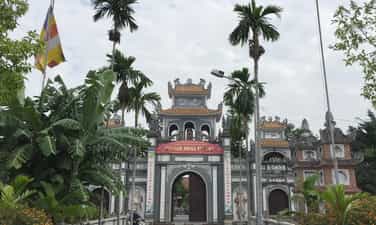
Communal house - Mai Phuc Pagoda
Communal house - Mai Phuc Pagoda (Long Bien, Hanoi) Communal House - Mai Phuc Pagoda is located in Long Bien ward, Hanoi city, built in the 17th century during the Le Dynasty. This is a valuable historical, architectural and artistic relic, worshiping the two blessed gods Xuan Vinh Dai Vuong and Princess Luan Nuong and famous generals who were instrumental in suppressing the rebellion of 12 warlords. According to fairy tales, Xuan Vinh and his younger sister Luan Nuong were two brothers who were talented in literature and martial arts, recruited insurgents, and contributed to Dinh Tien Hoang's unification of the country. After achieving many victories, Xuan Vinh was granted the title Xuan Vinh Dai Vuong, and Luan Nuong was granted the title Luan Nuong Princess. When the two brothers passed away, people built a temple to commemorate their contributions and honored them as local tutelary gods. Mai Phuc communal house still preserves many precious artifacts, notably 28 ordinations from feudal dynasties, of which the earliest ordination is dated 1674. In particular, the communal house also preserves a pair of Mac dynasty candlesticks with the name Dien Thanh 7 (1583) donated by Bat Trang people. These artifacts show that the communal house was built around the 16th century. Through many historical events and wars, the communal house was damaged but has been restored many times. Currently, the communal house faces south and is still a place for religious activities, preserving traditional cultural values of local people. Source: Hanoi Landscapes and Monuments
Hanoi
334 view
Rating : National monument
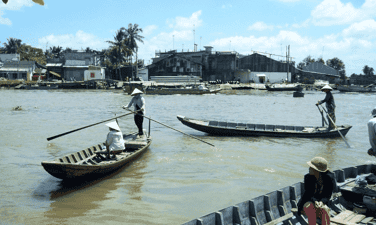
Tu Tong ferry station
Located peacefully on the red alluvial Red River, Tu Tong wharf (now in Tu Lien, Tay Ho ward, Hanoi) is a historical witness, marking the heroic history of the Capital during the resistance war against the French colonialists. Before the August Revolution, the ancient land of the Four Generals was one of the centers of the revolutionary movement in Hanoi, where many cadres were hidden and protected. When the guns of the National Resistance broke out, Tu Tong wharf quickly became a strategic traffic artery connecting the inner city with the safe base area of Dong Anh. The pinnacle of the victory here took place on the night of January 15, 1947, when the self-defense forces and people of Tu Tong bravely rowed boats carrying officers, soldiers and weapons across the Red River safely under a hail of enemy bullets. The silent sacrifice and the spirit of "death for the Fatherland" of the people here made an important contribution to protecting the core forces of the revolution in the arduous early days. Now that the war has receded, the old wharf has been labeled by the State as a historical relic of the revolutionary resistance. This place has become a sacred "red address", reminding today's young generation of the patriotism and resilient revolutionary tradition of their ancestors. According to: Hanoi New Newspaper
Hanoi
504 view
Rating : Provincial level relics
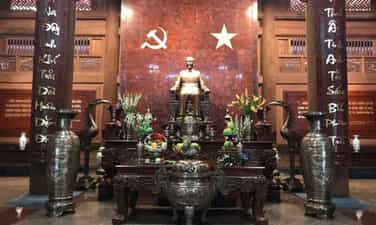
K9 Da Chong Relic Area
K9 Da Chong Relic Area - A red address marking the years of history Located at the foot of Ba Vi Mountain, about 70 km from the center of Hanoi, K9 Da Chong Relic Area is one of the special historical relics associated with President Ho Chi Minh and the resistance war against the US to save the country. In 1957, during a business trip to Ba Vi, Uncle Ho stopped at Da Chong area and realized that this place had an important strategic position. In 1958, he decided to choose K9 as the working base of the Party Central Committee. From 1960 to 1969, K9 was the place where President Ho Chi Minh and the Politburo met to discuss many important decisions of the country, and also welcomed many international delegations. After Uncle Ho passed away in 1969, K9 continued to undertake the special task of preserving and preserving his body during the war years, before being brought to Ho Chi Minh's Mausoleum in 1975. Up to now, K9 Da Chong Relic Area still preserves many valuable works and artifacts such as a two-story stilt house, office room, service house, area to preserve President Ho Chi Minh's body and pristine mountain and forest landscape. Not only is it a testament to a special historical period of the nation, this place is also a traditional educational address, contributing to helping today's generations better understand the life, thoughts and simple lifestyle of President Ho Chi Minh. According to: Tourist Information Center
Hanoi
668 view
Rating : Special national monument
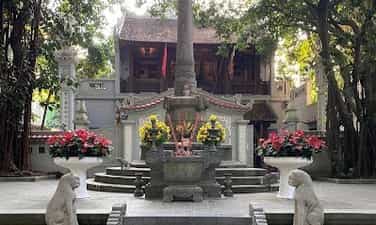
Statue of King Le Thai To next to Sword Lake
Statue of King Le Thai To next to Sword Lake The statue of King Le Thai To is located in the temple worshiping King Le Thai To located at 16 Le Thai To Street, Hang Trong Ward, Hoan Kiem District, Hanoi, in the green space on the banks of Hoan Kiem Lake. This is a historical relic associated with national hero Le Loi and the legend of returning the magic sword, a typical symbol of Thang Long - Hanoi. According to history books and legends, after leading the Lam Son uprising to defeat the Ming army, establishing the Later Le Dynasty, King Le Thai To returned the Thuan Thien sword to the Golden Turtle at Hoan Kiem Lake. From then on, the lake was named Hoan Kiem Lake (or Sword Lake), becoming a symbol of the desire for peace and national independence. The bronze statue of King Le Thai To was built in 1896, about 1.2 meters high, showing the king in a majestic posture, his right hand holding a sword, his left hand on his hip. The entire relic includes gate, garden, Phuong communal house and monument, in harmony with the landscape of Hoan Kiem Lake. In 2000, the project was restored and renovated on the occasion of the 990th anniversary of Thang Long - Hanoi. According to: Hanoi Landscapes and Monuments
Hanoi
354 view
Rating : National monument
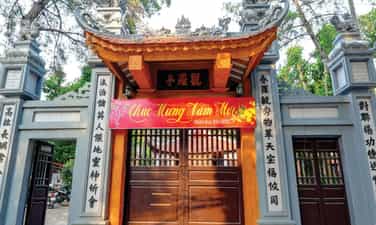
Quan La Communal House
Quan La Communal House - Historical relic associated with a mysterious ancient underground tunnel. Quan La communal house is located in Tay Ho ward, Hanoi, is an ancient communal house with a long history of the West Lake region. According to Tay Ho 360 website, the communal house is also called Quan Gia La, Quan Khai Nguyen or Quan Chua Hang, worshiping the village's tutelary god with many ordinations from the Le and Nguyen dynasties, of which the earliest ordination is dated 1653. Along with Khai Nguyen pagoda, Quan La communal house was ranked a national historical and architectural and artistic relic in 1992. The communal house stands out with traditional architecture, ancient space and many hundreds of years old trees. This is also the place where President Ho Chi Minh visited twice in 1958 and 1964, and was also the place where the Capital's defense force was stationed during the resistance war against the US. A special feature of Quan La communal house is that below the harem there still exists Thong Thien Cave - an ancient underground tunnel built of brick arches. According to Tay Ho 360, this work is said to date back to the Ly dynasty. Some theories say that this was once a Taoist alchemy place, while archaeologists believe it could be a Han Dynasty burial tomb. To date, the origin and function of the underground bunker have not been determined, creating a mysterious and unique appeal for the monument. With historical value, architecture and unique archaeological vestiges, Quan La communal house is not only a place for religious activities of the community but also a destination to help visitors learn about history, culture and mysteries still preserved in the heart of the Capital. Source: According to Tay Ho 360 website.
Hanoi
674 view
Rating : National monument
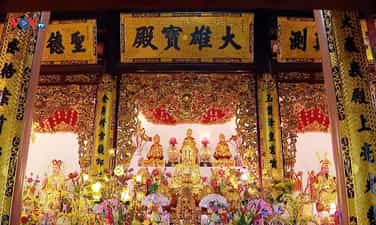
Historical and artistic relic Tho Lao Pagoda
Historical and artistic relic Tho Lao Pagoda. Tho Lao Pagoda has the literal name "Thanh Nhan Tu", located at 20 Tho Lao Street, Dong Nhan Ward, Hai Ba Trung District, now Hai Ba Trung Ward, Hanoi City. The pagoda also has the Nom name Bun Pagoda, the reason for its name is because Tho Lao village in the past had the profession of making vermicelli. Tho Lao Pagoda was built in the 18th century. During the resistance war against the French colonialists, the pagoda was destroyed by artillery shells and burned to the ground, leaving only 3 rooms of the Mother Church. After the liberation of the capital in 1954, the government, the abbot and all the people restored the pagoda to its old location. After many restorations in the year of Canh Ngo (1990), the year of Mau Dan (1998) and the most recent restoration took place in the year of the Dragon (2012), the architectural scale has been kept intact until now. Currently, the main pagoda has a "second" architectural layout with a scale of 2 floors and 8 majestic roofs, including: Trai hall, Dai Hung Bao hall, Ksitigarbha altar, Patriarch church, Mother church, Tu Grace house and Sutra room... In the pagoda, there are still preserved the statues of the Three Worlds, the Eternal Dharmakaya, the statues of the World-Honored Buddha, Amitabha, Avalokiteśvara and Mahasthamaprapta Bodhisattva, the thousand-armed Guan Yin, the Nine-Dragon throne and the statue of the newborn Shakyamuni... Two altars to worship the Monsignor and the Holy Monk are arranged in the two gables of the Tam Bao house. Most of these statues were created during the Nguyen Dynasty in the 19th century. The relics are crafted from wooden materials such as horizontal boards, couplets, incense burners... with the main theme being the four sacred animals and the four precious animals - mascots of the universe that symbolize the transformation of creation, and at the same time express human aspirations for natural life. The most unique is the Tay Son bronze bell dated Canh Thinh 6 (1798), indicating the early birth of the monument. In addition, during the period 1936 - 1944, Tho Lao Pagoda was the place of operation of patriotic organizations in Dong Nhan village such as: Elderly Association, Women's Association, Youth Association... During the years of national resistance, especially during "Hanoi - 60 days and nights of smoke and fire", the pagoda was a place to hide Viet Minh cadres and a place to station, gather, and transfer wounded soldiers of the Capital Protection Regiment - Inter-Region I. According to: 360° historical - cultural relics of Hai Ba Trung ward, Hanoi city
Hanoi
262 view
Rating : Provincial level relics
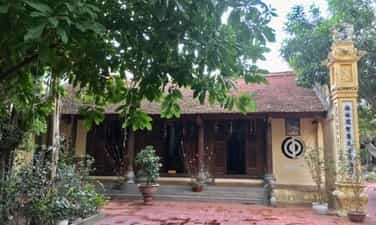
Huong Tuyet Pagoda historical site
Huong Tuyet Pagoda historical site. Huong Tuyet Pagoda is located at lane 205, Bach Mai street, Hai Ba Trung ward, Hanoi. On the post-Buddhist stele built in the year of Nham Ty, the 6th year of Duy Tan (1912), the history of the construction of this pagoda is clearly recorded as follows: "Mr. Nguyen Huu Quang on Hang Dao street, Dong Lac ward, and his wife Truong Thi Dieu, decided to buy a private garden in Bach Mai ward, Hoan Long district to build a pagoda to worship Buddha, paint statues, and cast pagoda bells. In the year of Tan Hoi (1911), October, on an auspicious day, the pagoda was completed and placed. named "Huong Tuyet Tu" (Perfume Tuyet Pagoda)". Pagoda buildings include: Gate, main pagoda, Patriarch's house, Mother's house and guest house. The main pagoda includes: Front hall; Middle Hall and Upper Palace. The most interesting thing about the pagoda is the system of Buddha statues arranged higher and higher in the upper house. The entire system of over 50 round statues was created in the first half of the twentieth century. In addition, the pagoda also preserves many precious relics such as: 3 bronze bells; 3 stone steles of the Nguyen Dynasty record the construction of the pagoda and meritorious people; and wooden relics include: Royal concubine, couplet, y door, hammock, scroll, incense burner, dragon throne, altar... carved with themes of four sacred animals, four precious animals, adoring dragons, tigers... all painted with gold and gilded, dating from the 19th - 20th centuries. Besides, the pagoda is also a historical site of the Revolution, making a great contribution to the resistance war against the French. At the pagoda gate, there is a stone stele carved in 1938 stating: "The Huong Tuyet Pagoda area was the contact place of the Vietnam Revolutionary Youth Comrades Association in 1929 and was the headquarters of the Steering Committee of the first strike of Avia Hanoi factory workers (from May 28 to June 10, 1929)". The relics of Huong Tuyet Pagoda and the struggle of Avia Hanoi workers were the direct driving force promoting the wave of revolutionary struggle of our people, leading to the birth of the Indochina Communist Party organization (June 17, 1929) - the main nucleus of the Communist Party of Vietnam, established on February 3, 1930. According to: 360° historical - cultural relics of Hai Ba Trung ward, Hanoi city
Hanoi
253 view
Rating : National monument
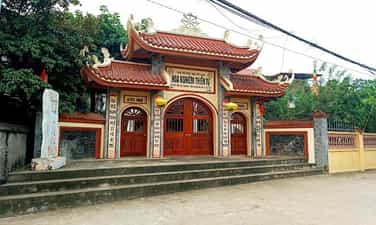
Hoa Nghiem Pagoda
Hoa Nghiem Pagoda - An ancient pagoda that preserves the artistic imprint of the Mac Dynasty. Located in Phuong Ban village, Phung Chau commune, Chuong My district, now Phu Yen village, Phu Nghia, Hanoi, Hoa Nghiem pagoda (Hoa Nghiem pagoda) is an ancient pagoda with a long history, closely associated with the cultural and religious life of local people. Located in the land of Doai rich in historical tradition, the pagoda is not only a sacred place to worship Buddha but also a relic that preserves many unique cultural and artistic values. The pagoda was built in the traditional architectural style of the Northern Delta with wooden structures, ancient tiled roofs and a peaceful space under ancient trees. In particular, the pagoda is located adjacent to Phuong Ban communal house, forming a relic complex that clearly reflects the religious life of ancient agricultural residents. The outstanding value of Hoa Nghiem Pagoda is its system of rare antiques dating back to the Mac Dynasty (16th century). Among them, the highlight are ancient Buddha statues with sophisticated sculpture style, demonstrating the soft, intimate beauty of Vietnamese Buddhist art. The pagoda also preserves a stone stele of the Mac Dynasty with records of the process of building and restoring the pagoda and those who contributed to it, which is a valuable source of material for studying history, culture and Han Nom. Having gone through many historical events, Hoa Nghiem Pagoda is still preserved and embellished, becoming an attractive spiritual and cultural destination of Chuong My district. With unique historical, architectural and artistic values, the ancient temple contributes to preserving the cultural heritage of the Doai region and is a meaningful address for tourists, Buddhists as well as researchers. Reference source: Institute of Sino-Nom Studies
Hanoi
706 view
Rating : Provincial level relics
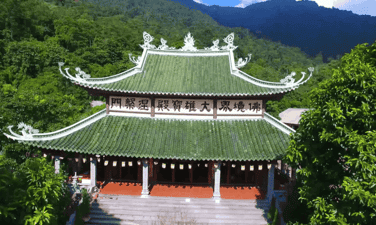
Tan Vien Pagoda
Tan Vien Pagoda - Sacred ancient temple in the middle of Ba Vi mountains and forests. Located on the slopes of Ba Vi mountain, in Minh Quang commune, Hanoi, Tan Vien pagoda (Tan Vien Son Quoc Tu) is an ancient pagoda associated with the sacred land of Tan mountain. According to the pagoda's documents, the pagoda has a history dating back to the reign of An Duong Vuong. Experiencing many historical events, the temple was damaged and became ruins before being restored by local people in 1993. In 2008, Venerable Thich Dao Thinh was appointed abbot and together with monks, nuns, and Buddhists gradually built and developed the pagoda into a center for learning and propagating Dharma in the Ba Vi area. After nearly two decades, the pagoda has been built spaciously with many items such as Tam Bao, Patriarch's house, Quan Am Thien Thu Thien Nhan palace, Dharma conference house, Dai Thong Tri Thang statue, Quan Am cave - well and many spiritual works in harmony with mountain and forest nature. Not only is it a place of worship, Tan Vien Pagoda also regularly organizes retreats for Buddhists, teenagers and students, contributing to spreading the values of compassion, wisdom and morality of Buddhism. With its pure landscape, unique architecture and sacred space between Ba Vi Mountain, Tan Vien Pagoda today is an attractive spiritual and cultural destination for tourists and Buddhists from all over. Source: People's Representative Newspaper.
Hanoi
709 view
Rating : National monument
Outstanding monuments
See all
Imperial Citadel of Thang Long
Historical and archaeological relics of Thang Long Imperial Citadel Central Area - Hanoi with a core conservation planning area of 18,395 hectares (including Hanoi Ancient Citadel Relic Area and 18 Hoang Dieu Archaeological Relic Area) and a buffer zone area of 108 hectares. In 1009, Ly Cong Uan ascended the throne and established the Ly dynasty. In 1010, Ly Thai To moved the capital from Hoa Lu to Dai La citadel, renamed the new capital Thang Long and built it into the country's largest economic, political and cultural center. Through the Ly, Tran, Le So, Mac and Le Trung Hung dynasties, Thang Long citadel always held the position of "National Capital", the residence and working place of the King and Royal Family. This area is also where important ceremonies of the country are held. After the Nguyen Dynasty established the capital in Hue (1802), the capital role of Thang Long was dissolved... After 1954, the Thang Long citadel area became the headquarters of the Ministry of National Defense. It was in this area that many important decisions of the Party and State were made, contributing to great victories in the resistance war against the US to save the country, win national independence, and unify the country. Through time and historical events, Thang Long citadel has had many changes and deformations..., but up to now a number of historical and archaeological relics are still preserved, typically: Flagpole (Hanoi Flagpole): built in 1812, under the reign of King Gia Long, 33.4m high, including three floors: base, column body and lookout. Doan Mon: is the southern citadel gate, built in a rolling arch style. Doan Mon is arranged horizontally, including the middle door reserved for the king, on both sides there are 4 smaller doors, for mandarins and royal families. Kinh Thien Palace: located in the center of the imperial citadel (early Le Dynasty), built in 1428, right on the old foundation of Can Nguyen Palace under the Ly Dynasty (later renamed Thien An Palace). In 1886, this palace was destroyed by the French colonialists to build the French Army Artillery Command. Currently, only traces of the foundation of Kinh Thien Palace remain. In particular, this area still preserves two stone dragon steps, dating back to the 15th century. Hau Lau (Princess's Floor): built in 1821, used as a resting place for the maids in the convoy escorting the Nguyen Kings when traveling to the North. At the end of the 19th century, Hau Lau was seriously damaged, the French colonialists renovated and rebuilt it as it is today. Main Bac Mon (North Gate): is the northern city gate, built in 1805, consisting of two floors, eight roofs, with a curved blade head, in the traditional style. Surrounding walls and 8 palace gates of the Nguyen Dynasty: In 1805, the Nguyen Dynasty built a wall from Doan Mon gate around the inner palace, creating a palace for the king to work and rest every time the North patrolled. Currently, in the ancient citadel there are still 8 city gates along with a system of walls surrounding the palace made of bricks. Relics of house and bunker D67: built in 1967, in area A. This is where the Politburo, Central Military Party Committee, and General Command made many historical decisions, marking the milestones of the Vietnamese revolution: The 1968 Tet Offensive, the 1972 campaign, the 1975 General Offensive and the climax of the Ho Chi Minh Campaign... French architectural works: built from the late 19th century to the early 20th century in the Vauban style, including the French Army Artillery Command building; a 2-story building, built in 1897, now used as the headquarters of the Department of Operations; two one-story buildings, built in 1897. East of the Operations Department building is a guest house, built in 1930. Trees in the relic area: planted at high density and diverse in types, have contributed to creating a fresh environment and harmonious landscape for the relic area. Archaeological relics at 18 Hoang Dieu: located about 100m west of Kinh Thien Palace, with an area of 4,530 hectares, excavation began in December 2002, divided into 4 zones (A, B, C, D). While excavating here, archaeologists discovered traces of the foundations of ancient architectural works of Thang Long Imperial Citadel and many valuable artifacts, such as terracotta architectural decorative materials, wooden columns, ceramics of Vietnamese feudal dynasties and many foreign utensils and objects, such as porcelain of West Asia, China, Japan... Thang Long - Hanoi Ancient Citadel is a typical historical and archaeological relic, material evidence reflecting high technical level, containing historical, architectural and artistic values. At the same time, it reflects the cultural interference with countries in the region and around the world in a long historical process, shown through many historical artifacts, architectural works, and urban landscapes with thousands of years of history. With the special historical, cultural and scientific values of the monument, the Prime Minister decided to classify the Thang Long - Hanoi Imperial Citadel Central Area historical and archaeological site as a special national monument on August 12, 2009. Source: Department of Cultural Heritage
Hanoi
11703 view
Rating : Special national monument

One Pillar Pagoda
The pagoda was built in 1049, the first year of the reign of Sung Hung Dai Bao of King Thai Tong of the Ly Dynasty. Legend has it that at that time, King Thai Tong was old and his father had a son, so he often went to pray at pagodas. One night the king had a dream and saw Avalokiteshvara Buddha appearing on a lotus platform in a square lake in the west of the citadel, holding a baby boy and giving it to the king. Then, sure enough, the king gave birth to a son. Seeing the fulfillment, the king immediately ordered a pagoda to be built to worship Avalokiteśvara Buddha. One Pillar Pagoda is an architectural complex consisting of a pagoda and a tower in the middle of the lake, originally called Dien Huu pagoda and Lien Hoa tower. This monument has long been known as the One Pillar Pagoda. The far pagoda is located west of Thang Long citadel, in Ngoc Thanh village, Ngoc Ha, now the location behind Uncle Ho's Mausoleum. The pagoda was built on a square lake, in the middle of the lake there is a stone pillar, about two meters high, nine meters in circumference, at the top of the pillar is a small tiled pagoda, shaped like a lotus flower rising from the water, hence the name of the pagoda. Nhat Tru Pagoda or One Pillar Pagoda. The pagoda was built in 1049, the first year of the reign of Sung Hung Dai Bao of King Thai Tong of the Ly Dynasty. Legend has it that at that time, King Thai Tong was old but had no son yet, so he often went to pray at pagodas. One night the king had a dream and saw Avalokiteshvara Buddha appearing on a lotus platform in a square lake in the west of the citadel, holding a baby boy and giving it to the king. Then, sure enough, the king gave birth to a son. Seeing the fulfillment, the king immediately ordered a pagoda to be built to worship Avalokiteśvara Buddha. When the pagoda was finished, the king summoned all the Buddhist monks and nuns in the capital to stand around, chant sutras for seven days and nights, and build a large temple next to it to worship Buddha, called Dien Huu pagoda. In 1105, King Ly Nhan Tong repaired the pagoda and erected a white stone tower in front of Dien Huu pagoda called Bach Tuynh tower. The tower is 13 meters high. From the tower to the One Pillar Pagoda, go through a rainbow corridor. Every month, on the full moon day and the first day of the month, the king, his queens, concubines, concubines and courtiers go to the temple to worship Buddha. Especially on the 8th day of the fourth lunar month every year, the day Buddha was born, the king would go to the temple one night in advance, fasting to perform the Buddha-bathing ceremony the next day. On this day, many Buddhist monks, nuns and people from all over come to attend, creating a big festival in the capital. On this day, there is a life release ceremony at the temple. The freeing ceremony began right after the Buddha bathing ceremony. The king stood on a high platform, holding a bird in his hand and letting it fly away. Then the monks, nuns, and lay men and women raced to each release one bird, the shadow of the bird. flying through the sky. Old history records that in the eighth year of Long Phu (1108), the king ordered 12,000 pounds of bronze to be cast into a large bell called Giac The Chung (bell to awaken people), to hang at Dien Huu pagoda. A Phuong communal house was built with green stone eight meters high, and on the roof of the communal house were large iron bars to hang bells. But after the bell was cast, it didn't ring, so it had to be left in the field. For a long time forgotten, the bell became a turtle's nest, so the bell was called Quy Dien. In 1922, the Far East Uncle Ho School repaired the pagoda and kept it according to the old architecture. On the night of September 11, 1954, French colonial henchmen, before handing over the Capital to our Government and people, deliberately set mines to destroy the pagoda. After taking over the capital, the Government ordered it to follow the old format and repair it. In April 1955, the One Pillar Pagoda was restored to its original form. Until 1958, on the occasion of President Ho Chi Minh's visit to India, the Indian people gave him the Bodhi tree from the land of Buddha and was planted in the temple yard. Source: Ba Dinh District Electronic Information Portal
Hanoi
11659 view
Rating :

Thanh Nhan Pagoda
Thanh Nhan Pagoda (Linh Son Tu) is the Party's secret revolutionary base, the Ancestral Church is the meeting place, printing of leaflets, and accommodation for revolutionary cadres active in the period before the August Revolution of 1945 and when France temporarily occupied Hanoi (1947- 1949). A number of officers who sacrificed heroically at the pagoda in March 1949 were buried at Mai Dich cemetery - Hanoi. Thanh Nhan Pagoda (Linh Son Tu) is the secret revolutionary base of the Party and the church. The group is a meeting place, printing leaflets, and accommodation for revolutionary cadres active in the period before the August Revolution of 1945 and when the French temporarily occupied Hanoi (1947- 1949). A number of officers who sacrificed heroically at the pagoda in March 1949 were buried at Mai Dich cemetery - Hanoi. Located to the south of the ancient Thang Long citadel, close to the O Cau Den area, there is a pagoda called Thanh Nhan Pagoda in its literal name, Linh Son Tu in its literal name. Thanh Nhan Pagoda is currently located at alley 331 Tran Khat Chan. Thanh Nhan Pagoda is located in a complex of relics including Lac Nghiep Communal House in the East, close to the pagoda, a little further away are An Cu Communal House, Luong Yen Communal House. Thanh Nhan Pagoda is located on a mound that people here used to call a mountain, engraved on the ancient stone stele "Linh Son Bao Tu" carved in the year Canh Hung 20 (1759), during the Le Dynasty. Monk Chinh Minh, the abbot of Linh Son pagoda at that time, wrote as follows: "Now in Ong Mac land, Thanh Nhan village in the capital, there is a land with a towering mountain of land. That mountain has a vein leading from West Lake, flowing to the To Lich River, on the right there is Bach Ho, on the left there is Thanh Long, in front is a robin, behind is a feathered bird, as far as the eye can see, it is truly a first-class quiet land. most of all". Thanh Nhan Pagoda has a large scale. The three-entrance structure is shown in the form of pillars, with a main gate. The main pagoda is located on the highest position compared to the supporting structures and faces south, overlooking the courtyard and lotus pond of the pagoda. The pagoda has a "Dinh" shaped structure, gabled walls, and tiled roof. The ridge and the embankment are raised high, decorated with rosettes on the top, and in the middle of the ridge is the great pagoda "Linh Son Tu". The decoration in the main pagoda's architecture is gentle, the themes and motifs are mainly in the artistic style of the Nguyen Dynasty, such as: apricot bamboo stems, seal patterns, concentrated on the mesmerizing parts. Along with the main temple architecture, there is an ancestral house with five compartments. The temple also has a model electric house. Currently, Thanh Nhan Pagoda still preserves a rich amount of relics in both quantity and artistic value. Typically, there are ancient stone steles (9 steles). The system of Buddha statues, Mother Goddess statues, and Patriarch statues includes 61 large and small statues. Two bronze bells were cast in the year of Tu Duc (1848). Other artifacts: horizontal boards, parallel sentences... are products of the Nguyen Dynasty. On May 28, 2003, Thanh Nhan Pagoda - Linh Son Tu was ranked by the Hanoi People's Committee as a historical architectural and artistic relic by Decision No. 2942/QD-UB. What we cannot mention is that in the early years of the resistance war against the French colonial invaders, Thanh Nhan Pagoda was a base for raising underground revolutionary comrades, a place where documents were printed and hidden. Party leaflets, in the fierce and persistent struggle, there were comrades who heroically sacrificed their lives at this pagoda. A number of other comrades later took on the responsibility of the Party and the State, they became heroes. witnesses of the historical period, and also witnesses affirming the positive contribution of Thanh Nhan Pagoda in the cause of fighting to protect Hanoi Capital, protecting the Fatherland, creating more motivation to promote the war. The revolution quickly led to brilliant victory. On August 5, 2005, Thanh Nhan Pagoda was labeled a revolutionary historical relic. Today, the pagoda is also an address for generous-hearted Buddhists to contribute and share with many difficult situations in society through very practical and humane charity works such as cooking rice. , charity porridge for cancer patients in difficult circumstances at two K hospitals (Addresses Quan Su and Thanh Tri). Organize gift distribution programs combined with medical examination and treatment for people in remote areas; eye surgery program for the poor; distribute wheelchairs to disabled people. Coordinate with the Health Department to organize charity clinics for the poor right at the temple. Source: Phuong Thanh Nhan website
Hanoi
11354 view
Rating : National monument

Communal house, Dai Lan pagoda
Dai Lan communal house and pagoda relic cluster was ranked by the Ministry of Culture and Information (now the Ministry of Culture, Sports and Tourism) as a national architectural and artistic relic in 1989. This is the destination of many people. tourists from near and far because of the unique features of the architecture as well as the friendliness and hospitality of the people... Dai Lan communal house and pagoda (Dai Lan village, Duyen Ha commune, Thanh Tri district), were built around the 17th century. Previously, the cluster of relics was close to the riverbank. Over time, the riverbank eroded so the villagers moved to the current location. Dai Lan Communal House Dai Lan communal house, located close to the left of the three jewels of the village temple, has a "Dinh" shaped architecture including 3 vestibules and 2 back rooms. The Dai Lan communal house is divided into 3 compartments and 2 compartments with 4 curved roofs, the roof is covered with two dragons flanking a tiger holding a stylized sun, the two ends of the roof are two dragons holding the roof, the roofs are covered with swords. The dragon's head curves toward the communal house. Inside, the roof support beams are made in the style of upper gong and armpit beams, lower porches, seven porches, and seven backs on the surface with four rows of pillars. Architectural decorations at Dai Lan communal house mainly focus on the remaining heads, dragon-carved pillars, the four sacred animals, and the four precious gems, which are familiar themes in traditional folk belief architecture. Dai Lan Communal House worships 4 village Tutelary Gods (3 during the Hung King period, Linh Ho, Minh Chau and Cha Luc, who were instrumental in suppressing the enemy and Nguyen Nhu Do, a great mandarin of the Le Dynasty, who served as Minister and was an ambassador three times. China). Dai Lan communal house still retains many valuable artifacts including 11 ordinations of the Le and Nguyen dynasties, scrolls, hammock doors, dragon thrones, tablets, incense burners, cenotaphs, especially four palanquins set. Made from the 17th to 18th centuries. Notably, there is a large scroll-shaped horizontal scroll, below is a hammock door running throughout the house. These are two relics decorated with perforation and gilded lacquer techniques. Dragons flanking the sun, dragons rolling water, dragons and horses painting pearls...are decorated on the border of the horizontal panel. The upper part of the hammock door is a pair of large dragons flanking tiger faces, both sides are decorated with images of water-spewing dragons, phoenixes, dragon horses...beneath these two artifacts is a wooden plan meticulously decorated with embossed techniques. A stylized dragon with leaves flanking a tiger, in the middle are dragons and phoenixes, facing the sun in the middle... The main hall has a horizontal panel made in the form of a scroll hanging on a delicately carved hammock door. The decorations there all show traditional carving themes: two dragons in the Japanese dynasty, dragons rolling in the water, dragons and horses painting pearls, dancing phoenixes... Below is an incense burner with hidden sculptures around the border. The two side rooms have horizontal panels hanging above the entrance to the forbidden palace. In the harem, there is a large palace, where the dragon throne and the tablets of the four tutelary gods are placed. In the harem, there is also a large palace containing the dragon thrones and tablets of the four village tutelary gods. Dai Lan village festival takes place on three days, the 6th, 7th (main festival) and 8th of January. In the annual festival, stick fighting is indispensable to commemorate the merits of the gods, and at the same time to exercise strength and wisdom to keep the village peaceful. Dai Lan Pagoda Dai Lan Pagoda (Pho Hue Tu), originally the home of Dai Lan village, Duyen Ha commune. Because in the past, the pagoda had moved many times and the most recent time was in 1959 when the Red River changed its course and the pagoda's land collapsed, so the villagers moved the Buddha statue and worship items to the village to worship, since then the pagoda has been transformed into a temple. pagoda. In the past, the construction site had a large architectural scale with a "pre-Nhat and post-Dinh" structure, however, over time the monument has been seriously degraded. In 2010, the government and local people renovated the current Tam Bao Pagoda with a Dinh architectural structure located on a plot of land at the beginning of the village, close to the village communal house, including Tien Duong and Upper Palace. but still preserves some of the old works' stubs. In 2012, the Ancestor house and Mother house were built. In 2013, the Guest House was built. The front hall consists of five compartments and three Upper Palace compartments. The pagoda was built with a brick wall surrounding it, the gable wall was closed, at the end of the bank was a stepped throne, two tiled roofs, in the middle of the roof was a scroll, the inside was embossed with Chinese characters writing the name of the pagoda, on both ends. The roof is covered with two leaf dragons holding the roof, the two gable walls are built with mezzanine walls connected to two pillars, the top of the pillar is covered with four phoenixes with their tails together, down below is a lantern box with four sacred animals (dragon, glass) embossed inside. , turtle, phoenix), the body of the pillar is covered with embossed edges, inside are written pairs of Chinese characters praising the beautiful scenery of the pagoda and the compassion, joy, forgiveness and charity of Buddhism. Inside, the set of railings supporting the roof of the front hall is made in the following style: Upper gongs overlap the beams, lower floors, porches, seven rears on the surface with four rows of pillars. Decoration on the architecture of the Tien Duong house is concentrated on the pillars, beams, stripes and pillars with the main decorative themes being dragons, four sacred animals, four precious animals, chrysanthemums, eight precious objects of Confucianism... Worth it The most notable are the two armpit paintings on both sides of the gable representing cloud dragons using filigree techniques. The cloud dragon represents the traditional Confucian concept of the dragon and the dragon, the dragon and the tiger are symbols of the meeting of kings and subjects. The presence of two pillars decorated with dragon clouds is very appropriate in an architecture that worships former academicians. The harem of Dai Lan pagoda is built with pedestals gradually increasing from the outside to the inside, with statues placed on the pedestals. At the top is the Tam The statue. The second layer is the set of statues of Amitabha Tam Ton, with the statue of Amitabha sitting in the middle, flanked by the statue of Avalokiteshvara and Mahasthamaprapta. The next layer is the statue of Amitabha Tiep Mang, on both sides are the statues of Thi Gia. The fourth layer includes Quan Am Chuan De statues, flanked by Kim Dong and Ngoc Nu statues. Outside are the statues of the Jade Emperor and Brahma, De Thich, then the Kowloon throne and the statue of Sakyamuni Buddha. On both sides of the Upper Palace there are statues of Quan Am Tua Son, Tho Dia, Giam Trai, and a set of statues of Ten Dien Diem King. Outside the front hall are two altars worshiping the Monsignor, the Holy Monk and the statues of Ho Dharma Encouraging Goodness and Punishing Evil. Besides the Buddha statue system, Dai Lan Pagoda also preserves a number of valuable artifacts: hammock doors, incense burners, and incense bowls of the Le Dynasty; 1 pair of Qing Dynasty porcelain vases, 2 bells, 4 horizontal panels and 2 pairs of parallel sentences. In 1989, the Dai Lan communal house and pagoda relic complex was ranked by the Ministry of Culture and Information (now the Ministry of Culture, Sports and Tourism) as a national architectural and artistic relic. Source: Hanoi Department of Culture and Information
Hanoi
11126 view
Rating :

Hoang Xa communal house
Hoang Xa Communal House still retains the altar, the large throne altar, the altar, the palanquin and the precious bowl, the ordination (from the Quang Trung to Khai Dinh period) and parallel parallel panels; The carvings reached the highest peak of art during the Le Trung Hung period. Ung Hoa district possesses a rich system of relics and intangible cultural heritage, typical of the Red River civilization and the Northern Delta region. Among them, Hoang Xa communal house - a national historical and cultural relic - attracts a large number of tourists from near and far to visit. Hoang Xa communal house (Van Dinh town, Ung Hoa district) was built around the end of the 16th century, in the "Nhat" style, meaning there is only one rectangular building with three compartments and two large wings, worshiping in a horizontal way. The altar is worshiped on the mezzanine in the space between the two main columns and the two military columns at the back of the middle space, worshiping the village tutelary god Quy Minh - one of the Three Saints of Tan. Expression of fertility, happiness, prosperity. The communal house's name is taken from the name of Hoang Xa village (formerly in Lien Bat commune, now in Van Dinh town). In the 17th century, Hoang Xa communal house was repaired and the Central Palace and the Harem Palace were built in the architectural style of the letter "Cong". Hoang Xa communal house looks towards the West - Northwest. The ritual gate is designed in the style of a pillar. The head of the pillar is shaped like a lantern, the top is covered with two unicorns flanking each other. Nghi Mon has four pillars. The middle door is two large square pillars with two unicorns flanking each other at the top. Dai Bai (main communal house) is built on a rectangular foundation of 200m2, including 3 large rooms and 2 wings, uneven. The middle space is a place for ceremonies, the front rooms are paved with wood as a place for community activities, now there are 4 tiled pedestals built. The wooden frame is firmly built on rows of large, round columns. The main column of the two middle sets has a circumference of 1.85m, the military column has a circumference of 1.25m. The four main sets are made in two different ways. The two sets of structures are structured in the style of "Upper is stacked with a lower beam", the two main sets are structured in the style of "Upper is stacked with lower beams". Supporting the upper part of the two gable roofs is a system of rafters placed on large horizontal beams. The beam has one end that goes through the body of the main column with two side rafters, and the other end is placed on the military column on the gable side. The Harem Palace consists of 1 room and 2 compartments, built on a square foundation, with 4 roofs and curved corners. Between the four pillars is placed a large altar, above is a square box-shaped altar painted with red and gilded gold, inside the coffin is the dragon throne and tablet of Tutelary God Quy Minh. Located perpendicularly connecting the Hau Palace with the Great Temple is the Central Palace building consisting of 3 vertical compartments, forming 3 floors of hammock doors. Over time, Hoang Xa communal house still preserves artistic sculptures expressed on traps, stripes, planks, pillars, piles of beams, residual ends... Most of them are paintings. carved dragons with the themes of Doc Long, Long Van, Long O, Long Ly... Four pliers are carved into dragon shapes with slim heads, long tails hidden behind the column, horse faces with protruding foreheads, upturned noses, smiling mouths, beard and mane stretched back like long swords covering the neck, legs spread out firmly. Throughout the framework of the communal house, dragon images are created in different positions in the style of carving parasols and multi-layered bubbles of the art of the Le Trung Hung period. Interwoven with dragons are carvings with many themes of human and animal activities such as scenes of fairies dancing and singing, musicians playing drums, singing at communal houses, rowing boats, wrestling, cockfighting... scenes of elephants plowing and horses. or the scene of riding an elephant on a horse, burying a dragon's jaw... Besides, in Hoang Xa communal house, there is still an altar, a large altar, a throne, an altar, a palanquin and a precious bowl, ordaining (from the Quang Trung period to Khai Dinh) and Hoang Phi are parallel sentences. All combine to give Hoang Xa communal house a beauty as a complete artistic whole. Hoang Xa Communal House was ranked as a historical and cultural relic by the Ministry of Culture (now the Ministry of Culture, Sports and Tourism) in 1962. (Source: Hanoi Department of Tourism)
Hanoi
11091 view
Rating :

Voi Phuc Temple, Hanoi
The temple was established during the reign of Ly Thai Tong (1028-1054) in the southwest corner of the old Thang Long citadel in the territory of Thu Le village, now Thu Le park. Worshiping Prince Linh Lang, son of King Ly Thai Tong, and his 9th concubine Duong Thi Quang, but it is said that he was originally the son of Long Quan, whose name was Hoang Chau, waterfall, who had meritorious service in the resistance war against Vietnam. Song Dynasty invaders. After his death, the people of Thu Le built a temple and was ordained by the king as Linh Lang Great Vuong, the supreme blessed god. The god has many times conspired to help the Tran dynasty in the war against the Yuan-Mongol invaders, and the Le dynasty in the revival. Because in front of the temple door there are two kneeling elephants, it is commonly called Voi Phuc Temple and because the temple is in the west of the capital, it is also called Tay Town or Doai Town (Doai, according to the Western eight trigrams). Voi Phuc Temple is currently located in Ngoc Khanh ward, Ba Dinh district, Hanoi. The temple is also called Phuc Thu Le Elephant Temple to distinguish it from Phuc Thuy Khue Elephant Temple at 251 Thuy Khue Street, Tay Ho District, Hanoi. Previously, the temple was located in the Tu Tran system, "keeping" the west of the capital. This place was originally a land full of lakes, ponds, and marshes, and was one of the Thirteen camps dating back to the Ly Dynasty. At that time, it belonged to the general cabinet, Quang Duc district, Phung Thien district. Legend has it that Voi Phuc Temple was built in the 7th year of Chuong Thanh Gia Khanh (1065) under King Ly Thanh Tong on a high mound in the land of Thu Le camp - one of 13 camp villages in the west of Thang Long capital. . The temple's opening is currently a four-pillar gate, like cosmic axes that bring vitality from the upper floors down to earth (this is a product of the 19th and 20th centuries). On both sides of the gate are steles of a horse and a pair of elephants. adoration ceremony (currently a new four-pillar ritual gate has been built, close to the main road). It is also because of this that the temple is named Voi Phuc. New
Hanoi
9730 view
Rating : National monument

Nguyen Trai Temple.
Nguyen Trai Church is located in Nhi Khe commune, Thuong Tin district, Hanoi. Nguyen Trai (1380 - 1442), a national hero, outstanding cultural figure, and world cultural celebrity, was recognized by the United Nations Educational Scientific and Cultural Organization (UNESCO) in 1980. Nguyen Trai Church was built in Nhi Khe village, Nhi Khe commune, Thuong Tin district. In Con Son (Hai Duong) and other places there are also temples worshiping famous person - national hero Nguyen Trai. The gate of Nhi Khe village is embossed with four large Chinese characters: "Like seeing a great guest" (like seeing a big guest). That is the heart of the ancients who came to the village. This gate is also called "Quoc Gate" - according to legend, it is called so to commemorate the founder of the country Nguyen Trai. After passing the National Gate, a short distance leads to the Nguyen Trai church area with the Nguyen Trai monument, the church, the exhibition house "Nguyen Trai's life and career", and Nhi Khe library. Since then, the church has welcomed millions of visitors to admire and admire a work with good content, portraying Nguyen Trai - a talented man of literature and martial arts. Through the monument area you will reach the church. In front of the church there is a semicircular lake. The church has a system of pillars, walls, cannon gates... elaborately painted in the style of a village communal house. Through a small brick yard to reach Dai Bai, Nguyen Trai church was built of four-stone wood, gabled, and covered with ancient tiles. The church has the architectural appearance of the Nguyen Dynasty - the result of renovations in the 19th century. The art of architecture tends to be durable, smooth, and sharp. The highlight of the Dai Pagoda building is that the great paintings, horizontal panels and parallel sentences are all painted with gold or silver plated with gold to show respect and gratitude to the great mandarin and poet Nguyen Trai. Those are the royal concubines: Opening the country Nguyen Huan, Binh Ngo opening the country, Simple close to the people... On the altar of Nguyen Trai in the Hau Palace, there is a portrait of Nguyen Trai and the ordination box of the Le and Nguyen dynasties. In particular, there is a sign to honor the words of King Le Thanh Tong, in the 5th year of Quang Thuan (1464), "Uc Trai's heart is bright and beautiful" (Nguyen Trai's heart is as bright and beautiful as Khue star). That was the king's vindication of Nguyen Trai. Visiting Nguyen Trai church, guests will be introduced to "Guava Farm" and "Ao Hue" about Nguyen Trai's father, Nguyen Phi Khanh, who opened a teaching school. Nguyen Trai's great career is boldly imprinted on Nhi Khe land. Nguyen Trai Church has been renovated many times. On the occasion of the 1000th anniversary of Thang Long - Hanoi, Hanoi city and Thuong Tin district invested funds to restore and renovate the entire Nguyen Trai memorial area. Nguyen Trai Church was ranked as a historical relic by the Ministry of Culture and Information in 1964. Source Electronic information portal of Thuong Tin district, Hanoi city.
Hanoi
8240 view
Rating : National monument

Ba Da Pagoda
Ba Da Pagoda was originally the ancestral place of the Lam Te Zen Sect, one of the two major Zen Sects of Buddhism in Northern Vietnam. Ba Da Pagoda (Linh Quang Tu) is located at 3 Nha Tho Street, Hang Trong Ward, Hoan Kiem District, Hanoi, only about 100m from Hoan Kiem Lake area. This place used to belong to Tien Thi village, Bao Thien ward, Tien Tuc district, Tho Xuong district, Phung Thien district, Thang Long capital. Ba Da Pagoda is one of the four most ancient Ba Pagodas in the Capital along with Ba Danh Pagoda, Ba Nanh Pagoda and Ba Ngo Pagoda. Ba Da Pagoda was originally the ancestral place of the Lam Te Zen Sect, one of the two major Zen sects of Buddhism in Northern Vietnam. The pagoda is also associated with many evidences of two resistance wars to save the country of Hanoi people. During the resistance war against the French, Ba Da Pagoda was a travel base for Viet Minh cadres. After the establishment of the Vietnam Unified Buddhist Association (May 1958), Ba Da Pagoda was the headquarters of the Hanoi Buddhist Liaison Committee. After the establishment of the Vietnam Buddhist Sangha (November 1981), the pagoda became the Headquarters of the Hanoi Buddhist Association. Since 1992, at Ba Da Pagoda, the first Hanoi Buddhist Intermediate class (1989 - 1992) opened. At the end of Le Trinh's reign (1767 - 1782), when people dug around the pagoda garden to get soil to build Thang Long citadel, they found a stone statue. People believe that this is a statue of Lady Buddha so they brought it to worship in the pagoda, from then on it was called Ba Da Pagoda. In June of the Year of the Horse (1786), the Tay Son army entered Thang Long. During the battle, an accidental fire caused Ba Da Pagoda to turn to ashes. The pagoda burned down, leaving only an empty ground with grass and moss growing. At that time, the superior ordered the people to weed that deserted garden to repair the ruin. The villagers built a pagoda made entirely of bamboo paintings to pay respect to Buddha and have a place to worship. In the year of the Ox (1793), monk Khoan Giai became the abbot of the pagoda and gradually built a three-room, tile-roofed pagoda. In the year of the Snake (1821), Patriarch Giac Vuong succeeded to the throne and received merit from ten directions, so he built a larger pagoda, added several corridors and increased guest rooms. Next, Pho Si's ancestors planned to post... From here on, Ba Da Pagoda restored its ancient beauty. The pagoda today has a relatively large scale with 5 front halls, 4 upper halls and the Patriarch and Mother Church areas located in a closed campus. The pagoda does not have three gates like other pagodas, the entrance is a narrow alley about 9 meters deep. The temple faces North. The most unique architecture of this temple is the low porch supported by four stone pillars of modest, proportionate size. On the column there are very delicate and soft carved motifs, depicting scenes of the four seasons and four seasons. In the pagoda, there are many wooden statues painted in red and gilded, on top there is a statue of Tam The, below is a statue of Amitabha Tam Ton. Next is the statue of Sakyamuni Buddha, with statues of Bodhisattva Manjushri and Bodhisattva Samantabhadra on both sides. The bottom row is the Cuu Long Temple, the statues are all larger in size than other pagodas, the statues here have their own very beautiful and ancient appearance. In particular, the Bai Duong house does not have a Dharma Protector Statue like other pagodas, but there are many back stele mounted on the walls on both sides. The pagoda also preserves a number of precious artifacts such as two bronze bells cast in 1873 - 1881; bronze casting ceremony in 1842. Ba Da Pagoda was ranked as a historical and cultural relic by the Hanoi People's Committee in 2006./. Source Electronic information portal of Hoan Kiem district, Hanoi city.
Hanoi
7588 view
Rating : National monument

Ha Thai Communal House
The architectural and artistic relic of Ha Thai communal house, Duyen Thai commune, Thuong Tin district, Hanoi is one of 15 monuments in the country ranked as a national monument by the Ministry of Culture, Sports and Tourism in the first phase of 2017. . The Ministry of Culture, Sports and Tourism has just issued decision No. 824/QD- BVHTTDL recognizing the architectural and artistic relic of Ha Thai communal house, Duyen Hai commune, Thuong Tin, Hanoi as a national monument. Ha Thai communal house, Duyen Thai commune, Thuong Tin district has bold architectural features of the Northern Delta with banyan trees, water wharf, and communal house yard. This is the place to worship the two village tutelary gods, the military mandarin of Le Bui Si Luong's reign and Mrs. Dinh Thi Trach (also known as Mrs. Lay) who sacrificed her life to let the villagers escape the disaster to pay tribute. The genealogy records that: previously this land was desolate, overgrown with trees and sparsely populated. At that time, there was a ferocious tiger in the forest, called the wolf tiger by the villagers, who often came to capture people and livestock to eat. Unable to capture this mature tiger, the villagers had to pay tribute to the tiger every year on November 10. In the village, there was Mrs. Lay, a woman without a husband or children. Understanding the pain and loss of the villagers, she voluntarily offered herself to the tiger with the hope that this tribute would stop. Her prayer before heaven and earth seemed sacred and fulfilled, because since November 10 of that year when the tiger came to pounce on Ms. Oi and took her away, people have no longer seen the tiger return to harass her. To commemorate her merits, the people built a shrine. She was later honored as the village's tutelary god and that shrine became Ha Thai village communal house and took November 10 every year as the traditional village festival. Ha Thai village communal house is also related to the military mandarin during the reign of Le Bui Si Luong (1544-1597), he held the position of Grand Master and Commander of the Palace. As a man of excellent literary and military intelligence, he had great contributions in defending Le and destroying Mac. When he came to Ha Thai, realizing that this land had the power of dragons worshiping tigers, he chose Ha Thai to establish a family home and teach people to start a business, so after his death, he was also honored as the village's Tutelary God. Ha Thai village festival takes place from the 9th to the 11th of the 11th lunar month every year and attracts a large number of tourists from all over. Source Hanoi Department of Culture and Sports.
Hanoi
7473 view
Rating : National monument

Dau Pagoda
Dau Pagoda (Thuong Tin, Hanoi) was recognized with two national records: Being the place with the first fleshly statue in Vietnam and owning the oldest and most page bronze pagoda history book in Vietnam. Located on a high mound in the middle of the fields of Gia Phuc village (Nguyen Trai commune, Thuong Tin district, Hanoi), Dau Pagoda - the number one ancient pagoda - for more than 1,800 years has always been quiet under the shade of trees. Lush green, surrounded by lakes and the gentle Nhue River flowing behind. Dau Pagoda has the literal name Thanh Dao Tu or Phap Vu Tu, people often call it King Pagoda, Ba Pagoda, or Dau Pagoda, each name is associated with a legend. According to the ancient bronze book still kept at Dau Pagoda, the pagoda was started construction during the Sy Nhiep period in the 3rd century AD, at the same time as the legend of Man Nuong Buddha and the Buddhist worship system appeared. Four Dharmas (including Phap Van, Phap Vu, Phap Loi, Phap Dien). Initially, the pagoda was called Thanh Dao Tu. After the pagoda welcomed the Great Saint Bodhisattva Phap Vu (the goddess who governs the rain) to worship, it was called Phap Vu Tu. During feudal times, the pagoda was mainly for kings to worship Buddha, and people were only allowed to worship during festivals, so people called it King Pagoda. The pagoda worships Bodhisattva Phap Vu incarnated as a woman, so people also call it Ba pagoda. The temple is famous for its sacredness, the scholars who sought great careers here all passed the entrance exam and became famous; Farmers pray for a bountiful harvest, so people call it another name, Chua Dau. Under the reign of King Le Than Tong (17th century), the pagoda was degraded, then restored, making it more majestic and spacious. After that, the King ordained the pagoda as "The number one famous place in An Nam", meaning "Number one famous place in the South." Buddhists and people around the area consider it a Buddhist land because of the inspiration that the pagoda brings. Dau Pagoda not only has a beautiful location as if sitting on a blooming lotus flower, but is also a magnificent architectural complex with typical architectural art features of the Ly-Tran-Le-Nguyen dynasties. In particular, the pagoda is famous for the Bodhisattva bodies of two enlightened Zen masters Vu Khac Truong and Vu Khac Minh. These are two extremely rare cases in the Buddhist practice journey of Zen masters in the country and around the world. With a rich history, preserving many cultural, architectural, and artistic values, Dau Pagoda has been ranked a Class A historical and artistic relic by the State since 1964. Two statues of two Zen masters were recognized by the State as National Treasures in 2016; Dau Pagoda also set a record as the pagoda with the first corpse statue in Vietnam. Source Electronic information portal of Thuong Tin district, Hanoi city.
Hanoi
7394 view
Rating : National monument
 AI Travelviet