Relic point Vietnam

View as mapThai Nguyen

List of relic sites (44)

Historical relic of Doi Can Workshop - Military Ordnance Factory k77

Historical relic of Doi Can Workshop - Military Ordnance Factory k77

Historical relic of Doi Can Factory - Military Ordnance Factory k77 (1947-1954) in Dong Lan hamlet, Dong Thinh commune, Dinh Hoa ATK. On September 15, 1945, President Ho Chi Minh signed a directive to establish the Military Department under the Ministry of National Defense, with the following tasks: collecting, purchasing and organizing weapons production facilities to equip the army. Doi Can Factory (K77 Military Ordnance Factory) under the Military Department of the Vietnam People's Army is the main factory producing ammunition and weapons, making a great contribution to the victory in the resistance war against the French colonialists (1946). – 1954), building the foundation of the Vietnam Military Industry (now the General Department of Defense Industry) to contribute to the army and people of the whole country winning the resistance war against the French and the Americans to save the country, build and defend firmly. Surely Vietnam is a socialist Fatherland meaning. Doi Can Workshop and the Military Armament Workshops of the resistance war zones against the French colonialists nationwide contributed to the great achievements of the Vietnamese Military Sector. The Military Department (now the General Department of Defense Industry) was awarded many noble awards by the Party and State: Conferred the title of Hero of the People's Armed Forces in the resistance war against the French colonialists and the Americans to save the country. , Gold Star Medal, two Ho Chi Minh Medals, First Class Military Merit Medal, hundreds of Victory Medals, Labor Medals. 17 collectives and 58 individuals were awarded Hero of the People's Armed Forces and Hero of Labor in the Reformation Period, including 3 factories Z111, Z121, Z113 which were awarded Hero twice... Factory Relics Doi Can was invested by the Military Department and the General Department of Defense Industry to build a campus and fence with a complex of artistic ceramic reliefs "President Ho Chi Minh with Military workers" Additional exhibition house di Relics - library serving the people of Dong Thinh commune and visitors to the special national relic ATK Dinh Hoa, Thai Nguyen. Determined to be the origin of the General Department of Defense Industry at Viet Bac Base. The above historical relics have a particularly important meaning in the ATK Dinh Hoa Special National Relic Area complex and in the work of educating revolutionary traditions, studying and following moral and private examples. Ho Chi Minh's ideas and style. In order to promote the potential value of historical relics and perform the functions and tasks of the Management Board of Historical and Ecological Relic Areas ATK Dinh Hoa and Thai Nguyen, research and prepare scientific records based on historical values , cultural and scientific relics submitted to the Ministry of Culture, Sports and Tourism. On March 9, 2017, Minister of Culture, Sports and Tourism Nguyen Ngoc Thien signed Decision No. 814/DECISION OF THE MINISTRY OF CULTURE ranking national monuments for historical relic sites of the Ministry's agencies. The General Staff of the Vietnam People's Army and the residence and work of Chief of the General Staff Hoang Van Thai (1949 - 1954) and Decision No. 813/DECISION MINISTRY CULTURE SPORTS TOURISM historical relics Doi Can Factory - Military Ordnance Factory k77 (1947-1954). SOURCE: Management Board of ATK Dinh Hoa Historical-Ecological Relic Area, Thai Nguyen

Thai Nguyen

3886 view

Rating : National monument

Open

Historical site: The residence and work place of General Vo Nguyen Giap

Historical site: The residence and work place of General Vo Nguyen Giap

The historical relic site of the General Command of the Vietnam People's Army (1949- 1954) includes two main points: the residence and working place of General Vo Nguyen Giap and the Military Commission office on Don My hill (the hill jackfruit) and the office of the General Command on Khau Cuoi hill (banana forest) in Bao Bien village, Bao Linh commune, Dinh Hoa district. During the years of resistance against the French colonialists (1947-1954), Bao Bien was chosen by President Ho Chi Minh and our Party to be one of the central points of the Central base (Safety Zone - called ATK). ). There used to be leaders and commanders of the Ministry of National Defense living and working here such as comrade Ta Quang Buu - Minister of National Defense, comrade Hoang Van Thai - Chief of General Staff of the Vietnam People's Army at the communal house. Khen version. After the successful resistance war, Prime Minister Pham Van Dong and General Vo Nguyen Giap wrote many letters to visit and encourage ethnic people here, in the spring of 1989 and August 12, 1998, General Vo Nguyen Giap returned. Bao Bien, visited the place where he lived and worked in the past and the office of the General Command during the resistance war against the French. General Vo Nguyen Giap's living and working place and the district party office are located on Don My hill, looking ahead in the East-South direction to Bao Bien field, with a car road running through, cutting right in front. The relic is a newly opened village road, on the right and left are people's houses. Behind is the Lai Liep mountain range connected to the majestic Hong mountain range. Currently, through survey, we can see 5 different large and small house foundations covered by trees. Based on the size, location and testimony of witnesses, the large floor of the house is on top of the hill, with a cellar door in the middle that is a meeting and working place. In front is the guard house, behind is the kitchen, on the left is General Vo Nguyen Giap's house and the Military Commission office along with service staff, at the foot of the hill behind there is a luxuriant reed pond surrounded by fields. of the people. The Commander-in-Chief's office area is located on a low hill, facing the front about 700m East - South of General Vo Nguyen Giap's residence, surrounded on the right and left, behind is a palm forest. , in front looking up to the West - North is Bao Bien field. Through the survey, it was found that there are two adjacent house floors with clear traces, which are the large hall and the office of the General Command, in addition, there are many different large and small house floors scattered on Khau Cuoi hill, That is where our soldiers live to protect the Bao Bien base area. The entire Bao Bien historical relic site is located in a small narrow valley, surrounded by mountains and forests, very discreet, convenient for keeping secrets, but also very convenient for communication in all directions. From here you can easily go to Chu Market, Thai Nguyen, Cho Don - Bac Kan, Son Duong - Tuyen Quang. Bao Bien is the military headquarters of our Party, where General Vo Nguyen Giap, together with the Military Commission and the General Command, develops important military plans and submits them to the Standing Committee of the Party Central Committee for approval by President Ho Chi Minh. Approving, commanding, and directing many major campaigns, including the historic Dien Bien Phu campaign, Bao Bien has an important position in the history of our nation's resistance war against the French colonialists. Over time, due to the impact of nature as well as humans, the monument has been greatly degraded. The living and working place of General Vo Nguyen Giap, the Military Commission Office and the Office of the General Command were previously made of bamboo and wood, but no longer exist, traces of the floor are still relatively intact. Thanks to the awareness of protecting the relics of the people, both locations of the relic area were not damaged or encroached. In early 1996, according to the state's investment project to build the ATK area, a motorway was opened in front. At the center of the relic site, a road built with bricks and cement steps leading to the residence of General Vo Nguyen Giap and the Military Commission office, the national power grid is also being built. At the end of 1996, local people mobilized to build a motorway to the site of the Office of the General Command. Along with the relics in the Dinh Hoa ATK area, such as the place where the Vietnamese Propaganda and Liberation Army team merged with the National Salvation Army to become the Vietnam Liberation Army (May 15, 1945) in Dinh Bien. President Ho Chi Minh's relics in Keo province, Phu Dinh commune, passing Deo De Hong mountain is the Tan Trao historical relic site (Tuyen Quang)... forming a complex of revolutionary and resistance relics, convenient for traveling. tourist sightseeing. To promote the value of the monument, it is necessary to create a good environment for material and spiritual life, promote economic development, culture, education, raise people's knowledge in the region, and restore a At several important relics, a stele house was built to mark the event, and a guide sign was erected to welcome visitors regularly. The site of the relic site of the General Command of the Vietnam People's Army (1949 - 1954) in Bao Bien was ranked as a national historical and cultural relic by the Ministry of Culture and Information according to Decision No. 43/1999- QD-BVHTT, on July 12, 1999, the army and people of Bao Linh commune were honored as Heroes of the Armed Forces in the resistance war against the French colonialists. SOURCE: Management Board of ATK Dinh Hoa Historical-Ecological Relic Area, Thai Nguyen

Thai Nguyen

4397 view

Rating : National monument

Open

Party Central Office

Party Central Office

The site of the relic of General Secretary Truong Chinh and the Party Central Office working in Na Mon, Phu Dinh commune, Dinh Hoa district, Thai Nguyen province. The national resistance broke out (December 19, 1946), implementing the policy of "all-people resistance, comprehensive, long-term, self-reliant" to protect national independence, General Secretary Truong Chinh and his Office The Party Central Committee moved from Hanoi to Phu Tho, through Tuyen Quang, Deo Khe, Minh Tien (Dai Tu district)... The first stop of General Secretary Truong Chinh, comrade Le Van Luong and Mr. Le Duc Tho... At the Safe Zone (ATK) of Dinh Hoa, there are stilt houses of people in Quang Nap commune, now Binh Thanh commune, bordering Minh Tien commune, Dai Tu district, gateway to ATK, with a resistance village market, a town. quite crowded in early 1947 of the Viet Bac war zone. Moving together, setting up a working agency with comrade Truong Chinh, in addition to the Party Central Office, there are also the editorial department, reporters of the Party's Truth newspaper, and the Central Organizing Committee, which mainly moves around the foot of the mountain range. Hong from Diem Mac commune to Phu Dinh commune... (According to the story of Ms. Nguyen Thi Bich Thuan, former Deputy Director of the Police Department, wife of the late member of the Politburo, Head of the Central Organizing Committee Le Van Luong and her daughter visited the old place at ATK Dinh Hoa in 2006) Stopping in Quang Nap for a few months, the General Secretary and the Central Office moved to Khuoi Khe hill, Phung Hien hamlet (Thanh Dinh, now Diem Mac commune), then moved to Na Mon hamlet (Commune Phu Dinh), at the foot of Hong Mountain, near people, with fields spreading out in front. From here to Tham Khen hill where Deputy Prime Minister Pham Van Dong worked (1950 - 1953) is about 1km, 2.5km from Uncle Ho's Presidential Palace in Keo Province. You can follow the horse road to go over De Pass from Hong Mountain to Tan Trao (Son Duong, Tuyen Quang) for 6-7 km. During the resistance period, Comrade Truong Chinh and the Party Central Committee moved with Central agencies and President Ho Chi Minh from Dinh Hoa to Vo Nhai, to Cho Don (Bac Kan), to Son Duong, Champa. Hoa (Tuyen Quang)... then returned to live, work, and live with the Tay and Nung ethnic people in Na Mon village at the foot of Hong Mountain, Phu Dinh commune for the longest time from 1948 to early 1954. The Party Central Office in Na Mon is an advisory and assisting agency for General Secretary Truong Chinh, receiving instructions and reports from the Party Committees of provinces and inter-regions and is the place to broadcast policies, guidelines, and reports. resolutions, directives, and leadership nationwide. Here, many important directives, policies and resolutions were adopted, and major campaigns were launched such as the determination to liberate and open the border with our friend China (1950), the Trung Du campaign, and the Ha Nam campaign. Ninh, Hoa Binh campaign, Northwest campaign... Also here prepared political reports, expected personnel, organized the preparation of documents for the 2nd National Party Congress taking place in Kim Binh, Chiem Hoa, province Tuyen Quang in 1951… SOURCE: Management Board of ATK Dinh Hoa Historical-Ecological Relic Area, Thai Nguyen

Thai Nguyen

3802 view

Rating : National monument

Open

Pu Don Hill

Pu Don Hill

In an excited atmosphere, the entire party, people and army look forward to celebrating the 80th anniversary of the founding of the Vietnam People's Army and the 35th anniversary of the All-People's National Defense Festival, on the afternoon of December 9, 2024, in Tinh hamlet. Keo, Phu Dinh commune, Dinh Hoa district, Thai Nguyen province, the Command of Region I in coordination with the People's Committee of Thai Nguyen province solemnly organized the inauguration and handover of the renovation and embellishment project of the National Monument. Hill family Pu Don, belongs to ATK Dinh Hoa Special National Relic Area, Thai Nguyen. The project to renovate and embellish the Pu Don Hill National Monument began construction in January 2024, with an area of ​​3.32 hectares including the following items: Nghi Mon Gate; stone block with the name of the project; reception house; relic stele house; General Vo Nguyen Giap memorial house; stone screen; flagpole and other auxiliary items. After more than 10 months of renovation and renovation work, it has been completed and put into use to serve tourists inside and outside the province. After being inaugurated and put into use, Pu Don Hill National Monument along with other relics in the ATK Special National Monument Area will be a red address for officers and soldiers of the entire army to learn about traditional education sources. network, contributing to improving the promotion and introduction of the potential and strengths of the land and people of ATK Dinh Hoa, Thai Nguyen./. SOURCE: Department of Culture, Sports and Tourism of Thai Nguyen province

Thai Nguyen

3501 view

Rating : National monument

Open

General's Hill

General's Hill

On January 20, 1948, at the Presidential Palace - a simple palm leaf roof in Khuon Tat (Phu Dinh commune), President Ho Chi Minh signed Decree No. 110/SL conferring the military rank of general on a number of leading officials - Army commander, General rank: Vo Nguyen Giap, Lieutenant General rank: Nguyen Binh, Major General rank: Nguyen Son, Le Thiet Hung, Chu Van Tan, Hoang Sam, Hoang Van Thai, Le Hien Mai, Van Tien Dung, Tran Dai Nghia, Tran Tu Binh. In a house built next to a large stream, leaning on one side of a mountain, the trees are densely covered, making it difficult to see from the outside and difficult for airplanes to search. A special gallery. There is a Fatherland altar, surrounded by red tape with slogans: "Long-term resistance war will definitely win", "Reunification and independence will definitely succeed"... looks simple but dignified. President Ho Chi Minh and Mr. Bui Bang Doan, Head of the Standing Committee of the National Assembly, stood on both sides of the altar, all Government employees stood in line in front of the altar (Mr. Cu Huy Can - Secretary of the Government Council, Phan My - Chief of Government Office)... President Ho Chi Minh held a decree calling Vo Nguyen Giap to the altar, then he remained silent, sobbing and shedding tears... An extremely touching minute, everyone was in tears. tear. After a while, President Ho Chi Minh spoke up and declared: In the name of the President of the Democratic Republic of Vietnam, I give you the position of General, so that you can command soldiers and soldiers to fulfill the mission entrusted to you by the people. falls for. Comrade Vo Nguyen Giap received the decree. The Head of the Standing Committee announced a few words in the name of the National Assembly. Mr. Phan Anh, on behalf of the Government, said a few words of congratulation. Ta Quang Buu - Minister of National Defense, on behalf of the soldiers, expressed congratulations to the entire army and raised the spirit of heroic struggle under the command of General Vo Nguyen Giap. Finally, comrade Vo Nguyen Giap stood up to thank President Ho Chi Minh, the National Assembly and the Government, declaring that he would continue to make efforts to fulfill his duties to bring independence and unity to the country, Vo Nguyen Giap said. Shake everyone's hand in turn. Then President Ho Chi Minh announced the closing of the ceremony. Marking this event, "Vietnam People's Police Guard, Chronicle History 1941-1954" is inscribed. “From the beginning of May to the end of May 1948, Uncle Ho's guards returned to Na Lom, Phu Dinh commune, right at Uncle Ho's children's camp next to Na Lom stream, about 200m from the old hill. Here, Uncle Ho and the Government conferred the military rank of General on comrade Vo Nguyen Giap"... The Management Board of Thai Nguyen relics and landscapes has compiled a scientific dossier to submit to the Ministry of Culture, Sports and Tourism to rank a national historical and cultural relic for the relic site of President Ho Chi Minh presiding over the ceremony. conferred the first military rank of General of our army, which marked an important historical event marking the formal and modern advancement of our army and the attention to training, disciplining and promoting generals. The Vietnam People's Army became a team of military leaders defeat invading enemies to protect the independence and freedom of the Fatherland.

Thai Nguyen

3935 view

Rating : National monument

Open

Gia Bay Bridge

Gia Bay Bridge

Gia Bay Bridge was built around 1928-1930. Previously, the bridge was located on National Highway 1B, the main road connecting Lang Son to Thai Nguyen. During the Indochina War, the bridge was destroyed by Vietnamese soldiers and people in 1947. In 1965, the bridge was hit by three bombs by US planes and was seriously damaged. In 1991, the bridge was newly built at the old location, with a length of nearly 100m and a controlled width of 9m. Gia Bay Bridge is a place with many historical marks, especially during the resistance war against American imperialism. History has recorded: On October 17, 1965, the American enemy mobilized aircraft 29 times, threw 116 explosive bombs at Gia Bay bridge and many series of missiles at the anti-aircraft artillery field of Regiment 210, opening began their war of air sabotage against Thai Nguyen. The massive destruction of the bomb caused two abutments of the Gia Bay bridge to be damaged, the main beam and the upstream and downstream side beams were broken, causing traffic to completely stop. American bombs killed and injured 147 people; 45 houses on both sides of the bridge burned and collapsed; 32 officers and soldiers in the Self-Defense Company of Hoang Van Thu neighborhood were injured. SOURCE: Department of Foreign Affairs of Thai Nguyen Province

Thai Nguyen

4241 view

Rating : Provincial level relics

Open

Cluster of Thai Nguyen uprising relics

Cluster of Thai Nguyen uprising relics

105 years ago, the Thai Nguyen uprising led by Doi Can and Luong Ngoc Quyen shook the French colonial government in Indochina. This is considered the most heroic armed uprising in our nation's history in the early twentieth century. Going back in history, in the early years of the 20th century, the people in Thai Nguyen province as well as the whole country suffered greatly from the oppression and exploitation of the French colonialists and their henchmen. In that situation, the patriotic children of their hometown Thai Nguyen raised the flag of insurrection, led by Trinh Van Can and Luong Ngoc Quyen. The uprising broke out on the evening of August 30, 1917. Doi Truong, Ba Chen and a number of enlightened soldiers came to kill the warden Noel and other powerful henchmen of the enemy. Mr. Doi Gia and his teammates came to kill a couple named Loet (Loet) - a very cruel prison guard, opened the prison door, broke the chains, and freed over 200 political prisoners and common criminals. Mr. Luong Ngoc Quyen was paralyzed and was carried out by his brothers. Next, Mr. Doi Gia opened the military food warehouse, took clothes and ammunition to equip the insurgents, then occupied the Consulate Palace, the courthouse, the courthouse, the wine warehouse, the ammunition warehouse... With tenacious fighting spirit, the insurgents took control of the province within a week. On September 5, 1917, the insurgent front in Thai Nguyen town was broken, forcing them to retreat from Thai Nguyen. Mr. Luong Ngoc Quyen was seriously injured and sacrificed heroically. Although it later failed, the uprising left a special milestone. For the first time in Vietnam's modern history, an uprising took place, seizing power in a province, having a declaration, declaring independence, having a national flag, a national name, and establishing its own army. The cluster of Thai Nguyen uprising relics was ranked Nationally in 1997, including relics: Green loincloth soldiers camp, French ambassador's palace, Thai Nguyen prison, Doi Can temple. SOURCE: Department of Foreign Affairs of Thai Nguyen Province

Thai Nguyen

4221 view

Rating : Provincial level relics

Open

Ecotourism area, preserving traditional culture of the Tay ethnic group in Thai Nguyen

Ecotourism area, preserving traditional culture of the Tay ethnic group in Thai Nguyen

Located more than 10km from the center of Thai Nguyen city, Thai Hai eco-tourism area in My Hao hamlet, Thinh Duc commune, Thai Nguyen city has been a tourist area to experience Tay ethnic customs and traditions for many years. . Thai Hai Tay ethnic cultural conservation and eco-tourism area currently has about 30 stilt houses built according to the original stilt houses of the Tay people Dinh Hoa Thai Nguyen where you can enjoy Tay culture. same uniqueness Here, under the stilt houses clustered in the green space of palm trees, acacia forests, and vau forests in the mountains and hills, artifacts and traditional folk culture of the Tay and Nung Viet Bac people are preserved. Village Thai Hai's stilt house is divided into many areas with separate functions, including a conservation area, food area, entertainment area, event organization... and is an attractive destination that attracts domestic and foreign tourists.

Thai Nguyen

4169 view

Rating : Provincial level relics

Open

Museum of Cultures of Vietnam's Ethnic Groups

Museum of Cultures of Vietnam's Ethnic Groups

Museum of Cultures of Vietnam's Ethnic Groups The Museum of Vietnamese Ethnic Cultures is located at No. 1 Doi Can, Trung Vuong, Thai Nguyen city (Thai Nguyen province), established in 1960 with the original name Viet Bac Museum, until 1960. 1990 changed name to Museum of Cultures of Vietnamese Ethnic Groups. With an area of ​​nearly 40,000 square meters, this is a project that converges, stores, displays and introduces important documents about the history and cultural identity of ethnic communities in Vietnam. The Museum of Cultures of Vietnam's Ethnic Groups won the Ho Chi Minh Prize for architectural works, phase I, 2006. In particular, ethnic groups in areas such as the Delta, Northern Midlands, Northwest, Northeast, Central Highlands, Southern Delta... are recreated through nearly 50,000 artifacts in the museum space. In particular, the cultural identity of customs, labor practices, production, rituals, festivals, costumes, cuisine, architecture, crafts... are vividly recreated through the documentation system, tangible and intangible cultural heritage. SOURCE: Central Agency of the Communist Party of Vietnam

Thai Nguyen

4168 view

Rating : Provincial level relics

Open

Khuon Manh forest relic

Khuon Manh forest relic

Khuan Manh forest relic Khuan Manh forest is a forest in Trang Xa commune, Vo Nhai district, 50 km northeast of Thai Nguyen city. This is the birthplace of the Party Central Committee to preserve and continue to strengthen its forces. On September 15, 1941, on behalf of the Party Central Committee's standing committee, Mr. Hoang Quoc Viet came to the base to witness the establishment and handover ceremony. Mission for National Salvation Army II, Mr. Chu Van Tan is the commander, Mr. Nguyen Van Phan is the deputy commander. At first the platoon had 36 people, including 3 women, but later increased to 46 people, equipped with rudimentary weapons, only pistols and spears. After the founding ceremony, the platoon began building a political base among the people, promoting guerrilla activities in Trang Xa and Dinh Ca, causing many losses to the enemy. In November 1944, many fierce battles between the National Salvation Army II (with the participation of local people) and the French army at Dong Thu bridge, Khe pass, La Han banyan tree, Da Do mountain, Mo Ga cave... these places mark the glorious victories of the Vo Nhai army and people at that time. SOURCE: World Travel

Thai Nguyen

3664 view

Rating : Provincial level relics

Open

Dong Cao Pagoda

Dong Cao Pagoda

Dong Cao Pagoda or Doi Cao Pagoda, built during the Ly Dynasty, is located on a hill in Phuc Duyen village, Tan Huong commune. During the resistance war against the French colonialists, the pagoda was destroyed. In 1999, Tan Huong commune organized the restoration of the pagoda and the construction of a bell tower. In 2002, people in the commune and benefactors mobilized to donate more than 120 million VND to renovate the pagoda. Currently, the pagoda has been invested in a spacious, clean and beautiful construction, with a Tam Bao house, Mother Goddess church, Uncle Ho church, and in front is a 3-story bell tower. Dong Cao Pagoda was recognized as a provincial historical-cultural relic in 2004. Every year, on January 14 and 15, people in the commune and tourists from all over come to the pagoda to pray for a peaceful new year, for trees to sprout and everything to be prosperous. The festival also takes place cultural and artistic exchange activities (photo) and folk games that attract a large number of people to participate such as wrestling, Chinese chess, cockfighting... The pagoda is often called Dong Cao Pagoda or Cao Pagoda, located on a hill in Tan Huong commune, Pho Yen district, Thai Nguyen province. From Hanoi to Thai Nguyen province, go another 16km to the temple. The pagoda belongs to the Northern sect. The pagoda was built in the Later Le Dynasty. Today's temple was built by Master Thich Dam Hinh on May 17, 1992, completed on July 21, 1992. The pagoda still retains the towers, steles, and stone pillars of the Later Le period, such as the ancient stele engraved with the 18th year of Chinh Hoa (1697). SOURCE: Viet Architect Group

Thai Nguyen

3419 view

Rating : Provincial level relics

Open

Dinh Minh Ly

Dinh Minh Ly

On the morning of January 6, the Party Committee, government and people of Minh Lap commune held a ceremony to receive the provincial-level cultural and historical relic certificate for Minh Ly communal house. Minh Ly communal house in Minh Ly hamlet, Minh Lap commune is a place for cultural and religious activities of the people in the commune. The communal house worships national hero Duong Tu Minh, who made great contributions to maintaining and strengthening the great unity of ethnic groups to expel foreign invaders. He was respected by the people and established a temple to worship the village's Tutelary God. The communal house has existed for a long time, but due to historical changes and natural disasters, Minh Ly Communal House was seriously degraded. In 2007, the people of 4 hamlets Ao Son, Doan Ket, Lang Chu and Theo Cay worked together to rebuild the communal house on the old foundation. The communal house includes an altar and a harem, the total construction land area is 1,903 m2. Every year at the communal house there are two main holidays on January 9 and November 20 of the lunar calendar, in addition to other holidays such as lower field and upper field ceremonies. Offerings to the village tutelary god are mainly local agricultural products with the purpose of praying for good weather, lush vegetation, good harvests, and prosperity and happiness for the people of all ethnic groups in the area. With historical and cultural values, the People's Committee of Thai Nguyen province decided to recognize Minh Ly communal house as a provincial-level historical and cultural relic. This is the joy of the Party Committee, government and people of Minh Lap commune in particular and Dong Hy district in general. Being recognized as a historical relic contributes to preserving and promoting the value of national cultural heritage, educating patriotic traditions, and meeting the spiritual needs of the people in the area./. SOURCE DONG HY DISTRICT ELECTRONIC INFORMATION PAGE

Thai Nguyen

3398 view

Rating : Provincial level relics

Open

Location of the Department of Communications

Location of the Department of Communications

During the resistance war against the French colonialists, many agencies were established, stationed and worked at ATK Dinh Hoa. Among these is the Department of Information, Ministry of National Defense. On July 31, 1949, the Minister of National Defense issued Decree No. 123/ND establishing the Information Department under the General Command of the National Army and the Vietnam Militia and Self-Defense Force. The agency was established on the basis of the Military Communications Department with comrade Hoang Dao Thuy as Head of the Department. According to the Decree, the Information Department is the agency that advises the High Command on communications; Organize and maintain communication from the General Staff to the battlefields and professional guidance units; Equip technical material for communication units under the Ministry of National Defense and the Commander-in-Chief; Unify all communications forces at the Ministry of Defense and the Vietnam Radio Service and put them in the Department of Information formation. During the period 1952-1953, the Information Department lived and worked in Khuoi Tat village, Quy Ky commune (Dinh Hoa). This location has been surveyed and determined, but a monument has been built. Mr. Hoang Van Chuc, born in 1942, in Khuoi Tat hamlet, Quy Ky commune confirmed: The area where the Information Department works is located halfway up the hill, the leveling is relatively large. After moving, this place still hid a lot of machines and telephones, but now they are gone and almost lost. In May 1953, the Information Department moved its location to Khuan Giang hamlet, Trung Hoi commune (from 1953 to present, Trung Luong commune, Dinh Hoa). Although there are still many difficulties and shortages, the unit's staff has determined to complete the following tasks within 6 months: Forming agencies and units under the Department; open training classes for staff officers, communications officers and technical staff to repair radios, telephones, and generators; draft submitted to the Ministry of National Defense and the Commander-in-Chief for approval and promulgation of a plan to organize the communication system throughout the army; Purchasing and repairing communication equipment to quickly equip units, and quickly compiling the document "Brief communications" for training throughout the army. Also in Khuan Giang, Chief of General Staff Hoang Van Thai spent a lot of time working and talking with officers and soldiers of the Information Department. He emphasized: "Communications need to firmly grasp the most essential tasks, of which the top priority is building a team of officers and soldiers who are qualified to undertake tasks, ensuring command of the troops in the right conditions." operational combat events on a larger scale. The direction of self-reliance is correct, but the Department of Information needs to strengthen material and technical means for the campaign and tactical levels to be able to complete the task...". During the resistance war against the French, the Information Department successfully completed its assigned tasks, ensuring communication for leaders and commanders at all levels to coordinate between battlefields; contributing to building major regiments, ensuring combat command of the three armies, political and diplomatic struggles...effectively serving the armed forces to fight for victory in campaigns, especially the strategic Dong Xuan offensive (1953-1954) culminating in the historic Dien Bien Phu Campaign in 1954. With such important historical significance, the location of the Department of Information (1953-1954) in Khuan Giang, Trung Luong commune, was recognized by the Provincial People's Committee as a provincial historical relic in August 2017. SOURCE: Thai Nguyen Newspaper

Thai Nguyen

3690 view

Rating : Provincial level relics

Open

Burial location of patriot Luong Ngoc Quyen

Burial location of patriot Luong Ngoc Quyen

On August 25, at Thong Nhat 3 hamlet, Vo Tranh commune (Phu Luong), Phu Luong district solemnly held a ceremony to receive and break ground for a project marking the burial site of provincial-level patriot Luong Ngoc Quyen. . Patriot Luong Ngoc Quyen was born in 1885, and at the age of 19 participated in the cause of national liberation; At the age of 29, he was arrested by the French colonialists and sentenced to life in prison. On July 25, 1916, they transferred him to prison in Thai Nguyen Prison. Here, he enlightened his patriotism and the will to fight for fellow prisoners and green loincloth soldiers, including Trinh Van Can (aka Doi Can). The Thai Nguyen uprising broke out on the night of August 30, 1917. On September 4, 1917, he was hit by enemy artillery and died. The insurgents buried him in the southeast of Go Mu hill, Thong Nhat 3 hamlet, Vo Tranh commune (Phu Luong). On December 23, 2001, with the help of local authorities and professional agencies, his descendants took his remains and brought them back to his hometown, Nhi Khe commune, Thuong Tin district (Ha Tay) to mourn and repose. burial. The place where he rested (1917-2001) was ranked as a provincial-level historical relic by Thai Nguyen province (Decision No. 2386/QD-UBND, dated August 10, 2017). The land area zoned for relic protection is 1,281 square meters, of which the burial area is 335 square meters; The adjacent landscape area and surrounding area is 946 m2 wide. On the same day, delegates participated in the groundbreaking ceremony of the project; Vo Tranh Commune People's Committee also announced the decision to establish a Relics Management Board, consisting of 11 people. SOURCE: Thai Nguyen Newspaper

Thai Nguyen

3770 view

Rating : Provincial level relics

Open

Dinh Van Han

Dinh Van Han

Van Han communal house belongs to Van Han hamlet, Van Han commune; The communal house has existed since ancient times, located on a hillock with an area of ​​over 1 hectare, belonging to the type of Artistic Architecture, a historical relic of the resistance war. The communal house worships the Great Saint Cao Son Quy Minh Dai Vuong - a famous general who fought against the Song invaders during the Ly Dynasty and his daughter. In 1951, at Dinh Van Han, there was a Preparatory Conference of the Agricultural Tax Policy Committee chaired by comrade Truong Chinh. The communal house was previously built in the style of a stilt house, consisting of one room, two left, facing southwest; The communal house's roof is covered with flaked tiles, the communal house has many large columns with diameters from 50  60 cm; Through time and historical events, the communal house has been rebuilt 5 times, the last reconstruction was in 2015, including 3 rooms with red tile roofs. Currently, the communal house still retains many ancient artifacts such as: 1 set of palanquins, carved with dragon images; 1 The altar is embossed with images of cranes and dragons; 1 bowl of ancient bronze incense, carved with dragon and phoenix shapes; 1 Statue of Mr. Cao Son Quy Minh, the two corners below the statue are carved with two faces of Ngoc Rong and Doan Trinh, his two daughters; 3 titles were given by the kings: Tu Duc, Duy Tan and Khai Dinh. On February 28, 2012, Thai Nguyen Provincial People's Committee issued Decision No. 596/QD-UBND classifying Van Han Communal House as a provincial-level relic. Source Electronic information portal of Dong Hy district, Thai Nguyen province.

Thai Nguyen

3901 view

Rating : Provincial level relics

Open

Dinh Thinh Duc

Dinh Thinh Duc

Thinh Duc communal house is located in Thinh Duc hamlet, Van Han commune, and is a place for cultural and religious activities of the people. The communal house was built a long time ago, no one remembers the exact year. Previously, the communal house consisted of five compartments, wooden pillars, a thatched roof, and lower floors on both sides to serve as seats for officials and guests visiting the communal house. Before 1945, Thinh Duc Communal House was also called Lang Dau Communal House, built on Na Lang mound belonging to Thinh Duc's communal house land, the communal house land was flat, with cool air; The communal house faces southwest down to the village's fields; In front of the communal house's door, there are two large banyan trees, providing shade to the communal house's yard. Regarding customs and annual festivals of Dinh, villagers worship 5 times a year on January 7, March 23, March 10, August 15 and January 23 (lunar calendar); On the day of the festival, the village organizes many games such as lion dance, con tossing, singing, and wrestling. Nowadays, villagers still maintain incense sticks and smoke on the above days, but the festivals are no longer maintained. During our nation's resistance war against the French colonialists (1946-1954) at Dinh Thinh Duc, many secret meetings of the Viet Bac inter-region took place. Most notably, in 1953, the Party and State implemented the land reform movement and reduced rents. Dinh Thinh Duc was chosen as the meeting place to discuss the land reform movement and rent reduction of the Party and the state. During the meeting, comrade Nong Quoc Chan, representing the Viet Bac inter-regional committee, attended. The communal house still retains many precious artifacts such as: 1 council judge, 1 gilded throne, 1 ancient incense bowl, 4 buntings, 1 bronze gong, 1 bronze gong, 2 sets of doors, 2 wooden ladders , 2 wooden Nghe birds, 4 wooden candlesticks, 2 wooden incense tubes, 3 royal decrees (shared with Van Han communal house), 1 wooden communal house pillar. On July 21, 2014, Thai Nguyen Provincial People's Committee issued Decision No. 1574/QD-UBND classifying Thinh Duc Communal House as a provincial-level historical relic. Source Electronic information portal of Dong Hy district, Thai Nguyen province.

Thai Nguyen

3958 view

Rating : Provincial level relics

Open

Communal House - Ho Lenh Pagoda

Communal House - Ho Lenh Pagoda

Phu Binh is the locality with the largest number of communal relics, temples, pagodas and festivals in Thai Nguyen province. In the early spring, spiritual tourist destinations in the district such as: Communal House - Temple - Salt Bridge Pagoda relic complex; Phuong Do communal house; Khanh Long Pagoda; Mai Son pagoda... attracts quite a large number of tourists inside and outside the province to visit and worship. Among them, it is impossible not to mention the relic complex of Ho Lenh Communal House - Pagoda located in Trung hamlet, Diem Thuy commune, Phu Binh district. Ho Lenh Pagoda's literal name is "Linh Quang Tu", built around the 17th century. The pagoda is located on a high terrain, facing Southeast. Initially, the pagoda had a layout including: Three gates, front hall, harem, ancestral house... Over time the pagoda has been degraded. However, with the attention of leaders at all levels and the support and donations of Buddhist monks, nuns and people in the village, the pagoda was restored and embellished on the basis of maintaining its current status and expanding the teaching area. roads, churches... to serve Buddhists from all over and organize great holidays. Ho Lenh Pagoda was ranked a provincial architectural and artistic relic by the Provincial People's Committee in 2010. Ho Lenh Communal House was built in the Le Dynasty, the 4th year of Vinh Huu (1738). Ho Lenh communal house worships the village's tutelary gods including: Cao Son, Quy Minh and Tam Giang, who were generals who supported King Hung to fight the enemy and protect the country, and Duong Tu Minh, a talented general during the Ly dynasty. The communal house consists of 3 compartments, 2 wings, 21m long, 9m wide, structured by 48 ironwood columns. The trusses are all decorated with the theme "four sacred animals". Dinh Ho Lenh Communal House was recognized as a National Historical and Cultural Monument in 2001. Every year, the Dinh - Ho Lenh Pagoda festival is held on January 4, attracting thousands of visitors from all over to visit and worship. Over time, the Ho Lenh Communal House - Pagoda relic complex still preserves its ancient majestic architectural appearance, is a place for religious activities of local people, and is a spiritual tourist destination that attracts a large number of tourists. People from all over come to visit and pray for good luck. Source Electronic information portal of Phu Binh district, Thai Nguyen province.

Thai Nguyen

4252 view

Rating : National monument

Open

Khuon Manh Forest Relic

Khuon Manh Forest Relic

Khuon Manh Forest is located in Trang Xa commune, Vo Nhai district, has rugged terrain, and was once the place of operation of revolutionary cadres and guerrillas during the secret period. On September 15, 1941, the founding ceremony of the National Salvation Army II took place here, which was a milestone marking a period in the history of the resilient revolutionary struggle of our Party and people in the cause of national liberation. clan. History records: At Bac Son - Vo Nhai base, the French colonialists' terrorist repression of the revolution took place fiercely, the National Salvation Army I had to withdraw from the base to preserve its forces and many Party facilities. broken, the revolutionary movement encountered difficulties. At that time, Comrade Hoang Quoc Viet, member of the Party Central Committee, and the Bac Son-Vo Nhai base leadership advocated the restoration of the National Salvation Army I to maintain the sound of Bac Son armed guns and encourage the revolutionary movement. network. On the morning of September 15, 1941, at Khuon Manh forest, comrade Hoang Quoc Viet, on behalf of the Party Central Committee, announced the establishment of the Second National Salvation Army, assigned the flag and tasks to the Team to fight against terrorist enemies, eliminate fraud, and destroy enemies. reactionary oligarchs, protect the revolutionary base, protect the bases, strengthen and develop self-defense teams, maintain the guns of armed struggle to encourage the revolutionary movement of the whole country. The command board of the assigned Team consists of three comrades: Chu Van Tan - Commander; Nguyen Cao Dam - Directing political officer; Tran Van Phan - Deputy Commander. The initial team had 36 officers and soldiers (3 female), a few days later the number increased to 46 people, organized into 5 squads, equipped with rudimentary weapons: flintlock guns, bayonets, spears... Between After the siege of the French colonialists and the ruling apparatus of the feudal henchmen, the National Salvation Army II was established, this was a predecessor force of the Vietnam People's Army. Khuon Manh Forest, the location where the National Salvation Army II was established on September 15, 1941, was ranked as a national historical relic by the (former) Ministry of Culture and Information, and Trang Xa commune was honored as Hero of the Force. armed forces in the resistance war against the French. Currently, the list of the National Salvation Army II is solemnly engraved on a marble stele, carved into the great Khuon Manh forest, an important historical event in the struggle for national liberation of the Vietnamese people. Source: Thai Nguyen Electronic Newspaper

Thai Nguyen

4343 view

Rating : National monument

Open

Outstanding monuments

See all
Na Pau Hill Relics

Na Pau Hill Relics

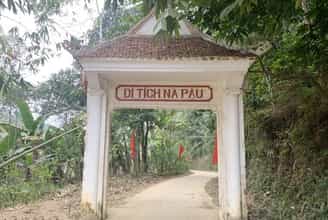
Na Pau place - Luong Bang commune, Cho Don district, Bac Kan province. Along with the historical relics of Ban Ca, Khuoi Linh, Pu Co Hill, Khau Ma, Na Quan and Na Pau are where Uncle Ho lived and worked in early 1951. In early 1951, President Ho Chi Minh went to work in Na Pau, Thit village, Luong Bang commune (Cho Don). On this hill, the Party Central Committee built a tunnel and built a shack for him to work. Na Pau - the place where people live and work - has a very convenient location for activities as well as when moving to avoid enemy eyes and ears. In front of Na Pau hill is a large field, capable of observing far away, next to it is a clear stream providing water, behind is a vast forest where when there is movement, he and his comrades In the agency, you can go straight to Phong Huan, Nghia Ta commune or go straight to Chiem Hoa (Tuyen Quang) very safely. From Km 18, Road 254 Cho Don - Thai Nguyen, follow the trail of Thit village about 150m to reach Na Pau hill. His house has two rooms, one for working, one for resting and a house of about 6 rooms for the agency's brothers (unit 41) to live in. About 70m west of the house floor is President Ho Chi Minh's bunker. The tunnel is T-shaped, the tunnel door height is 1.5m, 4m deep and divided into 2 balanced niches. Although a long time has passed, the rain has eroded the soil and covered a bit of the cellar door, but the cellar still seems to be intact. From the basement of President Ho Chi Minh, about 5 - 6 meters ahead, there is a quite large old tree, about 90 - 100 years old, called the Phay tree by local people. In front of the tunnel entrance is a flat area of ​​land, where in the past he often grew vegetables... In front of Na Pau hill is Na Pau stream, next to it there are two giant trees crisscrossing each other, under the canopy of the tree is a big rock, where he lives. often fishing, bathing and washing. In Na Pau, he wrote many congratulatory letters and telegrams to agencies and organizations at home and abroad. On January 20, 1951, he signed a decision to reward the army units that won the Trung Du and Northeast campaigns, and at the same time sent 4 honorary flags to award to the army units that achieved many successes. accumulated and accomplished many outstanding victories. Also during this time, he signed many important decisions that contributed to bringing our people's resistance to victory. He also visited a number of agencies of the Party Central Committee and the army stationed in Cho Don area, encouraging the spirit of officers, soldiers, and compatriots to enthusiastically emulate killing the enemy and work productively to serve the resistance war. On the afternoon of February 27, 1951, President Ho left Na Pau - Luong Bang on his way to attend the Second National Congress of the Party in Chiem Hoa (Tuyen Quang). On June 28, 1996, the Ministry of Culture and Information recognized and ranked Na Pau Hill Relic, Luong Bang commune, Cho Don district, Bac Kan province as a national historical relic. Source: Bac Kan province electronic information portal

Thai Nguyen

10030 view

Rating : National monument

Open

Historical relics safety zone (ATK) Cho Don

Historical relics safety zone (ATK) Cho Don

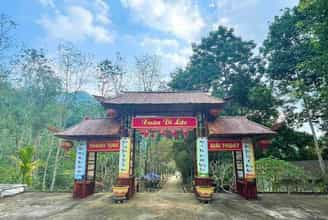
Cho Don Safety Zone (ATK) relic area, located in 3 communes: Binh Trung, Nghia Ta, Luong Bang, Cho Don district, Bac Kan province. Cho Don ATK belongs to the Viet Bac War Zone relic complex (including Dinh Hoa ATK, Thai Nguyen province and Tan Trao ATK, Tuyen Quang province), which is the residence and working place of President Ho Chi Minh and his fellow leaders. Central Government during the resistance war against the French (1946 - 1954). ATK Cho Don relic is a strategic base, witnessing and marking many important historical events in the period before the August Revolution of 1945 and the resistance war against the French colonialists (1946 - 1954); associated with the revolutionary cause of President Ho Chi Minh and comrades: Pham Van Dong, Vo Nguyen Giap, Truong Chinh, Hoang Van Thai, Nguyen Chi Thanh, Tran Dang Ninh... Here, President Ho Chi Minh, Trung The Party Central Committee and the Government have planned the resistance path, made strategic decisions, and decided the country's destiny in a historical period of arduous struggle, leading the entire people from victory to victory. one victory after another. Located in 3 communes in the south of Cho Don district, where the terrain is rugged and mountainous, with an average altitude of 600m, the system of rivers, streams, streams and canals is quite dense, the largest being Pho Day river, ATK area. Cho Don, includes 25 relics, including: 6 relics have been ranked at national level, 3 relics have been ranked at provincial level, 16 relics are included in the inventory list. 1. Pu Co Hill Relics (Ban Bang village, Nghia Ta commune - Where the two armies advancing from the South and the North met in October 1943) 2. Relics of Comrade Vo Nguyen Giap's Shack (Ban Bang village, Nghia Ta commune - Comrade Vo Nguyen Giap's residence and revolutionary activities, after the road to the South was opened in 1943). 3. Khuoi Khit relic (Na Ca village, Nghia Ta commune - where an exhibition praising the Allied forces before 1945 was held). 4. Relics of Mr. Trieu Phu Duong's House (Ban Bang village, Nghia Ta commune - Where the leaders of the Viet Minh Front met during the pre-uprising period of 1945). 5. Na Pay relic (Na Kien village, Nghia Ta commune - Where Uncle Ho stopped to rest on the way from Pac Bo (Cao Bang) to Tan Trao (Tuyen Quang) on ​​May 17, 18, and 19, 1945. 6. L-star L-so do relic (Khe Nua) (Ban Bang village, Nghia Ta commune - Where Viet Minh forces set up a base to repair and make rudimentary weapons to directly serve the two Northern armies advance, advance South, 1943 - 1945). 7. Ban Ca relic (Ban Ca village, Binh Trung commune - Uncle Ho's living and working place in December 1947) 8. Na Kien relic (Na Kien village, Nghia Ta commune - Place of the Closing Ceremony of Course 2 and 3 of Tran Quoc Tuan Military School on October 28, 1947. 9. Khuoi Dam relic (Na Khan village, Nghia Ta commune - The living and working place of Truth Newspaper from 1948 to 1953), located in a small valley, at the intersection of two small streams, surrounding are high hills and mountains, densely wooded, within the protection zone zone II, divided into 3 areas: 10. Ban Tang Hill Relic (Na Quan village, Binh Trung commune - Comrade Hoang Van Thai's living and working place from 1947 - 1954). 11. Experts' Shack Relic (Na Quan village, Binh Trung commune - Where experts lived and worked from 1947 - 1954) 12. Na Don relic (Don Lien village, Binh Trung commune - Living and working place of the Ministry of Defense Logistics agency from 1948 - 1951). 13. Khuoi Do relic (Na Tong village, Nghia Ta commune - Living and working place of Thang Long mechanical agency from 1948 - 1950) 14. Khuoi Toi relic (Na Quan village, Binh Trung commune - Uncle Ho's living and working place in 1948). 15. Khuoi Dan Relic (village 8 Vang Quan, Binh Trung commune - Where Minh Khai Paper Factory had its paper production facility from 1948 - 1952), divided into 2 areas: 16. Relics of Mr. Ma Van Chuong's House (Na Phay village, Binh Trung commune - Comrade Nguyen Chi Thanh's living and working place from 1948 - 1952) 17. Na Chang Relics (Na Chang village, Nghia Ta commune - Where the communication area (Government Guest House) was located from 1948 - 1953) 18. Na Sam relic (Na Quan village, Binh Trung commune - Comrade Vo Nguyen Giap's living and working place in 1948-1953) 19. Khuoi Chang relic (Ban Peo village, Binh Trung commune - Uncle Ho's living and working place from May 12 to June 1, 1949. 20. Khuoi Ang relic (Khuoi Ang village, Binh Trung commune - Living and working place of Quoc Cuu Newspaper agency in 1949). 21. Khuoi Linh relic (Na Dang village, Nghia Ta commune - The living and working place of comrade Truong Chinh and the Party Central Office from 1950 - 1951) 22. Khau Ma Hill Relic (Ban Ven village, Luong Bang commune - The living and working place of comrade Pham Van Dong and the Government Office in 1950 - 1951). 23. Na Quan relic (Na Quan village, Binh Trung commune - Where the Party Central Committee Hall was located from 1948 - 1952). 24. Relics of Mr. Tran Van Ly's House (Na Phay village, Binh Trung commune - Living and working place of the Ministry of National Defense from 1950 - 1953). 25. Na Pau relic (Ban Thit village, Luong Bang commune - Where Uncle Ho lived and worked from 1950 - 1951), located on a large area of ​​land: Today, the ATK Cho Don relic site has become a red address that arouses national pride; propagate and educate the patriotic spirit and revolutionary struggle traditions of previous generations for the younger generations of today and tomorrow. With particularly typical values, the historical relic Safety Zone (ATK) Cho Don (Cho Don district, Bac Kan province) was ranked by the Prime Minister as a special national monument. Source: Department of Cultural Heritage

Thai Nguyen

9869 view

Rating : Special national monument
Open

Thach Long Pagoda

Thach Long Pagoda

Thach Long Pagoda (Stone Dragon) is located in Cao Ky commune, Cho Moi district, Bac Kan province. This place is known as "the sacred temple in the cave". The temple contains many beautiful stories and legends. Thach Long Pagoda attracts thousands of visitors from all over to attend the festival and offer incense to pray for blessings and fortune every spring. Many people say that, traveling from North to South, they have never seen a pagoda located in a large, clean and airy cave like Thach Long Pagoda. Buddhist monks and nuns attending the festival can enter the cave to worship Buddha in thousands of people. The story goes that, in the past, people in Vi Huong - Bach Thong commune went down the Cau River to pick up the Shakyamuni Buddha statue to worship in their village, Hoa Son, on top of the Phja Bjooc mountain range. The golden Buddha statue is very heavy, so when going up to Vi Huong, it had to be pulled by a rope. Coming to Bo Mi river in Cao Ky commune today, the array kept spinning and made it impossible to move. It was already dark, that night, the people going to process the statue had to set up a tent to sleep at the Bo Mi garden to continue the next day. The next morning when they woke up, they were panic-stricken and could not see the Buddha. The person going to process the statue had to light a large bunch of incense and pray: "If you want to stay here, I will obey your wishes, but please let me know where you are sitting so that future generations can worship the incense and smoke." Having finished speaking, the bundle of incense and smoke flew to the other side of the river, forever going into the mountains. The person carrying the statue kept following the incense smoke and discovered a beautiful, spacious cave. Shakyamuni Buddha sat at the highest place. Knowing the sacred cave, the villagers built a temple right in this cave. The pagoda is called Thach Long (stone dragon) because the cave is located in a rocky mountain, the cave entrance has the shape of an open dragon's mouth. The pagoda has two main parts. The first part is Thien Pagoda. This pagoda is located high up, with a stone step from the foot of the mountain leading straight up to the cave entrance. The highest compartment worships Shakyamuni Buddha. In the middle space, on the highest pedestal, there is an image worshiping Uncle Ho. The second part of the pagoda is Am Pagoda, the way to Am Pagoda must go around the mountainside. The entrance to Am Pagoda is a bit narrower than Thien Pagoda. The cave's interior is not as wide as Thien Pagoda. It is estimated to be about 6m high, 6m wide and has a deep recess inside. Both Thien Pagoda and Am Pagoda have many heavenly statues depicting Buddhas. In the heart of Thien Pagoda, the cliff divides itself into segments like high and luxurious parasols covering the Buddhas sitting below. Not only does it contain many legends, Thach Long Pagoda is also a historical relic, the pride of the people of Cao Ky commune during the resistance war against the French. During the resistance war against the French colonialists, Uncle Ho came here three times. During the Dien Bien Phu campaign in 1954, the pagoda became a weapons transport station and a secret arsenal of our army. Peace was restored, the pagoda was again worshiped by people like before. Thach Long Pagoda Festival is held on January 7 every year, attracting many tourists from all over, who come to offer incense to pray for luck and happiness for their families and relatives. Thach Long Pagoda is not only a beautiful landscape of Bac Kan, but also a historical relic. This relic has been receiving a lot of attention, protection, and restoration to become an attractive cultural tourist destination of Bac Kan province. Source: Bac Kan Province Electronic Information Portal

Thai Nguyen

7465 view

Rating : Provincial level relics

Open

Ban Ca historical site

Ban Ca historical site

Ban Ca historical site, Binh Trung commune, Cho Don district, Bac Kan province. This is where Uncle Ho lived and worked during the resistance war against the French colonialists. He was in Ban Ca from December 7, 1947 to the end of December 1947. Initially, he built a camp at the beginning of Ban Ca stream, then built another camp on Khau Phay hill near the people in the village. These two shacks are 800m apart, next to them are shacks with typewriters for printing and drafting documents, word processors and shacks for security guards. According to the people here, while living and working here, he lived very simply and was close to the people, also wearing brown shirts and carrying cloth bags like the people. He works on schedule. After work, he often exercises and participates in growing vegetables with officials in the Presidential Palace. He often visited other leaders of the Party Central Committee in Cho Don, but only occasionally by horse and other times on foot. During his time here, Uncle Ho issued many decrees, directives, and letters such as: He signed a decree to reward commune presidents and administrators on the occasion of the one-year anniversary of the national resistance war. On December 8, 1947, he wrote a letter to Bishop Le Huu Tu on the occasion of Christmas. On December 12, 1947, he wrote a letter to the Government of liberated Cambodia (Cambodia) welcoming the establishment of the Vietnam-Cambodia-Laos Liberation Committee. On December 19, 1947, he called on his compatriots to compete in killing the enemy to form workers on the national day of resistance, and signed a circular to the ministries on "sending effective employees for reward". On the occasion of the 3rd anniversary of the founding of the Vietnam Liberation Army, he wrote an article about the development process of the people's armed forces, and wished that our armed forces would continuously mature in all aspects. On December 24, 1947, he wrote a letter to fellow Catholics, wishing that fellow Catholics would stand side by side with fellow soldiers across the country to expel the colonial invaders. In addition, he also wrote many articles encouraging people all over the country to participate in the resistance war against the French colonialists... Currently, the only remaining evidence of Uncle Ho's shack area in Ca village is only the remains of the shack floor next to the old palm tree. The two artifacts are a cooking stirrup for Uncle Ho and a black dinner jacket he gave to the family of Mr. Ban Van Trai (Mr. Nhuoi). In early 1990, Mr. Trai's family donated these two artifacts to the (old) Bac Thai Museum. Currently, these two artifacts are still kept at Thai Nguyen museum. On June 28, 1996, Ban Ca was ranked as a national historical relic by the Ministry of Culture and Information. Source: Bac Kan province electronic information portal

Thai Nguyen

7243 view

Rating : National monument

Open

Tham Temple

Tham Temple

Tham Temple is located in Cho Moi district, Bac Kan province with many myths and legends that have entered the minds of mountain residents here. The temple is located right next to the gravel road leading to Quang Chu commune, less than 4km from Highway 3 and 45km south of Bac Kan city. The temple worships a female general named Tham - who had great contributions in the fight against the Black Flag invaders in the second half of the 19th century. Previously, the temple was a place to worship the Mountain God and the Water God to pray for boats and ships to travel safely. By the end of the 19th century, the temple was renovated to worship the female general who had great merit in fighting the Black Flag invaders, Ms. Tham. The story goes that there was an old father and son who fished for a living on the Trang Co river. A year of natural disasters, floods, and fierce waters swept away the poor old man's boat and nets. After the water receded, the old man brought the fishing net to the river. By dusk, he was able to put away a heavy batch, but sadly it was just a rock. The next time, only that rock went into the net. He moved to another part of the river, still lifting up that strange rock. He was about to throw it away when a voice echoed from within the rock: "Old man, take me home." Feeling strange, he brought the talking rock home. When he arrived, he was exhausted and threw the rock to the ground. It hit another rock and broke. Strangely, there is a yellow glow in the rock's belly. Those were gold bars. Thinking that Giang (God) had given the village to compensate for the flood disaster, he divided the gold among the people around the area. There is gold, but the old man and his son still work hard to make a living by the Trang Co river. Grateful, the people here built a temple to worship two stones, the Mountain God and the Water God, so that boats and ships can travel safely. Ms. Tham, the daughter of an old fisherman, was gentle and beautiful, and had a reputation. Boys from both the upper and lower villages dreamed of marrying her. When she was young, she was taken by God's power to be his wife. She lived in a golden situation but was humiliated in every way, especially when the Black Flag invaders came to harass them, and the Lord Muong not only did not fight the invaders but also became their henchman. She tried every way to escape from the Muong Lord's house and gathered poor people to rise up to fight the enemy. The Muong Lord was angry and wanted to gain merit, so he led the enemy to fight. The female general stubbornly fought back. At the Trang Co river, a fierce battle took place, blood flowed into rivers, but Co Tham's soldiers remained undeterred. Unfortunately, the female general was hit by a poisoned arrow and died. The angry soldiers decided to fight to avenge her. The enemy was terrified and fled in disarray, the Lord Muong was captured alive and executed as a sacrifice to his general. To commemorate the courageous female general, people built a temple to worship Ms. Tham. Tham temple complex includes the main temple, Ms. Tham temple and Son Than temple. The main temple is divided into three compartments, worshiping: Five Venerable Gods, Bach Linh, Saint Tran Hung Dao, Mother Thuong Thien, and Avalokiteśvara Buddha. The shrine to Ms. Tham is located right next to the main temple, on the left side there is a domed concrete structure, on the altar is a statue of Ms. Tham wearing a blue shirt, under the pedestal there are a pair of phoenix birds carved in stone. Every year, tourists from all over come to Tham temple to worship and pray in large numbers, especially on the first and second occasions. After many years of construction and repair, in 2012 the temple was ranked at the provincial level as a historical-cultural relic, a place for cultural and religious activities of the people. Source: Vietnam National Tourism Administration

Thai Nguyen

7040 view

Rating : Provincial level relics

Open

Khuoi Linh historical site, Khau Ma hill

Khuoi Linh historical site, Khau Ma hill

Khuoi Linh historical relic (in Nghia Ta commune, Cho Don district) is the living and working place of comrade Truong Chinh, former General Secretary of the Party Central Committee and the Central office from August to December 2019. 1950. Comrade Truong Chinh's residence is located on a hillside, his workplace is located on the top of a hill next to his residence at the foot of Khau Bon mountain. The Party Central Committee office area is located on a hill near Comrade Truong Chinh's residence. Khuoi Linh relic site is in a very dangerous location but traffic is very convenient for communication in all directions. On March 18, 1996, Khuoi Linh was ranked by the Ministry of Culture and Information as a national historical and cultural relic. In 2000, Nghia Ta commune was awarded the title Hero of the People's Armed Forces by the Party and State. Khau Ma Hill historical relic in Ven village, Luong Bang commune (Cho Don) is where comrade Pham Van Dong - former Prime Minister and the Government Office lived and worked from early 1950 to the summer of 1951. . At this place, comrade Pham Van Dong together with the Party Central Committee and the General Command of the Vietnam People's Army under the direction of President Ho Chi Minh held a meeting to discuss opening the border campaign in 1950, opening A new era for the Vietnamese revolution. It can be said that during the period in the Viet Bac war zone, especially the period of living and working in Khau Ma - Ban Ven (Luong Bang), Prime Minister Pham Van Dong had many positive activities with the Party Central Committee. and Uncle Ho led the people to promote the resistance war against the French colonialists to complete victory. In 1996, the people of Luong Bang commune were honored to receive the Certificate of historical relics ranked by the Ministry of Culture and Information as a national historical relic. Source: Bac Kan Province Electronic Information Portal

Thai Nguyen

7033 view

Rating : National monument

Open

Na Tu Historical Relic Area

Na Tu Historical Relic Area

Na Tu is a revolutionary historical relic in Cam Giang commune, Bach Thong district (Bac Kan) located along National Highway 3, 10 km north of Bac Kan town. During the resistance war against the French colonialists, this was where the Youth Volunteer Army was stationed, performing the task of ensuring transportation to serve the resistance. During the war, the French always increased aircraft bombardment of traffic routes, the most important of which was the section of National Highway 3 passing through Bac Kan. Therefore, at this time, ensuring transportation has become an important task of the army and people of Bac Kan. Since 1950, the Party Central Committee has initiated a program to repair and restore Highway 3 from Thai Nguyen to Cao Bang to serve the resistance war. Also at this time, the Government launched a campaign in the three provinces of Cao Bang, Bac Kan, and Thai Nguyen and at the same time reinforced many volunteer youth detachments in Bac Kan. The Youth Volunteer Army chose Na Tu to station its troops. Even though they lacked many things, had to do hard labor and spent a lot of time being bombarded by enemy aircraft, the young volunteers had to work day and night, which was very dangerous, but together with the army and people of Bac Kan, they completed their mission well. assigned task. It is an honor that during that difficult and fierce time, on March 28, 1951, during a business trip, Uncle Ho came to Na Tu to visit the health and encourage the youth and people here. He reminded the construction site command board and staff to organize their work scientifically, unite and love each other. Before leaving, Uncle Ho read four verses to the youth volunteer force: Nothing is difficult, Only fear unstable heart, Digging mountains and filling seas, Surely made a firm decision. Thus, the place Na Tu was the birthplace of Uncle Ho's four immortal poems, and today Na Tu has become a historical relic. Since then, along with the pace of development of the revolution, Uncle Ho's teachings in four verses have become a source of encouragement for the younger generations, strengthening their determination to overcome all obstacles to achieve victory. Until today, when living in peace and freedom, the people of Na Tu village - Cam Giang still cannot forget Uncle Ho's profound teachings and consider this a guideline for all actions. Source: Bac Kan Province Electronic Information Portal

Thai Nguyen

6914 view

Rating : National monument

Open

Phu Thong Fort historical site

Phu Thong Fort historical site

Phu Thong Fort is located in Phu Thong town, Bach Thong district, Bac Kan province. This entire area is a mountain with an average altitude of over 350m. The fort was built on a small protrusion of Na Cot mountain, nearly 200m high, 300m from Phu Thong junction. On October 7, 1947, the airborne troops of the French expeditionary force with nearly 1,200 people parachuted into Bac Kan town. On October 15, they marched to occupy Phu Thong Fort. The fort is 100m long and 50m wide; The wall is made of soil 1m thick, 2m high, inside and outside the wall is made of wood, outside there are piles, on four sides there are many battlements, the four corners of the fort have 4 mother bunkers, and an observation deck. The commander's house was in the middle of the station. The enemy dug tunnels from the commander's house and soldiers' house to the bunkers. Outside the wall there are 3 layers of bamboo fence. During the years 1947 - 1948, when the enemy first occupied Phu Thong Fort, they continuously encountered attacks by our troops, making them confused. In particular, the first raid on the night of November 30, 1947 destroyed and wounded 50 enemies, capturing 2 machine guns and 1 rifle. This was the first time the enemy was destroyed right at a strong fortified base. We performed part of the proposed mission, contributing to the overall victory of our army and people in the Viet Bac Fall - Winter Campaign in 1947, serving as a premise for the next battle. On the night of March 12, 1948, our army launched a second raid on Phu Thong Fort. In this battle, our troops destroyed most of the fortifications and barracks in the base, causing nearly 70 enemy casualties. After this battle, our troops continuously took the initiative on the Road No. 3 front. On July 25, 1948, the General Command decided to open the third attack on Phu Thong Fort. At around 6:00 p.m. on July 25, 1948, the artillery of Battalion 410 opened fire, destroying part of the information area and destroying the trench fence surrounding the site. Battalion 11 divided into two attacks to attack the Fort. Our troops cut the barbed wire fence, destroyed the bamboo fence, set up bamboo ladders and climbed over the wall to attack the Fort. The enemy panicked and retreated to underground bunkers. Our troops took control of the battlefield, collecting weapons and trophies. After the first few minutes of confusion, the enemy restored their defensive position, fought back fiercely, concentrating machine gun and mortar fire to prevent units from entering later. Our troops had a number of soldiers sacrificed and injured. The battle lasted until 11 p.m. We withdrew from the Fort, although we could not capture the base, we destroyed and wounded 3/4 of the troops in the Fort, heavily destroying the fortification system, obstacles, and houses in the Fort; Recovered 5 machine guns, 4 submachine guns, 10 rifles, some bullets, and grenades. Although not completely victorious, the battle at Fort Phu Thong on July 25, 1948 had great significance. After the attack on Phu Thong Fort, the enemy troops at the bases did not dare to sweep and search the surrounding areas. Our troops regained the initiative in the area of ​​Bac Bach Thong. The Battle of Phu Thong was praised by the Party Central Committee and the General Command. On March 27, 1998, Phu Thong Fort was ranked as a national historical relic by the Ministry of Culture and Information. On June 1, 1999, the people and people's armed forces of Phu Thong town were honored by the Party and State with the title of Hero of the People's Armed Forces. Source: Bac Kan Province Electronic Information Portal

Thai Nguyen

6869 view

Rating : National monument

Open

Deo Giang Victory Relic

Deo Giang Victory Relic

Giang Pass is located on National Highway 3, bordering Bach Thong and Ngan Son districts. Here, during the resistance war against the French colonialists, our army and people achieved a resounding victory and entered the heroic history of the nation. This was the largest scale battle compared to other ambush battles against the enemy in the Deo Giang area. From this battle, we learned a lot of experience in battalion-level ambush tactics for ambushing the enemy during the period of resistance against the French colonial invasion. This battle was closely associated with the battle of Phu Thong garrison, which made a great noise, had a strong effect, encouraged and encouraged the armed forces in the early days of the resistance war against the French colonialists, contributing to the whole people. The country defeated all sabotage plots of the French colonialists in the Viet Bac war zone. At 9:00 a.m. on December 12, 1947, at km 187 - 188 Deo Giang - Lang Ngam commune (Ngan Son) there was an enemy motorized convoy consisting of 22 tanks, armored vehicles, trucks, and vehicles. The jeep carrying soldiers fell into the ambush of the 165th Regiment (Capital Regiment). The ambush was a dangerous road, with high mountains on one side and deep abysses on the other. Right from the first round of bullets from our soldiers, an enemy car was destroyed and many enemy soldiers were killed. After a few minutes of using strong firepower to shoot directly at the enemy formation, our soldiers rushed to the street to destroy the enemy. Battle results: Killed on the spot 60 people (including two lieutenants), destroyed and burned 17 motor vehicles, collected 2 million Indochina coins and many military weapons and supplies. From this resounding battle, Deo Giang has become a historical place associated with the glorious victories of our army and people in the Viet Bac counter-attack campaign - Autumn Winter in 1947. Deo Giang historical site became the pride of the Vietnamese people's army and the people of Bac Kan. On July 12, 2001, the Ministry of Culture and Information recognized and ranked the Giang Deo Victory historical relic in Lang Ngam commune, Ngan Son district, Bac Kan province as a national historical relic. Currently, the road at the Deo Giang relic site has changed a lot, the government and people of Bac Kan province have built a stele commemorating the victory of Deo Giang. The stele house is built close to the cliff on a large area of ​​land, with iron doors and protective fences. The stele house is built of reinforced concrete, the roof is made in the ancient style (Four sword roofs, glued with funny nose tiles) on four concrete columns painted in imitation wood colors, leaving four sides blank. Inside there is a commemorative stele recording the victory at Deo Giang Pass in 1947. The stele is made of stone, the face of the stele faces Highway 3. The stele's floor is built of bricks, cement mortar, paved with stones and planted with decorative flowers. . The road to the stele house is built with steps made of bricks plastered with cement. Opposite the stele house is a large bas-relief marking the victories of the army and people who contributed to the battle at Deo Giang, with engraved images of the Command Committee, soldiers and people preparing for the battle along with a panoramic view of the battle. Fierce fighting took place at Deo Giang. Monument monuments and accompanying auxiliary works, embankments around the foundation, planting trees to create landscape for the project. Source: Bac Kan Province Electronic Information Portal

Thai Nguyen

6852 view

Rating : National monument

Open

Hoang Phai historical site

Hoang Phai historical site

This is the place where Uncle Ho stopped on the way from Pac Bo to Tan Trao in May 1945 in Hoang Phai village, Coc Dan commune, Ngan Son district, Bac Kan province. Recently, Hoang Phai historical site has been recognized as a National Historical Site by the Ministry of Culture, Sports and Tourism. This is a red address marking the revolutionary history of our ancestors in the resistance war against the French colonialists. In 1945, the second world war entered its final phase. Domestically, Japan overthrew France. Realizing that this is a once-in-a-lifetime opportunity, the current situation requires us to act resolutely, flexibly, quickly and promptly. Uncle Ho decided to quickly move the location from Pac Bo (Cao Bang) to Tan Trao (Tuyen Quang) to facilitate the leadership of the entire people in a general uprising to seize power. During this time in Coc Dan commune, Ngan Son district, the revolutionary movement of mass organizations under the leadership of the Viet Minh Party Committee developed strongly. On the afternoon of May 9, 1945, Uncle Ho and his group arrived at Hoang Phai village. The stay in Hoang Phai village of Uncle Ho and his delegation left good feelings, forever engraved in the memories of the local ethnic people. Here, Uncle Ho went to the popular education class to visit the students' learning situation. Before leaving, Uncle Ho told young men and women to try to train and study hard to become the owners of independent Vietnam. On the morning of May 10, 1945, Uncle Ho and the group of officials continued their journey to Tan Trao (Tuyen Quang). In the Hoang Phai area, the Viet Minh Committee, commune organizations and people nostalgically said goodbye to Uncle Ho and the workers' union. work before hitting the road. To mark this important event, at the same time build a monument worthy of its historical significance to promote the value of cultural heritage and educate revolutionary traditions for present and future generations. Later, on October 31, 2011, the Ministry of Culture, Sports and Tourism recognized and ranked the historical relic, the Memorial Site where Uncle Ho stopped on the way from Pac Bo to Tan Trao, in May 2011. 1945 in Hoang Phai village, Coc Dan commune, Ngan Son district, Bac Kan province is a national historical site. That is the pride not only of the Party Committee and people of Coc Dan commune in particular but of Bac Kan province in general. Source: Electronic Information Portal of Ngan Son District, Bac Kan Province

Thai Nguyen

6776 view

Rating : National monument

Open

×
Ask AI