
 vn
vn en
en ja
ja ko
ko zh
zh
















List of tourist attractions (60)
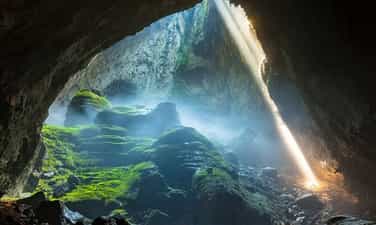
Thien Ha Cave
Thien Ha Cave is located in the east of Son Ha commune, Nho Quan district, Ninh Binh province. From Ninh Binh city center, it will take you about an hour to travel 24km to reach Thien Ha cave. Nestled in the Tuong mountain range at an altitude of nearly 200m above sea level - a strong natural wall protecting the southwest of the 10th century ancient capital of Hoa Lu, this cave has its own cool air. cool and unique with cool summer and warm winter, so visitors can visit this place at any time of the year. The cave was discovered and put into operation in 2007 with a space of up to 12,000 m2 equivalent to Sung Sot cave in Ha Long. Visiting Thien Ha Cave, visitors can not only admire countless stalactites with magical shapes hundreds of millions of years old, but also experience exciting boating and sightseeing activities. Thien Ha dry cave is located in a triassic limestone mountain range, formed about 250 million years ago. The dry cave is only about 200m long, much shorter than the wet cave. However, this place receives more natural light so it is easy to observe the stalactites. Because there is a lot of sunlight, the emulsion blocks become sparkling like gold and silver. Combined with unique and diverse shapes, you will be able to let your imagination soar. If you are not a creative person, you can also listen to the tour guide's description, most of the stalactites have been "named" with names like Hoa Tien island, Bau Sua Mother, Ca Mau. Hoa Long is extremely rustic. Surely when you hear the tour guide's description of his appearance, you will immediately recognize it! Besides, inside the dry cave is also very famous for "Heaven's Gate" - A hole naturally formed right in the cave. Therefore, inside the cave, you will see the sun's rays shining inside through this hole, creating a wonderful, magical light line. The photos taken here are super sparkling! Check-in to Ninh Binh and skip Thien Ha cave, it will be a big mistake! Besides the dry cave, the wet cave is also an extremely unique destination. The name Thien Ha cave is also taken from the water cave. When rowing deep inside, you will see many magical colors from the installed lighting system, illuminating the stalactites, making them shine with different colors. magical. Thien Ha cave is quite long, about 500m, so you will have plenty of time to admire the shapes and beauty of the stalactites in the dark "night". Inside you will feel cool and humid, combined with a rowing boat floating on the water, extremely relaxing. Participating in "Muong tours - Thien Ha Cave", you will admire the unique cultural beauty of the (original) stilt houses of the Muong people, experience with mass performance teams performing folk games , playing cards, playing tickle, walking on stilts, dancing... and enjoying typical dishes of the Muong ethnic people such as wild boar meat, bitter bamboo shoots, traditional cakes of the people... Who has ever enjoyed these This dish will definitely not forget its unique flavor that cannot be found everywhere. The echoing sound of gongs, the graceful dances, the singing, the sweet smell of Can wine... creating its own unique, unique and rich cultural identity, attracting and captivating many tourists.
Ninh Binh
5253 view



Thung Nang tourist area
It is truly a pity to stop to visit the ancient capital - Ninh Binh without once visiting Thung Nang. Thung Nang is a tourist destination that attracts many tourists with majestic mountains combined with a clear river creating a landscape picture that is both intimate and poetic of Ninh Binh. Thung Nang tourist area is located in Dam Khe village, Ninh Hai commune, Hoa Lu district, Ninh Binh - this place has recently been promoted in tourism, so when you set foot in Thung Nang you will feel the beauty. wild, natural. Perhaps it is because of this that makes Thung Nang become one of the interesting tourist destinations that attracts tourists, especially those who want to experience a simple but also very poetic natural life. Although it does not have the lyrical beauty like Tuyet Tinh Coc Ninh Binh or as famous as Trang An Bai Dinh tourist area, what makes Thung Nang memorable in the hearts of any tourist who visits this place is its wildness and beauty. idyllic. Sun Valley is not too large, so you only need to spend about half a day to explore and visit this place. In the past, during the summer, the water often dried up, so people living nearby often came to plant rice, but in the past few years, due to investment and development of services, the government The locality built a dam to prevent the water from receding so that tourists can visit easily as well as creating the beauty of the ancient capital for Thung Nang. Because of this, to be able to explore Ninh Binh Sunshine Valley, you will have to travel by mainly taking a boat. Right from the welcome gate you can buy a ticket for 60,000 VND/person including boat ride. From Thach Bich wharf, a small, simple bamboo boat will take you past tourist attractions and around the mountains to a valley full of sunshine. True to its name, Sun Valley, this place is filled with rays of sunlight shining everywhere, shining through the green leaves, reflecting through sparkling limestone mountains, and even penetrating to the bottom of the river, creating An extremely brilliant and peaceful scene of a Northern countryside village. Really, when you come here, you can feel the pure, brilliant Ninh Binh Sunshine Valley in the piercing sunlight, bringing a strange feeling of peace. The scenery is wild but not desolate, gorgeous but not too luxurious, magnificent, beautiful but not boring at all. The boat starts to row, but you certainly won't want to leave at all. After "sun hunting" to your heart's content, the small boat will take you to Thung Nang cave in Ninh Binh. The road to the cave is filled with the white color of reed flowers, sometimes in the open fields you will catch glimpses of extremely simple and lovely roofs. On the boat journey, you will encounter majestic and famous mountains such as Ba Doi Mountain, Coc Mountain, Mang Mountain, and Vang Mountain. Right outside the cave entrance are luxuriant reed bushes, revealing to you that this is also a super beautiful background for you to enjoy taking those beautiful "virtual life" photos! When the boat enters the cave, the boat driver will give you a flashlight because the cave is usually not designed with lights so they are very dark. When the boat starts entering the cave, you will begin to feel a cool atmosphere radiating, completely different from when standing outside the valley hunting in the sun. The cave ceiling here is often lower than in the Trang An Ninh Binh or Tam Coc Bich Dong tourist areas, so there are parts where you will even have to bow your head or sometimes you just need to reach out lightly to touch it. Glittering stalactites often receive drops of water flowing from clear, pure stalactites that nature has bestowed on the land of Ninh Binh Sun Valley. On the journey to explore Ninh Binh Sunshine Valley, it will definitely be an extremely flawed experience if you do not visit the ancient and long-standing temples and pagodas here. After the boat leaves the valley to catch the sun, the boatman will become a professional guide to introduce you to each location that you will stop at on the journey. The next destination is Thoong Nang temple - where local people worship Lord Thuong Ngan along with the surrounding temples and shrines. At this time, the ferryman will stop at a suitable open area so you can rest and take advantage of snacks. Thoong Nang Temple was designed and built in a completely quiet space, separate from the surroundings while all four sides are covered with forest and river scenery, this has created an attraction and highlight. for a majestic atmosphere. After making the pilgrimage at Thoong Nang temple, you can travel by road to visit Voi temple - a temple built entirely of stone with meticulously and elaborately carved stone slabs. Voi Temple is a long-standing temple, dating back to the Le Dynasty and worships Mr. Ly Dong Hai - a mandarin who restored the mountains and forests here. Visiting these ancient temples, you will not only find a peaceful and tranquil place, but most importantly, learn about the ancient culture and history of the ancient land of Hoa Lu. Ninh Binh. To make your journey to explore Ninh Binh Sunshine Valley more complete, don't forget to sit on a small boat and visit Thung Nham - a place considered a paradise for hundreds of different species of birds gathering, not only that, this place also is an extremely unique eco-tourism, garden, and flooded forest tour of the ancient capital of Ninh Binh! Visitors to Thung Nham Ninh Binh bird garden will be able to sit on a boat and enjoy the fresh, airy atmosphere. If you come here in the late afternoon, you will have the opportunity to watch the scene of flocks of birds flying in the sky and flying back to their nests after a long day of foraging! Visit Ninh Binh Sun Valley and enjoy the atmosphere. Fresh air, admiring the idyllic wild beauty and being able to chat with your friends and learn about the culture and history of the ancient capital, this will certainly be an extremely wonderful trip for you. Friend
Ninh Binh
5354 view


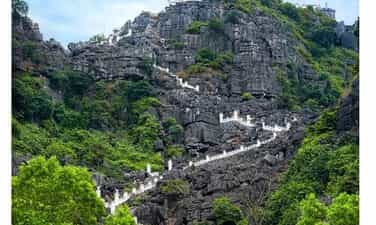
Hang Mua
Hang Mua is located at the foot of Mua Mountain in the eco-tourism complex in Khe Dau Ha village, Ninh Xuan commune, Hoa Lu, Ninh Binh. The highlight of this tourist destination, in addition to the beautiful scenery, is the road leading to the top of Mua Mountain. The surrounding scenery before you reach the top of Mua Mountain is covered in immense green with rice fields and roofed houses. Red tiles on the lake surface, or in the distance are rocky mountains and giant cliffs leaning against each other... Standing from there, you will immediately see a strip of white stone leading to the top of the mountain. This path is inspired by the Great Wall with nearly 486 steps. The two sides of the stairs are exquisitely decorated with drawings of dragons and phoenixes, showing the sculptural art of the Tran Dynasty, very sharp and beautiful. From the top of Mua Mountain, visitors can admire the entire beautiful scenery of Tam Coc area, a famous landscape in Ninh Binh. According to legend, when King Tran returned to Hoa Lu area to establish Thai Vi Am, he often came here to listen to the beautiful ladies and concubines dancing and singing. Therefore, this place is named Hang Mua. Tourists visiting Hang Mua try to conquer this mountain with 486 steps on the steep rocky cliff. The top of Mua Mountain is the only place in Ninh Binh where you can admire the entire beautiful scenery of Tam Coc area. One of the memorable experiences that visitors can try is watching the sunrise and sunset at Mua Cave. The ideal time to watch the sunrise is from 5:00 a.m. to 6:00 a.m., or from 5:00 p.m. to 6:00 p.m. to watch the sunset. Visitors can refer to the expected sunrise or sunset time on weather applications to be able to "watch" the exact time to watch the sunrise/sunset. On June 6 every year, the delta The countryside in Tam Coc will become sparkling with the yellow color of ripe rice fields and the green color of natural mountains. After overcoming more than 500 steps to reach the top of Ngoa Long mountain, visitors can look out into the distance and admire the entire scenery of the ripe rice season. The golden rice fields are like a giant carpet, stretching as far as the horizon. The yellow color of Ninh Binh's ripe rice season blends with the green of the mountains and forests, creating a beautiful natural picture. Every summer, the lotus season comes, making Hang Mua become sparkling and brilliant, with the colors of white and pink lotus blooming. Hang Mua lotus pond is about 1 hectare wide and is located right at the foot of Ngoa Long mountain, surrounded by golden rice fields and majestic mountains, so the scene is as poetic as in historical movies. So just choose the right outfit and you can check-in and take the photos of a lifetime right here. Lotuses in Hang Mua bloom until the end of the year, but the time when the flowers bloom most brilliantly is in June - July. With all kinds of white lotus and pink lotus, it can be said that Hang Mua lotus pond is an ideal virtual living place. for tourists because the lotuses here bloom at the same time, creating a beautiful landscape. Hang Mua, Ninh Binh has become an extremely impressive destination, especially for young people with a hobby of taking photos and want to own it. The most impressive check-in photos.
Ninh Binh
5442 view


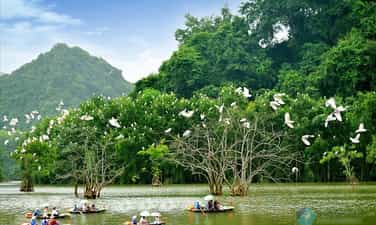
Thung Nham Bird Garden
As a beautiful eco-tourism area in the Trang An complex, Thung Nham bird garden or Thung Nham tourist area is a place you should visit at least once in your life. Thung Nham bird garden tourist area (also known as Thung Chim) is located in Ninh Hai commune, Hoa Lu district, Ninh Binh province. This place is located in the core of the famous Trang An scenic complex and very close to Tam Coc Bich Dong. As an eco-tourism area spanning over 334 hectares, Thung Nham bird garden has many beautiful and poetic landscapes that you cannot miss. If you don't have much time, you should go to at least the following 3 places. First is the Buddha cave. But Cave is a 500m long natural rock cave in Thung Nham bird garden tourist area. In the cave, there is a beautiful stone image of Buddha sitting next to an underground river. The cave is dark and has no electric lighting system, you will need to bring a flashlight to visit. As mentioned on the way to Thung Nham Ninh Binh, you should buy tickets at the ferry right at the first ticket gate to visit But cave. Next is Vai Gioi Cave. Vai Gioi Cave is a cave located on a high mountain, about 5000 m2 wide with 3 cave floors containing many stalactites divided into "Earth, Hell and Heaven". Legend has it that this is the place where the ancient people set up an altar to worship God, praying for favorable weather and good harvests. Tourists coming to Thung Nham bird garden almost all visit the cave to wish them a peaceful and good visit. To visit Vai Gioi Cave, after passing the ticket gate 500m, turn right to go up to the cave. After overcoming the challenge of 439 stone steps, you will reach the cave entrance. Finally, there is the Bird Garden. This is definitely the most important destination of Thung Nham Ninh Binh bird garden tourist area. The bird garden is a living space for many species of birds such as storks, storks, teal, warblers,... especially two rare species in the red book, cranes and phoenixes. The towering limestone mountains silhouetted against the blue water and flocks of birds passing through the branches create a peaceful and poetic scene that is rare to find anywhere else. The best time to visit the bird garden is autumn, when the weather is cold, around 5pm when the birds return from looking for food. However, if you can't arrange the time, you can come at 5:00 am - 7:00 am or 4:00 pm - 6:00 pm to watch the birds fly, or 2:00 pm - 3:00 pm to return to Hanoi in time for the day. If you have more time, you should fully visit other attractions at Thung Nham Bird Park, such as: Mermaid Cave, Garden Area, Aquarium Cave, Moving Banyan Tree, Valley of Love,...
Ninh Binh
5706 view


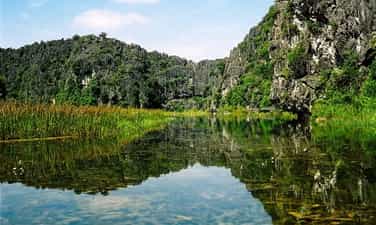
Van Long Nature Reserve
Van Long Wetland Nature Reserve is 17 km northeast of Ninh Binh city center, established by the Provincial People's Committee in December 2001, is one of three special-use forests of Ninh Binh province and is located in Ninh Binh province. in the system of more than 100 special-use forests in Vietnam. The natural area is more than 3,500 hectares, of which the area under the management conservation area is 2,743 hectares, of which the permanently flooded land area is about more than 400 hectares. This is considered the largest inland wetland in the Northern Delta. Van Long is a place with many natural and humanistic tourism potentials, has a convenient location for tourist visits, and plays an important role in the socio-economic development of the province. With the meaning "Van" is cloud, "Long" is dragon, Van Long is the place where dragons and clouds converge, also means the place where water gathers (because clouds and dragons are both manifestations of water sources). The name "Van Long" carries with it a dream, an aspiration of the people here for a peaceful life, good rain, and wind "like a dragon meeting clouds". "Van Long" also means dragon flying in the clouds. Van Long Wetland Conservation Area is located in 7 communes of Gia Vien district, Ninh Binh: Gia Hung, Lien Son, Gia Hoa, Gia Van, Gia Lap, Gia Tan, Gia Thanh in the Northeast of the province. Ninh Binh. Van Long's terrain is flat, the difference is no more than 0.5m. It is an area with high biodiversity, with a limestone mountain ecosystem that is home to the largest population of "Spanish Langurs" in Vietnam. Van Long forest has 457 species of vascular plants belonging to 327 genera and 127 families. In particular, there are 8 species recorded in the Vietnam Red Book (1996) including Tien Hoa, broad-leaved minnow, Cot Thai Loi, Sang, Cypress, Ma Tien Hoa Canh... Regarding animals, there are 39 species, 19 families, 7 animal set; There are 12 rare animal species such as langurs (with the largest number in Vietnam), black bears, chamois, great lorises, red-faced monkeys, striped plows, etc. Among reptiles, there are 9 recorded species. In the Vietnam Red Book are king cobras, monitor lizards, pythons, buffalo snakes, common snakes, red-headed garter snakes, kraits, cobras, and geckos. It is worth noting that in the Van Long flooded area, there is a species of Ca Cuong belonging to the swimming leg family, a rare insect species, currently very few in Vietnam. Raw Ca Cuong represents the freshness of the water environment and the surrounding landscape. Van Long eco-tourism area has 32 beautiful caves, many large and valuable caves such as Fish cave, Bong cave, Turtle cave, Chanh cave. There is also Kem Cham and the Mother Temple, where the mother of the four generals Hong Nuong is worshiped. Van Long Non Nuoc is a very good ecotourism place, a research and study site for scientists and students who want to study the inland wetlands of Vietnam.
Ninh Binh
5221 view


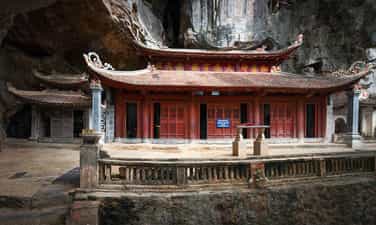
Bich Dong Pagoda
Bich Dong Pagoda was originally called "Bach Ngoc Thach Son Dong", meaning a beautiful and pure stone pagoda in the deep mountains. In 1774, Lord Trinh Sam once visited this place and changed its name to what it is today. Bich Dong Pagoda is a very popular cave pagoda in Ninh Binh. Some other cave pagodas in Ninh Binh such as Bai Dinh pagoda, Dich Long pagoda, Ky Lan pagoda, Hoa Son pagoda, Canh Dieu pagoda, Hang pagoda... The pagoda was originally founded in 1428 and is just a small temple on the top of the mountain. In 1705, two monks Tri Kien and Tri The met and became brothers. The two monks both wanted to travel to many places to spread Buddhism and build temples. Coming here, seeing the beautiful terrain of Bich Dong cave and already having a pagoda, the two monks decided to stop and repair the old pagoda, collect donations to rebuild it into 3 pagodas: Ha, Trung and Thuong to practice. . In 1707, two monks Tri Kien and Tri The cast a large bell, which is still hanging in Dark Cave. In the year Giap Ngo 1774, Lord Trinh Sam visited the pagoda and saw the green landscape around the pagoda, so he named the pagoda Bich Dong. Bich Dong Pagoda is built of ironwood, the roof is made of tiles with no knots, the tip is rounded, the corners of the roof all have curved knife tips or the shape of a phoenix's tail, making the roof curving and flexible like tidal waves. Bich Dong Pagoda was built in the style of the letter "Three", three disjointed buildings, three levels along the mountainside, based on the mountain position from low to high into 3 separate pagodas: Lower, Middle and Upper. The unique thing about the pagoda is that the mountains, caves and pagodas complement each other, hidden among the giant trees, making the pagoda blend into the natural landscape. Ha Pagoda has 5 compartments built on a high foundation. In the Buddhist temple, the architecture is in the style of the letter "Ding". The trusses, horizontal beams, and vertical beams are also made of ironwood. The pagoda's roof is two curved roofs, consisting of 8 roofs. The stone columns at Ha Pagoda are all made of solid stone, not joined, and are over 4 meters high. From Ha Pagoda, step up 120 steps along the S-shaped path to Trung Pagoda. In front of the pagoda are two words "Bich Dong" carved into the cliff. This is a unique temple, half attached to a cave, half exposed. The pagoda has 3 rooms to worship Buddha. After worshiping Buddha at the upper palace, walk up 21 stone steps to reach the dark cave. On the top of the pagoda's roof are ten yellow Chinese characters: "Gia Lam Than Dai Hung Bao Dien Nam Thien To" - "all the monks in this Southern heaven came from Bich Dong pagoda". Buddha Shakyamuni in Central Pagoda has a nine-dragon talisman. The two statues on the outside are Van Thu Bodhisattva, on the left is Samantabhadra Bodhisattva, inside the main palace is the statue worshiping Venerable Ananda. To get to Thuong Pagoda, visitors have to go up 40 more stone steps along the mountainside. Thuong Pagoda is also called East Pagoda, the pagoda worships Avalokiteśvara Bodhisattva. Thuong Pagoda is located at the highest position, near the top of Bich Dong mountain. Looking out from the pagoda, there are 5 mountains that look like 5 lotus petals, Ngu Nhac Son, including Tam Sang, Gia Dinh, Con Lon, Dau Cau and Hang Ba mountains. Bich Dong Pagoda is a unique cave temple in Vietnam, nowhere else has the same earth and mountain position. Standing at Thuong Pagoda, you can have a panoramic view of the entire beautiful scenery of Bich Dong, as well as the mountains and water of Ninh Binh.
Ninh Binh
6704 view


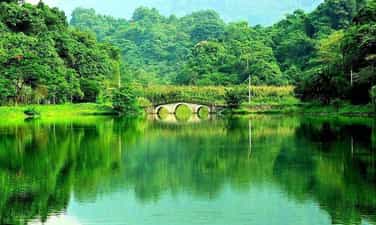
Cuc Phuong National Park
Cuc Phuong National Park has an area of 25,000 hectares and is also Vietnam's first national forest. Cuc Phuong's characteristics are tropical rain forests, green all year round and extremely rich and diverse flora and fauna. Many species of plants and animals at high risk of extinction have been discovered and preserved here, notably the black-and-white langur, considered the symbol of Cuc Phuong forest. The best time to go to Cuc Phuong National Park is during the dry season (from December to May), at this time the weather in the forest is very cool. Avoid going during the rainy season because at this time the roads are slippery and there are a lot of mosquitoes, which will affect your travel experience. Especially coming to Cuc Phuong National Park in May is the time when butterflies in Cuc Phuong forest bloom the most. With a number of individuals that can reach millions of animals competing to show off, it makes this place look like a beautiful "butterfly forest" like in a fairyland. Cave of the Ancients: Also known as Bitter Cave. This is where traces of prehistoric people's residences and burials are kept, a precious heritage of Cuc Phuong garden. Con Moong Cave: Because outside the cave entrance there is a large rock protruding that looks like the shape of an animal, it was named Con Moong cave (animal cave in Muong language). This is also the residence of ancient people, and is also an important archaeological site classified as a national monument. Crescent Moon Cave: from a distance, the cave entrance looks like a crescent moon, the cave is located deep in the forest. Silver Cloud Peak: Silver Cloud Peak is 648m high, from the top we can see a panoramic view of the national park along with the ancient capital of Hoa Lu and Bai Dinh Pagoda. However, the road to the top of May Bac has many rocky slopes that are quite difficult to go, so this place is only suitable for people with good health. Yen Quang Lake - Pho Ma cave: go back to Nho Quan street about 7km, reach Tri Phuong bridge and turn west to reach Yen Quang lake. Continuing through Thung La to the foot of the limestone mountain range is Pho Ma cave. Pho Ma Cave is a magical architectural work of nature with countless stalactites with interesting shapes. Thousand-year-old trees: Cuc Phuong forest has many ancient trees such as: Dang tree 45m high with a diameter of 5m, thousand-year-old green Cho tree with a circumference of more than 20 people, ancient crocodile tree... Muong village: Cuc Phuong is also home to the Muong community with many unique cultural features such as stilt houses, terraced fields, brocade weaving looms... Primate rescue center: A place to preserve and nurture many rare primate species. Coming here, visitors will not only be able to observe the beauty of primates but also learn more about these animals. Things to keep in mind when traveling to Cuc Phuong National Park include: It is necessary to prepare all necessary items such as hats, trekking shoes, medicine, bandages, food and drinks... before visiting Cuc Phuong. You can bring binoculars to enjoy the scenery. There are many types of mosquitoes in the forest, so a tip for you to avoid these obnoxious animals is to buy DEP medicine (anti-scabies medicine) in cream form and apply it to sensitive areas such as the head, nape, wrists, ankles... The burning smell of this medicine is the enemy of the above animals.
Ninh Binh
5984 view


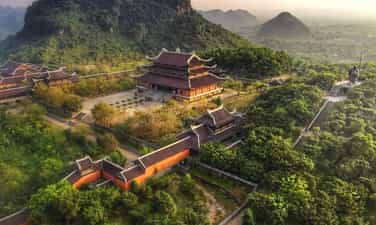
Bai Dinh Pagoda
1. When is the best time to visit Bai Dinh Pagoda? From January to March of the lunar calendar in the spring, the weather here is extremely warm and is also the best time to go to Bai Dinh Trang An. You can combine spring sightseeing, pagoda ceremonies for good luck and participating in major festivals in both Trang An and Bai Dinh. 2. How to get to Bai Dinh Pagoda? You can refer to some popular ways to move to Bai Dinh Pagoda below: - Travel by motorbike: To limit costs, you can proactively travel by motorbike to Ninh Binh. This way, you move along Highway 1A to the city center then follow the signs to get to Bai Dinh. - By bus: From Hanoi, you can catch buses to Ninh Binh from Giap Bat and My Dinh bus stations. Ticket price is about 70,000 - 80,000 VND/person. Stopping at Ninh Binh bus station, you continue to catch a bus or taxi for about 130,000 VND/trip to Bai Dinh pagoda area. - By train: This way, you get on the train from Hanoi and get off at Ninh Binh station. From here you can take a bus or catch a taxi to get to Bai Dinh. Train ticket prices range from 70,000 - 120,000 VND/person depending on seat class. 3. How to move at Bai Dinh Pagoda? Tourists who choose to take the electric car will wait for the car at the waiting area, then travel 3.5km of asphalt road to go straight to the Tam Quan gate of Bai Dinh Pagoda. The latest updated tram ticket price from the parking lot to Tam Quan gate in 2022 is: Bai Dinh pagoda tram ticket price for adults: about 30,000 VND/ticket/turn ⇔ about 60,000 VND/round-trip ticket. Tram ticket price for children: Children under 1m are free, over 1m are charged as adults. 4. Ticket price to visit Bai Dinh Pagoda. You will need to hire a tour guide service for Bai Dinh Pagoda which is about 300,000 VND for both the new pagoda and the old pagoda which is about 500,000 VND. The ticket to Bai Dinh Pagoda Stupa is about 50,000 VND. 6. What to eat when traveling to Bai Dinh Pagoda? You can refer to some delicious places to eat when traveling to Bai Dinh Pagoda that many people visit below: Mrs. Phan's eel vermicelli: 999 Tran Hung Dao, Thanh Binh, Ninh Binh. Luan Nhan Restaurant: Hamlet 4, Gia Sinh, Gia Vien, Ninh Binh. Thang Long Restaurant: Trang An, Truong Yen commune, Hoa Lu, Ninh Binh. Nha San Van Long Restaurant: Gia Van Commune, Gia Vien District, Gia Van, Gia Vien, Ninh Binh. 7. Note when traveling to Bai Dinh Pagoda Although Bai Dinh Pagoda is an attractive tourist destination, you also need to pay attention to the following issues to have the most complete travel trip: Because during the journey to visit the temple you will walk quite a lot, so you should wear sports shoes instead of high heels to help you move more easily. If you want to buy souvenirs, wait until you get off the mountain to buy them. Because if you buy inside the temple grounds, the price will be exorbitant. Please bring a few coins to donate and pray for good luck for yourself and your family. If you go in early spring, you should bring an umbrella to prevent heavy drizzle. Source: https://63stravel.com/
Ninh Binh
5844 view


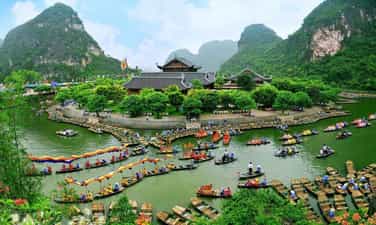
Trang An tourist area
Trang An Cultural and Natural Heritage Complex is located in many districts of Ninh Binh province. This is our country's only "dual" heritage recognized by UNESCO. This heritage complex includes the Trang An - Tam Coc - Bich Dong scenic area - Hoa Lu ancient capital - Hoa Lu special-use forest. In that complex, the ancient capital of Hoa Lu is located in the North; Tam Coc - Bich Dong is located in the south; Trang An tourist area is located in a central location. From Ninh Binh city center, visitors only need to go about 8km to get here. Every spring - summer - autumn - winter, Trang An puts on a new shirt. And every time of the year, visitors find things worth exploring here: In spring, visitors can immerse themselves in special festivals such as: Trang An Festival (mid-March of the lunar calendar); Co Lau Festival (8th - 10th day of the third lunar month). In the summer, this place is enchanting with golden rice fields or fragrant lotus ponds. In autumn, the weather is cool and pleasant, ideal for outdoor sightseeing and exploration activities. In winter, Trang An is hidden in the mist like a fairyland. Coming to Trang An tourist area, visitors can visit famous spiritual and cultural sites such as: Trinh Temple - a place to worship 4 officials of the Dinh Dynasty. Tran Ninh Binh Temple: The throne was established by King Dinh Tien Hoang to worship the god Quy Minh - the god of the southern gate of Hoa Lu. Four Pillars Temple - where four great mandarins under the Dinh Dynasty helped King Dinh Tien Hoang quell the rebellion of 12 warlords to establish the Dai Co Viet state. Phu Khong - a place to worship 7 loyal mandarins of the Dinh Dynasty. Vu Lam Palace - a check-in location that no one wants to miss. Mysterious caves: Dia Linh Cave with a length of nearly 1500m and a system of fossil stalactites. Nau Ruou Cave has underground water more than 10m deep and hundreds of jars of wine distilled from this underground water. Boi Cave - where traces of prehistoric people were discovered about ten thousand years ago. Bright Cave - Dark Cave, Ba Giot Cave are also caves worth visiting. With river terrain, boats are the main means of transportation in Trang An tourist area. Visitors can choose to take a traditional boat with 3 routes departing from the marina including: Route 1: Boat station - Trinh Temple - Dark Cave - Sang Cave - Wine Cooking Cave - Tran Temple - Ba Giot Cave - Seo Cave - Son Duong Cave - Khong Palace - Bao Hieu Pagoda - Khong Cave - Tran Cave - Quy Hau Cave - back to the boat dock. Route 2: Boat dock – Lam Cave – Vang Cave – Thanh Truot Cave – Suoi Tien Temple – Dai Cave – Hanh Cung Vu Lam – back to the boat dock. Route 3: Boat station - Trinh Temple - May Cave - Suoi Tien - Dia Linh Cave - Dai Cave - Hanh Cung Vu Lam - back to the boat station. In addition, the resort also provides kayaking services with 2 main routes: Route 1: Boat wharf - Trinh Temple - Tam Quan Gate - Toi Cave Entrance - Quy Hau Cave Entrance - Ngoc Mountain. Route 2: Boat wharf - Kong Island wharf - Thuy Dinh - Hanh Cung Vu Lam.
Ninh Binh
6294 view


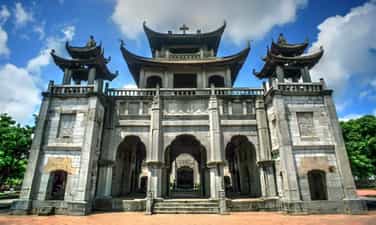
Phat Diem Cathedral
For a long time, Phat Diem Stone Cathedral has not only been a place for common spiritual and cultural activities of parishioners in the Kim Son area, but also a unique architectural work that attracts tourists from near and far to visit and admire the architecture. threshold. Because this is not only a harmonious and unique combination of Eastern and Western architectural art, but also a miracle that our ancestors left behind for future generations. Phat Diem Stone Church was built in the late 19th century by Phat Diem Parish Priest Peter Tran Luc (also known as Uncle Sau) - who was appointed as Phat Diem Parish Priest in 1865 after many years of research and completion of the outline. draw up plans and concentrate financial and material resources. The church is made of mainly stone and wood. On each stone and wooden slab, flowers bloom with exquisite carvings. Most notably, the art of stone sculpture is extremely soft and flexible, with pieces of stone only 3.5cm thick. The entire architectural complex consists of 9 rafters with 9 different stages of workers, so each rafters has a distinct cultural feature, reflecting the rich aesthetics of skilled craftsmen. Furthermore, the church was built entirely of stone without the need for a reinforced concrete core. The most difficult part of this project is the foundation treatment. Because Kim Son is inherently a muddy alluvial land, Parish Priest Peter Tran Luc had to exploit and transport thousands of tons of stone from a mountain in Thanh Hoa to prevent subsidence, including blocks of stone weighing up to 20 kg. ton. At the same time, Mr. Luc also exploited and transported hundreds of ironwood trees from Nghe An mountain forests to build the project. However, what makes cultural researchers and architects fascinated about the Phat Diem Cathedral complex is the harmonious combination of Eastern pagoda architecture with Western Gothic architecture. Mr. Sau is the one who designed and created the church with extremely new details. It could also be because he was not a Christian but a Buddhist, so in his design, he had a very ingenious combination of Western church architecture and curved roof architecture like that of a communal house. in Buddhism. The artistic quintessence at Phat Diem stone church also clearly demonstrates the harmony between stone carving art and Vietnamese wood carving art, such as the symbol of the cross (symbol of Catholicism) sitting on the lotus (symbol of the Catholic religion). Buddhist symbols), Buddhist "swastika" letters engraved on rosary flowers, stone and wood reliefs carved with images of Jesus and saints; In which the saints dressed in Vietnamese style look so vivid but close, as familiar as watching folk paintings; The stone pillar carved in the shape of a lotus flower represents the stages of "birth - old age - illness - death" according to Buddhist philosophy. Even more impressive is the Church of the Immaculate Heart of Mary, which is made entirely of stone, with a dazzling gilded sanctuary with many delicate and elaborate patterns and carvings but still creating a gentle feeling. peaceful because of its simple and familiar design according to the Eastern philosophy of "the sky is round, the earth is square". There is also a Bible verse carved into stone in early Vietnamese. It can be said that Phat Diem Stone Cathedral is an interference, a harmonious and sophisticated combination of Western church architecture and traditional Eastern architecture. Catholicism brings faith to people, but the architectural style and worship space with images of communal houses and pagodas are deeply ingrained in the subconscious of Asians in general and Vietnamese people in particular, creating peace and protection, this is also a symbol of the meeting between Catholicism and the religious traditions of the Vietnamese people from a very early age.
Ninh Binh
6107 view


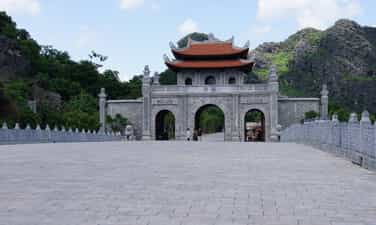
Hoa Lu ancient capital relic site
Hoa Lu ancient capital is a unique architectural complex in Ninh Binh province, recognized by UNESCO as one of the four core areas of the Trang An World Heritage complex. This place is also ranked by the government as a particularly important architectural complex and national historical relic that needs to be preserved. With a history of more than 1,000 years, this place has gone through many ups and downs of the nation, is a place to preserve historical relics through many eras as well as become a historical testament for our country. for thousands of years. However, even though it has gone through many ups and downs of time, Hoa Lu still retains its historical traces. Those are sturdy city walls, two majestic temples worshiping King Dinh Tien Hoang and King Le Dai Hanh, built to simulate the ancient capital of Hoa Lu. You can come to Hoa Lu at any time of the year. However, spring is the most beautiful time as well as many festivals are held, so this is the right time for you if you want to participate and experience the bustling, crowded atmosphere of these festivals. If you are someone who likes quiet and wants to enjoy the peaceful space of this place, you can choose to go on the remaining days. Since the past, Hoa Lu was a magnificent and magnificent imperial capital. The mountains and hills rise up around the capital's perimeter like a sturdy wall. The meandering Hoang Long River and the vast Nho Quan and Gia Vien fields are extremely convenient natural deep ditches. The entire historical and cultural relic site of Hoa Lu Ancient Capital, including the special protection zone, buffer zone and relics such as Thien Ton cave and Bai Dinh pagoda, are all located in the limestone mountain system in the area. Ninh Binh province, belonging to Truong Yen commune, Hoa Lu district, bordering Gia Vien and Hoa Lu districts. This place is about 100km south of Hanoi capital. Hoa Lu ancient capital is an architectural complex, and each architecture has its own characteristics, all creating the ancient and heroic look of ancient historical relics. The historical traces still remaining in the relic complex are very diverse and rich, including the architecture of city walls, royal citadels, caves, temples, tombs and many other types of valuable architectural works. history and high culture. Most notably, there are still two relics here: King Dinh temple and King Le temple. These are two monuments built around the 17th century with extremely elaborate and unique sculptures on wood and stone. The road to King Dinh temple leads visitors under the canopy of poinciana trees along the road. People call Hoa Lu the stone citadel and the temples of King Dinh and King Le also used many materials from stone. For example, when entering the temple yard, visitors will see a floor made of boulders and two flanking goats also carved from monolithic green stone. Entering the harem, visitors will see a statue worshiping King Dinh cast in bronze and placed on a green stone. King Le's temple is located 50m away from King Dinh's temple and has the same structure. 200 meters from King Le Temple, is Nhat Tru Pagoda, built during the reign of King Le Dai Hanh. In front of the temple door is a stone pillar, 4.16 meters high, eight-sided shape, engraved with the Shurangama Sutra made by the king to offer to the Buddha. . Located right next to it is a relic associated with the story of King Dinh Tien Hoang's third princess, who jumped into a well and committed suicide rather than follow her husband and betray her father. This temple worships that princess. On March 8 - March 10 every year, the traditional festival of the ancient capital of Hoa Lu takes place to honor the kings and national heroes who built and developed the capital of Hoa Lu and founded the Vietnamese dynasty. Dai Co Viet country in the 10th century. The festival of Hoa Lu ancient capital includes 2 parts: the ceremony and the festival. Besides the ceremony, the festival with traditional games such as boat racing, wrestling, cheo singing... takes place in an extremely jubilant and bustling atmosphere. When coming to this relic you need to note the following. Hoa Lu Ninh Binh is a spiritual tourist destination, so when coming here you need to dress politely and discreetly. When visiting the temples of King Dinh and King Le, you need to be gentle and orderly to maintain dignity as well as burn incense to show respect to the kings who have contributed to the country. It is necessary to follow the instructions of the monument management board or tour guide if traveling in a group. Must throw trash in the right place, do not litter indiscriminately. If you go on your own, you should look at the map in advance to make your discovery journey more convenient. You can directly chat with the elders in the temple relics management board to learn more deeply about the history, cultural values, architecture... of the relics. If you want to see with your own eyes and admire works of extremely historical value as well as architectural value, then come quickly to the ancient capital of Hoa Lu Ninh Binh - a work of great historical significance. that our ancestors' generation has worked hard to preserve and preserve until now. Let's come here to visit the ancient capital and relive the heroic moments of the nation's history.
Ninh Binh
6941 view


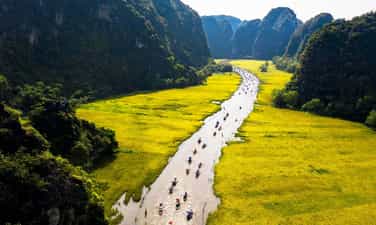
Tam Coc tourist area
Tam Coc - Bich Dong is often known for its poetic, peaceful but no less beautiful scenes, captivating people's hearts - a place favored by the simile names "Nam Thien De Nhi Dong" or “Ha Long Bay on land.” It would be a mistake if you did not spend time traveling to Tam Coc - Bich Dong Ninh Binh, because this is a wonderful destination. It must be said that Tam Coc - Bich Dong is beautiful in every season, each season has its own beauty. But if you want to admire the lush green rice fields, full of vitality stretching across the winding stream like a soft silk strip, giving you a clear, fresh feeling, immersed in the flavor of rice. Earth, sky, rivers, and nature, the time after Tet in January and February is the appropriate time. And if you want to admire a beautiful picture of nature with mixed touches of the yellow color of ripe rice, blending with the green of the mountains and forests, and in the distance dotted with light boats floating extremely poetically, then Around the end of May, early June - when summer has arrived, it is a suitable opportunity to enjoy the beauty of Tam Coc - Bich Dong. One experience of traveling to Tam Coc - Bich Dong is that you can go and return in the same day, to save time - start early in the morning to breathe the morning air and have a complete trip because Tam Coc - Bich Dong is only about 110km from the center of Hanoi, so the luggage you bring with you only needs a few simple items such as a thin jacket in case the boat ride into the cave causes low temperatures and steam. causes a cold feeling. You can also bring an umbrella to use while boating on the river. In addition, it is best to wear flat shoes to facilitate comfortable movement and sightseeing. In addition, you can bring some snacks to eat when hungry. There are two options for you, one is to travel on your own by personal vehicle such as a car or motorbike to be proactive during your trip to Tam Coc - Bich Dong, or if you go in a large group and want to have If you have the opportunity to visit and walk, you can take a bus to Ninh Binh from Giap Bat and My Dinh bus stations. For a smooth trip, you should agree in advance on the vehicle, travel time, and respect punctuality. To admire and immerse yourself in the beauty of Tam Coc Bich Dong, you have only one choice: taking a boat. And if you are a photographer and want to preserve memorable moments and poetic scenes, please discuss and ask for help from boat drivers. Their experience and knowledge of the terrain will help you capture memorable photos. Another thing to note is that you should time it so that the trip is complete because the time on the boat when traveling to Tam Coc - Bich Dong also takes nearly 3 hours, avoid having to sit on the boat at noon when the sun is strong, or too late at night when the sun has already set. And it will certainly be great if you find an ideal seat to watch the sunset here, the harmonious sunset covering the fields and rivers like a story of attachment and sharing of nature's wealth. with the people here. Coming to Tam Coc - Bich Dong, you will definitely have wonderful and memorable moments of relaxation.
Ninh Binh
6359 view


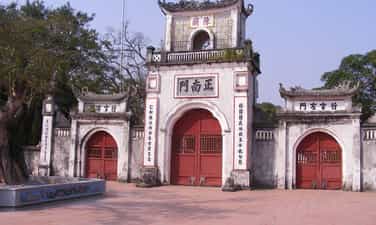
Tran Temple
Mentioning Nam Dinh means mentioning Thanh Nam land with a long history of culture and civilization. Mentioning Nam Dinh means mentioning the land of learning, which has trained many talents for the country. Nam Dinh has long been considered the second capital of Dai Viet after Thang Long capital because this is the birthplace of the Tran Dynasty. That's why the Tran Temple relic area has not only become a place to commemorate the Tran kings who contributed to protecting the country, but also a spiritual destination that attracts many tourists. To enter the Temple, you must go through the five-door gate. Through the gate is a lotus pond, with flowers blooming fragrantly throughout the entire area. The path to the temple is shaded by large old trees, creating shade for visitors to visit. Tran Temple relic area includes 3 main architectural works. In the middle behind the lake is Thien Truong Temple. On the right is Co Trach Temple and on the left is Trung Hoa Temple. Photo source: instagram vickyvan97 Every year, Tran Temple holds two major festivals that attract many visitors. The Tran Temple Festival is held from the 15th to the 20th of the eighth lunar month every year and the Tran Temple Opening Ceremony at dawn on January 15 has been registered as a national intangible cultural heritage.
Ninh Binh
5880 view


Xuan Thuy National Park
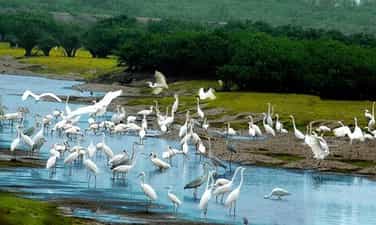
Xuan Thuy National Park is a coastal wetland conservation area in Giao Thuy district, Nam Dinh province. This is the first flooded forest in Southeast Asia to join the RAMSAR international convention. With an interesting and attractive ecological system, many rare bird species return to reside here, creating a beautiful and lively picture of a typical countryside right at the estuary along the Northern coast. The appropriate time to travel to Xuan Thuy National Park is from October - November to March - April of the following year, because at this time the number of birds increases dramatically, creating an extremely bustling atmosphere of thousands of individual birds. Migrating from the North to escape the cold. Besides, according to Xuan Thuy National Park travel experience, you can also visit in the summer months to enjoy the sea breeze and admire the brilliant scenery here. Traveling to the national park is also an opportunity for you to enjoy special Giao Thuy dishes such as: spring rolls, Giao Thuy spring rolls, Sa Chau fish sauce, jellyfish salad, mangrove honey... or other types of seafood. Fresh delicacies from the sea such as clams, oysters, shrimp, crab... Xuan Thuy national ecosystem is recognized by UNESCO as the core area of the world biosphere reserve in the interprovincial coastal area of the Red River Delta. This is considered a platform for international migratory birds with more than 200 species, including more than 50 species of water birds and 100 species of migratory birds. Therefore, Giao Thuy National Park will become an attractive eco-tourism area for domestic and foreign tourists when traveling to Nam Dinh. Besides visiting Xuan Thuy National Park, tourists return to the mainland and rest at hotels and motels. And if you want to have a memorable experience in your life, you should set up a sleeping tent in the pine forest next to the clam field so that you can wake up early in the morning to catch a wonderful sunrise. With over 200 species of birds and tens of thousands of individuals, Xuan Thuy National Park is truly a large bird station of the Red River Delta. Coming to Xuan Thuy National Park, you will discover new bird species, freely watch birds passionately foraging for food, flocks of storks flying above the green forest floor.
Ninh Binh
6503 view


Phu Day relic area
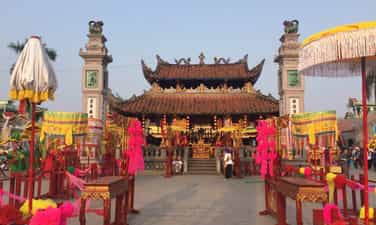
Phu Day architectural and artistic relics (including: Phu Tien Huong, Phu Van Cat, Mausoleum of Lieu Hanh) are located in the two villages of Tien Huong and Van Cat in Kim Thai commune, Vu Ban district, far from the city center. Nam Dinh street is about 15km southwest. This is a relic with typical historical, cultural and artistic architectural value that has been ranked nationally by the Ministry of Culture according to Decision No. 09-VH/QD dated February 21, 1975. Phu Day worships Holy Mother Lieu Hanh, the head deity in the belief system of Mother Goddess worship (Three Palaces, Four Palaces) of the Vietnamese people, and is also one of the "Four Immortals" of the Vietnamese temple. She was conferred with many titles by feudal dynasties from the Le to Nguyen dynasties as "Mother Nghi Thien Ha" (Mother of all peoples) with the following titles: Ma Vang Bodhisattva, Great King Che Thang Hoa Dieu. Most villages and urban areas in our country have temples, pagodas, and temples worshiping Mother Lieu Hanh, which is very solemn. Among them, Phu Day relic has long been considered the center of Mother Goddess worship (Three Palaces, Four Palaces) of Vietnamese people. Based on historical books, scientific research works and folk legends about the story of Saint Mother Lieu Hanh, the Phu Day relic was built on the homeland where the Mother was born for the second time. According to the content of the stele "Tien tu genealogy" (Jade genealogy records the work of Tien Huong temple), "Holy Mother's late Trach Linh Tu Bi Ky" (Stele recording the old foundation of the sacred temple of the Holy Mother) is currently kept. At the site, Phu Day (including Phu Tien Huong and Phu Van Cat) had the earliest construction history in the Later Le dynasty, the reigns of Duong Hoa (1642) and Canh Tri (1663-1671). The original project was just a small temple built by local people to worship and pay tribute to the merits of Saint Mother Lieu Hanh. Through historical periods, the government, people and tourists from all over have contributed money and efforts to restore and build Phu Day into a spacious and majestic architectural complex to worship the Mother Goddess as it is today. Tien Huong Palace was built on a campus of nearly 7,500 square meters, facing southwest. On the overall plan, the project consists of 19 buildings with 81 large and small rooms of different heights and heights, arranged symmetrically and harmoniously, forming an architectural plan of the "Inside the terrace, outside the country" style. Looking from the outside, first is a round well with the meaning "Gathering water to gather blessings", followed by 3 communal houses, a semicircular lake and the main building. On both sides of the main building are two bridges running all the way connecting the Co and Cau floors with the stele house and guest house. The main building has four worship palaces: first, second, third, fourth. The shrines all have frames made of ironwood, designed in the same way as each other, creating a space for worship that is wide on the outside and deep on the inside. Among the four worship palaces, the fourth palace is the project with the highest artistic value. Here, on the system of trusses, horizontal beams, vertical beams, and planks carrying architectural components, artisans meticulously machined and carved them with many vivid themes and motifs such as: four sacred animals. , four precious items, fish turning into dragons, dharma wheels, pairs of "five blessings" money, bats with the word "tho" in their mouths, Nghe chau, two peaches, lotus turtles... have artistic value during the Nguyen Dynasty, 19th century - XX. Phu Van Cat is located about 1km east of Phu Tien Huong, built on a land area of nearly 3600m2, facing Northwest. The project consists of 7 buildings with 30 large and small compartments, also designed similarly to Thien Huong Palace in the style of "Inside the terrace, outside the country". On the overall plan, looking from the outside, first is a semicircular lake, in the middle of the lake is a 3-compartment water pavilion built entirely of ironwood. Next is the Nghi Mon system (five gates) designed in the style of a 3-storey stack, 5 lofts and the main building. The main project is also designed to include 4 palaces: first, second, third, and fourth. The architectural and artistic value is most clearly shown on the wooden architectural structures of the fourth palace. Here, the artisans have put all their ingenuity and effort into carving extremely rich and diverse works of art with motifs of dragons, dragons flanking phoenixes dancing, mixed with groups of glasses playing with other animals. The turtle is hidden under the lotus pond... in the architectural and artistic style of the Later Le period, 17th - 18th centuries. Mausoleum of Lieu Hanh was built in 1938, on a high land area with an area of 1647m2. The mausoleum was built entirely of green stone, including many square walls. In the middle of the walls there is a door made up of two pillars, with a pink stone lotus placed on top of the pillar. In the middle of the mausoleum is an octagonal tomb, each side is 1.3m wide. The overall mausoleum has 60 pillars corresponding to 60 lotus buds, looking like a nasturtium pond from afar. Phu Day architectural work, since its inception, has undergone many restorations, embellishments and expansions but still preserves intact the architectural values bearing the artistic imprint of the Le - Nguyen dynasties. . With reasonable and scientific calculation of scale, architectural structure, and ingenious combination and use of construction materials, our ancestors created extremely unique and perfect works of art. . All three relics of Tien Huong Palace, Van Cat Palace and Lieu Hanh Mausoleum, not only have typical historical, cultural and scientific values but also have aesthetic, architectural and artistic values. In addition to being located in a charming landscape, these relics all have a majestic scale, symmetrical and harmonious structure, along with unique artistic value through rich sculptural themes. diversity. All of these elements have become an important nucleus constituting an architectural complex, a famous "super temple" not only of Nam Dinh, but also typical of the whole country. In addition, the system of relics, antiques and worship objects such as epitaphs, ordinations, parallel sentences, great characters... along with the legend of Holy Mother Lieu Hanh are rich and valuable sources of information to help scholars. Scientific research in many fields explains and identifies the great value of these relics to the nation's cultural heritage system through the ages.
Ninh Binh
6067 view


Ksitigarbha Temple – Phi Lai Tu
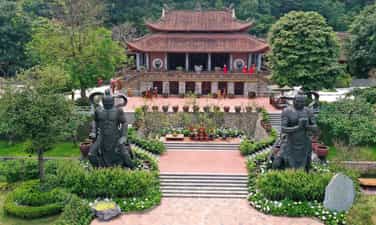
No need to go far, right in Ha Nam there is a pure and beautiful temple loved by many people, which is Ksitigarbha Phi Lai Tu Pagoda. This pagoda also has other names such as Phi Lai Dia Tang Pagoda or the Nom name Dung Pagoda, with a history of more than 1000 years old. On both sides there are mountains shaped like a left dragon, a right white tiger and many ancient objects of sacred historical value, bearing the mark of the history of Vietnamese Buddhism. The pagoda's location is right on a small hill, behind a green pine forest and in Ninh Trung village. The space inside is extremely spacious and flat with a spacious entrance path. Those who come here for the first time will be somewhat surprised when the yard leading to the temple is covered with white gravel instead of red bricks like many other places. According to local people, Dung Pagoda was initially built around the 11th century with more than 100 compartments. There was a time when King Tran Nghe Tong chose this place as a hiding place and King Tu Duc also came to pray. After many years of being known as a place of worship, the pagoda's architecture gradually eroded over time, surrounding it with trees, making people forget it. In December 2015, the pagoda was received, renovated, rebuilt and renamed by Venerable Thich Minh Quang. The name of the temple refers to Ksitigarbha Bodhisattva who always comes or may never come to this place. The place that transformed into Buddha's land is the place where Ksitigarbha does not return. Ksitigarbha Phi Lai Tu Pagoda has a charming mountain-like landscape and a small lotus pond on the premises. The whole ensemble seems to be hidden in a magnificent forest. Right in front of the Ancestral Hall are 12 circles drawn on the gravel floor symbolizing 12 human causes and conditions. Right in those 12 circles, there is a sign "Kho hai (sea of suffering) because it is the sea, so please go ashore" is placed, carrying a gentle message reminding you to go on those smooth rocks, don't step on the pebbles. . Moon pebbles also have a meditative significance. That's also the reason why when walking around the yard, just looking at the pristine pebbles, people's hearts become peaceful. The image of Ksitigarbha statue exuding kindness and majesty is placed at Ksitigarbha Phi Lai Tu Pagoda with the main colors brown, yellow and white. On the campus you can also find gardens of fruits, herbs, wild vegetables... well taken care of by the people and monks. At the foot of the mountain, Dia Tang Phi Lai Tu Pagoda also built a mushroom growing house of about 20 square meters to provide clean food when cooking vegetarian hot pot or making vegetarian shrimp paste. For those of you who enjoy reading books, especially books that nourish the soul, Ksitigarbha Phi Lai Tu Pagoda is a paradise on earth with the number of books covering the walls. In addition, when you need to breathe fresh air, you can also admire the orchid pots located behind the Ancestral Church or go to the Zen garden to enjoy tea, lie in a hammock, or sit on a stone bench to watch the pagoda from above. Visiting here at the beginning of the year, you will see the image of Ksitigarbha Phi Lai Tu Pagoda decorated with many bright fresh flowers to celebrate the traditional New Year. In addition, from September to October of the lunar calendar, the pagoda will also recreate the countryside market scene with many familiar items to impress visitors. June - July is the time when Ksitigarbha Phi Lai Tu Pagoda organizes summer retreats that many Buddhist families love to enroll in. More specifically, on the 30th day of the 7th lunar month, the pagoda will hold the Vu Lan ceremony, the extremely solemn ceremony of Ksitigarbha Bodhisattva. Another ideal time to visit is the Mid-Autumn Festival on the 15th of the 8th lunar month when we can enjoy the full moon and enjoy the open space around.
Ninh Binh
6221 view


Phat Quang Pagoda
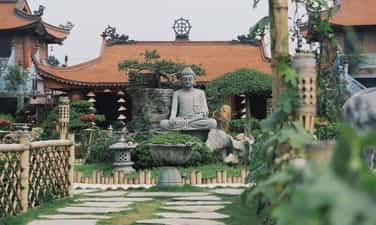
Through many ups and downs, Phat Quang Pagoda, an ancient pagoda nearly a hundred years old in Du Nhan village, has experienced many difficulties. Initially it was just a small temple serving the spiritual needs of the local community. However, due to its long history, many buildings began to deteriorate and become damaged. Faced with this situation, Abbot Venerable Thich Thien An decided to restore the entire temple space. The restoration of Phat Quang Pagoda officially began in 2015 with many impressive architectural works such as fish pond, lecture hall, tea house, rockery, Patriarch's house, Tam Bao... on an area of more than 6,000 m2. The brilliant new look of Phat Quang Pagoda is not only the result of restoration but also the dedicated contribution and support of many monks, nuns and Buddhists. Venerable Thich Thien An, with calligraphy, paintings, and landscape decoration of the pagoda, creates a unique and impressive artistic space that makes visitors amazed. Phat Quang Pagoda is an interesting destination with exquisite architecture, rockery, fish pond, and massive stone tables and chairs. The pagoda's airy space is characterized by Japanese design with attention to every small detail, from bonsai to calligraphy on stone. Exploring this temple, visitors will feel peace, forgetting all worries and pressures of life. Tourists not only enjoy tea and flowers, but also have the opportunity to listen to monks preach. The pagoda is open to visitors and is willing to answer any questions about the history and meaning of each landscape within the pagoda grounds. Not only admiring and sightseeing, tourists also have the opportunity to enjoy attractive specialties of Ha Nam. Delicious Dishes Like Banh Chung of Dam Village, Braised Fish of Vu Dai Village, Banh Cuon Phu Ly will enrich your trip
Ninh Binh
5518 view


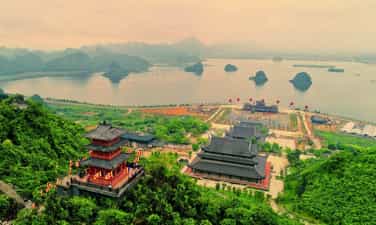
Tam Chuc Pagoda
Tam Chuc Pagoda belongs to the newly formed super tourist complex project in Ha Nam. Tam Chuc Pagoda is also known as the largest pagoda in the world with a landscape system and many rare treasures. We invite you to join Vntrip to visit with your own eyes the special things of this majestic temple. Tam Chuc Pagoda is located in Ba Sao town, Kha Phong commune, Kim Bang district, Ha Nam province. From here it is about 60km from Hanoi center. This pagoda has a very special location that can be considered a bridge connecting Huong Pagoda and Bai Dinh Pagoda in Ninh Binh. Located in an extremely spiritually favorable location, behind the pagoda is That Tinh and in front is Luc Nhac Lake. In the lake there are 6 islands that according to legend represent 6 bells given by heaven. Currently, the transportation system connecting Hanoi and Ha Nam is very convenient. Tam Chuc Pagoda is about 30Km from Bai Dinh Pagoda and 4.5Km from Huong Pagoda, creating a "golden triangle" complex in spiritual tourism activities. The entire Tam Chuc tourist area complex project is up to 5,000 hectares wide, including many landscapes such as large lakes, rocky mountains, and valleys creating grandeur and splendor. Tam Chuc Pagoda project is still under construction and it is estimated that it will take another 30 years to complete this entire complex. Tam Chuc Pagoda was built on the foundation of a previous ancient pagoda, which according to archaeologists dates back more than 1,000 years ago. Through time and many historical events, this place only retains ancient traces such as stone pillars, stone beams, and many artifacts buried for thousands of years. Tam Chuc Pagoda was rebuilt with 12,000 stone paintings depicting the stories of Buddha, these works were carved by Indonesian Muslims from volcanic stone and brought to Vietnam. Outstanding works in this complex include: Jade Pagoda, Tam The Palace, Phap Chu Palace, Quan Am Palace, Tam Quan Gate, International Meeting Room. Tam Chuc Communal House is a place to worship the Queen of the Dinh Dynasty named Duong Thi Nguyet. According to historical legend, Dinh Bo Linh, during the war to quell the rebellion, 12 warlords came here to recruit troops until he won the battle and ascended the throne. He ordered the temple to be built here. The spiritual tourism relic complex of Tam Chuc Pagoda deserves to be an attractive destination for Buddhists around the world to make pilgrimages as well as domestic and foreign tourists to enjoy, worship and pray for luck and peace, especially in the months after the Lunar New Year. The pagoda is a perfect combination of sacred ancient features of a thousand-year-old relic along with majestic and vast natural scenery. Tam Chuc Pagoda now and in the future will certainly be an attractive destination and is expected to create a driving force for breakthrough socio-economic development for Ha Nam province.
Ninh Binh
6010 view


 AI Travelviet