Relic point Vietnam
Việt Nam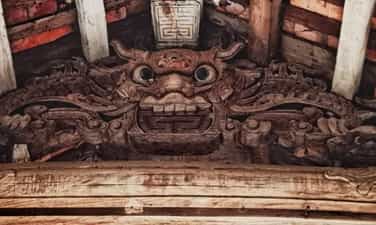
Phu Luong Village communal house
Phu Luong Village Temple, located in Quang Phu Cau Commune, Ung Hoa District (now Thuong Phuc Commune, Hanoi), is a National Historical and Cultural Monument, classified as such in 1993. The temple serves as a center for religious and cultural activities for the local community and is associated with many unique historical and artistic values. It is dedicated to General Bach Loi, a renowned general during the reign of the 18th Hung King. According to legend, he, along with Tan Vien Son Thanh, Cao Son, and Quy Minh, contributed to fighting the Shu invaders and protecting the borders. During his military campaign, Bach Loi chose Phu Luong as his encampment and passed away there. To commemorate his contributions, the people built the temple and honored him as the village's tutelary deity. The site still preserves a genealogical record from the 3rd year of the Hong Phuc era (1674) and seven royal decrees. Architecturally, the temple is built in the shape of the Chinese character "Đinh," consisting of five main halls and three rear halls. Particularly noteworthy are the exquisite wood carvings depicting the four mythical creatures, the four auspicious symbols, and "dragons and fish playing in the water," showcasing the vibrant beauty of traditional village communal house architecture. Every year, on the 7th day of the first lunar month, the communal house festival is held with processions of deities and goddesses, along with many folk games such as wrestling, swinging, duck catching, and cockfighting. Source: Hanoi People Magazine
Hanoi
10 view
Rating : National Monument
Phu Dien Temple (Dai Thanh)
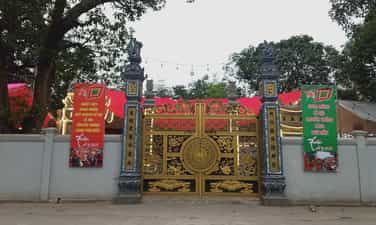
Phu Dien Temple is located in Huu Hoa commune, Thanh Tri district (now Dai Thanh commune, Hanoi). It is a historical and architectural monument associated with important landmarks of the local area. The temple is dedicated to two village tutelary deities: King Le Dai Hành and General Tran Thong, both natives of Phu Dien. According to legend, King Le Dai Hành stopped to hunt in this area while marching north to fight invaders. To commemorate this event, the village was named "Dai Hành" (meaning "Great Hành"). The temple still preserves the "Phu Dien Le Emperor's Genealogy," compiled by Nguyen Binh in 1572 and copied in 1710, recording the life and career of King Le Dai Hành. Although not large in scale, the temple boasts many distinctive architectural and artistic features. The main hall consists of five bays, with a two-bay sanctuary behind it. The wooden components are carved with dragons, leaves, cloud patterns, and various motifs of the four mythical creatures and four auspicious symbols. Within the grounds are also pillars, stone lions, and stone tigers, adding to the ancient and sacred atmosphere of the site. The temple currently preserves many valuable artifacts such as stone animal statues, wooden cranes, palanquins, dragon thrones, altars, incense burners, eight treasures, 10 royal decrees, genealogical records, and ancient steles. Every year, the festival takes place from the 7th to the 9th of March in the lunar calendar, featuring many folk activities such as dragon dance, wrestling, boat racing, Ca Tru singing, water puppetry, and traditional games. Source: Hanoi Famous Landmarks and Historical Sites
Hanoi
11 view
Rating : National Monument
Phu Dien Village Temple
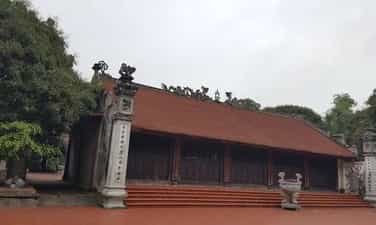
Located in Phu Dien village, Tu Liem ward, Hanoi city, Phu Dien communal house is a typical architectural and artistic relic, closely associated with the history and cultural traditions of the ancient Phu Dien region. This is also a region famous for its tradition of scholarship, having produced two Doctors of Philosophy and many other successful scholars throughout various dynasties. The communal house is dedicated to Bach Hac Tam Giang, also known as General Dao Truong, a legendary figure associated with the Hung King era, who commanded the navy to fight invaders and protect the country. Over time, the image of this tutelary deity has become a symbol of community cohesion and is revered and worshipped by the people of Phu Dien. Architecturally, the communal house is built in the shape of the Chinese character "Công" (meaning "work" or "achievement"), consisting of a main hall, a connecting corridor, and a rear sanctuary. The main hall has five bays, and the rear sanctuary has three bays. The wooden components are elaborately carved with familiar themes of traditional art such as the four mythical creatures, the four seasons, dragons, flowers, and scenes of folk life. The intricate carvings not only enhance the beauty of the structure but also reflect the aesthetic sensibilities and spiritual life of the inhabitants of the Northern Delta region. The communal house still preserves many valuable artifacts such as royal decrees, genealogical records, stone steles, dragon thrones, palanquins, cranes, incense altars, horizontal plaques, couplets, and ornate archways. Every year, the communal house festival is held on the 14th and 15th of the third lunar month, featuring a palanquin procession, water fetching from the ancient well, and many traditional cultural activities. With its harmonious blend of historical value, religious beliefs, and architectural art, Phu Dien communal house is not only a place to commemorate the village's tutelary deity but also a space preserving the memories, traditions, and cultural identity of Phu Dien village within the historical flow of Thang Long – Hanoi. Source: Hanoi Newspaper and Radio & Television.
Hanoi
11 view
Rating : National Monument
Gray Temple
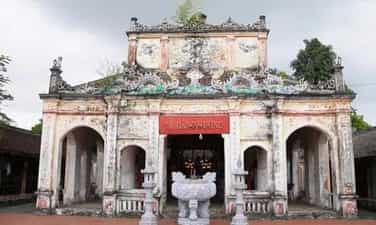
Located in Lac Dao village, Hong Quang commune, Nam Dinh ward, Ninh Binh province, Xam Temple, also known as Dinh Xam or Dinh Hat, is a place of worship dedicated to General Tran Minh Cong, whose real name was Tran Lam – a figure who helped Dinh Bo Linh quell the rebellion of the 12 warlords and contribute to the unification of the country. Xam Temple has a long history, with architecture and art developed and refined over many periods, from the Mac Dynasty, the Later Le Dynasty to the Nguyen Dynasty. The complex includes the main temple, the front hall, the middle hall, the main sanctuary, and two side halls. Particularly noteworthy is the exquisite wood carving system featuring dragons, phoenixes, mythical creatures, tigers, and various animals and flowers, clearly showcasing the characteristics of traditional wooden architecture from the 16th-17th centuries. Beyond its architectural value, Xam Temple also preserves unique folk cultural features. Every year, a festival is held from the 17th to the 19th of August in the lunar calendar, featuring folk singing, dancing, and boat racing competitions. Notably, the locality still preserves 10 ancient folk songs and 10 traditional <i>ca trù</i> songs, along with many traditional dances. These cultural activities are what gave the site its name, "Singing Temple." Source: Nhan Dan Newspaper
Ninh Binh
11 view
Rating : Special national monument
105mm artillery position of the 805th Company
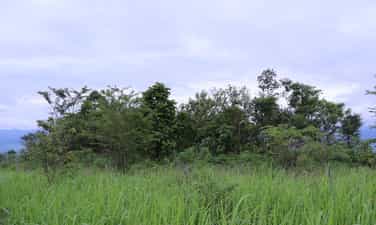
Located on Pha Hill, part of the Pu Hong Meo mountain range, in Nam Thanh ward, Dien Bien Phu city and Thanh Xuong commune, Dien Bien province, the 105mm artillery position of Company 805, Battalion 954, Regiment 45, Division 351 is a component of the Dien Bien Phu Battlefield Special National Historical Site. The position is situated at an altitude of approximately 1,000m, offering a wide observation point overlooking the Muong Thanh basin and Dien Bien Phu city. During the 1954 Dien Bien Phu Campaign, this position was where Company 805 deployed its 105mm artillery, contributing to a more than 30km long fire arc encircling the French stronghold. From here, our artillery carried out the task of suppressing enemy artillery, bombarding important positions, and supporting infantry attacks. In particular, during the first attack on March 13, 1954, the artillery positions coordinated to suppress French firepower, creating favorable conditions for the infantry to attack the Him Lam stronghold. To ensure safety and combat effectiveness, the artillery positions were meticulously constructed with a system of gun emplacements, ammunition bunkers, command bunkers, rest bunkers, trenches, and diversionary positions. After more than 70 years, the site still retains traces of 9 artillery bunkers, a section of trench, and an observation post. These traces are evidence of the hardship, creativity, and artistry in the deployment and use of artillery by our army during the Dien Bien Phu Campaign. Source: Dien Bien Province Relics Management Board
Dien Bien
13 view
Rating : Special national monument
Bat Thap Pagoda
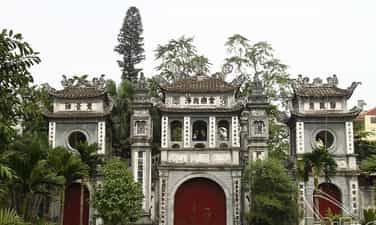
Bat Thap Pagoda – An Ancient Charm in the Heart of Hanoi. Located at 209 Doi Can Street, Ba Dinh Ward, Hanoi, Bat Thap Pagoda, also known as Van Bao Pagoda, is a Buddhist architectural relic with a long history, closely associated with the ancient Thang Long region. The name Bat Thap (Eight Towers) is believed to originate from the unique shape of the pagoda's base, which resembles a bowl. The pagoda is situated on high ground, offering a spacious and airy environment. Highlights include the two-story, eight-roofed gate, the seven-bay front hall, and the three-bay rear hall. The intricately carved wooden components depict dragons, tigers, and plants, creating a structure that is both robust and graceful. The pagoda still preserves a system of Buddha and Mother Goddess statues dating from the late Le Dynasty to the Nguyen Dynasty, most notably the Three Buddhas statues. In addition, there are many precious artifacts such as a pair of bronze cranes, incense burners, and especially the bronze bell "Bat Thap Pagoda Bell," cast in the second year of Gia Long's reign, which is 1803. With its historical, architectural, and artistic value, Bat Thap Pagoda is an important landmark that reflects the cultural landscape of ancient Thang Long, and is also a destination for tourists to explore the beauty of Buddhist architecture in the heart of Hanoi. Source: National Museum of History
Hanoi
31 view
Rating : National Monument
Ngoc Khanh Temple
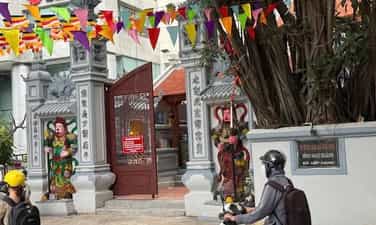
Located beside Ngoc Khanh Lake in Ngoc Khanh Ward, Ba Dinh District, Hanoi, Ngoc Khanh Temple is a valuable architectural and artistic relic, built around the 18th century and classified as a historical monument by the Hanoi City government in 2006. The temple is dedicated to the Three Supreme Deities: Ha Hai Thai Giam Hoang Phuc Trung, Linh Lang Dai Vuong, and Thanh Hoang Uy Linh. These deities are associated with the protection of the country, the development of the western region of the capital, and the establishment of the ancient "Thirteen Villages" system. Beyond its historical value, Ngoc Khanh Temple also preserves many precious Han Nom artifacts and documents such as palanquins, dragon thrones, ornate doors, horizontal plaques, couplets, bells, bronze gongs, bronze incense burners, and censers. Notably, the temple also preserves four royal decrees, the earliest of which is the decree dated the 2nd year of the Minh Menh reign (1821). Despite numerous renovations, Ngoc Khanh Temple today retains its solemn appearance, serving as a place of religious worship for the people and a destination for tourists to learn about the history and culture of the Ba Dinh area. Source: Hanoi Famous Landmarks and Historical Sites
Hanoi
32 view
Rating : National Monument
Tran Khat Chan Temple
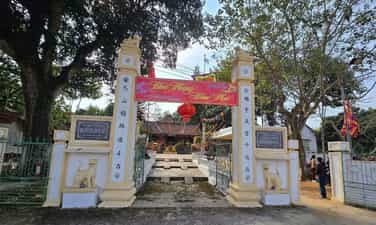
The Tran Khat Chan Temple is located at the foot of Don Son Mountain, in Vinh Loc town, Thanh Hoa province, more than 2 km from Ho Dynasty Citadel. The Tran Khat Chan Temple is a national historical monument, associated with the life and career of General Tran Khat Chan – a famous general of the late Tran Dynasty. In 1390, during the war against the Champa army, Tran Khat Chan commanded the Dai Viet army to defeat Che Bong Nga's army at Hai Trieu, contributing to the defense of the borders. However, when the Tran Dynasty weakened, he participated in the resistance against Ho Quy Ly. The plot failed, and in 1399, Tran Khat Chan and many others were executed at Don Son. In remembrance of this talented and loyal general, the local people erected a temple in his honor around the late 15th – early 16th century and revered him as the tutelary deity. The temple features traditional architecture with main components such as the entrance gate, front hall, middle hall, and rear hall; it still preserves many valuable artifacts, including imperial decrees from the Nguyen Dynasty. Every year, the Trần Khát Chân Commemoration Ceremony is held on the 23rd and 24th of April in the lunar calendar, providing an opportunity for locals and tourists to remember the contributions of this renowned general, while also learning about and preserving the historical and cultural values of the Vĩnh Lộc region. Source: Thanh Hóa Newspaper and Radio & Television
Thanh Hoa
30 view
Rating : National Monument
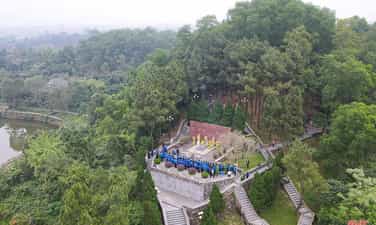
Tran Phu Memorial Site
The Tran Phu Memorial Site is located in Duc Tho commune, Ha Tinh province, the hometown of Comrade Tran Phu – the first General Secretary of the Party. This is a historically significant site, preserving the imprints of the life and revolutionary career of this steadfast communist fighter. Comrade Tran Phu was born on May 1, 1904, into a patriotic scholarly family. In October 1930, he was elected the first General Secretary of the Party and directly drafted the 1930 Political Thesis. In April 1931, he was arrested by the French colonialists and died on September 6, 1931, at Cho Quan Hospital in Saigon, at the age of 27. Before his death, he left behind the famous admonition: "Maintain your fighting spirit." In 1999, his remains were brought back to his hometown for burial. The tomb is located on Quan Hoi Mountain, facing Tam Soa Wharf – the confluence of the Ngan Sau, Ngan Pho, and La rivers. Within the grounds are a memorial stele and the tombs of the comrade's parents and younger brother. About 1km from the tomb is the Tran family ancestral temple and the Tran Phu Memorial Exhibition House, which houses many documents, images, and artifacts related to the comrade's revolutionary life. Today, the Tran Phu Memorial Site has become a destination for generations to come, offering incense, learning about history, and commemorating the first General Secretary of the Party – an exemplary figure of patriotism, unwavering will, and indomitable spirit in the face of the enemy. Source: News and Ethnic Minorities Newspaper
Ha Tinh
32 view
Rating : National Monument
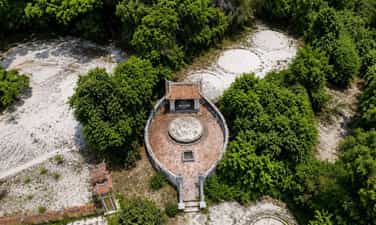
Tomb of Nguyen Lo Trach
The tomb of Nguyen Lo Trach, also known as Ha Nhan and Ky Am, is located in the Don Cat area, Ke Mon village, Phong Phu ward, Phong Dien town, Hue city. Born on February 15, 1853, he was a progressive thinker during the reign of Emperor Tu Duc, notable for his ideas on national reform amidst the turbulent times in Vietnamese society. Nguyen Lo Trach left behind valuable ideas in three famous works: "Thoi Vu Sach Thuong," "Thoi Vu Sach Ha," and "Thien Ha Dai The Luan," reflecting his vision and proposals for national renewal and consolidation. He died in 1895 and was initially buried in Binh Dinh. In 1957, his descendants reinterred his remains in his hometown of Ke Mon. The tomb is circular, with a simple structure, approximately 3 meters in diameter, and walls 40 cm high and 20 cm thick. With historical values associated with the life and reformist ideas of Nguyen Lo Trach, his tomb was recognized as a National Historical Monument on December 28, 2001. Source: Phu Ho Commune website – hue.gov.vn
Hue
30 view
Rating : National Monument