Relic point Vietnam
Việt Nam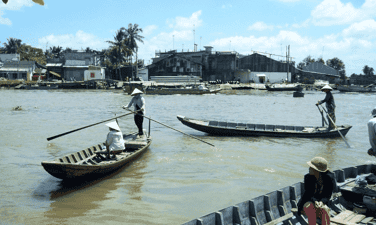
Tu Tong ferry station
Located peacefully on the red alluvial Red River, Tu Tong wharf (now in Tu Lien, Tay Ho ward, Hanoi) is a historical witness, marking the heroic history of the Capital during the resistance war against the French colonialists. Before the August Revolution, the ancient land of the Four Generals was one of the centers of the revolutionary movement in Hanoi, where many cadres were hidden and protected. When the guns of the National Resistance broke out, Tu Tong wharf quickly became a strategic traffic artery connecting the inner city with the safe base area of Dong Anh. The pinnacle of the victory here took place on the night of January 15, 1947, when the self-defense forces and people of Tu Tong bravely rowed boats carrying officers, soldiers and weapons across the Red River safely under a hail of enemy bullets. The silent sacrifice and the spirit of "death for the Fatherland" of the people here made an important contribution to protecting the core forces of the revolution in the arduous early days. Now that the war has receded, the old wharf has been labeled by the State as a historical relic of the revolutionary resistance. This place has become a sacred "red address", reminding today's young generation of the patriotism and resilient revolutionary tradition of their ancestors. According to: Hanoi New Newspaper
Hanoi
644 view
Rating : Provincial level relics
Sa Pa ancient stone beach
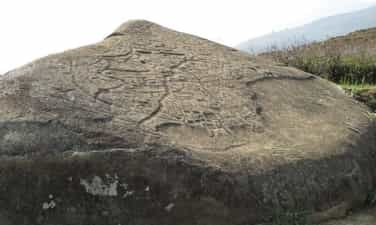
Sa Pa ancient stone field - Archaeological heritage in the middle of Muong Hoa valley Located in the middle of Muong Hoa valley, about 7 km from Sa Pa center, Sa Pa ancient stone beach is one of the most unique archaeological relics in Vietnam. The relic was discovered by French scholar V. Goloubew in 1925, spread over the communes of Lao Chai, Ta Van and Hau Thao with nearly 200 large and small stone blocks bearing many mysterious carvings. The stone slabs preserve a series of patterns and engravings such as stilt houses, people, animals, maps, symbols and daily activities of ancient residents. Up to now, the origin, date and exact meaning of these engravings have not been completely decoded, making the stone field a mysterious "stone book", attracting the attention of domestic and foreign archaeologists. Not only has archaeological and historical value, Sa Pa Ancient Stone Field also reflects the cultural life, beliefs and thinking of ancient residents who once lived in the Northwest region. In 1994, the monument was ranked as a National Monument, becoming an attractive destination for tourists who love to explore the history, culture and nature of Sa Pa. According to: Tourism Newspaper
Lai Chau
821 view
Rating : National monument

K9 Da Chong Relic Area
K9 Da Chong Relic Area - A red address marking the years of history Located at the foot of Ba Vi Mountain, about 70 km from the center of Hanoi, K9 Da Chong Relic Area is one of the special historical relics associated with President Ho Chi Minh and the resistance war against the US to save the country. In 1957, during a business trip to Ba Vi, Uncle Ho stopped at Da Chong area and realized that this place had an important strategic position. In 1958, he decided to choose K9 as the working base of the Party Central Committee. From 1960 to 1969, K9 was the place where President Ho Chi Minh and the Politburo met to discuss many important decisions of the country, and also welcomed many international delegations. After Uncle Ho passed away in 1969, K9 continued to undertake the special task of preserving and preserving his body during the war years, before being brought to Ho Chi Minh's Mausoleum in 1975. Up to now, K9 Da Chong Relic Area still preserves many valuable works and artifacts such as a two-story stilt house, office room, service house, area to preserve President Ho Chi Minh's body and pristine mountain and forest landscape. Not only is it a testament to a special historical period of the nation, this place is also a traditional educational address, contributing to helping today's generations better understand the life, thoughts and simple lifestyle of President Ho Chi Minh. According to: Tourist Information Center
Hanoi
847 view
Rating : Special national monument
Cao Lo Temple
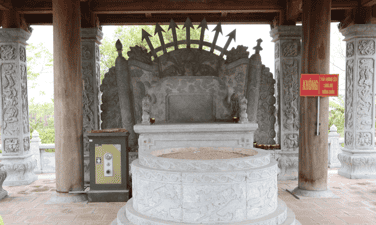
Cao Lo Temple - Historical relic associated with the talented general of An Duong Vuong's reign. Cao Lo Temple is located in Dai Trung village, Cao Duc commune, Bac Ninh province, and is a typical historical and cultural relic associated with the famous general Cao Lo Vuong, who was considered a talented general and outstanding military leader during the reign of An Duong Vuong. According to legend, he helped build Co Loa citadel, created magic crossbows to protect Au Lac country and was worshiped by many local people after his death. Legend has it that the temple was built during the reign of King An Duong and has undergone many restorations throughout the dynasties. Despite the influence of war and time, the monument still preserves many historical, architectural and artistic values. Inside the temple, there are also precious artifacts such as ordinations, stone stele, horizontal plates, parallel sentences and many wood carvings bearing the artistic style of the Le Trung Hung and Nguyen dynasties. Not only has historical value, Cao Lo temple is also the center of religious activities of the people of Dai Than region. Every year, on the 10th day of the third lunar month, people in the villages organize a traditional festival to commemorate the merits of Cao Lo Vuong, contributing to preserving cultural values, the spirit of community solidarity and the tradition of remembering the source when drinking water. Today, Cao Lo temple is a meaningful destination for tourists who want to learn about the history of the country's founding period and discover the unique cultural values of Kinh Bac land. Source: Bac Ninh Tourism Information Portal
Bac Ninh
841 view
Rating : National monument
Bac Ninh ancient citadel
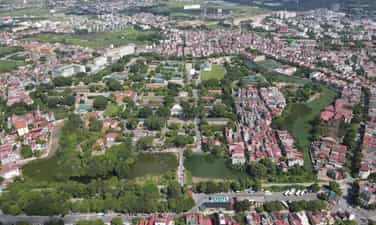
Bac Ninh Ancient Citadel - Historical relic marking Kinh Bac land Bac Ninh Ancient Citadel is one of the typical historical relics of the Kinh Bac region, associated with the formation and development of Bac Ninh province under the Nguyen Dynasty. Built in the early 19th century, this was once an important administrative and military center, playing the role of protecting the northern gateway of Thang Long capital. The special feature of Bac Ninh Citadel is that it was built according to Vauban architecture with a hexagonal plan - a type of modern military citadel at that time. The system of city walls, moats and corner fortresses are solidly arranged, reflecting the combination of Eastern and Western construction techniques under the Nguyen Dynasty. Not only has architectural value, Bac Ninh Ancient Citadel is also a witness to many important historical events. In the 19th century, many battles took place here between royal troops and rebel forces, especially the Battle of Bac Ninh in 1884 during the invasion of the French colonialists. Until the August Revolution of 1945, the citadel continued to be the place where Bac Ninh people rose up to seize power, contributing to the victory of the revolution throughout the country. After more than two centuries and the upheavals of history, many items of the citadel are no longer intact. However, the remaining traces still reflect the scale and position of a military project that once played a particularly important role in the defense system north of Thang Long citadel. According to: Dan Viet Electronic Newspaper
Bac Ninh
819 view
Rating : Provincial level relics
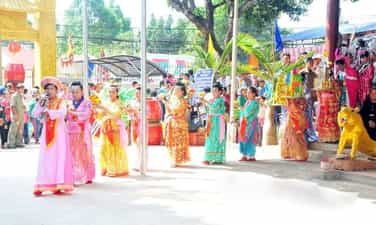
Ba Ra special labor camp
Ba Ra special labor camp - Evidence of the French colonial prison in the South. Located at the foot of Ba Ra mountain, in Phuoc Long ward, Dong Nai province (formerly in Phuoc Long town, Binh Phuoc province), Ba Ra Special Labor Camp is a typical historical relic, marking the crimes of the French colonialists against patriotic and revolutionary soldiers in the years 1940 - 1945. Built by the French colonialists in 1940, the camp was titled a "labor camp", but was actually a disguised prison to detain political prisoners and patriots. This place once imprisoned many famous revolutionary soldiers such as Tran Van Giau, Nguyen Thi Dinh, Nguyen Thi Luu... In the conditions of wild mountains and forests, harsh climate, prisoners had to do hard labor, lacked food, medicine and endured many tortures, but still stubbornly maintained the will to fight. Today, the relic site still retains traces of the prison grounds along with many documents and artifacts reflecting the life and indomitable spirit of revolutionary soldiers. This is not only a testament to a painful period of history but also a symbol of patriotism, resilient will and desire for independence of the Vietnamese people. Source: According to Vietnam Military History Museum
Dong Nai
693 view
Rating : National monument
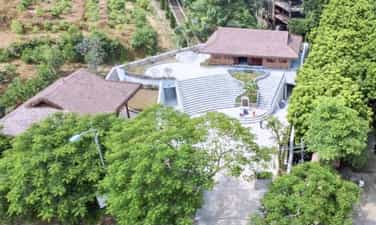
Huynh Thuc Khang Journalism School
Huynh Thuc Khang Journalism School - The cradle of Vietnam's revolutionary journalism. Located in Tan Thai commune, now Dai Phuc commune, Thai Nguyen province, Huynh Thuc Khang Journalism School National Historical Site is a special red address associated with the birth of Vietnam's revolutionary journalism. This was the place where the first journalism training class was opened during the resistance war against the French colonialists, laying the foundation for training a team of revolutionary journalists. The school was established in 1949 under the instructions of President Ho Chi Minh and named after patriot, journalist Huynh Thuc Khang. Although only organizing a single course for three months, the school has trained 42 students who are press and propaganda officers from many central agencies. In particular, the teaching team gathered many leaders and famous writers and journalists such as Truong Chinh, Vo Nguyen Giap, To Huu, Nguyen Tuan, Xuan Dieu, Nam Cao... contributing to training the first class of journalists to serve the resistance cause. Today, the relic area is spaciously planned with many items such as monument stele, exhibition house, stilt house recreating the press space of the Viet Bac War Zone, reliefs depicting portraits of the Board of Directors, lecturers and students, and a square serving traditional cultural and educational activities. Not only is it a meaningful attraction, this place also contributes to educating patriotic traditions, arousing pride in Vietnam's revolutionary journalism and becoming an attractive destination for those who love history, journalism and travel to the source. Source: According to Thai Nguyen province's electronic information portal
Thai Nguyen
192 view
Rating : National monument
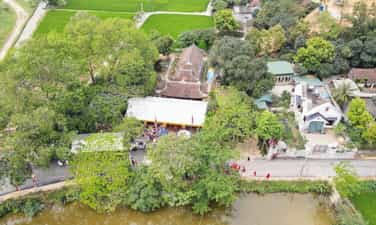
Lang Temple
Lang Temple - Sacred historical site in Ninh Binh Located in Liem Ha commune, Ninh Binh province, Lang Temple (also known as Ninh Thai temple) is a national historical-cultural relic, associated with the merits of King Dinh Tien Hoang and King Le Dai Hanh. This is a spiritual destination, as well as a place that preserves many historical values and traditional architecture. According to legend, the land of Liem Ha was once the place where Dinh Bo Linh and Le Hoan gathered and trained their armies. The current temple is the remaining temple in the complex of three ancient temples, Upper, Middle, and Lower. The project was restored under the Nguyen Dynasty but still preserves many ancient architectural features and precious artifacts such as altar thrones, altar collapses and many valuable worship objects. Every year, from the 6th to the 8th day of the third lunar month, the Lang Temple festival is held with incense offering ceremonies, sacrifices and folk cultural activities, attracting a large number of people and tourists to offer incense and commemorate the merits of ancestors. Source: Ninh Binh Tourism Promotion Information Center
Ninh Binh
835 view
Rating : National monument
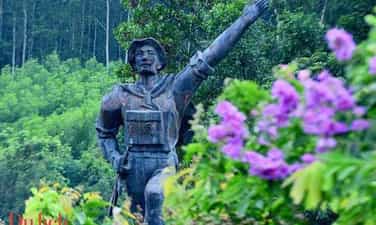
Ba Gia victory relic
Ba Gia Victory - A historical milestone in the homeland of Quang Ngai. The Ba Gia victory is one of the typical victories of the army and people of Quang Ngai in the resistance war against the US, contributing to the bankruptcy of the US "Special War" strategy in the South. The campaign took place from May to July 1965, notably the battle at Ba Gia (former Son Tinh district) from May 29 to 31, 1965. In just two days and nights, the liberation army destroyed and disintegrated a mixed battle group of American and puppet troops, confiscating many weapons and means of war, affirming the maturity of the revolutionary armed forces. Today, the relic site still preserves many locations associated with victory such as Tron Mountain, Monkey Mountain, Chop Non Mountain, Phuoc Loc trench and high point 47. Ba Gia Victory Monument was built at the foot of Tron Mountain, becoming a red address to educate patriotic and revolutionary traditions for generations. With special historical value, Ba Gia Victory Monument was ranked a National Historical Monument in 1991, a meaningful destination for tourists who want to learn about the nation's heroic history of struggle. Source: Quang Ngai Provincial General Library
Quang Ngai
805 view
Rating : National monument
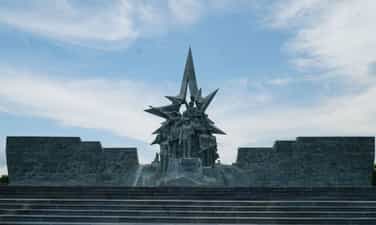
Lam Ha anti-aircraft artillery battle
The historical relic of Lam Ha Anti-Aircraft Artillery Field - Red Address marks the epic poem of 10 female militiamen. Located in Phu Ly ward, Ninh Binh province (formerly in Lam Ha ward, Phu Ly city, Ha Nam province), Lam Ha anti-aircraft artillery battlefield historical site is one of the typical red addresses, marking the heroic fighting spirit of Ha Nam's army and people in the resistance war against the US to save the country. This place is associated with the noble sacrifice of 10 Lam Ha female militiamen - outstanding children who wrote an immortal epic with patriotism and strong will. During the years 1965 - 1972, Lam Ha was an area with an important strategic position with many vital traffic routes such as National Highway 1A, North - South railway, Phu Ly bridge and Chau river. These were the targets that were fiercely attacked by the US air force to cut off the support line from the Northern rear to the Southern battlefield. To protect transportation routes and coordinate with the main air defense force, the Lam Ha Air Defense Militia Company was established with many young soldiers, including very young female militiamen. In the fierce battles that took place in October 1966 and July 1967, 10 Lam Ha female militiamen heroically fought and died right on the artillery battlefield while on duty to protect their homeland. Their sacrifices have become a shining symbol of revolutionary heroism, contributing to the glorious tradition of the Vietnamese militia and self-defense force. To pay tribute to the fallen, Ha Nam province built the Temple of 10 Lam Ha female militiamen, a memorial monument and a relic campus right on the old battlefield. Today's relic space is solemnly planned, a place where people and tourists come to offer incense, learn about history and educate patriotic traditions for the younger generation. Source: According to the Electronic Information Portal of Ha Nam province (Ninh Binh)
Ninh Binh
621 view
Rating : National monument