Relic point Vietnam
Việt Nam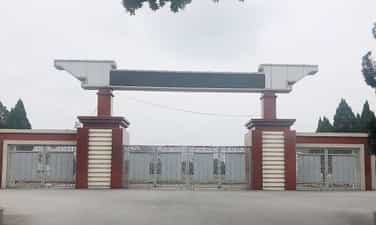
Yen Bai city stadium ceremony platform
Yen Bai City Stadium Stadium, Hong Ha Ward, Yen Bai City is where Uncle Ho stood and talked to the people of Yen Bai province on September 25, 1958. This is a National Historical Site recognized by the Ministry of Culture and Information on November 16, 1988. The original ceremony is the grandstand of the old town stadium. The courtyard and ceremony platform are located in a densely populated area, the center of the former provincial capital. The town stadium dates back to the French colonial period. After completing the conquest and establishment of Yen Bai province (1900), in 1905, France established a legion camp to protect their government. To serve the spiritual life of soldiers, especially cultural and sports activities. In 1927, France built this stadium to organize festivals and football activities, but around the stadium were only built into high mounds without any stands, and it was not completed until 1930. Since then, France has regularly organized fun and entertainment activities here, invited football teams from Hanoi, Phu Tho, Tuyen Quang to compete, and also organized many days of "Western festivals" at the stands. this town stadium. In 1954, when peace was restored, Yen Bai province advocated restoring the football field into a town stadium. In January 1957, the province built a grandstand (the current grandstand) and a wall surrounding the field in an oval shape. The most important historical event was on September 25, 1958, the Government delegation led by President Ho Chi Minh visited Yen Bai province. During his time working in the province, at the request of President Ho Chi Minh, the Provincial Administrative Committee chose the town stadium as a meeting place for Uncle Ho to talk to people of all ethnic groups in the province. At that time, Yen Bai province was one of the most difficult provinces in the North, having just gained independence, the war was heavily destructive, most of the terrain was mountainous, sparsely populated, low educational level, and many victims. Nomadic farming, superstitions still abound, life is still extremely poor. During the most difficult time, Uncle Ho visited Yen Bai. Early in the morning of September 25, 1958, nearly 5,000 officials and people of Yen Bai town's ethnic groups and people from neighboring areas eagerly flocked to the rally to see Uncle Ho and hear his voice. Coming out of the provincial team, Uncle Ho went to the stadium and stepped onto the ceremony platform amid the thunderous cheers of his compatriots. After everyone was silent, Uncle Ho started talking. He cordially visited officials and people, pointing out practical actions. He mentioned many issues from national unity, increasing production, and practicing thrift. After talking, Uncle Ho joined the entire Yen Bai people in singing the song "Unite". From the platform, he left to return to work amid the applause and majestic songs of the people of the province. On May 31, 1966, a bombing by a US aircraft collapsed a corner of the stadium. In 1977, the stadium was repaired, replacing the arched door with a square door, the entire architecture remained the same. . In 2016, the Ceremonial Monument area was renovated and upgraded. The monument and the entire architecture of Uncle Ho's memorial area are designed in traditional architectural style, simulating the memorial architecture of Uncle Ho in Kim Lien - Nghe An, Uncle Ho's hometown. With that cultural and historical significance, this place is a destination, an address for people and tourists to visit and burn incense to commemorate Uncle Ho, forever a place to preserve sacred memories of the Leader. Great - President Ho Chi Minh in the hearts of the people of Yen Bai province, is a traditional educational address for young generations today and tomorrow. Source: Yen Bai province electronic information portal
Lao Cai
9205 view
Rating : National monument
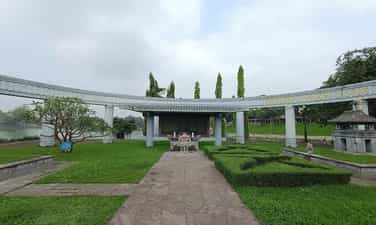
Nguyen Thai Hoc historical relic site
The grave site of Nguyen Thai Hoc and soldiers in the Yen Bai uprising in 1930, located in Yen Hoa park (30 hectares wide), Nguyen Thai Hoc ward, Yen Bai city, built in 2001 . Nguyen Thai Hoc was born on December 1, 1902 in Tho Tang, Vinh Tuong district, Vinh Phuc province. He was a patriot right from the time he was in a colonial school. He sent a letter to Governor General of Indochina Alexandre Varenne, a member of the French Socialist Party, calling for social reform in Vietnam. The Governor-General of Indochina did not pay attention to what Nguyen Thai Hoc suggested. On December 25, 1927, Nguyen Thai Hoc and his colleagues organized the establishment of the Vietnam Nationalist Party, and he was elected Chairman. The Vietnamese Nationalist Party was hunted down and arrested by the authorities. Faced with the risk of the Vietnamese Nationalist Party being broken up, Nguyen Thai Hoc, Nguyen Khac Nhu and Pho Duc Chinh decided to carry out a "general armed uprising". If you fail, it is also an example for the next generation to follow, "If you don't succeed, you will become a good person". The uprising force consisted of the Vietnam Nationalist Party, mainly red loincloth soldiers belonging to Companies 5, 6, 7, Battalion 2, 4th Tonkin Red Loincloth Soldier Regiment. Green loincloth soldiers did not participate in the uprising. On the night of February 9 to 10, 1930, the Yen Bai uprising broke out. The insurgent army killed most of the officers and non-commissioned officers in private houses, coordinating with the two-armed insurgent army and soldiers in the red loincloth station. 5 and 6 posts under rebellion. In front of the barracks yard, a representative of the Vietnam Nationalist Party read the article "Hit Uprising" with the slogans: "Drive the French enemy back to France. Bring the South back to the South. Let hundreds of them avoid suffering. More happy part". The flag of the Vietnam Nationalist Party flies above military camps and offices. Due to not being able to attract all the green loincloth soldiers No. 7 and No. 8 on the high station, the force was thin, so the insurgents were knocked out of their occupied positions, and the uprising was drowned in a sea of blood. Five days after the Yen Bai uprising, Nguyen Thai Hoc organized an uprising in Vinh Bao and Phu Duc, advocating to take over all of Hai Phong. The insurgents captured the district capital of Vinh Bao and killed district governor Hoang Gia Mo, a cruel and greedy mandarin. With a fierce counterattack by the French army with modern weapons, the insurgent army was destroyed. Nguyen Thai Hoc escaped due to the protection of the people. With a number of remaining prominent party members of the Vietnam Nationalist Party, Nguyen Thai Hoc discussed and planned to reform the Party and change the Party's strategic and operational direction. As soon as this policy was launched, on February 20, 1930, Nguyen Thai Hoc was arrested in Co Vit hamlet (Chi Linh, Hai Duong). On March 23, 1930, he was sentenced to death. On June 17, 1930, France sent Nguyen Thai Hoc and 12 other soldiers of the Vietnam Nationalist Party in Yen Bai to the guillotine. Stepping onto the scaffold, before putting his head into the guillotine, Nguyen Thai Hoc shouted: "Long live Vietnam!". France had to admit that the Yen Bai uprising had dealt a fatal blow to the colonial government. Nguyen Thai Hoc historical site marking the "Yen Bai Uprising" currently includes a mausoleum area, a monument area, a reception area, a memorial stele and a bonsai garden. Monument to Nguyen Thai Hoc and his associates during the Yen Bai uprising in 1930 at Yen Hoa Park, Yen Bai city. Most prominent in this area is the famous saying of Nguyen Thai Hoc, which became the main action motto and ideology of the Vietnam Nationalist Party, which is "If you are not successful, you will become a man", which was considered by the insurgents as a saying. swear to death. Although the Yen Bai uprising was not successful, patriotism is eternal. That's why, in our country, many places take the name Nguyen Thai Hoc to name avenues and schools. Mr. Phan Boi Chau wrote an oration about the Yen Bai uprising and the key figures of the uprising. Nguyen Thai Hoc historical relic site, Yen Bai city, Yen Bai province was recognized by the Ministry of Culture (now the Ministry of Culture, Sports and Tourism) as a national historical relic on March 5, 2019. 1990. Source: Yen Bai province electronic information portal
Lao Cai
10002 view
Rating : National monument
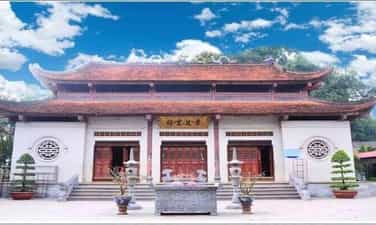
Dong Cuong Temple
Dong Cuong Temple is one of two large temples in the upper reaches of the Red River, which has existed for a long time, located in Dong Cuong commune, Van Yen district, Yen Bai province. Dong Cuong Temple is a relic cluster consisting of 4 points: In addition to the main Temple, there are also Co Temple, Cau Temple and Duc Ong Temple. The temple has been around for a long time. Through historical records, it is known that the temple was built at the latest in the Le dynasty, developed from an ancient temple (in the center of Quy Hoa camp during the Tran dynasty); Ancient bibliographies such as Kien Van Tieu Luc and Dai Nam Thong Nhat Chi all have records about this Dong Cuong Temple. The temple and temple area are related to Ngoc Thap Temple and Hung Temple (Phu Tho). Dong Cuong Temple was initially a temple to worship Princess Dong Quang, founded by the Ha and Hoang families, who were Tay Khao people, and took turns in charge of government duties, and was also the workplace of Tho Tu, translators, and mandarins. and functioned as "Dinh Tram" to serve two-way dispatches between the central court and the grassroots. During the Tran dynasty, the general headquarters of Quy Hoa - Ha Bong and Mr. Tu (Ngoc Thap - Quang Son) came to guard the border. Currently, formerly the Dinh, now the Ha family temple is run by the Ha family's ancestor, Ha Van, who once led the locality to fight the Nguyen - Mongol invaders during the Tran dynasty. History records that in the second month of Dinh Hoi year (1287), the Nguyen - Mongol king took 70,000 troops, 500 warships, 6,000 Yunnan troops and 10,000 5,000 troops in 4 continents outside the sea and sent crown prince Thoat Hoan to be the great marshal; A Bat Xich became the Left Vehicle; Ah Lo Xich pacified political affairs; O Ma Nhi, in charge of politics, brought more than 300,000 troops to attack the South. Faced with that situation, Emperor Tran Thanh Tong and King Tran Nhan Tong ordained Hung Dao Vuong Tran Quoc Tuan as a moderator to command the entire Dai Viet army and people in the resistance war against the Yuan-Mongol invaders. The Yuan - Mongol army led by Nat Toc La Dinh ran up the Lo River to Van Nam. When running through Phu Ninh territory (now Phong Chau district, Phu Tho province), they were attacked by local soldiers and people led by the Ha Dac brothers, Ha Chuong withdrew his troops to attack the base of Mount Chi (in Phu Tho province). From the mountain, he sent militiamen to storm the enemy's vanguard station, launching a surprise attack with many military strategies. Ha Dac and Ha Chuong's troops chased the enemy all the way to A La, then were blocked by the enemy's rear army. Ha Dac heroically sacrificed his life, and Ha Chuong was captured. The Yuan - Mongol army was broken and suffered heavy losses, the survivors fled to Yunnan. According to the genealogy of the Ha family, "the Tay Khao people originally belonged to the Ha Dac and Ha Chuong lineages during the Tran dynasty. Now residing in An Boi - Kien Xuong, Thai Binh: Ha Dac and Ha Chuong are two brothers. When fighting the enemy, Ha Chuong enthusiastically pursued the enemy to the Yen Bai area and died there. He was awarded the title "Binh Nguyen Thuong General Trung Dung Marquis". (According to Tran Hung Hoa's fairy tale section) after being killed in battle and the villagers built a shrine next to the throne rapid (in Ghenh Ngai village on the left bank of Tan commune). Hop, Van Yen district), his wife Le Thi and his son Hoang Bao, when they died, were also worshiped by the villagers at Ghenh Ngai and shortly after, the mother and child altar was moved to Dong Cuong communal house (where the temple is located). Dong Cuong today). The second victory over the Yuan-Mongol army was a glorious victory. The typical places of Ham Tu, Chuong Duong, Tay Ket, and Cu Da will forever be recorded in history books. Since the relocation, the communal house was expanded and converted to become the Temple of Mr. Le Quy Don in the Later Le Dynasty, which has records. The book "Dai Nam Nhat Thong Chi" is named "Temple of the Guardian God" after the ordination. The events of the Giap Dan uprising (1913-1914), in 1914, the insurgents of Man Bach, Man Dai Ban and the Tay and Nung people of Yen Bai province organized to gather forces and rose up in the year of Giap Dan to attack the army's posts. France in Yen Bai and Lao Cai provinces. At the same time, overseas Viet Kieu railway workers and businessmen in Yunnan province - China responded to the call of Phan Boi Chau and other Vietnamese people to celebrate and establish friendship and patriotic associations overseas. , secretly supported the anti-French movement in the country. Some French military posts along the Vietnam-China border and Lao Cai area were attacked by insurgents. The uprising failed. Due to lack of proper organization. The French ruling government established a special military court during the war... to try patriotic soldiers, most were sentenced to death, life in prison or forced exile, some were secretly executed. sneaky. In 2000, the temple was recognized by the People's Committee of Yen Bai province as a provincial-level historical and cultural relic. On January 22, 2009, the temple was recognized by the Ministry of Culture, Sports and Tourism as a national historical-cultural relic in Decision No. 296/QD-BVHTTDL. Source: Yen Bai Provincial Museum
Lao Cai
7825 view
Rating : National monument
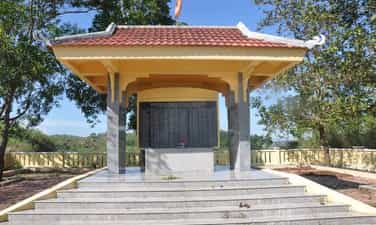
Historical site high point 519
Historical site High point 519 is about 72 km east of Buon Ma Thuot city center, in Eapil commune, M d rak district, Dak Lak province. During the years of resistance against the US, High Point 519 had an important strategic position, considered the eastern gateway connecting to Phuong Hoang Pass and the battlefield of the 25th Regiment, so there were often infantry and artillery units. soldiers stationed. Therefore, here there were very fierce battles between us and the enemy to protect the defense line, prevent the enemy from attacking from Nha Trang or blocking the enemy on the way to retreat. High point 519 is the place marking the glorious victories of the 25th Regiment of Command B3, Military Region 5, who stubbornly held on, not afraid to sacrifice, overcoming all difficulties and hardships, protecting key points, and winning. many consecutive battles in many positions, ensuring the defense line, blocking the front, blocking the tail and decisively attacking battle points, making an important contribution to liberating Buon Ma Thuot, moving towards completely liberating the South and reunifying the country. The 25th Mobile Infantry Regiment of B3 Command was established on September 15, 1972, stationed in area H5. On February 25, 1975, the unit received the important task of cutting Road 21 (now National Highway 26) at peak 519 in Khanh Duong district, Khanh Hoa (now M D rak district - Dak Lak). Faced with this urgent task, within a week, the Regiment joined forces and ethnic people of M'D rak district to strengthen fortifications and dig solid tunnels for important positions. On March 2, 1975, units approached Route 21 and arranged reconnaissance to follow the enemy and follow the road. At exactly 04:30 on March 5, 1975, Battalion 631 opened fire to destroy the enemy Security Company at Cu Se station. Battalion 2 destroyed the blockhouses at bridgehead No. 2. At the same time, engineering forces destroyed Bridge No. 5 and Road 26 were cut off, making it impossible for the enemy to move and respond. Battalion 3 quickly occupied peak 519 and controlled the area at the foot of Cu Pa mountain and together with other positions formed a defense line. : block the head, lock the tail and fight decisively. On the morning of March 6, 1975, the enemy opened fire and mobilized aircraft to bomb Cu Se station and peak 519, mobilized the 207th Artillery Battalion to fire first and then massively rushed straight into bridge position No. 2, our soldiers A surprise attack from three sides prevented them from withdrawing, destroying hundreds of enemies, capturing the battalion commander and capturing many weapons. On March 6, 1975, the puppet army sent a reconnaissance battalion to open the road. After 3 hours of fighting, Battalion 5, Regiment 25 destroyed the puppet reconnaissance battalion. During 3 days from March 7 to March 10, 1975, puppet troops sent Security Battalions 245 and 228 from Ninh Hoa to open the way to rescue Buon Ma Thuot but could not get there. On March 20, 1975, the 40th Regiment of puppets and paratroopers were deployed to Khanh Duong to save the situation and create a shield to block our troops here. However, they were destroyed by our 10th Infantry Division. The people of Khanh Duong together with the main force surrounded and threatened, destroyed 2 battalions 383 and 264b, searched, captured and surrendered nearly 500 puppets, coordinated with the main force to shoot down 5 aircraft on the spot. Collect 20 cannons. The people destroyed the hamlet and proactively raised the liberation flag before the main force launched its attack. On the other hand, the district forces coordinated to organize a siege and destroy the 40th regiment of the 22nd puppet division, attacking and liberating the district capital. Khanh Duong, the military posts surrounding the district capital, the masses rose up to liberate the remaining 18 hamlets and 45 villages of the district. This was the strongest uprising attack, making the enemy confused, confused, and unable to fight back in time. On March 22, 1975, M'D rak district was completely liberated. This was a great victory for the army and people of all ethnic groups in M'D rak district, who courageously persevered and held back the enemy. many places, coordinating fighting forces with the armed forces to attack the enemy during the historic days of March, contributing with the army and people of the province to a glorious victory, creating new position and strength for the regional revolution. Nam won. On December 6, 2016, the People's Committee of Dak Lak province ranked High Point 519 as a Provincial Historical Relic. Source: Dak Lak Provincial Museum
Dak Lak
4730 view
Rating : Provincial level relics

HISTORICAL RELIC OF THE TEMPLE OF THE HOLY TRAN
The Temple of Saint Tran is located at 291, Tran Hung Dao Street, An Lac Ward, Buon Ho Town, Dak Lak Province. In 1947, on a small piece of land in Buon Ho town, Krong Buk district (now Buon Ho town), people built the Temple of Saint Tran to show respect, gratitude and honor the national hero. Tran Hung Dao clan - the person who had great contributions in defeating the Nguyen - Mongol armies three times, went down in history, entered the legendary world, the spiritual world, became a sacred "Saint" respected by the entire people. Worshiped, is considered one of the "Four Immortals" of the Vietnamese people. Initially, the Temple was temporarily built from forest trees and plank walls, with a corrugated iron roof. In the middle of the Temple, an altar was placed and a paper painting of Tran Hung Dao was hung. Right from its inception, the people elected the Temple's Management Board to serve the management, sacrifices, and incense smoke monthly and yearly. In 1964, the Temple Management Board took the initiative, calling on the people of Buon Ho town to donate more money to buy land, materials and dismantle the old Temple, building the Temple of Saint Tran with brick walls and roof. roofing. To have the spacious campus and Temple as it is today, the Temple has undergone many restorations, embellishments, and area expansions such as: In 1972, the main hall was renovated and expanded; in 2004 bought more land; 2006 paving; 2012 floor construction. However, because it was built in a situation where the country was at war and the local socio-economic conditions were still difficult, the Temple could not be built in the traditional architectural style of some German temples. Thanh Tran in Hai Duong, Hanoi, Thanh Hoa, Ho Chi Minh City,... Currently, the Temple of Saint Tran is located in a large campus with a total area of 525.8 m2, with items: Temple Gate, front yard, Temple, back yard. The main place of worship of the Temple is the Inner Palace (harem), built protruding behind the Front Hall, not divided into many rooms and also not having closed doors like temples in the Northern provinces, but only includes a room that is directly connected to the middle room of the front hall. The inner hall does not have a closed door but is decorated with a wooden frame border with a cloud dragon pattern at the entrance, with two parallel sentences hanging on both sides: “Bach Dang Van Kiep, the Vietnamese people are grateful. Ham Tu Chuong Duong and the Yuan army were terrified." The horizontal panel is 60 cm high, 3.6 m wide, lacquered with 4 Chinese characters: "Tran Trieu Reveals the Saint" and is solemnly hung right above the door to the Inner Palace. The incense altar in the Inner Palace consists of 3 floors: The ground floor is the place to worship the Five Tigers (a symbol of the sacred power that can eliminate evil spirits, protect all directions, and is the guardian spirit of the temples) with two paintings. Five Tigers painting and a bronze top are placed in the middle of the altar, on both sides are two bronze candlesticks and a bronze Tiger statue to pray for prosperity and peace; The second floor of the Inner Palace incense altar is 50 cm high and 1.8 m wide. This is where the incense bowl and a Tran Temple Seal are placed in a glass frame with a width of 30 cm and a height of 60 cm. This is the Tran Temple seal that journalist Tran Quang Tuan requested from Tran Temple in Nam Dinh province to bring back to the Management Board of the Saint Tran Temple in Dak Lak on Tet 2016. On the altar page are also placed two candlesticks and a candle. The bronze incense burner is decorated with a Lion image symbolizing intelligence, strength, and controlling the soul of the person coming to the ceremony; The third floor - the highest floor of the incense altar is where the plaster statue of Tran Hung Dao is placed. The statue is about 1.1 m high, about 50 cm wide, placed on a 60 cm thick, 20 cm high statue base. The statue is cast in a sitting position on a Dragon chair, holding a sword, with a red outfit and majestic facial expression to show the strength, will, and spirit of fighting against foreign invaders of a Vietnamese military genius. To the left of the statue of Tran Hung Dao is placed a sword, a mandarin uniform along with a pair of cloth shoes embroidered with decorative patterns and a glass cabinet containing yellow ceremonial clothes. On both sides of the statue of Tran Hung Dao, there are also wooden statues of two unicorns (in Vietnamese culture, the unicorn is also an animal that signals good omen, a symbol of longevity, majesty and happiness). great blessing). In particular, on both sides of the incense altar, two bronze swords with dragon-shaped decorative patterns and about 1.8 m high are erected to add majesty and dignity to the shrine in the Inner Palace. The Temple of Saint Tran is a place of worship to commemorate the merits of national hero Tran Hung Dao. During the resistance war against the US, the Holy Tran Temple was a place to provide food, food, and medicine for the revolution, mainly supplying working teams along the H4 line (code name for the Buon Ho, Krong Nang, Krong Buk districts). In addition, the Temple Management Board led by Mr. Dang Van Dau, Nam Phung, Ha Hanh,... lobbied and called on the owner of Rossi coffee plantation to join forces with Bao An forces in area H4 to cover up the case. The provision of food, medicine, and ammunition at Tran Hung Dao Temple during the years of resistance against the US. With that meaning, on September 29, 2017, the People's Committee of Dak Lak province ranked the Temple of Saint Tran as a provincial-level historical relic. Source: Dak Lak Provincial Museum
Dak Lak
7531 view
Rating : Provincial level relics

CADA Plantation Historical Site
The historical ca da plantation site stretches from km 18 to km 47 along both sides of Highway 26 in Ea Kenh and Ea Yong communes, Krong Pak district. Ca da is the abbreviation for Asia Agricultural Company, built by the French in 1922 to grow coffee and tea. Ca da was the place where the French colonialists started the plundering of land to exploit resources on a large scale during the colonial exploitation process in Dak Lak, the establishment of plantations and the introduction of colonial capitalism destroyed disrupting the traditional economy of ethnic minorities here. The strongest exploitation process of the French colonialists at Ca Da Plantation began from 1925 to 1934, they exploited workers with low wages and extremely cruel treatment. It was during this time that the working class was born and developed strongly. In 1940, the first Communist Party cell was established at the Buon Ma Thuot Prison, where the fire and guidelines of the Communist Party of Vietnam were rekindled, serving as the core and spreading everywhere, playing an important role. great strength for the national liberation movement in Dak Lak. By the end of 1944, the Exile Party cell had built facilities in the green loincloth soldier station, established a number of semi-legal organizations to spread activities throughout the plantations, the strongest being the ca da plantation. In 1945, Ca Da - a place with a strong movement and organization - was chosen by the Provisional Executive Committee to assign the core task in the uprising. Ca da was also the place to train and gather forces to seize power first and was the base to continue fighting if the uprising was not successful. Secret organizations were also established, with loyal comrades such as: Tran Thu, Tran Phong, Mai Nguyen, Tran Coi, Nguyen Tam Thu and Tran Thi Thuy. It was also here that the French colonial ruling apparatus, after more than 40 years of construction, collapsed for the first time in Dak Lak. The birth and growth process of Ca da plantation workers affirmed the strong development of the Dak Lak revolutionary movement, which was extremely important to the victory of the August Revolution in 1945 and the General uprising offensive in Spring 1975 in Dak Lak province. After the country was unified, Ca da Plantation was assigned to Dak Lak Agriculture Company to manage, on that basis in 1977 Phuoc An Coffee Farm was established, then in May 1989, May Coffee Farm was established. 10 was born. These two farms have made many contributions to the construction and development of Dak Lak province in general and Krong Pak district in particular. With the historical value and current status of Ca Da Plantation, on January 26, 1999, the Minister of Culture and Information (now the Ministry of Culture, Sports and Tourism) issued Decision No. 02/1999 /QD-BVHTT ranked the Ca Da Historical Site, Ea Yong Commune, Krong Pak District, Dak Lak Province as a National Monument. Source: Dak Lak Provincial Museum
Dak Lak
8767 view
Rating : National monument

Historical site Memorial site for Nam Tien soldiers
Monument Memorial site for Southern soldiers, located at 5 Le Duan, Buon Ma Thuot city, is the place marking the event of December 1, 1945 (October 27, At Dau year). Nam Tien Detachment is the first liberation army unit established in Hanoi Capital. The force is mainly workers and young volunteers under the age of 30, working in factories and workshops, with the task of protecting the achievements of the Vietnamese revolution after September 2, 1945, and protecting the achievements of the Vietnamese revolution after September 2, 1945. Intensive training to supplement the cadre force for the South. Receiving the mission, the Nam Tien Detachment set out to advance to the South. After a period of strenuous marching, at about 10 o'clock on December 1, 1945, the Nam Tien Army arrived in Buon Ma Thuot town and rested at Bao An Binh station (now a historical site, a memorial site for Southern soldiers in Buon Ma Thuot). At about 3:00 p.m. on December 1, 1945 (October 27, At Dau year), the French colonialists attacked Buon Ma Thuot town, starting the reconquest of Dak Lak. The unprepared fighting of the army and people of Dak Lak took place on every road and street. Using every means and weapon at hand, our people and soldiers stubbornly fought to block the enemy's advance. Our forces at that time were only equipped with each soldier with a rifle and a few dozen bullets, but all of them fought back very tenaciously. Even though they were in a weak position, had a small force, and were passive in response, the soldiers were still very resilient and bravely fought until their last breath. After that, the French colonialists continued to march into the center of Buon Ma Thuot town and the roads of Lac Giao village at that time. Wherever they went, they used guns and mortars, causing casualties to many people who fled. especially women, the elderly and children of Lac Giao village. The event on December 1, 1945 (October 27, Year of the Rooster) was a huge loss and infinite grief for the whole country in general and Dak Lak province in particular. Admiring the brave fighting spirit and heroic sacrifice of more than 100 Nam Tien soldiers and mourning the deaths of the people of Lac Giao village, the people of Lac Giao village took the 27th day of the 10th lunar month every year as Memorial Day for the fallen Nam Tien soldiers and the people of Lac Giao village who died in 1945. The memorial site for Southern soldiers in Buon Ma Thuot is ranked as a national monument by the Ministry of Culture, Sports and Tourism, and is one of the red addresses for educating revolutionary traditions and the spirit of resistance. initiative, resilience, and heroism in the fight against foreign invaders of our ancestors for the young generations of today and tomorrow. Source: Dak Lak Museum
Dak Lak
5489 view
Rating : National monument

Dak Tuar cave
Historical relic Stone Cave in Dack Tuar village (Dak Tuor) is located in Cu Pui commune, Krong Bong district, about 80 km southeast of Buon Ma Thuot city center. The total area zoned for relic protection areas is 5.6 hectares. The cave is made up of uneven, concave, cubic rocks, located deep in the heart of the mountains of the Cu Yang Sin range. The location is dangerous and difficult to travel, so it has become a place to work and stay. Hidden, discreet, safe and secret revolutionary activities of officers and soldiers of some departments of Dak Lak province and M'nong people of Krong Bong district during the years of resistance against the US to save the country. Dak Tuar cave was once the base of the main force of the Southern Liberation Army of Vietnam and housed the Dak Lak Provincial Party Committee of the Communist Party of Vietnam during many years of the Vietnam War. Accordingly, here is the residence and working place of Mr. Huynh Van Can (secretary of the Communist Party Provincial Party Committee in Dak Lak), the Provincial Party Committee Hall and from here, the Provincial Party Committee of the Communist Party of Vietnam in Dak Lak leads the people. Ethnic group, mostly M Nong people from H9 base area (Dak Tuar village) occupied a large area of land to the East of the province in 1965, now in Krong Bong district and "The US military repeatedly bombed and marched swept but all failed." The historical relic of Dack Tuar Stone Cave (Dak Tuor) has entered the heroic history of the army and people of all ethnic groups in Dak Lak province, closely associated with the Party's direction, contributing to smashing plots and strategic strategies. special war of American imperialism, further affirming that the People's War policy is completely wise. The relic became a red address, reflecting the faithful tradition of ethnic minorities in Dak Lak province in general, and the noble sacrifices of M'nong revolutionary soldiers in particular, typically Comrade Y On - who heroically sacrificed his life before the enemy's brutal bayonet. Today, the Monument has become a historical address that carries the meaning of educating revolutionary traditions for generations, especially the younger generation. On major holidays of the year, organizations, unions, and people of Dak Lak province regularly organize "returning to the source" activities, revisiting the old battlefields and holding ceremonies to admit members of the Ho Chi Minh Communist Youth Union. Chi Minh at the Monument. Dack Tuar stone cave (Dak Tuor) was ranked as a national historical relic on August 3, 1991. Source: Collection of Dak Lak province tourism newspaper
Dak Lak
5020 view
Rating : National monument

Ban Me Thuot Bishop's Palace
Buon Ma Thuot Bishop's Palace is an ancient religious building located at 104 Phan Chu Trinh, right near the center of Buon Ma Thuot city (Dak Lak province). This is the address for religious activities of parishioners and also a famous tourist attraction of the city. This facility was originally a monastery built by Benedictine nuns in 1956. Later, this monastery was purchased by Bishop Paul Seitz Kim and a new diocese was established. In 1967, the Diocese of Buon Ma Thuot was established and the monastery had a new name, Buon Ma Thuot Bishop's Palace. Buon Ma Thuot Bishop's Palace is a complex of many buildings such as a chapel, guest house, management house, housing and activities... located in a spacious campus with many trees. The works are all designed and built in the architectural style of the Central Highlands ethnic groups, of which the chapel is the largest and most unique. The building is built entirely of wood, with a fish-scale tiled roof. The main part of the cathedral is inspired by the floor plan of a long house, the roof has communal house architecture. The construction site is higher than the natural ground, in the style of a stilt house to avoid moisture and termites. Accordingly, the chapel's floor plan is arranged with the main staircase and main hall facing from the gable end of the building adjacent to the entrance from the gate. Inside the chapel is divided into two parts, the front is the ceremony area for parishioners, the back is the ceremony area for nuns. Separating the two areas is an altar placed in the middle of the space. The cross is hung high so that it can be viewed from two opposite directions. The wooden structural frame system is scientifically designed and rich in aesthetics, creating a sturdy roof frame that supports the large tile roof, and also brings sophistication and flexibility to the interior space. Building light is exploited from both sides of the long wall with high wooden glass windows from the floor to the end of the roof. The structures in the Bishop's Palace are interconnected, in harmony with the gardens and trees. There is also a bell tower here designed in the image of a communal roof in the Central Highlands. Buon Ma Thuot Bishop's Palace is the common home of Buon Ma Thuot Diocese. Every day, a mass is celebrated in the chapel. On major holidays such as Easter and Christmas, Mass will be celebrated more often. This is also a tourist attraction of Buon Ma Thuot city. Source: Catholic Board, Buon Ma Thuot diocese
Dak Lak
5157 view
Rating : Provincial level relics

Sac Tu Khai Doan Pagoda
Sac Tu Khai Doan Pagoda is located at 117 Phan Boi Chau Street, Thong Nhat Ward, Buon Ma Thuot City, Dak Lak Province. The pagoda is often called Lon Pagoda or Province Pagoda, facing southwest, overlooking Doc Hoc stream. Khai Doan is the last Sac Tu pagoda of the Nguyen Dynasty, the first pagoda of the Buddhist organization during the Revival of Vietnamese Buddhism in the Central Highlands, the land of the Imperial Dynasty during Bao Dai's reign. The pagoda was directly managed by Doan Huy Hoang, Queen Mother Hoang Thi Cuc (King Khai Dinh's concubine), King Bao Dai's mother, and Queen Nam Phuong, along with a number of dedicated Buddhists, to build for the Central Vietnamese Sangha. . Venerable Thich Tri Thu appointed his eldest son, monk Thich Duc Thieu, to direct the construction of the pagoda on a land area of nearly 7 acres, 8 acres, 28 square meters and to be the first abbot. In 1951, the pagoda built the rear and lecture hall, and in 1953, the main hall was built. The name Khai Doan is a combination of two words Khai Dinh - Doan Huy. On June 29, 1953 (May 19, Year of the Snake), Mr. Narada Thera (Ceylon) requested the Buddha's relics to present to Tu Cung in Buon Ma Thuot. Attending the ceremony were Venerable Thich Tinh Khiet, President of the Vietnam General Buddhist Association, along with monks, Buddhists and a large number of people worshiping the Buddha's relics and praying for peace in the country. The pagoda was built by the skillful hands of workers in the ancient capital of Hue, so it has Hue communal house architecture mixed with local architecture. The main gate faces southwest, overlooking Quang Trung street, towards the 'Suoi Doc Hoc' valley. In front and behind the gate are written 'Khai Doan Tu'. The main hall is the main building of the pagoda with an area of 320m2 divided into two parts. The front half has the appearance of a Central Highlands long house, but the rafters structure is in the style of a Huong house. The second half is built in a modern style. The most notable in the main hall is the statue of Shakyamuni Buddha in the middle and the bronze bell placed in the room on the right. The 1.1m high bronze Buddha statue, 0.35m high wooden lotus with elaborate decoration, 1.15m high bronze bell, 2.7m base circumference, weighing 380kg were cast in January 1954 (i.e. December of the year of the Snake). In 1953, on the occasion of the Hau To's peaceful citadel ceremony, the pagoda was ordained as "Sac tu Khai Doan" - during the reign of King Bao Dai. In 1953, although the Nguyen Dynasty had ended, Bao Dai was still the Head of State of the State of Vietnam (the South) and with the institution of the Imperial Dynasty in the Central Highlands (Central Highlands), Bao Dai is still the Emperor of this land. And this is the last decree of a Vietnamese king bestowed on a Buddhist temple. Over more than half a century, the pagoda has succeeded seven generations of abbots. The current abbot is Venerable Thich Chau Quang, current Head of the Buddhist Administration Committee of Dak Lak province. In 1986, the Provincial Buddhist Executive Committee was established. The pagoda has been chosen to house the province's Buddhist office to date. Khai Doan Pagoda is the most famous temple in the Central Highlands. Source: Collection of Dak Lak province tourism newspaper
Dak Lak
5486 view
Rating : National monument