Relic point Vietnam
Việt Nam
Shakyamuni Buddha Monument
Located on Tran Phu Street, the road curves around Lon Mountain, up to Ben Da and Ben Dinh. The Shakyamuni Buddha Monument is associated with the beauty of Ben Da and the natural landscape northeast of Big Mountain. If Ben Da is a busy and bustling fishing port, then Shakyamuni Buddha Dai is a quiet place, imbued with the magic of paradise. The Shakyamuni Buddha Dai mountain area was previously lush and uninhabited. Around 1957, Mr. Le Quang Vinh, a civil servant during the French colonial period, reluctantly came here to build a temple to practice, called Thien Lam Tu. In 1962, the Buddhist Church realized that Thien Lam Tu was located in a location with beautiful natural scenery, a prime area gathering sacred energy, and convenient transportation for monks and Buddhists from all over. pilgrimage so he created a project to build a large-scale Thien Lam Tu into Shakyamuni Buddha Dai. After more than 19 months of construction, on February 15, the year of the Cat (1963), Shakyamuni Buddha Dai was inaugurated with the architectural works as today. Shakyamuni Buddha Dai is a sculptural architectural complex created according to the life story of Buddha Shakyamuni associated with a harmonious and lively natural landscape, creating a beautiful scenic area with many cultural values. religious history, is one of the most popular tourist attractions of Vung Tau. Entering Shakyamuni Buddha Dai, visitors pass through three gates, on top of which is a wheel of Buddhist morality called Dharma wheel with eight spokes symbolizing the Middle Way. The outer ring has four knobs symbolizing the Four Noble Truths. On the four pillars of the three-door entrance are four lotus buds symbolizing the purity, purity, and nobility of Buddhism. The entire Shakyamuni Buddha Temple campus is shown on the mountainside like a half moon, divided into three levels according to a tower that gradually rises from the bottom up. The stupa that visitors first encounter, after climbing the first level, is a place to remember and commemorate the person who built Thien Lam Tu: Monk Giac Phap, a mandarin of Le Quang Vinh. The path up to the second step follows a small arc, on the left is a majestic cliff. On the right, you can see all the way to Nua Mountain - Long Son and in the distance is the Oil and Gas port with high cranes connecting with streets, houses and fishing villages of Ben Dinh and Ben Da right at the foot of the mountain. Shakyamuni Buddha Dai is covered with the green of many towering trees. The sea breeze whispers. Going to the end of the arc, visitors reach a height of 25m, the space spreads out in front of them. This is an area of sculptures built based on the life stories of Shakyamuni Buddha, from his birth to his Nirvana. The Shakyamuni stupa here enshrines 13 Buddha relics, contained in a gold box. This is a great joy for Vietnamese Buddhists in general and Vung Tau Buddhists in particular. The Xa Loi jade stupa at Shakyamuni Buddha Dai is 17m high, rising in the middle of a ceremony yard of about 300m2, with lotus buds on top. The entrance to the stupa is decorated with a dragon image, flanked by a pair of lions on both sides symbolizing the Great Hero - Great Power. At the foot of the tower there is an altar for worship, engraved on it: Namo Bo Master Shakyamuni Buddha, (Wholehearted respect for Buddha Shakyamuni). Below the four sides of the base of the octagonal stupa are four large peaks, inside which are four handfuls of sacred soil brought here from the place where he was born), where he attained enlightenment), (where he preached) and (where he entered Nirvana) here. . Sakyamuni Buddha Dai is a group of architectural and sculptural structures with the intention of depicting the main events in the Buddha's life. Source: Buddhist Church of Ba Ria - Vung Tau province
Ho Chi Minh City
5281 view
Rating : National monument
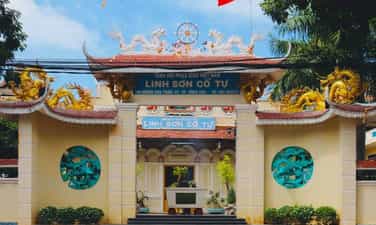
Linh Son Pagoda Relics "Linh Son Co Pagoda"
Linh Son ancient pagoda, also known as Golden Buddha Pagoda (the French call it Golden Buddha Statue), was built on the slopes of Nho Mountain in the early years of the 20th century. In 1919, the French built pilot works. and the lighthouse served the colonial conquest, forcing the pagoda to relocate to the foot of Small Mountain. Abbot Thich Minh Thuong, a former monk who lived for a long time at Linh Son ancient pagoda, said that initially the pagoda was built of bamboo, cork walls, and roofed with yin and yang tiles. Around the late 40s of the last century, the monk Dinh Thang Tam invited monk Thich Tri Tinh to become abbot and manage the pagoda. Later, Venerable Thich Tri Tinh assumed the position of Deputy Dharma Lord, Chairman of the Central Executive Council of the Vietnam Buddhist Sangha, and he assigned his disciple, the late Venerable Thich Tinh Vien (passed away in 1995), to serve as the head of the Buddhist Sangha. maintain. Linh Son ancient pagoda was moved to a location near Dinh Thang Tam and built spaciously as it is today. The temple is located at 104, Hoang Hoa Tham, Ward 2, City. Vung Tau, about 500m from Back Beach. On both sides of the temple gate are statues of two dragons flanking each other in the style of two dragons painting pearls. Next are the steps leading up to the main hall with 100 gold-plated Buddha statues. Among them, the most unique is the Buddha statue worshiped in the main hall, 1.2m high, carved of sandstone, elaborately and skillfully sculpted with vivid details, creating a gentle, compassionate face. of Buddha, can be considered a treasure. Venerable Thich Tinh Dinh, currently practicing at the pagoda, said that this statue has been assessed by archaeologists as a Cham Buddha statue, dating from the 7th century AD. The origin of the statue is also extremely mysterious. It is said that about 100 years ago, a fleet of fishing boats from the Central region came to fish in the waters of Bai Truoc. While going up the mountain to collect firewood and fresh water, they discovered two stone Buddha statues on the slopes of Big Mountain, near Bai Dau. Local people heard the news and quickly came to see it and insisted on keeping it. After negotiating with local people, the fishermen in the Central region agreed to hand over the large statue to the villagers of Thang Tam to worship at Linh Son ancient pagoda, and the small statue they brought back to the Central region. Currently, the small statue is worshiped at a temple in Duc Pho district, Quang Ngai province. Another notable statue that is also being worshiped at Linh Son ancient pagoda is the bronze statue of Maitreya Buddha, brought back from Southern Laos in 1972. Linh Son ancient pagoda is divided into many different spaces, with ancient architecture, many paintings, sculptures, and delicate carvings, depicting stories in Buddhist scriptures. Interspersed among the statues of Bodhisattvas and Arhats placed in the temple grounds are lotus ponds and giant plumeria trees that radiate a gentle fragrance. Every year, the pagoda often organizes ceremonies to pray for peace and death on the occasion of Lunar New Year, Quan Am festival, Birthday, Vu Lan ceremony, requiem ceremony for the spirits of fetuses - children up to 13 years old, transmission of the three refuges and five precepts. For many years, Linh Son ancient pagoda has become a favorite place to visit and worship for Vung Tau people and tourists from everywhere. The pagoda has also been recognized as a national historical-cultural relic. Source: Ba Ria - Vung Tau electronic newspaper.
Ho Chi Minh City
4814 view
Rating : National monument

Thang Tam communal house relic area (Thang Tam communal house, Lang Ca Ong, Ba temple)
Thang Tam God's Temple is located on Hoang Hoa Tham Street, Thang Tam Ward, Vung Tau City, this is a complex including Thang Tam God's Temple, Ngu Hanh Temple and Ca Ong Tomb. Thang Tam temple Built during the reign of King Minh Mang, the communal house was initially made of bamboo leaves. In 1835, people contributed to repairing and roofing the communal house with tiles and in 1965, the communal house was restored, built solidly and kept. original architectural layout as it is today. The communal house worships the three people who built three villages in Vung Tau, namely Pham Van Dinh, Le Van Loc and Ngo Van Huyen. During the reign of King Gia Long, pirates often broke into the Ben Nghe river mouth to plunder money and goods. To protect the Vietnamese merchant ships, King Gia Long immediately sent three armies on three boats to protect the peace of the gateway coast, and reclaim land to establish hamlets and make a living. Around the 3rd year of Minh Mang's reign (1822), the pirate situation no longer existed, and the king issued a decree rewarding them with titles, ranks, and land that the three armies had successfully cleared. From the three positions of the three armies gradually formed three villages. The first village is called Thang Nhat village managed by Mr. Pham Van Dinh, Thang Nhi village managed by Mr. Le Van Loc, Thang Tam village managed by Mr. Ngo Van Huyen. Later, his father became Tien Hien and was worshiped at three communal houses in the three villages mentioned above. The communal house has a sequential architecture consisting of four houses connected by a side walkway, which are Tien Hien - Assembly Hall - Trung Communal House - Martial arts stage. The communal house is decorated with many exquisitely carved offerings, painted and gilded splendidly. The Tien Sage throne is roofed with yin and yang tiles, with "two dragons flanking the moon" embossed on the roof. The ends of the arms, purlins, and columns are all carved with dragon images. The interior of Tien Hien's house displays 4 altars including the altars of Tho Cong, Tien Hien, Hau Hien and Tien Vang - Hau Vang. The hall is the meeting place for members. Next to the hall is the Trung communal house with a similar structure to the Tien Hien temple, displaying 10 altars including the altars of Than Nong, Thien Y A Na, Ngu Duc, Thanh Phi, Hau Hien, Council, Phu An - Cao Cac, Heavenly Master, Five Poems and Five Words - Tien Hien. The martial arts stage is where opera performances and boi singing are performed when the communal house has ceremonies. Ba Ngu Hanh Temple On the left side of the gate of the relic site is Ba Ngu Hanh Temple. The temple was built in the late 19th century to worship five goddesses: Metal, Wood, Water, Fire, and Earth. In addition, the temple also worships two protectors of the country who were promoted to Supreme Deities by the king, Thien Y A Na and Thuy Long Than Nu. Ba Ngu Hanh Temple was built in the architectural style of one room and two wings, with "two dragons flanking the moon" on the roof. In the Temple there are 8 altars: in the middle of the main hall is the altar of 5 Ngu Hanh ladies and two Superior Gods; On both sides are altars of 5 girls and 5 boys; The left side worships Quan Cong, Quan Binh and Chau Xuong, who are loyal people ready to rescue seafarers when they encounter misfortune; On the right is the altar of Ong Dia - Tho Cong; Behind is the altar of Tien Hien and the compassionate and generous people in the village. Lang Co Ong Lang Co Ong is located on the right side of the relic site built in the same period as Ba Ngu Hanh Temple. In the current mausoleum there is a part of the skeleton of the giant Ca Ong fish picked up by Vung Tau fishermen about 100 years ago. The mausoleum has ancient architecture, inside a large glass cabinet containing Ca Ong's bones and three altars are displayed. On both sides there are two more altars of Ba Sau (Turtle God) and the music group. Currently, the Thang Tam Temple relic site still preserves 12 ordinations of King Thieu Tri and Tu Duc, including 6 ordinations for Dai Can National Nam Hai (Ca Ong), 3 ordinations for Thien Y A Na Dien Ngoc Phi and three conferred ordinations on the Water Dragon Goddess. Every year, Thang Tam temple has 3 major festivals: Pray An (from 17 to 20 of the 2nd lunar month), Nghinh Ong (from 16 to 18 of the 8th lunar month) and Ba Temple (from 16 to 18 of the 10th lunar month) ). Source: Center for Investment, Trade and Tourism Promotion of Ba Ria - Vung Tau Province
Ho Chi Minh City
5522 view
Rating : National monument
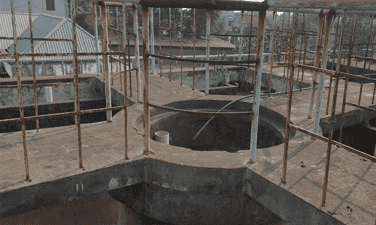
Revolutionary historical relic Water factory station
Revolutionary historical relic Vung Tau water plant station is located on April 30 Street, Ward 9, Vung Tau City, between Tran Nguyen Han High School and Ba Ria - Vung Tau Water Supply Joint Stock Company. Although the water plant station is only a modest-sized relic, it leaves behind historical values of the revolutionary struggle with many fierce battles, raising the spirit of independence of our army and people. The Vung Tau Water Plant Station relic is located about 50m from the intersection of Nguyen An Ninh - Pham Hong Thai - April 30 (Water Well intersection). This monument is about 5m long, 3.7m wide, nearly 4m high, built of stone, brick, lime, cement, iron and steel and wood. This is a small military structure, divided into two floors, separated by a wooden floor, with battlements facing four directions. During the war, the terrain of Vung Tau (O Cap) was militarily important, so the occupying French army began building a port and airport as soon as they arrived in Vung Tau. At that time, in this land surrounded by the sea, fresh water was an extremely valuable resource, so the French built a water supply system (drilled wells, water filtration plants...) right near the intersection. from Vung Tau City Water Well today. To protect the airport, port and water supply system for the whole Vung Tau, the French army set up a military station right next to the water plant, so it was called the Water Plant Station. This post was occupied by security forces with about a company of troops, equipped with strong firepower, blocking the gateway to Vung Tau at that time. At that time, the enemy strictly controlled the movement of people in this area, making the activities of our army and people difficult. Therefore, the water plant station became a target that needed to be destroyed by the revolutionary armed forces. In 1948, the Level Action Committee, the Assault Police, the 51st Reconnaissance Team and the forces of the Level Town Squad attacked the Water Plant Station twice, destroyed the station, and confiscated 150 guns of all kinds. The battles to attack the Water Plant Station were all very fierce, contributing to the loss of enemy manpower and firepower, marking victories in the history of the revolutionary struggle of the army and people of Ba Ria-Vung Tau province in the past. In 1985, on the occasion of the 10th anniversary of the establishment of Vung Tau - Con Dao Special Zone, the special zone government built a relief in front of the water plant station commemorating the victory of two battles in 1948. At the same time, attaching The sign is engraved with content introducing the historical value of attacking this military site. On August 4, 1992, the Ministry of Culture and Information recognized Vung Tau Water Plant Station as a National-level revolutionary historical relic. Source: Ba Ria - Vung Tau electronic newspaper
Ho Chi Minh City
5118 view
Rating : National monument
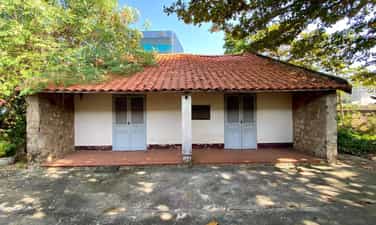
Historical revolutionary relic house number 86 - Phan Chu Trinh
The National Relic of House 86 Phan Chu Trinh (currently No. 5 Phan Chu Trinh, Ward 2, Vung Tau City) was once the home of French official Pierre Chappus located on Phan Chu Trinh Street, at the foot of Nho Mountain. The house was built in the old French architectural style of the early 20th century. During the war, this house used to be a place to hide revolutionary activists. Mr. Pierre Chappus has a French father and a Vietnamese mother. He is a private official of the French government, owner of the Vung Tau Lighthouse Department. The house of Mr. Pierre Chappus at that time was built with blue stone walls and a tiled roof, located on a plot of land about 100 meters in front of Phan Chu Trinh street and 80 meters deep. Around the house there are many fruit trees such as coconut, mango, custard apple, star apple, guava, lemon... Behind the house there is a very large lotus pond and a lychee tree the size of two people. Although Mr. Pierre Chappus is a French official, he is sympathetic to the Vietnamese revolution, and especially respects leader Nguyen Ai Quoc. While material conditions and life were extremely difficult, he supported the Viet Minh with money, rice, and 50 cows. He used his house at 86 Phan Chu Trinh as a place to hide and protect secret officers, including comrade Nguyen Hoai Duc, Vung Tau City Captain. At that time, Mr. Pierre Chappus's family always kept 5-7 dogs, each with a name. Whenever they heard a stranger coming, the dogs barked to alert the front door, and the officers immediately crept into the garden. The fruit tree exits through the back door. In the cases where acquaintances (officers) entered the gate and the dogs barked, he just had to call each dog's name and they would lie still and not bark. During the anti-American period, the house at 86 Phan Chu Trinh was agreed by Mr. Pierre Chappus for the revolution to be used as the Ba Ria - Long Khanh Provincial Party Committee Office, showing his sympathy for the Vietnamese revolution. He emotionally told the cadres: "You guys just use my house to work. In case I am captured by the enemy and die, it will be an honor for me to die for the Vietnamese revolution." In 1957, the Ba Ria - Long Khanh Provincial Party Committee Office was officially located at Mr. Pierre Chappus's house. Standing members of the Office include comrade Trinh Phong Dan and comrade Ho Si Hanh. At this time, Mr. Pierre Chappus's family kept 10 dogs, this was an important "force" that very effectively guarded the house, protecting the safety of revolutionary cadres working secretly. By the end of 1958, the Ba Ria - Long Khanh Provincial Party Committee Office had to move to another place to ensure secrecy, but the house at 86 Phan Chu Trinh was still a base for officials to come and get help, mobilize money and support. material for revolution. Mr. Pierre Chappus died in 1959 at his house at 86 Phan Chu Trinh, at the age of 81. On August 4, 1992, the house at 86 Phan Chu Trinh was recognized by the Ministry of Culture, Information, Sports and Tourism as a National Monument. Accordingly, on holidays and New Year, Doan Ket High School often organizes for students to clean and visit the house at 86 Phan Chu Trinh, and at the same time introduce them to the history of the struggle to preserve the long-standing and heroic nation of the nation. Source: Ba Ria - Vung Tau electronic newspaper
Ho Chi Minh City
5057 view
Rating : National monument

Revolutionary historical relic "Cao Cao House" No. 18 Le Loi.
The historical relic "The Cao Cao House" located at No. 18, Le Loi Street, Vung Tau City is the place where many secret meetings of the Ba Ria-Long Khanh Provincial Party Committee took place during the years of resistance against American imperialism. The tall house is 160m2 wide, and is called that because below the house are rows of 4 rows of stone columns, each 2.2m high, 40cm square side like legs supporting the house. The house is built in the style of an isolated motel, surrounded by a fence and garden. The house is divided into 2 areas: the main house and the annex. The main house consists of 2 floors, the ground floor is a row of pillars supporting the whole house. The upper floor is the main residence of the house, designed on both front and back sides with stairs up and down, built gently from the outdoors leading upstairs. Inside there is a large hall used to receive guests and small rooms used to rest. All rooms have windows facing the garden, creating a quiet space. The roof is covered with western tiles, similar to the roof of the Thai people, the roof slopes down on 4 sides, 2 gable sides have small triangles to catch the wind to prevent heat. The annex is a 2.25m wide house with a 6m horizontal roof used as a kitchen and a path leading to the main house. The "high-ranking house" was completed by Mr. Deloudet, a French civil servant and officer working in Saigon, around 1949. The house was built for him and his wife, Mrs. Chau Chon, as a vacation place in Vung Tau. . Around the "Cao Cao" area, there are many villas and resorts, facing the beach, and security is strictly controlled. In 1950, Mr. Deloudet returned to France, and the house became the property of Ms. Chau Chon. In 1951, she sold this house to agricultural engineer Nguyen Van Chien. In 1952, Mr. Ba Tra, a worker at a water factory in Ba Ria, was assigned the responsibility of taking care of the "Cao Can House". He was an enthusiastic participant in the Party's revolutionary movements; He was captured by the enemy many times, released, and was always in the enemy's sights. With a patriotic spirit, in Vung Tau, he quickly connected with the Party and continued to serve as a secret base for revolutionary cadres. Taking advantage of the enemy's negligence and lack of vigilance, during the period from 1956 to 1959, the Standing Committee of the Ba Ria-Long Khanh Provincial Party Committee turned the "High-ranking House" and surrounding villas into revolutionary bases. as a place to eat, live, travel and meet for the leaders of the revolutionary movement. Here, under the guidance of comrade Nam An Chi, the revolutionary movement among the people developed strongly and widely. In 1956 and 1957, many secret meetings took place at the "Cao Cao House". During the meeting, many of the Party's policies were implemented, promptly following the situation and promoting the development of the local revolutionary movement. In March and April 1959, it was here that the Provincial Party Standing Committee held a meeting with the Vung Tau District Party Committee to check the study of Resolution 15 of the Party Central Committee and implement the Party's Directives. Eastern inter-provincial ministry; program to mobilize the mass movement against the laws of the Ngo Dinh Diem government. Currently, the revolutionary historical relic "Cao Cang House" is located on the campus of Vung Tau City Customs Department and is managed by this unit. Much of the house's architecture remains intact. Because it only existed for a short period of time in the early period of resistance against American imperialism, the artifacts were not saved. In 1991, "The Cao Cao House" was recognized by the Ministry of Culture and Information as a revolutionary historical relic. Source: Ba Ria - Vung Tau Newspaper
Ho Chi Minh City
4807 view
Rating : National monument
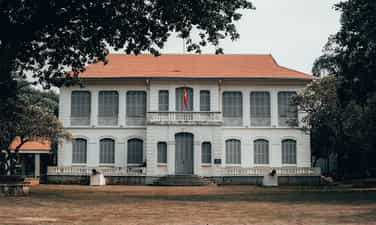
Relics of the Viet Minh Committee headquarters in Vung Tau
Vung Tau City's Traditional Revolutionary House (No. 1, Ba Cu, Vung Tau City) was formerly the headquarters of the Viet Minh Committee. Having gone through periods of war, this place still preserves intact images of historical memories of the heroic struggle of Ba Ria - Vung Tau soldiers and people. Vung Tau City's Traditional Revolutionary House was built from 1908-1913 with a land area of 6,580 square meters. The house was built according to the architecture of a French colonial office, which was the military command office of the Vung Tau area from the first decade of the 18th century until the Japanese coup d'état against France. It is a massive, airy, fully furnished two-story villa, located close to the beach at Front Beach. In the villa there is also an attached staff office, where French officers often work. The leaders of the Viet Minh Committee quickly contacted the Southern Party Committee through comrade Duong Bach Mai and received instructions to prepare to seize power. Thereby, quoting the "Viet Minh Program", he wrote leaflets scattered throughout the town calling on the people of Vung Tau to rebel and prepare the armed forces to commit revolutionary violence for the uprising. During the days of the uprising, the core leaders along with the security forces and suicide soldiers of more than 40 people were on duty day and night, working at the headquarters. On August 28, 1945, at Lam Son Stadium, 300m from the headquarters of the Viet Minh Committee, under the leadership of the Viet Minh Committee of Vung Tau Town, the local people's uprising rally to win power won. Victory. During the years of arduous and fierce struggle of the resistance war against the French colonialists, the Viet Minh Committee played the role of a core leader in Vung Tau, Ba Ria and the Southeast provinces. At the end of 1945, Vung Tau-Ba Ria merged into one province, the leaders in the Viet Minh Committee and Party cells were transferred to Ba Ria, and the headquarters was also relocated. After the country was liberated, the Viet Minh Committee headquarters relics made significant contributions to the tourism of the coastal city of Vung Tau. In 1978, the monument was built with a number of additional works such as the ground floor at the back, installing air conditioners inside, building more rooms upstairs, renovating the exterior... However, no work was done. greatly affects the surrounding landscape and the main design of the house. In 1991, the headquarters of the Viet Minh Committee was recognized by the Ministry of Culture and Information as a national historical relic and renamed Vung Tau City Revolutionary Traditional House. Currently, to serve the needs of local people to learn history and visit relics, the two floors of the traditional house are used as a library, display, exhibition, and meeting place. On the upper floor is a gallery of images, historical documents, images of the city's leaders through the ages and many other artifacts... Source: Ba Ria - Vung Tau electronic newspaper
Ho Chi Minh City
5775 view
Rating : National monument

Revolutionary historical relic Tam Nhung's House
The revolutionary historical relic of Tam Nhung's house (Ho Thi Khuyen) old number 42 on 11 Tran Phu street, now number 1, Tran Xuan Do, Thang Nhi ward, Vung Tau city, Ba Ria - Vung Tau province, located below At the foot of Lon Mountain, about 100 meters west of Ben Dinh intersection, Thang Nhi ward. Previously, it was a dense, quiet garden with many fruit trees explored and built by Mr. and Mrs. Tam Nhung. In the days of the August 1945 revolution, this house was the meeting place of the Viet Minh Front Committee. During the two resistance wars, the house was a base for raising cadres operating in the inner city of the Provincial Party Committee and Vung Tau City Party Committee. ...With typical historical value and significance, in 1989, Tam Nhung's house (Ho Thi Khuyen) was recognized as a national monument by the Ministry of Culture and Information. Currently, Tam Nhung's mother's house has been restored and embellished in 2015. The monument has become a traditional educational attraction about a typical Vietnamese mother who shined the city's revolutionary heroism. Vung Tau during the two periods of resistance was simple, kind but loyal, indomitable... wholeheartedly supported and secretly kept the revolutionary cadres safe until the day the South was liberated and the country was unified. . Mother Ho Thi Khuyen was born in 1905, and people in the neighborhood often call her mother Tam Nhung (because her husband is Mr. Nguyen Van Nhung). Mr. Nhung was also a man with a patriotic spirit, hated the French colonialists and the tyrannical and tyrannical landlords, and was soon enlightened by the revolution. In 1930, he participated in seizing power in 18 Vuon Trau villages. The uprising failed and he was captured by the French colonialists. They used every trick to bribe and brutally torture him, but he never reported. His body was beaten by them until he was disabled, then he was exiled to another country. Around 1941-1942, Mr. Nguyen Van Nhung moved from Go Cong (Tien Giang) to the Nui Lon area (Vung Tau) to live, then he built family with Mrs. Ho Thi Khuyen. The couple cut down trees and reclaimed land at the foot of Big Mountain, Thang Nhi ward to build a house and plant fruit trees. The Cochinchina Uprising failed. The revolutionary movement in many Southern provinces temporarily subsided before the brutal repression of the French colonialists. In Ba Ria - Vung Tau, revolutionary bases were not broken and continued to operate, creating favorable conditions for the August 1945 revolution. Mr. and Mrs. Tam Nhung promptly secretly contacted Ban Viet Minh and soldiers in Vung Tau. Formed a core part in the campaign to seize power in 1945. Mr. and Mrs. Ho Thi Khuyen's house was the place where the Uprising Committee was established, deciding to seize power in Vung Tau. During the 9-year resistance war against the French colonialists (1945-1954), Mr. and Mrs. Ho Thi Khuyen continued to secretly participate in revolutionary activities. In 1962, faced with harsh persecution from the enemy, Ho Thi Khuyen moved back to work in Tan Dien commune, Go Cong Dong district, Tien Giang province. She participated in the Soldiers' Mother Association, directly placing spikes and mines. destroy the enemy... In 1968, the enemy pacified Tan Dien commune, Go Cong district, Tien Giang. Ma Tam was captured and detained by the enemy for 2 months. In the camp, Tam's mother was subjected to all kinds of torture, water splashing, electric shock to her toes and fingers... but she was determined not to report. In the end, without evidence, Tam's mother was released and returned to Vung Tau. During this time, the enemy urgently established more posts and strictly controlled the area. Many revolutionary bases in Vung Tau had to move deep into Sac Forest, to Dinh Mountain, Thi Vai... To lead the revolutionary movement, the Vung Tau City Party Committee decided to stick to the bases. Tam's mother was assigned the task of secretly raising secrets for revolutionary cadres. To ensure absolute safety for fellow activists, Tam's mother came up with a unique way to hide by building a secret basement in the family's house. Visiting the house and secret basement of Ho Thi Khuyen's family makes us even more proud of the patriotism, kindness, and noble heart of a heroic Vietnamese mother who sacrificed her life for her cause. liberation of the nation. Source: Ba Ria - Vung Tau Provincial Museum
Ho Chi Minh City
5023 view
Rating : National monument
Tan Hiep Prison Historical Relic
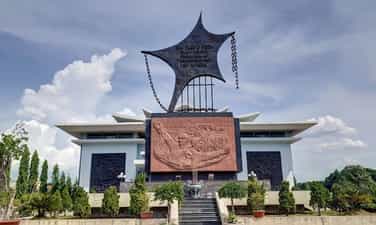
Tan Hiep Prison, also known as "Tan Hiep Correctional Center", is located in Quarter 6, Tan Tien Ward, Bien Hoa City. Tan Hiep Prison Relic was ranked as a national relic by the Ministry of Culture and Sports on January 15, 1994. Tan Hiep Prison is one of the six largest prisons in South Vietnam and the largest prison in the Southeast region, built in an important military position, northeast of Bien Hoa town. Ahead is National Highway 1; Behind is the North - South railway line. This is an isolated location, convenient for transportation, easy for protecting, guarding, receiving prisoners from other places and transferring prisoners to Con Dao, Phu Quoc... Tan Hiep Prison has an area of 46,520 square meters with 8 prisons, including 5 prisons for communist prisoners and patriots. The prison is surrounded by 4 layers of barbed wire with 9 bunkers, 3 watchtowers with a team of guards and a modern alarm system. It's called "Correctional Center" but inside is actually a gun warehouse, an interrogation and torture room with the most modern tools. Each prison only has an area of nearly 200 square meters but holds 300-400 people, sometimes up to a thousand people. In particular, there are "repentance" rooms and "tiger cages" that are very small and narrow and living conditions are extremely harsh, prisoners live like in a crematorium. The diet was extremely unhygienic. The prison guards bought rotten rice and rotten fish to fertilize the fields, and fried them in oil to feed the prisoners, leading to many people being poisoned. With the determination to escape the imperial prison, return to the Party and the people to continue fighting and liberating the nation, on December 2, 1956, with the agreement of the Eastern Inter-Provincial Party Committee, the soldiers Communists were "detained" in Tan Hiep prison under the direct direction of comrade Nguyen Trong Tam (Bat Tam) - in charge of the prison Party Committee and a number of other comrades who suddenly broke the shackles. was able to free nearly 500 comrades and patriots. This event caused a stir in the Pentagon. America - Diem hastily mobilized both main forces and security forces, civil guards defending the three provinces of Bien Hoa, Ba Ria, Thu Dau Mot and two special forces to encircle and capture the prisoners, but all were defeated. failure. Our comrades and compatriots who escaped from Tan Hiep prison received help and protection from local facilities and returned safely to base. Among the escaped prisoners were comrades: Bay Tam, Hai Thong, Ly Van Sam... who became the core nucleus of the Dong Khoi movement later. In 2001, to partly recreate the crimes of the US - Diem against our comrades and compatriots imprisoned at Tan Hiep prison and describe the entire Tan Hiep uprising on December 2, 1956. , Dong Nai Museum has collected images, documents, and artifacts displayed at the relic and made a model to serve the research and sightseeing needs of all classes of people. Every day, the monument is open to visitors. Source: Dong Nai Electronic Newspaper
Dong Nai
15937 view
Rating : National monument
Nguyen Huu Canh Temple
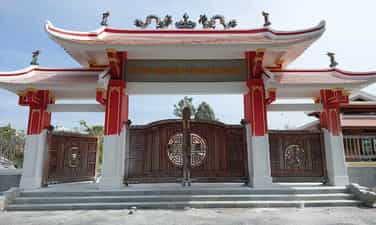
Nguyen Huu Canh temple, also known as Binh Kinh communal house, is located on the left bank of Dong Nai river, formerly belonging to Binh Kinh hamlet, Binh Hoanh village, Tran Bien canton, now Nhi Hoa hamlet, Hiep Hoa commune, Bien Hoa city. It was ranked as a national historical relic by the Ministry of Culture, Information, Sports and Tourism on March 25, 1991. Nguyen Huu Canh Temple was built around the end of the 18th century. Initially, the temple was small in scale, with walls made of boards and a yin-yang tile roof, about 400m south of the current temple. Documents say: the temple was first rebuilt in the fourth year of Tu Duc (1851); By 1923, the temple was rebuilt at its current location. Nguyen Huu Canh was born in 1650 in Gia Mieu, Tong Son district, Thanh Hoa province in a family with many famous generals in the dynasty. He was a man of both literature and martial arts, accomplished many great victories and was trusted, loved and respected by Lord Nguyen. In the spring of the year Mau Dan (1698), he obeyed Lord Nguyen's order to invade Dang Trong while it was still very desolate. Arriving in Dong Nai, he set up his headquarters at Cu Lao Pho (now Hiep Hoa commune); took Dong Nai land as Phuoc Long district, built Tran Bien palace, took Saigon land as Tan Binh district, built Phien Tran palace, the land expanded thousands of miles. He recruited immigrants to settle down, organized the administrative apparatus gradually and systematically, encouraged land reclamation, and promoted Cu Lao Pho to develop into one of the busiest and most dynamic port towns throughout the century. 18 and officially annexed the new land of the South into the Dai Viet map. After returning from the invasion of the South, the following year he again served Lord Nguyen Phuc Chu's command to lead an army to suppress King Chan Lap and maintain the southern border region. In April of the year Canh Thin (1700), after completing his mission, on the way back to Rach Gam (Tien Giang), he fell ill and passed away on the 16th day of the 5th lunar month, at the age of 51 years old. On the way to his hometown for burial, his coffin was stopped at the land where he once had his headquarters on Cu Lao Pho so that local people could have the opportunity to say goodbye to him one last time. At the mandarin's communal house, local people built a tomb to remember this event. When hearing the news of Nguyen Huu Canh's death, Lord Nguyen was extremely sorry and conferred on him the title of High-ranking official of the Town Chancellor with the title: Thanh Marquis Ceremony and had his tablet enshrined at the Thai temple. Source: Dong Nai Electronic Newspaper
Dong Nai
14010 view
Rating : National monument