Relic point Vietnam
Việt Nam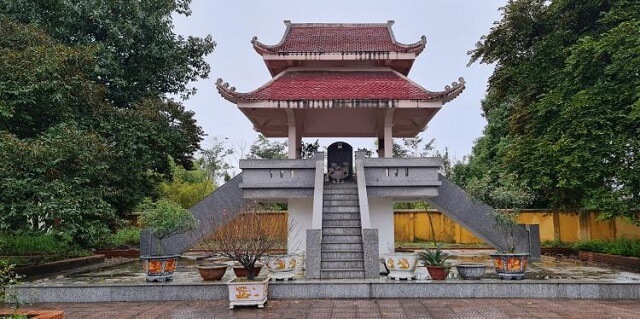
Souvenir relic of Uncle Ho's visit to Cam Xuyen, Xuan Cam commune, Hiep Hoa district
During the years leading the Vietnamese revolution, Uncle Ho many times visited the Party Committee, government and people of all ethnic groups in Bac Giang province. Hiep Hoa district was honored and proud to welcome Uncle Ho to visit Cam Xuyen village, Trung Nghia commune (now Xuan Cam commune) on February 8, 1955. Today, the site of his footprints has become a historical relic, a place of traditional education for generations. The souvenir relic of Uncle Ho's visit to Cam Xuyen is located on an alluvial beach outside the Cau River dyke, running nearly 1 km long with a nearly 100-year-old lychee garden close to the water's edge, limited by two horizontal wharves at the river's edge. North and South of Cam Xuyen village to Soc Son district (Hanoi). This place used to be the old Cam Xuyen communal house (ruined in 1963). Here, in February 1955, Cam Xuyen communal house (Hiep Hoa) was the working place of the Reform Youth Union Party Committee. At that time, the beach along the dyke was a sports ground, cinema, logistics, etc. The lychee garden of Dong Nuong was the meeting hall of the union, more than 2,000 reform officials lived in the homes of Cam Xuyen village. On February 8, 1955, President Ho Chi Minh came to work with the Party Committee of the Reform Youth Union at Cam Xuyen communal house, visited the logistics area at Cam Xuyen village, then he visited a number of farmer's houses in Cam Xuyen. Cam Xuyen village. In particular, here, he attended and spoke at the Land Reform Review Conference, Phase II. This is a historical milestone, marking the great transformation of the Vietnamese revolution: Completing the national revolution, People's democracy, realizing the plowman has the field and the biggest goals that the revolution set. go out. Currently, the memorial site of Uncle Ho's visit to Cam Xuyen village has an area of 3674.8m2. To commemorate the day Uncle Ho visited Cam Xuyen village, on April 28, 2000, the people of Cam Xuyen village worked with comrade Vu Ky (formerly Uncle Ho's personal secretary) in Hanoi to propose building a stele house. commemorating the day Uncle Ho visited Cam Xuyen village on February 8, 1955. In 2005, the project was started construction, including the following items: Concrete road, entrance gate, garden, stele house and wall system to protect the monument. From the Cau River dike road, turn left to a concrete road about 100m long, connecting the Cau River dike with the souvenir area. The entrance gate is designed in a two-story style with 8 curved roofs covered with red-nosed tiles, including 3 doors: 1 main door and 2 side doors. The yard is paved with traditional red spring rolls. Through the yard is the beer house area built with 2 floors. The first floor is built with a wall system, surrounded on four sides by a system of stairs to get to the second floor where the stone stele is placed. The stone stele is made of a rectangular block of green stone, with 2 sides, inside the stele is engraved with the words: "On February 8, 1955, Uncle Ho attended the 2nd Land Reform Summary Conference of the Thai Nguyen Delegation - Bac Giang and visited farmers in Cam Xuyen village, Xuan Cam commune, Hiep Hoa district, Bac Giang province". In 2018 and 2019, Hiep Hoa district invested more than 3 billion VND to build and renovate the relic such as: Reception area, yard, gate, entrance road, lighting system, drainage,... On June 18, 2021, the memorial site of Uncle Ho's visit to Cam Xuyen village, Xuan Cam commune, Hiep Hoa district was ranked as a National historical relic. Source: Hiep Hoa District People's Committee
Bac Ninh 4514 view
Chau Lo Temple
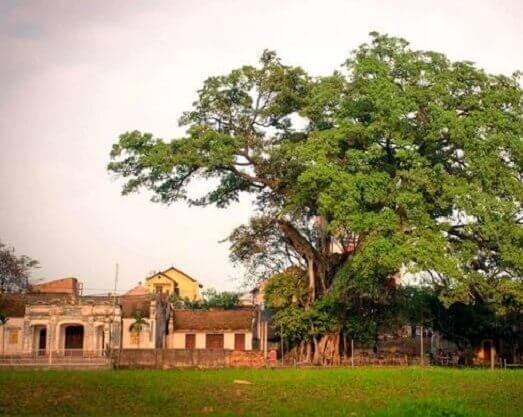
Trau Lo communal house is located in Mai Dinh commune, Hiep Hoa district, about 43km west of Bac Giang city center. The communal house worships King Ong and King Ba - two human deities who have made great contributions to their homeland during the reign of King Trieu Viet Vuong. Besides, Trau Lo Communal House also worships Saint Tam Giang - who had many merits in helping Trieu Quang Phuc fight the Luong invaders (VI century), bringing peace to the country. Based on the remaining Sino-Nom sources at Trau Lo communal house, it is said: In the year of Dinh Hoi, the reign of Duc Nguyen of the Le Dynasty (1677), the villagers held a "carpentry" ceremony to build a communal house. In the year of the Dog, during the reign of King Vinh Thinh (1706), Mrs. Ngo Thi The, a native of Trau Lo village, nicknamed Tu Khanh, brought 200 prehistoric mandarins to the commune to buy forest wood to build a communal house. Later, the communal house was also repaired. many times through the Le Trung Hung dynasty (18th century), Nguyen dynasty (19th century) and later periods. The communal house was built right in the center of the village, on a high, open, spacious area of land. This is an ancient architectural complex with a massive scale, including: the 5-compartment Pre-Sacrificing Court, the 5-compartment Great Hall with 5-compartment spaces and the Harem. In front of the communal house is a large square tiled floor. Over time, the Former Temple was damaged, leaving only the Great Court and the Harem. The Great Court - the main architecture of the whole project - has a massive scale with long, wide rooms, each with 6 rows of tall and muscular columns, supporting a wide roof frame with curved blades, soft curved roofs, The roof and strip banks are decorated with pincers, bucktails, phoenixes, and phoenixes dancing very vividly. The most valuable architectural part is the ironwood frame of the rafters, in the style of four pillars stacked on beams, the architectural decorative sculptures are concentrated at the top of the trap, and the diaphragm has many vivid themes and many objects. Cloud dragon patterns have rich variations and stylizations, imbued with the folk art style of the late 17th century. At Trau Lo communal house, each temple exhibits its own style and technical mark, proving that many workers participated in building the communal house, making the entire communal house a unified architectural structure. , but each has its own engravings that express its own artistic talent. Trau Lo Communal House and Trau Lo Temple are the center of cultural and religious activities of local people. Every year, the communal house has two main events taking place with the temple on the 4th day of the first lunar month and the 15th day of the ninth month of the lunar calendar. These are two great days, also known as the Great Blessing Ceremony. On the day of the festival, the people of Trau Lo village organize many solemn ceremonies such as procession of palanquins, tablets, altars to honor the merits of the Tutelary Gods and folk games imbued with regional identities such as marking milestones, pull rope, tug of war... On December 12, 1994, the Ministry of Culture, Sports and Tourism ranked Trau Lo communal house and temple as a national architectural and artistic relic and historical-cultural relic. Source: Bac Giang province electronic information portal
Bac Ninh 4566 view
Tomb of Mai Xuan Thuong
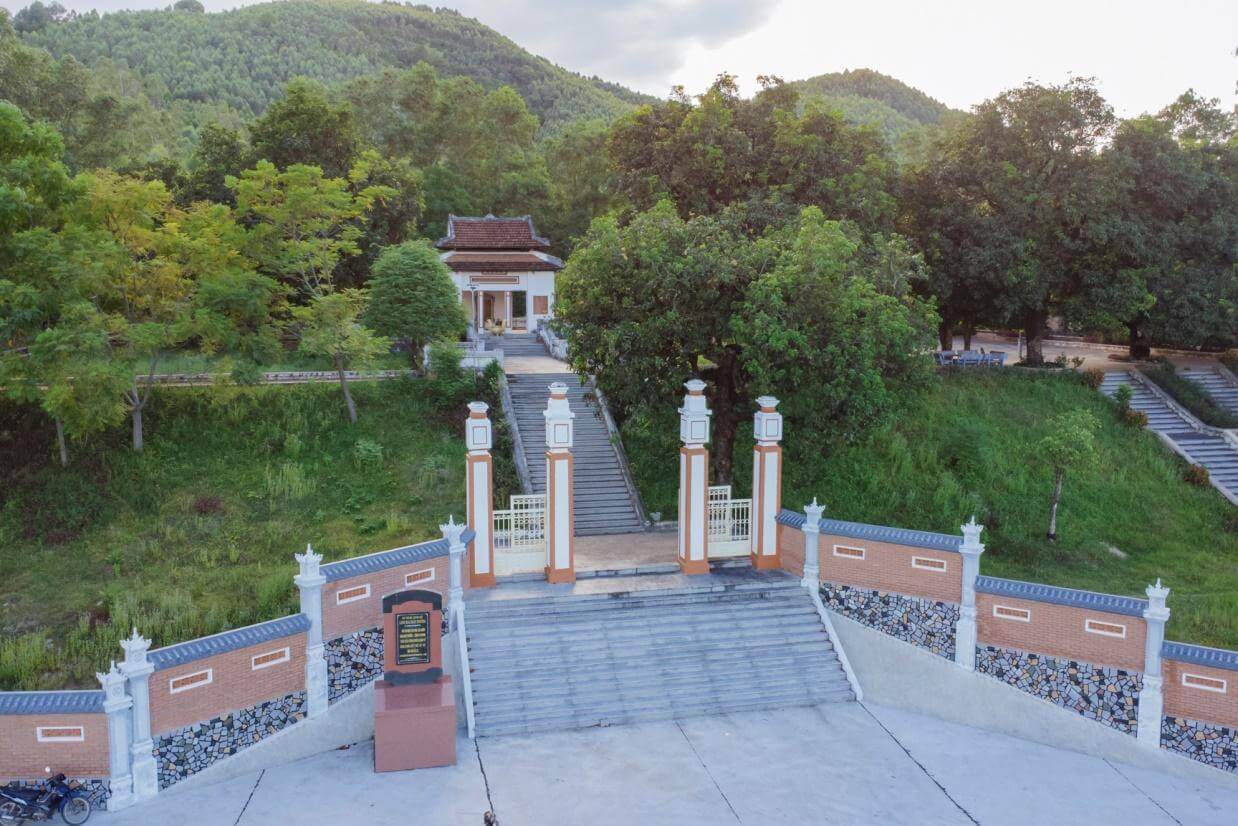
Mai Xuan Thuong was the leader of the Can Vuong movement against the French at the end of the 19th century in Binh Dinh. Mai Xuan Thuong was born in the year of Canh Than, 1860, died in the year of the Pig, 1887, from Phu Lac village, Phu Phong district, Tuy Vien district, Binh Dinh province (now Phu Lac village, Binh Thanh commune, Tay Son district, Binh Dinh province). His father, Mai Xuan Tin, was the chief father in Cao Bang. His mother, Huynh Thi Nguyet, was the daughter of a noble family in the village. Mai Xuan Thuong is inherently intelligent and eager to learn. At the age of 18 (1878), he passed the Baccalaureate at Binh Dinh Examination School. At the age of 25 (1885), he passed the bachelor's exam. Responding to King Ham Nghi's Can Vuong edict, Mai Xuan Thuong returned to his hometown of Phu Lac, recruited insurgents, set up a base on Sung island to raise the Can Vuong flag against the French, then Mai Xuan Thuong brought his forces to join the army. The insurgent army was led by Dao Doan Dich and was appointed by Dao Doan Dich to the position of Military Salary Officer (in charge of food for the insurgent army). From then until 1887, the Can Vuong movement in Binh Dinh developed strongly and spread to Quang Ngai, Phu Yen... attracting tens of thousands of people from all walks of life to participate. On September 20, 1885, Dao Doan Dich died and assigned all his forces to Mai Xuan Thuong. He chose the Loc Dong mountain area (now in Binh Tuong commune, Tay Son district) as his headquarters and organized a flag worshiping ceremony, calling on scholars, literati, and people to join the movement to fight against the French. During that ceremony, insurgents from many regions in Binh Dinh province agreed to honor him as the Marshal leading the uprising and raised the slogan: "First to kill the left, later to attack the West". In early 1887, the French army under the command of Lieutenant Colonel Cherrean and the royal army led by Tran Ba Loc along with Minister Trira launched a major attack on the headquarters of the Can Vuong movement in Binh Dinh, the battle The fighting between the insurgent forces and the French enemy was extremely fierce, the fight was unequal, and in the end the insurgent force was pushed back. In March 1887, after a fierce battle in Bau Sau (An Nhon town, Binh Dinh province), Mai Xuan Thuong was seriously injured, the insurgents withdrew to Linh Dong secret area. On April 21, 1887, Tran Ba Loc surrounded and captured the Linh Dong secret base and captured a number of insurgents, including Mai Nguyen Soai's mother. On the night of April 30, 1887, Mai Xuan Thuong sent a suicide squad to break into Tran Ba Loc barracks, relieve the captured people, and he and a group of 50 subordinates crossed the mountain into Phu Yen and continued to resist. battle, but when she reached Phu Quy Pass (boundary between Binh Dinh and Phu Yen), she was captured by Tran Ba Loc's ambush and taken to be beheaded at Go Cham (East of Binh Dinh Citadel). The mausoleum of patriot Mai Xuan Thuong is located on a high hill of the Ngang mountain range (in Hoa Son village, Binh Tuong commune, Tay Son district, Binh Dinh province) about 50km northwest of Quy Nhon city; The mausoleum was built on a land area of 1988m2, inaugurated on January 22, 1961. Overall, the mausoleum is designed in the style of an ancient mausoleum, surrounded by low walls. The Lang gate (three gates) is made up of 4 square pillars, the top is tied in the style of a gourd and a vase, bearing the architectural appearance of a communal house or temple gate of the late 19th century. In the middle of the Mausoleum is Mai Xuan Thuong's tomb, rectangular in shape in the East - West direction; At the head of the grave is a stone stele engraved with an inscription recording the biography and career of Mai Xuan Thuong: The relic was ranked at the National level by the Ministry of Culture and Information on April 20, 1995. Source: People's Committee of Tay Son District, Binh Dinh Province
Gia Lai 10760 view
Go Lang historical site
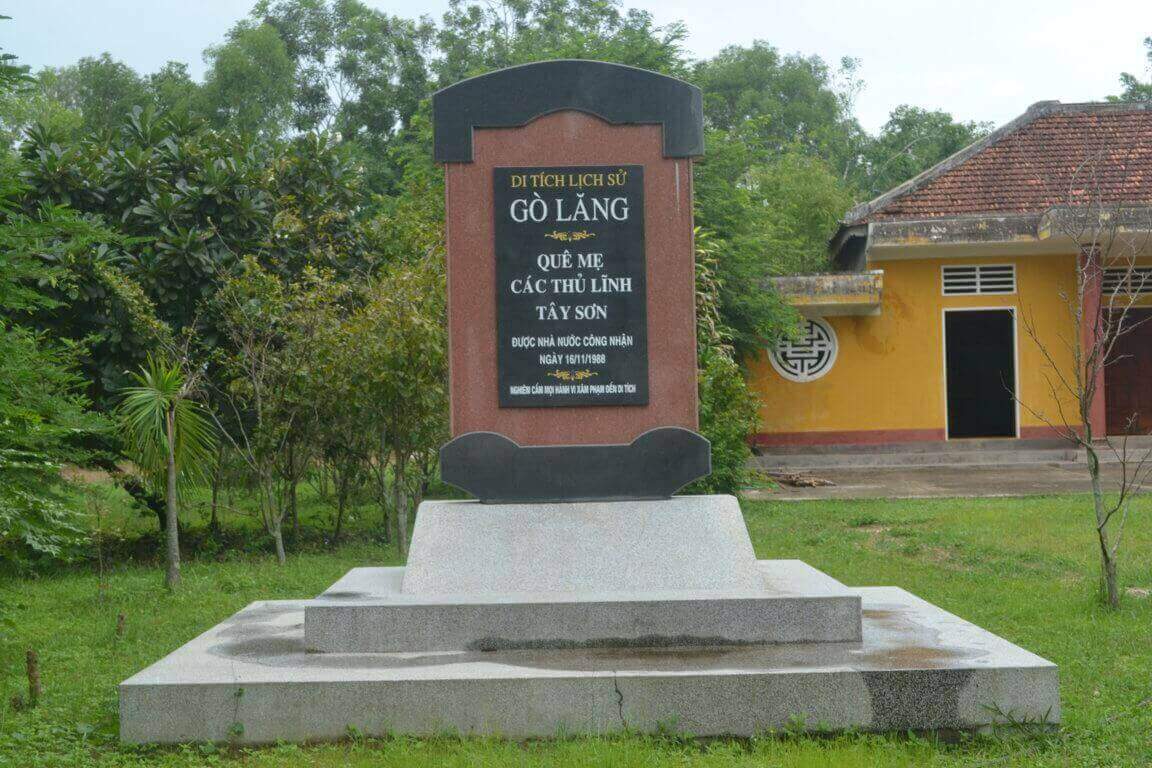
Go Lang relic is located in Phu Lac village, Binh Thanh commune, Tay Son district, Binh Dinh province. Here, with the remaining vestiges of the garden and the old house floor, the hometown of Mrs. Nguyen Thi Dong, the mother of the three Tay Son masterpieces: Nguyen Nhac, Nguyen Hue and Nguyen Lu, outstanding leaders of the Tay Son peasant movement in the 18th century. The relic was ranked at the National level on November 16, 1988. Go Lang relic has many events related to the Tay Son three masterpieces in the early days of winning people's hearts and building the Tay Son uprising. These are legends and oral stories that local people often tell. for many generations despite the Nguyen Dynasty's revenge and devastating war... The story "Nguyen Nhac Vi Vuong". The story goes: "One late night, on the death anniversary at the house of Mr. and Mrs. Ho Phi Phuc - Nguyen Thi Dong in Go Lang, when everyone finished saying goodbye to each other and left, everyone was shocked to hear the sound of gongs and drums. emerging from the direction of Hon Sung, a solemn and mysterious sight that had never happened before. Everyone stopped and saw a magical light shining on an area on the mountain. They encouraged each other to go up and see. Arriving at the place of light, while hesitating and no one dared to advance, from the light suddenly appeared an old man with a red face, a long white beard, and a dragonfly hat. He stepped out and said loudly: among you. Is there anyone Nguyen Nhac? I obeyed the Jade Emperor's order to descend to the world this time to give the decree to King Nguyen Nhac. When Nguyen Nhac stepped forward, everyone bowed their heads respectfully and the old man disappeared. Or the story: Every time the Tay Son brothers return to their grandmother's hometown, they often tie their horses at the tall Bodhi tree next to Mr. and Mrs. Ho Phi Phuc's house, so the people in the area have a saying: "He's back on his horse again, Cutting Bodhi grass for his horses to eat." After the Tay Son dynasty passed away, the Nguyen Gia Long dynasty implemented a very harsh revenge policy. Mr. and Mrs. Ho Phi Phuc's old house at the relic was razed and became an empty piece of land, with only traces of the house's foundation remaining. , the square pillar stone is engraved with a rosette pattern with a size of 0.4m on each side and many ceramic fragments of broken dishes; In the old garden there are also some ancient trees: Thi, Thien Tue... During the Nguyen Dynasty, Phu Lac people always remembered and paid tribute to their ancestors and heroes of their homeland. They built a temple to worship Son Quan (Mountain God) called Cay Thi temple, some people called it Cay Thi temple. Mr. and Mrs. Ho Phi Phuc - Nguyen Thi Dong at their old garden and secretly worshiped Mr. and Mrs. Ho Phi Phuc - Nguyen Thi Dong, Tay Son Tam Kieu (Nguyen Nhac, Nguyen Hue and Nguyen Lu) on November 14, Lunar New Year The annual calendar at Phu Lac village communal house is called Thuong Tan worshiping day (new rice festival) with the form of commemorating flower incense and fox nectar. In 1999, the local government built a temple on the old foundation of the relic to worship Mr. and Mrs. Ho Phi Phuc - Nguyen Thi Dong and their paternal and maternal families, as well as ancestors who had publicly established the village, and the three masterpieces of Tay Son; Source: People's Committee of Tay Son District, Binh Dinh Province
Gia Lai 7746 view
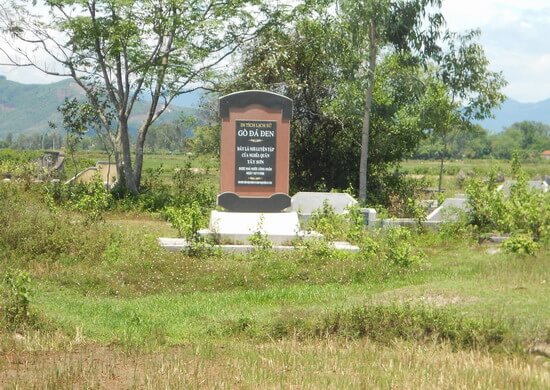
BLACK ROCK MILL
Go Da Den is a training and discharge location for Tay Son insurgents, formerly located in Kien My village, Kien Thanh hamlet, Quy Nhon district, now located in block 1 of Phu Phong town, Tay Son district, Binh Dinh province. On November 16, 1988, the Ministry of Culture, Sports and Tourism issued a decision to recognize Go Da Den as a historical-cultural relic. Kien My is not only a place where Tay Son leaders were attached from childhood to adulthood but also one of the early bases of the Tay Son movement. In 1771, after a period of preparing forces, Nguyen Nhac, along with Nguyen Hue and Nguyen Lu, raised an uprising flag in Tay Son Thuong Dao. In 1773, from the Upper Dao insurgents marched down to liberate the lower Tay Son region and stationed their headquarters in Kien Thanh hamlet, the center of which was Kien My hamlet. This was a wise decision, especially in the early days when the uprising was launched and the force was not yet strong. On the one hand, because this is the homeland of the insurgent leaders, but on the other hand, also very important, is the favorable location of Kien My. Located at the foot of An Khe Pass on the left bank of the Kon River, Kien My is a convenient waterway transportation hub. From Kien My, you can take the road through An Khe, follow the waterway up the river to the Thuong people area, or down to the delta, to the coast. After a short period of consolidating their forces, the insurgent army moved down from Kien Thanh hamlet to capture Quy Nhon citadel, creating a turning point in the entire development process of the uprising. Kien My village - Kien Thanh hamlet, as the headquarters and starting point of the insurgent army moving to liberate the delta, has a very important position. On Kien My land, there are still many historical relics associated with the Tay Son leaders as well as the entire Tay Son movement. In addition to the ancient tamarind tree and ancient well, Truong Trau Wharf also has Palace Garden, Tap Binh Palace, Cam Co Palace, Da Den Hill, and Cut Cu Hill, which are places that reflect the headquarters and barracks of the insurgent army. Go Da Den is a high and wide land. This is originally a wild forest with an estimated area of about 5 hectares stretching from Phu Lac to Bau Dao. In the middle of the mound emerges a very large black rock, that's why people call this mound Black Stone Mound. Time, war, and the revenge of the Nguyen Dynasty, partly because the insurgents stopped here not long ago, so now there are traces associated with the activities of the insurgents, in addition to the places preserved in folk memory. , there is almost nothing left. The area of Da Den mound was reduced to only 2 hectares, because people dug up the soil to make bricks and used stones to build houses. The large black rock has also been chipped into pieces. Source: People's Committee of Tay Son District, Binh Dinh Province
Gia Lai 5145 view
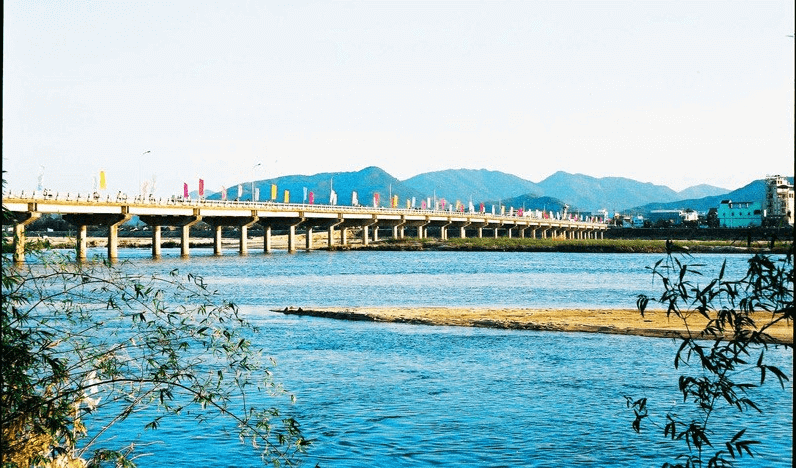
Ben Truong Trau
Truong Trau Wharf is a large betel trading wharf on the banks of the ancient Con River, in Trau hamlet, Kien My village, about 200m from Tay Son Tam Kiet temple. Betel and areca nuts are a famous product of both the upper and lower Tay Son regions, especially the type of betel grown by the Upper People in the Central Highlands. Truong Trau Wharf became a place of transit and trade relations between the mountains and the plains, in addition to betel and areca nuts, there were also many other essential goods. When Mr. Ho Phi Phuc's family still resided in his wife's hometown - Phu Lac village, in addition to farming, they also participated in trade with the lowlands and uplands, thus becoming rich. His children also continued their father's career, maintaining and expanding trade and exchange. Ben Truong Trau, with its trading exchanges, had a great influence on the uprising career of the three Tay Son brothers, especially Nguyen Nhac. Nguyen Nhac often traveled back and forth to the upper Tay Son region, had close relationships with ethnic minorities in the Central Highlands, and traded with markets, wharves, and towns in the delta. This helped him expand his vision and understand the suffering of people from all walks of life, thereby easily mobilizing and uniting forces to participate in the uprising. After preparations at the upper Tay Son, the Tay Son insurgents under the command of Nguyen Nhac launched a large-scale operation to liberate the lower Tay Son, liberated the Quy Nhon government, and laid a solid foundation. for the movement's next victories. Among that achievement, Ben Truong Trau was an important focal point, where information and correspondence of the insurgent army was connected in the early days of preparing for the uprising, until it reached its peak. Legend has it that next to the old Truong Trau Wharf, Nguyen Nhac built a house to store betel and serve as an inn for betel traders. Therefore, the people of Kien My, as well as many surrounding areas, know Nguyen Nhac as Mr. Hai Trau. After the Tay Son dynasty passed away, Kien My people built on the old house's foundation a temple to worship the three Tay Son brothers, called Vinh Tho temple (also called Cay Gon temple because there is a big tree here). Later, the French colonialists used it as a food warehouse and then destroyed it. In 1963, three Southern mendicants and local people built a small thatched pagoda (on the old temple foundation). In 1967, it was newly built with bricks called Ngoc Binh Vihara. Truong Trau Wharf has now been filled in, only a sandy beach along the river, no longer crowded with boats and the hustle and bustle of preparing for a great career, but "The old tamarind tree, the old Ben Trau..." has go down in history, forever echoing a glorious time. Source: People's Committee of Tay Son District, Binh Dinh Province
Gia Lai 4511 view
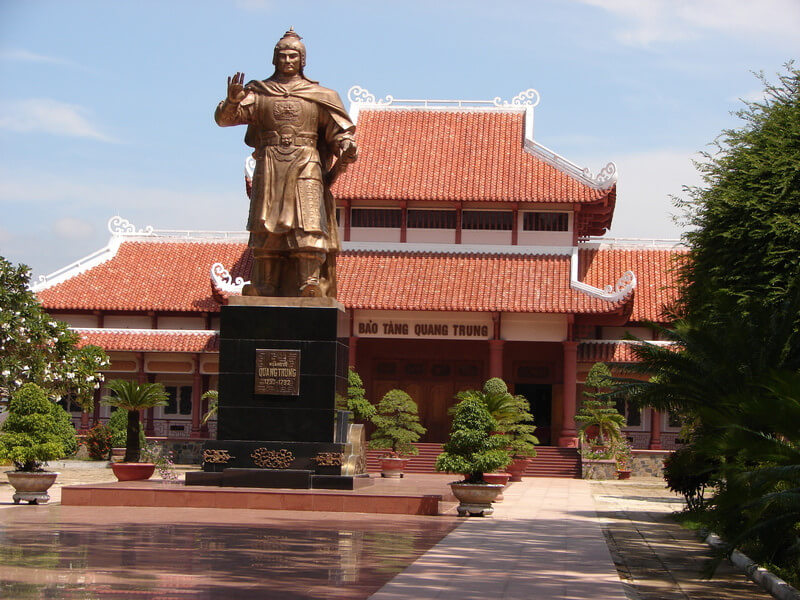
Tay Son Tam Kiet Temple
The Tam Kiet Tay Son Temple relic area includes 2 relics: Tay Son Palace and Truong Trau wharf site, located in Phu Phong town, Tay Son district, Binh Dinh province. associated with the names of three brothers Nguyen Nhac, Nguyen Hue and Nguyen Lu, leaders of the Tay Son movement, Tay Son dynasty at the end of the 18th century; decided to be classified as a special national monument by the Prime Minister on December 31, 2014). Historical sources say that the ancestors of the Tay Son Dynasty were originally from the Ho family in Hung Nguyen district, Nghe An. Come to rest in Tay Son Nhat hamlet, Quy Ninh. Nguyen Nhac's father, Mr. Ho Phi Phuc, and his wife, Ms. Nguyen Thi Dong, moved to Kien My village (now block 1, Phu Phong, Tay Son, Binh Dinh) to live for business purposes. Kien My village is also a gathering place for martyrs and the first base of the peasant movement in the lower Tay Son region. Nguyen Nhac and his two younger brothers, Nguyen Hue and Nguyen Lu, led the Tay Son uprising to bring Nguyen Hue and Nguyen Nhac to the throne. After the fall of the Tay Son dynasty, the house of Mr. and Mrs. Ho Phi Phuc's family in Kien My village was burned and razed. Some time later, right on the old house's foundation, local people contributed their contributions to build a tall and majestic communal house to secretly worship Tay Son Tam Kiet, named Kien My village communal house. In 1946, the communal house burned down. In 1958 - 1960, Binh Khe people once again built a new temple named Tay Son Palace, officially worshiping the three Tay Son brothers and holding an anniversary festival. commemorate every year. Tay Son Dien is built in the style of Dinh, with split stone foundations, solid brick walls, and cement tiled roof, with an area of over 100 square meters. The main shrine has three compartments, in the middle worships Emperor Quang Trung - Nguyen Hue, on the right worships Emperor Thai Duc - Nguyen Nhac, on the left worships Dong Dinh Vuong - Nguyen Lu, on the left and right the shrine worships military mandarins and ancestors. In the Tay Son family, the two gables have gongs and drums to serve ceremonies. In 1998, the State built and expanded Tay Son Palace. The temple was rebuilt with ancient architecture, quite large and majestic, three times the area of the old temple, made of reinforced concrete, Recreating the large, well-structured columns like an old communal house, the roof is cast in concrete, and covered with funny-nosed scale tiles. In front of the main temple, there is a pavilion like the old temple, on both sides there are two rows of large columns decorated with majestic dragons wrapped around the columns. In front of the house is a red granite stele with a summary of the temple's history. The Electric Gate remains the same. The well site was embellished with a hexagonal shelter, a concrete roof covered with scale tiles, and the surrounding Tamarind tree was also renovated more spaciously than before. In 2004, nine ceramic statues were brought back, covered in real gold on the outside, and placed in the inner sanctum. The rear hall has 3 altars, in the middle is the altar worshiping Emperor Quang Trung - Nguyen Hue; On the right is the altar worshiping Emperor Thai Duc - Nguyen Nhac; On the left is the altar of Dong Dinh Vuong - Nguyen Lu. Behind the altars is a large wooden diaphragm with carved dragons, patterns and gilded lacquer. In front, on both sides of the three altars, there are two wooden shelves holding eight sets of weapons. On the East and West sides of the inner palace, there are altars to worship civil servants, gods, and military generals of the Tay Son period. Although Tay Son Palace has gone through ups and downs over the years, it has been preserved, preserved and promoted by local people for generations to commemorate and pay tribute to the great contributions of national hero Quang Trung. – Nguyen Hue in his career of fighting to build and defend the country. Source: Department of Culture and Sports of Binh Dinh Province
Gia Lai 8284 view
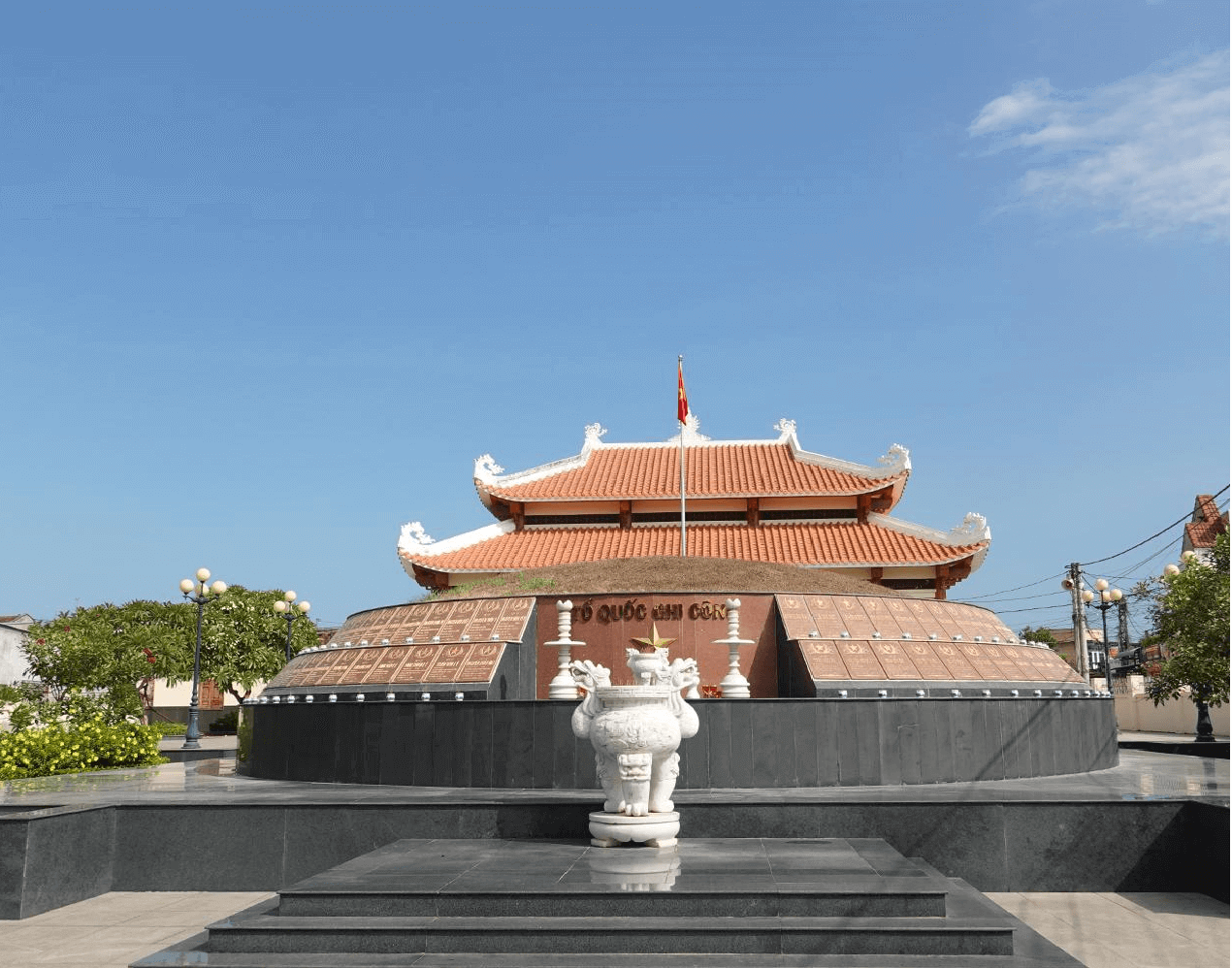
Historical site of collective grave of martyrs of the Golden Star Division
The relic is a mass grave in Tay Phuong Danh area, Dap Da ward, An Nhon town, the resting place of 153 soldiers of Battalion 6, Regiment 12, Golden Star Division who died in the General campaign. offensive and uprising in the Spring of Mau Than 1968. Opening the 1968 Spring Mau Than campaign, in An Nhon area, from December 25, 1967 to January 17, 1968, provincial and district soldiers and guerrilla forces coordinated to attack the enemy in many places, causing them harm. much damage. Battalion 6, Regiment 12, Sao Vang Division of Military Region 5 was assigned the task of fighting the enemy in areas close to the provincial capital, attracting the enemy to the countryside so that the liberation army could attack Quy Nhon town. After attacking the Phu Cat training center on January 19, 1968, the Battalion destroyed the enemy holding the Sita - Nhon Hung bridge on Highway 1. Fearing the loss of Dap Da, the district capital of An Nhon and Quy Nhon will be threatened, the enemy has sent here a regiment of South Korean soldiers, 4 security companies, 32 tanks and armored vehicles to surround Battalion 6 and use artillery to counterattack. With superior military and weapons superiority, the enemy drove the people out, trying to surround and isolate the soldiers of Battalion 6 in the Tay Phuong Danh area to destroy them. The unit fought bravely with the enemy for 5 days and nights, from January 20, 1968 to January 24, 1968 until there were no more bullets left, the soldiers used hoes, shovels, and bayonets to attack with armor. fought with the enemy and sacrificed heroically. Admiring the tenacious fighting spirit, courage and indomitable sacrifice of the soldiers of Battalion 6, the People, despite the danger, buried 153 soldiers' bodies in a mass grave in the Tay Phuong Danh area - Smashing Rocks in infinite grief. People around the area call it Ma To. The mass grave of soldiers of Battalion 6, Regiment 12, Golden Star Division was ranked as a provincial revolutionary relic by the Provincial People's Committee on October 20, 2003. In 2016, the collective grave of soldiers of Battalion 6, Regiment 12, Golden Star Division was invested in many renovation items: building an incense house, carving stone tombstones, covering the entire grave with granite, and making a yard. The garden creates a clean and beautiful landscape, expressing the people's affection for the relatives of the Northern martyrs who fought and sacrificed for the South. Binh Dinh Provincial Museum is preparing a document to request the Ministry of Culture, Sports and Tourism to upgrade it to the national level to match the historical value of this relic. Source: Binh Dinh Province Electronic Information Portal
Gia Lai 8055 view
Ancient Go Sanh ceramic kiln
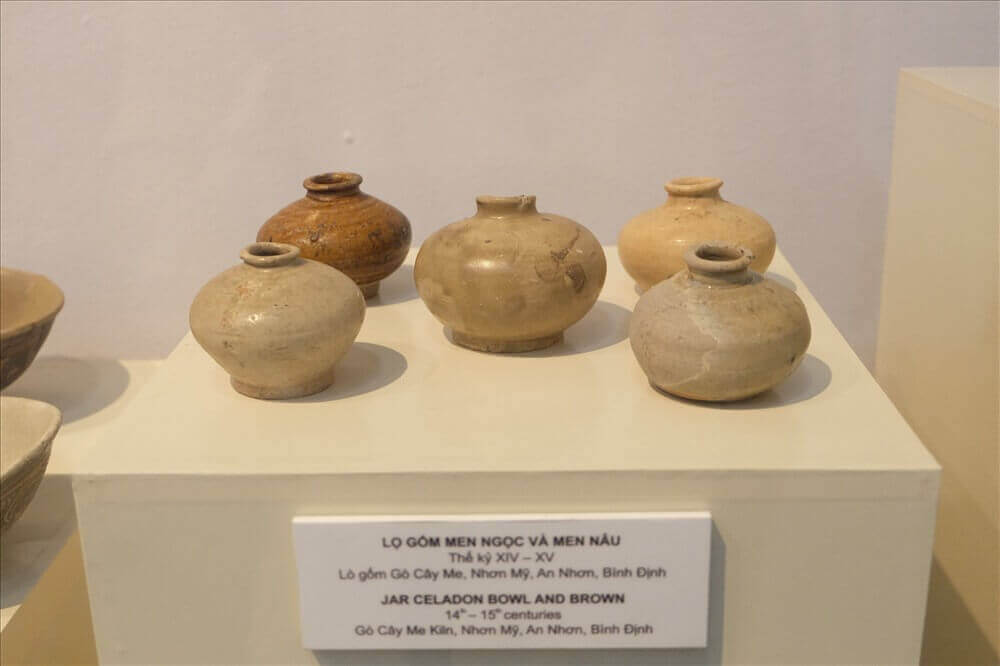
Go Sanh or Sanh hamlet is the name of a small hamlet in Phu Quang village, Nhon Hoa ward, An Nhon town. Phu Quang people say that while digging land for construction or farming, they often come across areas thick with intact pieces of ceramics of many types such as bowls, plates, and cups. Around the 70s, Go Sanh ceramics followed antique dealers to many regions and attracted the attention of ancient ceramic researchers in Vietnam and the world. In March 1974, an archaeological team from Saigon came to Phu Quang to research. Although there have been no excavations at Go Sanh, they have hypothesized that the owners of Go Sanh pottery are Cham people. From the above information, the Hanoi Institute of Archeology and Binh Dinh General Museum have planned a long-term research program at Go Sanh and all ancient ceramic relics in Binh Dinh. Until 2000, there were 4 excavations continuously conducted at this relic site. Up to now, Binh Dinh pottery kilns have 5 groups. In An Nhon town, there are Go Sanh, Go Cay Ke, and Go Hoi. All of these relics are located along the banks of the Kon River flowing into Thi Nai Bay (Quy Nhon port today) - a convenient location for waterway transportation. Archaeological excavations at Go Sanh were carried out in 1991, 1992, 1993. In 1994, besides Vietnamese scientists, there was additional cooperation from Japanese scholars. Among the kiln sites that have been identified in 5 locations within the former Vijaya region, kilns No. 1, No. 2 and 3 are in Go Sanh. Furnace number 1: Named Cay Quang furnace. The kiln is still quite intact, from the kiln wall, kiln floor and the final fired product of this kiln. The furnace has a tubular shape with a total length of 14m. The furnace chamber is rectangular, gradually expanding towards the end, measuring 1.6m; The width at the front is 2.8m; at the rear and an additional 10m in length. On one side of the oven wall there is a door for loading and unloading products. Furnace number 2: It is called Cay Man furnace (Roi Tree). The kiln area is located in the south of Go Sanh. Technically similar to furnace No. 1 (Cay Quang furnace), the furnace wall is also built of compacted soil bags and the arrangement of fire sharing columns in the burner is similar. Furnace No. 3: Located under furnace No. 2. According to researchers, this is the furnace with the earliest construction date. The wall of furnace No. 3 is not made of burnt shell material but is completely made of earth. The furnace is 1.2m wide near the burner, 1.7m wide at the back. The length of the furnace body is 5.3m. Currently, the Binh Dinh Provincial General Museum collects and preserves a quite rich collection of Go Sanh ceramic products. Porcelain products mainly produced here include enameled bowls, plates, pots, unglazed tiles and architectural decorations. Celadon enameled dishes and brown enameled jars show similar characteristics to the products of Fujian kilns (China). Recent information shows that Go Sanh Binh Dinh ceramics are produced not only for local service but also to participate in the export market to countries in Southeast Asia and further afield, Egypt. Among the artifacts found on the shipwreck in the Calatagan archipelago off Pantanan Island in the Philippines are thousands of Go Sanh ceramics. Some Vietnamese experts believe that the beginning of Binh Dinh ceramic production may have started from the late 13th to the 14th century, or at the latest until the 16th century. The owners of Go Sanh pottery kilns and other ancient pottery kilns in Binh Dinh are none other than the ancient Champa people. Go Sanh pottery kiln archaeological relic site has been ranked by the State as a National Historical-Cultural Relic. Source: Website of An Nhon Town People's Committee
Gia Lai 4937 view
Thap Thap Pagoda
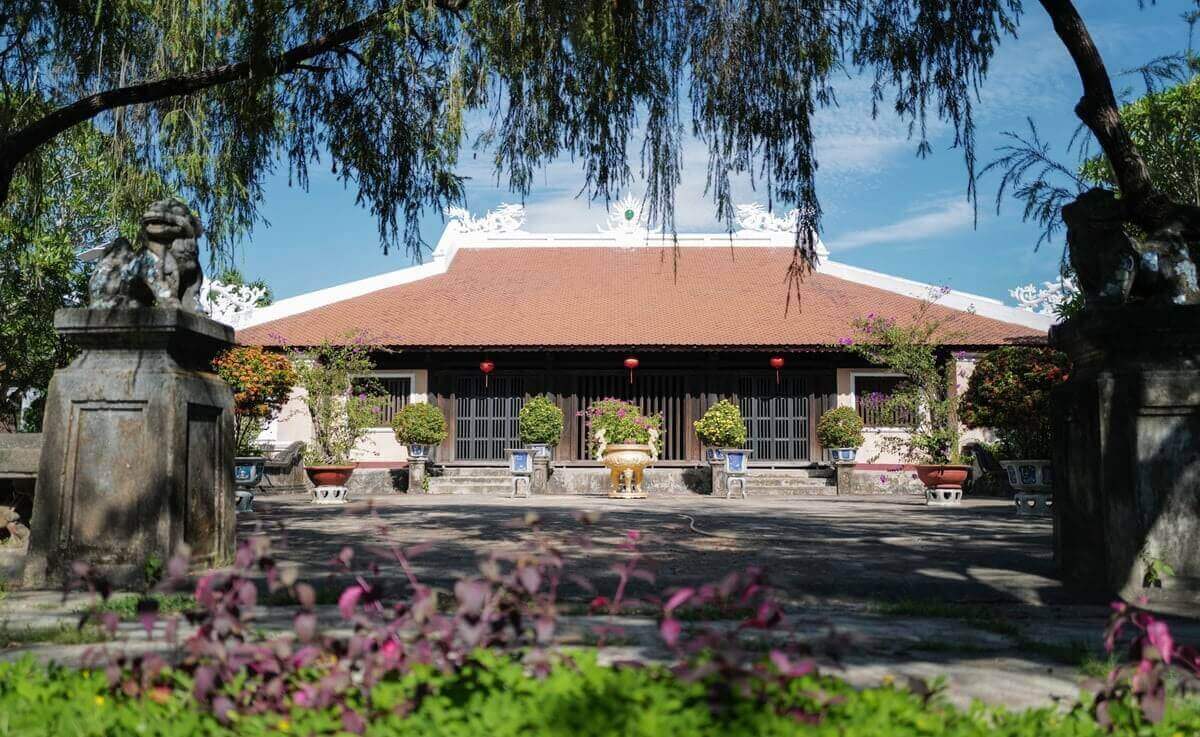
Di Da Thap Thap Pagoda is located in Van Thuan village, Nhon Thanh ward, An Nhon town, Binh Dinh province. The name of the pagoda "Thap Thaps" is because previously there were 10 Cham towers on this hill, which later collapsed. The name "Amitabha" is the title of the Buddhist leader of the Pure Land. Amitabha also means reason, the original awareness of sentient beings. Combining the above meanings, the ancestral temple is named Thap Thap Amitabha Temple. Thap Thap Di Da Ancestral Pagoda is associated with the name of the founder, Zen Master Nguyen Thieu. Many documents today indicate that his surname was Ta, self-named Hoan Bich, from Trinh Huong district, Chaozhou district, Guangdong province, China. He was born in the year of the Rat (1648), and at the age of 19 became a monk at Bao Tu Pagoda. In 1677, he followed a Chinese trading boat to Quy Ninh district, now in Binh Dinh province, about 28 km from Quy Nhon city, and built a hermitage to worship Amitabha Buddha. In 1683, the pagoda used bricks and stones from 10 fallen towers to build the pagoda. The pagoda has gone through 16 generations of lineage with many famous Zen masters such as: Zen Master Lieu Triet, Zen Master Minh Ly, Zen Master Phuoc Hue... Zen Master Phuoc Hue has been honored as National Master. He was invited to preach sutras in the Nguyen royal palace from the reign of King Thanh Thai to King Bao Dai, and taught Buddhism at Truc Lam and Tay Thien Buddhist schools (Hue) since 1935. From outside, walking along the lotus pond to the temple gate, there are two tall square pillars, on top of which are placed two lion statues sitting majestically, connecting an arc, above are attached two words "Thap Thap". Behind the gate is a screen with an embossed dragon and horse symbol placed on a kneeling pedestal. The main hall was rebuilt by Zen Master Lieu Triet in 1749. Today's main hall has a straight roof, yin-yang tiles, and two dragons with pearl paintings on the roof. The Buddha hall is decorated solemnly, in the middle worshiping statues of Tam The Buddha, Chuan De, Ca Diep, and Ananda; The shrine worships Avalokiteśvara Bodhisattva and Ksitigarbha Bodhisattva, placed in two compartments on either side of the Buddha hall; On the left and right walls, there are statues of Thap Bat La Lan, statues of Thap Dien Minh Vuong, Dharma Protector, Patriarch Dat Ma and Patriarch Ty Ni Da Luu Chi. Most of the worship statues were carved during the reign of Zen Master Minh Ly (1871-1889). The pagoda was given a sign by Lord Nguyen Phuc Chu "Sac Tu Thap Amitabha Pagoda" hanging in the middle of the main door of the main hall, which was engraved by Venerable Mat Hoang in 1821. The big bell (cast in 1893) and the big drum were placed. at both ends of the hallway. Behind the main hall, there is a stele inscribed with the poem "Thap Thap Amitabha Pagoda" written by layman Duong Thanh Tu and founded by Venerable Minh Ly in 1876. The monk's house is located behind the main hall built by National Master Phuoc Hue in 1924. The Patriarch's house is in the south, connecting the main hall and the monk's house, worshiping the Patriarch of Khai Son Nguyen Thieu and the late abbots and monks. and past Buddhists. Opposite the Patriarch's house is the lecture hall, there is a wooden board with the article "Thap Thap Tu Chi" written by An Nhon Academician Vo Khac Trien in 1928, recording the history of enlightenment, the process of construction and inheritance. of Thap Thap ancestral temple. In particular, Binh Dinh Newspaper said that the pagoda still retains 2,000 wood carvings used to print the Amitabha Sutra, Diamond Sutra, Lotus Sutra, etc. The Tripitaka offered by Governor Ha Tien Mac Thien Tu also exists. 1,200 volumes of sutras, laws, treatises and records. The pagoda also preserves the Korean Tripitaka and the Taiwanese Tripitaka. The Patriarch Tower Garden is located in the North with 20 ancient towers containing the bodies of the abbots and monks in the temple. Behind the pagoda, there is also the White Tiger tower and the Council tower The pagoda has been recognized by the Ministry of Culture as a national historical and cultural relic. Amitabha Thap Thap Pagoda is the most famous pagoda in the Central region. Source: Website of An Nhon Town People's Committee
Gia Lai 4731 view