Relic point Vietnam
Việt Nam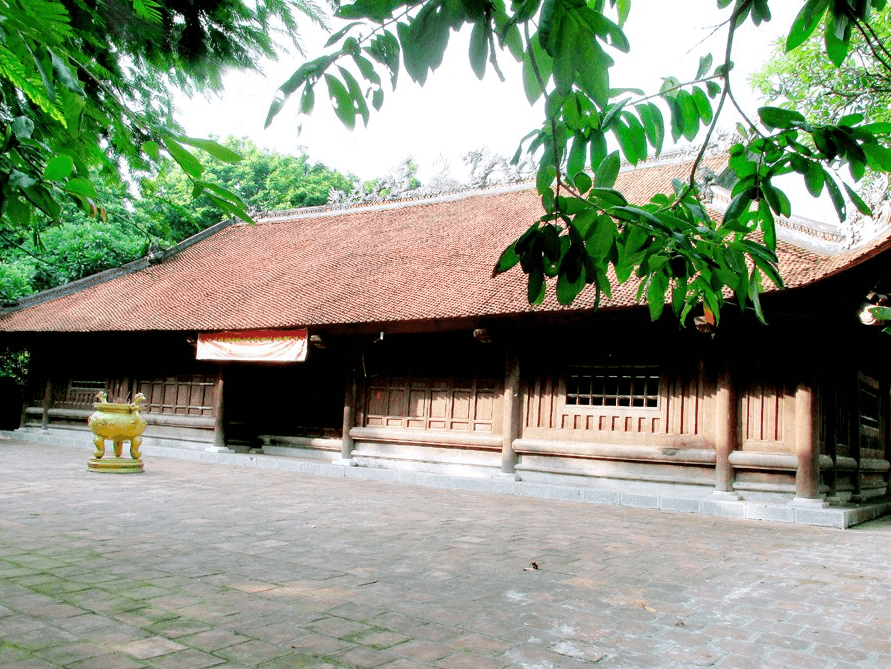
Cho Van Communal House
Cho Van communal house formerly belonged to Hoang Van canton, Bac Ha district, Kinh Bac region, now belongs to Hoang Lien village, Hoang An commune (Hiep Hoa). The communal house was built during the Le Trung Hung dynasty (17th century) and renovated during the Nguyen dynasty (19th century). Van Market Communal House was demoted in 1984. During the 1945 August Revolution campaign, many large rallies and propaganda events were organized and directed by revolutionary cadres at Cho Van Communal House. On the momentum of victory in Xuan Bieu (Xuan Cam commune) and Trung Dinh (Mai Trung commune), the people were extremely excited, the revolutionary spirit was boiling, and the prestige of the Viet Minh Front was increasingly enhanced. At Cho Van Communal House, on March 15, 1945, comrade Le Thanh Nghi, then member of the Tonkin Revolutionary Military Committee, and comrade Nguyen Trong Tinh, Secretary of the Provincial Personnel Committee, directed the Hoang Van Party Cell. and the local Viet Minh Front organized a propaganda campaign on market day to launch the anti-Japanese movement to save the country. The content of the speech clearly stated the basic spirit of the Resolution of the Central Standing Committee conference (March 9, 1945). Comrades have analyzed the world and domestic situation, clearly pointing out that the main enemy of our people right now is fascist Japan and mobilized the masses to destroy Japanese and French granaries to solve the famine. Next, to demonstrate their strength, on March 16, 1945, the Provincial Personnel Committee organized a large rally at Cho Van Communal House. After the rally and self-defense fight, the people went to destroy the plantation's granary. This event had a strong impact on the revolutionary movement in surrounding areas, contributing to the overall revolutionary cause of the whole country. According to elders and local leaders, nearly 60 years ago, the communal house was a teaching and learning point for the village and commune. In 1965 and 1966, during the US imperialist war to sabotage the North, the communal house was a place to store machine parts of the air defense force. On January 10 every year, the locality holds the Cho Van communal house festival. During the festival, there are many activities such as Quan Ho singing, folk games, air volleyball competitions, Chinese chess, tug of war... In addition, on the 10th day of the 4th lunar month every year there is a ceremony to pray for favorable weather and wind. The harvest is bountiful and the villagers are healthy. These rituals have been restored since 2012 until now, after 66 years of interruption. Over a long time, Van market still retains its traditional cultural values, becoming a place to buy and sell goods for people. In addition to admiring the system of historical relics, coming to Van market, visitors are attracted by many local specialties such as Hoang Van black fillings and banh chung. The market opens on the 2nd, 4th, 7th, 9th lunar days. In recent years, at Cho Van Communal House, many activities have taken place to announce contributions to Uncle Ho, admit union members and team members, launch launching ceremonies for youth groups and schools... Thereby educating historical traditions. revolution, patriotism, pride for the young generation. SOURCE: Electronic information portal of Mai Dinh Commune People's Committee
Bac Ninh 4021 view
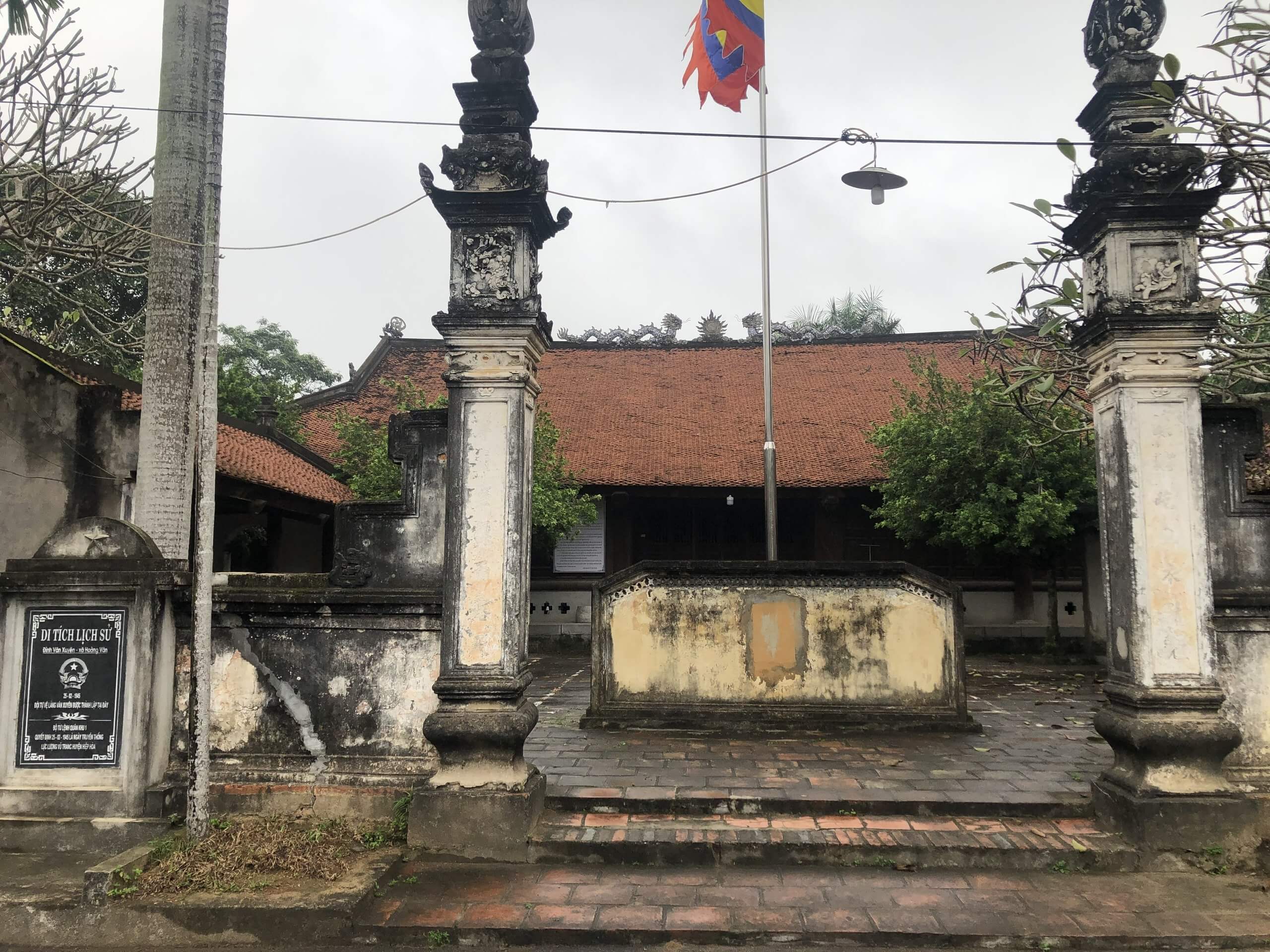
Dinh Van Xuyen
(BGDT) - Located in Trung hamlet, Van Xuyen village, Hoang Van commune (Hiep Hoa), Van Xuyen communal house is a center of cultural and religious activities, worshiping people who have contributed to the people and the country and are also meaningful. Important history in the pre-uprising period of the August Revolution in 1945. This is one of 8 points in the Safety Monument Zone II (ATK II) ranked as a special national historical relic by the Prime Minister. Van Xuyen communal house was built during the reign of Le Trung Hung (17th-18th centuries). Currently, the communal house still retains many ancient architectural features, typical of communal houses in the Northern Delta with many items: Ritual gate, left and right vu, garden and main communal area with floor plan. Nail-style architecture (Dai Dinh and Harem). The Great Court is made up of 3 compartments and 2 wings with 4 curved roofs. The roof and strip are built of bricks covered with mortar. The middle of the roof is covered with the theme of two dragons flanking the sun. The four surrounding areas of the communal house are covered with wooden planks. The middle of the pavilion creates a well, the remaining two sides have wooden floorboards. The wooden frame system of the communal house is made up of 6 rafters, the structure of the rafters is linked in the traditional style of the upper husband and the gong rack, the lower husband and cock fighting the cock, the front and the back seven, with carved panels that are typical of the style. during the reign of Le Trung Hung (17th - 18th centuries). The Harem Court has 2 spaces connected perpendicular to the Great Court. The harem is separated by a layer of wooden doors and upper and lower walls. In the Harem, the altars, incense stands, altars, and tablets are exquisitely carved and elaborately painted. During the pre-uprising period, Van Xuyen communal house was a place marking many important historical events: On February 25, 1945, the Van Xuyen village self-defense team was established; On March 15, 1945, comrades Le Thanh Nghi and Nguyen Trong Tinh directed the Party Cell and Viet Minh Front in Hoang Van to organize a campaign propaganda rally, declare the destruction of the enemy government, and establish The National Liberation Committee of Van Xuyen with the participation of hundreds of people with the protection of self-defense teams fighting in Hoang Van, Ngoc Thanh and Ba Huyen hamlet; On June 1, 1945, self-defense chief Hoang Van and the armed forces of Bac Giang province gathered at Van Xuyen communal house to enter the district capital to seize power and establish a revolutionary government. With typical historical value, in 1994, Van Xuyen communal house was ranked a national monument by the Ministry of Culture and Information; By 2020, it will be ranked as a special national historical relic ATK II by the Prime Minister. SOURCE: Bac Giang Newspaper.
Bac Ninh 4045 view
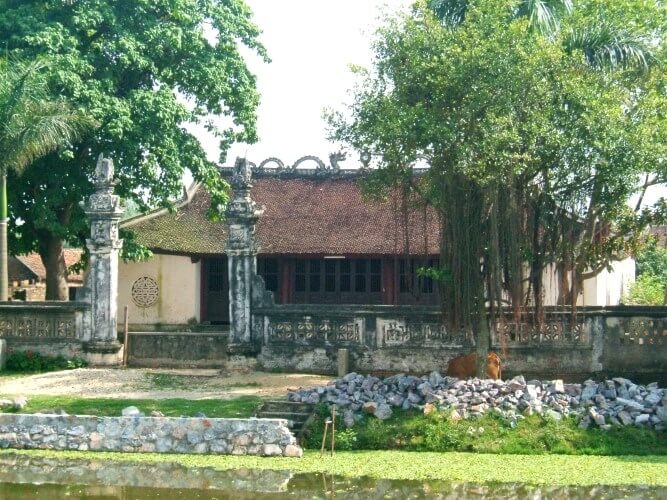
Dinh Xuan Bieu
Xuan Bieu communal house is an ancient communal house built a long time ago, located on the northern bank of Cau River in Xuan Bieu village, Xuan Cam commune, Hiep Hoa district. The communal house is a place to worship Cao Son - Quy Minh and Saint Tam Giang who fought the enemy to save the country. Not only is it a communal house with ancient architecture, Xuan Bieu communal house also preserves many precious documents and artifacts valuable for historical and cultural research. The special value of the communal house is its historical value. At the communal house, 77 years ago, the first uprising to seize power at the grassroots level in the country took place in the spirit of the Directive "Japan - France shoot each other and commit suicide." "Our Movement" on March 12, 1945, organized by comrade Le Thanh Nghi, Politician directing the anti-Japanese movement in Bac Giang province, Bac Ninh and comrade Nguyen Trong Tinh, Head of the Party Committee of Bac Giang province. . In 1994, the communal house was ranked as a national historical and cultural relic ATKII. In 2020, the communal house was upgraded from National level to Special National level ATKII Hiep Hoa. Because the communal house was built a long time ago, over time it has been degraded and does not meet the religious and cultural needs of local people as well as traditional education. Based on that need, with the approval of the competent authorities, on December 10, 2021, Xuan Bieu communal house was started to repair and embellish with a total investment cost of more than 11.1 billion VND. After nearly 1 year of construction, on September 7, 2022, the communal house was completed and accepted and handed over by the Department of Construction of Bac Giang province and put into use. The communal house, which has been completely renovated and renovated, still retains the ancient architecture, better serving the religious and cultural needs of local people, and is also a place for traditional education. At the same time, preserving and embellishing relics has been receiving attention from party committees and authorities at all levels. The special national relic of Xuan Bieu Communal House was renovated and inaugurated, along with the Uncle Ho memorial site of Cam Xuyen village built previously, becoming red addresses with educational value for patriotic traditions and spirit. spirit of solidarity, national pride, and the desire to build a strong and prosperous homeland. At the ceremony, delegates cut the ribbon to inaugurate Xuan Bieu communal house. Under the authorization of the Prime Minister, the leaders of the District Party Committee and District People's Committee awarded the Certificate of Ranking as a Special National Monument of Xuan Bieu communal house to representatives of commune and village leaders. SOURCE: Bac Giang Newspaper
Bac Ninh 4156 view
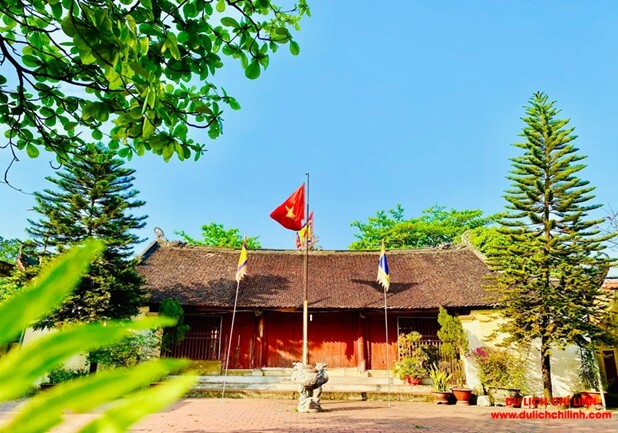
Dinh Chi Linh
Chi Linh communal house is located in Chi Linh village, Nhan Hue commune, Chi Linh city, Hai Duong province. Based on the "Miraculous inscription" engraved in the year Tu Duc 20 (1867) still preserved here, it is said that Chi Linh communal house worships 3 village tutelary gods including: Cao Son Quoc Trang Dai Vuong (ie Cao Hien, Holy Elder); Duong Canh Thanh Hoang Quang Bac Dai Vuong (ie Pham Cuong, Thanh Hai); Duong Canh Thanh Hoang Hung Due Dai Vuong (aka Pham Uy - Thanh Ba) According to legend, Cao Son Quoc Tu Dai Vuong was a member of Tan Vien's family. The second King of the 18th Hung King's reign, Cao Hien, was skilled in literature and martial arts. He "conspired" to help King Ly Thai Tong fight the enemy to save the country. Cao Son Dai Vuong transformed into a talented general of King Ly leading his army to fight the enemy. Arriving at Ba Gia Trang, Nam Sach district, Hai Duong town, I met two twin brothers, villagers Pham Cuong and Pham Uy, the children of Mr. and Mrs. Pham Chan and Dao Thi Quy. Seeing that the two brothers Pham Cuong and Pham Uy were talented in martial arts and martial arts, Hien Cong immediately recruited them to be his generals. After fighting the battle of Ben Dong (now Binh Than - Luc Dau) and returning victorious, through Ba Gia Trang, the army, Hien Cong and two generals Pham Cuong and Pham Uy turned out on the same day. Remembering the gratitude of the three talented generals, King Ly Thai Tong came down to hold a solemn funeral and allowed local people to set up a temple to worship. Chi Linh Communal House was built around the Later Le Dynasty (18th Century), restored and embellished during the Nguyen Dynasty in 1848, 1856, 1859, 1867, 1911. The original architecture was in the style of the letter "Dinh" consisting of 5 Dai Bai compartment and 3 Hau palace compartments are built in the west direction. In the year of Khai Dinh (1916), the people continued to build 5 more worship halls and two dance halls to meet the people's daily needs during festivals. Having gone through many historical upheavals, Chi Linh communal house still preserves many precious antiques such as a set of statues of the "Three Tutelary Gods" from the Nguyen Dynasty, 9 ordinations from the reign of King Thanh Thai to King Khai Dinh, 16 panels. merit stele from the 18th and 19th centuries... The communal house is located on a high and wide mound, in front of the Thai Binh river flowing downstream, behind a series of long ponds and lakes, originally an ancient river branch after many times of filling. The remaining dyke surrounds the monument, forming a natural barrier. Harmonious and breathtaking natural landscape. Chi Linh Communal House is a place to worship heroes associated with the religious life of the people of Nhan Hue commune, molding the nation's patriotic traditions. Chi Linh communal house festival takes place on the 10th day of the 3rd lunar month every year, the festival takes place for 3 days, of which the 10th day is the main festival. Based on its historical value, spiritual culture and traditional architecture, Chi Linh Communal House was ranked National by the Ministry of Culture and Information in 1994. Source Electronic information portal of Chi Linh city, Hai Duong province.
Hai Phong 4300 view
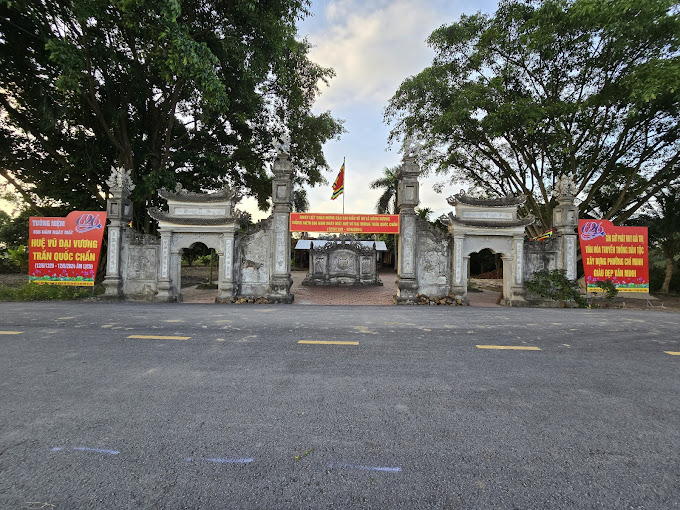
National Father's Temple
Quoc Phu Temple is one of eight relics belonging to the famous "Chi Linh bowl" recorded by many history books. Previously, the temple belonged to Kiet Dac commune, Chi Linh district. Now the relic belongs to Neo village, Chi Minh commune, Chi Linh district, Hai Duong province. This is the temple of the Imperial Father Tran Quoc Chan - one of the outstanding generals of the Tran Dynasty, with impeccable talent and virtue, wholeheartedly devoted to the cause of building and protecting the country. Tran Quoc Chan was the second son of Tran Nhan Tong, younger brother of Crown Prince Tran Thuyen, who later became Tran Anh Tong. He was a political figure, official and prince of the Tran dynasty during the reigns of kings Anh Tong and Minh Tong, considered one of the outstanding political figures and a talented man. But the end of life is full of injustice. Tran Quoc Chan was convicted of treason and starved to death. His death left behind a lot of criticism from historians towards Tran Minh Tong. By the year Giap Than (1341), during the reign of Tran Du Ton, the case of Tran Quoc Chan was completely exonerated. The court restored Tran Quoc Chan's position: Introducing the Supreme Patriarch of the State to Tran Quoc Chan, returning dignity to the deceased. The National Father Temple was established after he was exonerated and restored to his honor and title. The temple was built from his old house, so it is also called Thuong Thuc Co Trach (ie the old house of the High Lord). The temples were all ordained by later feudal dynasties. The monument was built on a high mound in the middle of rice fields running north-south. According to the "feng shui" theory, Quoc Phu Temple has "Kim Xa" (Golden Snake): in front there is a road to the stone wharf along the Kinh Thay river, on the left is Lang Tri field and Ao Va, legend has it that this is the bathing place of the king. Tran Quoc Chan, on the right there is Giai Phuon field, here is Dong Do relic, there are many piles of natural lipstick and behind is Dong Lang field. In 1951, the French enemy from Trung Ha post (Nam Hung - Nam Sach) shelled the main temple area in an attempt to destroy our secret resistance base, causing many construction items to be ruined, leaving only a part of Hau Hau. The palace and some worship objects were hidden by people last year. In 1953, the monument collapsed completely. By 1958, local people continued to mobilize merit to rebuild the Harem on the old foundation to stabilize religious activities and continue to honor people with meritorious services to the country. In 1997 - 1998, according to the wishes of many officials and people, and with the consensus of all levels and functional sectors, the Commune People's Committee organized a merit campaign, mobilizing all local resources to restore Restore the Quoc Phu Temple. The project was completed in a short time of no more than 60 days and nights. The temple was built in a 2-letter style, including 5 pre-sacrificing spaces, 3 back-hall spaces, along with a number of three-entrance gate items, temple grounds... Particularly, the 5 pre-sacrificing spaces were built with ancient wooden house frames in Hung Yen. The entire front and back halls are built with walls, wooden columns supporting purlins, and roofed with red tiles. Quoc Phu Temple: Recognizing the merits of Tran Quoc Chan, the royal court assigned the commune to repair the old house in his hometown in Kiet Dac, Chi Linh as a temple. Throughout the dynasties, the feudal state ordained Tran Quoc Chan and allowed localities to follow and worship and honor those who had contributed to the country. Based on the historical value of relics and famous people, Quoc Phu Temple was ranked by the Ministry of Culture and Information with Decision No. 15/2003/Decision - Ministry of Culture and Information dated April 14, 2003. Classified as a national historical relic according to the provisions of the Law on Cultural Heritage. This is the 127th relic of Hai Duong province to be ranked protected. Source Electronic information portal of Chi Linh city, Hai Duong province.
Hai Phong 4124 view
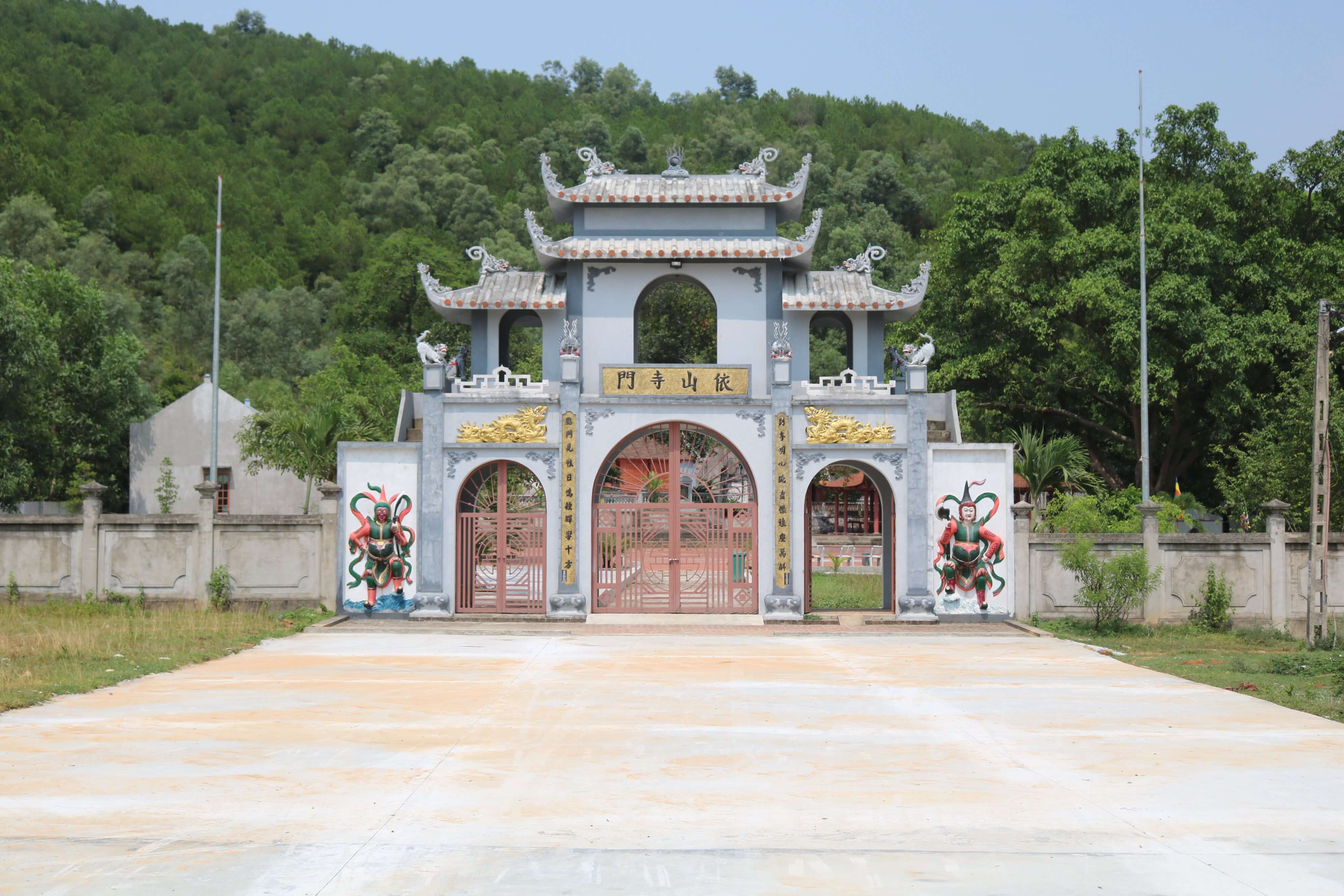
Y Son Temple
Ia Temple's previous name is now called Y Son Temple. The temple worships Saint Hung Linh Cong - the person who was instrumental in suppressing the An invaders and saving the country, and has been admired and worshiped by the people in the area for a long time. Y Son Temple in Hoa Son commune was built at the foot of Mount Ia, Hiep Hoa district, Bac Giang province. The temple is 7 km west of Thang town. The temple is located in the Y Son Cultural Historical Relic complex including the Ha temple, the Upper temple, the Tien well and the pagoda. Both the Ha temple, the Thuong temple, the Tien well and the pagoda are all located in the complex associated with the legend of Saint Hung. Linh Cong, who had the merit of fighting the An invaders along with Thanh Giong during the reign of the 6th Hung King. The temple has been granted a certificate of historical and cultural relic status by the state since 1994. According to ancient documents and legends: "During the 6th Hung King period, there was an administrator of Kinh Bac named Hung Nhac, a descendant of Hung King. He is over 60 years old, she is over 40 years old and still does not have a son. On the first day of spring, my grandparents visited Chau Lang and sightseeed on the Nhu Nguyet River (Cau River today), passing through the Ia mountains when it was dark. They went to Ia Pagoda (Y Son Tay Tu) to rest and pray for Buddha's blessings. That night, a divine dream occurred: "The angel of the fall responded to conception". Lady Cao Tien, a mandarin, became pregnant and gave birth to a son on October 12 (Year of the Pig), and he was named Hung Linh Cong. . At the age of 17, Hung Linh Cong was handsome and talented in literature and martial arts. When the king heard the news, he summoned him to the capital to participate in the talent contest. Hung Linh Cong was chosen and proved to be an excellent person. When there was an enemy, the King ordered Hung Linh Cong to lead the army to quell it and capture the leading beasts to bring back and domesticate them for use. When the An enemy invaded our country, the King assigned Hung Linh Cong thirty thousand troops and Appointed Nhac Phu as general and led the army to defeat the enemy with Duc Thanh Giong. After defeating the enemy and the country was at peace, Hung Linh Cong returned to the Ia mountains and saw the charming landscape of green mountains and blue water. He set up headquarters here and was declared a saint on August 8. Lunar calendar. After Hung Linh Cong's father and mother passed away, the King was deeply moved by his miraculous story and his contributions to the people and country, so he allowed the villagers to worship Mr. and Mrs. Hung Nhac at the back hall. Ia pagoda (Y Son Tay Tu) and worshiping Hung Linh Cong at Ia temple. Through many periods of historical ups and downs, the historical and cultural relic of Y Son temple still preserves many sacred artifacts and offerings. Rare and precious items such as: 21 ordinations of dynasties from the Later Le and Tay Son dynasties to the Nguyen dynasty, 15th century incense burners, ivory fan blades, stone elephants, stone horses, diaphragms, ancient couplets. On the top of Ia mountain - where Hung Linh Cong became a saint, the villagers built Thuong temple to worship and commemorate. In front of the Thuong temple gate is a Fairy well. Legend has it that on beautiful moonlit nights, fairies often come down here to dance, sing, play chess, comb their hair, and look in the mirror at the well. To express their gratitude to the Holy Spirit Hung Linh Cong and his parents, every year on the full moon day of the first lunar month, people in the area organize a festival, called Tich Hoi Hoi Thanh Mau, and once every 3 years. , the festival is held on a large scale, taking place from the 15th to 17th of the first lunar month. Every year when Tet comes, the people in the area are bustling and busy preparing the rituals together. , costumes for the festival. Y Son Festival is recognized as a National Intangible Cultural Heritage, people here are extremely excited, eager and prepared before the annual festival. Y Son Temple Festival begins with activities such as welcoming the Saint, palanquin procession, and procession of Mr. Ma from temple to pagoda. Incense offerings, sacrifices, examination of statues, generals, drawing of letters, military posts, examination of generals... The procession lineup has more than 200 people. Incense, flowers and offerings were offered to express the villagers' respect and gratitude to His Holiness Hung Linh Cong and his parents and to wish the villagers a year of good rain and wind, good crops, and a prosperous country. Thai Dan An...Y Son Temple Cultural and Historical Relic Area is also the place where many revolutionary events took place. As early as 1940, on the top of Ia mountain, the Party's red hammer and sickle flag appeared. On February 22, 1940, on the occasion of Ia festival, Mr. Le Hoang - Member of the Central Party Committee of Tonkin gave a revolutionary propaganda speech. On July 12, 1945, Mr. Le Quang Dao - revolutionary officer chaired the people's organization of 3 Hiep Hoa districts (Bac Giang), Phu Binh and Pho Yen districts (Thai Nguyen) at a meeting to praise the preparatory forces. General uprising in August 1945. In 1966, the militia of Hoa Son commune fought on the top of Ia mountain, used infantry guns to shoot down an American jet and were awarded the Third Class Victory Medal by the State. Today, the historical and cultural relic site of Y Son temple has been repaired many times. SOURCE: HIEPHOANET.VN
Bac Ninh 3520 view
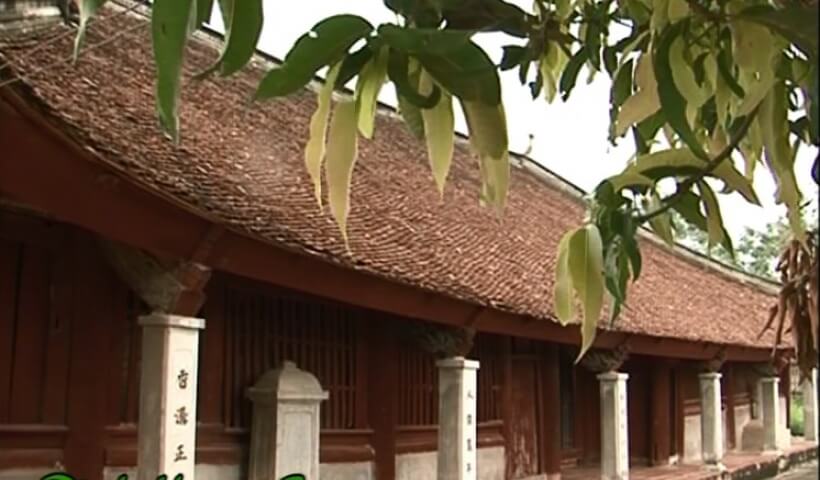
Dinh Huong Cau
Huong Cau communal house, Huong Lam commune is one of the remaining typical architectural and artistic relics in Hiep Hoa in particular and Bac Giang province in general. The communal house is ranked as a national architectural and artistic relic according to Decision No. 138/QD dated January 31, 1992 of the Minister of Culture, Information and Sports (now the Ministry of Culture, Sports and Sports). Tourism). In terms of architectural and artistic value, Huong Cau communal house is probably second only to Lo Hanh communal house, "the first in Kinh Bac", Dong Lo commune of the same district. The communal house is located in the center of the village looking west, in front there is a communal lake, and further away is the Cau River surrounding. The communal lake is not only a place where water gathers, providing an ecological landscape, but also a place where many folk games take place during the communal house festival, wrestling, going for prayers, singing quan ho on boats...all taking place on the lake. communal house lake. On the left in front of the communal house gate, a village well still reflects water next to a corner of the rural market. No one knows how long the village well has existed, but many generations of people here have been very attached to their childhood memories next to the village well. A corner of the rural market also displays, sells and buys all kinds of village products. Like many other communal houses, the gate of Huong Cau communal house is built in the ritual style, including a main gate built with a pillar with square edges, the body of the pillar is covered with parallel sentences in Chinese characters praising the scene of the communal house and the people worshiped in the communal house. The top of the pillar is stylized in the shape of a garden fruit. Many visual elements, along with folk culture, are displayed here. The lower part of the pier's ear is made up of seams, the four sides are covered with four sacred animals: Dragon, lyre, tortoise, phoenix, four sacred animals with many meanings in Vietnamese religious culture. Huong Cau Communal House has a total area of 8,971 m2, the inner communal house area is 291.60 m2. The garden is large and green with shady trees. From a distance, the wide, low roof of Huong Cau communal house with curved blades hidden in the verdant canopy of the village's trees makes it easy to recognize that it is an ancient communal house. The communal house has a very unique architecture, the grand communal house looks like a dragon communal house, surrounded by a very airy wooden railing system, and a roof system with four curved blades. The two main roof sides and the two side roof sides are covered with funny-nosed tiles. The roof edge is built to create a straight strip of lemon flowers connecting the two ends of the roof pliers. The tip of the roof pliers is stylized in the shape of a dragon's head opening its mouth to grasp the edge of the roof. The dragon's tail is a thin strip that curves like a crescent moon. In addition to the aesthetic element, it also has the element of yin and yang. His father put into it valuable folk experiences. The dragon is a symbol of kingship and a symbol of rain clouds. The crescent moon is also a symbol of rain. The dragon's head grasps the edge of the roof, making it easy to imagine the image of a dragon whirring and spraying water. And that will prevent a fire from happening. From a scientific perspective, it is also very reasonable, and folk experience will make people always aware of water and fire in life. The bank is also built to create a strip of lemon flowers reaching the bend to connect with the bank. The edge of the goat is built to create a strip of lemon flowers running straight to connect with the four curved blades. The corners of the knife's head are decorated with a stylized dragon and phoenix shape with a curved shape. At the four corners of the knife's head, there are dragon heads making water as if spraying water on the edge of the river. The four curved corners of the knife's head not only bring the element of yin and yang but also make the house more elegant and soft. The ingenuity of the masons who built Huong Cau communal house, they built tough, strong but very elegant lemon flower strip edges and at the same time created four corners of curved knife heads to cover the edges of the strip, creating a soft floating roof. commercial. The great communal house has 3 rooms and 2 wings built on high ground. From a distance, you can see the roofs forming like a large boat facing down on the wooden frame for the roof. The flat, wide roof system and low structure create a large slope for the communal house roof. On the outside, it is easy to see the porch stripes running around the four communal roofs with 24 stripes. The front eaves are carved the most. The two ends of the middle stripe touch both sides. The main theme is the image of a nest dragon, a mother dragon, and a baby dragon, with details of a 4-clawed dragon and a round, fat body. In addition to dragon images, there are also human and beast images. The top of the porch on the left side has a dragon image on the inside, and there is an image of a fairy's hand with long slender fingers, long nails, holding a dragon sword. Near the dragon's tail, there is a human figure, naked body, belted around the waist, wearing a loincloth, lying on a wooden shelf, one hand resting on his head, the other hand resting on his knee, legs crossed in a five letter, looking very comfortable. Thoughts and faces are described in detail and exude a very cheerful and close feeling. The right side of the porch stripe is also covered with the main theme being a dragon with four clawed dragon details, part of the corner of the stripe has a very funny spirit animal image. The next two lines are also thickly carved with themes of dragons, swords and clouds. The remaining lines running around the four roofs are carved lighter and more sparse than the previous lines. The main carving themes are images of mother dragons, baby dragons, swords, clouds, and mother dragons always opening their mouths to grasp the roof of the ship. If in some other communal houses in the Northern countryside, at the beginning of the 18th century, the engravings of human images were absent, the folk features remained only in the animals close to the workers, then Huong Cau communal house still fully retains the close image of people and animals, retaining the aesthetics, preferences and emotions of the workers. Scenes of love between boys and girls next to the scene of "four sacred animals and four nobles". The royal art here is very strange and rough. We rarely see images of ferocious tigers, or stereotypical images of the four sacred animals and four precious animals, but instead there are images that are very everyday, close and full of folk vitality. SOURCE: ELECTRONIC INFORMATION PORTAL DEPARTMENT OF CULTURE - SPORTS - TOURISM OF BAC GIANG PROVINCE
Bac Ninh 3218 view
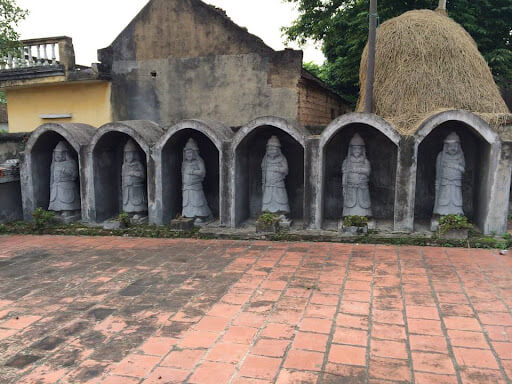
Tomb of the Tran family
The Tran family's mausoleum was built during the Le Dynasty (more than 200 years ago), and is a carved architectural work of unique value. The main value of this mausoleum is the art of stone carving, because all works in the mausoleum are built with laterite and green stone. From mausoleums, small huts covering altars and statues of individual dancers, the artifacts here are very diverse and contain very profound artistic content. It is a system of artifacts made of stone such as stele, parallel sentences, statues of dancers, and symbolic animals also made of stone. All of this has given the mausoleum great artistic value even though it has gone through many changes of time and many ups and downs of history. This is a place to worship typical famous people of the Tran family: The couple of Duke Tran Dinh Ngoc and Duke Tran Dinh Mien, so this mausoleum is not simply a place to commemorate famous people of one family but also a A place to witness important local events: Ceremonies, rituals, and ceremonies not only take place in the common communal house but also take place within the Tran family, deeply expressing the sentiment of "drinking". "When you eat fruit, remember the person who planted the tree" of the people. Although many documents about famous people of the Tran family have been lost, they are recorded quite clearly in the national history in the book "Dai Viet Su Ky Toan Thu" (volume I, Record of 1686). -1740) of the Social and Science Publishing House, Hanoi, 1982. The interior part of the Tran family mausoleum is currently divided into two main parts: The first part is the mausoleum (grave) including 3 small huts facing the mausoleum facing the South, the other three sides are residential areas. In front of the mausoleum area, there is a mausoleum pond, a river trough and road 19. Around the mausoleum area there are a number of compound graves (Le Dynasty). Among these tombs, it is worth noting that there are tombs of family members and villagers who have long called them "grandfather's mausoleum" and "lady's mausoleum". Most of the above graves are sunken and flat below the ground (no earthen mounds or construction above). Some houses have been dug up and are no longer intact. The second part of the mausoleum's inner temple area is considered the exterior display part of a museum. Here, there are mainly stone steles, statues of boxers and symbolic animals such as stone crocodiles and stone horses. These artifacts are built in two long rows running along the mausoleum, at the outermost are two horses kicking each other. Previously, statues of boxers had roofs like small huts. Currently, those huts are all gone and some of the stone steles here are also scattered, only to be collected later and brought back as before. All stone statues in the Tran family mausoleum are carved very elaborately and artistically, in a very vivid, clear and unique Le Dynasty style. Each martial artist has his own personality and expresses his inner feelings differently, but they all exude the majesty of soldiers standing guard over the mansion (grave) of their master. The Tran family's mausoleum is an outdoor relic, without buildings like cultural buildings such as temples, communal houses or pagodas. Therefore, artifacts related to the mausoleum, in addition to those in its area, must also include artifacts kept in the family and village here. The parallel stone steles here are extremely valuable documents and artifacts, playing an important role in research on family history, famous Tran family members and the construction and renovation process of the Tran family. this mausoleum. Statues of people and animals in Tran family mausoleums tend to be depicted close to reality (the size is the same as real people and horses). Currently, 4 statues of dancers have been brought to Bac Giang Museum to be displayed and introduced to visitors inside and outside the province to visit and study. The artifacts that originally belonged to Cau communal house are now preserved in Giua village, also in Luong Phong commune. These are ordinations, orations, and reliable evidence of the great and profound influence of famous people from the Tran family on Luong Phong village and commune. There are currently 18 ordinations, most of which belong to the Nguyen dynasty. Thanks to these ordinations, we can now know fully and accurately. Specifically, the following 5 people are - King Cao Son King Linh Linh - King Quy Minh King - Princess Dien Binh King. - Your Majesty assists the Great King of Linh Quoc. In short, the Tran family mausoleum is an extremely valuable cultural work. It includes basic values that are similar to the cultural value and the architectural value of artistic carving (stone carving). This is a mausoleum built during the Le Dynasty. The art of carving reached a high level. The artifacts and stone sculptures here are very rich and diverse, deeply expressing the soul and talent of our ancestors from ancient times. With precious historical values as well as unique stone sculpture architecture of the Tran family mausoleum, in 1990 the Ministry of Culture recognized this mausoleum as a national historical site. SOURCE: Explore Vietnam's natural & cultural heritage
Bac Ninh 3546 view
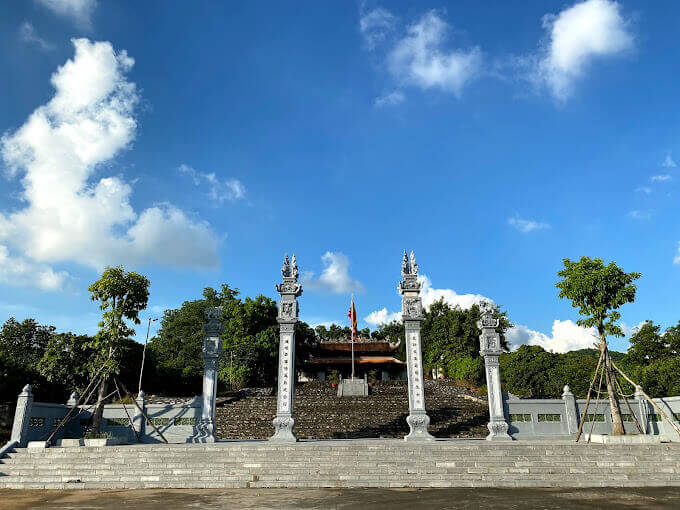
Ba Chua Sao Sa Temple (Ba Due Temple)
Nguyen Thi Due also has the names Nguyen Thi Ngoc Toan, Nguyen Thi Du, her name is Dieu Huyen, the king's name is Tinh Phi or Sao Sa, she was born in Kiet Dac commune (now Van An ward, Chi Linh town, (Hai Duong province) Ngoc Toan is a talented and beautiful girl, exceptionally intelligent and virtuous beyond others. She was born at the end of the 16th century into a studious family. From a young age, she showed bravery and determination, and her family invited a teacher named Cao to teach. The older Ngoc Toan grows, the more beautiful he becomes, smarter than others, and more ambitious. In the year Quang Hung 15 (the original year of Mac Bao Dinh), the army of Le Trinh's court captured Thang Long, the Mac army withdrew to the East in Hai Duong town. At the beginning of the year Quang Hung 16 (1593), Le Trinh's army attacked the Nam Sach region, the Mac dynasty fell and had to withdraw from Hai Duong, fleeing to Cao Bang to establish a base... That year, 20-year-old Nguyen Thi Due and her father ran after home. Mac went to Cao Bang. Even though she had to run around, she still studied hard, showing a person with great ambition. After building the citadel and ramparts to stabilize its position in Cao Bang, the Mac dynasty opened an examination to select talented people, with quite a large number of candidates applying. Binh Thin Exam In 1616, Nguyen Thi Due pretended to be a boy to take the exam with her teacher. After marking the test, she received a high score and passed first, while her teacher passed second. Impressed by the talent of his excellent student, he said: "The color green comes from blue but is more beautiful than blue." When attending the banquet, King Mac saw that her appearance resembled a woman. Upon questioning, he learned the truth. He did not punish her, but encouraged her and made her his wife, named Tinh Phi, named Sao Sa. Nguyen Thi Due's beauty is unmatched in the world. In the eyes of Lord Mac, Ms. Due is "a shooting star that has fallen from the sky". When Le Trinh's army attacked Cao Bang and the Mac army was defeated, she hid in a mountain cave, was captured by Trinh's army and brought to the Lord, she was immediately loved and respected. The people of her commune, from top to bottom, received her affection and were grateful for the exception, so they all respected her and respected her as her successor. She read the Bible widely, understood Buddhism, enjoyed many benefits but lived a frugal life. She established a convention, determining that the anniversaries of her ancestors' deaths and birthdays (March 14), her birthday when she When a person is a hundred years old, they all use vegetarian food and oan quai to worship, and that custom will be passed down forever. When she was old, she returned to become the abbot of Vu Nong pagoda, Gia Lam district. When Trinh Tac (royal ancestor Duong Vuong) ascended the throne and ordered a female scholar to teach the palace staff, all the mandarins nominated her. Duong Vuong invited her into the palace and taught the palace staff to call her Duc Lao Master. At nearly 80 years old, she built a small hut in front of her ancestors' graves, on a low hilltop at the foot of Phuong Hoang Mountain, 200m south of Huyen Thien Pagoda. She passed away on November 8, when she was over 80 years old, having experienced three kings: Le Than Tong (1619 - 1643), Le Chan Tong (1643 - 1649), Le Than Tong (second king, 1649). – 1662). After her death, her remains were buried next to her ancestors' graves, on top of which was a pink tower made of bricks, clearly visible from afar. By the end of the Later Le Dynasty (18th century), her tomb was classified by contemporary historians as "Chi Linh eight ancient relics", meaning one of the eight ancient relics of Chi Linh district, named Tinh Phi ancient tower. Since 2004, we have realized the importance of relics, especially the historical value of famous people. On June 28, 2006, the Provincial People's Committee signed Decision No. 2283/Decision -People's Committee approving the project to build Nguyen Thi Due temple. The project includes the following items: Main Temple, Ta Huu Vu, Tam Quan, 2 golden temples and renovating and upgrading the Tomb. After a short period of construction, three items have now been completed: the main temple, two golden temples and the front yard. Nguyen Thi Due Temple was built on the basis of the old temple on top of Mam Xoi hill. facing southwest. According to feng shui theory, the land of the temple is like a pearl surrounded by the Phoenix mountain range. In front is a vast dam, fluttering with storks and cauldrons at sunset, confirming that this place is truly a good land. The temple to worship Princess Sao Sa has Dinh-style architecture, including three compartments, two compartments and one harem compartment. Behind the Harem is Tinh Phi ancient tower. Source Electronic information portal of Chi Linh city, Hai Duong province.
Hai Phong 4395 view
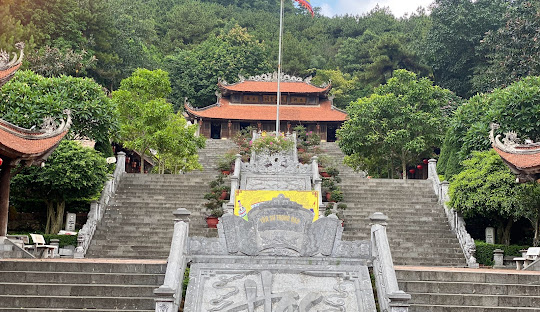
Chu Van An Temple
Chu Van An Temple is located on Phuong Hoang Mountain, in Van An commune; about 4 km from Con Son relic site. This is a cultural relic and scenic spot that you can visit, with beautiful pine forests, old and new temples built in 2007. Chu Van An mausoleum is located in this relic area. The festival is in August and January, the main festival is on August 25 and November 26. The relic was ranked in 1998. The mausoleum is hidden deep in the Phoenix ravine, about 600m from the temple. Teacher Chu Van An's mausoleum was renovated with funds from teachers and students in the education sector of Hai Duong province. A small path with uneven gravel layers shaded by forest pine canopy will take visitors to visit the master's grave. Legend has it that when Master Chu Van An died (1370), his students buried him at the top of Phuong Hoang Mountain and built a house next to the grave to worship him all year long to show their condolences. The main hall of the temple is located on a high, airy position, with a nail (J) architectural style, overlapping 8 roofs, curved belt ends creating an elegant, sacred look, the roof embossed with ''two dragons''. Adoration of the Sun", in front is a pair of large stone dragons and high stone steps. The special thing here is that when tourists visit the temple, in addition to offering vegetarian and salty offerings, they often also offer pens and books to pray for fame, fortune, and education. Source Electronic information portal of Chi Linh city, Hai Duong province.
Hai Phong 3592 view