Relic point Vietnam
Việt Nam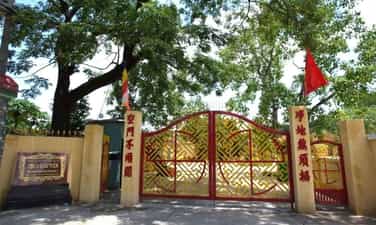
Giac Vien Pagoda
Located on Lac Long Quan Street, Binh Thoi Ward, Ho Chi Minh City, Giac Vien Pagoda is one of the representative ancient pagodas of the Gia Dinh - Saigon region, with a history closely linked to the construction and restoration of Giac Lam Pagoda. Its predecessor was Quan Am Vien, built in 1805 in the Ho Dat wharf area. In 1850, Quan Am Vien was renamed Giac Vien Pagoda. Through numerous restorations, the pagoda has gradually perfected its architectural and artistic appearance to its present state. Giac Vien Pagoda features Southern Vietnamese Buddhist architecture, harmoniously combining traditional elements with some Western influences in its facade decoration. However, the most outstanding value of the monument lies in its system of statues, decorative panels, horizontal plaques, couplets, and elaborately crafted wooden reliefs, particularly those from the late 19th and early 20th centuries. The pagoda currently houses 153 wooden statues, including many sets of high artistic value such as the Eighteen Arhats, the Ten Kings of Hell, and the Buddha and the Four Assemblies. The statues clearly demonstrate a free and expressive style, close to the daily life of the people of Southern Vietnam. Most remarkable is the system of 58 decorative panels with diverse themes. The "Ba Dieu" panel stands out for its exquisite carving, depicting nearly 100 species of birds in various lively poses. Besides familiar figures like dragons, unicorns, turtles, and phoenixes, the artisans also incorporated images close to everyday life such as buffaloes, cows, goats, pigs, dogs, birds, flowers, and fruits. These rustic images create a unique character, clearly showing the process of the Southern Vietnamese adaptation of Buddhist decorative art. The pagoda also has a system of 128 couplets and many reliefs carved on the columns and wooden structures. The themes are diverse, ranging from the Four Sacred Animals, the Eight Immortals, and the Eighteen Arhats to flowers, birds, trees, fruits, and familiar animals. Through this, the art of carving not only served religious needs but also reflected the life, thoughts, and aesthetic concepts of the inhabitants of the ancient Gia Dinh region. Source: Vietnam Buddhist Forum
Ho Chi Minh City
342 view
Rating : National Monument
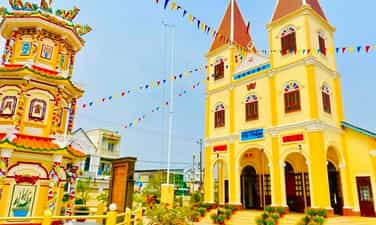
Cao Dai Ban Chinh Dao Holy See
The Cao Dai Ban Chinh Dao Holy See is located at 100C Truong Dinh Street, Son Dong Ward, Vinh Long Province, on the banks of the Ham Luong River. It is the central place of worship of the Cao Dai Ban Chinh Dao Holy See, the second largest indigenous Cao Dai sect in Vietnam. The current Holy See was built on a large scale starting in 1947 on the foundation of the ancient An Hoi Temple, after years of historical upheaval. The Holy See boasts a unique blend of Eastern and Western architecture, situated on a spacious grounds of over 7,000 m², surrounded by ceremonial courtyards and lush greenery. Inside, the architectural space is designed with solemnity, featuring intricately carved dragon columns and the Divine Eye symbol representing the Supreme Being. The domes and religious flags, bearing the three characteristic colors, fully preserve the philosophy of "Three Religions Returning to the Origin" of Buddhism, Taoism, and Confucianism, along with the traditional ceremonial robes and artifacts of the senior religious leaders. Notably, the complex also includes the Yao Chi Buu Dien temple dedicated to the Goddess Kim Mau and the Ky Tho garden – a place of serene meditation associated with the years of religious practice of the Supreme Patriarch Nguyen Ngoc Tuong. Many auxiliary structures and surrounding gardens have also been cared for and preserved by generations of dignitaries and followers for nearly a century. More than just a remarkable architectural masterpiece, the Holy See also embodies the spirit of religious practice accompanying the nation, having served as a solid revolutionary base, sheltering many cadres and soldiers during the wars of national liberation. Today, it has become a significant historical and cultural site, attracting numerous visitors to explore, admire, and learn about the unique religious beauty of the Southern region of Vietnam. Source: Cao Dai Ban Chinh Dao Church Electronic Information Portal.
Vinh Long
358 view
Rating : Provincial-level historical site
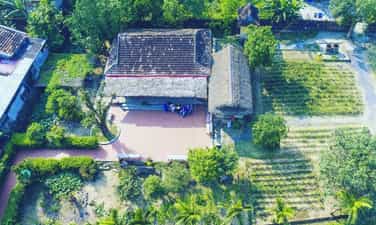
General Vo Nguyen Giap Memorial House
The General Vo Nguyen Giap Memorial House is located in An Xa village, An Lac hamlet, Le Thuy commune, Quang Tri province, along the Kien Giang river. This is where General Vo Nguyen Giap was born and spent his childhood years with his family and hometown. The current house was rebuilt on the old site after it was destroyed by the French colonialists in 1947. It has a traditional three-bay, two-wing architecture, built with various types of wood from his hometown of Le Thuy. A large, lush garden surrounds the house. Inside, the central bay houses the ancestral altar and a portrait of the General's parents; the other bays preserve familiar family items such as tables, beds, wardrobes, chests, plows, harrows, hoes, and shovels, along with many images depicting the General's life and career. Notably, within the grounds is a starfruit tree over 100 years old, associated with the General's childhood memories of studying and playing. Many other types of trees were also planted by the General and the people and soldiers from all over the country during his visits back to his hometown. More than just a place preserving everyday memories, the Memorial House also reflects the General's deep affection for his homeland and the respect and love the people have for him. Today, it has become a significant historical and cultural site, attracting numerous visitors who come to offer incense, tour, and learn about the childhood of this beloved General. Source: People's Army Newspaper
Quang Tri
289 view
Rating : National Monument

An Xa Pagoda
An Xa Pagoda, now located in An Xa village, Le Thuy commune, Quang Tri province, is situated near the birthplace of General Vo Nguyen Giap. It is not only an ancient pagoda but also a historical, cultural, and revolutionary relic, associated with many important events of the homeland during the years of the struggle for independence. The pagoda was built around the beginning of the 20th century, following Mahayana Buddhism. During the resistance wars against the French and the Americans, the pagoda was repeatedly damaged by war and subsequently restored by the people. Notably, on July 2nd, 1945, a conference of delegates from Party committees throughout Quang Binh province was held here to discuss and unify preparations for the August 1945 General Uprising to seize power. Architecturally, An Xa Pagoda features the distinctive characteristics of ancient Vietnamese pagodas, highlighted by a screen depicting a dragon's face, a pair of cranes standing on the backs of turtles, and motifs of the four mythical creatures: dragon, lion, turtle, and phoenix. These details reflect the artistic and traditional religious values of the Vietnamese people. The pagoda was classified as a National Historical and Cultural Monument by the State in 1992. Notably, in 1999, General Vo Nguyen Giap personally planted a banyan tree in the pagoda grounds. This banyan tree has become a symbol of the General's affection for his homeland. Source: Sacred Places – Directory of Spiritual Sites in Vietnam
Quang Tri
444 view
Rating : National Monument

A place that commemorates the Nghe Tinh Soviet Movement.
This site commemorates the Nghe Tinh Soviet Movement (1930–1931) in Nghe An. The Nghe Tinh Soviet Movement (1930–1931) was the first revolutionary movement led by the Communist Party of Vietnam, marking the tenacious fighting spirit of the workers and farmers of Nghe An in the early years of the revolution. The complex of relics includes nine representative sites associated with important events of the movement, such as: Ben Thuy Crossroads, where the workers' and farmers' struggle took place on May 1, 1930; Vo Liet Temple, formerly the headquarters of the Soviet government; the site of the massacre on September 12, 1930 in Hung Nguyen; the graves of the Nghe Tinh Soviet martyrs who died on November 7, 1930 in Dien Chau; the execution site of 72 Nghe Tinh Soviet soldiers in Van Tu; along with the relics of Tam Mai Temple, Trung Temple, Luong Son Temple, and the house of Mr. Vi Van Khang. Besides preserving historical evidence, these relics also reflect the transformation of social life in Nghe An during the revolutionary period. Village communal houses and private homes, once centers of community life, became meeting places for propaganda, organization, and the establishment of the revolutionary government. Memorials, statues, and reliefs also contribute to recreating the fighting spirit and sacrifices of previous generations. Source: Department of Cultural Heritage
Ha Tinh
276 view
Rating : Special national monument
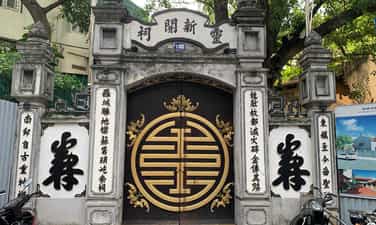
Tan Khai Temple
Tan Khai Temple, also known as Thai Cam Temple, is located at 44 Hang Vai Street, in Hanoi's Old Quarter. According to the stele, the temple was built in the 3rd year of Minh Menh's reign (1822), at the same time as Thai Cam Pagoda. The temple worships three tutelary deities: To Lich, Bach Ma, and Thiet Lam – deities associated with the formation of Thang Long capital and revered by the people as protectors of the capital. To Lich is the representative tutelary deity of the capital; Bach Ma, or Long Do, is associated with Bach Ma Temple; and Thiet Lam is believed to originate from the ancient Vietnamese belief in worshipping natural forces. Over nearly two centuries, Tan Khai Temple has undergone many changes. The front hall no longer exists; the main remains are the rear hall, built in the shape of the Chinese character "Công," along with the temple courtyard and gate shared with Thai Cam Pagoda. Above the gate is a scroll inscribed with four Chinese characters: "Tan Khai Linh Tu." Beyond its architectural value, the communal house also preserves traces of folk beliefs and the history of Thang Long, reflecting the people's reverence for the guardian deities of the capital. Source: Hanoi People Magazine
Hanoi
465 view
Rating : National Monument

Tan Khai Temple
The Tan Khai communal temple is currently located in Tan Khai ward, Dong Nai province. It was built in 1901 by the first settlers who migrated from the Tan Khanh - Ba Tra area to cultivate the land and establish their livelihoods. After building the temple, the people brought the tutelary deity from the Bung Cu communal temple to worship there, along with their ancestors. During the war against the Americans, the temple was repeatedly bombed and had to be relocated 11 times, 7 of which were rebuilt with sturdy structures. Through many historical upheavals, the temple today comprises main structures such as the main hall, lecture hall, eastern wing, and screen wall, on a grounds of over 2,700 square meters. The Tan Khai communal temple is not only a place of religious activity but also preserves many traditional customs and festivals. Every year, there is the Ky Yen Festival on the 18th day of the 3rd lunar month, the Cau Bong Festival on the 18th day of the 8th lunar month, and the buffalo fighting festival. Notably, after a competition, regardless of whether they win or lose, the buffaloes are not slaughtered but are instead cared for to serve in production and breeding. With its unique historical, cultural, and religious values, Tan Khai Temple is a typical heritage of the Tan Khai region, and was classified as a provincial-level historical relic in 2014. Source: Dong Nai Provincial Department of Culture, Sports and Tourism
Dong Nai
450 view
Rating : Provincial-level historical site
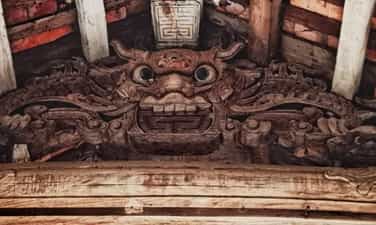
Phu Luong Village communal house
Phu Luong Village Temple, located in Quang Phu Cau Commune, Ung Hoa District (now Thuong Phuc Commune, Hanoi), is a National Historical and Cultural Monument, classified as such in 1993. The temple serves as a center for religious and cultural activities for the local community and is associated with many unique historical and artistic values. It is dedicated to General Bach Loi, a renowned general during the reign of the 18th Hung King. According to legend, he, along with Tan Vien Son Thanh, Cao Son, and Quy Minh, contributed to fighting the Shu invaders and protecting the borders. During his military campaign, Bach Loi chose Phu Luong as his encampment and passed away there. To commemorate his contributions, the people built the temple and honored him as the village's tutelary deity. The site still preserves a genealogical record from the 3rd year of the Hong Phuc era (1674) and seven royal decrees. Architecturally, the temple is built in the shape of the Chinese character "Đinh," consisting of five main halls and three rear halls. Particularly noteworthy are the exquisite wood carvings depicting the four mythical creatures, the four auspicious symbols, and "dragons and fish playing in the water," showcasing the vibrant beauty of traditional village communal house architecture. Every year, on the 7th day of the first lunar month, the communal house festival is held with processions of deities and goddesses, along with many folk games such as wrestling, swinging, duck catching, and cockfighting. Source: Hanoi People Magazine
Hanoi
432 view
Rating : National Monument
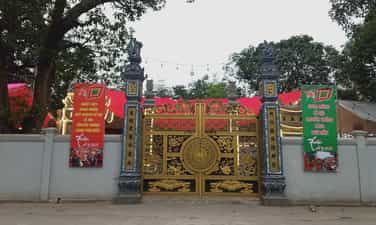
Phu Dien Temple (Dai Thanh)
Phu Dien Temple is located in Huu Hoa commune, Thanh Tri district (now Dai Thanh commune, Hanoi). It is a historical and architectural monument associated with important landmarks of the local area. The temple is dedicated to two village tutelary deities: King Le Dai Hành and General Tran Thong, both natives of Phu Dien. According to legend, King Le Dai Hành stopped to hunt in this area while marching north to fight invaders. To commemorate this event, the village was named "Dai Hành" (meaning "Great Hành"). The temple still preserves the "Phu Dien Le Emperor's Genealogy," compiled by Nguyen Binh in 1572 and copied in 1710, recording the life and career of King Le Dai Hành. Although not large in scale, the temple boasts many distinctive architectural and artistic features. The main hall consists of five bays, with a two-bay sanctuary behind it. The wooden components are carved with dragons, leaves, cloud patterns, and various motifs of the four mythical creatures and four auspicious symbols. Within the grounds are also pillars, stone lions, and stone tigers, adding to the ancient and sacred atmosphere of the site. The temple currently preserves many valuable artifacts such as stone animal statues, wooden cranes, palanquins, dragon thrones, altars, incense burners, eight treasures, 10 royal decrees, genealogical records, and ancient steles. Every year, the festival takes place from the 7th to the 9th of March in the lunar calendar, featuring many folk activities such as dragon dance, wrestling, boat racing, Ca Tru singing, water puppetry, and traditional games. Source: Hanoi Famous Landmarks and Historical Sites
Hanoi
476 view
Rating : National Monument
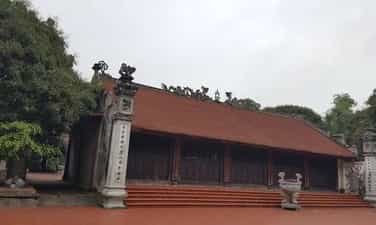
Phu Dien Village Temple
Located in Phu Dien village, Tu Liem ward, Hanoi city, Phu Dien communal house is a typical architectural and artistic relic, closely associated with the history and cultural traditions of the ancient Phu Dien region. This is also a region famous for its tradition of scholarship, having produced two Doctors of Philosophy and many other successful scholars throughout various dynasties. The communal house is dedicated to Bach Hac Tam Giang, also known as General Dao Truong, a legendary figure associated with the Hung King era, who commanded the navy to fight invaders and protect the country. Over time, the image of this tutelary deity has become a symbol of community cohesion and is revered and worshipped by the people of Phu Dien. Architecturally, the communal house is built in the shape of the Chinese character "Công" (meaning "work" or "achievement"), consisting of a main hall, a connecting corridor, and a rear sanctuary. The main hall has five bays, and the rear sanctuary has three bays. The wooden components are elaborately carved with familiar themes of traditional art such as the four mythical creatures, the four seasons, dragons, flowers, and scenes of folk life. The intricate carvings not only enhance the beauty of the structure but also reflect the aesthetic sensibilities and spiritual life of the inhabitants of the Northern Delta region. The communal house still preserves many valuable artifacts such as royal decrees, genealogical records, stone steles, dragon thrones, palanquins, cranes, incense altars, horizontal plaques, couplets, and ornate archways. Every year, the communal house festival is held on the 14th and 15th of the third lunar month, featuring a palanquin procession, water fetching from the ancient well, and many traditional cultural activities. With its harmonious blend of historical value, religious beliefs, and architectural art, Phu Dien communal house is not only a place to commemorate the village's tutelary deity but also a space preserving the memories, traditions, and cultural identity of Phu Dien village within the historical flow of Thang Long – Hanoi. Source: Hanoi Newspaper and Radio & Television.
Hanoi
511 view
Rating : National Monument