Relic point Vietnam
Việt Nam
Southern Vietnam Radio and Telecommunications Agency
The Southern Vietnam Radio and Telecommunications Agency – A Heroic Legacy in the Heart of Dong Thap. The Southern Vietnam Radio and Telecommunications Agency historical site is located at the Go Muoi Tai base in the Dong Thap Muoi region, now Phu Cuong commune, Tam Nong district, Dong Thap province. Established and operating secretly from 1945 to 1954, it was one of the first cradles of revolutionary communications in Southern Vietnam. Through the passage of time and the vicissitudes of history, it has been rebuilt and restored into a solemn historical site. The grounds are highlighted by the majestic Monument to the Southern Vietnam Radio and Telecommunications Agency, along with memorial structures commemorating the contributions of previous generations. This space not only preserves the memory of the rudimentary machinery repair workshop and the former telegraph operator training school, but also marks the glorious milestones during the nine years of service in the resistance war against the French, maintaining the uninterrupted flow of information between the Southern battlefield and the Central Government. Not only is it historically significant for the postal service, but the site is also a brilliant symbol of the patriotic spirit of the Southern region. Overcoming bombing raids and harsh conditions, it served as a safe transit point, ensuring the transportation of weapons, documents, and transporting tens of thousands of cadres to and from the battlefield. With its immense historical significance, the Southern Vietnam Radio and Telecommunications Post Office site today is not only a symbol of gratitude to our forefathers, but also a destination rich in cultural values, contributing to the education of revolutionary traditions for future generations. Source: Dong Thap Provincial Museum Information Portal
Dong Thap
381 view
Rating : National Monument
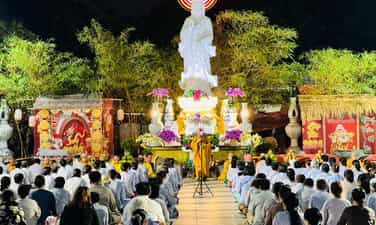
Long Thien Pagoda
Long Thien Pagoda – A Long-Standing Buddhist Landmark in Dong Nai Province. Located on the right bank of the Dong Nai River, in Buu Hoa Ward, Bien Hoa City, Long Thien Pagoda was built in 1664 by Patriarch Thanh Nhac. It is one of the oldest pagodas in Dong Nai and is considered the cradle of Southern Vietnamese Buddhism. In 1991, the pagoda was classified as a National Historical Monument. Despite numerous renovations, particularly in 1748, 1842, and 1952, the pagoda retains its ancient and solemn appearance. The grounds feature many ancient trees, old stupas, and the stupa of Patriarch Thanh Nhac. The main hall is notable for its collection of Buddha statues, horizontal plaques, couplets, and exquisite carvings depicting traditional themes such as the four mythical creatures, flowers and birds, and fish transforming into dragons. Beyond its architectural and religious value, Long Thien Pagoda is also deeply connected to the history of Dong Nai province. During the resistance war, the pagoda served as a gathering place for monks, nuns, and Buddhist followers to participate in patriotic activities and contribute to the national liberation struggle. With a history of over 360 years, Long Thien Pagoda today is not only a place of religious worship but also a destination rich in historical and cultural value, contributing to preserving the imprint of the formation and development of Dong Nai province. Source: Dong Nai Buddhist Affairs TV
Dong Nai
493 view
Rating : National Monument
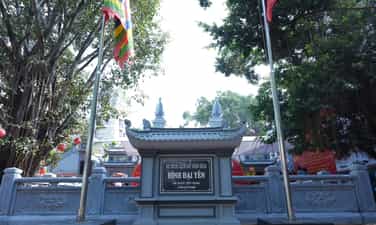
Dai Yen communal house
Dai Yen communal house in Ngoc Ha ward, Ba Dinh district, Hanoi, is a relic associated with the "Thirteen camps" area west of Thang Long citadel from the Ly dynasty. The communal house worships Princess Ngoc Hoa, who is said to have been a 9-year-old girl who made achievements in the war against the Champa army in 1104. Disguising herself as a man and following her father into battle, Ngoc Hoa disguised herself as a betel and areca seller and pipe tobacco seller to infiltrate the enemy camp, collect information and make signals to help our troops defeat the enemy. After her triumph, she returned to Dai Yen and transformed into the place where the communal house is built today. The communal house was greatly overhauled in 1886, including the communal house gate, left and right vu, front altar, grand altar and back palace. In the harem, there are still altars, statues, dragon thrones, tablets and ordinations through dynasties. Every year, the Dai Yen village festival is held on the 14th day of the third lunar month, with many rituals and especially the "Flower Offering" dance to commemorate Princess Ngoc Hoa. With historical, cultural and architectural and artistic values, Dai Yen Communal House was ranked a historical, architectural and artistic relic in 1990. Source: Hanoi Landscapes and Monuments
Hanoi
545 view
Rating : National monument
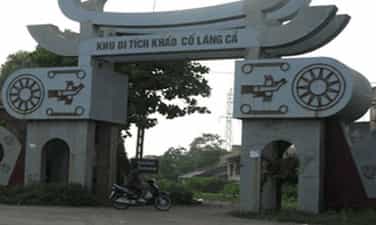
Archaeological site of Lang Ca
Lang Ca archaeological site is located on Nhan Hill, Tho Son ward, Viet Tri city, Phu Tho province. This is one of the most typical archaeological relics of Dong Son culture, associated with the formation and development process of ancient Vietnamese residents in the ancestral land. Through many excavations, archaeologists have discovered 336 burial tombs, including 328 tombs belonging to the Dong Son culture, along with many traces of residence. A series of bronze, stone and ceramic artifacts were found such as axes, spears, daggers, jars, bells, bronze drums, molds and jewelry, showing that this place was once an important economic and cultural center for residents during the country's founding period. Research shows that the Lang Ca residence dates back to around the V–IV centuries BC, equivalent to the Hung King era; The burial site continued to exist for many centuries afterward. The findings here are a valuable source of data for studying the Hung King era and the Van Lang state. With special historical and archaeological value, Lang Ca was ranked as a national archaeological relic in 2006. Source: Phu Tho Newspaper
Phu Tho
211 view
Rating : National monument
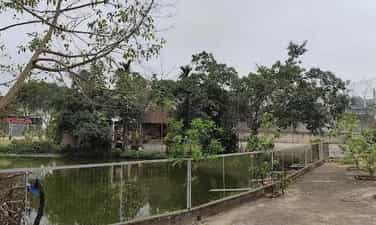
Dinh Huong Tram
Huong Tram communal house is located in Du Lau ward, Viet Tri city, Phu Tho province, and is one of the ancient communal houses associated with the ancient land of Van Lang. The communal house worships King Quy Minh, Queen Mother Thanh Phi and Princess Can Nuong Bao Hoa - figures who have been worshiped since the time of Hung King. According to the family tree, the communal house was built in 1572, during the Later Le Dynasty. The building has the architecture of the word "Dinh", including a communal house and a harem, featuring a system of wooden columns and carvings bearing the artistic mark of the Le and Nguyen dynasties. Every year, the Huong Tram communal house festival takes place on the 5th and 6th of January, with palanquin procession ceremonies, Xoan singing, silk house singing and many folk games, attracting a large number of people and tourists. With unique historical, cultural and architectural artistic values, Huong Tram Communal House was ranked a National Historical Site in 2004, contributing to enriching the heritage system associated with the Hung King era in Viet Tri land. Source: Phu Tho Newspaper and Radio and Television
Phu Tho
226 view
Rating : National monument

Cao Thang Church
Cao Thang Church is located on a small hill in Son Tien commune, Ha Tinh province, and is a place to commemorate Cao Thang (1863–1893) - a talented general of the Huong Khe insurgent army and a close associate of Phan Dinh Phung in the anti-French colonial movement at the end of the 19th century. Cao Thang is famous for his military leadership and especially for researching and manufacturing French 1874-style rifles to serve the Huong Khe uprising. He died in 1893 when he was only 30 years old. After that, the Cao family's descendants and local people built a church to commemorate and pay tribute to the hero. The church was built in 1907, made of ironwood, has three compartments, four trusses, and a tiled roof, with bold traditional architecture. Inside, there are also dragon thrones, tablets, mirror stands and gilded lacquered worship objects. With historical values and artistic architecture, Cao Thang Cathedral was ranked a national historical relic in 1998. Source: Historical and cultural relics information page
Ha Tinh
542 view
Rating : National monument
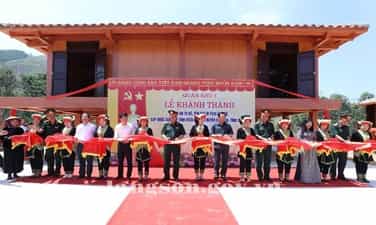
The location marking the crimes of the French colonialists in Lan Ang
The site marking the crimes of the French colonialists at Lan Ang, Hung Vu commune, Bac Son district, Lang Son province is a revolutionary historical relic associated with the years of arduous struggle of the army and people of Bac Son. Lan Ang used to be a safe revolutionary zone, a place to hide and protect revolutionary cadres and agencies, and a military training location for guerrilla forces. In particular, on February 9, 1945, the French colonialists and their henchmen ambushed and murdered comrade Hoang Van Han - Commander of the Bac Son Guerrilla Team in 1940. Comrade Hoang Van Han's sacrifice aroused hatred for the enemy and strengthened the local people's determination to fight. Lan Ang was also associated with the development process of the Bac Son revolutionary force, from the Bac Son Guerrilla Team to the National Salvation Army I, contributing to creating an important premise for the August Revolution of 1945. Today, at the monument there is a stele marking the historical event in 1945. With typical historical values, this location was ranked a National Historical Monument in 2020 by the Ministry of Culture, Sports and Tourism. Source: Department of Cultural Heritage
Lang Son
339 view
Rating : National monument
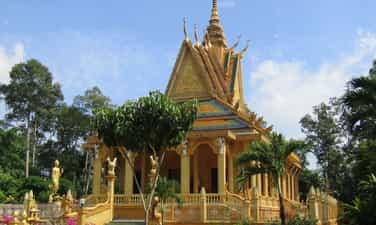
Bo Luy - Lo Gach Pagoda
Bo Luy - Lo Gach Pagoda: Unique vestiges of Oc Eo culture in Vinh Long. Bo Luy relic - Lo Gach pagoda is a special archaeological site, associated with traces of the Oc Eo culture in the Mekong Delta. The relic was discovered in the grounds of Kompong Thmo Pagoda, also known as Lo Gach Pagoda. Through excavations, archaeologists found traces of an ancient architectural complex and a large-scale earth rampart system, considered one of the notable citadels in the Southwest region. Many artifacts such as fired bricks, sandstone, bronze and gold leaf carvings of elephants and lotus flowers were discovered here, showing the unique historical, cultural and artistic value of the monument, dating back to the 8th - 9th centuries. With outstanding values, in 2017, Bo Luy - Lo Gach Pagoda was recognized as a National Monument. Today, this place is not only an archaeological research site but also contributes to introducing ancient cultural imprints of Tra Vinh land. Source: Ethnicity and Development Newspaper
Vinh Long
514 view
Rating : National monument

Luu Cu II Relics
Luu Cu II Relics - Vestiges of Oc Eo culture nearly 2,000 years old. Located in Luu Cu II hamlet, Luu Nghiep Anh commune, Vinh Long province, Luu Cu II Relic is a typical Brahmanical religious architectural ruin of the Oc Eo culture, dating back nearly 2,000 years. The site was discovered in 1985 and excavated during 1986–1987. Through research, archaeologists determined that the structure had two phases of existence, from the first century to the fifth century AD, associated with the development of the Funan Kingdom. Luu Cu II architecture has a large scale, the foundation is elaborately built with many angles and surrounding corridors. In particular, excavations have discovered many artifacts related to Hindu beliefs, including lingams, yoni and artifacts associated with the god Shiva. With special historical, archaeological and architectural value, in 1990, Luu Cu II was recognized as a national historical-cultural relic. This is one of the relatively intact Oc Eo vestiges, helping visitors better visualize an important historical period of the ancient Southern region. Source: Vinh Long province electronic information portal
Vinh Long
579 view
Rating : National monument

Quang Trieu Assembly Hall (Ong Pagoda Can Tho)
Located at 32 Hai Ba Trung Street, Can Tho City, Quang Trieu Assembly Hall, commonly known as Ong Pagoda, is a typical religious building of the Cantonese Chinese community. The pagoda was built in 1894, completed in 1896 and still retains its ancient appearance almost intact. The project stands out with its "Quoc"-shaped architecture, closed rows of houses surrounding Thien Tinh yard. The yin-yang tiled roof is elaborately decorated with images of two dragons painting pearls, fish turning into dragons, phoenixes, along with a system of reliefs, horizontal panels, parallel tureens and sophisticated wood carvings. The main hall is the place to worship Quan Thanh De Quan, along with Thien Hau Thanh Mau, Phuc Duc Chinh Than and Avalokitesvara Bodhisattva. Every year, many traditional funeral ceremonies take place here, attracting a large number of people and tourists to worship. Not only has architectural value, Ong Pagoda is also associated with the history of the Chinese community and was once a place to shelter revolutionary cadres during the war years. With these unique values, in 1993, Ong Pagoda was recognized as a National Monument, becoming a prominent cultural and historical destination of Can Tho. Source: Wikipedia
Can Tho
377 view
Rating : National monument