
 vn
vn en
en ja
ja ko
ko zh
zh

















List of relic sites (94)
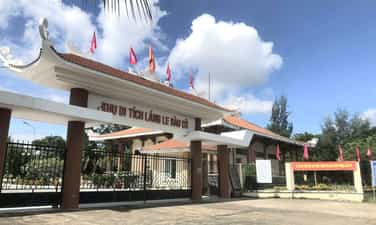
Lang Le Bau Co relic site
Lang Le Bau Co relic site is located in Tan Nhut commune, Binh Chanh district, Ho Chi Minh City. Lang Le Bau Co is associated with the resistance war against the French invasion in 1948 with major battles that went down in history. Lang Le Bau Co relic was recognized as a city-level historical relic in 2003. The reason it is called Lang Le Bau Co relic area is because the name of Lang Le Bau Co relic area was given by local people. The hamlet was established next to the interlaced canals and rivers. Lang Le Bau Co is located inside a large field with many shrimp, crabs, and fish. Along with many species of birds such as mallards, storks, teal, nuthatches, gongs, partridges, herons, and red armpits come to feed here. Therefore, Tan Nhut people call it by the familiar and rustic name Lang Le Bau Co. Lang Le Bau Co relic is considered the gateway to move to the center of Vuon Thom base and attack the enemy headquarters in Saigon. Previously, Lang Le Bau Co relic area was originally a field of overgrown reeds. On April 15, 1948, the French colonialists sent 3 thousand soldiers and many modern weapons to simultaneously attack the Lang Le Bau Co area to destroy the Vuon Thom base. At that time, the revolutionary armed forces in Lang Le - Bau, because of their small force and rudimentary weapons, had the help of local people along with the advantage of terrain. After just over half a day of fighting, it turned to attack, causing the French army to suffer a large number of casualties. The victory at Lang Le Bau Co killed 300 enemies, captured 30 mercenaries, and destroyed many machines, military vehicles, and guns of all kinds of the enemy. However, on our side, there are many officers and soldiers who heroically sacrificed their lives at a very young age. On October 14, 1966, in Lang Le, the Republic of Vietnam Army Ranger Battalion was destroyed by tourist militia. Lang Le Bau Co relic site has great historical significance for the people of Saigon in particular and the whole country in general. Faced with hatred for the French colonialists, Lang Le Bau Co's army and people fought a war of great historical significance that opened the door for our side and the enemy. For our side, the battle opened the door to heroism in a strong resistance position. As for the enemy, they had to retreat into a strategic position and were destroyed. The French colonialists could no longer form a strategy to defeat the Viet Minh. Moreover, at Vuon Thom base, Lang Le Bau Co also took place a determined battle to protect our base and destroy all sabotage plans of the enemy. Lang Le Bau Co relic area, after the Dong Khoi movement in 1960, was also a logistics and springboard for the armed forces to liberate Long An - Saigon - Gia Dinh. To commemorate the sacrifices of our compatriots and soldiers, in 1988 Binh Chanh district built a historical building in Lang Le Bau Co land with an area of 1000m2. Source: Ho Chi Minh City Electronic Information Newspaper
Ho Chi Minh City
17794 view
Rating : City-level relics
Cu Chi Tunnels historical relic site
Located about 70 km northwest of the center of Ho Chi Minh City, Cu Chi Tunnels is a miniature of the transformation and creativity of the army and people of Cu Chi during the long and fierce resistance war for 30 years. fight against invaders, win independence and freedom for the Fatherland. With the scale of its feat, Cu Chi Tunnels entered the history of the heroic struggle of the Vietnamese people as a legend of the 20th century and became a famous landmark in the world. With only rudimentary tools such as a hoe blade and a shovel, a unique and one-of-a-kind wonder of fighting the enemy has been created with about 250 km of tunnels spreading like a spider web in the ground, with continuous constructions. with tunnels such as: Trenches, emplacements, fighting nests, bunkers for dining, sleeping, meetings, activities, military medicine, food storage warehouses, wells, Hoang Cam kitchen... The real stories from the tunnels have exceeded human imagination. The tunnel is 3 to 8 meters deep underground, the height is only enough for one person to walk on their knees. The first tunnel at the edge of the forest has an underground well that provides drinking and living water for the entire tunnel area. The well is 15m deep and clear. The tunnel system consists of 3 floors, from the "backbone" radiating countless long and short branches that connect with each other, some branches reaching out to the Saigon River. The first floor is 3m above the ground, resistant to artillery shells and the weight of tanks and armored vehicles. The second floor is 5m above the ground and can withstand small bombs. The last floor is 8 to 10 meters above the ground, which is very safe. The way up and down between the basement floors is arranged with secret hatch covers. Above is discreet camouflage, looking like extruded termite mounds, along the tunnel there are vents. Connected to the tunnels, there are large tunnels for resting, a place to store weapons and food, a well, a Hoang Cam kitchen, a command tunnel, a surgical tunnel... There are also large tunnels and roofs. The roof is airy and cleverly camouflaged for watching movies and performing arts. Also from this tunnel, the US Crimp (trap) operation with 3,000 troops, Sedarfall operation with 12,000 soldiers, with tanks and maximum support aircraft, aimed to turn Cu Chi into a "destruction free zone". destroy" has been smashed. Cu Chi truly deserves the title "land of steel and bronze" through 20 years of persistent fighting. With the value and stature of the victory summed up by the blood and efforts of tens of thousands of soldiers and compatriots, the Cu Chi tunnel base has been recognized by the Ministry of Culture as a special national monument. Since the return of peace, tens of thousands of tourist groups with millions of people of all skin colors and ethnicities around the world have visited Cu Chi tunnels. From General Secretaries of the Communist Party, Heads of State, to politicians, generals, scientists, philosophers, writers, journalists, American veterans... have set foot in the tunnels with all emotions and admiration for the heroic land. A politician in the Federal Republic of Germany said: "For many years I have been skeptical about the struggle of the Vietnamese people. How can a small and poor country defeat a large and rich country like America? But when I came here, going through the 70m tunnel, I was able to answer that question myself." Source: Ho Chi Minh City Historical Relics
Ho Chi Minh City
7264 view
Rating : Special national monument
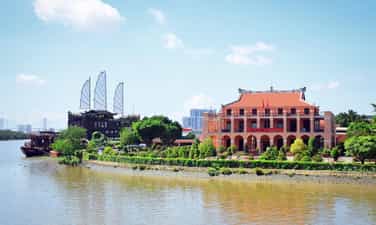
Nha Rong Wharf - Ho Chi Minh Museum (Ho Chi Minh City Branch)
Nha Rong Wharf is one of the historical relics associated with the great President Ho Chi Minh's path to national salvation. Nha Rong Wharf or Ho Chi Minh Museum started out as a major commercial port of Saigon. This trading port is located on the Saigon River and was built in 1863, and more than 2 years later, in 1864, this Nha Rong was completed, on the area near Khanh Hoi bridge. Construction of Nha Rong began on March 4, 1863, by the "Sea Shipping Company" to build a store to serve as a residence for the General Director and a place to sell train tickets. The roof is decorated with a dragon image, in the middle instead of a pearl is a badge with the image of "Horse head and anchor". The "Horse Head" insignia refers to the time when in France, this company specialized in road transport with horses pulling carts, while the "Anchor" symbol symbolizes ships. In 1919, the company was allowed to build a wharf with reinforced cement but could not do so. It took until March 1930 to complete the new wharf, which had only one wharf but was 430m long. In 1955, after the French colonialists failed in Vietnam, Saigon Trade was transferred to the southern government of our country to manage. The government restored the roof and replaced the two old dragons with two other dragons with heads facing outward. With a construction area of nearly 1,500 square meters, the remaining area is a green garden with cool air and a romantic setting of more than 400 precious trees from all over the country gathered here to show off their beauty and fragrance, especially especially the banyan tree of the late General Secretary Nguyen Van Linh and the bodhi tree of the President of India. In 1965, Nha Rong was used by the US military as the headquarters of the US Military Aid Receiving Agency. In 1975, after the country was unified, Dragon House, the symbol of Saigon port, was managed by the Vietnam Seaway Department. Nha Rong Wharf is currently the Ho Chi Minh Museum, Ho Chi Minh City Branch, one of the museum branches and souvenirs about President Ho Chi Minh in the country. Because here, on June 5, 1911, young man Nguyen Tat Thanh (later Ho Chi Minh) boarded a train to work as a kitchen assistant to have the opportunity to go to Europe. Next was the day Uncle Ho left to find a way to save the country in Vietnam. Nha Rong Harbor is a place to preserve many priceless documents and artifacts to help future generations better understand the life and great revolutionary career of the Father of the Nation. The museum is built into 12 galleries with about 170 data, images and artifacts. Not only that, this is also an address for people to come and learn about the life and revolutionary career of Uncle Ho. Nha Rong Wharf is also a destination that attracts millions of domestic and international tourists. From the above great values and meanings, Nha Rong Harbor deserves to be a national historical relic that we need to preserve, honor as well as propagate and promote to friends in five continents. Nha Rong Wharf will forever be a great pride of the entire nation. Source: Department of Cultural Heritage
Ho Chi Minh City
11274 view
Rating : National monument

Independence Palace
The Independence Palace today is called the Reunification Palace or the Thong Nhat School Association. This was once the residence and workplace of the President of the Republic of Vietnam. The Independence Palace is currently classified as a special national monument by the Vietnamese government. In 1962, Ngo Dinh Diem built the project with the design of the building by architect Ngo Viet Thu. In 1868, after occupying Luc Tinh Cochinchina, the French colonialists built a mansion here. The ding was originally the residence of the governor of Cochinchina. Since 1887, when the French president signed the decree establishing the Indochina Federation, the independence palace became the French governor-general in Indochina. In 1954, with the defeat at Dien Bien Phu and according to the Geneva Accords, the French expeditionary force had to withdraw from Vietnam. On September 7, 1954, the High Commissioner of the French Military Command in Indochina, on behalf of France, returned the Independence Palace to the representative of the Saigon government, Prime Minister Ngo Dinh Diem. On February 27, 1962, there was a coup. Two Saigon army pilots or bombers collapsed the entire main left wing of the Palace. Since it was impossible to restore it, Ngo Dinh Diem decided to Construction of the palace began on July 1, 1962. During the construction of the new palace, Ngo Dinh Diem's family moved to live at Gia Long Palace. While the project was being built, Ngo Dinh Diem was killed by a coup faction on November 2, 1963. Therefore, on the inauguration day of the palace, the person presiding over the ceremony was Nguyen Van Thieu - Chairman of the National Leadership Committee. . The person who lived the longest at the Independence Palace was Nguyen Van Thieu. This is the headquarters of the Saigon government, where many foreign military interventions were witnessed in the brutal war in Vietnam and where many anti-people policies were born. President of the Republic of Vietnam Nguyen Van Thieu. With the Ho Chi Minh campaign on April 30, 1975, Tank number 390 rammed through the gate of the Independence Palace to enter the palace. At 11:30 a.m. on the same day, Lieutenant Bui Quang Than, commander of the company commanding vehicle 843, lowered flag 36 and raised the flag of the National Front for the Liberation of South Vietnam. The flag fluttering on the roof of the Independence Palace ended 30 years of arduous and heroic war for the Vietnamese people. At this moment, the last President of the Republic of Vietnam, Duong Van Minh, and the entire cabinet of the Saigon government, announced their unconditional surrender to Ho Chi Minh's campaign of complete victory over the people of the two Souths. Bac has reunited as a family. Independence Palace has been recognized by the state as a historical and cultural relic. In addition to the names independence palace, there are also a number of other names such as Governor General's Palace, Presidential Palace or another name, Dragon's Head Palace. Architect Ngo Viet Thu has harmoniously combined modern architectural art with traditional Eastern architecture. The entire Palace is shaped like the word Cat, which means good and lucky. The center of the Independence Palace is the location of the national document presentation room on the top floor, Tu Phuong. The mouth-shaped main door promotes education and self-expression. The architectural beauty of the Palace is also shown by the stylized floral curtain. This is a modification from the image of the Hue Imperial Palace, which increases the beauty of the palace. Usable area is 20,000 m², divided into 95 rooms. Each room here has a unique function with architecture and decoration suitable for its intended use. After 1975, the main house continued to be used in some circles to serve tourists. At the corner of Princess Huyen Tran Street - Nguyen Thi Minh Khai before 1975 was the living area of the Guard crew who flew the plane for Nguyen Van Thieu. Currently, it has been renovated into a lunch break area and collective kitchen for Thong Nhat hall staff. The two-storey building with an area of 160 m², under Nguyen Du street, before 1975 was the headquarters of the Democratic Party, and after 1975, it was the workplace of the board of directors. In addition to the above buildings in the left corner of the palace on Nguyen Thi Minh Khai street, Thong Nhat Hall also has a 4m Van Giap Duong house built on a high mound. Independence Palace is not only a unique architectural work but it is also a historical testament. The Independence Palace has accompanied our country through many ups and downs of history. Its solidity has left a lifetime of valuable lessons for our children and grandchildren about patriotism and resilience in the lives of our ancestors. ta. Source: Ho Chi Minh City electronic information portal
Ho Chi Minh City
6264 view
Rating : Special national monument
Outstanding monuments
See all
Lang Le Bau Co relic site
Lang Le Bau Co relic site is located in Tan Nhut commune, Binh Chanh district, Ho Chi Minh City. Lang Le Bau Co is associated with the resistance war against the French invasion in 1948 with major battles that went down in history. Lang Le Bau Co relic was recognized as a city-level historical relic in 2003. The reason it is called Lang Le Bau Co relic area is because the name of Lang Le Bau Co relic area was given by local people. The hamlet was established next to the interlaced canals and rivers. Lang Le Bau Co is located inside a large field with many shrimp, crabs, and fish. Along with many species of birds such as mallards, storks, teal, nuthatches, gongs, partridges, herons, and red armpits come to feed here. Therefore, Tan Nhut people call it by the familiar and rustic name Lang Le Bau Co. Lang Le Bau Co relic is considered the gateway to move to the center of Vuon Thom base and attack the enemy headquarters in Saigon. Previously, Lang Le Bau Co relic area was originally a field of overgrown reeds. On April 15, 1948, the French colonialists sent 3 thousand soldiers and many modern weapons to simultaneously attack the Lang Le Bau Co area to destroy the Vuon Thom base. At that time, the revolutionary armed forces in Lang Le - Bau, because of their small force and rudimentary weapons, had the help of local people along with the advantage of terrain. After just over half a day of fighting, it turned to attack, causing the French army to suffer a large number of casualties. The victory at Lang Le Bau Co killed 300 enemies, captured 30 mercenaries, and destroyed many machines, military vehicles, and guns of all kinds of the enemy. However, on our side, there are many officers and soldiers who heroically sacrificed their lives at a very young age. On October 14, 1966, in Lang Le, the Republic of Vietnam Army Ranger Battalion was destroyed by tourist militia. Lang Le Bau Co relic site has great historical significance for the people of Saigon in particular and the whole country in general. Faced with hatred for the French colonialists, Lang Le Bau Co's army and people fought a war of great historical significance that opened the door for our side and the enemy. For our side, the battle opened the door to heroism in a strong resistance position. As for the enemy, they had to retreat into a strategic position and were destroyed. The French colonialists could no longer form a strategy to defeat the Viet Minh. Moreover, at Vuon Thom base, Lang Le Bau Co also took place a determined battle to protect our base and destroy all sabotage plans of the enemy. Lang Le Bau Co relic area, after the Dong Khoi movement in 1960, was also a logistics and springboard for the armed forces to liberate Long An - Saigon - Gia Dinh. To commemorate the sacrifices of our compatriots and soldiers, in 1988 Binh Chanh district built a historical building in Lang Le Bau Co land with an area of 1000m2. Source: Ho Chi Minh City Electronic Information Newspaper
Ho Chi Minh City
17794 view
Rating : City-level relics

Hoc Mon District Palace
Hoc Mon District Palace is located at No. 1, Ly Nam De Street, Hoc Mon Town, (next to the District People's Committee headquarters) and is the place where many outstanding fighting events have been recorded throughout the long history from 1885 to the Southern days. Complete liberation of the People of 18 Betel Garden Villages. After defeating Chi Hoa Fort, the French colonialists built a 3-storey wooden house here to use as a military post. When Tran Tu Ca took office as Governor of the Palace, he used the Station as the Palace of Binh Long district. Originally a cunning drunkard of the French colonialists, Tran Tu Ca was led by a group led by Mr. Phan Van Hon (Quan Hon) and Nguyen Van Qua (Chanh Lanh Binh) of nearly 1,000 insurgents who came to burn the District Palace, captured and head cut off in the middle of the market. That was February 8, 1885, At Dau Tet. Afterwards, Hoc Mon District Palace was rebuilt with a blue stone foundation, brick walls, and a defense system from the upper floors to the fence. The architecture is similar to the Military Fort, so the locals call it Hoc Mon Fort. Tran took over from Tran Tu Ca as Governor of Ngon district, moving to Tra District and then Tho District. This was a long period of time when the people of the Hoc Mon region suffered from many cruel and despicable scenes from the French colonialists and their oligarchic henchmen mentioned above. With the indomitable tradition of Hoc Mon people. On June 4, 1930, around 6 a.m. in front of the District Palace, hundreds of Hoc Mon people protested demanding "abolition of poll tax, reduction of license and market taxes, and granting land to poor farmers." Tra District invited the leaders into the Palace to negotiate, but they cunningly arrested them, including Mr. Le Van Uoi (Secretary of Tan Thoi Nhi Commune), who was the leader of the protest. People were undaunted and fiercely demanded that Tea District release those detained. The protest group became more and more crowded, the fighting spirit spread somewhat, causing Tra District to give in. On the one hand, they released the detained people, on the other hand, they called the officials in Saigon for help. 2 hours later, the struggle was led by two men, Blachole and Nobbot, who opened fire on the protest group, causing many casualties. But the most impressive historical event at Hoc Mon District Palace was the Southern Uprising on November 23, 1940. Hoc Mon Fort is very solid, built of green stone like a fortress, about 15 meters high, has a gun emplacement and a defense system with battlements guarded by a platoon of green soldiers. On November 22, 1940, France reinforced one more platoon to deal with the situation. On the afternoon of November 22, 1940, Mr. Do Van Coi's army broke into the town, disguised as civilians, ambushed behind the Station waiting for orders to rob the Station. Another army wing has the task of destroying bridges, cutting down trees blocking roads, and occupying offices and houses... The army wing from Phuoc Vinh An, Tan Thong, Tan An Hoi, Tan Phu Trung is led by Mr. Pham Van Sang and Dang Cong Binh commanded, started from Ben Do hamlet, attacked the house, killed 1 person, collected 4 guns, and took control of the situation here (Tan Phu Trung). Immediately this army was ordered to pull back to Hoc Mon. The Long Tuy Thuong army was commanded by Mr. Bui Van Hoat. The army of General Long Tuy Trung was commanded by Mr. Do Van Day and Le Binh Dang. At around 24:00 on the night of November 22, 1940, the sound of artillery fire had not yet been heard in Saigon. After consulting, the army commanders united to attack the enemy's post. Immediately the troops headed straight to Fort Hoc Mon, where District Chief Bui Ngoc Tho resided. Two insurgents named Nghe and Kinh volunteered to enter the front gate and sacrificed their lives. Insurgents from all directions rushed into the Fort like water bursting its banks. Faced with the power of the insurgents and the masses, the soldiers in the Station no longer had the spirit to resist and fled in disarray. The insurgents completely occupied the inside of the station, but upstairs, the enemy still stubbornly used guns to shoot sporadically, at the same time calling Saigon and Thu Dau Mot for emergency help. Because he was eager to capture the name of Tho District, comrade Do Van Day climbed up to the upper floor of the Station by clinging to the gutter. Halfway up, he was hit by bullets, the comrade fell and died later. The battle was at a standstill when enemy reinforcements arrived. Unable to hold out, the insurgents withdrew from the town, dispersed to the villages, the armed forces withdrew to Ben Do hamlet (Tan Phu Trung) and then moved to My Hanh hamlet (Duc Hoa). Although the attack on Hoc Mon Fort (later called Hoc Mon District Palace) failed, it left a deep impression in the hearts of all civilians admiring the courage of revolutionary soldiers in the fight against colonialism. steal the country. During the historic Ho Chi Minh campaign, at 7:00 a.m. on April 30, 1975, Hoc Mon town was completely liberated, the National flag fluttered above the District Palace, where District Chief Nguyen Nhu Sang and his gang sai has been running away since last night. Today, Hoc Mon District Palace is chosen as the District Museum, where many documents are displayed, illustrating the ups and downs of historical periods as well as the revolutionary fighting spirit of the army and people in Hoc Mon district over the past two years. resistance war against French colonialism and American imperialism. A monument placed in front of the Hoc Mon District Palace relic represents the indomitable sacrifice of the army and people of 18 Betel Garden Villages, recognized as a national historical and cultural relic. Source: Hoc Mon District People's Committee
Ho Chi Minh City
13861 view
Rating : National monument

US Embassy building
The US Embassy relics, also known as the "White House of the East", are the origin of sinister military and political plots aimed at long-term annexation of Vietnam. The relic site is a 5-storey building built Built in modern architecture, located at the corner of Mac Dinh Chi - Le Duan Street, Ben Nghe Ward, District 1, Ho Chi Minh City, on a plot of land nearly 5,000 square meters. Previously, the US embassy was located at 39 Ham Nghi Street. At around 10:00 a.m. on March 30, 1963, the US embassy on Ham Nghi Street was hit with explosives by the F21 Commando team, collapsing three floors: 1, 2, 3, so the US decided to rebuild it. Construction began on the building in 1965, most of the materials and construction machinery were transported from the US, under the control of American engineers. According to the design, the building is surrounded by 7,800 Taredo stones that can withstand mines and artillery shells. The main door is equipped with thick steel, the other doors are blocked by a special thick bulletproof layer. All doors use automatic systems, including iron doors blocking the way to the upper floors. Inside the building there are 140 rooms with 200 staff serving day and night. In addition, next to the building is also built an additional row of houses called the "Norodom" area exclusively for C.I.A. employees. When inaugurated, the building had only 3 floors. At the end of 1966, two more floors and a terrace were built to serve as a landing place for helicopters. Surrounding the building is a 3m high wall, at both ends of the wall close to Le Duan Street, 2 high blockhouses are built, guarded day and night. The Embassy was completed in September 1967 with a defense system such as a fortress with 60 guards, a bomb shelter, and a radar screen system to control the facade. Immediately after the building was completed, on September 24, 1967, thousands of students flocked to the gate of the US Embassy to fight for "America to stop bombing the North", "America to go home" and issued a notice denouncing the US for "trampling and seriously violating the right to self-determination of the Southern people". But the outstanding event that happened at the US Embassy was the battle of the City Rangers during the General Offensive and Uprising in the Spring of 1968. The target of attacking the US Embassy was added on January 24, 1968 by Ngo Thanh. Van is in charge of general affairs. Ranger Team 11 took on this important mission, including captain Ut Nho (military region reconnaissance captain) and soldiers: Bay Truyen, Tuoc, Thanh, Chuc, Tran The Ninh, Chinh, Tai, Van, Duc, Cao Hoai Vinh, Mang, Sau and 2 drivers: Tran Si Hung and Ngo Van Thuan. Another equally humiliating event for the US Embassy was the chaotic escape that occurred on April 29 and 30, 1975 by the US and its accomplices. Faced with the rapid attack of the Vietnamese army and people in the historic Ho Chi Minh campaign, over 1,000 Americans and more than 5,000 pro-American Vietnamese jostled, pushed, and kicked each other to compete for a place on the terrace of the building. building to be rescued by helicopter. This relic was granted a certificate of recognition by the Ministry of Culture on June 25, 1976. Currently, the US Embassy building has been demolished and a new consulate in Ho Chi Minh City has been built, but next to it is a memorial stele forever remembering the achievements of the special forces soldiers who died in the battle. . Source: Ho Chi Minh City Youth Union
Ho Chi Minh City
13749 view
Rating : National monument

WARRIORS' MEMORIAL AREA AT THREE GIONG FORCES, NATIONAL HISTORICAL MONITOR
Nga Ba Giong relic is a revolutionary historical relic located in Hamlet 5, Xuan Thoi Thuong commune, Hoc Mon district. Surrounded by three roads: Phan Van Hon, Nguyen Van Bua and Provincial Road 19. Nga Ba Giong relic site is a memorial site for historical events in two wars against foreign invaders. Recognized as a national historical site in 2002. Giong Junction (also fully known as Giong Bang Lang Junction) is located in Xuan Thoi Tay village, part of 18 old betel garden villages formed from 1698 to 1731. For a long time, Giong Junction is a place with a folk name that has entered the history of the hometown of 18 betel garden villages of Hoc Mon - Ba Diem. Legend has it that in the past, this place was a relatively high land and a place where many linden trees grew, so this place got its name from there. After the Southern Uprising (November 23, 1940) failed, the French colonialists increased their repression and fierce terror against the revolutionary movement in the Hoc Mon - Ba Diem region. They set up three shooting ranges in Hoc Mon to kill Party leaders and patriotic comrades from their hometown of Hoc Mon and surrounding areas. Giong intersection is the third shooting range to record the heinous crimes of the French enemy and his henchmen against the people of Hoc Mon. Learning from the experience of 2 previous shooting ranges (1 at the old theater in the center of Hoc Mon District, 1 next to the well behind Hoc Mon Hospital today), they executed public shootings, forcing people to come and watch for the purpose of intimidation. revolutionary spirit of Hoc Mon people. But that firing squad backfired. The Hoc Mon people witnessed with their own eyes the cruelty of the French colonialists and the noble sacrifices of the communist soldiers, so their patriotic fire flared up even more fiercely. . For this third shooting range, they did not dare to build it near the center of the District anymore, but moved it to the Giong Junction area as a desolate, sparsely populated area to avoid people's resistance. Here, they built a shooting range with a solid mound of land 12m long, 2.2m high, in front of which were planted 6 shooting posts, each 1.7m high, the shooting direction facing the field (Ba Tram Lac). In 1941, here they secretly executed many times without letting the people see, hundreds of communist soldiers and patriots were killed by them. With the extremely sacred historical significance of Giong Junction, the place that marked the barbaric crimes of the French invaders, the place that demonstrated the indomitable fighting will and noble sacrifices of our comrades and compatriots later on. the Southern Uprising (November 23, 1940); After the complete liberation of the South (April 30, 1975), Hoc Mon district quickly restored and embellished the Nga Giong Junction revolutionary historical relic site to educate traditional generations of youth. This place has become a tourist attraction and a place to organize traditional festivals during major annual holidays of Hoc Mon district and the city, especially the anniversary of Southern Uprising Day (November 23). Currently, with the consent of the city, the district is renovating and building Giong Junction into "Giong Junction Martyrs' Memorial Area". Source: Hoc Mon electronic information portal
Ho Chi Minh City
13025 view
Rating : National monument

Nha Rong Wharf - Ho Chi Minh Museum (Ho Chi Minh City Branch)
Nha Rong Wharf is one of the historical relics associated with the great President Ho Chi Minh's path to national salvation. Nha Rong Wharf or Ho Chi Minh Museum started out as a major commercial port of Saigon. This trading port is located on the Saigon River and was built in 1863, and more than 2 years later, in 1864, this Nha Rong was completed, on the area near Khanh Hoi bridge. Construction of Nha Rong began on March 4, 1863, by the "Sea Shipping Company" to build a store to serve as a residence for the General Director and a place to sell train tickets. The roof is decorated with a dragon image, in the middle instead of a pearl is a badge with the image of "Horse head and anchor". The "Horse Head" insignia refers to the time when in France, this company specialized in road transport with horses pulling carts, while the "Anchor" symbol symbolizes ships. In 1919, the company was allowed to build a wharf with reinforced cement but could not do so. It took until March 1930 to complete the new wharf, which had only one wharf but was 430m long. In 1955, after the French colonialists failed in Vietnam, Saigon Trade was transferred to the southern government of our country to manage. The government restored the roof and replaced the two old dragons with two other dragons with heads facing outward. With a construction area of nearly 1,500 square meters, the remaining area is a green garden with cool air and a romantic setting of more than 400 precious trees from all over the country gathered here to show off their beauty and fragrance, especially especially the banyan tree of the late General Secretary Nguyen Van Linh and the bodhi tree of the President of India. In 1965, Nha Rong was used by the US military as the headquarters of the US Military Aid Receiving Agency. In 1975, after the country was unified, Dragon House, the symbol of Saigon port, was managed by the Vietnam Seaway Department. Nha Rong Wharf is currently the Ho Chi Minh Museum, Ho Chi Minh City Branch, one of the museum branches and souvenirs about President Ho Chi Minh in the country. Because here, on June 5, 1911, young man Nguyen Tat Thanh (later Ho Chi Minh) boarded a train to work as a kitchen assistant to have the opportunity to go to Europe. Next was the day Uncle Ho left to find a way to save the country in Vietnam. Nha Rong Harbor is a place to preserve many priceless documents and artifacts to help future generations better understand the life and great revolutionary career of the Father of the Nation. The museum is built into 12 galleries with about 170 data, images and artifacts. Not only that, this is also an address for people to come and learn about the life and revolutionary career of Uncle Ho. Nha Rong Wharf is also a destination that attracts millions of domestic and international tourists. From the above great values and meanings, Nha Rong Harbor deserves to be a national historical relic that we need to preserve, honor as well as propagate and promote to friends in five continents. Nha Rong Wharf will forever be a great pride of the entire nation. Source: Department of Cultural Heritage
Ho Chi Minh City
11274 view
Rating : National monument

Steel Wire Historical Site
The Steel Wire Bot relic includes 3 separate houses, Western-style architecture, brick walls, tile roofs, located on high land in Tang Nhon Phu A ward, district 9, Thu Duc city. Steel Wire House was built a long time ago. According to elders over 80 years old, they saw the Steel Wire house when they were young. Before 1945, the Steel Wire House was formerly known as the Steel Wire House because it was built to serve as a news transmitting and receiving station for the French. The station is designed to consist of three separate houses with 'western' style architecture with three antenna columns, the tallest of which is over 70 m. The project was designed by two Frenchmen, Hermall and Stéru, to serve the invasion of the French colonialists before 1945. The steel wire is a house with one ground floor and one floor, with many windows facing out in four directions. On the left side of the house there are two stairs leading to the first floor. The strangest thing is that in Steel Wire Bunch there is a secret cellar used to lock up and torture people they consider 'rebellious'. The tunnel has only one vent at the top. The mouth of the tunnel is small (0.4 m2) just large enough for a person to stand upright and enter the tunnel. In 1945, when Japan staged a coup to oust France in Indochina, the Steel Wire House was occupied by Japanese fascists. Not long after, the Japanese fascists were defeated, the French colonialists returned and the Steel Wire House belonged to the French again. When retaking the Steel Wire House, the French colonialists took down the antenna column (leaving only one column) and built two more brick houses with high floors, one for the commander named Pi-rolet and the other. The remaining room is reserved for French soldiers to guard. Since the day they took over Steel Wire, the French army has turned this place into a prison, arresting, besieging, torturing, and interrogating the people of the heroic Tang Nhon Phu village and those they suspect of being involved. , providing supplies to revolutionary soldiers. Here, during the nine-year resistance war against the French colonialists, French soldiers interrogated and tortured countless people as well as resilient revolutionary soldiers. They arrested and brutally used all methods of interrogation. There are prisoners who suffocated to death because the cellar was overcrowded and there was no oxygen. Many other people, regardless of age, young or old, male or female, whenever they were suspected by them, they had to stand in line so they could shoot them and throw their bodies into the Cau Ben Noc River. More brutally, they also used machetes to decapitate, threw the body into the river, the head was impaled on a stake, and formed a long line in front of the steel wire fence to 'expose the crime', preventing patriots from standing up. Being surrounded by steel wire during nine years of resistance against the French colonialists was a living hell for many innocent people. The Steel Wire Basket Relic was recognized by the Ministry of Culture, Sports and Tourism as a national historical and cultural relic on January 18, 1993. Source: Tang Nhon Phu A Ward Youth Union
Ho Chi Minh City
9144 view
Rating : National monument

Vo Thi Sau Memorial House
The memorial house and monument to hero Vo Thi Sau is located at Dat Do intersection, in Phuoc Long Tho commune - Dat Do District. The ancient wooden-walled, tile-roofed house where she lived as a teenager with her family has memorabilia, simple items, an ancestral altar, and an altar she placed in the outer space. In 1980, the house was renovated by the People's Committee of Dat Do district to be as spacious as it is today. Vo Thi Sau was a female guerrilla during the French-Vietnamese War in Vietnam, who repeatedly carried out assassination attempts on French officers and Vietnamese people collaborating with the French colonial government in South Vietnam. . The Vietnamese government views her as a symbol of a typical Heroic Martyr in the resistance war against the French and posthumously awarded her the title of Hero of the People's Armed Forces in 1993. Vo Thi Sau was born in 1933, the daughter of Mr. Vo Van Hoi and Mrs. Nguyen Thi Dau. Regarding the place of origin, the tombstone only records Dat Do district, Ba Ria - Vung Tau province. She was born into a poor family, her father worked as a horse-drawn carriage driver to transport passengers to Long Dien and Phuoc Hai, and her mother sold vermicelli noodles at Dat Do market. From a young age, she had to help her parents to make a living. After the French army recaptured the Dat Do region, at the end of 1945, Ms. Sau's brothers left their family and joined the resistance movement for the Viet Minh movement. She gave up her studies, stayed home to help her parents make a living and secretly provided supplies for her brothers, who worked in the Liberation Army Detachment of Ba Ria province. In 1946, she followed her brother, Vo Van Me, into the resistance zone, and became a liaison with the French Army Volunteer Police Team; In particular, the grenade attack at the French National Day celebration on July 14, 1949 in Dat Do, caused great resonance in the Dat Do region. In 1947, she officially became a member of the Dat Do Volunteer Police at the age of 14. Since then, she participated in many grenade raids and assassinated French and Vietnamese officers who collaborated with the French colonialists, creating a reputation and support from the people in the region. In December 1949, during a business trip to Dat Do, Ms. Vo Thi Sau was captured by the French army. Some other documents record that she was arrested in February 1950, after she and her comrades used grenades to kill Ca Suot and Ca Day, Vietnamese officials who collaborated effectively with the French army, at the trial. Canh Dan Tet market at Dat Do market. In the prison of those sentenced to death, she was still innocent, cheerful, and confident in the day of victory for the Fatherland. Even though her defense lawyers argued that she was under 18 years old, the French colonialists still stubbornly imposed the death penalty. Before being sentenced, she was exiled to Chi Hoa, Ba Ria and Con Dao prisons. Because the French army did not dare to publicly execute the sentence against her, they secretly murdered her. The story is still told that, when the group of executioners told her to kneel, she shouted back at them with a legendary sentence, I only know how to stand, not how to kneel. She was executed by firing squad in 1952 in Con Dao when she was under 18 years old. About 100 meters away is the monument park and the temple of hero Vo Thi Sau. Her statue is placed there, in a cool, four-season place fragrant with porcelain flowers, magnolia flowers, and lekima flowers. A beautiful, peaceful and quiet place. The statue is cast in bronze, 7m high, in the manner of Ms. Sau leisurely walking to the execution ground, her shirt still fluttering in the wind. A person who is brave, indomitable, resilient, and never gives up in the face of hardship and danger. The temple is a place for people to pay their respects, commemorate heroes and is a place to display artifacts, introducing images of the life and activities of heroic martyr Vo Thi Sau and some images of his homeland Dat Do. . Source: Electronic Information Portal of Ba Ria - Vung Tau Province
Ho Chi Minh City
7999 view
Rating : National monument

Cu Chi Tunnels historical relic site
Located about 70 km northwest of the center of Ho Chi Minh City, Cu Chi Tunnels is a miniature of the transformation and creativity of the army and people of Cu Chi during the long and fierce resistance war for 30 years. fight against invaders, win independence and freedom for the Fatherland. With the scale of its feat, Cu Chi Tunnels entered the history of the heroic struggle of the Vietnamese people as a legend of the 20th century and became a famous landmark in the world. With only rudimentary tools such as a hoe blade and a shovel, a unique and one-of-a-kind wonder of fighting the enemy has been created with about 250 km of tunnels spreading like a spider web in the ground, with continuous constructions. with tunnels such as: Trenches, emplacements, fighting nests, bunkers for dining, sleeping, meetings, activities, military medicine, food storage warehouses, wells, Hoang Cam kitchen... The real stories from the tunnels have exceeded human imagination. The tunnel is 3 to 8 meters deep underground, the height is only enough for one person to walk on their knees. The first tunnel at the edge of the forest has an underground well that provides drinking and living water for the entire tunnel area. The well is 15m deep and clear. The tunnel system consists of 3 floors, from the "backbone" radiating countless long and short branches that connect with each other, some branches reaching out to the Saigon River. The first floor is 3m above the ground, resistant to artillery shells and the weight of tanks and armored vehicles. The second floor is 5m above the ground and can withstand small bombs. The last floor is 8 to 10 meters above the ground, which is very safe. The way up and down between the basement floors is arranged with secret hatch covers. Above is discreet camouflage, looking like extruded termite mounds, along the tunnel there are vents. Connected to the tunnels, there are large tunnels for resting, a place to store weapons and food, a well, a Hoang Cam kitchen, a command tunnel, a surgical tunnel... There are also large tunnels and roofs. The roof is airy and cleverly camouflaged for watching movies and performing arts. Also from this tunnel, the US Crimp (trap) operation with 3,000 troops, Sedarfall operation with 12,000 soldiers, with tanks and maximum support aircraft, aimed to turn Cu Chi into a "destruction free zone". destroy" has been smashed. Cu Chi truly deserves the title "land of steel and bronze" through 20 years of persistent fighting. With the value and stature of the victory summed up by the blood and efforts of tens of thousands of soldiers and compatriots, the Cu Chi tunnel base has been recognized by the Ministry of Culture as a special national monument. Since the return of peace, tens of thousands of tourist groups with millions of people of all skin colors and ethnicities around the world have visited Cu Chi tunnels. From General Secretaries of the Communist Party, Heads of State, to politicians, generals, scientists, philosophers, writers, journalists, American veterans... have set foot in the tunnels with all emotions and admiration for the heroic land. A politician in the Federal Republic of Germany said: "For many years I have been skeptical about the struggle of the Vietnamese people. How can a small and poor country defeat a large and rich country like America? But when I came here, going through the 70m tunnel, I was able to answer that question myself." Source: Ho Chi Minh City Historical Relics
Ho Chi Minh City
7264 view
Rating : Special national monument

Rung Sac Military Special Zone - Ho Chi Minh City
Historical relic of the Sac Can Gio Forest War Zone (formerly known as Can Gio Forest Park) with an area of 2,215.45 hectares, of which 514 hectares have been and are being exploited for tourism. Here are all the species and habitats of the most typical sub-region of the mangrove ecosystem. This place also houses many groups of monkeys with a total of more than 1,000 monkeys, living completely in natural conditions and very bold with humans. Located inside the Historical Relic of the Sac Forest War Zone in Can Gio is the Rung Sac Revolutionary Base, which is recognized as a National Historical Relic Area. This base has been known to many people in the past. heroic of the Sac Forest Special Forces. The base has been built and recreates almost all the living and fighting scenes of ancient heroes such as: Guard house, reception house, bunker, hall, logistics house, military house. medical, military house, cipher house; Scene of the commander of Group 10 listening to a report on the field situation and deciding to organize a raid to destroy the Nha Be gas depot, scene of Group 10 soldiers destroying crocodiles, how to distill salt water into fresh water, scene of the farewell Soldiers in battle, DKZ artillery shelling the Independence Palace... Rung Sac relic area (Can Gio district, Ho Chi Minh City) at that time was considered a floating base, close to Saigon - Gia Dinh to the southeast, where the Long Tau river was the "throat" of transportation. providing logistics for the giant war machine with millions of American troops and the Saigon government. On April 15, 1966, the Regional Command established the Sac forest special area with the code name T10, later changed to Group 10 with the task of guarding the seaport, guiding the people and building facilities, and grasping the enemy situation. Regiment 10 - Sac Forest Special Forces, has the task of penetrating deeply, holding on at all costs to occupy the Sac forest to continuously attack warehouses, ports, headquarters, and apparatus lairs. American war - Saigon government. To protect the Long Tau River, the US declared "weeding Rung Sac" with a "rain of bombs and storms of bullets". One of the famous ship battles was the battle of the Victoria ship in August 1966. At this time, the US sent ships Victoria carried about 100 tanks, armored vehicles; 2 helicopters, 20 tons of food... to supply an American division, preparing for the first dry season campaign of 1966-1967 Continuous fire, planes swarmed in the sky; on the ground there were dense ambushes. Rung Sac commando soldiers had to submerge themselves in the water, burying themselves in camouflage. After more than a month of preparation and planning, On the morning of August 23, when the Victoria ship passed by, two mines blew up the ship with a tonnage of more than 10 thousand tons and its weapons sank into the river bed. Nine years of fighting (1966-1975), Group 10 stubbornly stood firm on the defensive posture and took the initiative to attack, attacking deep into the harbor and enemy rear warehouses according to the orders of the Regional Command. , build local revolutionary movements, guide people in strategic hamlets to fight the enemy, build revolutionary bases in areas temporarily occupied by the enemy, develop guerrilla warfare to break the enemy's grip, and contribute Participate in the great victory of the resistance war against America and national salvation of the entire nation. With the leadership and direction of superiors, the 10th Rung Sac Special Forces Group has surpassed itself, knowing how to rely on the people to build a "people's heart posture", building a steadfast and steadfast ideology and a determined will to fight. willing to sacrifice their lives for the independence and freedom of the Fatherland, promoting revolutionary heroism to defeat enemies, the unit's tradition: "Rung Sac is the home, the port, the warehouse is the battlefield, Long Tau River is a decisive battle point - if you have an order, you will fight - in any situation, you will fight - if you fight, you will win. That tradition is like a song going into battle, following the special forces soldier into battle and making heroic achievements. On January 21, 2000, UNESCO recognized Sac forest as Can Gio World Biosphere Reserve with a unique and diverse flora and fauna typical of mangrove areas. On December 15, 2004, Sac Forest Base was decided to be ranked as a national historical relic by the Ministry of Culture, Sports and Tourism. Visiting the Rung Sac War Zone Historical Relic today, we not only enjoy the pristine nature but also find our roots as a way to remind and review the nation's heroic history. According to the Department of Cultural Heritage
Ho Chi Minh City
7259 view
Rating : National monument

War Zone D historical relic site
War Zone D was formed in February 1946 with the initial area including 5 communes: Tan Hoa, My Loc, Tan Tich, Thuong Lang, Lac An in Tan Uyen district, Bien Hoa province (now part of Tan Uyen Town). , Binh Duong Province). During each historical period of the resistance war against colonialism and imperialism, the scope of War Zone D changed. War Zone D is the code name for the headquarters of Zone 7, located in the system of areas of the zone in alphabetical order (A: Communications base, B: Logistics base, C: Area standing army). Later, the code name D was used to refer to the entire large war zone. In addition, there are a number of other explanations: D means "red", referring to the resilient revolutionary war zone, a "red address" of the whole country; D is the first letter of the place name Dat Cuoc - where Huynh Van Nghe's soldiers built their first base; D is the abbreviation for Dong Nai war zone, Eastern war zone, first war zone... Based on the original scope of 5 communes in Tan Uyen district, from 1948 onwards, War Zone D was expanded, taking Road 16 from the west and Dong Nai River from the south as the boundary to expand to the north. to Phuoc Hoa and east to Be River; then continue to cross the Be River and develop forever to the north and northeast. However, the main scope of the war zone lies on the land: To the west, it borders Road 16, from Tan Uyen town to Green Gate; The north borders Be River, the section from Phuoc Hoa bridge to Chanh Hung; The east still borders Be River, from Chanh Hung to Hieu Liem intersection, and the south borders Dong Nai river, from Hieu Liem intersection to Tan Uyen town. During the resistance war against the US, from the old war zone (mainly located in Tan Uyen area), we gradually moved the center of the base to the northeast. By early 1975, the base was completely built, with its maximum scope expanded. At that time, War Zone D was located within: The south bordered Dong Nai river; The west borders Binh Duong province and cuts through the two provinces of Phuoc Long and Binh Long (now Binh Phuoc); The north reaches far to the Vietnam - Cambodia border (section from Bu Dop to Bu Dang); The east borders Binh Thuan and Lam Dong provinces. War Zone D is considered a center of resistance, the birthplace of the armed forces of the Southeast region. During the resistance war against the French colonialists, War Zone D was one of the important bases of Party committees at all levels, government organizations and military command agencies in many neighboring districts, provinces and even Zone 7. , Eastern and Southern inter-regional division. This is also the birthplace of armed units in the early days of the resistance war, such as: Detachment 1, Detachment 10, Regiment 301, Regiment 310, Inter-Regiment 301 - 310, Main Battalion 303, Battalion transport convoy 320... During the resistance war against American imperialism, War Zone D was the place where the Party's leading agencies and the armed forces from districts, provinces, inter-provinces, military zones to Central China were built and stood. Central Department. War Zone D was the birthplace of the special forces fighting style, starting with the battle of the Ba Kien bridge watchtower in Tan Uyen on March 19, 1948, from which the special forces were formed, developing the special forces fighting style to the whole world. water. War Zone D is also a place associated with resounding victories of the troops and people of the Southeast region. In particular, this was the starting place of the 12-day and night campaign (from April 9 to April 21, 1975) to liberate Long Khanh town, smashing Xuan Loc steel door - the last line of defense of the Saigon puppet government. paving the way for the historic Ho Chi Minh campaign to win, completely liberate the South, and unify the country. Existing for nearly 30 years (1946-1975), War Zone D is a milestone in the heroic history of the "hard-working but heroic East". With the historical significance, stature and contribution of War Zone D through the two resistance wars against the French colonialists and the American imperialists, on May 11, 2010, the Ministry of Culture, Sports and Tourism ranked War Zone D is classified as a national historical relic. Source: Binh Duong Electronic Newspaper
Ho Chi Minh City
7129 view
Rating : National monument
 AI Travelviet