
 vn
vn en
en ja
ja ko
ko zh
zh














List of relic sites (61)
Ham Rong Cave
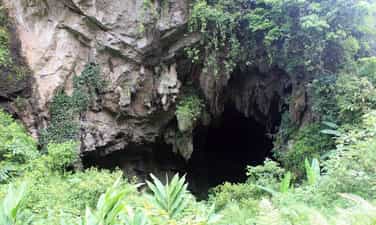
Ham Rong Cave is located right at the foot of Ham Rong mountain, Na Bu village, Tung Chung Pho commune, Muong Khuong district, Lao Cai City (now Muong Khuong town) nearly 2km from the district center. This is a large cave located in the heart of a limestone mountain. The reason it is called Ham Rong is because according to legends and folk tales, in the cave there is a very large dragon that often appears when the weather changes. Therefore, local people named that cave Ham Rong cave. Coming to Ham Rong cave, visitors will have the opportunity to admire the mysterious beauty amidst a vast mountainous area. The road to Ham Rong cave is quite convenient, visitors follow the Tung Lau stream to the main entrance to the cave. This stream curves all year round over each ravine, passes through caves, forming the "Pao Tung" waterfall - a wonderful landscape of the entire Muong Khuong region. Ham Rong cave complex includes 2 main caves connected to each other with a total length of about 750m. Ham Rong cave entrance is more than 6m wide and the cave arch is 5m high, so it is convenient for tourists to visit. The inside of the cave is divided into many small interconnected niches, about 10m deep to reach single dark-colored stalactites, continue up through a small hole - a place to receive natural light that shines deep into the cave. The strange shapes are: stalactites clinging to the cliffs with dome caves that look soft like climbing gourds. Going deeper into the cave, visitors will see shapes that look like goats eating. grass, shapes of birds in flight, they blend with the landscape shimmering under the lights. Suddenly before the visitors' eyes appeared a palace with the Emperor's crown dotted with sparkling jewels, then shapes resembling successive terraced fields. In the middle of the cave is a round cylindrical block with a head like a Buddha and a kind face, but its body is thorny and rough, clinging to each other like antennae, in some places it looks like a fairy chess board, like a princess's chamber. Lord... The deeper you go into the cave, the more you realize the splendid majesty with the variety of colors creating a poetic and lyrical beauty. Ham Rong Cave has great value in terms of tourism, geology, and aesthetics. Coming to the cave, visitors can not only admire the charming scenery of mountains, forests, natural rivers and streams, but also provide conditions for researchers in geography, soil and stratigraphy. Ham Rong is also a source of artistic inspiration for artists and photographers. Ham Rong Cave was recognized by the state as a National Scenic Monument according to Decision No. 15/QD-BVHTT dated April 14, 2003. SOURCE: Lao Cai Provincial People's Committee
Lao Cai
6133 view
Rating : National monument
Muong Vi Cave
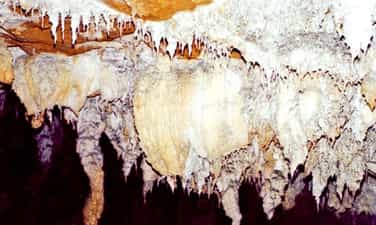
28 km northwest of Lao Cai city through Bat Xat district to Ban Vuoc, turn left to Muong Vi commune - where there is a large valley, surrounded by rolling limestone mountains forming a complex of caves. Large area called Muong Vi cave complex. This place includes Na Rin, Cam Rang, Cam Rum and Cam Tam caves, all quite beautiful. This is one of the unique and attractive relics of Lao Cai province. Na Rin Cave is a large cave with many transparent silver-colored stalactites interwoven together like simple screens in design but exuding luxurious and pristine beauty. The stalactite heads look like drops of pure water originating from a small stream located on the cave wall. The stalactites look like crystal chandeliers of different sizes. Cam Rang Cave is located halfway up a mountain in a high position with little moisture, the emulsion color is slightly dark brown but solid. Inside the cave are rocks shaped like long gourds and a tray of five yellow fruits that attract the eyes of all tourists coming here to visit and explore. Inside the cave there is a sky gate, above the gate is a stalactite strip that looks like a crown with elaborate iridescent lace strips. Equally attractive are Cam Rum and Cam Tam caves, these two caves also have many rocks with unique shapes covered with colorful stalactites. Cam Tam cave alone contains many rich and attractive folk elements. There are many ancient traces left here, reflecting the spiritual cultural life of the Giay ethnic community. Muong Vi Cave also contains many mystical folk tales about the intelligent and heroic Giay king with his feats of fighting against foreign invaders and protecting his village, such as building streams to prevent water from attacking invaders, planting bamboo to create fences. fought against the enemy very effectively, then came the story of the King's flying stone horse... There are also folk tales telling the story of beautiful and gentle fairies who often come down to help people. during the busy planting and fall seasons planning... Muong Vi cave complex is a large cave complex with many different characteristics and research values, is a place containing rich folk treasures about the country and people here, and is also a place Learn about the research of geologists. In particular, the Muong Vi cave complex has a practical value in the strategy of protecting border security and enriching the local ecological environment. This is also a place to learn about aesthetic values, providing creative inspiration for creative researchers in literature and painting. Currently, this place has been attracting the attention of many scientific fields such as culture, environment, tourism, geology... in order to exploit, conserve and promote the values of relics to serve the people. economic development for the locality. Muong Vi cave complex was recognized by the state as a National Scenic Monument according to Decision No. 38/QD-BVHTT dated June 11, 1999 of the Ministry of Culture and Information. SOURCE: Lao Cai Provincial People's Committee
Lao Cai
6174 view
Rating : National monument
Cam Temple
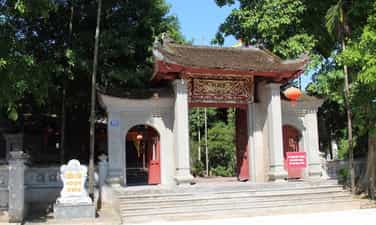
Cam Temple is located in Soi Muoi village, Van Hoa commune (now the group of 3 Pho Moi wards - Lao Cai), the temple is located at the foot of a low hill, surrounded by lush fruit trees, in front of the temple are 3 ancient trees: the sycamore tree. , jackfruit trees and jade trees spread shade to the temple, creating an ideal landscape. The temple was built and existed nearly 200 years ago and is associated with the history of building and defending the country of the Vietnamese people in general and Lao Cai ethnic people in particular. The temple has a legend associated with the three times of resistance against the Mongol army under the command of the Tran Dynasty's king, general Tran Quoc Tuan - who was awarded the title "Van Co heroic spirit of the highest class of blessings". . Legend has it that in 1257, Tran Quoc Tuan marched to the border to command the defense against the Mongol invaders (13th century). Many generals fell on this border land. Cam Temple was built to commemorate 5 Tran Dynasty soldiers (names unknown). At that time, the station area (today's Pho Moi) was a dense primeval forest. During an inspection and command of border defense (around 1257), General Tran Quoc Tuan chose the location of the current Cam Temple. Now working as a 2nd line military medical station in border defense. Later in the battles, wounded soldiers were brought back to be treated in this forest. The indigenous people at that time, the Vietnamese, Tay and Giay people, also brought sick people in for military medical care. Then something thrilling happened: at night there was a young girl wearing a blue dress who came to treat everyone. The girl was very good at treating everyone. Everyone who received the medicine was healthy, but the miracle doctor just appeared. at night and not seen during the day. Learning about the local people, the people said that there was no one's child like that. Afterwards, the people and soldiers believed that it was the apparition of the Holy Mother of Heaven helping the army and people to protect the country. Right below Phuong Dinh next to this ancient jackfruit tree are 5 graves of military officers who sacrificed their lives for a great cause. Cam Temple is located in the center of the ancient forest, formerly a small temple created by soldiers and villagers together, then officially started construction into a temple in the 16th century, after many advances. Agarwood still retains some ancient maple trees and jackfruit trees. Today, the temple has been beautifully restored and consists of two parts: the main hall and the harem. Meeting the needs of folk beliefs not only of the city's residents but also of tourists from all over, beautifying old legends - legends of military and civilian love on the border. Cam Temple holds its main festival on the seventh day of the seventh month (lunar calendar) every year, celebrating the death anniversary of 5 Tran Dynasty soldiers. People consider this the death anniversary of "erasing the sins of the dead" for the five soldiers; Therefore, together we contribute rice and meat... to the organization. The ceremony of the relic is organized quite spaciously in order. Besides the ceremony, there is also a fun festival with traditional games such as shuttlecock throwing, swallow fighting... In addition, this place is also the place to organize the annual field festival. On December 27, 2001, Cam Temple was recognized as a National Historical Site according to Decision No. 51/QD-BVHTT of the Ministry of Culture and Information. SOURCE: Lao Cai Provincial People's Committee
Lao Cai
6390 view
Rating : National monument
Dinh Chieng Ken Lao Cai
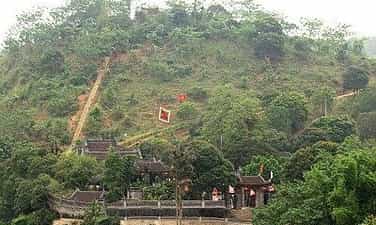
Located in the Bao Ha National Temple historical relic complex of Lao Cai province, Ken Temple (Chieng Ken, Van Ban, Lao Cai) is famous for its solemnity and antiquity with valuable evidence still intact. Ken Temple is located on top of Pu Dinh hill, over 180m high, in the heart of Ken village with a land area of over 10,000m2. According to memories from the elders, due to the advantage of a high point and a wide field of view, during the French colonial period, colonial soldiers chose this place as the "key point" for all four villages: Ken, Chieng. , Bo village, Be village around a radius of 4 km. However, they could not hold the station for long before the struggle movement and the increasingly strong development of the Revolutionary Army (at that time called Viet Minh), the colonialists had to flee and return to a peaceful life. for local people. Since then, the sacredness of the temple has been worshiped by the people, because the more the enemy holds this place, the more they lose. According to ancient legend, Ken Temple worships Mr. Nguyen Hoang Long and the generals of the Nguyen family who were instrumental in repelling the enemy and establishing villages in Van Ban district. People in the area remember his merits and the generals of the Nguyen family worshiped and built a temple here. Because the Temple is located on the highest hill in the village, it is also called Ken communal house. Over time, ups and downs of history and wars have caused Ken Temple to be destroyed many times, sometimes it seemed like there was no trace left. Today the road to the Temple has been opened by local people. Modern means of transportation such as cars and motorbikes can reach the place, very convenient for tourists to visit. With its mysterious sacredness spread by word of mouth and beautiful scenery, Ken Temple is increasingly known and attracts more and more visitors from all over to visit and worship. Every year on the 7th day of the first lunar month, Lao Cai province holds the Ken Temple Ceremony to commemorate the merits of Mr. Nguyen Hoang Long and his followers. SOURCE: Vietnam Tourism
Lao Cai
4215 view
Rating : Provincial level relics
Trinh Tuong Mother Temple
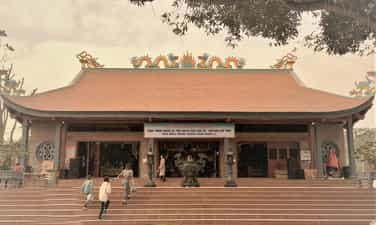
Trinh Tuong Mother Temple is a place to worship the Holy Mother Thuong Ngan - the second Holy Mother in the Three Holy Mother Temples, governing the music palace, that is, governing the mountains and forests, guarding the border. Ms. Tran Thi Thanh, incense burner at Mother Goddess Trinh Tuong temple, said: The temple was built in the early 20th century and was ranked as a provincial historical-cultural relic in 2016. In recent years, Bat Xat district has mobilized many resources to restore and embellish monuments, and at the same time manage festival activities well. From the main temple, which was a small 4-level house as a place of worship, up to now, Trinh Tuong Mother Temple has been expanded with the following items: Main temple house, ceremony house, golden temple, Huu vu house, three-entrance gate, crescent lake… Entering Trinh Tuong Mother Temple, visitors feel a quiet, peaceful space with wafting incense smoke and the sound of birds chirping in the ancient trees. Although it has been through periods of renovation, visitors can still see the remaining ancient architecture on each brick, tiled roof or the gilded and lacquered worship statues with a majestic and magnificent appearance. Every year, on the 10th day of the 3rd lunar month, the Trinh Tuong Mother Temple Festival takes place to pray for a year of good rain, good winds, lush crops, and peace in the country and people. The festival is held solemnly, in accordance with the belief of worshiping Mother Goddess Thuong Ngan; exploiting traditional cultural values, creating cultural activities and folk beliefs that are colorful, attractive and suitable to the actual conditions of the locality. Source “Lao Cai Electronic Newspaper
Lao Cai
4337 view
Rating : Provincial level relics

Dong An Temple
Dong An Temple is a relic with a long history. Up to now, the foundation of the ancient temple still remains, showing that this place was once built on a very large scale, including bricks from the Le Dynasty (late 18th century) and a A number of artifacts dating back over 100 years are kept at the temple. Dong An is an ancient name with the meaning that the people are united in their gratitude to the general Hung Dao Dai Vuong - Tran Quoc Tuan, who had merit in the war to expel the Yuan-Mongol invaders. In addition, the temple is also known by local people by another name, Mi temple, because it was previously associated with the name of Mi village. Experiencing ups and downs of historical fluctuations associated with the heroic land of Bao Thang over the centuries, the Temple is still located on a field in Quyet Tam village, Thai Nien commune, Bao Thang district. With a strategic location along the Red River, belonging to the ancient Bao Thang gate, the temple is both a spiritual cultural milestone marking the territorial sovereignty of the border region and one of the places of secret revolutionary activities of the Vietnamese government. Bao Thang's army and people during the resistance war against the French colonialists. Dong An Temple is the place to worship Saint Tran, Hung Dao king Tran Quoc Tuan. During the three resistance wars against the Yuan and Mongols, he used his strategic skills to lead soldiers and people everywhere to unanimously defend the country. Among them, it is impossible to mention the land of Quy Hoa (present-day Lao Cai), where Bao Thang gate is located at the beginning of the Fatherland, which is one of the key points that the Northern enemy targets every time they invade our country. Therefore, during the resistance war against the Northern invaders, Bao Thang was always a key position for our army on the strategic map. During the three resistance wars against the Mongol army, under the talented leadership of Tran Hung Dao, the army and people of Quy Hoa region actively defended the gate, blocking the enemy right from the border gate, contributing to the victory. of the people of the whole country. To commemorate the merits of the generals and soldiers who joined the people in fighting against foreign invaders and the talented leadership of Hung Dao King Tran Quoc Tuan, people everywhere came together to build temples to express their deep gratitude. . In Lao Cai city, there is Thuong Temple, a temple dedicated to him, built in the 17th century, built by local people for worship, and annually welcoming many domestic and foreign tourists to celebrate and sightsee. Although the exact age of Dong An temple has not been determined, based on the results of archaeological excavations of Dong An temple's foundation, the earliest construction materials for the temple date back to the Le dynasty (18th century). Therefore, it can be said that Dong An Temple is a temple that, although it exists after Thuong Temple, is also one of the relics worshiping Hung Dao King Tran Quoc Tuan and has many spiritual meanings for Bao Thang people for many generations. . To this day, people still say, "This land used to be a vast field with luxuriant vegetation along the Red River. That year, the Northern invaders invaded, and Tran Dynasty generals went up to suppress the border invaders." During the battle, he was injured and then when he returned to the temple grounds, he stopped to recuperate. After that, the people saw only the armor left but no body, so they built a temple to commemorate that general's merit in fighting the enemy." With historical values, in 2016 Dong An Temple was recognized by the Provincial People's Committee as a provincial-level historical and cultural relic. Dong An Temple has a convenient location, located right near the banks of the Red River, overlooking the river with a charming landscape. In the future, it will develop into a spiritual tourist destination that attracts many tourists when coming to Lao Cai in general and Bao Thang district in particular. In the coming time, Dong An Temple will be a bright spot on the spiritual tourism map of Lao Cai province when connected with other relics in the district such as Lien Hoa Pagoda in Phong Nien commune, Ngoi Bo temple in Gia commune. Phu are all relics located along the Red River. Along with the system of sacred temples of Lao Cai province located along the left bank of the Red River such as Thuong Temple, Mau Temple, Cam Temple, Quan Temple, Doi Co Temple... These are attractive spiritual tourism addresses. Tens of thousands of visitors visit, worship, and perform ceremonies on various occasions throughout the year. There are many famous relics throughout the region and region. Besides, with the revolutionary tradition of a heroic district, Bao Thang also has many tourist attractions introducing local history during the resistance periods that contributed to the overall victory of the whole country such as the base area. Soi Co - Soi Gia revolution; Pho Lu station, followed by the famous beautiful Tien cave in Xuan Quang commune, Dau Nhuan waterfall in Phu Nhuan commune with many beautiful, wild and untouched waterfalls. It is an interesting destination for those who like to experience, explore… When connecting Dong An Temple with the above relics and scenic spots, it will form tourist spots and routes that attract tourists to Bao Thang district, creating a new direction in developing the local tourism economy. region in particular and Lao Cai province in general. SOURCE: LAO CAI PROVINCE DEPARTMENT OF TOURISM
Lao Cai
4288 view
Rating : Provincial level relics

Memorial site of President Ho Chi Minh
Located right in the center of Lao Cai city, the memorial site of President Ho Chi Minh in Lao Cai is often known as "Ho Chi Minh Park", located in Lao Cai ward, Laos city. Cai, Lao Cai province. The relic site is a memorial site, marking the only visit of Uncle Ho and the government delegation to the Party Committee and people of Lao Cai. The relic's location is located on the foundation of the old Lao Cai Power Plant, where Uncle Ho spent time visiting and encouraging workers at the power plant construction project that was about to be completed. In the midst of the country's difficulties, despite being busy with thousands of jobs, President Ho Chi Minh took the time to visit and work with the Party Committee and people of Lao Cai on September 23-24, 1958. Remembering the great contributions of President Ho Chi Minh and appreciating his precious feelings for his homeland Lao Cai, on the occasion of the 40th anniversary of Uncle Ho's visit to Lao Cai (1958-1998), Lao Provincial People's Committee Cai built Uncle Ho's memorial area. In 2022, the Memorial Site of President Ho Chi Minh in Lao Cai was recognized by the Ministry of Culture as a national historical relic. This is a spiritual work for people and tourists from near and far to have the opportunity to express their gratitude, respect, and offer incense to commemorate the great President Ho Chi Minh. Besides, the Memorial Area is also a "red address" to educate young generations today and tomorrow about the nation's history, his background, and his great career. This place is always open to welcome people from all over the country to visit and pay their respects and gratitude to President Ho. SOURCE: LAO CAI PROVINCE DEPARTMENT OF TOURISM
Lao Cai
4274 view
Rating : National monument
Bac Ha station
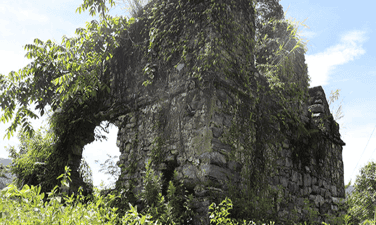
Bac Ha Fort is located right in the center of Bac Ha town, built on a high hill overlooking the entire Bac Ha town area. This is a large-scale military garrison, built in a spiral shape from low to high, with a barbed wire fence on the outside, followed by a protective wall surrounding the station with many huts. guarding the entrance. Inside the station there are many architectural units with different functions, forming a closed internal system to serve the French army when occupying Bac Ha. Before Bac Ha was liberated, the French colonialists burned Bac Ha station and fled, leaving this historical relic no longer intact. Currently, most of the works belonging to Bac Ha Fort have been destroyed, only a part of them remains such as: blockhouse, three-compartment water tank in the center of the hilltop; a tunnel in the south of the monument and a foundation embankment system surrounding the Fort. Of these buildings, only the walls, roof and foundation systems remain. Some buildings only have traces of their foundations left, such as: Quan Ba's house, horse stables, and soldier's house. Today, being classified as a provincial historical relic, Bac Ha post promises to create an attraction for tourists to visit and learn about the history of our ancestors fighting against foreign invaders in the past. Visit Bac Ha White Plateau. SOURCE: LAO CAI PROVINCE DEPARTMENT OF TOURISM
Lao Cai
3970 view
Rating : Provincial level relics

Silver Falls
Lao Cai province has just ranked Silver Falls, residential group 2, O Quy Ho ward, Sa Pa town, Lao Cai province as a provincial-level scenic relic. The Provincial People's Committee has just issued document No. 3415/QD-People's Committee dated December 31, 2023, ranking Bac Waterfall as a provincial-level scenic relic Accordingly, the relic protection area is determined according to the Minutes of zoning of relic protection areas and the Zoning Map of relic protection areas in the relic scientific records. The People's Committee of Lao Cai province assigned the Department of Culture and Sports and the People's Committee of Sapa town to develop a plan to protect, manage, restore and use the Thac Bac scenic relic in accordance with current regulations. state action. Silver Waterfall scenic spot in Residential Group No. 2, O Quy Ho Ward, Sa Pa Town is one of the attractive tourist destinations, attracting a large number of domestic and foreign tourists (each year welcoming over 45,000 visitors). ). The Silver Waterfall landscape has been known since the 20th century, during the French colonial period, along with famous tourist and resort destinations: Silver Waterfall, Cau May, and Stone Cave. By 2011, Lao Cai province invested in building Thac Bac irrigation lake to store water upstream and adjust to ensure year-round water volume and create majestic landscape and beauty for the waterfall. From a distance, Silver Waterfall looks like a soft, silvery white silk strip across the sky. When approaching, the rushing waterfall looks like a Bach Dragon rising and roaring between the sky and earth in a very majestic way. Having gone through the ups and downs of history and climate change, Silver Waterfall is still a beautiful and attractive place for domestic and foreign tourists, fully meeting the criteria and approved by the People's Committee. Lao Cai province is ranked as a provincial-level scenic relic./. SOURCE: Lao Cai Provincial People's Committee
Lao Cai
4114 view
Rating : Provincial level relics
Ta Phin Cave
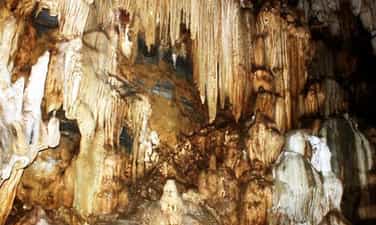
National relic - scenic spot Ta Phin Cave is located in Ta Phin commune, Sa Pa district, Lao Cai province, 12km north of Sapa town, this is where two ethnic groups Dao and Mong live. It is also a place with many research and archaeological values, and attracts many tourists to visit. Coming to Sapa, tourists who want to visit Ta Phin Cave will go through town to Ta Phin village, nearly 1km north of the People's Committee headquarters of Ta Phin commune, there is a limestone mountain range, a branch of the mountain range. Hoang Lien Son mountain. In this mountain range there is a small mountain. At the foot of the mountain, visitors see a crack with a cave entrance, about 5m high, about 3m wide, opening a path through the ground, attracting the curiosity of visitors. Tourists come here to explore caves. Starting the journey of discovery underground, visitors go about 30 meters in the dark and bumpy and will encounter a cave. From here, the cave divides into many underground paths that can only fit one person. In many steep sections, one must cling to rocks and swing up and down. Following these small walls leads to more and more paths, there are even corners that turn around and crackle and eventually return to the original position. To continue the journey to explore the cave, visitors follow the path of the big cliff. Here, visitors have the feeling of going up the cliff. The path is zigzag, sometimes up and down, sometimes bulging and sometimes resembling a person. A young woman is holding a baby, some look like bathing fairies, some look like giant raspberries with rough white patches of lava, patches of coral clinging around the edges, some look like smooth white pillars hanging down. from the top down... In particular, the widest part of the cave is on the high dome about 8m, creating conditions for the stalactites to hang down, intertwine with each other without any arrangement, winding, undulating, glittering jade color, with drops of water from the top of the mountain gradually seeping and then condensing. The tip of the stalactite drips like a beat in an illusory space. SOURCE: Lao Cai Provincial People's Committee
Lao Cai
4192 view
Rating : National monument

Nghi Lang ancient citadel
Nghi Lang ancient citadel Nghi Lang ancient citadel, also known as Phuc Khanh temple, is located in Pho Rang valley, Bao Yen district, Lao Cai, and was recognized as a national historical and cultural relic in 2002. Nghi Lang ancient citadel is a sacred place of worship. The Bau Lords, bearing traces of heroic deeds, fought against the Mac Dynasty, protected the borders of the Bau Lords, protected the people, and protected the country. The Bau Lord Worshiping Festival takes place on the 10th day of the first lunar month every year. People gather to commemorate the Bau Lords' merit in protecting the country. SOURCE: Vietnam Tourism
Lao Cai
3147 view
Rating : National monument

Bao Ha Temple
Bao Ha Temple When talking about Bao Yen district, no one knows about Bao Ha temple, one of the most popular tourist attractions in this district. Bao Ha Temple worships the national defense god Hoang Bay, a mountain hero who fought the enemy to protect the village. Bao Ha Temple is very majestic, quiet, and the natural landscape here is charming: on the wharf, under the boat, and surrounded by vast, vast, green mountains and forests. Bao Ha's main temple festival is held on the 17th day of the 7th lunar month every year - the death anniversary of General Hoang Bay, attracting a large number of domestic and foreign tourists to attend. During this festival, there are palanquin processions, sacrifices, incense offerings, and cultural and sports activities bearing the characteristics of Vietnamese cultural festivals. On weekdays - especially in the spring, pilgrims from all over the country often gather here to burn incense to commemorate, pray for peace, and pray for fortune, making the atmosphere at the temple cheerful.
Lao Cai
3210 view
Rating : National monument

Fansipan peak
CTTĐT - Lao Cai Provincial People's Committee has just issued document No. 1396/QD-UBND dated June 7, 2024, deciding to classify the Fansipan peak area as a provincial-level scenic relic. Accordingly, the People's Committee of Lao Cai province ranked Fansipan peak area, Hoang Lien commune, Sapa town, Lao Cai province as a provincial-level scenic relic. The relic protection area is determined according to the Minutes of zoning of relic protection areas and the Zoning Map of relic protection areas in the relic scientific records. The Provincial People's Committee assigned the Department of Culture and Sports and Sapa Town People's Committee to develop a plan to protect, manage, restore and use the scenic relics of the Fansipan peak area in accordance with current state regulations. Fansipan peak area, Sin Chai village, Hoang Lien commune, Sa Pa town is the highest mountain massif in the Hoang Lien Son range, nicknamed "Roof of Indochina" with an altitude of 3,143m, formed about 260 meters from today. -250 million years. In 1905, the French survey team organized an expedition and placed the first landmark on the Fansipan peak area to establish the coordinates of geodetic points in the area. From here, Fansipan appeared in French maps and documents recording Sapa, becoming a tourist destination for those who love adventure. Fansipan peak area has become a Sa Pa tourism brand, known and desired by many domestic and international tourists. SOURCE: Lao Cai Provincial People's Committee
Lao Cai
3289 view
Rating : Provincial level relics

Thien Long Cave
Thien Long, Ta Van Chu commune, Bac Ha district, Lao Cai province has been ranked a national monument by the Ministry of Culture, Sports and Tourism in Decision No. 3578/QD-BVHTTDL, 3579/QD-BVHTTDL dated December 18. October 2013. Thien Long Cave scenic spot, Ta Van Chu commune, Bac Ha district, is often called "Dragon Cave" by locals. Thien Long Cave is located deep in the heart of Dragon Mountain, at an altitude of over 1000m above sea level, still retaining its pristine and mysterious beauty with many layers of large and majestic stalactites. The total length of the cave is about 470 m, divided into 3 different floors, each floor has its own characteristics. The first floor is about 115m long, the ground is wide, the foundation is made up of large rocks, covered with a layer of black, spongy sedimentary soil, the cave dome of the first floor is high (about 8m - 10m) above. There are large stalactite arrays, stalactite arrays created by nature with many diverse shapes, cave walls with layers of stalactites clinging to the walls, over a long period of tectonic time, creating beautiful paintings. Ink painting is clear and translucent virtual. The second floor of the cave is shorter in length than the first floor, but has more stalactites and is richer in shape, size and color. The second floor has a flat floor, wide cave with high arches, so it is convenient to move around. . The third floor of the cave is long and has quite a steep slope, the wide cave has many stalactites of different shapes, the entire third floor is like a large bag, especially here there is a thick layer of sediment covering each other. The relic protection area is determined according to the records and maps delineating the relic protection areas in the file. The Ministry of Culture, Sports and Tourism requests People's Committees at all levels where the ranked relics are located, within the scope of their duties and powers, to carry out State management of the relics according to the provisions of law on relics. cultural product. SOURCE: Lao Cai Provincial People's Committee
Lao Cai
3122 view
Rating : National monument

Sapa terraced fields
Sa Pa terraced fields in Lao Chai commune, Ta Van commune, Hau Thao commune, Sa Pa district are ranked as national relics by the Ministry of Culture, Sports and Tourism in Decision No. 3578/QD-BVHTTDL, 3579/QD -BVHTTDL October 18, 2013. National monument - scenic spot Sa Pa terraced fields are located in Muong Hoa valley, nearly 10 km southwest of Sa Pa town. This is the largest terraced field complex in Vietnam, covering 935.4 hectares, located in Lao Chai, Ta Van, Hau Thao communes, Sa Pa district. In 2009, the American Travel and Leisure Magazine voted Sa Pa Rice Terraces among the top 7 most spectacular terraced fields in Asia and the world. SOURCE: Lao Cai Provincial People's Committee
Lao Cai
3000 view
Rating : National monument

Ngoi Bo Temple
Ngoi Bo Temple now belongs to Thong Nhat commune, Lao Cai city, Lao Cai province. Overlooking the river confluence - the intersection of Ngoi Bo stream and the Red River, the temple is a place to worship Tan Vien Son Thanh - one of the Four Immortals of Vietnamese folk beliefs, "the most sacred deity of Vietnam". Southern Heaven". According to the elders, when the people from the lowlands in the village came here and were attached to this land, they built shrines and temples to worship Saint Tan Vien - a Saint who is worshiped throughout the midland and Northern Delta with devout belief in His blessing and protection. That trust is the pedestal and spiritual fulcrum of those far away from home on the path to creating a life in a new land, and at the same time is a reminder and maintenance of memories of their homeland. about his ancestors' origins. Ngoi Bo Temple Festival takes place on January 11 every year. Ngoi Bo Temple was ranked as a Provincial historical-cultural relic in 2016 Source Lao Cai province electronic information portal.
Lao Cai
3570 view
Rating : Provincial level relics

Pho Rang Fort Historical Relic
Pho Rang Fort National Historical Site in Pho Rang town, Bao Yen district (Lao Cai) is a special testament, where the heroic and glorious historical victory of our ancestors' generation 73 years ago is engraved ( June 26, 1949 – June 26, 2022). According to the History of Bao Yen District Party Committee (Lao Cai), Pho Rang station was built on peak 442, with an area of nearly 1 hectare; This is a strategic location, able to control the entire basin area of Pho Rang town and surrounding areas. The station has almost three sides of the river, so the station can cover and monitor all activities on the river and both sides of the river. The French built a solid fortification system with many bunkers, trenches, dense sharpened bamboo fences around the base, mines, obstacles and gun emplacements were arranged around the station. The enemy also arranged 2 platoons of European and African soldiers, 1 team of red soldiers, 1 platoon of paratroopers, 1 platoon of soldiers, all kinds of weapons ready to fight back and block the progress of our military branches to liberate the region. Northwest. On June 11, 1999, Pho Rang Fort relic was recognized by the Ministry of Culture and Information (now the Ministry of Culture, Sports and Tourism) as a National Historical Relic, according to Decision No. 38/QD-BVHTT . Source: Ministry of Culture, Sports and Tourism.
Lao Cai
3764 view
Rating : National monument

Historical relic of Pho Lu Fort Victory
Historical Relics The Victory Site of Fort Pho Lu is surrounded by high mountains, dense forests, steep cliffs, and deep rivers and streams. There are 2 clusters of blockhouses: the near cluster and the far cluster. The nearby cluster has 3 blockhouses: Number 1 was swept away by a flood in 1971 due to landslides. Number 2 is made of 4.5m long, 4.5m long and 3.7m wide concrete. Number 3 is 900m from Pho Lu station. The remote cluster has 2 bunkers built on top of a hill about 50 - 70m high. The center of the station is the Command Post, now house number 244 Le Hong Phong Street. There are also barracks and many solid concrete underground bunkers, currently only 5 remain. Source Lao Cai province electronic information portal.
Lao Cai
4055 view
Rating : National monument
Outstanding monuments
See all
Thuong Temple - Lao Cai
Lao Cai Thuong Temple is also named Saint Tran Tu. Lao Cai Thuong Temple was built on land in Bao Thang street, Chau Thuy Vi, Hung Hoa province, now Lao Cai ward, Lao Cai city, Lao Cai province. Thuong Temple was built during the Le dynasty, Chinh Hoa era (1680 - 1705). It is a place to worship the temperate Duke Hung Dao Vuong - Tran Quoc Tuan, who made great contributions in the career of protecting the country's mountains and rivers. A great historical celebrity, a sacred and noble Saint in the minds of generations of Vietnamese people. Located on Hoa Hieu hill in Mai Linh mountain range with an altitude of 1200m above sea level. Thuong Temple was built in the ancient architectural style of the letter Cong, following feng shui theory which is both majestic and very dignified. The Thuong Temple area has a charming natural landscape and a harmonious combination of traditional architecture and indigenous culture, giving the temple a majestic and splendid appearance. Reflecting on the Nam Thi river, this place once had an extremely important position in the defense strategy against invaders. Today, near the trade gateway between the two provinces of Lao Cai (Vietnam) and Yunnan (China), this sacred land at the tip of the Fatherland welcomes tens of thousands of domestic and foreign tourists every year. commemorate the national hero. Right from the moment they step foot at the temple gate, visitors can admire the beauty of a 300-year-old banyan tree spreading its branches, under the shadow of the ancient tree is a shrine worshiping Ba Chua Thuong Ngan (Queen of the Green Forest). Legend has it that during the resistance war against foreign invaders, she contributed to fighting the enemy to protect the territory of the South. To thank her, the people built a shrine right under the banyan tree with lush branches and leaves. In the main temple area, the horizontal painting "Land of Literature" is hung in front of the Nghi gate, on both sides there are two parallel sentences: "Vietnamese spiritual spirit is not built, Dong A's spirit lasts forever", meaning: " Vietnam's sacred monument stretches across the sky, the Tran Dynasty's pride remains forever. On the back of Nghi Mon's interior, there are the words "Quoc Thai and Dan An" with two parallel sentences: "Heaven and earth are gentle, heaven and earth are old; The golden flower grass is different, the money flower grass" means: "Heaven and earth are still the same, heaven and earth are old; The grass and flowers today are different from the grass and flowers of the past." Thuong Temple was built spaciously with 7 main worship spaces including: The Palace for worshiping Buddha Shakyamuni, The Palace for worshiping the Three Courts of Thanh Mau; Altar of Saint Tran Hung Dao; The palace worships the King and his father Ngoc Hoang... and the altars on the Left Vu - Huu Vu sides worshiping Lady Nhi Son Trang, Twelve Fairies, Attending God and the Temple Boy... are all arranged. placed in order. Next to the Thuong Temple is a square communal house with 4 doors and 8 flanking dragons. In the middle of the communal house is a golden turtle with a stone stele engraved with the name "Holy Tran". This place used to be a resting place for military officers on patrol. Today, it is an ecological forest with all kinds of plants to protect the environment, serving tourists to visit and rest to enjoy the fresh climate. Thuong Temple is located in a cultural relic complex with Tan Bao pagoda, Am temple, Mau temple, Cam temple, Quan temple. In particular, Thuong Temple is one of the most famous sacred temples in the system of temples and pagodas in Lao Cai. Through many restorations and embellishments, in 1996, Thuong Temple was ranked as a National Historical and Cultural Monument. Every year, Thuong Temple holds a festival on the 15th day of the first lunar month, attracting the attention of many domestic and foreign tourists to visit and worship. Source: Vietnam Tourism
Lao Cai
11169 view
Rating : National monument

Nguyen Thai Hoc historical relic site
The grave site of Nguyen Thai Hoc and soldiers in the Yen Bai uprising in 1930, located in Yen Hoa park (30 hectares wide), Nguyen Thai Hoc ward, Yen Bai city, built in 2001 . Nguyen Thai Hoc was born on December 1, 1902 in Tho Tang, Vinh Tuong district, Vinh Phuc province. He was a patriot right from the time he was in a colonial school. He sent a letter to Governor General of Indochina Alexandre Varenne, a member of the French Socialist Party, calling for social reform in Vietnam. The Governor-General of Indochina did not pay attention to what Nguyen Thai Hoc suggested. On December 25, 1927, Nguyen Thai Hoc and his colleagues organized the establishment of the Vietnam Nationalist Party, and he was elected Chairman. The Vietnamese Nationalist Party was hunted down and arrested by the authorities. Faced with the risk of the Vietnamese Nationalist Party being broken up, Nguyen Thai Hoc, Nguyen Khac Nhu and Pho Duc Chinh decided to carry out a "general armed uprising". If you fail, it is also an example for the next generation to follow, "If you don't succeed, you will become a good person". The uprising force consisted of the Vietnam Nationalist Party, mainly red loincloth soldiers belonging to Companies 5, 6, 7, Battalion 2, 4th Tonkin Red Loincloth Soldier Regiment. Green loincloth soldiers did not participate in the uprising. On the night of February 9 to 10, 1930, the Yen Bai uprising broke out. The insurgent army killed most of the officers and non-commissioned officers in private houses, coordinating with the two-armed insurgent army and soldiers in the red loincloth station. 5 and 6 posts under rebellion. In front of the barracks yard, a representative of the Vietnam Nationalist Party read the article "Hit Uprising" with the slogans: "Drive the French enemy back to France. Bring the South back to the South. Let hundreds of them avoid suffering. More happy part". The flag of the Vietnam Nationalist Party flies above military camps and offices. Due to not being able to attract all the green loincloth soldiers No. 7 and No. 8 on the high station, the force was thin, so the insurgents were knocked out of their occupied positions, and the uprising was drowned in a sea of blood. Five days after the Yen Bai uprising, Nguyen Thai Hoc organized an uprising in Vinh Bao and Phu Duc, advocating to take over all of Hai Phong. The insurgents captured the district capital of Vinh Bao and killed district governor Hoang Gia Mo, a cruel and greedy mandarin. With a fierce counterattack by the French army with modern weapons, the insurgent army was destroyed. Nguyen Thai Hoc escaped due to the protection of the people. With a number of remaining prominent party members of the Vietnam Nationalist Party, Nguyen Thai Hoc discussed and planned to reform the Party and change the Party's strategic and operational direction. As soon as this policy was launched, on February 20, 1930, Nguyen Thai Hoc was arrested in Co Vit hamlet (Chi Linh, Hai Duong). On March 23, 1930, he was sentenced to death. On June 17, 1930, France sent Nguyen Thai Hoc and 12 other soldiers of the Vietnam Nationalist Party in Yen Bai to the guillotine. Stepping onto the scaffold, before putting his head into the guillotine, Nguyen Thai Hoc shouted: "Long live Vietnam!". France had to admit that the Yen Bai uprising had dealt a fatal blow to the colonial government. Nguyen Thai Hoc historical site marking the "Yen Bai Uprising" currently includes a mausoleum area, a monument area, a reception area, a memorial stele and a bonsai garden. Monument to Nguyen Thai Hoc and his associates during the Yen Bai uprising in 1930 at Yen Hoa Park, Yen Bai city. Most prominent in this area is the famous saying of Nguyen Thai Hoc, which became the main action motto and ideology of the Vietnam Nationalist Party, which is "If you are not successful, you will become a man", which was considered by the insurgents as a saying. swear to death. Although the Yen Bai uprising was not successful, patriotism is eternal. That's why, in our country, many places take the name Nguyen Thai Hoc to name avenues and schools. Mr. Phan Boi Chau wrote an oration about the Yen Bai uprising and the key figures of the uprising. Nguyen Thai Hoc historical relic site, Yen Bai city, Yen Bai province was recognized by the Ministry of Culture (now the Ministry of Culture, Sports and Tourism) as a national historical relic on March 5, 2019. 1990. Source: Yen Bai province electronic information portal
Lao Cai
10516 view
Rating : National monument

Mother Goddess Temple Lao Cai
Mau Temple is located in group 4, Lao Cai ward, Lao Cai city. The temple is located at the confluence between the Nam Thi and Red rivers flowing into Vietnam. This is also the international border gate of Lao Cai (Vietnam) - He Khau (Yunnan - China) and also the 102nd milestone in the Northwest border region. Mother Temple is a place to worship the Holy Mother Princess Lieu Hanh, a compassionate deity who exorcises evil spirits, helps poor people, and helps the court fight against foreign invaders and protect the sacred border areas of the Patriarchate. country. At the same time, she is a heroic mother in the folk subconscious of the Vietnamese people. The custom of worshiping Mother Goddesses in our country has gone through a long history. This is not only a worship custom imbued with national identity, but it is a common spiritual need of our people from the early period of building and defending the country until now. until today. Beliefs and customs of worshiping the Mother Goddess originate from the sense of ancestral remembrance, respect, gratitude, trust and have a profound moral educational meaning that is still of value to our generations today. . Holy Mother Lieu Hanh has been deeply imprinted in the subconscious of Vietnamese people in general and Lao Cai in particular since the 16th century. Through the ups and downs of history until today, our Vietnamese people have named her Mother Nghi. Thien Ha, always wish the Holy Mother to help "The world is peaceful - The country is peaceful and the people are peaceful - Phong Dang is in peace". Mother Goddess Lieu Hanh is a vivid symbol in daily life, but is very sacred in the mental life of Vietnamese people. In her subconscious, she is a Fairy, so she has Fairy magic; As a Buddha, one should carry Buddha's thoughts; As a Mother, she should have the qualities of a mother; is Holy so it is sacred; He is a child of good family, so he is educated, knowledgeable in history, and good at singing and poetry. In her, she has the filial piety of Confucianism and the magic of Taoism. That's why, Holy Mother Lieu Hanh is an image, one of the Four Immortals, the Mother of Heaven who has been reminded and educated to us for many generations: "In August, the anniversary of my father's death - in March, the anniversary of my mother's death." In Lao Cai, Mau Temple is located in the Thuong Temple Relics complex - a place to worship and remember the great contributions of the National Duke of Moderation - Hung Dao Dai Vuong - Tran Quoc Tuan. Mau Temple and Thuong Temple are also places with an important strategic position, a milestone in the Northern border of the Fatherland and a red address of the nation's historical and cultural roots. Mau Temple was built in the early 18th century, located in Lao Nhai village (now Lao Cai City), behind the temple is leaning against an ancient wall built by Liu Vinh Phuc insurgents to fight against foreign invaders. protect the borders of the land. Therefore, the Mau Temple was conferred three ordinations by the Nguyen dynasties: Tu Duc in the sixth year (September 24, 1853); Tu Duc in his 33rd year (November 24, 1880); Khai Dinh's 9th year (July 25, 1924). Located at the national border gate, on the international trade route, despite going through hundreds of years with many ups and downs of history, Mother Temple has not only become a sacred border landmark. Not only is it visited by people and tourists from all over the country and internationally, it is also a spiritual cultural milestone in the northern border region of the country. Mau Temple was recognized by the Ministry of Culture, Sports and Tourism as a National Historical and Cultural Relic on January 26, 2011. Source: Lao Cai province electronic information portal
Lao Cai
10445 view
Rating : National monument

Cam Duong revolutionary base area
Cam Duong base area is located in Da 1 village, Cam Duong commune, Lao Cai city, Lao Cai province. Cam Duong and the surrounding communes of Xuan Giao and Gia Phu are lands rich in patriotic traditions and resistance to foreign invaders. The Cam Duong - Xuan Giao - Gia Phu guerrilla area played a very important role in the resistance war against the French in Lao Cai. That is the first resilient base, the direction point for implementing the Resolutions of the Lao Cai Provincial Party Committee on Party building, establishing party cells, establishing resistance administrative committees, and building unions. patriotic, formed a guerrilla team. Cam Duong was the site of the earliest armed uprising in Lao Cai. Cam Duong revolutionary base was born during the extremely difficult period of the resistance war against the French period (1948-1950). Built in the middle of the enemy's rear area and located in an important strategic position, the Cam Duong guerrilla zone became a springboard for expanding the construction of other guerrilla zones. Delegations of cadres from the rear (Luc Yen-Yen Bai region) returning to Lao Cai used Cam Duong as a secret gathering place to sneak deep into Lao Cai town, up to Muong Bo, Binh Lu, Phong Tho or to Nam Pung, Bat Xat, built base areas, built an anti-French movement in the enemy's rear area. In particular, Cam Duong is truly a belt and buffer zone close to the enemy's headquarters in Lao Cai town. During the Le Hong Phong Campaign to liberate Lao Cai, reconnaissance forces, military intelligence and the 148th Regiment all departed from Cam Duong. Cam Duong - Xuan Giao - Gia Phu guerrilla area for a long time was also the location for the leadership agency of the Provincial Party Committee and Lao Cai Provincial Team, many important meetings of the province were held here. Cam Duong revolutionary base area was recognized as a national revolutionary historical relic in 1995. This is where Cam Duong Party Cell, the first rural Party cell, was established on October 10, 1948. The Cam Duong base area is also preserved by the people and the Commune People's Committee, such as the stilt house - where the first rural cell was established; gathering shack; gunpowder mortar; alarm drums and many guns and ammunition; swords and self-made mines of Cam Duong guerrillas. Currently, the Cam Duong revolutionary relic site has been renovated and a traditional gallery built in Cam Duong commune associated with the name of the relic to meet the people's wishes, as a place to educate about historical traditions. heroic history of fighting against foreign invaders to win national independence for the younger generation. Source: Military Region 2 Newspaper
Lao Cai
9723 view
Rating : National monument

Yen Bai city stadium ceremony platform
Yen Bai City Stadium Stadium, Hong Ha Ward, Yen Bai City is where Uncle Ho stood and talked to the people of Yen Bai province on September 25, 1958. This is a National Historical Site recognized by the Ministry of Culture and Information on November 16, 1988. The original ceremony is the grandstand of the old town stadium. The courtyard and ceremony platform are located in a densely populated area, the center of the former provincial capital. The town stadium dates back to the French colonial period. After completing the conquest and establishment of Yen Bai province (1900), in 1905, France established a legion camp to protect their government. To serve the spiritual life of soldiers, especially cultural and sports activities. In 1927, France built this stadium to organize festivals and football activities, but around the stadium were only built into high mounds without any stands, and it was not completed until 1930. Since then, France has regularly organized fun and entertainment activities here, invited football teams from Hanoi, Phu Tho, Tuyen Quang to compete, and also organized many days of "Western festivals" at the stands. this town stadium. In 1954, when peace was restored, Yen Bai province advocated restoring the football field into a town stadium. In January 1957, the province built a grandstand (the current grandstand) and a wall surrounding the field in an oval shape. The most important historical event was on September 25, 1958, the Government delegation led by President Ho Chi Minh visited Yen Bai province. During his time working in the province, at the request of President Ho Chi Minh, the Provincial Administrative Committee chose the town stadium as a meeting place for Uncle Ho to talk to people of all ethnic groups in the province. At that time, Yen Bai province was one of the most difficult provinces in the North, having just gained independence, the war was heavily destructive, most of the terrain was mountainous, sparsely populated, low educational level, and many victims. Nomadic farming, superstitions still abound, life is still extremely poor. During the most difficult time, Uncle Ho visited Yen Bai. Early in the morning of September 25, 1958, nearly 5,000 officials and people of Yen Bai town's ethnic groups and people from neighboring areas eagerly flocked to the rally to see Uncle Ho and hear his voice. Coming out of the provincial team, Uncle Ho went to the stadium and stepped onto the ceremony platform amid the thunderous cheers of his compatriots. After everyone was silent, Uncle Ho started talking. He cordially visited officials and people, pointing out practical actions. He mentioned many issues from national unity, increasing production, and practicing thrift. After talking, Uncle Ho joined the entire Yen Bai people in singing the song "Unite". From the platform, he left to return to work amid the applause and majestic songs of the people of the province. On May 31, 1966, a bombing by a US aircraft collapsed a corner of the stadium. In 1977, the stadium was repaired, replacing the arched door with a square door, the entire architecture remained the same. . In 2016, the Ceremonial Monument area was renovated and upgraded. The monument and the entire architecture of Uncle Ho's memorial area are designed in traditional architectural style, simulating the memorial architecture of Uncle Ho in Kim Lien - Nghe An, Uncle Ho's hometown. With that cultural and historical significance, this place is a destination, an address for people and tourists to visit and burn incense to commemorate Uncle Ho, forever a place to preserve sacred memories of the Leader. Great - President Ho Chi Minh in the hearts of the people of Yen Bai province, is a traditional educational address for young generations today and tomorrow. Source: Yen Bai province electronic information portal
Lao Cai
9512 view
Rating : National monument

Dong Cuong Temple
Dong Cuong Temple is one of two large temples in the upper reaches of the Red River, which has existed for a long time, located in Dong Cuong commune, Van Yen district, Yen Bai province. Dong Cuong Temple is a relic cluster consisting of 4 points: In addition to the main Temple, there are also Co Temple, Cau Temple and Duc Ong Temple. The temple has been around for a long time. Through historical records, it is known that the temple was built at the latest in the Le dynasty, developed from an ancient temple (in the center of Quy Hoa camp during the Tran dynasty); Ancient bibliographies such as Kien Van Tieu Luc and Dai Nam Thong Nhat Chi all have records about this Dong Cuong Temple. The temple and temple area are related to Ngoc Thap Temple and Hung Temple (Phu Tho). Dong Cuong Temple was initially a temple to worship Princess Dong Quang, founded by the Ha and Hoang families, who were Tay Khao people, and took turns in charge of government duties, and was also the workplace of Tho Tu, translators, and mandarins. and functioned as "Dinh Tram" to serve two-way dispatches between the central court and the grassroots. During the Tran dynasty, the general headquarters of Quy Hoa - Ha Bong and Mr. Tu (Ngoc Thap - Quang Son) came to guard the border. Currently, formerly the Dinh, now the Ha family temple is run by the Ha family's ancestor, Ha Van, who once led the locality to fight the Nguyen - Mongol invaders during the Tran dynasty. History records that in the second month of Dinh Hoi year (1287), the Nguyen - Mongol king took 70,000 troops, 500 warships, 6,000 Yunnan troops and 10,000 5,000 troops in 4 continents outside the sea and sent crown prince Thoat Hoan to be the great marshal; A Bat Xich became the Left Vehicle; Ah Lo Xich pacified political affairs; O Ma Nhi, in charge of politics, brought more than 300,000 troops to attack the South. Faced with that situation, Emperor Tran Thanh Tong and King Tran Nhan Tong ordained Hung Dao Vuong Tran Quoc Tuan as a moderator to command the entire Dai Viet army and people in the resistance war against the Yuan-Mongol invaders. The Yuan - Mongol army led by Nat Toc La Dinh ran up the Lo River to Van Nam. When running through Phu Ninh territory (now Phong Chau district, Phu Tho province), they were attacked by local soldiers and people led by the Ha Dac brothers, Ha Chuong withdrew his troops to attack the base of Mount Chi (in Phu Tho province). From the mountain, he sent militiamen to storm the enemy's vanguard station, launching a surprise attack with many military strategies. Ha Dac and Ha Chuong's troops chased the enemy all the way to A La, then were blocked by the enemy's rear army. Ha Dac heroically sacrificed his life, and Ha Chuong was captured. The Yuan - Mongol army was broken and suffered heavy losses, the survivors fled to Yunnan. According to the genealogy of the Ha family, "the Tay Khao people originally belonged to the Ha Dac and Ha Chuong lineages during the Tran dynasty. Now residing in An Boi - Kien Xuong, Thai Binh: Ha Dac and Ha Chuong are two brothers. When fighting the enemy, Ha Chuong enthusiastically pursued the enemy to the Yen Bai area and died there. He was awarded the title "Binh Nguyen Thuong General Trung Dung Marquis". (According to Tran Hung Hoa's fairy tale section) after being killed in battle and the villagers built a shrine next to the throne rapid (in Ghenh Ngai village on the left bank of Tan commune). Hop, Van Yen district), his wife Le Thi and his son Hoang Bao, when they died, were also worshiped by the villagers at Ghenh Ngai and shortly after, the mother and child altar was moved to Dong Cuong communal house (where the temple is located). Dong Cuong today). The second victory over the Yuan-Mongol army was a glorious victory. The typical places of Ham Tu, Chuong Duong, Tay Ket, and Cu Da will forever be recorded in history books. Since the relocation, the communal house was expanded and converted to become the Temple of Mr. Le Quy Don in the Later Le Dynasty, which has records. The book "Dai Nam Nhat Thong Chi" is named "Temple of the Guardian God" after the ordination. The events of the Giap Dan uprising (1913-1914), in 1914, the insurgents of Man Bach, Man Dai Ban and the Tay and Nung people of Yen Bai province organized to gather forces and rose up in the year of Giap Dan to attack the army's posts. France in Yen Bai and Lao Cai provinces. At the same time, overseas Viet Kieu railway workers and businessmen in Yunnan province - China responded to the call of Phan Boi Chau and other Vietnamese people to celebrate and establish friendship and patriotic associations overseas. , secretly supported the anti-French movement in the country. Some French military posts along the Vietnam-China border and Lao Cai area were attacked by insurgents. The uprising failed. Due to lack of proper organization. The French ruling government established a special military court during the war... to try patriotic soldiers, most were sentenced to death, life in prison or forced exile, some were secretly executed. sneaky. In 2000, the temple was recognized by the People's Committee of Yen Bai province as a provincial-level historical and cultural relic. On January 22, 2009, the temple was recognized by the Ministry of Culture, Sports and Tourism as a national historical-cultural relic in Decision No. 296/QD-BVHTTDL. Source: Yen Bai Provincial Museum
Lao Cai
8764 view
Rating : National monument

Co Tan An Temple
Co Tan An Temple, located in Tan An commune, Van Ban district, Lao Cai province (also known as Co Be Thuong Ngan Temple), was ranked as a national historical and cultural relic in 2016, and is a place to worship a goddess. Thuong Ngan's name is Nguyen Hoang Ba Xa, she had the merit of conquering the evil enemy, keeping the land in peace, and was revered by the residents of Bao Ha and Khau Ban (ancient Van Ban places) as the Holy Mother. According to historical records, at the end of the Le dynasty, Canh Hung era (1740-1786), when the entire Qui Hoa region, especially Thuy Vy and Van Ban were always devastated by bandits, "The entire region was in chaos, the population devastated, abandoned fields". Faced with that chaos, Mrs. Nguyen Hoang Ba Xa and her father, National Guard Nguyen Hoang Bay, stood up to persuade ethnic minorities such as Dao, Giay, Nung in green shirts... to urgently exploit mining fields and drive out foreign invaders. invade, protect the territory, and regain a prosperous life for all people. When she passed away, "The fragrance was still resplendent, the halo shined everywhere", to commemorate her great contributions, people in the area carved engravings of gratitude and contributed their efforts and money to build the temple. , appoint someone to regularly look after the incense and smoke. Having gone through many ups and downs of history and changes in nature, the temple has now been embellished and rebuilt on the exact location of the ancient sacred land (on a large plot of land, right on the banks of the Red River). , looking towards the Northeast, opposite the national historical and cultural relic Bao Ha Temple), has become a majestic spiritual tourism destination that attracts a large number of tourists from all over. Source: Lao Cai province electronic information portal
Lao Cai
7106 view
Rating : National monument

Cang and Nghia Lo Fort
Nghia Lo Cang and Fort relic area is located on the main road of Dien Bien road (National Highway 32). This is the center point of Nghia Lo town and the Muong Lo field basin. When mentioning the history of Cang and Nghia Lo Fort, we refer to the place Van Chan and the history of this place during the resistance war against the French in the 40s of the twentieth century. With the intention of extinguishing our revolutionary movement, the French colonialists set up "special labor" camps to capture patriots and put them in concentration camps. After Cang Ba Van (Thai Nguyen) was dissolved, the French colonialists brought imprisoned patriots to Nghia Lo. In the summer of 1944, governor Van Chan mobilized the governors and communes to arrest husbands and submit materials to build the Cang. The French colonialists also sent Dinh Van Dung and Lam - Be from the district secret police department to urgently inspect day and night. By January 1945, construction was completed. Looking at the overall scene at this time, Nghia Lo Cang looks like a vertical cabinet with three long rows of houses. "Two rows are where political prisoners are detained for men, the inside is where political prisoners are detained for women, the outside is a permanent place and the outside is a place to detain political prisoners. Next to it is the guard station of green loincloth soldiers. Surrounding the entire Cang - Don area is a barbed wire fence, outside the fence is a deep tunnel with spikes, the Cang corner tank has a towering hut, carefully guarded day and night. The fierce fighting of our army and people with the incident of destroying Cang - Nghia Lo Fort, liberating Van Chan for the first time in 1945, are truly extremely heroic pages in history. Van Chan is a large district, located in the west of Yen Bai province, the terrain is a mountainous and forested area, with many high mountains and caves, and is a strategically important military position. retreat and take a defensive position". Therefore, the French enemy set a goal to conquer Van Chan. To carry out that intention, on October 2, 1947, they led troops to retake Van Chan, with the intention of attacking quickly and using strong military force and advanced weapons. The French colonialists wanted to subjugate the people of the Van Chan ethnic groups by shooting and killing in an extremely barbaric manner. Capturing Van Chan, the enemy relied on his henchmen to establish a governing apparatus from district to commune; At the same time, Nghia Lo station was established as the strongest military subdivision among the four subdivisions in the Northwest region of Vietnam. After setting up posts and setting up a governing apparatus, the French enemy carried out a plot to divide and rule, using people from one ethnic group to kill people from another ethnic group, using war to feed war; They turned the puppet army and puppet government system into a tool to oppress and exploit people of all ethnicities. They beheaded, disemboweled, and gutted some of our officers and soldiers. Then they used the stone mound on Ngoi Lao as an execution ground to execute 76 officers and soldiers in the middle of the rushing water. During nearly 5 years (1947 - 1952) of occupying Van Chan, the French killed and injured more than 300 people, leaving about 56 people missing. Thousands of children from all ethnic groups were forced to work as mercenaries for them, holding guns to shoot back at their compatriots and burning down their homeland's forests and mountains. In addition to shooting and killing, they also burned houses, destroyed rice, stole cattle and thousands of tons of food, and raped women and children. They forced the people to live right at the foot of the post to cut off contact with the Viet Minh and get them used to barbaric shooting and killing. Even more cruel, they also made fences with the bones and flesh of their compatriots to block the attacks of our troops. Small things like potatoes, cassava roots, rice bowls, rice bowls, and the most precious human things, the soul and body, are all snatched away by them and belong to the police station. Faced with the carnage of guns and bullets, the people of the Van Chan ethnic groups aroused deep resentment against the enemy, arousing faith, affection and patriotism, believing in the Viet Minh, believing in the resistance. Our people rose up with the spirit of determination to fight, determination to win and achieved victory at 5:30 a.m. on October 18, 1952. It was the support of our compatriots and the determination to win independence and freedom for the Fatherland that urged our army and people to fight, achieving a resounding victory in the fall of 1952, liberating Nghia Lo. To commemorate the heroic battles, on July 25, 1992, the People's Committee of Van Chan district built "Nghia Lo Cang Memorial". Currently, the Nghia Lo Cang - Fort relic area includes: Nghia Lo Cang Monument, Nghia Lo Victory Monument bearing the image of Uncle Ho's soldiers and people of all ethnic groups in the campaign to liberate Nghia Lo in October. in 1952, along with the stele inscribed with the names of martyrs. On September 27, 1996, the Minister of Culture and Information recognized Nghia Lo Cang and Fort relics as a National Historical Relic Area. Source: Yen Bai province electronic information portal
Lao Cai
7079 view
Rating : National monument

Historical relic of Ben Au Lau
Au Lau Wharf (now located in Au Lau commune and Nguyen Phuc ward, Yen Bai city) is an important place to transport officers, soldiers, citizens, food and weapons to serve major campaigns. during the resistance war against the French colonialists, paving the way to the victory of the Dien Bien Phu campaign, restoring peace in the North in 1954. In 1953, the ferry wharf where people along the Red River traveled back and forth to exchange and trade was built into the Au Lau ferry wharf. Au Lau ferry terminal is a convenient connection point between Viet Bac and the Northwest of the country. From the early days of the resistance war against the French colonialists, Au Lau wharf was the place to gather and secretly transport revolutionary cadres and soldiers to prepare for the general uprising and then establish the Revolutionary Committee. temporarily and took over Yen Bai town. It was also here that the French colonialists escorted political prisoners from Nghe An (1943) and Thai Nguyen (1945) to prison at Cang Nghia Lo. On the night of August 16 and 17, 1945, according to the plan, the Au Lau Guerrilla Revolutionary Military Committee and the Au Co Guerrilla (Van Hoi) along with the soldiers on the right bank of the Red River crossed the river to attack the Security Camp to seize the government from their hands. Japan. In 1951, during the Ly Thuong Kiet campaign, one direction of the 312th Division crossed the wharf to attack Nghia Lo military zone (October 3, 1951). The Northwest Campaign took place on the night of October 10-11, 1952. Au Lau wharf was one of four wharves where the 36th regiment, 174th regiment of the 316th regiment and the 308th regiment crossed the Red River into Ca Vinh, Ba Khe, and Pass. Hong attacked Cua Nhi base. At the end of November 1952, according to the instructions of the Party Central Committee and the General Command, it was requested to urgently expand route 13 from Viet Bac through Yen Bai. Despite difficult circumstances and fierce enemy bombardment, we still opened the road 13 early 5 days through Au Lau wharf to provide reinforcements for the Northwest battlefield. Au Lau wharf has an important position connecting the Viet Bac transportation system with the Northwest, and is the only place where heavy weapons can be hoisted such as: ground artillery, anti-aircraft artillery, cars carrying ammunition. , military equipment crossed the river to reinforce the Dien Bien Phu battlefield. During this time, Au Lau wharf was reinforced in terms of both manpower and facilities to transport weapons, ammunition, food, foodstuffs, citizens, and soldiers across the Red River, and at the same time brace itself against the battles. fierce bombing by the French colonialists. At night is the time when most activities take place at Au Lau wharf to avoid enemy detection. Ferries travel back and forth as quickly as possible to clear the way for reinforcement vehicles. To prevent sabotage by enemy aircraft, during the day we had to drag the ferry upstream to Ngoi Lau to submerge the ferry, and at night we had to flood it again and pull it out. From November 1953 to May 1954, the French colonialists focused fierce bombardment on Au Lau wharf for more than 200 days and nights with 2,700 tons of bombs and ammunition, but we were only able to transport thousands of tons of food and goods for only 8 days and nights. hundreds of tons of ammunition and weapons for the Dien Bien Phu front. After serving the Dien Bien Phu campaign, from 1955-1965, the wharf was upgraded from a wooden ferry to a steel ferry with iron canoes. In 1965-1968, with the spirit: "Living by the bridge, dying courageously" the wharf 100 times brought 500 trucks across the river, transported nearly 200,000 cars, and thousands of tons of goods back and forth. During the years of fighting against the destructive war of the US imperialists, they used many groups of planes to attack for 4 hours, causing heavy damage to Yen Bai town and Au Lau ferry port on May 31, 1966. In 1967, Au Lau Wharf was honored to be visited by Prime Minister Pham Van Dong on the occasion of wishing New Year to the troops and people of Yen Bai and Nghia Lo provinces. On December 18, 1972, the American enemy continued to raid Yen Bai, including Au Lau wharf, but still could not stop ferries carrying people and food supplies to the southern battlefield. After the country was unified, Au Lau ferry continued to operate and became a key unit of the transportation industry in Yen Bai province. On August 7, 2012, Au Lau Wharf was recognized by the Ministry of Culture, Sports and Tourism as a national historical relic. Source: Yen Bai province electronic information portal
Lao Cai
6844 view
Rating : National monument
Vietnamese heritage banyan tree
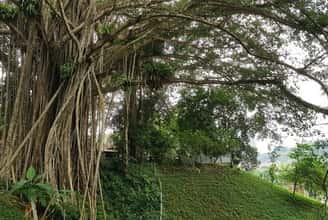
Thuong temple banyan tree belongs to the multi-hairy variety. At the time of recognition, the tree was classified as a heritage tree with the largest trunk circumference in Vietnam, with a circumference of 44m, more than 36m high, and an age of over 300 years. Up to now, the tree has developed many additional roots and thousands of baby roots surrounding it. It is very difficult to distinguish which is the main stem and which are the secondary roots, because over time, the secondary roots have developed and become tightly attached to each other into giant root clusters no different from the main stem. Along with the regime of caring for heritage trees according to State regulations, the ancient banyan tree at Thuong Temple is always protected by the people. Every year the tree produces many roots, but no one breaks the branches, cuts the roots, or climbs. The tree has many mistletoe, many orchids clinging tightly to high branches, and large roots add to the ancient and natural beauty. When recognized as a "Vietnamese Heritage Tree", the banyan tree at Thuong Temple was the first ancient tree in the province to be recognized by the Vietnam Association for Nature and Environment Protection as a Vietnamese Heritage Tree. The tree stands tall and proud right on the banks of Nam Thi River, next to Thuong Temple - the place to worship the National Duke Tiet Hung Dao Vuong - Tran Quoc Tuan, who has made great contributions to the cause of protecting the land, mountains and rivers. water, becoming the pride of the people in the border land - Lao Cai. Source "Lao Cai Electronic Newspaper"
Lao Cai
6562 view
Rating : National monument
 AI Travelviet