Relic point Vietnam
Việt Nam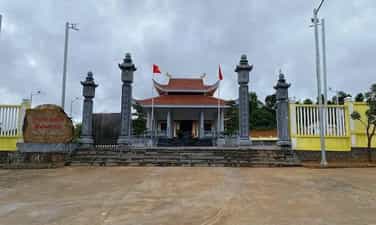
Di tích lịch sử Chiến thắng Plei Kần
Di tích lịch sử Chiến thắng Plei Kần nằm trên địa bàn xã Bờ Y, tỉnh Quảng Ngãi, vùng đất có vị trí chiến lược ở khu vực ngã ba biên giới Việt Nam – Lào – Campuchia. Trong kháng chiến chống Mỹ, Plei Kần là một vị trí quân sự quan trọng, án ngữ các tuyến giao thông chiến lược qua Bắc Tây Nguyên và hành lang biên giới. Năm 1966, quân Mỹ và chính quyền Việt Nam Cộng hòa từng bước xây dựng Plei Kần thành một cụm cứ điểm kiên cố với nhiều khu phòng thủ, hầm ngầm, lô cốt, hào giao thông, trận địa pháo, xe tăng và sân bay dã chiến. Cụm cứ điểm này được tổ chức nhằm ngăn chặn lực lượng cách mạng từ phía Bắc và từ hành lang biên giới tiến vào Tây Nguyên. Đầu tháng 10 năm 1972, Bộ Tư lệnh Mặt trận Tây Nguyên giao Sư đoàn 10 tổ chức tiến công Plei Kần. Sau hơn hai ngày đêm chiến đấu quyết liệt, đến ngày 12 và 13/10/1972, quân ta làm chủ hoàn toàn cụm cứ điểm. Chiến thắng đã tiêu diệt hơn 400 tên địch, bắt sống 65 tên, thu nhiều pháo, xe tăng cùng kho tàng, vũ khí và khí tài quân sự. Chiến thắng Plei Kần có ý nghĩa quan trọng trong việc mở rộng vùng giải phóng, khai thông hành lang biên giới Đông Dương và góp phần bảo đảm tuyến vận tải chiến lược trên đường Hồ Chí Minh. Di tích được xếp hạng di tích lịch sử cấp quốc gia năm 2000, là địa chỉ góp phần giáo dục truyền thống yêu nước, tinh thần chiến đấu và ý chí bảo vệ độc lập, chủ quyền dân tộc. Nguồn: Trang thông tin Di tích lịch sử văn hóa
Quang Ngai
68 view
Rating : Di tích cấp quốc gia
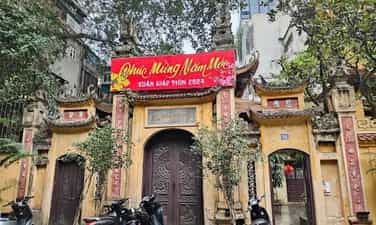
Chùa Lý Triều Quốc Sư
Tọa lạc tại số 50 phố Lý Quốc Sư, phường Hoàn Kiếm, thành phố Hà Nội, Chùa Lý Triều Quốc Sư (hay Đền Lý Quốc Sư) là một di tích lịch sử, kiến trúc nghệ thuật tiêu biểu giữa khu phố cổ Thăng Long. Xưa kia, nơi đây vốn là đền thờ Thiền sư Minh Không – vị Quốc sư triều Lý, người có công chữa bệnh cho vua Lý Thần Tông. Theo tư liệu lịch sử, năm 1131, vua Lý Thần Tông cho dựng nhà để Quốc sư nghỉ lại mỗi khi về kinh. Sau khi Minh Không viên tịch, nhân dân lập đền thờ để tưởng nhớ công đức của ngài. Đến năm 1932, chùa được tôn trí thêm hệ thống tượng Phật, Bồ Tát và từ đó mang tên Chùa Lý Triều Quốc Sư. Trải qua nhiều lần trùng tu, chùa vẫn lưu giữ nhiều dấu tích và hiện vật quý. Nổi bật là bia đá thời Nguyễn, trụ đá “Long Nữ thiên tài” cùng các tượng Thiền sư Minh Không, Từ Đạo Hạnh, Giác Hải và thân phụ, thân mẫu của Từ Đạo Hạnh, mang giá trị đặc sắc về lịch sử và nghệ thuật điêu khắc truyền thống. Vừa mang dấu ấn của một ngôi đền thờ nhân thần, vừa là nơi thờ Phật, Chùa Lý Triều Quốc Sư góp phần lưu giữ những lớp trầm tích văn hóa của kinh thành Thăng Long. Với những giá trị nổi bật, chùa được xếp hạng Di tích lịch sử văn hóa, kiến trúc nghệ thuật cấp quốc gia năm 1995. Nguồn: Bảo tàng Lịch sử Quốc gia
Hanoi
117 view
Rating : Di tích cấp quốc gia
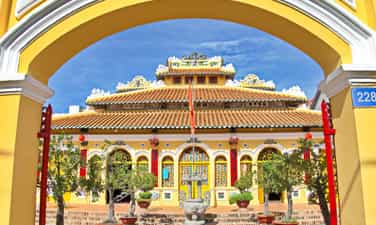
Chau Phu Temple
Chau Phu Temple – A historical landmark along the Hau River. Located in Chau Doc ward, An Giang province, on the Hau River, Chau Phu Temple is one of the typical religious structures of the Chau Doc region. Its predecessor was the Le Cong Ancestral Temple, built around the beginning of the 19th century to worship Le Thanh Hau Nguyen Huu Canh, a figure who made significant contributions to the development and expansion of the Southern region of Vietnam. Later, the structure was relocated and rebuilt; the current temple was completed in 1926. The temple is grand in scale, reflecting the distinctive architectural style of Southern Vietnamese village temples. The structure is arranged in a three-part layout, with large wooden columns, tiled roofs, and many exquisite carvings. The roof and architectural elements prominently feature traditional themes such as two dragons fighting over a pearl, two dragons worshipping the moon, fish transforming into dragons, phoenixes, and lions. Inside, many valuable horizontal plaques, couplets, religious artifacts, and other relics are preserved. Besides Nguyen Huu Canh, the temple also worships Thoai Ngoc Hau Nguyen Van Thoai and several other figures who contributed to the Chau Doc region. Every year, the temple holds the Ky Yen festival on the 10th and 11th of May in the lunar calendar, attracting a large number of people to offer incense and pay respects. With its unique historical, cultural, and architectural values, Chau Phu Temple is a destination that contributes to the distinctive spiritual and cultural landscape of Chau Doc and the Southwestern region of Vietnam. Source: Tuoi Tre Newspaper
An Giang
119 view
Rating : National Monument
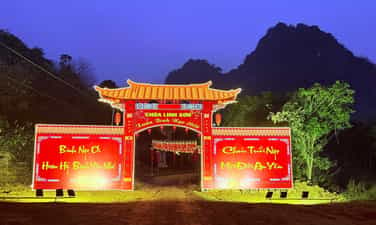
Linh Son Pagoda, Thai Nguyen
Located in Linh Son ward, Thai Nguyen province, Linh Son Pagoda is a familiar cultural and religious site for local people, situated within the Linh Son Cave National Monument complex. Amidst the landscape of rocky mountains, caves, and greenery, the pagoda offers a serene and solemn atmosphere, deeply connected to the spiritual life of the community for generations. Linh Son, meaning "sacred mountain," is a land that preserves many historical traces and stories passed down through time. Within the Linh Son Cave area, there is an ancient stone stele titled "Restoration of Linh Son Cave." The inscription records the restoration of the pagoda and traces related to the history of the temple and pagoda complex. The patterns on the stele are believed to be in the artistic style of the Le Dynasty, reflecting the rich history and culture of the site. Today, Linh Son Pagoda is not only a place where people and Buddhists come to worship and pray for peace, but also a destination connected to the unique natural landscape of the Linh Son region. Every year, the temple festival is held in early spring with incense offerings, processions, and many folk cultural activities, attracting a large number of locals and tourists. With its combination of spiritual, historical, and scenic values, Linh Son Temple contributes to the unique cultural beauty of Thai Nguyen, known as the "sacred mountain region." Source: Linh Son Ward website, Thai Nguyen Province
Thai Nguyen
61 view
Rating : National Monument
Mount Cau – Dau Tieng Reservoir
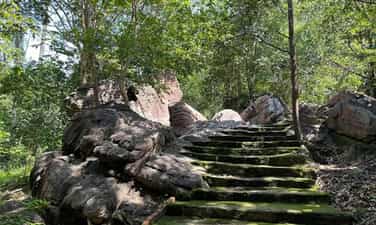
Mount Cau – Dau Tieng Lake is a prominent scenic area in Dau Tieng commune, Ho Chi Minh City, where the beauty of mountains, forests, lakes, and spiritual culture converges. Covering an area of over 1,600 hectares, the Mount Cau complex comprises 21 mountains of varying sizes, forming a long green mountain range in the Dau Tieng region. Among them, Mount Cua Ong, approximately 295 meters high, is the highest mountain in the complex. Besides its rich natural landscape, Mount Cau is also associated with a forest ecosystem and many characteristic timber species such as teak, ironwood, rosewood, and crape myrtle. At the foot of the mountains lies the vast Dau Tieng Lake, its clear blue waters stretching across the landscape, creating a picturesque scene. From the high points of Mount Cau, visitors can take in the panoramic view of the expansive lake blending with the lush green forest slopes. Within the scenic complex is also Truc Stream, with its water flowing through rocky slopes amidst the tranquil forest. Along with that are religious structures such as Thai Son Pagoda and sites associated with folk beliefs, creating a harmonious blend of natural landscapes and the cultural life of the local people. With outstanding values in landscape, ecology, and culture, Nui Cau - Dau Tieng Reservoir has been classified as a city-level scenic site. This is not only an attractive destination in the Dau Tieng area but also contributes to preserving the natural beauty and distinctive cultural values of the western part of Ho Chi Minh City. Source: Binh Duong Tourism Information Portal
Ho Chi Minh City
99 view
Rating : National Monument
Linh Son Pagoda, Cu Chi
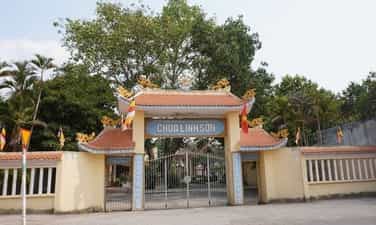
Located in Phu Loi hamlet, Phu Hoa Dong commune, Ho Chi Minh City, Linh Son Pagoda is one of the oldest pagodas in the Cu Chi area. It was founded in 1806 by Patriarch Buu Tinh – Pho Te, the 35th generation of the Lam Te lineage, initially as a simple thatched hut where people sought refuge in Buddhism. By 1816, thanks to the contributions of Buddhists and benefactors, the pagoda was expanded into a more spacious building with a main hall and ancestral hall, showcasing the distinctive architecture of Southern Vietnamese pagodas. Over time and through years of war, the pagoda suffered damage several times, but it has been restored and preserved by successive generations of abbots and Buddhists. Linh Son Pagoda is built in the shape of the Chinese character "Tam" (three), comprising the main hall, lecture hall, and guesthouse; the buildings feature a traditional four-pillar structure. The wooden columns, tiled roofs, wooden doors, and carved details create an ancient, rustic, yet distinctive appearance. In particular, the pagoda still preserves many valuable artifacts such as a set of three wooden statues of Amitabha Buddha, terracotta statues of Bodhidharma and Maitreya, a bronze bell, horizontal plaques, couplets, and a set of eighteen terracotta statues of Arhats. These are valuable documents that contribute to reflecting the religious life and Buddhist art of Southern Vietnam through many periods. Source: Giac Ngo Newspaper
Ho Chi Minh City
126 view
Rating : Provincial-level historical site
Đình Nhân Lý
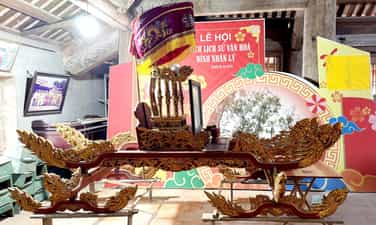
Đình Nhân Lý – Dấu ấn linh thiêng của làng khoa bảng. Tọa lạc tại thôn Nhân Đào, xã Nam Sách, thành phố Hải Phòng, đình Nhân Lý là một di tích lịch sử, văn hóa tiêu biểu, gắn với truyền thống khoa bảng nổi tiếng của vùng đất Nam Sách. Nơi đây từng có 12 vị đại khoa, trong đó nhiều người giữ những chức vụ quan trọng trong triều đình, góp phần làm nên danh tiếng của một vùng đất địa linh nhân kiệt. Theo tư liệu lịch sử, đình Nhân Lý được khởi dựng từ thời Lê và trải qua nhiều lần tu bổ, mở rộng. Công trình mang dáng vẻ bề thế, với những hàng cột gỗ lim lớn cùng hệ thống chạm khắc tinh xảo. Các đề tài rồng, ly, phượng, lân, mây, trúc… được thể hiện sinh động trên xà ngang, đầu dư và các cấu kiện kiến trúc, tạo nên giá trị đặc sắc cho nghệ thuật đình làng truyền thống. Đình là nơi thờ Thành hoàng Đào Tuấn Lương, vị tướng được nhân dân tôn kính vì có công phò tá Lý Nam Đế chống quân Lương vào thế kỷ VI. Đồng thời, đình cũng là nơi ghi danh, tưởng niệm 12 vị đại khoa của làng, thể hiện truyền thống trọng đạo học, tôn vinh hiền tài của cộng đồng. Hằng năm, lễ hội truyền thống được tổ chức vào tháng Hai âm lịch với các nghi lễ dâng hương cùng nhiều hoạt động văn hóa dân gian. Trải qua nhiều thế kỷ, đình Nhân Lý vẫn là nơi lưu giữ những giá trị lịch sử, kiến trúc và tín ngưỡng đặc sắc, đồng thời là biểu tượng cho truyền thống hiếu học và tinh thần trọng nghĩa, trọng tài của quê hương Nam Sách. Nguồn: Cổng Thông tin điện tử xã Nam Sách, thành phố Hải Phòng
Hai Phong
128 view
Rating : Di tích cấp quốc gia
Dinh Ha Mao
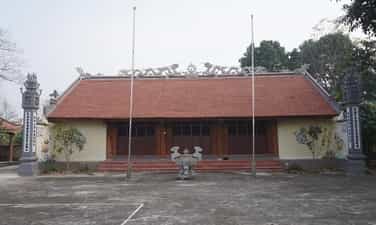
Ha Mao Temple – A Landmark of Nguyen Dynasty Architectural Art. Located in Zone 2, Au Co Ward, Phu Tho Province, along the Thao River, Ha Mao Temple dates back to the 19th century and has undergone several restorations. According to local records, the temple is dedicated to Hung Anh, a figure associated with the Hung King era and credited with water management. The temple is built in the shape of the Vietnamese character "Đinh," consisting of a main hall and a rear sanctuary. The structure is made of ironwood, with a tiled roof and a robust system of columns and trusses. The most distinctive feature lies in the wood carvings depicting dragons, lotuses, turtles, phoenixes, clouds, and waves. Dragon imagery appears throughout the carvings, from the corbels and beams to the brackets and archways, creating a majestic yet lively appearance. Particularly noteworthy are the brackets depicting a mother dragon and her offspring amidst clouds and water, combined with lotus and turtle imagery, representing the concept of fertility and continuity. The inner palace still preserves the ornate archway carved with "Two Dragons Worshipping the Moon" and "Dragons and Clouds Meeting," possessing high artistic value. Source: Phu Tho Province Tourism Guide website.
Phu Tho
61 view
Rating : National Monument
Dinh Phuong Do
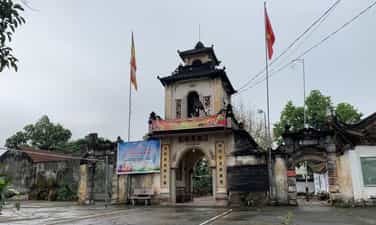
Phuong Do Temple, also known as Uc Tan Temple, located in Phu Binh commune, Thai Nguyen province, is one of the typical ancient temples that still preserves many distinctive features of Le Dynasty architecture in Thai Nguyen. Built during the Le Dynasty, it was initially located near the riverbank, but in 1901 it was moved to the center of the village. The structure features traditional wooden architecture with three bays and two wings, primarily constructed of ironwood. The roof is covered with curved tiles, creating an ancient and imposing appearance. The carvings on the trusses, beams, and panels prominently depict the four mythical creatures and four auspicious symbols, showcasing a refined artistic skill. The temple is dedicated to Cao Son Quy Minh Dai Vuong – Duong Tu Minh, a royal son-in-law of the Ly Dynasty who made significant contributions to the protection and development of the ancient Phu Luong region. The temple space also preserves many valuable artifacts such as royal decrees, large inscriptions, altars, incense burners, bronze candlesticks, and other religious objects of historical and artistic value. In 1993, Phuong Do Temple was classified as a National Historical and Architectural Art Monument, becoming a representative site contributing to the preservation of traditional cultural, architectural, and religious values of the Northern Midlands region. Source: Thai Nguyen Provincial Department of Culture, Sports and Tourism
Thai Nguyen
61 view
Rating : National Monument
Black Cave
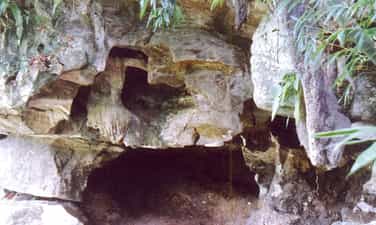
Black Stone Cave – Traces of Prehistoric Humans in Tuyen Quang. Located in Yen Phu commune, Tuyen Quang province, Black Stone Cave is a particularly valuable paleontological and archaeological site, marking the presence of humans from prehistoric times. The site was discovered during an archaeological survey in 2004 conducted by the Vietnam Institute of Archaeology in collaboration with the Tuyen Quang Museum. Inside the cave, archaeologists discovered a sediment layer approximately 1.2 meters thick containing numerous fossilized animal bones and teeth, including teeth of hominid and saber-toothed elephants. These findings contribute to clarifying the natural environment and the development of the fauna in the Tuyen Quang area during prehistoric times. Notably, at Goc Kheo mound in Yen Phu area, five stone tools were also discovered, including three roughly chipped tools and two pointed tools. These pebble tools, dating back to a very early period, are considered important traces of the Old Stone Age in Tuyen Quang. The findings at Black Stone Cave and the surrounding area are of great value in studying the origins of humankind, the lives of prehistoric inhabitants, and the changes in the natural environment in Vietnam and Southeast Asia. Source: Tuyen Quang Newspaper
Tuyen Quang
129 view
Rating : National Monument