Relic point Vietnam
Việt Nam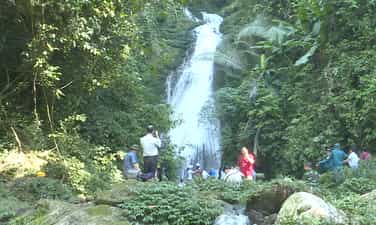
Silk Waterfall
Silk Waterfall originates from the Cham Chu mountain range and flows through Hoa Phu commune, Tuyen Quang province. The waterfall's clear, year-round flowing water not only creates a beautiful natural landscape but also provides a valuable water source for the daily life and production of the local people. For generations, the waters of Silk Waterfall have contributed to irrigating the fields, closely intertwined with the lives of the local community. Silk Waterfall is formed by three main tiers: Tat Cao, Tat Voc, and Tat Lua. Tat Cao originates from a narrow mountain gorge, over 30 meters high; Tat Voc is lower and parallel to Tat Cao. The two streams meet and merge to form Tat Lua at the bottom, creating a stream over 20 meters high and about 5 meters wide, gently cascading down like a silk ribbon amidst the mountains and forests. On either side of the waterfall are lush green trees and natural rock formations lining the banks. At the foot of Tat Lua, a clear pool of water forms, contributing to the wild yet poetic beauty of the scenic spot. Behind the Silk Waterfall lies a mountain cave associated with folk tales passed down by the local people since the time of the Black Flag Rebellion. These legends add to the mysterious beauty of the landscape and reflect the community's awareness of preserving the precious water source that has nourished their lives and the fields of their homeland. With its unique natural scenery, year-round water flow, and cultural values linked to community life, the Silk Waterfall is a scenic spot with great potential, contributing to enriching the natural landscape of Tuyen Quang province. Source: Vietnam National Tourism Administration
Tuyen Quang
135 view
Rating : National Monument
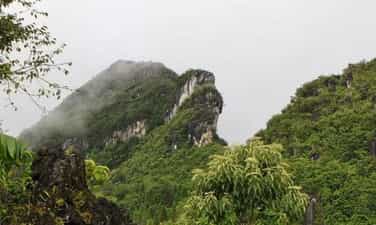
Ham Rong Mountain, Sa Pa
Ham Rong Mountain is located in the heart of Sa Pa ward, Lao Cai province, belonging to the Hoang Lien Son mountain range, at an altitude of nearly 1,800 meters above sea level. With its undulating, naturally rocky terrain, viewed from afar, the mountain resembles a dragon facing the majestic Hoang Lien mountain range. This unique shape gave it its name, Ham Rong (Dragon's Jaw), and it has become a symbol associated with the Sa Pa region. Ham Rong Mountain is not only impressive for its fascinating topography but also for the legends passed down through generations. According to folklore, in the beginning of time, a pair of dragons descended from heaven to earth and became attached to the scenery here. After a great flood, the male dragon flew back to the Hoang Lien mountain range, while the female dragon remained and turned to stone. The current shape of Ham Rong Mountain is associated with this image. From its summit, Ham Rong Mountain offers a wide view of the Hoang Lien Son mountain range, the valleys, and the town of Sa Pa. The naturally formed rock formations with their unique shapes, along with the ever-changing scenery of clouds and sky, create a majestic and mystical beauty for this scenic spot. With its outstanding natural landscape, topography, and the folklore associated with the Sa Pa region, Ham Rong Mountain is a representative landmark of Lao Cai, contributing to the unique charm of the Northwest highlands. Source: Vietnam National Tourism Administration
Lao Cai
136 view
Rating : National Monument
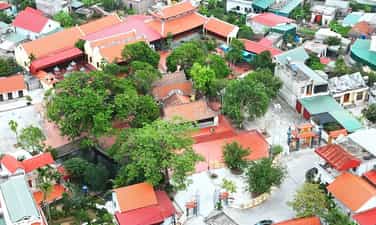
Dong Bao Temple
Dong Bao Temple, located in Thach Khoi Ward, Hai Phong City, is one of the main places of worship dedicated to Empress Dowager Y Lan – a virtuous and talented woman who made significant contributions to the country during the Ly Dynasty. Over the centuries, the temple has been preserved, restored, and maintained by the people, with incense burning and worship continuing. The temple has a "front-facing, rear-facing" architectural style, consisting of five front halls, five central halls, and three rear halls. The structures reflect the artistic architectural style of the Nguyen Dynasty, creating a solemn and ancient atmosphere. In 1991, the complex of temples, pagodas, and shrines in Dong Bao was classified as a National Historical and Cultural Monument, affirming its outstanding historical, cultural, and religious values. According to legend, the Dong Bao area was once a stopover for Empress Dowager Y Lan during her travels in the Eastern region. Therefore, a tradition of commemorating and worshipping her has been established here, reflecting the community's principle of "drinking water, remembering the source." Every year, the Dong Bao Temple Festival is held on the 23rd and 24th of the 7th lunar month, featuring incense offerings, processions of the Mother Goddess, and many cultural, artistic, sporting, and folk game activities. The festival is an opportunity for the people and visitors to commemorate the merits of Empress Dowager Y Lan, while also contributing to the preservation and promotion of the local traditional cultural values. Source: Thach Khoi Ward Electronic Information Portal, Hai Phong City.
Hai Phong
156 view
Rating : National Monument
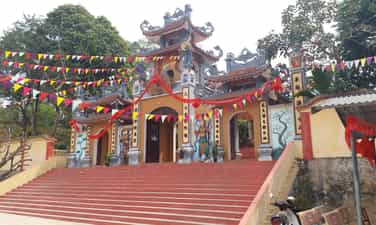
The Temple of the Devil
The Rối Temple is located at the foot of a dome-shaped hill, surrounded by ancient trees, in Văn Phú ward, Lào Cai province. Together with Minh Pháp Pagoda, it forms a complex of historical and cultural relics recognized at the provincial level in 2005. According to the preserved genealogical records, the Rối Temple is dedicated to Princess Ngọc Dung, the eighth daughter of a Hùng king. Legend says that the princess once lived in Hào Gia and was revered and worshipped by the people. She is believed to be a divine being, granting peace, rain, and healing, and was later bestowed the title of Sơn Thủy Linh Thần (Mountain and Water Spirit Deity). The temple still preserves two imperial decrees from the Nguyễn dynasty, issued in 1911 and 1924. The temple was originally built in the stilt house style. Due to the effects of time and natural conditions, the structure deteriorated, and was subsequently restored and renovated by the people in the early 1990s in the traditional architectural style. Some artifacts such as large inscriptions, couplets, and decorative motifs in an ancient style are still preserved at the site. On the hilltop near the Rối Temple is Minh Pháp Pagoda, formerly known as Rối Pagoda. The temple and pagoda, nestled under ancient trees, create a tranquil landscape, suitable for sightseeing, learning about history, and worship. The Rối Temple – Minh Pháp Pagoda complex is a typical cultural and spiritual destination of the former Yên Bái region. Source: Lào Cai Newspaper
Lao Cai
133 view
Rating : Provincial-level historical site
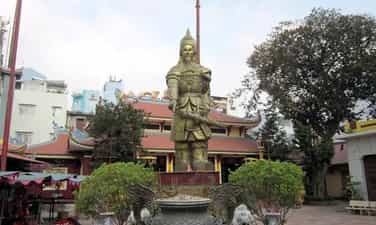
Temple of Saint Tran Hung Dao
The Temple of Saint Tran Hung Dao is located at 36 Vo Thi Sau Street, Tan Dinh Ward, Ho Chi Minh City. This religious structure commemorates Hung Dao Dai Vuong Tran Quoc Tuan – a renowned general of the Tran Dynasty who played a crucial role in the three resistance wars against the Yuan-Mongol invaders in the 13th century. The temple was built in 1932 on the site of the former Van An Pagoda. In 1957-1958, it was rebuilt according to the design of architect Nguyen Manh Bao. The structure features traditional architecture with a "Dinh" shaped frame, combining wood and reinforced concrete, and a tiled roof. Beyond the main gate is a courtyard leading to the worship area. The main hall houses a bronze statue of Tran Hung Dao, approximately 1.7 meters tall, seated, holding a military treatise, with a sword beside him, depicting the image of a brilliant commander. The interior space also preserves many religious artifacts, horizontal plaques, couplets, and carvings and reliefs depicting events associated with the Tran Dynasty. Every year, the temple holds ceremonies commemorating Saint Tran, the most important of which is the anniversary of Hung Dao Dai Vuong's death on the 20th day of the 8th lunar month. This is a center of religious and cultural activity, contributing to the preservation of the tradition of showing gratitude to ancestors in community life in Ho Chi Minh City. Source: Wikimedia
Ho Chi Minh City
122 view
Rating : Provincial-level historical site
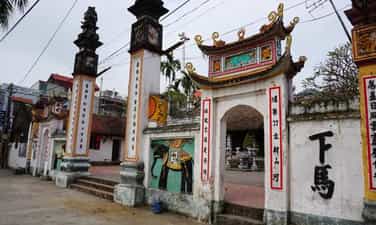
Đình Châu Mai
Đình Châu Mai nay thuộc xã Dân Hòa, thành phố Hà Nội, là công trình tín ngưỡng có giá trị về lịch sử, kiến trúc và nghệ thuật, đồng thời là nơi sinh hoạt văn hóa của cộng đồng địa phương. Theo thần phả, đình thờ Phả Tế Minh Lang thần đại tướng quân, vị tướng dưới triều Trần, có công cùng quân dân nhà Trần chống quân Nguyên – Mông xâm lược thế kỷ XIII. Ông đã chiến đấu và hy sinh tại trận Bạch Đằng, góp phần vào thắng lợi của quân dân Đại Việt. Sau khi ông mất, người dân Châu Mai tôn làm Thành hoàng và lập đình thờ phụng. Đình được xây dựng vào năm 1904, dưới triều vua Thành Thái, mang đặc trưng kiến trúc đình làng thời Nguyễn. Quần thể gồm nghi môn, sân đình, tả vu, hữu vu, đại bái và hậu cung. Nổi bật là hệ thống chạm khắc trên kiến trúc gỗ với các đề tài tứ linh, tứ quý cùng hình ảnh cá, cua, chuột sinh động, thể hiện nét đặc sắc của nghệ thuật dân gian vùng đồng bằng Bắc Bộ. Đình hiện còn lưu giữ nhiều bia đá, hoành phi, câu đối, sắc phong, thần phả và đồ thờ tự có giá trị. Lễ hội đình được tổ chức từ ngày 10 đến 14 tháng 8 âm lịch hằng năm góp phần bảo tồn và phát huy những giá trị văn hóa truyền thống của vùng đất Dân Hòa hôm nay. Nguồn: Cổng Thông tin điện tử thành phố Hà Nội
Hanoi
142 view
Rating : Di tích cấp quốc gia
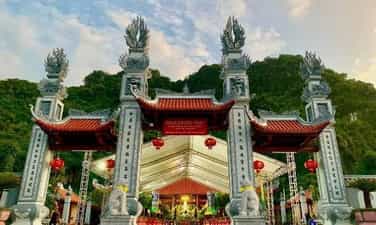
Dong Son Temple
Dong Son Temple is located in Zone 3, Cao Phong Commune, Phu Tho Province, within the Dau Rong Mountain complex. Along with Bong Lai Temple and the Dau Rong Mountain complex, the site was classified as a National Historical and Scenic Site in 2012. The temple is dedicated to the Second Lord of Muong, Thien Su La Binh Cong Chua, a Holy Mother associated with the mountains, forests, and spiritual life of the Muong people. According to folk beliefs, she is revered as the deity who governs the mountainous region, protecting the people, ensuring peace and prosperity, and safeguarding community life. The temple was restored in 2019 on an area of nearly 11,000 m², comprising solemn worship spaces. In particular, the altar dedicated to the Four Ancestral Clans of Muong clearly reflects the local culture, linked to the belief in commemorating those considered the founding ancestors of the Muong people. Every year, on the 12th day of the 9th lunar month, Dong Son Temple holds the Lady's Feast, attracting locals and tourists to offer incense. With its blend of mountainous landscapes, the worship of the Mother Goddess, and Muong culture, Dong Son Temple is a quintessential cultural and spiritual destination in the Cao Phong region. Source: Phu Tho Newspaper
Phu Tho
66 view
Rating : National Monument
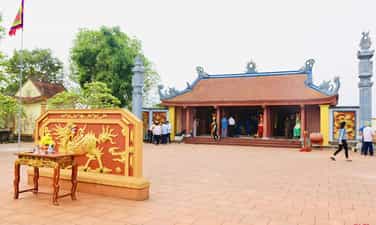
Than Nong Temple
Located in Tri Khe village, Thach Ha commune, Ha Tinh province, the Than Nong Temple is a cultural and religious site closely associated with the agricultural life of the local people for generations. In folk beliefs, Than Nong is considered the guardian deity of agriculture, associated with teaching people how to cultivate and plant crops, and praying for favorable weather, abundant harvests, and a prosperous life. According to historical documents, the temple was built during the Nguyen dynasty. Over time, the structure has become a place where people practice their faith, commemorate the deity associated with agriculture, and express their wishes for a peaceful life and successful production. The worship of Than Nong here also reflects the important role of agriculture in the economic and cultural life of the local community. In 2022, the temple was restored and renovated with many synchronized items such as the temple gate, the main hall, the left and right side buildings, the fence, and the grounds. The restored structure not only meets the needs of religious activities but also contributes to preserving the traditional architectural space of the historical site. Today, the Than Nong Temple is not only a place of religious activity for the people but also a place where tourists can learn about the worship of the God of Agriculture and the agricultural cultural traditions of the people of Ha Tinh. Source: Ha Tinh Newspaper
Ha Tinh
153 view
Rating : Provincial-level historical site
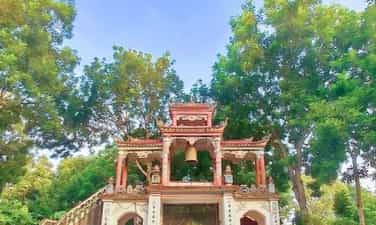
Du Anh Pagoda
Du Anh Pagoda, located at the foot of Xuan Dai Mountain, within the Ho Cong Cave scenic area, is a long-standing temple dating back to the Ly Dynasty. During the Tran Dynasty, King Tran Nghe Tong brought Princess Du Anh to the pagoda to worship and recuperate. After the princess recovered, the pagoda was upgraded and subsequently named Du Anh. In the early 17th century, the pagoda was rebuilt by Quang Quan Cong Trinh Vinh Loc. The structure once harmonized with the landscape of Trac Phong Mountain, Ho Cong Cave, Nhat Ho Lake, and Nguyet Ho Lake. Notably, the pagoda still preserves stone elephants and lions, considered valuable relics from the Tran Dynasty, along with the "Restoration of Xuan Dai Mountain, Ho Cong Cave, Du Anh Pagoda" stele erected in 1605, recording the history of the pagoda's restoration and the scenic landscape of the area. Today, Du Anh Pagoda has been restored, including the main pagoda, the Mother Goddess house, the Ancestor house, and other auxiliary structures. Together with Xuan Dai Mountain, Ho Cong Cave, and Trac Phong Mountain, the pagoda forms a complex of historical, cultural, and scenic relics. Source: Thanh Hoa Pagoda
Thanh Hoa
159 view
Rating : National Monument
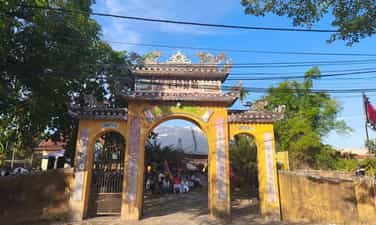
Phong Le Ancestral Temple
The Phong Le Ancestral Temple is a city-level architectural and artistic relic located in Phong Nam village, Hoa Xuan ward, Da Nang city. It is closely associated with the history and development of Phong Le village. Built in 1898, after several renovations and reconstructions, it still retains the distinctive traditional architecture of Central Vietnam, with its yin-yang tiled roof and intricate carvings of two dragons worshipping the sun, two phoenixes worshipping the moon, and exquisite patterns on the columns and beams. The temple is a place of worship for the ancestors and cultural activities of the Phong Le village community. It also preserves traditional values associated with the village's founding, settlement, and cultural life. The relic currently contributes to the preservation, education, and promotion of the cultural values of Phong Le village. Source: Van Hoa Newspaper
Da Nang
142 view
Rating : Provincial-level historical site