Relic point Vietnam
Việt Nam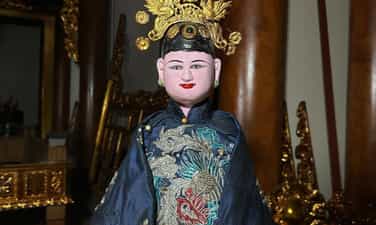
Temple of Co Be Minh Luong
The Minh Luong Maiden Temple is a spiritual destination located on a hill in the Minh Luong area, now part of Lang Quan commune, Tuyen Quang province. The temple is surrounded by the Lich and Coi streams; these two streams meet in front of the temple and flow into the Lo River, creating a cool, peaceful green space. The temple is dedicated to the Minh Luong Maiden, a celestial maiden in the Four Palaces (Tu Phu) belief system, and also houses altars to Buddha and Saint Tran. After several renovations, the temple now features the Maiden's Pavilion, the Boy's Pavilion, the Mountain God's Shrine, the Nine Heavenly Mother's altar, and other facilities for visitors. Notably, two ancient cycad trees stand in front of the temple, one of which is believed to be hundreds of years old. Every year, on the 24th day of the 6th lunar month, the Minh Luong Maiden's Festival is held, attracting locals and tourists to offer incense and pray for peace and prosperity. The temple is also part of a spiritual tourism area connected to other destinations and cultural villages in the Yen Son region. Source: Sacred Places – Directory of Spiritual Deities in Vietnam
Tuyen Quang
146 view
Rating : National Monument
Ho Cong Cave
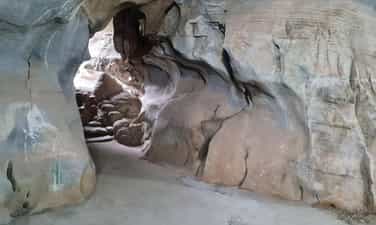
Ho Cong Cave – A wonder amidst the mountains and waters of Thanh Hoa province. The Ho Cong Cave complex, located in Vinh Loc commune, Thanh Hoa province, includes Ho Cong Cave, Xuan Dai Mountain, Trac Phong Mountain, and Du Anh Pagoda. Ho Cong Cave is situated halfway up Xuan Dai Mountain, boasting a unique landscape with natural rock formations and numerous cultural relics. The cave walls are preserved with many poems by kings, lords, and famous figures such as Le Thanh Tong, Le Hien Tong, Nguyen Nghiem, and Trinh Sam. Notably, it was once praised as "Ho Cong, the most beautiful" among the 36 most beautiful caves in Southern Vietnam. At the foot of the mountain is Du Anh Pagoda, believed to date back to the Ly Dynasty, contributing to the harmonious blend of mountains, caves, rivers, and spiritual space. With its outstanding historical, cultural, religious, and scenic values, the Ho Cong Cave complex was classified as a national historical site in 2009. Source: Thanh Hoa Newspaper
Thanh Hoa
162 view
Rating : National Monument
Mau Son Ancient Sacred Site
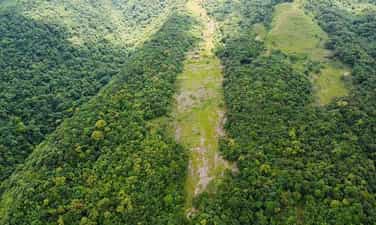
The ancient sacred site of Mau Son is located at an altitude of approximately 1,190 meters above sea level, on the southeastern slope of the Mau Son mountain range, in Lap Pia village, Mau Son commune, Lang Son province. The relics here date from around the 10th to the early 20th centuries, associated with the religious life of the communities living on the Mau Son range. According to archaeological records, the early inhabitants of the sacred site were the ancient Tay people; later, the Nung and Dao people also made their presence felt. The communities established a place of worship for the mountain god and maintained rituals and religious activities to pray for peace and prosperity. In 2003, the Lang Son Museum conducted excavations and discovered many traces of the sacred site. Currently, visitors can find remnants of ancient temple structures such as stone pillar bases, stone walls, brick walls, steps, stone doors, and stone tombs. A trip to the ancient sacred site is also an opportunity to explore the forest ecosystem of the Mau Son range. From the site, visitors can observe the vast mountain and forest landscape, and learn more about the history of settlement and religious life of ethnic communities in the mountainous border region of Lang Son. With its archaeological, historical, and cultural value, the Mau Son Ancient Sacred Site is a special destination on the Mau Son mountain range, contributing to clarifying the long-standing cultural layers of this land. Source: Lang Son Newspaper and Radio & Television
Lang Son
196 view
Rating : National Monument
To Thi Mountain
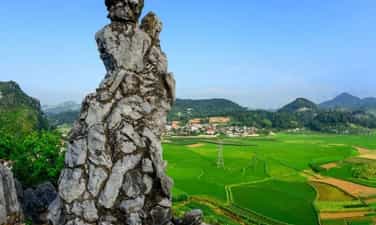
To Thi Mountain, also known as Vong Phu Mountain, is located northwest of Tam Thanh Mountain, in Tam Thanh Ward, Lang Son Province. On the mountain stands a natural rock formation resembling a woman holding a child, gazing into the distance. This image has long been associated with the folk tale of To Thi – a faithful woman who waited for her husband to return from war. According to legend, To Thi stood on the mountain, holding her child, waiting for her husband's return. After a long wait, the mother and child turned into stone. From then on, the image of the woman holding a child on the mountain became known as To Thi, a familiar symbol of unwavering loyalty and faithfulness in Vietnamese folklore. Over time, the rock formation was damaged by the elements. To preserve this image, which is associated with a cultural symbol of Lang Son, the local authorities have restored the image of To Thi. Today, To Thi Mountain is a tourist attraction associated with the Tam Thanh - Nhi Thanh scenic complex, drawing visitors to explore the landscape and unique folk tales of Lang Son province. Beyond its scenic value, To Thi Mountain holds significant meaning in Vietnamese culture, linked to stories of love, fidelity, and waiting. Source: Vietnam National Tourism Administration
Lang Son
188 view
Rating : National Monument
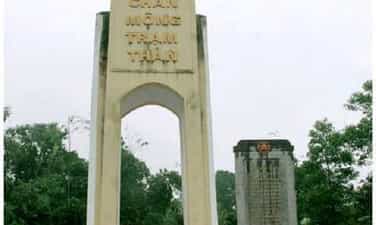
The Chân Mộng – Trạm Thản Victory Monument
The Chân Mộng – Trạm Thản Victory Monument, located in Trạm Thản commune, Phú Thọ province, commemorates the ambush of French troops on November 17, 1952, during the resistance war against French colonialism. The monument includes sites associated with the victory, including the Chân Mộng – Trạm Thản Victory Monument and the Chân Mộng – Trạm Thản Campaign Martyrs' Cemetery. In late 1952, the French colonialists launched Operation Loren to find and destroy our main forces and exert pressure in the Phú Thọ area. Knowing the enemy's retreat route, the main army units, in coordination with local armed forces, organized an ambush in the Chân Mộng – Trạm Thản area. The Chân Mộng – Trạm Thản victory contributed to the failure of Operation Loren in Phú Thọ and demonstrated the effectiveness of ambush organization and coordination between the main army units and local armed forces. Today, the Chân Mộng – Trạm Thản Campaign Martyrs' Cemetery and Historical Site serves as a place for revolutionary tradition education, commemorating the martyrs who fought and sacrificed their lives in the resistance war against French colonialism. The site helps visitors and younger generations learn about an important milestone in the history of the struggle of the army and people of Phú Thọ. Source: Phú Thọ Provincial Electronic Information Portal
Phu Tho
93 view
Rating : National Monument
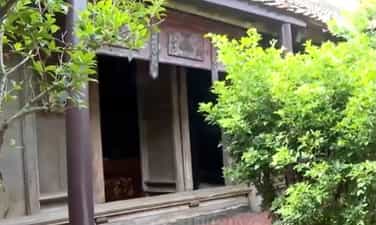
Temple of Words
The Lời Temple is located in Vĩnh Lại area, Bản Nguyên commune, Phú Thọ province, right on the left bank of the historic Thao River. For centuries, this ancient temple has been a solid spiritual anchor and a great source of pride in the cultural life of the people of the ancestral land. The temple dates back to the Later Lê Dynasty (17th century), closely associated with the process of settlement, village development, and border defense. It is a place of worship for Tản Viên Sơn Thánh (Sơn Tinh) – the leading saint in the "Four Immortals" of Vietnamese mythology, along with generals from the Hùng Vương era who contributed to flood control and defense against foreign invaders. Architecturally, the temple features the ancient characteristics of the Northern Delta region with its large wooden columns, moss-covered dragon-scale tiled roofs, and exquisitely carved patterns. The temple's space harmoniously combines traditional architectural and artistic values with a pristine natural landscape, surrounded by ancient, tranquil, and sacred trees. Every year, the temple holds traditional ceremonies, including the main sacrificial ceremony on the 15th day of the 2nd lunar month, praying for national peace and prosperity, favorable weather, bountiful harvests, and a peaceful and prosperous life. These ceremonies contribute to maintaining religious life, strengthening community bonds and traditional customs, and showcasing the unique aspects of the cultural life and the principle of "drinking water, remembering the source" of the people in the Hung Kings' ancestral land. Source: Compiled from the Electronic Information Portal of the People's Committee of Ban Nguyen Commune.
Phu Tho
99 view
Rating : National Monument
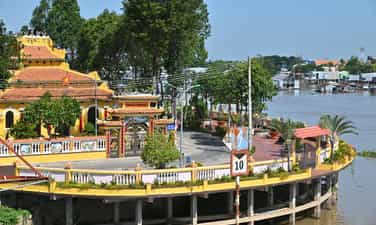
Vinh Nguon Temple
Vinh Nguon Temple is located at the head of the Vinh Te Canal, where it intersects with the Hau River, in Chau Doc ward, An Giang province. The temple was formed during the process of settlement and village development in the Chau Doc area. It is a place of worship for the tutelary deity and other deities, including Nguyen Huu Le, and also serves as a religious space for the local community. In 2011, the temple was recognized as a national-level architectural and artistic heritage site. Architecturally, the temple features the characteristics of Southern Vietnamese village temples with its tiled roofs, decorative dragon and phoenix motifs, and wooden columns carved with images of dragons, unicorns, turtles, and phoenixes. The temple's space harmoniously combines traditional architectural values with the characteristic riverine landscape of the Chau Doc region. Every year, the temple holds traditional ceremonies, including the worship of the tutelary deity Nguyen Huu Le on the 16th day of the 4th lunar month, praying for national peace and prosperity, favorable weather, and a peaceful and prosperous life. These rituals contribute to maintaining the religious life and traditional customs of the local community, and help showcase the unique cultural features of the people in the southwestern Mekong Delta region. Source: An Giang Newspaper
An Giang
187 view
Rating : National Monument

Suoi Linh Tunnel
The Suoi Linh Tunnels were constructed and used between 1962 and 1967, located in the primeval forest of the Southeast region of Vietnam. A national historical site, the Suoi Linh Tunnels are situated in Tri An commune, Dong Nai province, and are managed by the Dong Nai Nature and Culture Conservation Area. The tunnels were built on a relatively flat hillside, comprising a system of trenches approximately 260.7 meters long and a complex network of interconnected tunnels 383.5 meters long, distributed in two directions: North and Northeast. The tunnels are designed with winding tunnels, featuring upper and lower levels, ventilation shafts, and numerous tunnel entrances just large enough for one person to crawl through. The system of shelters is arranged on the tunnel's surface, combined with distant defensive lines of trees and spikes. From 1962 to 1967, the Southeast Region Information Department was based here, organizing training for information officers, assembling and repairing machinery, and operating the radio system to serve the battlefield. From the Suoi Linh base, communication between the Central Committee, the Regional Party Committee, and the provinces was maintained, contributing to the command of combat operations on many battlefields in the Southeast region. With its tightly organized, scientific, and combat-appropriate underground infrastructure, the Suoi Linh Tunnels are one of the important historical sites associated with communication activities during the resistance war against the US. Along with other revolutionary bases in the Zone D War Zone, the site contributes to clarifying the role of the Southeast region's base area in the history of the national liberation struggle. Source: Dong Nai Newspaper
Dong Nai
214 view
Rating : National Monument
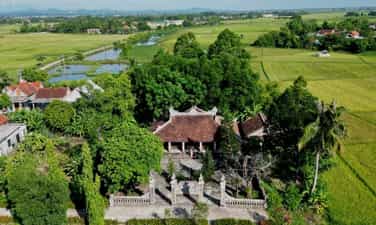
Ban Mon Temple
Ban Mon Temple is located on the Truoi River, in Nam Hamlet, Ban Mon Village, Loc An Commune, Hue City. Built in the late 19th century, the temple is a place of worship for two founding figures who pioneered the land reclamation and served as a community gathering place for the local people. In revolutionary history, Ban Mon Temple was an important location for the revolutionary movement in the Truoi region. During the period 1936–1939, the Truoi Communist Party branch organized activities here to implement the policy of establishing village associations under a democratic system and distributing communal land to farmers. In 1942, when the revolutionary leadership center of Thua Thien province moved to Phu Loc, Comrade Nguyen Chi Thanh worked at Ban Mon Temple and conveyed Resolution 8 of the Central Committee on the establishment of the Viet Minh Front and preparation for the uprising. In the years 1944–1945, the temple was the site of secret rallies, training of self-defense forces, and preparation for the General Uprising to seize power. After the August Revolution, the communal house became the headquarters of the Viet Minh Front and the People's Revolutionary Committee of Dai Thanh commune, and also the place where many national salvation movements were launched and where the first National Assembly of the Democratic Republic of Vietnam was elected on January 6, 1946. During the two wars of resistance against France and the United States, Ban Mon communal house continued to be a military base for the main army and local troops. Today, the site preserves the cultural traditions and revolutionary history of the Ban Mon region, contributing to the education of traditions for present and future generations. Source: Hue City Electronic Information Portal
Hue
212 view
Rating : National Monument
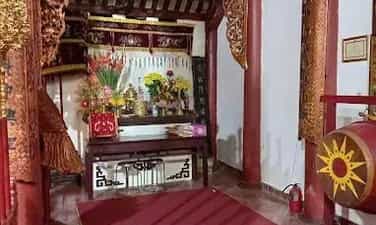
Kim Ma Thuong Temple
Kim Mã Thượng Temple, located at alley 294, Đội Cấn Street, Ngọc Hà Ward, Hanoi, is a historical site associated with Kim Mã Thượng village – one of the ancient villages in the area of the Thirteen Villages west of the former Thăng Long citadel. According to local tradition, the temple is dedicated to Linh Lang Đại Vương, a deity worshipped in many villages west of the citadel and associated with the legend of a prince who fought against invaders during the Lý Dynasty. For a long time, the temple has been a center of religious and cultural activities for the residents of Kim Mã Thượng. The temple has been affected by war and has undergone several renovations. Within the temple grounds was once Nguyễn Bá Ngọc Primary School, which was closely associated with the temple for many decades before relocating. This is also a special mark in the history of the use and preservation of the historical site in the heart of the city. Every year, the temple organizes traditional ceremonies and festivals, including commemorative events for Linh Lang Đại Vương, attracting local people to participate. These activities contribute to maintaining customs, beliefs, and community cohesion. Today, Kim Ma Thuong communal house is an important relic of the ancient Kim Ma Thuong village, helping to preserve the historical, cultural, and religious values of the western Thang Long area within the modern Hanoi landscape. Source: Kim Ma Thuong Village Communal House Relic (Ngoc Ha Ward)
Hanoi
234 view
Rating : National Monument