Relic point Vietnam
Việt Nam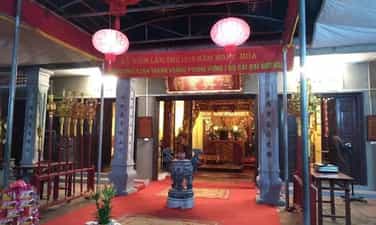
Kim Ma Ha Temple
Kim Mã Hạ Temple, located at 61 Kim Mã Street, now in Giảng Võ Ward, Hanoi, is a historical and architectural monument associated with the history of the ancient Kim Mã village. According to historical records, royal decrees, and genealogical accounts, the temple worships three tutelary deities: Bố Cái Đại Vương Phùng Hưng, Linh Lang Đại Vương, and Thái Tể Hoàng Phúc Trung. Phùng Hưng was a national hero of the 8th century who led the people in an uprising against the Tang Dynasty's colonial rule, gaining control of Tống Bình. The people of the ancient Kim Mã village revered him as their tutelary deity and established a temple to worship him. The temple was destroyed by the French colonialists, but was later repaired and restored as a place of worship. The site still retains a stele erected in 1875 recording information about Phùng Hưng and Kim Mã village, along with royal decrees, genealogical accounts, and a throne dating back to the 19th century. About 500 meters from the temple is Phùng Hưng's mausoleum, another historical site. Despite numerous architectural changes, the temple site remains connected to the history of Kim Mã village and the relics and legends of the area west of Thăng Long citadel, including the story of the royal horse training ground during the Lý dynasty. Kim Mã Hạ Temple was classified as a historical and architectural monument in 1990. Today, the site preserves the historical, religious, and cultural values of the old Kim Mã village within the urban landscape of Hanoi. Source: Hanoi Famous Landmarks and Monuments
Hanoi
225 view
Rating : National Monument
Duong Dinh Nghe Temple
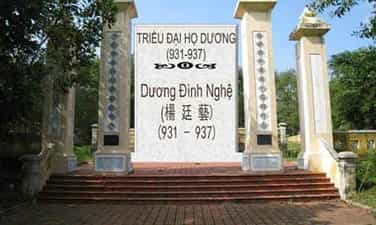
The Dương Đình Nghệ Temple, located in Dương Xá village (now Giàng village), Hàm Rồng ward, Thanh Hóa province, is a historical site associated with Dương Đình Nghệ – a prominent local leader and general who made significant contributions to the struggle for national independence in the 10th century. Dương Đình Nghệ was originally a general of the Khúc clan. After the Khúc dynasty's defeat, he returned to Dương Xá, gathered forces, recruited heroes, and established a base. In 931, from his hometown, Dương Đình Nghệ led his army north, besieged and captured Đại La citadel, and defeated the Southern Han army led by Trình Bảo. This victory contributed to restoring national independence and laid the groundwork for the Bạch Đằng victory in 938 by Ngô Quyền, his son-in-law. Dương Đình Nghệ was assassinated by Kiều Công Tiễn in 937. After his death, he was revered as a benevolent deity by the people of his hometown, and a temple was erected to commemorate his contributions. The temple was classified as a national historical and cultural relic by the State in 1996. Despite numerous renovations, the temple retains its ancient and majestic appearance and preserves many valuable artifacts such as kneeling elephant statues, stone horses, a pair of stone statues, and a stone stele commemorating meritorious deeds. Next to the temple is Phuc Hung Pagoda, creating a cultural and religious space connected to the history of Duong Xa region. Every year, the Duong Dinh Nghe Temple festival is held in the spring, attracting locals and tourists to commemorate the famous general who repelled the Southern Han army, contributing to the era of national independence. Source: Ham Rong Ward website
Thanh Hoa
219 view
Rating : National Monument
Temple dedicated to the First-ranked Scholar Nguyen Hien
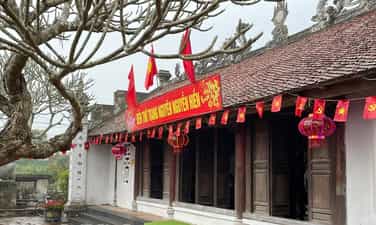
The temple dedicated to the First-Rank Scholar Nguyen Hien, located in Duong A village, Nam Hong commune, Ninh Binh province, is a historical and cultural relic associated with the life and career of Nguyen Hien, the youngest First-Rank Scholar in the history of Vietnamese imperial examinations. Nguyen Hien was born in 1235 in the ancient village of Duong Mien. Despite his difficult circumstances, he was known for his intelligence and studiousness. In 1247, at the age of 13, he passed the First-Rank Scholar examination under the reign of Tran Thai Tong. After becoming an official, Nguyen Hien was highly regarded by the court and made many contributions to diplomacy, military affairs, and water management. He died in 1255 at a very young age. Afterward, the court established a temple in his hometown, and the people revered him as the tutelary deity to commemorate his talent and contributions. Despite numerous renovations, the temple still retains the traditional architectural features of the Northern Delta region. The temple has a "front in the shape of the character 'Nhất' - back in the shape of the character 'Đinh'," consisting of a front hall, a second hall, and a forbidden hall. The system of ironwood frames and carvings such as dragons hidden in clouds, fish transforming into dragons, and bamboo transforming into dragons; the ironwood doors carved with the four seasons; and the imperial decrees, couplets, and large inscriptions contribute to the historical and artistic value of the monument. Every year, on the 10th day of the first lunar month, the temple holds the spring calligraphy ceremony with the participation of the people, teachers, and students. This activity expresses gratitude to the ancestors and contributes to preserving and spreading the tradition of studiousness in the homeland. With its historical, architectural, and educational value, the Temple of Scholar Nguyen Hien is a typical cultural destination of Nam Hong commune, contributing to showcasing the scholarly tradition and the spirit of valuing learning and talent in Ninh Binh province. Source: Ninh Binh Arts and Culture website
Ninh Binh
177 view
Rating : National Monument
Son Hai Temple
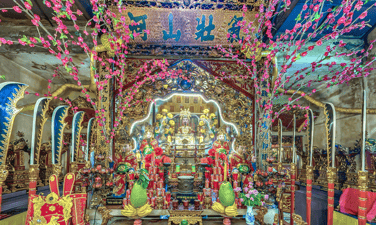
Son Hai Temple, also known as Son Hai Linh Tu, is located at 16, Alley 53, Bach Dang Street, Hong Ha Ward, Hanoi, next to Chuong Duong Bridge and facing the Red River. According to the National Historical Museum, the temple is dedicated to the national hero Tran Quoc Tuan (Hung Dao Dai Vuong), and also to his four sons: Tran Quoc Nghien, Tran Quoc Hien, Tran Quoc Tang, and Tran Quoc Uat, along with 18 other renowned generals of the Tran Dynasty. According to records at the temple, in 1785, residents of the fishing villages along the river built a temple to worship Saint Tran. The temple was once situated on the Red River floodplain, closely associated with the lives of the fishing community. In 1946, the temple burned down during the war, and the ancestral tablets, statues, and ritual objects were moved to boats by the locals for safekeeping. In 1984, the temple was rebuilt on its current site, and the religious artifacts were brought ashore. The temple's worship space clearly reflects the veneration of historical figures from the Tran Dynasty. The central hall is dedicated to Tran Hung Dao, along with Yet Kieu, Da Tuong, and their four sons; the two side halls are dedicated to 18 generals of the Tran Dynasty. The rear hall houses the Truc Lam Three Patriarchs, including Tran Nhan Tong, Phap Loa, and Huyen Quang, along with several other figures of the Tran Dynasty. Annually, the temple holds festivals and commemorative days for Saint Tran and the figures worshipped here, most notably August 20th – the anniversary of Tran Hung Dao's death. With its history closely linked to the riverside community and its rich system of worship, Son Hai Temple is a site of significant historical, cultural, and religious value on the Red River bank of Hanoi. Source: National Museum of History
Hanoi
261 view
Rating : Provincial-level historical site
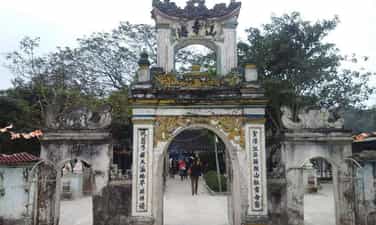
Chùa Sơn Hải
Chùa Sơn Hải còn được người dân địa phương gọi là Đền Nẻ hoặc gắn liền với địa danh cổ Gia Đôi, là một di tích lịch sử và văn hóa tâm linh nổi tiếng, tọa lạc tại xóm Đông Sơn, xã Hải Lộc, tỉnh Nghệ An. Chùa được xây dựng vào thời Nguyễn tại xã La Hoàng, tổng La Hoàng, huyện Chân Lộc xưa. Chùa Sơn Hải thờ Phật, Bồ-tát theo hệ phái Phật giáo Bắc tông. Trong quá trình lịch sử, do chiến tranh và sự biến đổi của các công trình tín ngưỡng trong vùng, nhân dân đã đưa long ngai, bài vị và tượng thờ từ một số đền, miếu về phối thờ tại chùa. Hiện chùa còn thờ các vị như Tam Tòa Thánh Mẫu, Tứ Vị Thánh Nương, Cao Sơn Cao Các, Sát Hải Đại vương Hoàng Tá Thốn và Bạch Y Công chúa. Về kiến trúc, Chùa Sơn Hải hiện còn các hạng mục có nguồn gốc từ thời Nguyễn. Trong đó, tam quan là một công trình kiến trúc gốc còn khá nguyên vẹn, cùng hệ thống hạ điện, trung điện và thượng điện. Chùa cũng lưu giữ nhiều hiện vật cổ như tượng Phật, tượng thần, hương án, hoành phi, đại tự, góp phần phản ánh lịch sử hình thành và đời sống tín ngưỡng của cộng đồng cư dân địa phương. Không chỉ là nơi thờ tự, Chùa Sơn Hải còn là không gian sinh hoạt văn hóa cộng đồng. Hằng năm, bên cạnh các nghi lễ như Phật Đản, Vu Lan và lễ giỗ Đức Thánh Mẫu, tại đây còn duy trì một số hoạt động hội truyền thống như cờ người, kéo co, đi cà kheo, chọi gà... Những hoạt động này góp phần bảo tồn phong tục, tạo không gian giao lưu văn hóa và đáp ứng nhu cầu tín ngưỡng của người dân, du khách. Nguồn: Báo Nghệ An
Nghe An
180 view
Rating : Di tích cấp tỉnh
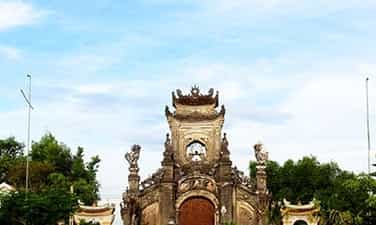
Phu Dang Cao
Dang Cao Palace – a unique architectural landmark in the countryside of Nghe An province. Located in the Am rice fields of Dai Dong commune, Nghe An province, Dang Cao Palace is a valuable historical and architectural site, closely associated with the history of the Nguyen Canh family and the Dai Dong region. The site dates back to the Le Trung Hung era and is where the local people worship three famous generals of the Nguyen Canh family who contributed to the country: Thai Pho Tan Quoc Cong Nguyen Canh Hoan, Cuong Quan Cong Nguyen Canh Van, and Pho Nham Hau Nguyen Canh Yen. The palace grounds cover nearly 2,000 m², comprising main structures such as the ceremonial gate, lower hall, middle hall, upper hall, courtyard, and lotus pond. The most prominent feature is the three-tiered ceremonial gate, built between 1938 and 1941. The structure harmoniously combines Eastern architectural elements with European and French influences, creating a distinctive appearance compared to many traditional ceremonial gates in Nghe An. The ceremonial gate consists of a pavilion, pillars, guardian statues, lampposts, and numerous decorative elements. Elaborately detailed relief carvings of dragons, mythical creatures, clouds, flowers, the four sacred animals, and the four auspicious symbols are sculpted on the walls, pillars, and architectural components. The ceremonial gate pavilion is over 10 meters high, with three levels, and the doors and roof are decorated with many patterns bearing the artistic imprint of the construction period. Inside the palace, the lower, middle, and upper halls still retain many details of carvings on the pillars, beams, eaves, and door panels with themes of clouds, flowers, dragons, and the four sacred animals. The site also preserves several royal decrees, altars, incense burners, and other religious artifacts, contributing to reflecting the history of religious beliefs as well as the artistic value of the site. With its long history, solemn religious space, and especially the rare architecture of its ceremonial gate, Dang Cao Palace is a culturally rich destination in the former Thanh Chuong region. Source: Nghe An Newspaper
Nghe An
220 view
Rating : National Monument
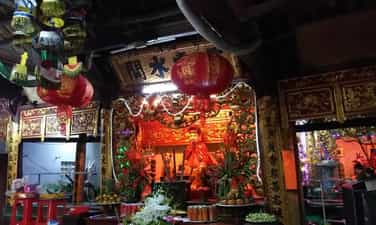
Phan Dong Temple
The Phan Dong Temple is located in Phan Dong village, Tam Da commune, Bac Ninh province, along the Cau River. It is one of the important relics within the Nhu Nguyet River defense line, associated with the resistance against the Song Dynasty by the Ly Dynasty's army and people in the 11th century. According to documents on the Nhu Nguyet defense line, the Tam Da commune area is part of a system of historical sites connected to the defense line organized by Ly Thuong Kiet on the Nhu Nguyet River (now the Cau River) during the resistance of 1075–1077. The Phan Dong Temple is one of the typical relics in this area. The temple was classified as a national historical relic according to Decision No. 28-VH/QD dated January 18, 1988. According to the current list of relics of Tam Da commune, both the Phan Dong Temple and the Phan Dong Pagoda (Dong Quy Pagoda) are national relics, located in Phan Dong village. Located along the Cau River and historically linked to the Nhu Nguyet defensive line, Phan Dong Temple is a significant site for understanding the history of resistance against foreign invaders during the Ly Dynasty, and also serves as a cultural and religious center for the local community. Source: Tam Da Commune Electronic Information Portal
Bac Ninh
234 view
Rating : National Monument
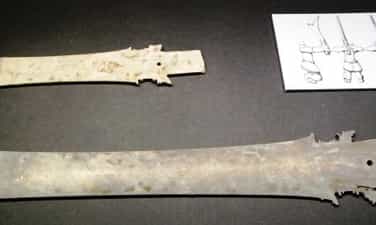
Xóm Rền Archaeological Site
The Xóm Rền archaeological site, located in Gia Thanh commune, Phù Ninh district, Phú Thọ province, is an important site for studying the Phùng Nguyên culture, dating back approximately 3,500–4,000 years. The site became known to archaeologists in 1968 and has undergone numerous excavations, uncovering a large number of artifacts reflecting the life of ancient inhabitants. The artifacts found at Xóm Rền are quite diverse, including production tools, weapons, jewelry, and household items made of stone and pottery. Of particular note is the ceremonial scepter – a rare and valuable artifact of the Phùng Nguyên culture. Excavations have also uncovered ancient tombs, some containing human remains, providing valuable data for anthropological and demographic studies of this period. The findings at Xóm Rền contribute to clarifying the material and technical life of the Phùng Nguyên inhabitants, while also supplementing documentation on the early period of the Metal Age and the formation of the culture during the Hùng Vương era. With its exceptional archaeological value, Xóm Rền is a suitable destination for those exploring the history, archaeology, and cultural origins of Phú Thọ province. Source: Nhân Dân Newspaper
Phu Tho
141 view
Rating : National Monument

Ho Lao Temple and Pagoda
The Hổ Lao communal house and pagoda, located in Tân Việt commune, Đông Triều town, Quảng Ninh province, is a historical and cultural relic complex associated with important milestones of the revolutionary movement in the Đông Triều region. On June 8, 1945, the Viet Minh held a rally here to declare the establishment of the Trần Hưng Đạo War Zone (the Fourth Đông Triều War Zone) and the Revolutionary Military Committee. During the pre-insurrection period, the Hổ Lao communal house and pagoda, along with the Bắc Mã area, became one of the operational sites of the revolutionary forces. Over time and through war, the relics have been damaged and restored several times. In 2001, the Hổ Lao communal house and pagoda were recognized as a national historical and cultural relic. The complex currently includes the communal house, pagoda, memorial stele, and green space, creating a tranquil atmosphere suitable for visiting and learning about history. Every year, the Ho Lao communal house and pagoda festival is held on the 15th day of the first lunar month, featuring processions, rituals, incense offerings, and many folk cultural activities such as tug-of-war, making banh chung (traditional Vietnamese rice cakes), and cultural performances. Today, the Ho Lao communal house and pagoda is a cultural and historical destination in the journey of exploring the Dong Trieu region, and also contributes to connecting with the system of Tran Dynasty relics such as An Sinh Temple, the mausoleum of the Tran kings, Quynh Lam Pagoda, Ngoa Van Pagoda, and Thien Lake. Source: Quang Ninh Newspaper
Quang Ninh
256 view
Rating : National Monument
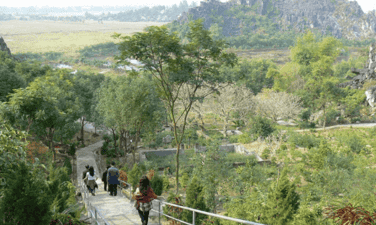
Ham Rong Mountain
Ham Rong Mountain, situated on the banks of the Ma River, is one of Thanh Hoa's most iconic landmarks, closely associated with the region's natural landscape, culture, and history. The mountain range consists of many interconnected peaks, winding along the river, with the final peak resembling a dragon's head holding a pearl, hence its name, Ham Rong or Long Ham (Dragon's Head). Opposite the mountain across the Ma River is Ngoc Mountain, creating a distinctive "dragon playing with a pearl" landscape. Within the Ham Rong mountain complex are Long Quang Cave and Tien Son Cave. Long Quang Cave was once a place where many poets and writers, including Nguyen Trai and Le Thanh Tong, left their mark. Tien Son Cave has a multi-tiered system with diverse stalactite formations, linked to folk tales about Buddha and immortals. Beyond its scenic value, Ham Rong is also an important cultural and historical space in Thanh Hoa. The image of Ham Rong Mountain, the Ma River, and Ham Rong Bridge has become a symbol associated with the battle to protect the bridge during the resistance war against the US. This area is also located near the ancient village of Dong Son – a place associated with the Dong Son culture and valuable archaeological discoveries. Today, Ham Rong Mountain is a destination that combines sightseeing, cave exploration, and learning about the history and culture of Thanh Hoa province. Source: Cong Ly Newspaper
Thanh Hoa
256 view
Rating : National Monument